Category: EV vehicles

  • Tesla Model S Maintains 88% Battery Health After 10 Years

    Tesla Model S Maintains 88% Battery Health After 10 Years

    Key Takeaways

    1. The Tesla Model S has proven its durability, with high-mileage examples showing minimal battery degradation over time.
    2. The 2015 Model S 70D, after 10 years, has maintained about 88.1% of its original battery capacity, indicating only a 12% decline.
    3. Electric vehicles, like the Model S, tend to have lower annual maintenance costs compared to traditional vehicles due to fewer moving parts.
    4. The owner of the 2015 Model S reported a positive ownership experience, with only minor issues such as door handle motor replacements.
    5. Despite being a decade old, the Model S remains a reliable option, suggesting longevity in electric vehicle technology.


    With the Tesla Model S being over ten years old now, we are seeing many high-mileage Teslas that have proven their durability without needing battery replacements. Last year, we shared videos from AutoTrader UK showcasing a Model S that surpassed 430,000 miles, showing a manageable 23% battery degradation.

    A Closer Look at the 2015 Model S 70D

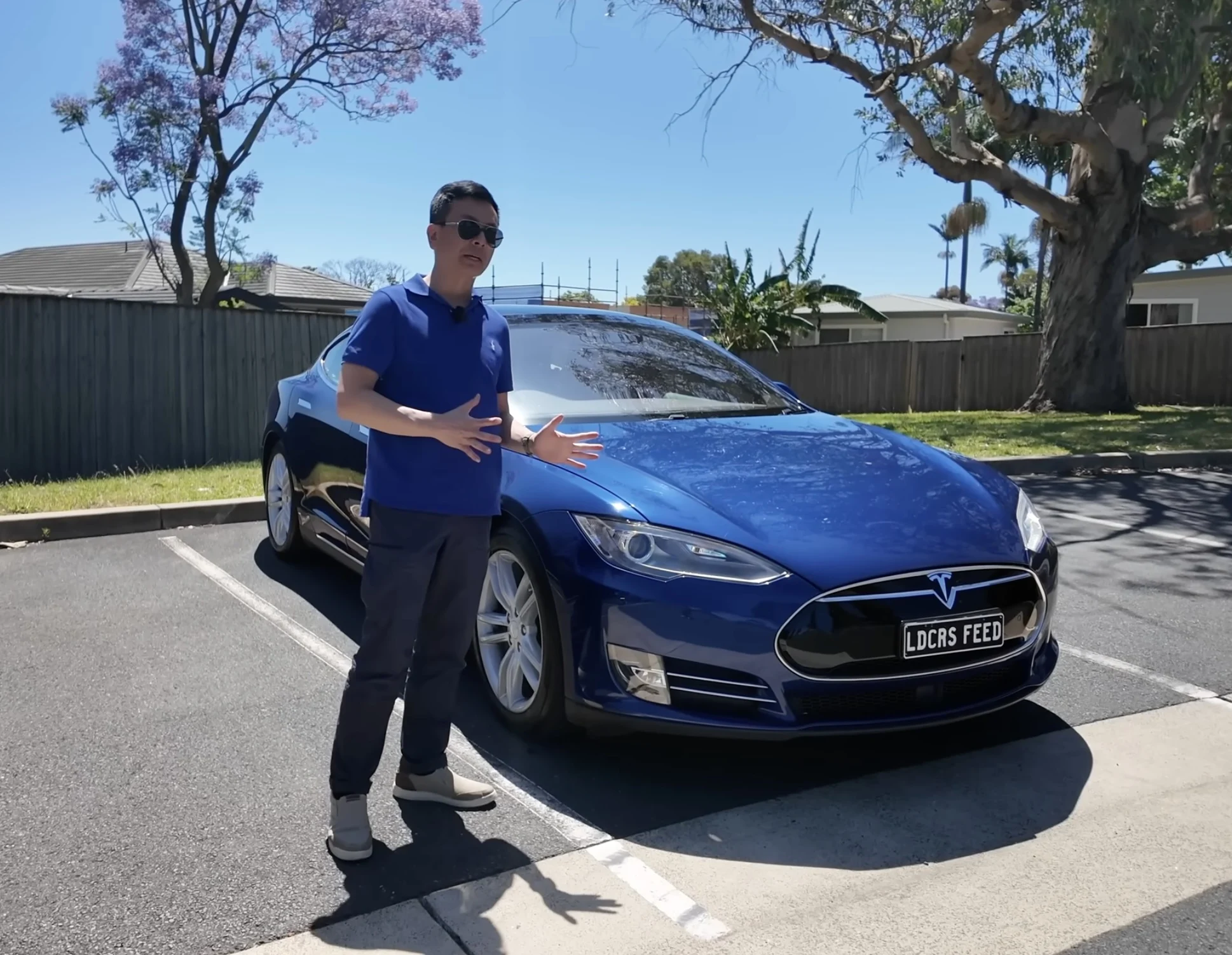
    Recently, the YouTube channel Ludicrous Feed released a video about their 10-year-old Tesla Model S. Specifically, they focused on the 2015 Model S 70D, which features a 69 kWh battery and claims a range of 350 km, or 218 miles. This vehicle has accumulated over 121,000 km, or about 75,000 miles, which is relatively low for its age.

    Battery Health Test Results

    In their review, Ludicrous Feed conducted a third-party test on the battery of their decade-old Model S. The findings showed that the battery capacity has decreased to approximately 61 kWh, which is around 88.1% of its initial capacity. Even though 75,000 miles over ten years may sound low, it still represents a significant amount of usage. The fact that the battery only experienced a 12% decline is certainly noteworthy.

    When you consider that the average American keeps their vehicle for about 12 years, one could say that this Model S is nearing the end of its life. While it’s true that replacing a battery is considerably more expensive than repairing a traditional internal combustion engine (ICE) vehicle, it’s important to note that electric vehicles (EVs) generally incur lower annual maintenance costs due to having far fewer moving parts.

    Positive Owner Experience

    Overall, Tom, the host of Ludicrous Feed, seemed quite pleased with owning the Model S, expressing no significant issues after a decade of ownership. The door handle motors did need replacement outside of warranty, which was a common problem for the 2015 models. Other than that, the video, which you can watch below, presents a very favorable view of the vehicle.

    Source:
    Link


  • Tesla Offers Free FSD Holiday Gift for Most Vehicles, Excludes HW3

    Tesla Offers Free FSD Holiday Gift for Most Vehicles, Excludes HW3

    Key Takeaways

    1. Tesla is offering a free 30-day trial of Full Self-Driving (FSD) software to 1.5 million owners of newer vehicles with HW4 hardware.
    2. Owners of HW3 vehicles are not eligible for the trial, as a lighter version of FSD is being developed for them.
    3. Despite advanced features, many Tesla owners have not subscribed to the FSD for $99/month or paid the $8,000 upfront fee.
    4. The free trial aims to increase awareness of FSD features among users and their friends and family, promoting word-of-mouth marketing.
    5. Eligible vehicles for the trial include newer Model S, Model 3, Model X, Model Y, and Cybertrucks running FSD 14.2 or later in North America and Puerto Rico.


    Tesla is giving away a free trial of its Full Self-Driving (FSD) software to all owners of newer vehicles equipped with the AI4 (or HW4) hardware kit, which includes advanced computers and cameras.

    Free FSD Trial for HW4 Owners

    The free FSD 14 trial is available to about 1.5 million Tesla owners whose vehicles are built on the HW4 platform. This offer comes via email, encouraging users to test out the advanced driver-assist system. However, those with HW3 vehicles will not be eligible, as Tesla is working on a lighter version of FSD 14 specifically for them. This version will be released after the company’s Robotaxi service expands to more major cities later this year and into early 2026.

    Limited Subscription Interest

    Even with the best-equipped cars for the latest FSD 14.2 version, only a small number of Tesla owners have opted for the $99 monthly subscription or have paid the full $8,000 upfront. Elon Musk believes that the FSD 14, especially with the upcoming 14.3 update, represents a significant advancement in self-driving technology.

    FSD 14 can manage both regular driving situations and rare scenarios without any driver input, but its features won’t matter if Tesla owners and the general public are unaware of them.

    Spreading Awareness

    To address this, Tesla has decided to offer a 30-day FSD trial to all HW4 vehicle owners, similar to the offer available for new car buyers. This trial has a value of $99, but more importantly, it allows users to experience features they might have otherwise ignored, such as the Speed Profiles like Mad Max or Sloth Mode, and the self-parking Arrival Options.

    This initiative is likely to increase word-of-mouth promotion among friends and family who ride with these Tesla owners, amplifying the reach beyond the initial 1.5 million HW4 vehicle owners who accept the trial.

    Who Qualifies for the Free FSD Offer

    Eligible for the free FSD trial are owners of newer Model S, Model 3, Model X, Model Y, or Cybertrucks running the Full Self-Driving (Supervised) 14.2 software update in North America and Puerto Rico. Tesla mentions “or later software,” hinting that it might release the much-anticipated “sentient” FSD 14.3 update before the end of the year. Therefore, those who sign up for the free trial now could enjoy some exciting features just in time for the holiday season.

    Source:
    Link


  • Record-Breaking Off-Grid Tesla Supercharger with 12 Trailer Piles

    Record-Breaking Off-Grid Tesla Supercharger with 12 Trailer Piles

    Key Takeaways

    1. Tesla has launched the world’s largest Supercharger station in Lost Hills, California, with 168 stalls, half of which were operational at its opening for the 4th of July.

    2. The station operates independently from the local utility grid, using 11 MW of solar energy from ten Megapack systems, with a total capacity of 39 MWh.

    3. Future expansion plans include adding more stalls and services, with twelve large pull-through stalls for vehicles towing trailers.

    4. Tesla addressed the charging infrastructure gap between San Francisco and LA by powering the station with Megapacks and solar canopies, completing it in under eight months.

    5. The use of prefabricated Supercharger stalls and innovative setup methods reduces construction time and costs, enhancing Tesla’s ability to secure public charging infrastructure grants.


    After just eight months of hard work, Tesla has launched the largest Supercharger station in the world. Situated in Lost Hills, California, this station boasts an impressive 168 charging stalls, although only half were operational at its grand opening, timed perfectly for the 4th of July travel rush.

    Solar Power and Capacity

    As of Thanksgiving, Tesla has activated the remaining 84 stalls, utilizing 11 MW of solar energy generated from ten Megapack energy storage systems, totaling a remarkable capacity of 39 MWh. Notably, this enormous Supercharger station operates independently from the local utility grid, running entirely on solar power.

    Future Expansion Plans

    The only minor utility connection present is designed for future growth, as Tesla intends to expand the Supercharger site with more stalls and additional services. Among the features of this record-breaking station are twelve large pull-through stalls, which accommodate vehicles towing trailers, allowing them to charge without needing to disconnect.

    Addressing Infrastructure Needs

    Tesla recognized a significant gap in charging infrastructure along the route from San Francisco to LA, especially with the Thanksgiving holiday approaching. Rather than waiting for a utility connection, the company opted to power this massive station with Megapacks and solar canopies over the 168 stalls.

    This strategic decision enabled Tesla to complete this record-setting Supercharger site in under eight months from the start of construction. The company is now employing prefabricated Supercharger stalls and an innovative method to set them up on a foundation without pouring concrete. This approach not only accelerates the building process but also reduces costs, giving Tesla an edge in securing public charging infrastructure grants.

    Source:
    Link


  • First Photos of Mercedes Baby-G EQ Electric SUV Prototype

    First Photos of Mercedes Baby-G EQ Electric SUV Prototype

    Key Takeaways

    1. Mercedes-Benz is blending classic G-Class vintage style with modern interior touches in the Baby-G EQ electric SUV.
    2. The Baby-G EQ features a compact design while retaining the recognizable angular shape of the G-Class.
    3. Key design elements include round daytime running lights, roof rails, and bow-shaped door handles, despite the prototype being camouflaged.
    4. The vehicle maintains iconic features like a side-opening tailgate and all-wheel drive, suggesting off-road capabilities.
    5. The design aims to attract a younger audience, offering a modern look while honoring the G-Class heritage.


    Mercedes-Benz is looking to blend the classic vintage style of its G-Class with contemporary interior touches. The smaller version of the G-Class, recently spotted in Stuttgart and named the “Baby-G” or “Mini-G,” showcases some intriguing aspects of the forthcoming electric vehicle.

    Compact Design with Familiar Features

    Images of the Mercedes Baby-G EQ from Newcar on X show that the recognizable angular design of the G-Class has been kept, yet the all-electric SUV is noticeably more compact than the standard G-Class. Additionally, the spare tire carrier on the back remains a feature.

    Notable Details Despite Camouflage

    Even with the prototype heavily covered, round daytime running lights can be seen at the front, modeled after those of the full-size G-Class and set back into the body. Moreover, the vehicle includes roof rails, noticeable wheel arches, three side windows on either side, and bow-shaped door handles.

    Retaining Iconic Elements

    At the back, there’s the traditional side-opening tailgate typical of off-road vehicles, along with small rear lights and a spot for the license plate. Overall, the Baby-G EQ electric SUV adheres to the classic G-Class aesthetic, hinting at its off-road capabilities. As expected for an off-road vehicle, all-wheel drive is likely to be included.

    Still, the Mercedes Baby-G EQ brings a distinctiveness to its design while honoring its heritage. It seems that Mercedes-Benz is trying to appeal to a younger audience with the Baby-G EQ electric SUV, indicated by its more modern appearance.

    Newcar via X

    Source:
    Link


  • BMW iX3 Exceeds EPA Range Estimates by 200 Miles in Test

    BMW iX3 Exceeds EPA Range Estimates by 200 Miles in Test

    Key Takeaways

    1. The BMW iX3 has an impressive official WLTP range of around 500 miles and an estimated EPA range of 400 miles.
    2. In a real-world test, the iX3 achieved a distance of 626 miles, exceeding its EPA estimate by 200 miles.
    3. The SUV’s 108 kWh battery allows for significant range, making it ideal for city driving.
    4. EPA range estimates consider both city and highway driving, with EVs generally performing better in urban settings.
    5. The BMW iX3 is expected to launch in the EU market next Spring and in the US around mid-year.


    EVs are making big leaps in range and dependability, leading to their growing popularity as models become more affordable and appealing. The BMW iX3, the electric version of the well-known X3 SUV, fits right into this movement, despite its design being a bit controversial.

    Impressive Range Performance

    The iX3 has an official WLTP range of around 500 miles and an estimated EPA range of 400 miles. Recently, BMW conducted a real-world range test for the electric SUV on a carefully selected route in Europe, avoiding highways, and the outcomes were quite remarkable.

    Thanks to its 108 kWh battery, the BMW iX3 completed a journey of 626 miles (1,007.7 km), exceeding its EPA estimate by 200 miles while still having 2% of the battery left, equating to about 12 miles of range at the finish. This is certainly good news for people who primarily use their cars for city driving.

    Important Considerations

    That said, it’s important to note that EPA range estimates consider a combination of city and highway driving. Unlike internal combustion engine vehicles (ICEVs), EVs perform much better in urban settings because of lower speeds and the use of regenerative braking. Additionally, the testing team did not use climate control or play any music, which likely contributed to the extended range but may not reflect typical driving conditions.

    The BMW iX3 is anticipated to hit the EU market next Spring, with a US release expected around the middle of the year.


    Source:
    Link


  • Gen Z zeigt wenig Interesse an kollektiven Themen, Pragmatismus dominiert

    Gen Z zeigt wenig Interesse an kollektiven Themen, Pragmatismus dominiert

    Key Takeaways

    1. Many Gen Z individuals prioritize personal gain over environmental concerns, with only 12% citing climate issues as major factors in their daily lives.
    2. Young people often choose quick, dependable, and affordable options over moral values when making significant life decisions.
    3. Contrary to stereotypes, 58% of young adults in Germany hold a driver’s license, and many use cars alongside public transportation based on convenience.
    4. While young people fly for vacations more than any other age group (37%), they show a tendency to prioritize travel experiences over environmental impact.
    5. Gen Z exhibits a disinterest in politics and moral appeals, focusing instead on practical technology like autonomous vehicles and flying taxis.


    The way the media presents climate activists as selfless heroes doesn’t really hold up under close examination. A recent in-depth survey conducted by the ADAC Foundation and the SINUS Institute among 16 to 27-year-olds reveals surprising insights that challenge common beliefs. Instead of striving to save the planet, many in Gen Z appear to be feeling disillusioned. Their choices now lean more towards personal gain rather than the greater good. Instead of focusing on pressing global issues like climate change, they prioritize their own comfort.

    Data That Speaks Volumes

    The findings from this survey are quite clear. When young people have to make significant decisions, such as choosing between going to university or entering the job market, the climate often takes a backseat. Just a small 12% cite environmental concerns as a major factor in their daily lives. This is even lower than the general population average, where 15% keep it in mind. What truly matters to them are straightforward facts: things need to be quick (52%), dependable (48%), and cheap (44%). In this scenario, moral values take a backseat to urgent timelines and financial strains. Christina Tillmann from the ADAC Foundation describes this as a process of “de-ideologization.”

    The Driving License Dilemma

    The survey also challenges old stereotypes about young people’s attitudes towards driving. Contrary to the belief that they are abandoning cars, 58% of young adults in Germany currently hold a driver’s license, with 27% planning to obtain one soon. Cars still play a crucial role in their mobility. Nearly half (48%) drive at least once a week. They also utilize public transportation more frequently than average (59% weekly), but it’s not a matter of choosing one over the other; they opt for whatever works best for them at the moment.

    Vacation Trends and Environmental Concerns

    The trend of retreating into comfort zones is especially noticeable when it comes to travel. This is where the difference between hopes and reality is the widest. While young people use their cars for vacations less than the national average, a notable 37% choose to fly for holidays. This marks the highest rate across all age groups. The urge to explore new places is outweighing worries about their carbon footprints.

    A Disinterest in Politics

    Gen Z doesn’t seem too keen on politics either. They show little interest in moral appeals. Instead, they are drawn to technology that actually works. For instance, 44% would eagerly ride in an autonomous vehicle, and 36% are open to flying taxis. When compared to Baby Boomers, this generation is more enthusiastic about technology but remains skeptical about how it will be applied in real life.

    Source:
    Link


  • AutoFlight Launches First eVTOL Air Taxi Water Landing Platform

    AutoFlight Launches First eVTOL Air Taxi Water Landing Platform

    Key Takeaways

    1. AutoFlight has introduced the first “sea-air mobility solution” with a floating airport for eVTOL aircraft landings on water.
    2. The eVTOL take-off platform features autonomous charging using solar panels and energy storage systems.
    3. The Water Vertiport supports various applications, including urban air taxis, emergency responses, and recreational flights.
    4. The platform can be quickly deployed in different water bodies and supports coordinated operations through a “Sea-Air Super Hub.”
    5. AutoFlight has secured orders for over 2,000 units and aims to reduce emergency response times and improve offshore maintenance efficiency.


    AutoFlight, a company that designs electric vertical take-off and landing (eVTOL) aircraft and is supported by battery manufacturer CATL, has unveiled the first “sea-air mobility solution.” This innovation is essentially a floating airport designed for eVTOL landings, which can be set up anywhere on the water.

    Autonomous Charging Capabilities

    The eVTOL take-off platform operates on its own and can recharge the aircraft using its solar panels and energy storage systems. AutoFlight specializes in creating electric aircraft for various uses, including passenger transport, cargo delivery, rescue missions, firefighting, air taxi services, and other commercial applications that do not require lengthy runways for takeoff or landing.

    Versatile Applications for Urban Mobility

    With the introduction of the eVTOL Water Vertiport, the firm aims to provide comprehensive air, land, and sea services for uses like urban air taxis, emergency responses, maintenance of ocean oil rigs, or simply recreational flights to popular tourist spots.

    In addition to the landing area and charging facilities, the Vertiport includes a dispatch center and communication systems, allowing it to be rapidly deployed in different bodies of water such as lakes, rivers, or oceans. Multiple eVTOL solutions can be deployed to create a “high-throughput, distributed Vertiport cluster,” which supports large-scale coordinated operations for wider coverage and smarter applications, according to AutoFlight, or what they refer to as a Sea-Air Super Hub.

    Expanding Market Potential

    The company, which has received significant investments from CATL, has already secured orders for over 2,000 units. It claims that the water landing platform will reduce emergency response times by 50% and make the maintenance of offshore wind farms and oil rigs up to ten times quicker. In the air taxi industry, it has the potential to provide shortcuts to airports or city centers, alleviating the burden on crowded transport networks.

    The emerging eVTOL market is gaining momentum, and CATL aims to capture a substantial share to boost its electric vehicle battery sales. They are also developing compact batteries for electric aircraft with a range of 2,000 miles, alongside standardized swap stations and other charging infrastructures to enhance their market presence.


    Source:
    Link


  • 620-Mile Solid-State Batteries Coming in 2026: Say Goodbye to Range Anxiety

    620-Mile Solid-State Batteries Coming in 2026: Say Goodbye to Range Anxiety

    Key Takeaways

    1. GAC Group has built its first large-capacity all-solid-state battery production line, capable of manufacturing automotive-grade batteries with over 60 Ah capacity.

    2. The new solid-state battery offers nearly double the energy density of traditional lithium-ion batteries, potentially extending vehicle ranges from 500 km to over 1,000 km.

    3. Solid-state batteries use solid electrolytes instead of liquid, improving heat resistance and safety, withstanding temperatures of 300-400°C compared to 200°C for conventional batteries.

    4. GAC has improved manufacturing efficiency by using a “dry process” that combines multiple production steps, reducing energy use and costs.

    5. Plans for small-batch vehicle testing by 2026 and gradual mass production from 2027 to 2030 align with China’s roadmap for solid-state battery adoption by 2035.


    China’s GAC Group has finished building its first large-capacity all-solid-state battery production line, and the facility is now in the small-batch testing and production phase. This marks a significant milestone as it is the first plant that can manufacture automotive-grade all-solid-state batteries with a capacity of over 60 Ah (ampere-hours), positioning GAC as a leader in this sector.

    Enhanced Energy Density

    The new solid-state battery boasts an energy density that is almost twice that of traditional lithium-ion batteries. According to GAC’s research director, Qi Hongzhong, vehicles that currently achieve a range of 500km (310 miles) could potentially go over 1,000km (620 miles) with these advanced batteries. Moreover, GAC’s battery is said to have an areal capacity of 7.7 mAh/cm², in contrast to the less than 5 mAh/cm² found in typical batteries. This increased capacity per cell leads to a higher energy density in the overall battery packs.

    Key Differences in Design

    The main distinction between conventional batteries and solid-state ones lies in their electrolyte. Traditional batteries utilize liquid electrolytes, whereas solid-state batteries employ solid ones. This shift brings several advantages; the “liquid-free” design enhances heat resistance and improves safety, as the solid electrolyte can endure temperatures ranging from 300 to 400°C (about 570-750°F), unlike the ~200°C (around 390°F) limit for conventional batteries.

    Manufacturing Efficiency Improvements

    GAC Group has also made strides in the efficiency of its negative electrode production, utilizing a “dry process” that merges three traditionally separate steps—slurry preparation, coating, and rolling—into one. This simplification lessens energy use and boosts overall manufacturing efficiency, which also helps in cutting costs.

    The official roadmap indicates that by 2026, there will be plans for small-batch vehicle integration and testing, while a gradual scale-up for mass production is expected between 2027 and 2030. However, it’s crucial to emphasize that while this represents a significant technical advancement, the commercial success will depend on supply chain dynamics and extended validation. Still, this breakthrough brings China a step closer to its “Energy-Saving and New Energy Vehicle Technology Roadmap 3.0,” which anticipates widespread adoption of solid-state batteries by the year 2035.

    Source:
    Link


  • BYD Launches Fastest Production Car with 30C Blade Battery

    BYD Launches Fastest Production Car with 30C Blade Battery

    Key Takeaways

    1. The BYD U9 Xtreme has set a new record for the fastest production car with a Nürburgring lap time of 6 minutes and 59.157 seconds.
    2. The hypercar features four electric motors producing nearly 3,000 horsepower and can reach a top speed of 496.22 km/h (308 mph).
    3. Only 30 units of the U9 Xtreme will be made available, and it was officially unveiled at the 2025 Auto Show in Guangzhou.
    4. Advanced technologies, including e⁴ intelligent all-wheel-drive and DiSus-X active body control, were enhanced for improved performance and aerodynamics.
    5. The U9 Xtreme is priced above a quarter million dollars, competing with other Chinese electric vehicles, and accelerates from 0 to 60 mph in just 1.9 seconds.


    A special hypercar from BYD, a competitor of Tesla, has recently claimed the record for the fastest production car in the world. It achieved an astonishing Nürburgring lap time of 6 minutes and 59.157 seconds.

    Incredible Performance

    The U9 Xtreme, equipped with four electric motors that together produce nearly 3,000 horsepower, surpassed the Bugatti Chiron to earn the title of the fastest production vehicle. It reached a remarkable top speed of 496.22 km/h, which is roughly 308 mph.

    Unveiling the U9 Xtreme

    This limited edition hypercar was officially revealed at the 2025 Auto Show in Guangzhou, where BYD showcased the car for the public. Only 30 units of this exceptional vehicle will be made available for fans to admire and experience.

    Advanced Technology

    To secure the title of the fastest car, BYD enhanced its e⁴ intelligent all-wheel-drive and DiSus-X active body control technologies. They made custom alterations to the battery, tires, brakes, and body kit. The car features large carbon fiber spoilers at both the front and rear to improve downforce, while its aerodynamic design includes a dual-through hood, fender flares, and a dual-layer rear diffuser.

    The U9 Xtreme also incorporates lightweight yet robust brake calipers made from titanium alloy alongside a specialized carbon-ceramic braking system. This allows the car to slow down effectively from its maximum speed of 500 km/h, as rated for the custom semi-slick GitiSport e·GTR2 PRO tires.

    Battery Innovation

    One of the standout features that enables the car to maintain speeds of up to 310 mph is BYD’s blade battery, designed specifically for the U9 Xtreme. This battery benefits from a dual-layer cooling system and custom cells that minimize resistance, boasting an impressive 30C discharge capability. Essentially, this means the battery can release 30 times its total capacity in amps for brief but powerful energy bursts to the high-rev electric motors, propelling the vehicle towards its record-breaking speeds.

    Pricing and Competition

    Interestingly, the U9 Xtreme doesn’t carry the typical seven-figure price tag associated with many limited edition hypercars. However, it will be priced above the quarter million dollar range, similar to its standard version. It’s notable that the top three fastest electric vehicles in the world are now all from Chinese manufacturers, with the U9 Xtreme accelerating from 0 to 60 mph in just 1.9 seconds, while the Tesla Model S follows closely in fourth place.


    Source:
    Link


  • Lucid Launches Affordable Gravity SUV with 1000V Charging Efficiency

    Lucid Launches Affordable Gravity SUV with 1000V Charging Efficiency

    Key Takeaways

    1. Lucid is targeting a budget-friendly market with its new Gravity line, priced $15,000 lower than the Grand Touring model.
    2. The Gravity Touring starts at $79,990 and offers a range of 337 miles, with a 0-60 mph acceleration in four seconds.
    3. It features a 1000V charging system that allows for 200 miles of range in just 15 minutes at a V4 Supercharger.
    4. The luxurious interior includes a 34-inch OLED display, 18-way front massage seats, and multiple power outlets.
    5. The Gravity Touring offers a family-friendly 7-seat configuration and ample cargo space, with customizable options for wheels and colors.


    Lucid has begun to target a more budget-friendly market with its Gravity line, aligning with its earlier commitments, and making the most energy efficient electric SUV in the United States more accessible.

    Pricing Details

    Although it isn’t a direct rival to the sub-$50,000 Tesla Model Y, the newly introduced Gravity trim is priced at $15,000 lower than the original Grand Touring model. The Gravity Touring starts at $79,990, which is the same price as the Lucid Air Touring sedan, and it is powered by the identical 89 kWh “Long Range” battery from Lucid.

    Performance and Range

    Even though the battery capacity might seem a bit on the lower side, Lucid takes pride in its ability to create the most efficient electric drive train available in the US, achieving an impressive 5 miles of range for each kWh in the RWD Air Pure model. The Gravity Touring boasts a range of 337 miles, which is quite good for a larger AWD SUV, especially when compared to the Tesla Model X. The dual-motor setup provides a combined output of 560 HP, enabling the Gravity Touring to sprint from 0 to 60 mph in just four seconds. For reference, the AWD Model X can do it in 3.8 seconds but costs $20,000 more and charges at a slower rate than the Lucid.

    Charging and Interior Features

    The Gravity Touring comes equipped with Lucid’s custom 1000V charging system, which allows drivers to add up to 200 miles of range in just 15 minutes at a V4 Supercharger, thanks to its native NACS port. The luxurious interior, characteristic of higher trims from Lucid, is also present in the Gravity Touring. It features a 34-inch Clearview Cockpit 6K OLED display, 18-way front massage seats available in six premium leather options, a top-notch audio system, and several 100W USB-C and 120V power outlets.

    Family-Friendly Options

    For families, the new Gravity Touring offers a 7-seat configuration, which includes two full-size seats in the third row that can fold flat, similar to the second row. The expansive frunk provides 8.1 cubic feet of storage or seating space, while the trunk can accommodate 120 cubic feet of cargo. Buyers can choose from five wheel types and a selection of six exterior and five interior colors to suit their preferences.


    Source:
    Link