Tag: Tesla Semi

  • Wireless Truck Charging at 65 MPH Tested on Interstate Concrete

    Wireless Truck Charging at 65 MPH Tested on Interstate Concrete

    Key Takeaways

    1. Successful wireless charging trial at highway speeds using an electric Cummins truck.
    2. Innovative inductive charging system designed to work with concrete pavement for heavy loads.
    3. Charging while in motion can reduce the size and cost of electric truck battery packs.
    4. Continuous charging can alleviate range anxiety for electric truck operators.
    5. Practical use of Tesla Semis shows potential for efficient daily operations with less frequent charging.


    An electric Cummins truck, which has induction features, has successfully completed a wireless charging trial at highway speeds on concrete.

    Innovative Design

    This kind of pavement supports the heaviest loads in the U.S., so researchers at Purdue University designed the transmitter coils to function while being surrounded by concrete. The Cummins semi traveled along a modified highway area in West Lafayette at a speed of 65 miles per hour, which is a common cruising speed for heavy-duty trucks on interstates. The team from Purdue’s Elmore Family School of Electrical and Computer Engineering has created a groundbreaking inductive charging system that can deliver 190 kilowatts of power to the truck’s coils while it is driving on the highway.

    Feasible Solution

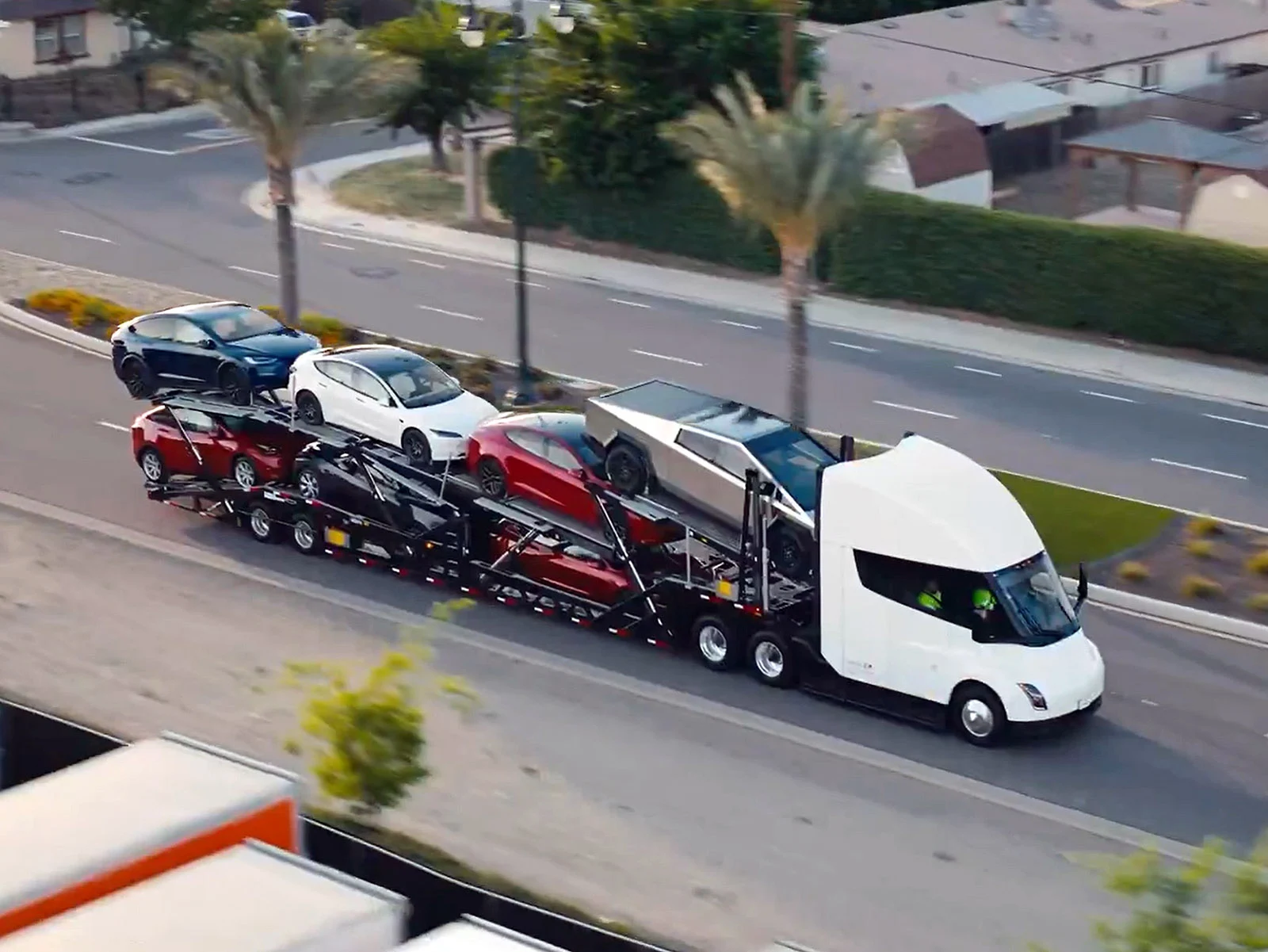
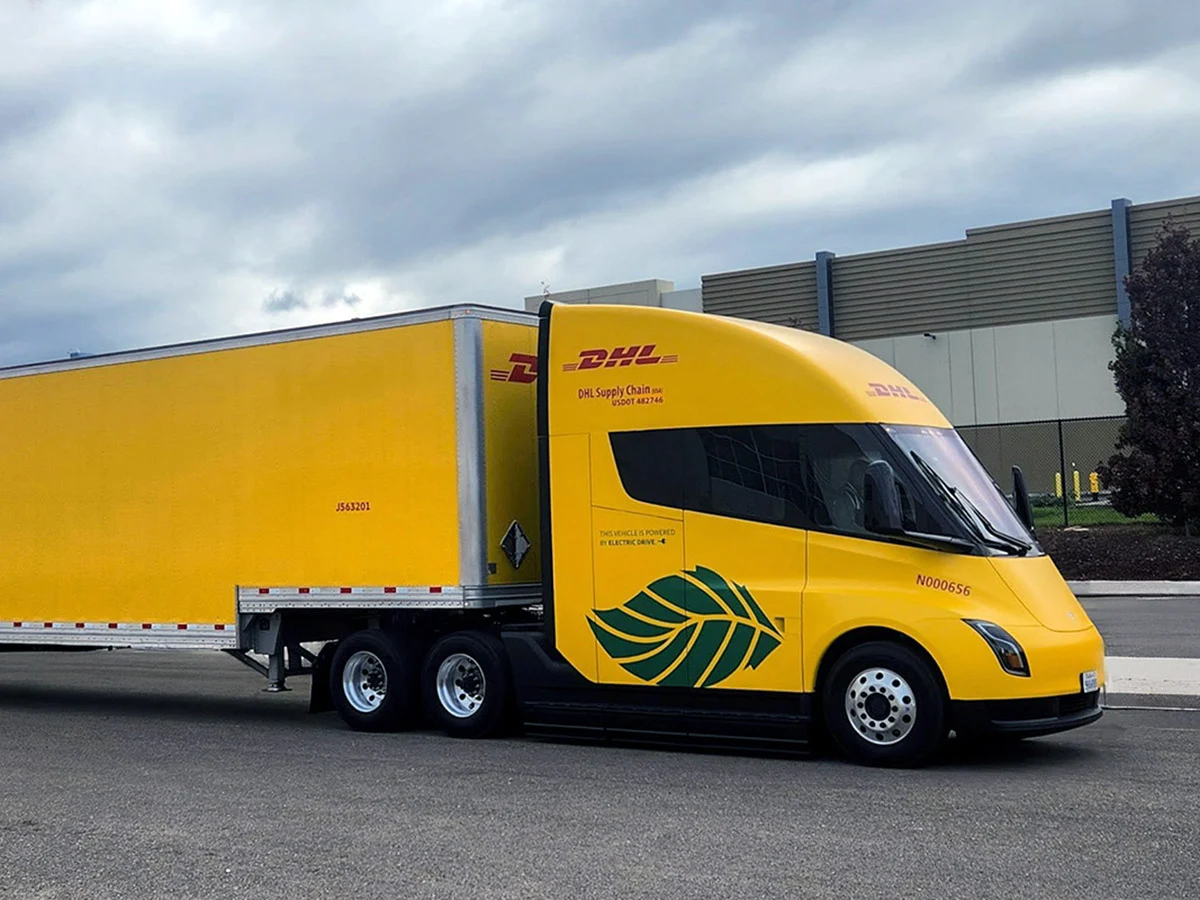
    The successful test demonstrated that charging electric trucks, such as the Tesla Semi, while they are in motion is a viable option. This advancement could help automakers decrease the size of the battery pack, which is the priciest component of an electric vehicle. Presently, heavy-duty electric trucks like the Tesla Semi need to be fitted with massive 900 kWh battery packs to achieve a 500-mile range between charges at large 1.2 MW V4 Superchargers. For example, DHL recently received its Tesla Semi test vehicles and lauded their ability to carry a full load over the claimed range, even on difficult terrains.

    Practical Benefits

    While the Tesla Semi demonstrated an impressive efficiency of 1.72 kWh per mile during practical use tests, continuous charging while driving could alleviate range anxiety and also lower manufacturing expenses. DHL mentioned that it charges the Tesla Semi only once a week since the vehicle only needs to cover a 100-mile route each day.

    Source:
    Link


  • Tesla Plans AI Chip Terafoundry, Reveals Roadster, Semi, Optimus Dates

    Tesla Plans AI Chip Terafoundry, Reveals Roadster, Semi, Optimus Dates

    Key Takeaways

    1. Tesla plans to start mass production of the Cybercab in April, aiming for one unit every 10 seconds, significantly faster than the Model Y.
    2. The Robotaxi service will expand to major US cities, including Miami, Dallas, Phoenix, and Las Vegas, with the Cybercab designed without pedals or a steering wheel.
    3. The second-generation Semi truck will enter mass production in 2026, featuring improvements like a light bar, increased payload capacity, and enhanced efficiency of 1.7 kWh/mile.
    4. The much-anticipated Roadster 2 reveal is set for April 1, 2026, with a release in 2027, and Tesla plans to start mass production of the Optimus 3 humanoid robot in 2026.
    5. Tesla’s Cybercab and Optimus robots will rely on advanced AI chips and batteries, with plans to establish a lithium refinery and potentially a chip foundry to support production needs.


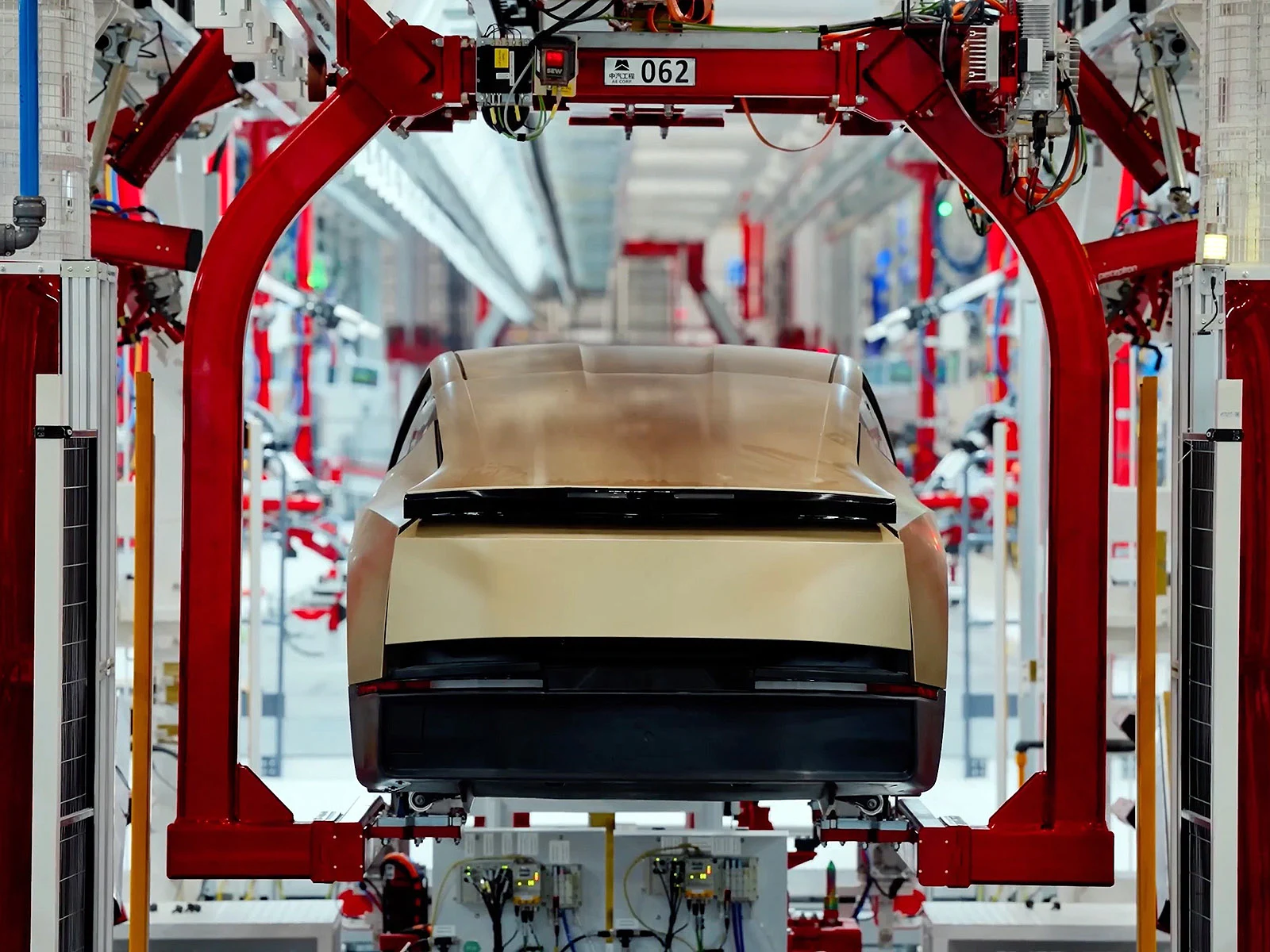
    Tesla has revealed plans to kick off mass production of its Cybercab in April, aiming to produce one unit every 10 seconds, which is four times faster than the Model Y.

    Expansion of Robotaxi Service

    By that time, Tesla’s Robotaxi service is set to cover most major US cities, with Miami, Dallas, Phoenix, and Las Vegas identified as the next locations for operation. The Cybercab has undergone minor design tweaks since its first introduction, but it will still be manufactured without pedals or a steering wheel.

    Updates on the Semi Truck

    The most significant design overhaul has been reserved for Tesla’s second-generation Semi truck, which is also expected to go into mass production in 2026. The new model will feature a light bar, enhanced payload capacity, and a 15% boost in efficiency, bringing it down to just 1.7 kWh/mile. Additionally, the charging speed has been increased to 1.2 MW, which is the maximum permitted by Tesla’s NACS standard at a V4 Supercharger station.

    Future Roadster and Humanoid Robots

    During the 2025 Annual Shareholder Meeting, where Elon Musk’s $1 trillion pay package was approved by 70% of shareholders, Tesla announced that the much-anticipated Roadster reveal will take place on April 1, 2026. The actual release date for the Roadster 2 is set for 2027, though a demo is planned for this year, where enthusiasts might discover why Musk claims the supercar can “fly.”

    The mass production of the Optimus 3 humanoid robot is also on the horizon for 2026, starting with an initial line of one million units at the Fremont facility, followed by a larger setup in Giga Texas for ten times that amount. Musk is accelerating these plans in response to competitive humanoid robots being announced by Chinese companies such as XPeng, which plan to begin mass production in 2026. “Tesla and Chinese companies will dominate the market,” Musk stated.

    AI Chips and Battery Production

    Both the Cybercab and Optimus robots will rely heavily on AI chips and batteries. Tesla provided an update regarding its lithium refinery, which is set to begin operations next year with a planned capacity of 50 GWh. Alongside its own lithium refinery and battery manufacturing plants, Musk mentioned that Tesla might need to establish its own AI chip foundry.

    “This isn’t just a new chapter for Tesla; it’s an entirely new book. This new book significantly boosts vehicle production and accelerates Optimus production at a pace never seen before in human history. Even with the most optimistic projections for chip production from our suppliers, it’s still insufficient. Therefore, I believe we might have to create a Tesla terafab. It’s like giga, but way larger,” he expressed.

    Chips and Production Plans

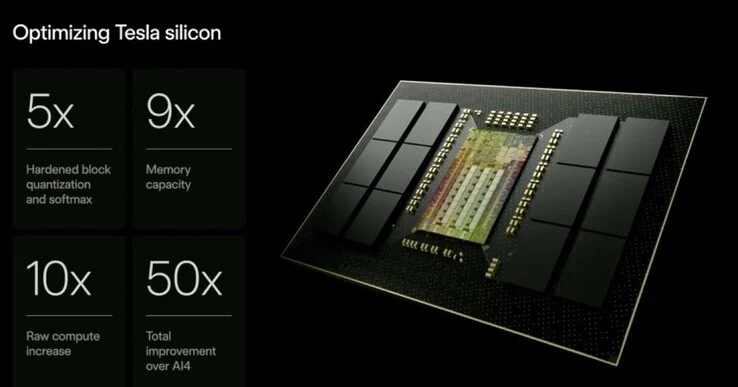
    Of course, Musk has a tendency for exaggeration, especially now that he’s just secured a potential trillion-dollar compensation package. However, he did share some insights into the Tesla AI5 chip specifications, stating it will begin production in about a year, boasting a 50x “total” advantage over the AI4. Production will continue to be shared between Samsung and TSMC, while the AI6 chip will be produced solely by Samsung at its Texas facility. This arrangement leaves Tesla’s own chip foundry responsible for the upcoming AI7 and AI8 chips that Musk has hinted at recently.

    Source:
    Link


  • Tesla Semi Achieves Diesel Truck Performance at 1.55 kWh/mile

    Tesla Semi Achieves Diesel Truck Performance at 1.55 kWh/mile

    Key Takeaways

    1. The Tesla Semi averaged 1.55 kWh per mile during road testing on challenging freight routes, including the steep Donner mountain pass.
    2. The Tesla Semi is reported to be three times more powerful than conventional diesel trucks, enabling it to perform well on steep inclines.
    3. Drivers expressed high satisfaction with the Tesla Semi’s cabin comfort, safety features, visibility, and ease of operation.
    4. Tesla is building over 40 charging stations along key freight routes to support the Tesla Semi’s operation.
    5. The latest V4 Superchargers can charge the Semi at speeds exceeding 1 MW, improving the fast-charging network for electric trucks.


    The Tesla Semi electric truck has been evaluated as a fleet vehicle on regular freight routes and has done exceptionally well. The transportation firm ArcBest reported that during three weeks of road testing, the Class 8 electric truck averaged an energy consumption of 1.55 kWh per mile, with routes specifically chosen to include various tough terrains.

    Performance on Challenging Routes

    Among these routes was the notorious Donner mountain pass, known for its steep incline, where the Tesla Semi matched the performance of diesel trucks. This isn’t the Tesla Semi’s first time tackling the Donner Pass; it has previously been seen overtaking diesel vehicles in that area.

    The incline in this mountain pass, which exceeds 7,000 feet in elevation, begins at a 7% grade, and diesel trucks generally struggle to ascend at speeds above 50 mph. Because of this, right-hand lanes have been created for slower trucks in the steeper sections.

    Engine Specs and Power

    Typically, a semi-truck is equipped with a 6-cylinder engine producing around 600 HP and generating 1,850 pounds of torque. In contrast, Tesla asserts that its Semi is three times more powerful than conventional diesel trucks, making it feasible to overtake other vehicles even on long, steep inclines like those found at Donner Pass.

    The freight company put Tesla’s Semi through a test over 4,494 miles, averaging 321 miles a day and using 1.55 kWh of battery per mile. However, for Tesla’s electric truck to be viable for fleet use, according to the company’s president, “it must meet or exceed the performance and total cost of ownership targets of our most efficient diesel units.”

    Driver Satisfaction and Infrastructure Concerns

    It did meet those criteria, and drivers expressed satisfaction with the comfort of the cabin, safety features, visibility, and ease of operation. The only concern that arose during the Tesla Semi trial was regarding the charging infrastructure.

    Currently, Tesla is in the process of constructing over 40 Semi charging stations along important freight routes in the United States. The introduction of its V4 Superchargers will enhance the fast-charging network. The latest generation of Tesla Superchargers is capable of charging at speeds exceeding 1 MW, which is suitable for the Semi, and its design allows for quicker adoption due to its efficient footprint.

    Source:
    Link

  • Tesla Model Y to Charge at Megawatt Semi Chargers Soon

    Tesla Model Y to Charge at Megawatt Semi Chargers Soon

    Key Takeaways

    1. Tesla is building advanced V4 Superchargers for its Semi, launching commercially in 2026.
    2. The 1.2 MW charging stations can provide energy to 8 charging stalls simultaneously, enhancing efficiency.
    3. Tesla has permits for 46 Semi charging locations this year and plans to add over 300 charging piles by 2026.
    4. New stations use most components from existing Superchargers, allowing for faster and cheaper rollout.
    5. Tesla is enabling white-label Supercharger projects for other companies, promoting faster network growth through collaboration.


    Tesla is in the process of building the advanced V4 Superchargers meant for its Semi, which is set to launch commercially in 2026.

    Powerful Charging Capability

    These 1.2 MW charging stations are made to work with Tesla’s passenger cars, including the Model Y. The power units can provide energy to as many as 8 charging stalls simultaneously, which is quite efficient.

    Tesla has received permits to establish 46 charging locations for the Semi this year and in 2026, aiming to add over 300 charging piles to its rapidly expanding network.

    Sharing Insights from the ACT Expo

    During the ACT Expo 2025 clean energy conference, Dan Priestley, who leads the Tesla Semi project, mentioned that the new 1.2 MW stations use most of the internal components from the existing Superchargers, except for the stronger cables and connectors necessary for megawatt-level charging.

    This design will enable Tesla to roll them out quickly and at lower costs, which should positively impact the pricing per kWh while maintaining the reliability and uptime that users expect from the Supercharger network.

    Expanding Through Collaboration

    In addition, Tesla is leading initiatives for white-label Supercharger projects, allowing other companies to install and brand these chargers. This move lets them benefit from local or federal subsidies while ensuring quicker growth of Tesla’s charging network.

    The details of the Hardware Sales program were shared at the Power2Drive EV industry event in Munich. Tesla’s Moritz Gutbrod hinted that interested parties could have “full control, yet zero hassle” when they install and manage Supercharger stations under their own brand and pricing models.

    Source:
    Link

  • Huawei Unveils 1.5 MW Supercharger with Robotic Arm Technology

    Huawei Unveils 1.5 MW Supercharger with Robotic Arm Technology

    Key Takeaways

    1. Huawei is set to introduce a 1.5 MW electric vehicle charger, surpassing competitors BYD’s 1 MW and Zeekr’s 1.2 MW chargers, aimed at heavy-duty trucks and commercial vehicles.

    2. The new charger features a liquid-cooled system enabling 2,400 A current flow, allowing a battery to charge from empty to full in just 15 minutes.

    3. Huawei’s 1.5 MW charger offers 1.44 MW output, branded as a Super Charge system, with plans to support over 30 trucks using 15-minute charging technology by 2025.

    4. A robotic arm will be included with the chargers to automate the connection process, allowing drivers to remain in their vehicles during charging.

    5. Huawei emphasizes the need for charging times under 30 minutes for full electrification of heavy-duty trucks, aligning with industry standards and competing initiatives.


    Huawei’s CEO of the Digital Power division has hinted at a new 1.5 MW electric vehicle charger, surpassing BYD’s 1 MW chargers and Zeekr’s recently unveiled 1.2 MW stations.

    Differentiation in Purpose

    While BYD’s system is designed for passenger vehicles and tailored with appropriate batteries and powertrains, Huawei’s 1.5 MW charger is intended for larger trucks, such as the Tesla Semi, as well as various heavy-duty commercial machines. Tesla’s V4 Supercharger stations can output 500 kW for regular passenger cars, but they can also reach up to 1.2 MW charging speeds for the Semi.

    Advanced Technology

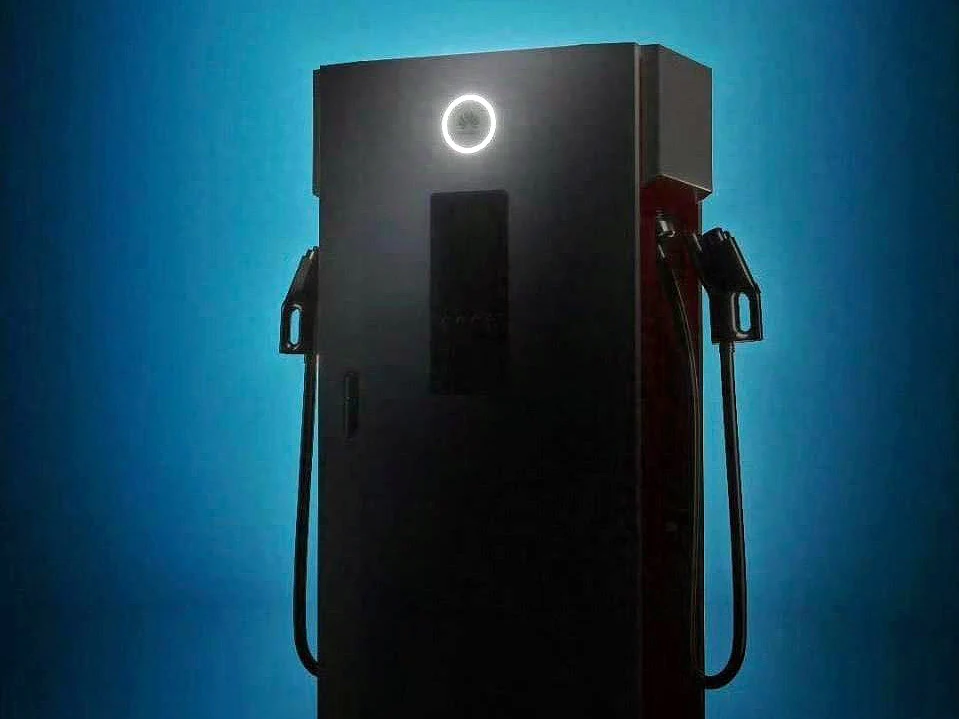
    Huawei enhances this capability with a liquid-cooled system that allows a massive 2,400 A current to flow through, enabling a battery to charge from empty to full in just 15 minutes. The new Huawei megacharger is set to be introduced on April 22 and will restore 20 kWh of battery capacity every minute while charging.

    In addition, Huawei has showcased a robotic arm that can be fitted to its EV chargers, allowing it to plug the connector into the vehicle’s charging port without the driver needing to exit the car.

    Clarifying Specifications

    The charger provides an output of 1.44 MW, but Huawei rounds this number up, branding it as a Super Charge system, clearly indicating the network it aims to serve. At the China Electric Vehicle 100 conference, where the new megawatt charger was previewed, Huawei explained its reasoning for investing in such a network. The company anticipates that over 30 trucks equipped with 4C (15-minute) speed technology will be launched in 2025, positioning Huawei at the leading edge of commercial electric vehicle charging advancements.

    During the announcement of the 1.5 MW system on April 22, Huawei will also share a timeline for the mass production of these stations and reveal the heavy-duty truck and construction equipment brands it has teamed up with for the network.

    Industry Insights

    “For heavy-duty trucks to achieve full electrification, charging times must be below 30 minutes,” stated Huawei’s Hou Jinlong at the forum. Other competing initiatives in the commercial electric vehicle charging space are also targeting this 30-minute time frame, which includes the 1.2 MW Tesla V4 Superchargers and the 3.75 MW MCS standard stations, alongside a specialized 6 MW system designed to power the 1.9 MWh battery of the 240-ton Liebherr T 264 haul trucks operating in Fortescue’s Pilbara ore mines.

    Source:
    Link