Tag: battery degradation

  • Tesla Model S Maintains 88% Battery Health After 10 Years

    Tesla Model S Maintains 88% Battery Health After 10 Years

    Key Takeaways

    1. The Tesla Model S has proven its durability, with high-mileage examples showing minimal battery degradation over time.
    2. The 2015 Model S 70D, after 10 years, has maintained about 88.1% of its original battery capacity, indicating only a 12% decline.
    3. Electric vehicles, like the Model S, tend to have lower annual maintenance costs compared to traditional vehicles due to fewer moving parts.
    4. The owner of the 2015 Model S reported a positive ownership experience, with only minor issues such as door handle motor replacements.
    5. Despite being a decade old, the Model S remains a reliable option, suggesting longevity in electric vehicle technology.


    With the Tesla Model S being over ten years old now, we are seeing many high-mileage Teslas that have proven their durability without needing battery replacements. Last year, we shared videos from AutoTrader UK showcasing a Model S that surpassed 430,000 miles, showing a manageable 23% battery degradation.

    A Closer Look at the 2015 Model S 70D

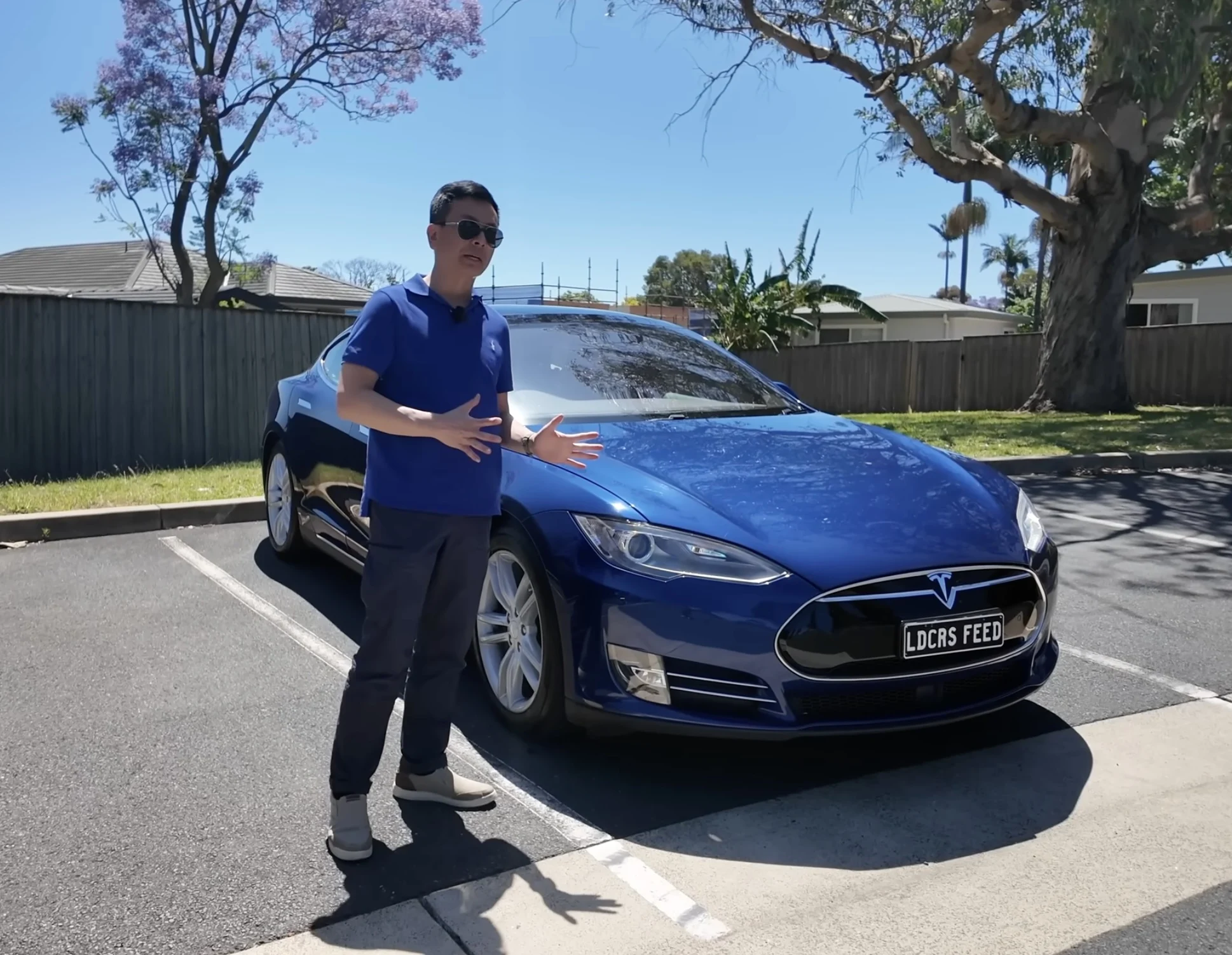
    Recently, the YouTube channel Ludicrous Feed released a video about their 10-year-old Tesla Model S. Specifically, they focused on the 2015 Model S 70D, which features a 69 kWh battery and claims a range of 350 km, or 218 miles. This vehicle has accumulated over 121,000 km, or about 75,000 miles, which is relatively low for its age.

    Battery Health Test Results

    In their review, Ludicrous Feed conducted a third-party test on the battery of their decade-old Model S. The findings showed that the battery capacity has decreased to approximately 61 kWh, which is around 88.1% of its initial capacity. Even though 75,000 miles over ten years may sound low, it still represents a significant amount of usage. The fact that the battery only experienced a 12% decline is certainly noteworthy.

    When you consider that the average American keeps their vehicle for about 12 years, one could say that this Model S is nearing the end of its life. While it’s true that replacing a battery is considerably more expensive than repairing a traditional internal combustion engine (ICE) vehicle, it’s important to note that electric vehicles (EVs) generally incur lower annual maintenance costs due to having far fewer moving parts.

    Positive Owner Experience

    Overall, Tom, the host of Ludicrous Feed, seemed quite pleased with owning the Model S, expressing no significant issues after a decade of ownership. The door handle motors did need replacement outside of warranty, which was a common problem for the 2015 models. Other than that, the video, which you can watch below, presents a very favorable view of the vehicle.

    Source:
    Link


  • Tesla Model 3 Uber Hits 255,000 Miles with Little Range Loss

    Tesla Model 3 Uber Hits 255,000 Miles with Little Range Loss

    Key Takeaways

    1. High Mileage Achievement: A 2021 Tesla Model 3 reached approximately 255,000 miles on its original battery and motor, impressing repair shop experts.

    2. Battery Performance Insights: The Model 3 only lost about 12% battery capacity after high mileage, showing minimal degradation over time compared to a similar vehicle.

    3. Degradation Pattern: EV battery degradation is significant in the first 50,000 miles, then stabilizes for the vehicle’s lifespan, according to both Tesla data and user experiences.

    4. Charging Habits: The owner used fast DC chargers for 30% of charging sessions, while the rest were done with AC home chargers, showing that full charging is less harmful to battery health.

    5. Cost Savings: The owner saved around US$24,000 in fuel costs since 2021, highlighting the financial benefits of owning an electric vehicle versus traditional internal combustion engines.


    After numerous older Model S cars covered a remarkable distance using their original battery and motor, the spotlight is now on Tesla’s latest sedan, which is also showcasing impressive longevity with minimal upkeep.

    High Mileage Achievement

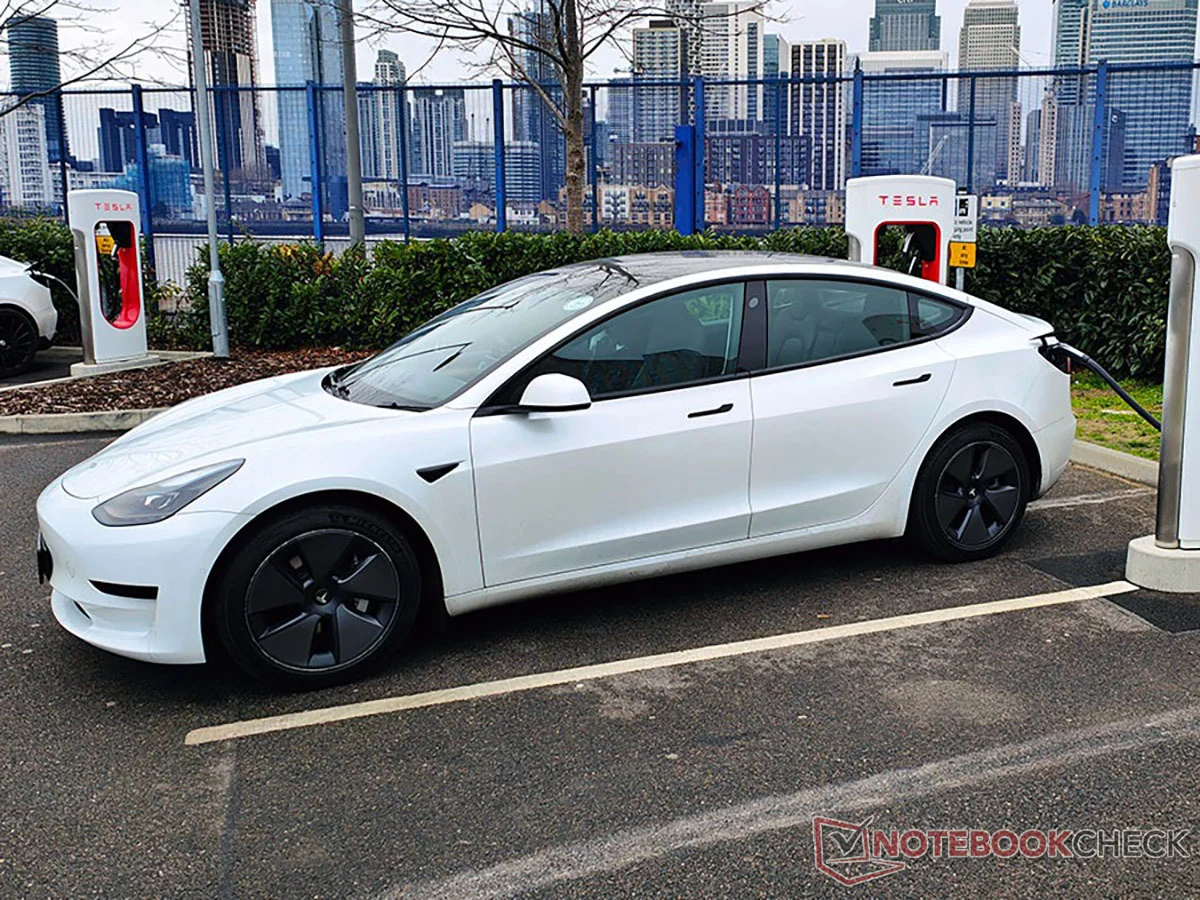
    A 2021 Tesla Model 3 was found to have worn mount bushings after its journey of around 255,000 miles using its original motor and battery. The repair shop expressed amazement at the electric vehicle’s performance, which even served as an Uber, and inquired if they could share and publish the battery statistics.

    Battery Performance Insights

    Surprisingly, even with the high mileage on the RWD Model 3’s original battery, it only lost about 12% of its initial capacity. In comparison, a different Model 3 that had achieved 150,000 miles showed a 10% degradation, suggesting a minimal capacity loss over the subsequent 100,000 miles.

    Both Tesla’s official data and personal experiences show that the degradation of EV batteries tends to be significant during the first 50,000 miles, then stabilizes for the rest of the vehicle’s useful lifespan.

    Charging Habits and Costs

    The owner of the high-mileage Model 3 utilized fast DC chargers for about 30% of the charging sessions, while the remainder was done using AC home chargers such as the 80A Tesla Gen 2 Wall Connector. The LFP battery chemistry permits charging to 100% without much increase in degradation compared to partial charging.

    Since the owner noticed a sudden jolt when accelerating, they brought the Model 3 to the shop. It turned out the original motor was still in good condition, but the mount bushings needed replacement, marking their first major visit to the shop. Meanwhile, considering fuel costs, they saved roughly US$24,000 in fuel expenses since 2021, not including other typical maintenance that internal combustion engine vehicles require.

    Source:
    Link


  • High-Mileage Model Y Battery Degradation Shows Tesla Longevity

    High-Mileage Model Y Battery Degradation Shows Tesla Longevity

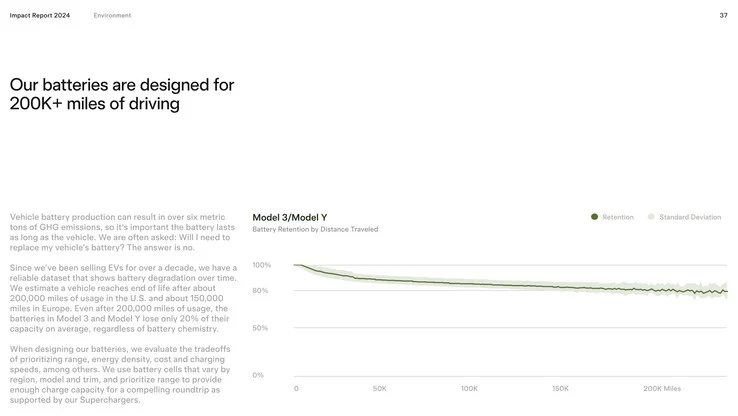
    According to Tesla, its electric vehicle batteries typically lose about 12%-15% of their original capacity by the time they reach 200,000 miles, varying by model. The Model Y, Tesla’s most popular vehicle, was introduced in 2020, and there are now examples that have surpassed the 200,000-mile mark.

    High Mileage Model Ys

    Some Model Ys have exceeded 210,000 miles, while others are approaching the 200,000-mile threshold with the average battery degradation Tesla mentions. Interestingly, some owners report extensive usage and rely solely on Superchargers for charging. One owner with a 180,000-mile Model Y has experienced only 12% battery degradation and charges the vehicle rapidly two times a day without a noticeable increase in battery capacity loss.

    Charging Habits and Battery Degradation

    A recent study has shown that the battery capacity loss from frequent Supercharger use versus slow charging from home wall chargers is statistically negligible. Research from Recurrent indicates that Tesla owners who frequently use Superchargers—around 90% of the time—show similar battery degradation rates as those who use them less often. The high-mileage examples of Model Ys support these findings.

    Historical Context of Battery Performance

    It’s worth noting that Tesla’s official statistics on battery degradation likely do not include early Model S vehicles produced until fall 2015. These older models had a fuse door at the top of the battery pack that could allow moisture to damage them prematurely. While these vehicles contribute to the average EV battery failure rate, they do not affect the average degradation figures because they often did not reach 200,000 miles before the battery was replaced, typically under warranty.

    Nonetheless, some Model S units have been recorded with up to 430,000 miles on their original battery, showing a 28% degradation after eight years. This aligns closely with the capacity loss that Tesla predicts for every 200,000 miles of usage.

    Future Battery Performance

    As the Model 3 and Model Y utilize newer battery technology, the average capacity degradation for Tesla vehicles may improve over time. More Model Y units are expected to surpass the 200,000-mile mark, potentially leading to better overall battery performance statistics.


    Image 1