Tag: Tesla Model 3

  • Ford Challenges Tesla Model 2 with $30K Pickup and Budget EV

    Ford Challenges Tesla Model 2 with $30K Pickup and Budget EV

    Key Takeaways

    1. Ford has developed its first universal electric vehicle platform (UEV) to create more affordable EVs amid competition from Chinese automakers and a slow EV market.
    2. The upcoming electric pickup truck will cost around $30,000, making it significantly cheaper than the Ford F-150 Lightning and even the basic Tesla Model 3.
    3. The truck features an innovative aerodynamic design using fewer parts, made from two aluminum pieces, and a 48V low-voltage architecture to reduce production costs and time.
    4. Ford’s budget-friendly electric pickup will require fewer workers for assembly, using a structural LFP battery pack to further lower costs.
    5. The company plans to integrate autonomous driving features into the truck by 2028 and aims to create a ride-share vehicle based on the UEV platform.


    Faced with a big challenge from Chinese automakers and a slow electric vehicle (EV) market, CEO Jim Farley mentions that Ford has created its first universal electric vehicle platform (UEV) to make cheaper cars.

    Upcoming Electric Pickup

    They are set to introduce an electric pickup truck that will cost around half of the Ford F-150 Lightning, which is similar to the price of the imagined affordable Tesla Model 2 that never came out. This truck will be a midsize model with a smaller battery, but the amount of effort Ford has put into hitting that price is quite remarkable.

    Innovative Design

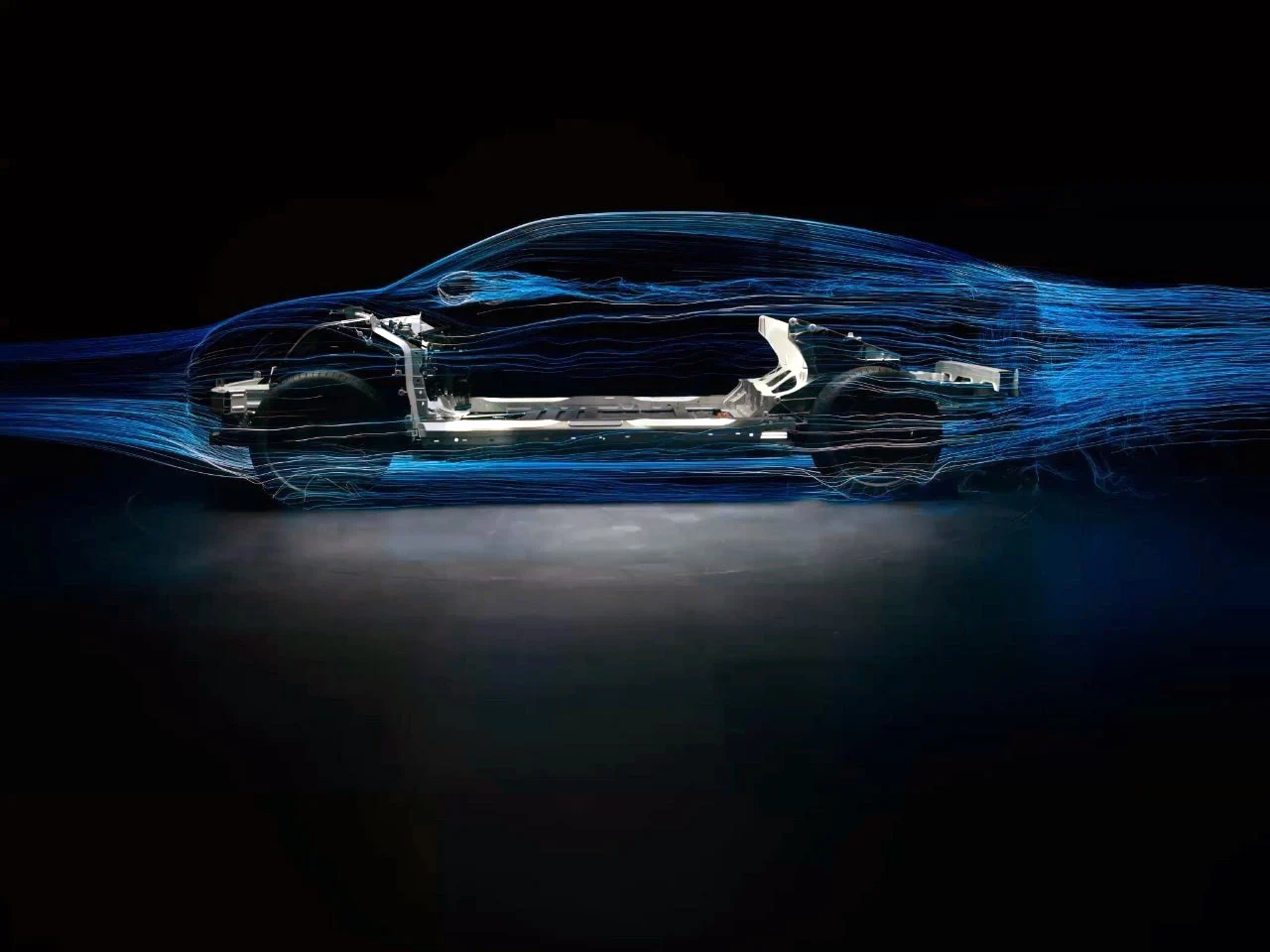
    The aerodynamic design of this truck is better than any other pickup available in the US. Its body is made from two aluminum pieces, like Tesla’s gigacasting method, instead of the over a hundred parts found in other midsize trucks like the Maverick.

    Ford has also embraced a new 48V low-voltage architecture, similar to what’s found in the Cybertruck, significantly reducing the number of electrical components and cables needed. Because of this, Ford’s budget-friendly electric pickup requires fewer parts and can be built in half the time, needing 600 fewer workers at the Louisville factory in Kentucky. Additionally, Ford is using a structural LFP battery pack that integrates the cells into the chassis, helping to lower costs even more.

    Competitive Pricing

    The anticipated $30,000 pickup will be cheaper than even the most basic Tesla Model 3 when it debuts in 2027, potentially heralding a new phase for Ford’s EV plans after losing billions on earlier projects. This situation isn’t just a Ford issue; the entire auto industry lost around $65 billion when the EV market faced troubles due to high costs, low demand, and the expiration of federal tax credits. Tesla experienced this too, seeing its first annual revenue drop last year, discontinuing its expensive Model S/X vehicles, and introducing APR financing offers to boost lagging Model Y sales.

    “You’re not going to beat them—you’ve got to get close on cost—but then you have to apply the innovation,” said Jim Farley. The leader of the UEV team noted that “customers don’t want stripped-down, all-feature-content-removed” vehicles, so the affordable truck will be a nice surprise in that area. Ford also plans to integrate autonomous driving features in 2028 at a lower price than competing systems, and they will utilize the platform to create a ride-share vehicle similar to the Tesla Cybercab.

    Source:
    Link


  • Xiaomi Shifts Focus as Lei Jun Celebrates Highway Battery Test Success

    Xiaomi Shifts Focus as Lei Jun Celebrates Highway Battery Test Success

    Key Takeaways

    1. Xiaomi has quickly turned a profit in the electric vehicle (EV) market, achieving this in just two years compared to Tesla’s decade-long journey to profitability.

    2. Recent battery efficiency tests show Xiaomi’s vehicles, like the SU7, are performing close to Tesla’s, with notable results in energy consumption.

    3. Xiaomi’s SU7 achieved an efficiency of 22.5 kWh per 100 km, while Tesla’s Model 3 was the most efficient at 20.8 kWh per 100 km.

    4. CEO Lei Jun believes that Chinese EV brands, including Xiaomi, are now on par with Tesla in terms of features and specifications but at lower price points.

    5. The competition in the EV market is increasing, with local brands showing confidence and striving for improved energy efficiency and overall vehicle performance.


    Xiaomi has emerged as a new contender in the electric vehicle (EV) market, taking on Tesla not just in vehicle features but also in sales and profitability.

    It took Xiaomi only two years to turn a profit from its EV segment last quarter, a stark contrast to Tesla, which required a decade before it could report a profitable quarter. Of course, Tesla was the first to bring electric vehicles into the spotlight, which made it a bit easier for Xiaomi, and CEO Lei Jun acknowledges that they have learned valuable lessons from Tesla.

    Testing Results Show Efficiency

    A recent test of popular electric vehicles on battery efficiency showed that Xiaomi’s cars are close to Tesla’s performance. The Autohome test was carried out at a steady speed of 120 km/h, with the same weight and cabin temperature for all vehicles involved.

    This test is quite demanding for electric cars, as they usually perform better in city driving than on highways. The Tesla Model 3 achieved the best efficiency, consuming 20.8 kWh of battery for every 100 km, equating to around three miles per kWh.

    Xiaomi’s Performance

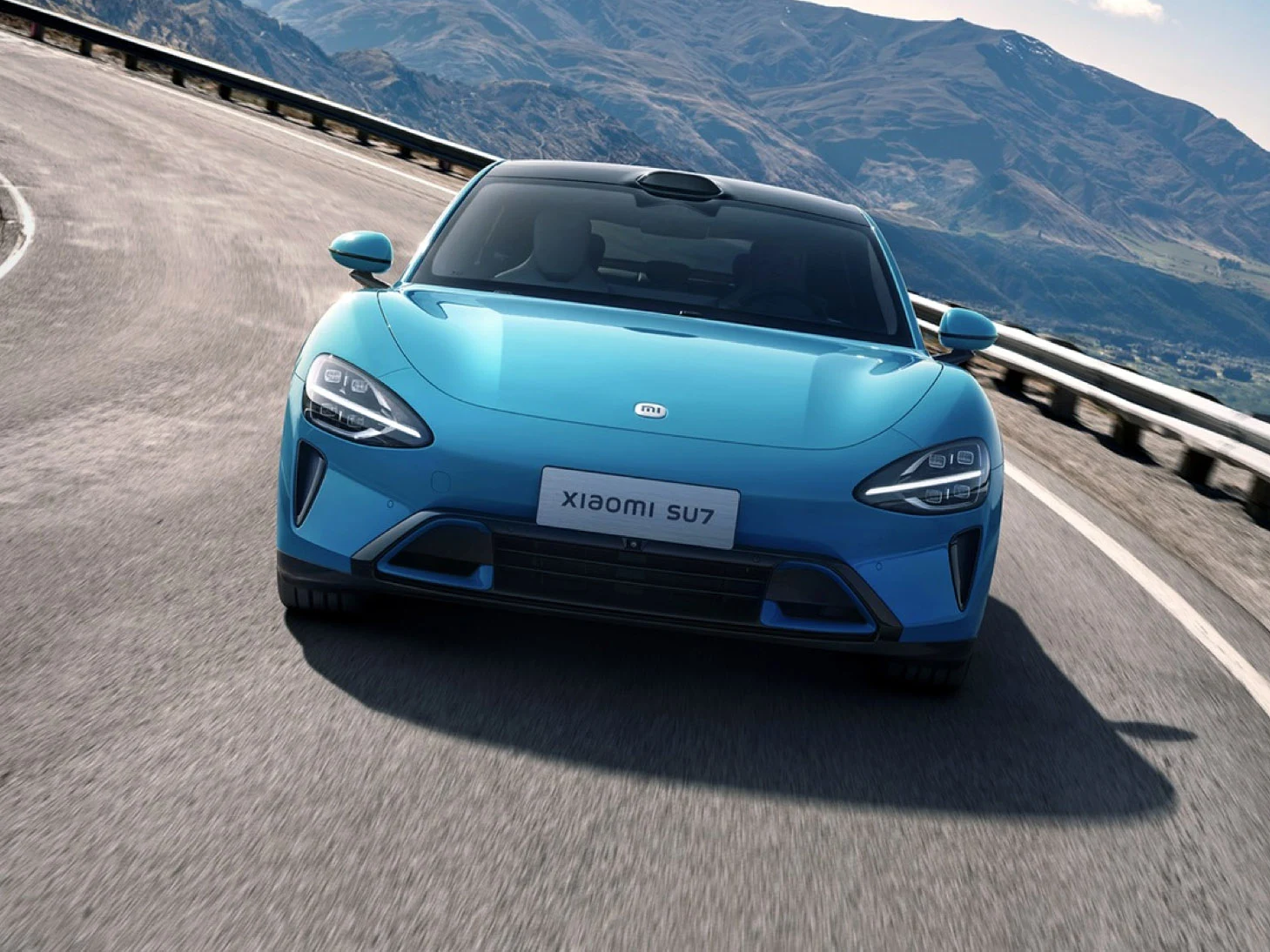
    On the other hand, the Xiaomi SU7 performed admirably, using 22.5 kWh per 100 km, even though it’s a larger and more premium option compared to the Model 3. The Model Y recorded an efficiency of 21.8 kWh/100 km, while the bigger Xiaomi YU7 SUV consumed 25.9 kWh/100 km.

    Lei Jun expressed his satisfaction with these results, noting that Chinese EV brands no longer look up to Tesla. He mentioned that vehicles like the SU7 are comparable in features and specifications, yet come with a lower price tag.

    The Future of EVs

    What excites me about these results is that local EVs are no longer just trying to catch up to Tesla but are now meeting industry standards on equal footing. Every brand is striving to optimize energy usage, thermal management, and overall vehicle efficiency, showcasing solid foundational capabilities. Honestly, I haven’t seen such a surge of confidence from Chinese brands on one of the toughest tracks globally.

    However, CEO Jun also noted that Xiaomi, which is well-known for its affordable smartphones and gadgets like the Redmi Buds 6 Pro, will continue to learn and aim to become an even more efficient automaker.

    In the realm of power consumption, Tesla faces rising competition in the U.S., with Lucid remaining the top player. Lucid’s custom motors and drivetrain achieve a remarkable efficiency of over 5 miles per kWh, although its premium models are pricier than those from Tesla or Xiaomi.

    Source:
    Link


  • Tesla Revives $25,000 Model 2 as Affordable Model Y Alternative

    Tesla Revives $25,000 Model 2 as Affordable Model Y Alternative

    Key Takeaways

    1. Tesla is set to launch more affordable versions of the Model Y and Model 3 in China, customizing features to meet local preferences.
    2. The new Standard trims may differ significantly from the US versions, with changes in hardware and design to compete with local rivals like BYD.
    3. Tesla is reviving projects for a $25,000 vehicle, informally called Model 2, which will be a smaller, budget-friendly option.
    4. The Model 2 is expected to launch by Q4 2026, featuring a 54 kWh battery and AI5 FSD hardware.
    5. Tesla’s strategy includes introducing Standard trims to maintain profit margins before focusing on mass production of the Model 2.


    Tesla is getting ready to introduce more affordable versions of the Model Y and Model 3 in its most competitive market, similar to the Standard trims it revealed in the US.

    Local Adaptation

    However, the company won’t just roll out a Model Y Standard in China; it plans to customize the hardware features and comfort designs to fit local preferences. In the US, Tesla removed over 20 features and options to achieve the under-$40,000 price tag for the Model Y Standard, including light bars and changes to the battery capacity. Given the wide range of cheaper and better electric vehicles available from Tesla’s main rival BYD and others in China, a simplified Model Y might look quite different from the US Standard trim.

    New Trims and Developments

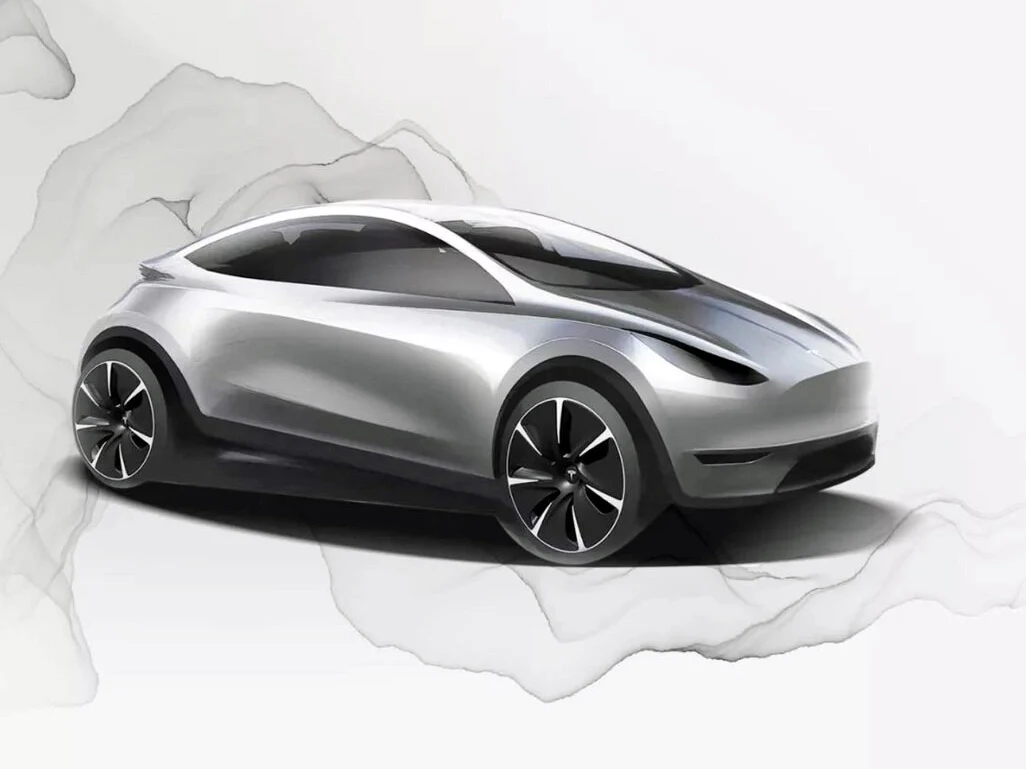
    This could explain why Tesla is only set to launch the basic Model Y and Model 3 trims there next year. They are expected to include AI5 FSD hardware to help distinguish them from competitors. In addition to the E41 and D50 trims that represent the Model Y and Model 3 Standard versions for China, insiders say Tesla is also reviving the NV91 and NV93 projects. These are variations of the anticipated $25,000 Tesla vehicle, informally known as the Model 2, which were initially developed in the US under the Project Redwood name.

    The $25,000 Model

    The NV91 (which means “new vehicle”) was reportedly in a very advanced stage of development as an affordable option, designed similarly to the Model Y crossover but featuring a smaller battery and more compact size. This $25,000 model was put on hold while Tesla shifted its focus to launching the Cybercab and Robotaxi platforms, as well as making the Model Y and Model 3 more budget-friendly by removing certain features and comforts.

    At that time, Tesla’s chief designer, Franz von Holzhausen, mentioned that the speculation about Tesla abandoning its $25,000 Model 2 is highly exaggerated, saying to “stay tuned.” According to Elon Musk, the upcoming Model 2 is expected to be “smaller, to be clear,” equipped with a 54 kWh battery that should provide around 250 miles of range, along with next-gen AI5 FSD hardware.

    Future Launches

    This likely indicates that the Model 2 could launch as early as Q4 2026, coinciding with Tesla’s plans to start installing HW5 computers and cameras in its vehicles on a large scale. This aligns with earlier rumors that the much-anticipated $25,000 Model 2 would not be available until 2026, after Tesla has updated all its other models in 2025 and introduced Standard base trims to maintain margins before embarking on its major experiment with its first mass-market electric vehicle, which is planned to produce four million units of.

    Source:
    Link


  • Tesla Launches Costly Model 3 Turn Signal Stalk Retrofit for Highland

    Tesla Launches Costly Model 3 Turn Signal Stalk Retrofit for Highland

    Key Takeaways

    1. Tesla has updated the Model 3 with a bigger battery, front bumper camera, and a more common turn signal stalk for regions like Europe.
    2. Older Model 3 owners can retrofit their vehicles with the new turn signal stalk for approximately $770 in Europe and $350 in China.
    3. The design change replaced traditional turn signal levers with controls on the steering wheel, leading to customer complaints and regulatory issues, especially in Europe.
    4. The retrofit option is available for all 2023-2025 Model 3 vehicles in Europe, while in China, it is limited to models made after February 7, 2025.
    5. The new turn signal stalk is only for signaling turns and does not control other functions like high beams or windshield wipers, which remain managed by buttons.


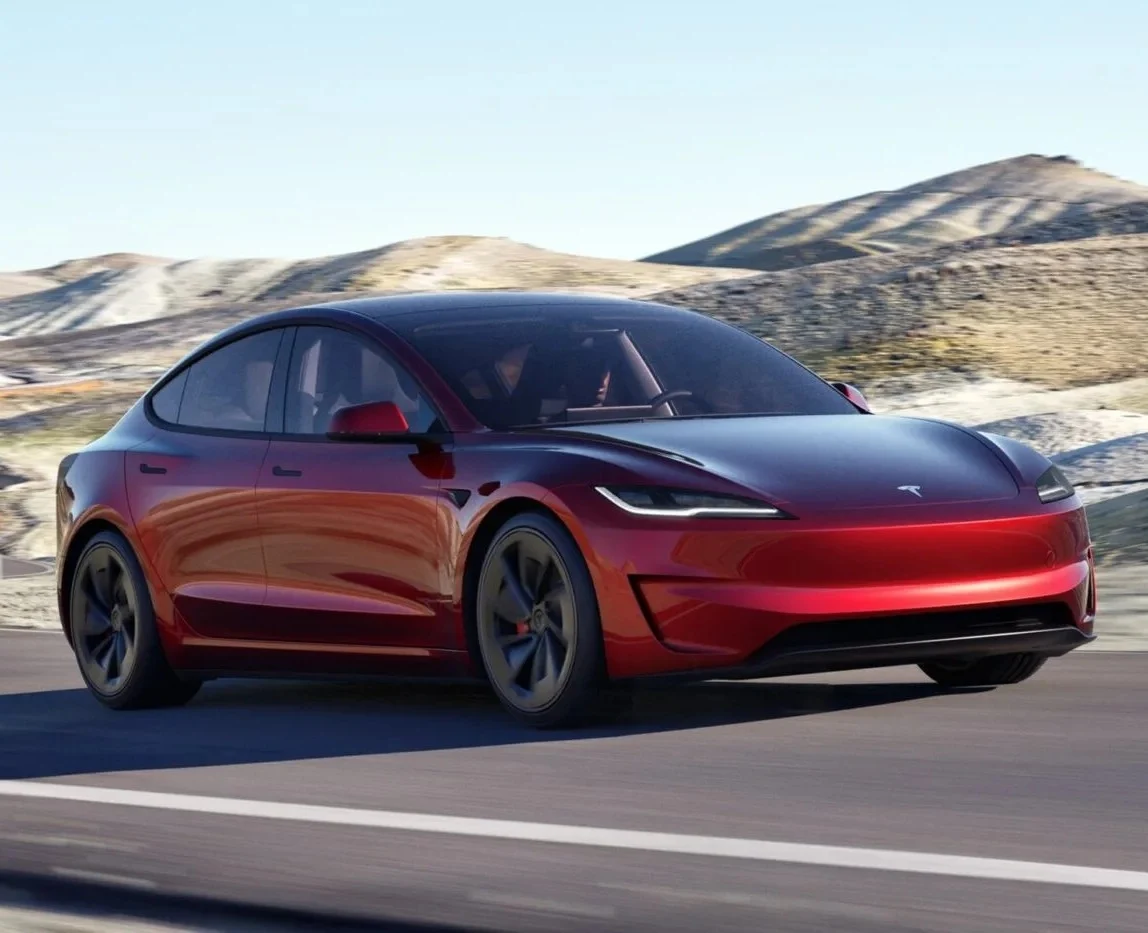
    Tesla has made some updates to the Model 3, which now comes with a bigger battery, a camera on the front bumper, and a turn signal stalk that is becoming more common in regions like Europe. For those who own older versions of the Model 3, Tesla is providing a retrofit option for the turn signal stalk, priced at around $770 in that area.

    Changes in Design

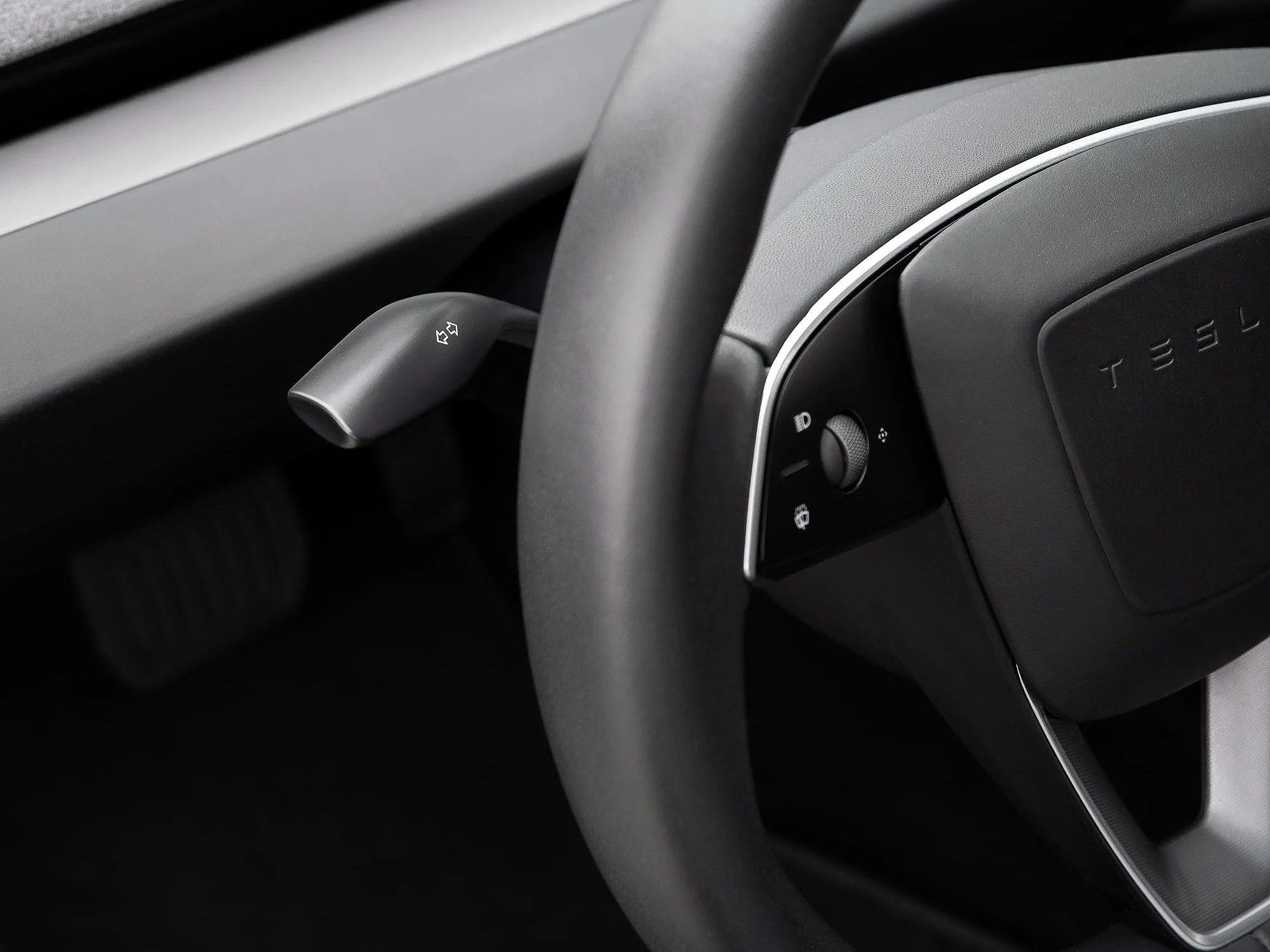
    In the Model 3 Highland refresh, the traditional lever was replaced with turn signal controls on the steering wheel. Tesla marketed this change as a way to create a more simplistic interior, aiming to cut costs. However, customers missed the familiarity of the turn buttons, leading to complaints. Furthermore, this change caused regulatory issues, especially in Europe, where driving schools avoided Teslas for students, and officials hinted that the car’s safety ratings might be affected because of the absence of the turn signal lever.

    Reaction in Different Markets

    A similar situation unfolded in China, where Tesla brought back the turn stalk for the Model 3 during the summer. For those who had already purchased the refreshed Model 3, Tesla initiated a retrofit program. In China, the cost for the turn signal stalk assembly, which includes both the component and installation, is about $350. This makes the retrofit in Europe more than twice the cost, which is quite significant.

    In China, the retrofit for the signal lever can only be performed on Model 3 cars without steering stalks that were made after February 7, 2025. Conversely, in Europe, the new turn signal stalk retrofit is available for all 2023-2025 Model 3 vehicles lacking one, covering nearly all Highland refresh models sold in that market.

    How to Get the Retrofit

    The price for the Model 3 turn stalk retrofit includes both the parts and installation. Buyers just need to contact their nearest Tesla Service Center to set up an appointment. The lever appears to be similar to the one used in the 2026 Model Y Juniper refresh. It is designed solely for signaling left or right turns and does not control high beams or windshield wipers, which are still managed by buttons on the steering wheel or through various multifunction Model 3 stalks available on Amazon at a much lower price than Tesla’s official but rather basic retrofit.

    Source:
    Link


  • Tesla Model 3 Refresh: New Front Camera & Turn Signal Stalk

    Tesla Model 3 Refresh: New Front Camera & Turn Signal Stalk

    Key Takeaways

    1. Tesla has introduced updates for the Model 3 in Japan, South Korea, and Taiwan, enhancing its best-selling model.
    2. A new front bumper camera improves visibility and aids in the development of Full Self-Driving (FSD) capabilities.
    3. The Tesla “T” logo has been removed from the front trunk, while the “TESLA” name remains on the rear trunk.
    4. The traditional turn signal stalk has been reinstated, replacing less user-friendly touch-sensitive controls on the steering wheel.
    5. Updates are currently being rolled out from Giga Shanghai, with plans for availability in North America and other regions soon.


    Tesla has rolled out fresh updates for the Model 3 in Japan, South Korea, and Taiwan, following its earlier launches in China. While these changes do not constitute a complete redesign, they showcase the electric vehicle manufacturer’s continuous efforts to enhance its best-selling model.

    New Features and Improvements

    One of the most significant updates is the addition of a front bumper camera. This enhancement boosts visibility by addressing blind spots, enabling drivers to navigate and park in more compact areas with greater ease. It also aids in the development of Tesla’s Full Self-Driving (FSD) capabilities. With this upgrade, all vehicles in Tesla’s lineup now feature a front bumper camera.

    Subtle Changes Outside

    Another minor exterior tweak is the removal of the Tesla “T” logo from the front trunk. However, the “TESLA” name on the rear trunk continues to be present.

    Enhancements Inside

    On the inside, Tesla has reinstated the traditional turn signal stalk. This feature, which was first brought back in China earlier this year, is now being implemented in other markets across Asia.

    The stalk replaces the touch-sensitive controls on the steering wheel, which many drivers found less user-friendly, especially during heavy traffic situations. For those who bought the stalkless version of the Model 3, Tesla is providing a retrofit option.

    As of now, these updates are being sent out from Giga Shanghai for the Asian market, but it is anticipated that these modifications will soon be available in North America and other parts of the world.

    Source:
    Link


  • Tesla Breaks Sales Record, Surpasses Analyst Expectations

    Tesla Breaks Sales Record, Surpasses Analyst Expectations

    Key Takeaways

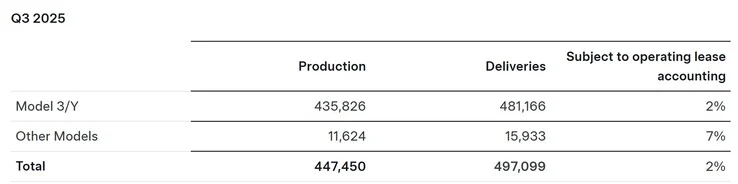
    1. Tesla achieved a record delivery of 497,099 vehicles in Q3, driven by high demand for the Model Y and Model 3 before the federal tax credit expired.
    2. Nearly 97% of deliveries were for the Model Y and Model 3, prompting price increases and reduced incentives due to high demand.
    3. Analysts underestimated deliveries, predicting 439,600 units, but Tesla surpassed this by 7.4% year-on-year, despite a challenging market.
    4. Tesla is facing future challenges as competitors like Hyundai cut prices, and it has introduced a $6,500 lease credit to counteract the loss of the tax credit in Q4.
    5. The company has begun mass production of a more affordable Model Y trim, but its success is uncertain due to past issues with similar strategies.


    Tesla has announced a record delivery of 497,099 vehicles in the third quarter, as customers rushed to purchase any available Model Y or Model 3 before the federal tax credit expired. This remarkable figure also includes the clearance of all inventory units, although the company was only able to produce 447,000 vehicles during this same period.

    High Demand for Model Y and Model 3

    Almost 97% of all Tesla deliveries consisted of the Model Y and Model 3, which were in such great demand that the company had to increase lease prices during the quarter and cut back on some initial incentives and promotions.

    Analysts’ Predictions and Market Response

    Bloomberg analysts had anticipated that Tesla would deliver significantly fewer vehicles in Q3, estimating an average of 439,600 units. However, the impending tax credit expiration proved to be a strong motivator, providing a direct discount of $7,500 at the point of sale. Tesla exceeded its delivery numbers by 7.4% year-on-year, offering some relief in a challenging year characterized by declining sales and profits, partly due to Elon Musk’s political involvement and a cooling EV market.

    Future Challenges and Strategies

    With the federal subsidy expiration providing a significant boost, Tesla seems to have strategically delayed some new releases until the holiday quarter when it will no longer benefit from government support. The competition is expected to become more intense as companies like Hyundai have initiated a price war by reducing the cost of their 2026 Ioniq 5, a rival to the Model Y, by as much as $9,800.

    To help offset the loss of the tax credit for its customers in Q4, Tesla has introduced a $6,500 lease credit and is set to launch two new versions of the Model Y. Notably, it introduced the 2026 Model Y Performance trim just before the tax credit expiration, allowing early buyers to still take advantage of the $7,500 discount, along with complimentary options for colors, interiors, and tow packages for those who missed the September deadline.

    New Releases and Market Response

    Moreover, Tesla has kicked off mass production of a more affordable Model Y trim that is expected to be priced similarly to what the best-selling vehicle used to cost with the tax credit discount. However, the success of this stripped-down version remains uncertain, especially given that a similar strategy with the RWD Cybertruck did not yield the desired results, leading to a quiet discontinuation of that trim.

    Tesla is set to announce its Q3 2025 earnings on Wednesday, October 22, where further insights will be shared regarding how its record sales have impacted operating profits and what plans are in place for future vehicle releases.

    Source:
    Link


  • New Electric Car Batteries: 500-Mile Range in Just 12 Minutes

    New Electric Car Batteries: 500-Mile Range in Just 12 Minutes

    Key Takeaways

    1. KAIST developed a new liquid electrolyte that prevents dendrite growth in lithium metal batteries, enhancing safety and performance.
    2. The new batteries can charge from 5 to 70% in just 12 minutes, offering a driving range of about 800 kilometers (under 500 miles).
    3. This technology allows for charging power exceeding 400 kW, significantly faster than current electric vehicle models.
    4. High energy density in lithium metal batteries could reduce weight and increase range without compromising vehicle performance.
    5. Despite promising results, challenges remain in ensuring safety, cost-effective mass production, and long-term performance testing.


    Researchers at the Korea Advanced Institute of Science & Technology (KAIST) have created a new liquid electrolyte that stops dendrite growth in lithium metal batteries. These batteries are different from standard lithium-ion ones because they use pure lithium instead of graphite. This unique feature allows for a higher energy density, resulting in a longer driving range without increasing weight. However, previously, these batteries faced issues with dendrite formation, which are crystal structures that develop during charging and can lead to short circuits. The innovative liquid electrolyte addresses this by encouraging even lithium ion deposition on the anode surface, preventing weak spots that would allow dendrites to grow.

    Fast Charging Breakthrough

    In their laboratory tests, KAIST researchers charged a battery from 5 to 70% in only 12 minutes, which equates to a range of about 800 kilometers (just under 500 miles). The battery’s performance stayed consistent over more than 350 charging cycles. In an even more powerful setup, a charge of 80% was reached in 17 minutes. Professor Hee Tak Kim emphasized in the publication, “This paves the way for broad adoption of electric vehicles.”

    Comparison with Current Models

    Current electric cars like the Tesla Model 3 and Hyundai Ioniq 6 can fast charge between 200 and 250 kW at modern HPC (high power charger) stations. In real-world use, these models typically take around 20 to 30 minutes to go from 10 to 80% charge, with ranges of 400 to 600 kilometers (250 – 370 miles), depending on battery type and driving conditions.

    The results from the lab for lithium-metal batteries greatly surpass these figures: a range of 800 kilometers with a 12-minute charging time would mean an effective charging power of over 400 kW. This advancement could bring electric vehicles closer to the refueling time of gasoline or diesel cars for the very first time.

    Implications for Future Vehicles

    The high energy densities of lithium metal batteries could lead to reduced weight in vehicle batteries or allow for longer ranges without adding weight. For consumers, this translates to shorter charging periods and driving distances similar to those of traditional vehicles, thus overcoming a major barrier to the day-to-day use of electric cars.

    Despite these promising lab results, there are still hurdles to tackle. Ensuring the safety of lithium metal anodes in real-world conditions is crucial, and creating special electrolytes on an industrial scale could be expensive. Moreover, how these batteries perform in long-term tests with increased cycle counts remains uncertain. Questions like these must be resolved before car manufacturers can effectively implement the technology on a large scale.

    The findings, published in Nature Energy, represent an important milestone in the quest for more efficient electric cars. If the technology can be safely and economically scaled for mass production, it may revolutionize electric mobility in the years ahead.

    Source:
    Link


  • Tesla Model 3 Canada: $5,000 Discount or Free Supercharging

    Tesla Model 3 Canada: $5,000 Discount or Free Supercharging

    Key Takeaways

    1. Tesla is offering a special promotion for new buyers of the Model 3 with options for either a $5,000 discount or unlimited free Supercharging for life.
    2. The promotion is valid for deliveries made by September 30, 2025, and is one of the largest incentives in Canada recently.
    3. Buyers must choose from Tesla Canada’s existing inventory; custom factory orders do not qualify for the promotion.
    4. The $5,000 discount will be automatically applied at checkout, while those opting for free Supercharging must contact Tesla to make the switch after ordering.
    5. The choice between the discount and free Supercharging depends on individual driving habits, with home chargers favoring the discount and frequent long-distance drivers benefiting from the Supercharging option.


    Canadians thinking about getting the Tesla Model 3 now have an exciting new reason to go for it. The electric vehicle (EV) company has rolled out a special offer for customers who take delivery of their car by September 30, 2025.

    Promotion Details

    New buyers can select either a $5,000 off the purchase price or enjoy unlimited free Supercharging for life. This marks one of the largest incentives Tesla has offered in Canada in recent times.

    Flexible Options

    This new offer follows Tesla’s previous announcement that customers who take delivery by September 30 could also get lifetime free Supercharging. Now, those buying the Model 3 have the choice between the free charging option and the $5,000 discount.

    Important Conditions

    There is a key condition: this promotion is valid only for new cars that are already in Tesla Canada’s inventory and does not apply to custom factory orders. Buyers need to choose from the available Model 3s and make sure they get their car by the September 30 cutoff. This limitation is partly because of import taxes that could impact custom orders.

    For qualified purchases, Tesla will automatically subtract the $5,000 discount at the time of checkout. However, those who want the lifetime free Supercharging will have to reach out to Tesla to change their choice after placing the order.

    Drivers who frequently charge their Tesla Model 3 at home might like the immediate financial benefit of the $5,000 discount, but those who often take long trips or commutes might find the free, unlimited lifetime Supercharging to be more advantageous.

    Source:
    Link


  • Panasonic Aims for 25% EV Range Boost with New Battery Tech by 2027

    Panasonic Aims for 25% EV Range Boost with New Battery Tech by 2027

    Key Takeaways

    1. Panasonic is developing a new battery system that could increase electric vehicle driving range by 25%.
    2. The new battery technology removes the anode during manufacturing, allowing for higher energy storage capacity.
    3. A first-time charging process will create a lithium metal anode, enabling more active cathode materials without increasing battery size or weight.
    4. A 25% range increase could add approximately 90 miles (145 km) to the Tesla Model 3, potentially achieving around 450 miles on a single charge.
    5. Panasonic aims to reduce battery costs by using less nickel, but it is unclear if this will lower electric vehicle prices.


    Range anxiety is still a big worry for those who own electric vehicles. But, Panasonic has shared some exciting news: they might be on the verge of a major breakthrough that could increase driving range by 25 percent.

    New Battery Development

    Panasonic is working on a new battery system that has a higher energy storage capacity by removing the anode during the manufacturing process. As reported by Reuters, the company aims to have this technology ready by the end of 2027.

    Innovative Charging Method

    When the battery is charged for the first time, it will form a lithium metal anode. This process allows Panasonic to include more active cathode materials, which boosts the energy capacity without changing the size or weight of the battery.

    Impact on Driving Range

    To illustrate what a 25 percent increase means, imagine it adding around 90 miles (145 km) to the Tesla Model 3’s range. This means that the most affordable Tesla could achieve about 450 miles on just one charge, all without any extra weight or larger battery size.

    Cost Considerations

    In addition to improving range, Panasonic is also looking to save costs by reducing the amount of nickel in the battery. However, the energy giant hasn’t confirmed whether this new technology will lead to lower prices for electric vehicles from Tesla or other manufacturers.

    Source:
    Link


  • Model Y APR Financing Ending as Tesla Offers Free Supercharging for Model X

    Model Y APR Financing Ending as Tesla Offers Free Supercharging for Model X

    Key Takeaways

    1. Tesla has raised prices for the Model S and Model X by $10,000, including a package with Full Self-Driving, lifetime Supercharging, and four years of Premium Connectivity.
    2. The total value of the included add-ons is $15,000, making the price increase more appealing, especially before the federal tax credit ends on September 30.
    3. Tesla has introduced significant promotions for the Model Y and Model 3, such as special financing rates, leasing deals, and free upgrades to boost sales before the tax credit expires.
    4. Promotional financing rates, such as 3.49% for the Model Y and zero APR for the Model 3, will gradually decrease after the federal tax credit announcement, depending on order volume.
    5. Certain promotions, like free Supercharging for a year with the Model 3, will end soon, and Tesla may need to find new strategies to attract buyers after the tax credit loss.


    Tesla has increased the prices of the Model S and Model X by $10,000, bundling this with a mandatory package that features complimentary Full Self-Driving (FSD), lifetime Supercharging, and four years of Premium Connectivity and service at no extra charge.

    Pricing and Package Value

    These add-ons have a total value of $15,000, making the $10,000 bundle cost seem more attractive, especially with the lifetime Supercharging included. This pricing change comes just before the federal tax credit expires on September 30, which could influence buyer decisions.

    Promotions and Financing Options

    Since Tesla can’t change the federal budget, it’s responding in other ways. It has launched its biggest set of promotions and incentives just as the federal subsidies are about to end. For the Model Y, this includes a special APR financing rate, a leasing deal, plus a free option upgrade for cars in stock, along with complimentary wheels or colors.

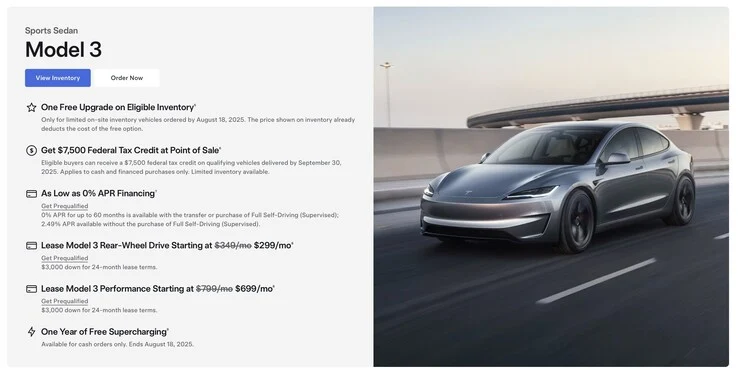
    In terms of the Model 3, Tesla is providing zero APR financing if you purchase FSD, the same free option upgrade for available inventory, and Supercharging free for a year.

    Gradual Changes in Financing Rates

    Tesla noted that the promotional APR financing for the Model Y, set at 3.49%, will be phased out gradually following the US government’s announcement about the end of the federal tax credit. The appealing lease payment promotion will also decrease in the coming weeks.

    The same applies to the Model 3’s zero APR financing, and how quickly this happens will rely on how many orders Tesla gets in the following weeks.

    Upcoming Changes to Promotions

    However, one of the Model 3 promotions is ending sooner than others. Tesla indicated that free Supercharging for a year will cease after Monday, August 18. In contrast, in Canada, Tesla has extended the Model 3’s 18-month charging deal to include a free lifetime Supercharging offer.

    In summary, Tesla may need to devise new strategies to counterbalance the loss of the $7,500 tax credit for the Model 3 and Model Y after September 30. Given the current strong demand, they might start to eliminate APR financing options and other perks, even for customers who finalize their purchases by that date.

    Source:
    Link