Category: EV vehicles

  • Cybercab Redesign Reveals Cybertruck Monowiper Engineering Flaw

    Cybercab Redesign Reveals Cybertruck Monowiper Engineering Flaw

    Key Takeaways

    1. Tesla’s Cybertruck single wiper struggles to clear heavy rain, slush, and mud, leading to owner dissatisfaction.
    2. Despite a formal recall, many Cybertruck owners report that their wiper issues remain unresolved.
    3. Tesla’s team has stated that the Cybertruck wiper is under “active Engineering investigation.”
    4. There are indications that Tesla may redesign the wiper assembly for the Cybertruck or abandon the Gigawiper idea.
    5. The new Cybercab robotaxi features a dual wiper system, suggesting a potential shift away from the monowiper design used in the Cybertruck.


    Tesla seems to be having a tough time with the windshield wipers on its electric cars. After the chaotic behavior of its dual wipers that often get confused by splashing bugs or need constant cleaning during long summer journeys on Autopilot, now the single, massive Cybertruck Gigawiper is under “engineering investigation.”

    Issues with the Cybertruck Wiper

    The Cybertruck’s single wiper has struggled to effectively clear heavy rain, slush, or mud since it was launched, regardless of any tweaks made. Although there has been one formal recall regarding this issue, many owners continue to voice their dissatisfaction, claiming the recall did not fix their problems.

    One recent complaint shared with Tesla’s support highlights that “the wiper blade is not clearing the windshield beyond a half radius from the root,” even after the service center replaced the motor and adjusted the wiper’s parking position. Tesla’s response to this situation was quite revealing, as their team mentioned that the performance of the Cybertruck’s single wiper is currently “under active Engineering investigation.”

    Possible Redesign on the Horizon

    This situation suggests that Tesla might be looking to completely rework the wiper assembly for the Cybertruck or abandon the Gigawiper idea entirely. A recent sighting of the revamped Cybercab robotaxi, which is a two-seater, supports this theory. The production-ready version of this autonomous vehicle now features a standard dual wiper system with two arms and blades, moving away from the monowiper design inspired by the Cybertruck’s windshield wiping system.

    The fact that Tesla has opted for a dual wiper system for the Cybercab while placing the Gigawiper under engineering investigation might indicate a major recall for the Cybertruck. They could potentially upgrade the original electric pickup to include two wiper blades, similar to the rest of their vehicle lineup, or they could introduce a completely new concept for the monowiper design.


    Source:
    Link


  • First Look: Tesla’s New Driverless Cybercab Images Leaked

    First Look: Tesla’s New Driverless Cybercab Images Leaked

    Key Takeaways

    1. Tesla is launching a new, efficient Cybercab for city driving next year as part of its Robotaxi fleet.
    2. The Cybercab features a redesigned interior focused on passenger comfort and lacks a steering wheel.
    3. Testing of the Cybercab has been conducted in Austin, where the Robotaxi initiative began, with public road sightings reported.
    4. The pricing for rides in the Cybercab is still uncertain, but Elon Musk suggests it could be as low as $0.30 per mile.
    5. Current Robotaxi ride prices range from $1.25 to $2 per mile, with potential for future adjustments as the Cybercab fleet expands.


    Tesla is set to introduce a more efficient Cybercab for city driving next year, as part of its Robotaxi fleet.

    New Design for Comfort

    The upcoming Cybercab, which will enter mass production, features numerous design updates, particularly in its interior, aimed at enhancing passenger comfort.

    Since its announcement in October 2024, Tesla has been testing the pedal-free Cybercab, which lacks a steering wheel, within factory premises. Recently, the production-ready model has also been seen on public roads.

    Testing in Austin

    The Cybercab has been observed in downtown Austin, the birthplace of Tesla’s Robotaxi ride-share initiative. The paid service is expected to be available to both owner vehicles and the Cybercab by 2026. This is anticipated to coincide with Tesla’s integration of the FSD 14 (Unsupervised) branch and the retail FSD version expected to be released to the public in Q2.

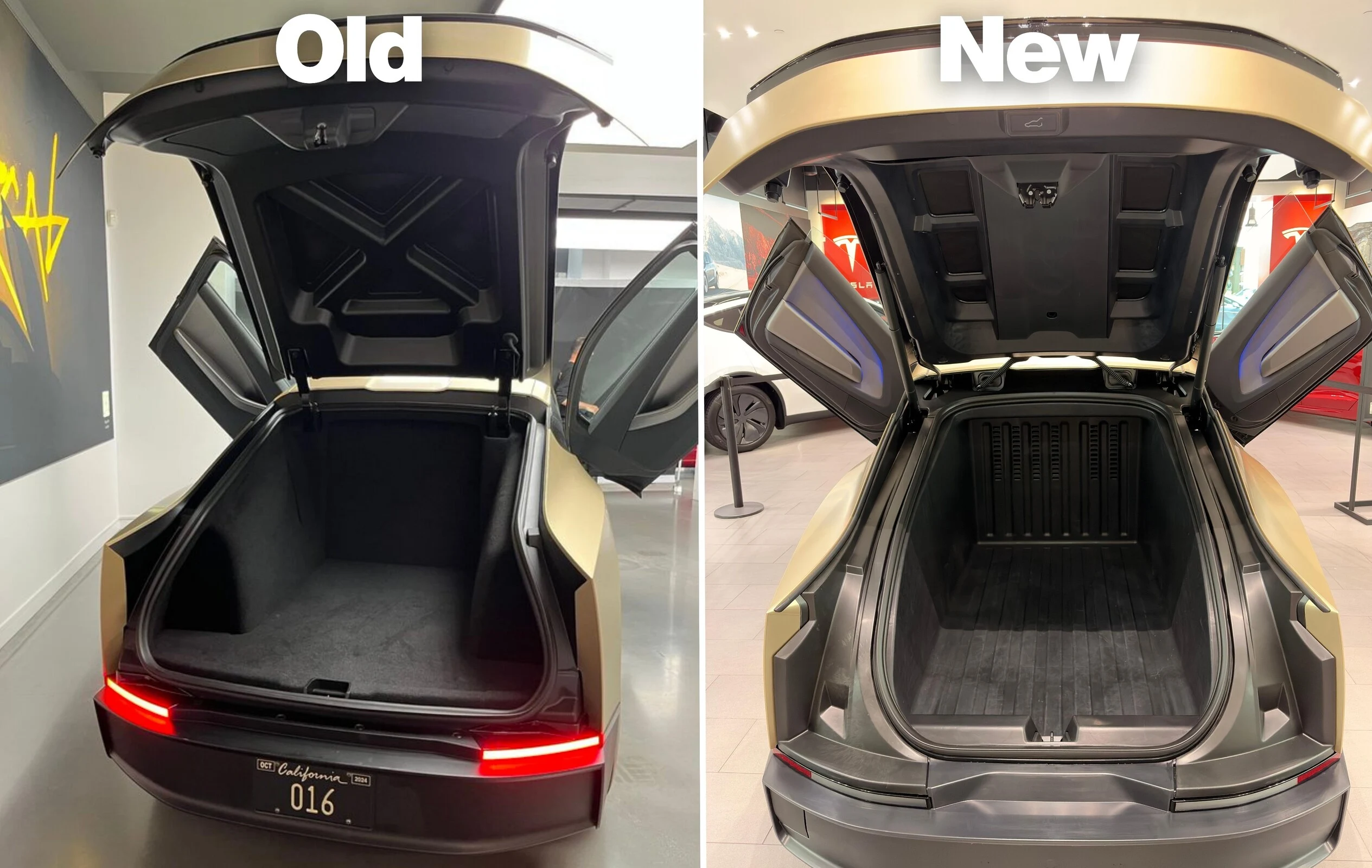
    There are multiple subtle modifications on the exterior too, like updated bumpers, hatch, humps, and roof. Tesla is utilizing the insights gained from its testing on factory grounds as well as on city streets.

    Pricing and Future Prospects

    It is still unclear what the cost per mile will be for a ride in a Cybercab compared to owner vehicles or Tesla’s existing Model Y units. Elon Musk has mentioned it might be as low as $0.30, but this is contingent on the Cybercab being produced at a large scale and having all the wireless charging and self-cleaning systems fully functional.

    Currently, Robotaxi rides vary from $1.25 to around $2 per mile, depending on location and distance. However, Tesla is likely to experiment with pricing as the fleet grows with more affordable vehicles like the Cybercab.

    Source:
    Link


  • Tesla Launches Steering-Free Cybercab for City Streets

    Tesla Launches Steering-Free Cybercab for City Streets

    Key Takeaways

    1. Tesla is testing its driverless Cybercab, which has no pedals or steering wheel, on public roads in Austin.
    2. The Robotaxi ride-share service began with the Model Y using a specialized FSD 14 (Unsupervised) software version.
    3. Tesla plans to include owner vehicles in its Robotaxi platform by 2026, but older HW3 vehicles will not qualify.
    4. The Cybercab has been evaluated at Tesla’s factory and is now deemed ready for public road testing.
    5. The Cybercab operates autonomously and lacks human intervention options, raising questions about its performance in busy traffic.


    Tesla is testing its driverless Cybercab, which lacks pedals and a steering wheel, on public roads for the very first time.

    The two-seater has been seen cruising in downtown Austin, where Tesla first initiated its Robotaxi ride-share service focused on driverless cars. The service started with the new Model Y, utilizing a specialized FSD 14 (Unsupervised) software version, as this was the first permit Tesla could obtain. The aim was to map out the area and try out the ride-share payment application using a vehicle that drivers were already familiar with.

    Plans for Expansion

    Elon Musk mentioned that Tesla intends to incorporate owner vehicles into its Robotaxi platform in 2026, likely including the new 2026 Model Y models as well as the Cybercab. Unfortunately, owners of older HW3 vehicles won’t be able to include their cars in the fleet due to limitations of their FSD computer and camera equipment, which cannot support unsupervised FSD. Their best bet is a restricted version of FSD 14 Lite, but the Cybercab won’t face this issue since it operates on Tesla’s advanced AI4 hardware.

    Testing and Confidence

    Tesla has been evaluating the self-driving Cybercab at its factory for some time now, even equipping standard Model 3 cars with a special Cybercab FSD kit to assess how it performs outside of factory limits.

    Now, Tesla feels secure enough in the Cybercab’s ability to navigate autonomously to take it onto public roads for the first time. It’s unclear whether the self-driving, self-cleaning, and self-charging Cybercab had someone observing it from inside, but since this was its initial public appearance, it’s likely that a Tesla engineer was present in the driver’s seat.

    Unique Driving Experience

    “Driver” isn’t quite the right term, as the Cybercab doesn’t have pedals or a steering wheel. It will be intriguing to see how the Cybercab manages in busy traffic without the ability for human intervention in emergencies. While it has been seen operated manually with a gaming controller, that was solely for moving it within expo centers, and such actions won’t be feasible during rides for the Robotaxi service.

    Source:
    Link


  • Solid-State Battery Breaks Energy Density Record, Doubles Limit

    Solid-State Battery Breaks Energy Density Record, Doubles Limit

    Key Takeaways

    1. A new record for solid-state battery energy density has been set at 824 Wh/kg, surpassing the previous theoretical limit by 20%.
    2. WeLion claims to have achieved 1,000 Wh/kg energy density, which is double the current standards, but this technology is not yet viable for large EV production.
    3. Major companies like Samsung, CATL, and Toyota aim to launch solid-state batteries with 500 Wh/kg energy density by 2027, enabling electric vehicles to potentially travel 750 miles on a single charge.
    4. WeLion’s existing 150 kWh packs are used in NIO vehicles, allowing ranges over 600 miles, but new advancements may exceed 1,000 miles once production is viable.
    5. High energy density solid-state batteries may be more suitable for drones and robots due to their elevated costs, rather than for mainstream electric vehicles.


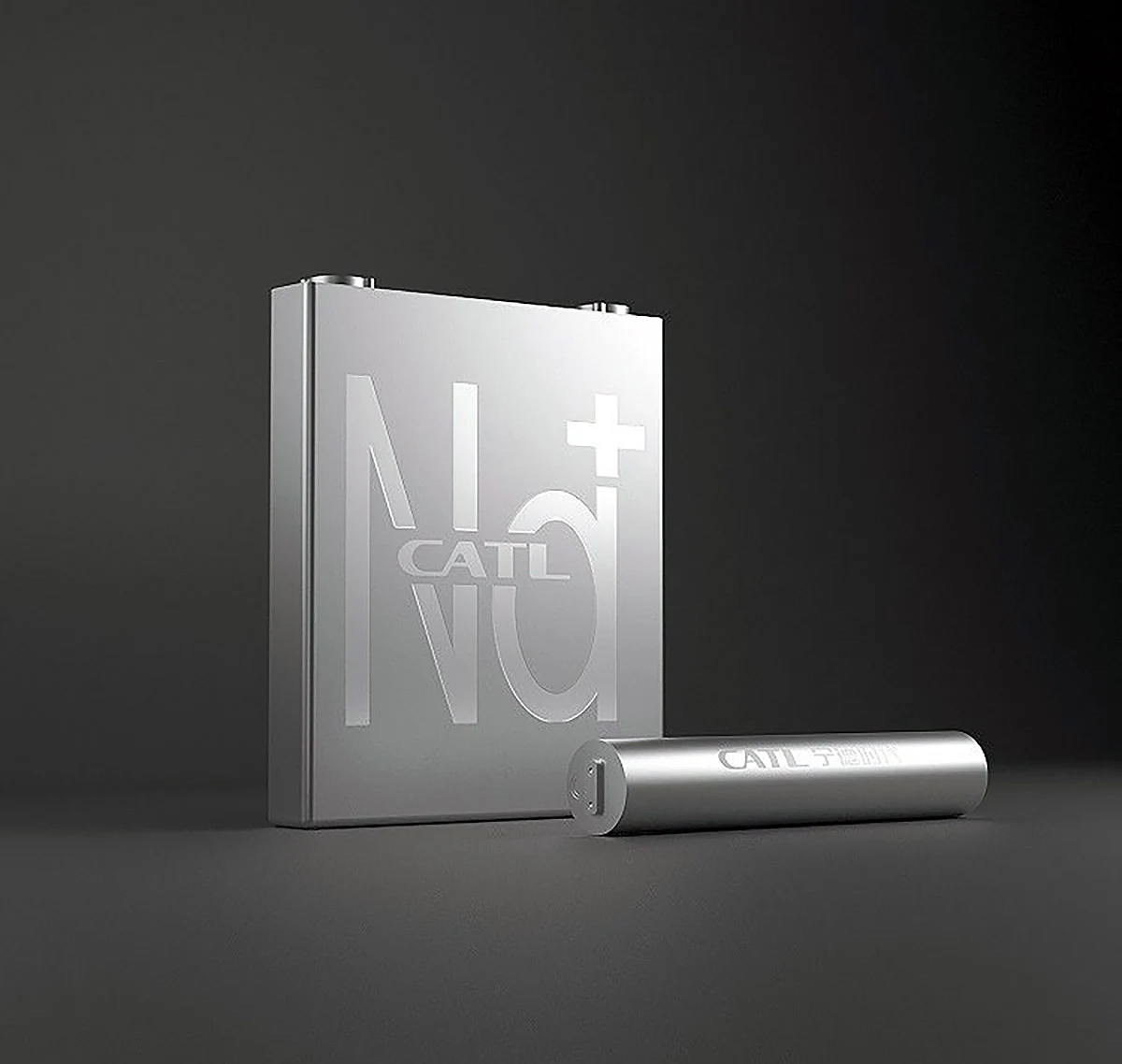
    One of the leaders in solid-state battery technology has declared a new record for energy density at 824 Wh/kg. The earlier record holder, Cherry, recently revealed that it has developed a 600 Wh/kg solid-state battery that is set to go into mass production by 2027.

    New Heights in Energy Density

    This new achievement surpasses the previous theoretical limit by 20% due to innovative polymer electrolyte tech. However, it is still significantly less than WeLion’s claim of achieving 1,000 Wh/kg energy density, which is double the current ratings for solid-state battery technologies.

    Big names like Samsung, CATL, and Toyota have expressed excitement about launching solid-state batteries that meet the previously theoretical maximum of 500 Wh/kg by 2027. These advancements could allow electric vehicles to travel 750 miles on a single charge while maintaining the same size as today’s batteries, like those in the Tesla Model Y, which currently offer a 300-mile range.

    Real-World Applications

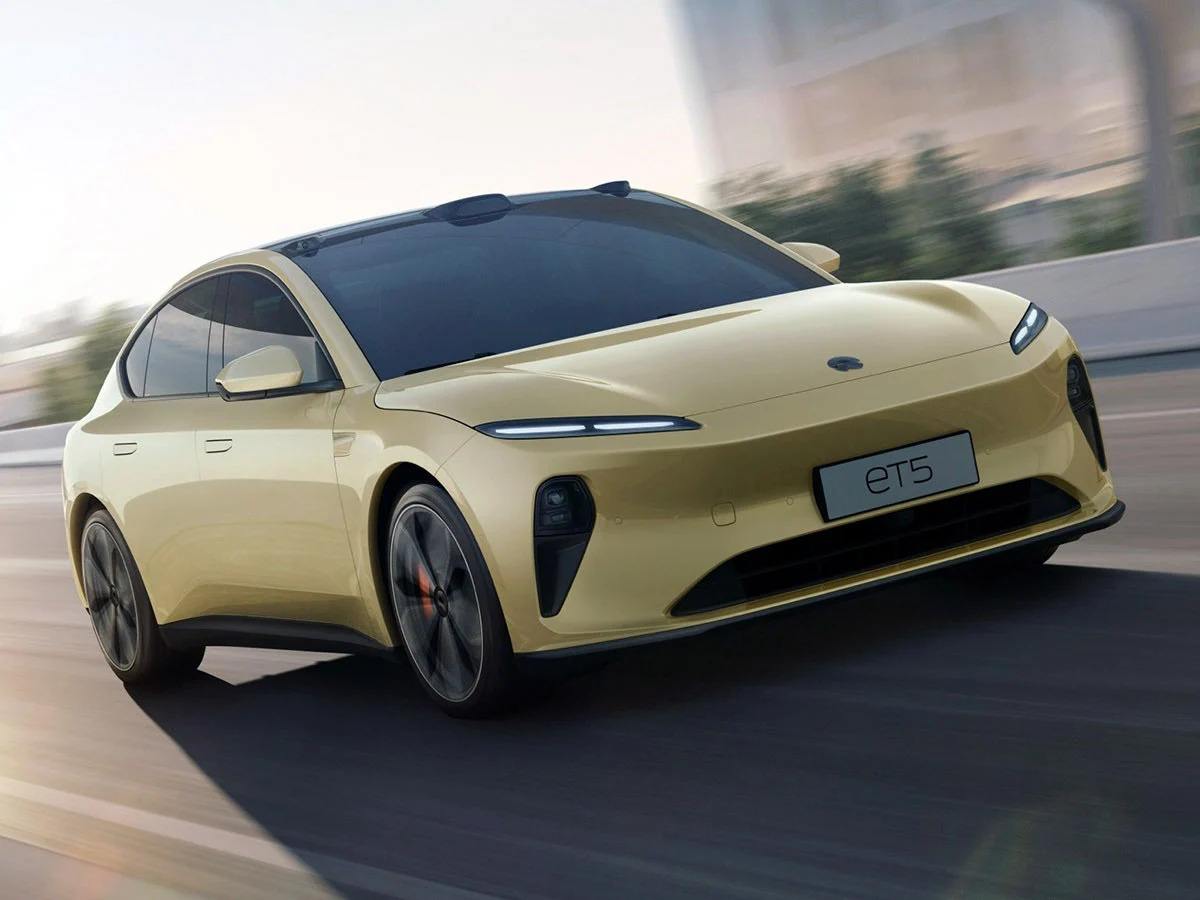
    WeLion has already developed 150 kWh packs featuring 95% solid electrolyte that are currently being used in NIO vehicles such as the ET7 sedan, allowing them to achieve ranges exceeding 600 miles on one charge. Once WeLion’s new energy density breakthrough is ready for production, the same vehicle could potentially exceed 1,000 miles of range. Nevertheless, WeLion’s chairman warns that such battery packs will be very costly.

    For example, the semi-solid electrolyte battery used in the NIO ET7 is priced comparably to an entire electric vehicle, which is why NIO only offers it for rental on longer summer trips at their battery swap stations. WeLion acknowledges that the 1,000 Wh/kg solid-state electrolyte technology it created in collaboration with BASF is not yet viable for large EV batteries, at least until it can be manufactured on a larger scale. However, applications like Tesla’s Optimus, where energy density and battery safety are crucial, could benefit greatly from this new technology.

    Market Trends and Future Outlook

    This aligns with insights from CATL, the world’s largest battery market player, and Panasonic, a key supplier for Tesla. Both companies share the perspective that solid-state batteries characterized by high energy density and elevated costs might be more appropriate for use in drones and robots, rather than electric vehicles, unless they target the luxury market.

    Source:
    Link


  • Ford Halts F-150 Lightning Production Due to Low EV Demand

    Ford Halts F-150 Lightning Production Due to Low EV Demand

    Key Takeaways

    1. Ford has halted production of the electric F-150 Lightning due to ongoing losses and limited demand for electric trucks in the U.S.

    2. Initial excitement for the F-150 Lightning has waned, with decreasing sales attributed to higher costs and challenges like charging infrastructure.

    3. The electric vehicle division has faced billions in losses, prompting Ford to cut expenses, lower production targets, and delay upcoming projects.

    4. Ford is shifting focus to hybrid vehicles, which are experiencing steady demand and more predictable profits compared to fully electric models.

    5. Changes in federal incentives and policy uncertainty have complicated the electric vehicle market, affecting planning and pricing for automakers.


    Ford has stopped making its electric F-150 Lightning pickup truck due to ongoing losses in its electric vehicle unit and the limited demand for electric trucks in the U.S.

    Initial Interest and Current Slowdown

    The F-150 Lightning was launched as the electric version of Ford’s top-selling pickup truck. While there was significant excitement initially, sales have decreased since then. Electric pickups typically cost more than their gasoline counterparts and encounter numerous challenges, such as charging infrastructure and driving range. These factors can be problematic for customers who rely on trucks for towing or traveling long distances.

    Financial Struggles and Strategic Shifts

    Ford’s electric vehicle division has faced billions in losses over the past year. In response, the company has been cutting expenses, lowering production targets, and postponing some upcoming electric vehicle projects. Executives at Ford have acknowledged that the uptake of EVs is happening slower than anticipated. As part of a new approach, Ford is placing greater emphasis on hybrid vehicles, which are seeing consistent demand. This trend suggests that profits are more predictable in the short run compared to fully electric models.

    Impact of Policy Changes

    Additionally, changes in policy have influenced the electric vehicle market. The decrease in federal incentives for electric vehicles during President Donald Trump’s administration has diminished consumer incentives that previously helped balance out higher buying costs. Automakers have indicated that uncertainty regarding long-term policy support has made planning and pricing more challenging.

    Even with the halt in production, Ford emphasizes that it is not leaving the electric vehicle sector altogether. The company will continue to develop future electric vehicle platforms while evaluating production numbers and timing for launches.

    Source:
    Link


  • Tesla Launches 10-Year Model Y Battery Warranty with $500 Deductible

    Tesla Launches 10-Year Model Y Battery Warranty with $500 Deductible

    Key Takeaways

    1. Tesla is now offering a paid option for a longer warranty on high-voltage batteries and drive units for Model 3 and Model Y, extending coverage by two years for $2,000 (CA$2,800).

    2. The standard warranty for Tesla’s high-voltage battery is 8 years with a 70% capacity retention, while competitors like Hyundai-Kia provide a 10-year warranty at no extra charge.

    3. The extended warranty must be paid upfront and is not available on a subscription basis, differing from earlier reports.

    4. The Extended Service Agreement (ESA) for out-of-warranty battery replacements is transferable to new owners, potentially increasing resale value.

    5. Tesla’s new warranty options respond to pressure from competitors offering longer warranties, as the market trends towards 15-year warranties with higher capacity retention.


    After expanding its coverage on other pricey parts, Tesla is now offering a longer warranty option for high-voltage batteries and drive units in both the US and Canada.

    Though it’s not the anticipated 12-year battery warranty for the Model Y, this new choice does provide owners a bit more comfort regarding the costly battery replacements once the warranty period ends.

    Competition in the Market

    Tesla’s primary competitors in the electric vehicle market within the US and Canada are the Hyundai-Kia group, which provides a 10-year battery warranty. This is especially notable given that their EVs utilize modern 800V powertrains that enable faster charging.

    As is typical for Tesla, they’ve managed to create a longer battery warranty for both the Model 3 and Model Y as a paid option, unlike Hyundai and Kia, who offer theirs at no extra charge.

    Warranty Details

    At present, Tesla provides an 8-year warranty for the high-voltage battery and drive unit, ensuring a 70% retention of capacity during that time.

    For those interested in adding two more years of warranty coverage for their Model Y or Model 3, they can pay $2,000 (CA$2,800) for the opportunity, but there’s also a $500 deductible if a battery replacement is needed during the additional 24 months.

    Subscription Misunderstandings

    Earlier reports hinted that Tesla would roll out an extended warranty for the high-voltage battery on a subscription basis, starting at $100 per month. However, the reality is that Tesla requires payment upfront, regardless of when the battery fails—whether it happens early in the coverage or later, or even if it doesn’t fail at all.

    The extended battery warranty for the Model 3 and Model Y will only appear for the vehicle owner in the app before their original factory warranty expires. Luckily, what Tesla refers to as the Extended Service Agreement (ESA) for out-of-warranty battery replacements after the initial eight years is transferable to new owners as well.

    Impact on the Used Market

    This setup means that a Model Y can be sold in its seventh year of ownership while still having three additional years left on the battery warranty, which could enhance the used EV market. Tesla might be feeling pressure from longer battery warranties offered by competitors in both the US and China, where there’s a movement towards a standardized 15-year EV battery warranty with an 85% capacity retention.

    Modern EV battery technologies are capable of supporting these longer warranties as the norm. However, Tesla has calculated that it can charge as much as $2,500 for a replacement or repair at cost. In many situations, Tesla will simply keep the one-time ESA payment since they are well aware that the Model 3 or Model Y battery packs typically last longer than their standard 8-year warranty.

    Source:
    Link


  • Tesla Launches Paid Robotaxi for HW4 Model Y Owners

    Tesla Launches Paid Robotaxi for HW4 Model Y Owners

    Key Takeaways

    1. Tesla has launched its Robotaxi service in Austin using Model Y cars that can now drive themselves without any human inside.
    2. The vehicles operate on a unique “unsupervised” version of Full Self-Driving (FSD) software, which differs from the standard FSD available to regular users.
    3. Previously, safety operators were required in the vehicles, but they have now been removed for public road testing.
    4. Tesla plans to merge the unsupervised FSD branch with the public version, allowing private Model Y owners to access this feature through an OTA update.
    5. Tesla owners will be able to add their Model Y to the Robotaxi fleet to earn income when not in use, with a 20% fee for the management of the ride-share service.


    The Model Y cars that Tesla began using for its Robotaxi service have now gained sentience and are driving by themselves without any person inside.

    New Developments in Robotaxi Pilot

    Tesla kicked off its Robotaxi ride-share program in Austin utilizing owned Model Y units that operate on a unique FSD 14 branch labeled “unsupervised.” Initially, a safety operator was always present in the vehicle, either sitting in the passenger seat in Texas or in the driver’s seat without using the controls in California due to local laws.

    Now, Tesla has eliminated the safety monitor from the cars, and Model Y robotaxi vehicles have been spotted performing test drives on public roads in Austin with no one onboard, fully executing unsupervised FSD.

    Unique Features of Tesla’s FSD

    From the beginning, Tesla has clarified that the vehicles in its Robotaxi ride-share initiative function on a special FSD branch that differs from the standard version available to regular Model Y owners.

    Until recently, Tesla had only conducted truly unsupervised Model Y FSD test drives within its manufacturing facilities, allowing newly built cars to navigate from the assembly line to the delivery area. They also performed a self-delivery test, where a recently purchased Model Y reached its new owner autonomously.

    Future of Unsupervised FSD

    However, the company now feels it has gathered enough data from the Robotaxi pilot to safely test unsupervised FSD on crowded public roads with no one inside the vehicle.

    In addition, the unsupervised FSD branch is expected to merge with the version accessible to the public soon. Tesla suggested that this feature will be available to privately owned vehicles through an OTA update, which will come “first slowly, and then all at once,” indicating a promising future for the Robotaxi service. For owners of AI4/HW4 vehicles, that is. Those with older HW3 Model Ys might only receive FSD 14 Lite, which could have fewer capabilities than needed for unsupervised FSD.

    Tesla owners will eventually have the opportunity to add their Model Y to the Robotaxi fleet and start earning when they aren’t using their cars, with a 20% fee for managing the Tesla ride-share app and payment system. Elon Musk previously mentioned that the rollout of unsupervised FSD for Tesla owners is expected in 2026, coinciding with the introduction of Cybercab two-seaters as part of the Robotaxi fleet.

    Source:
    Link


  • Tesla Cuts Model 3 and Model Y Lease Prices by Up to 67% for 2026

    Tesla Cuts Model 3 and Model Y Lease Prices by Up to 67% for 2026

    Key Takeaways

    1. Tesla is facing declines in Q4 shipment figures across multiple markets, including the U.S., due to the end of the federal EV tax credit.
    2. To boost sales, Tesla is offering zero percent APR financing on the Model Y and Model 3, along with discounts and complimentary upgrades.
    3. Tesla is urging customers to buy quickly by warning of a significant increase in lease payments for the Model 3 and Model Y.
    4. New lease prices will take effect after December 26, leading to higher costs for customers starting in 2026.
    5. The increase in lease payments will require a $3,000 down payment, affecting affordability for many customers.


    Tesla is making every effort to boost its Q4 shipment figures, which have seen declines not just in countries like China and Europe, but also in the United States. This drop comes after the Trump administration ended the federal EV tax credit earlier than expected at the close of September.

    Attractive Financing Offers

    To combat the downturn, Tesla has rolled out a stunning promotional offer of zero percent APR financing for the Model Y and Model 3. In addition, they are providing discounts on inventory and complimentary upgrade options. The company has also adjusted lease pricing, making significant reductions at the start of the quarter, aware that many individual customers and businesses prefer leasing their vehicles.

    Urging Customers to Act Fast

    Following the introduction of the 0% APR financing, Tesla is now using a strategy to motivate buyers by warning that lease payments for the Model 3 and Model Y will rise dramatically—by as much as 67%. Here’s a detailed overview of the upcoming changes to Tesla’s lease prices:

    The increase in lease payments will be particularly tough due to a required down payment of $3,000, whereas most trims currently allow for a lower monthly cost without any down payment upfront.

    Coming Changes to Lease Prices

    The new lease prices for the Tesla Model 3 and Model Y will take effect after December 26 and will apply to deliveries made after December 31. This means that Tesla will kick off the first quarter of 2026 facing a significant increase in lease payments for its best-selling vehicle, the Model Y.

    Source:
    Link


  • Nissan Sets Fuel Efficiency Record with N6 Hybrid, Teases $4K FSD

    Nissan Sets Fuel Efficiency Record with N6 Hybrid, Teases $4K FSD

    Key Takeaways

    1. Nissan has launched the N6 hybrid sedan, achieving global fuel efficiency standards in collaboration with Dongfeng.
    2. The N6 features an impressive Mach 1.5T gasoline engine with over 48% thermal efficiency, making it highly fuel-efficient.
    3. The N6 recorded an average fuel consumption of 2.9 liters per 100 km during a 14,000 km journey, verified by Guinness World Records.
    4. Electric Range Extended Vehicles (EREVs) are gaining popularity in China, blending electric driving with gasoline engines for longer trips.
    5. Nissan plans to integrate Wayve’s self-driving technology into its ProPilot system by 2027, aiming to offer a competitive alternative to Tesla’s Full Self-Driving at a lower cost.


    Nissan has made a name for itself in the electric vehicle (EV) world, especially with the launch of the Leaf. The company has now surpassed the global fuel efficiency standard with its new N6 hybrid sedan, which was developed in cooperation with Dongfeng.

    Impressive Engine Efficiency

    This Dongfeng has recently revealed the world’s most fuel-efficient Mach 1.5T gasoline engine for hybrids, achieving a thermal efficiency of more than 48%.

    Nissan’s N6 plug-in hybrid marks its debut in the local market and is constructed on the Tianyan Architecture, which is a joint project of the Dongfeng Nissan Passenger Vehicle Company (DFN). This architecture is designed specifically for “new energy vehicles,” which includes EVs and plug-in hybrids.

    Outstanding Fuel Economy

    During a remarkable journey of 14,000 km (or 8,750 miles), the Nissan N6 managed to use only 2.9 liters per 100 km, equating to about 81 miles per gallon. Even though the trip faced varying terrains and weather conditions, the average fuel consumption was verified by the Guinness Book of World Records.

    The car’s impressive efficiency is due to a hybrid powertrain that combines one of the most effective gasoline engines globally with a 21 kWh LFP battery capable of quick 20-minute recharges. This combination allowed the Nissan N6 to be the first hybrid in its premium sedan segment to achieve less than 2 liters per 100 km in charge-sustaining mode. Nissan claims that the annual running costs for this vehicle are just $280.

    The Rise of EREVs

    In China, EREVs (electric vehicles with extended range) have gained significant popularity as they blend the benefits of electric-only driving with a gasoline engine for long-distance travel. Even Xiaomi, which started its journey in the electric vehicle market only two years ago and has already turned a profit, has made moves toward hybrid EREV technology by filing for fuel indicator gauges.

    Nissan is also an early backer of the self-driving startup Wayve, alongside Nvidia, which recently invested $500 million into Wayve, impressed by its vision-only technology that reportedly rivals Tesla’s Full Self-Driving (FSD).

    Future Developments

    Nvidia’s Jensen Huang remarked that Wayve could become “the next trillion-dollar company,” and that Nissan plans to integrate Wayve’s technology into its ProPilot self-driving option, expected to be available in 2027. Nissan has stated that it will offer this Tesla FSD rival at a significantly lower price of $4,000.

    Meanwhile, Rivian has introduced a subscription service for its Autonomy+ self-driving feature at $50 per month, aiming for Level 4 autonomy similar to Tesla’s unsupervised FSD. This system will feature a custom AI chip and 11 cameras, set to debut in the R2 in 2026.

    Though Tesla and Waymo currently lead in self-driving technology and its commercialization, competition is intensifying. If this rivalry leads to reduced FSD costs and increased adoption of driver-assist features, it could make our roads much safer.

    Source:
    Link


  • Rivian Unveils Autonomy+: Affordable Tesla FSD Rival with AI Chip

    Rivian Unveils Autonomy+: Affordable Tesla FSD Rival with AI Chip

    Key Takeaways

    1. Rivian has launched Autonomy+, a self-driving feature priced at $2,500 or $50 per month, to compete with Tesla’s FSD.
    2. The self-driving hardware includes Rivian’s custom RAP1 chips, 11 cameras, several radars, and a LiDAR system, designed for vision-only autonomous driving.
    3. The RivLink interface allows for easy upgrades by adding extra RAP1 chips as software improves, while the new software utilizes advanced data processing techniques.
    4. The Autonomy+ subscription will be rolled out soon, with features like Universal Hands-Free driving for the second-generation R1 fleet and future R2 models.
    5. Compared to Tesla’s $8,000 FSD, Rivian’s Autonomy+ offers fewer capabilities initially, with plans to enhance features towards achieving L4 autonomy.


    Rivian has introduced its own solution to compete with Tesla’s FSD feature, named Autonomy+, which costs $2,500 or can be subscribed to for $50 a month.

    Advanced Hardware Components

    This new self-driving hardware kit relies on Rivian’s custom RAP1 (Rivian Autonomy Processor) chips, manufactured using TSMC’s 5nm technology. It also comes equipped with 11 cameras, several radars, and a LiDAR system.

    The RAP1 AI chip is designed specifically for vision-only autonomous driving and supports the development of Rivian’s next-generation Autonomy Compute Module 3 (ACM3) computer. Notably, it delivers 1600 sparse INT8 TOPS, enabling the processing of 5 billion pixels per second.

    Upgradeable Technology

    Additionally, Rivian has created a RivLink interface, which allows for the integration of extra RAP1 chips, facilitating easier upgrades when software advancements surpass hardware capabilities. The new Rivian Autonomy Platform software operates through an end-to-end data loop utilizing a Large Driving Model, which focuses on autonomous driving via Group-Relative Policy Optimization, effectively extracting advanced driving strategies from extensive datasets.

    The self-driving kit, centered around the specialized RAP1 AI chip, is set to debut on the R2 model in 2026. However, Rivian will roll out the Autonomy+ subscription model in the upcoming quarter, with plans to continuously add features as they become ready. For example, it will enhance the second-generation R1 fleet with Universal Hands-Free assisted driving, available for longer durations across more than 3.5 million road miles in the United States and Canada.

    Comparison with Tesla

    At this price point, the Autonomy+ feature will offer fewer capabilities compared to Tesla’s $8,000 FSD, at least until the ACM3 self-driving computer becomes a standard feature. The Universal Hands-Free option, for example, requires “clearly painted lines” for functionality outside of highways. Rivian has committed to “consistently enhancing the autonomy capabilities” of its second-gen R1 and future R2 vehicles, aiming for L4 autonomy, akin to Tesla’s unsupervised FSD, which is foundational for its Robotaxi platform.

    Source:
    Link