Tag: Cybertruck

  • Tesla Cybertruck Wade Mode test after sinking; vehicle recovered from lake

    Tesla Cybertruck Wade Mode test after sinking; vehicle recovered from lake

    Key Takeaway

    – Wade Mode allowed the Cybertruck to traverse shallow water, but the vehicle reportedly exceeded its stated 32-inch wading depth, leading to water ingress and immobilization.
    – The incident resulted in a recovered vehicle, arrests for the driver on park/water-safety violations, and no injuries to passengers.
    – Public reaction is mixed, with skepticism about Wade Mode’s real-world practicality and view of the feature as largely marketing.


    Elon Musk’s Cybertruck makes headlines again with an unusual test in Texas

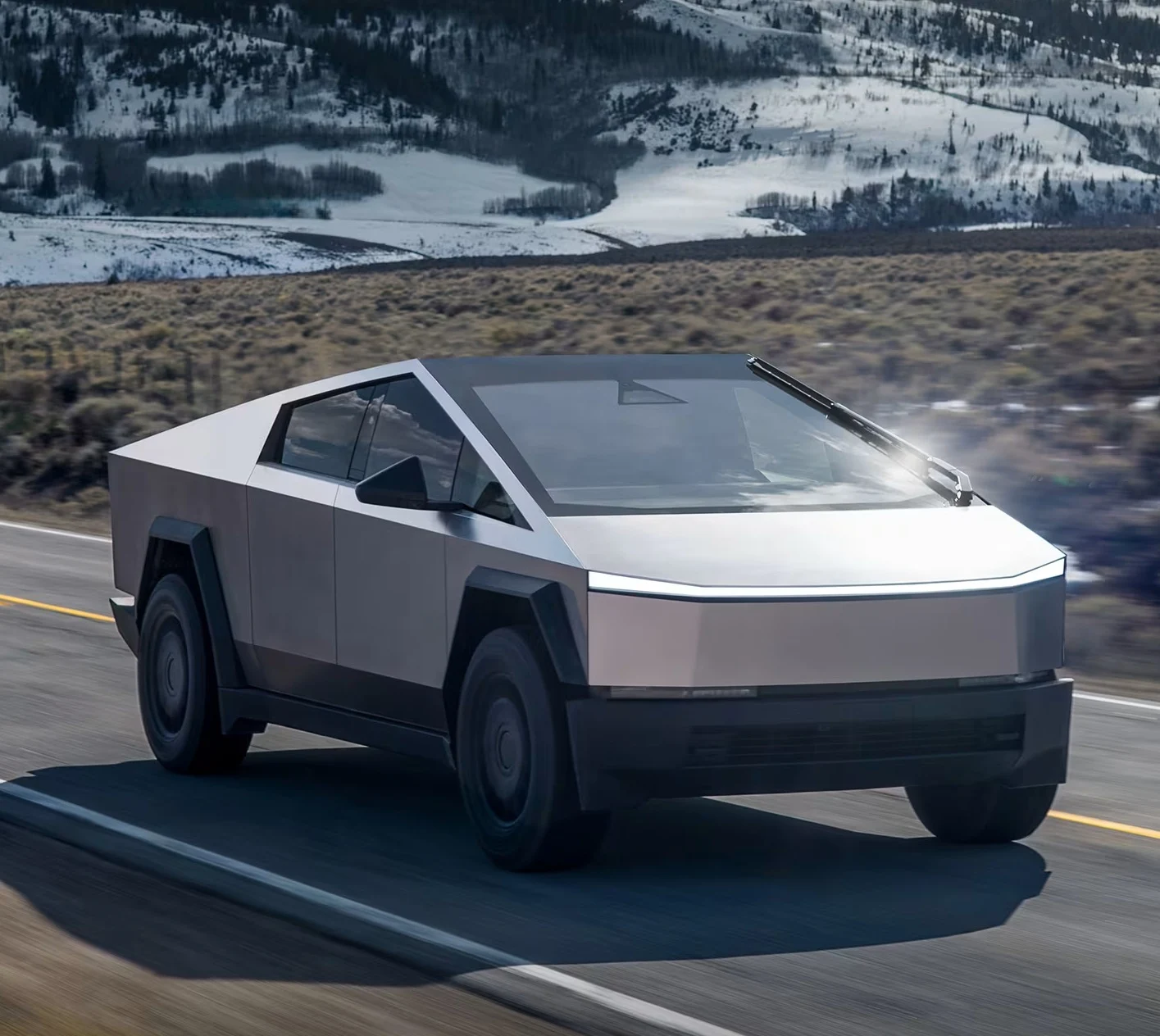
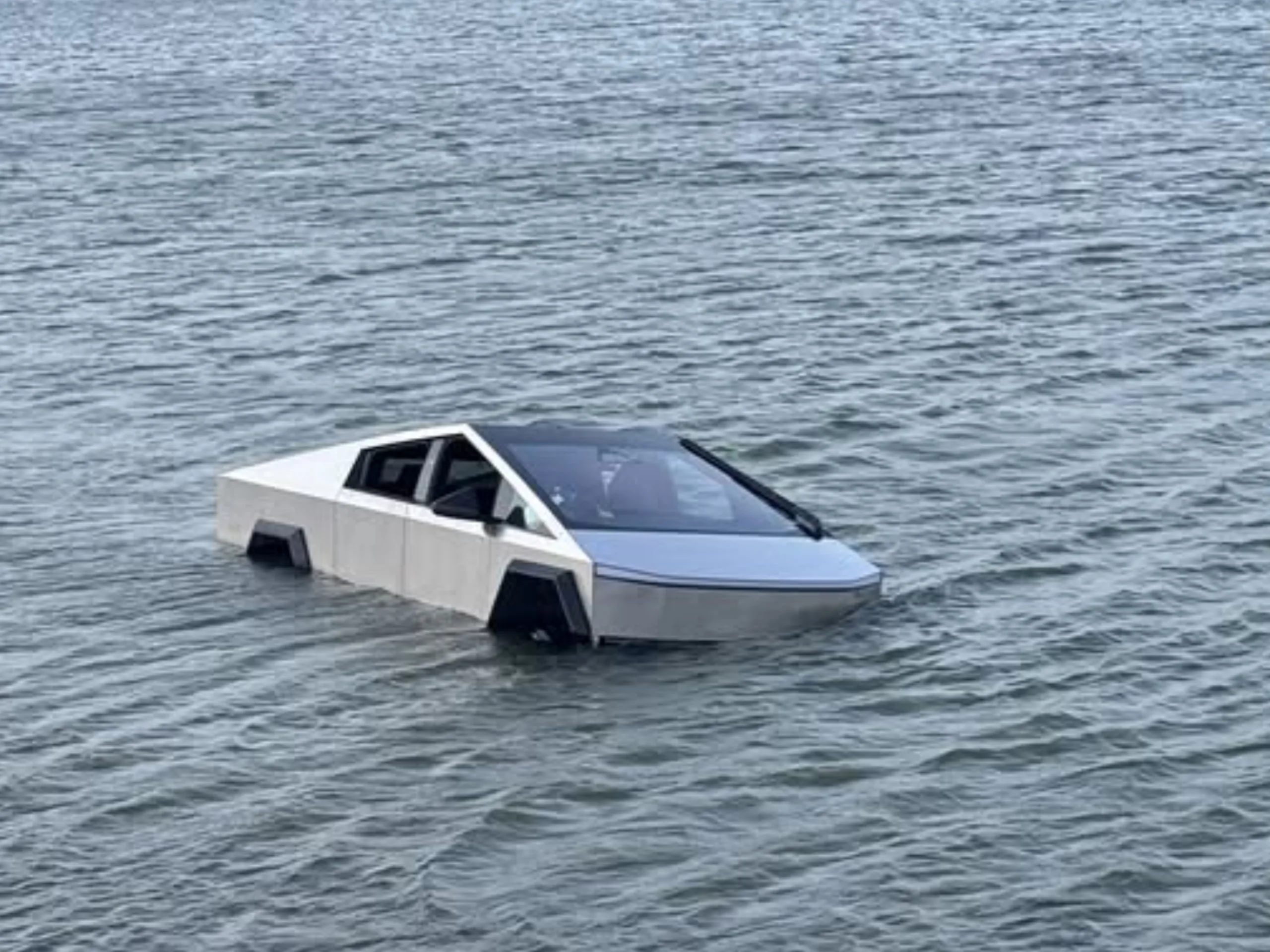
    Elon Musk’s Cybertruck continues to grab attention, this time not for sales numbers but for an odd incident in Texas. A man drove a Cybertruck into Grapevine Lake to test its “Wade Mode,” yet apparently misjudged how deep the water really was. The electric pickup filled with water, became immobile, and had to be retrieved by emergency responders, according to a recent Facebook post from the Grapevine Police Department. There were other people in the vehicle, but everyone involved reportedly escaped unharmed.

    What Wade Mode is supposed to do and what happened

    The so-called “Wade Mode” is a specialized Cybertruck function that Tesla says allows the vehicle to travel slowly through shallow water with the suspension raised. The maximum wading depth is listed as around 32 inches. From the available photos, it seems the driver did not venture far into the lake, but tried to move along the shoreline. Nevertheless, the Cybertruck’s maximum wading depth seems to have been exceeded on one side. The driver believes water entered the charging port and caused steering failure, though official technical details have not been confirmed yet.

    Public reaction and aftermath

    On social media, many people are shaking their heads at the driver’s decision. After the vehicle was recovered, police reportedly arrested the driver, who now faces charges for operating a vehicle in a restricted park or lake area, in addition to several water safety equipment violations. Simultaneously, numerous commenters on Facebook and Reddit criticize the Cybertruck itself, arguing that Wade Mode is more of a marketing gimmick with limited practical use in the real world.
    Sources
  • Cybertruck Under $60K Valid Until March; June Release Date Set

    Cybertruck Under $60K Valid Until March; June Release Date Set

    Key Takeaways

    1. The 2026 Cybertruck AWD is priced at $59,990 for the first 10 days after its reveal, ending on March 2.
    2. This price is significantly lower than the Premium AWD trim, offering similar features and range.
    3. The future price may increase based on order volume after the introductory period, potentially reaching up to $70,000.
    4. The base AWD version provides good value by sacrificing only a few features for a lower price.
    5. Buyers can secure the introductory price with a $250 deposit.


    The most affordable Cybertruck ever announced by Tesla is set to launch in June, but the price under $60,000 might not be available right away.

    Price Details and Timeline

    Elon Musk has stated that the 2026 Cybertruck AWD will be priced at $59,990 for just 10 days following its reveal, or until Monday, March 2. It remains uncertain whether this indicates a price increase for the new Cybertruck trim after March or if Tesla plans to introduce a cheaper RWD version in the meantime. Since Elon mentioned “only for the next 10 days” in response to lead engineer Wes Morrill’s announcement that the AWD Cybertruck starts below $60,000, it’s likely that the price will simply rise.

    Value and Demand

    At its current price of $59,990, the 2026 AWD Cybertruck is considered a good deal, being $20,000 less than the Premium AWD trim, while providing the same range and drivetrain. This means Tesla has room to increase the price and still attract buyers. By launching the 2026 dual-motor trim at this introductory rate, Tesla seems to be assessing demand for production purposes. Buyers can secure this price with a $250 deposit.

    Future Price Adjustments

    Musk mentions that the price increase for the Cybertruck AWD on March 2 will depend on how many orders come in at the introductory price. If Tesla receives a healthy number of orders, we might see the price rise to $64,990, still $15,000 less than the next trim. On the other hand, if there is a surge in orders, the price could edge closer to $70,000, reflecting the gap between the Premium AWD and the short-lived RWD version that was discontinued in 2025 due to poor sales.

    The base AWD Cybertruck offers better value since it only gives up a few features, like air suspension and towing capacity, while saving buyers $20,000. Therefore, Tesla needs to see an unusually low volume of orders to keep the price at the current $59,990.

    Source:
    Link


  • Tesla Launches Affordable Cybertruck with New AWD Trim for Sales Boost

    Tesla Launches Affordable Cybertruck with New AWD Trim for Sales Boost

    Key Takeaways

    1. Tesla’s Foundation Series Cyberbeast launched at $120,000, leading to a significant backlog of orders.
    2. The new AWD Cybertruck is priced at half of the initial launch price and aims to improve sales after the RWD model was pulled from the market.
    3. The latest AWD Cybertruck trim is the most affordable yet, priced $20,000 less than the Premium AWD variant.
    4. The AWD version retains the same 123 kWh battery with a range of 325 miles but lacks some features found in the previous RWD model.
    5. Key features missing from the AWD Cybertruck include a rear display, light bar, and cabin outlets, but it still offers unique options like rear-wheel steering and rapid charging.


    When Tesla introduced the Foundation Series Cyberbeast in late 2023, it set the price at $120,000, creating a massive order backlog worth billions.

    Price Changes Over Time

    Now, Tesla is offering the Cybertruck at a price that is half of the initial launch price, introducing a new AWD trim that improves on the RWD model that was available last year but was pulled from the market after just five months.

    The 2025 RWD Cybertruck not only had a higher price tag compared to the 2026 AWD version, but it also came with fewer features than what Tesla is now providing in its effort to boost the Cybertruck’s sluggish sales.

    New Features and Specs

    The latest AWD Cybertruck trim is $20,000 less than the Premium AWD variant, making it the most affordable Cybertruck Tesla has released to date. For example, the RWD Cybertruck was priced at $69,990, but with the now-removed federal tax credit, it dropped to $62,490, which is still more than the 2026 AWD version.

    Although the new trim doesn’t include many features found in the RWD model, such as air suspension, leather seating, or 20-inch wheels, it does come equipped with a motorized tonneau cover for the truck bed. Moreover, it retains the same 123 kWh battery, allowing for a range of 325 miles and the quickest charging system on any Tesla due to its 800V architecture.

    What’s Missing?

    Similar to last year, the 9.4″ rear display and rear light bar are absent, along with the 120V cabin outlets and Vault bed storage. However, Tesla has maintained the 120V outlets in the bed, as well as other unique Cybertruck features like rear-wheel steering, a motorized tonneau cover, rapid charging, and Powershare capabilities.

    It remains unclear whether this most affordable Cybertruck will achieve more success than Tesla’s earlier efforts to revitalize its electric pickup line, which currently reflects a mere footnote in the “Other” section of its financial reports.

    Source:
    Link


  • Cybercab Redesign Reveals Cybertruck Monowiper Engineering Flaw

    Cybercab Redesign Reveals Cybertruck Monowiper Engineering Flaw

    Key Takeaways

    1. Tesla’s Cybertruck single wiper struggles to clear heavy rain, slush, and mud, leading to owner dissatisfaction.
    2. Despite a formal recall, many Cybertruck owners report that their wiper issues remain unresolved.
    3. Tesla’s team has stated that the Cybertruck wiper is under “active Engineering investigation.”
    4. There are indications that Tesla may redesign the wiper assembly for the Cybertruck or abandon the Gigawiper idea.
    5. The new Cybercab robotaxi features a dual wiper system, suggesting a potential shift away from the monowiper design used in the Cybertruck.


    Tesla seems to be having a tough time with the windshield wipers on its electric cars. After the chaotic behavior of its dual wipers that often get confused by splashing bugs or need constant cleaning during long summer journeys on Autopilot, now the single, massive Cybertruck Gigawiper is under “engineering investigation.”

    Issues with the Cybertruck Wiper

    The Cybertruck’s single wiper has struggled to effectively clear heavy rain, slush, or mud since it was launched, regardless of any tweaks made. Although there has been one formal recall regarding this issue, many owners continue to voice their dissatisfaction, claiming the recall did not fix their problems.

    One recent complaint shared with Tesla’s support highlights that “the wiper blade is not clearing the windshield beyond a half radius from the root,” even after the service center replaced the motor and adjusted the wiper’s parking position. Tesla’s response to this situation was quite revealing, as their team mentioned that the performance of the Cybertruck’s single wiper is currently “under active Engineering investigation.”

    Possible Redesign on the Horizon

    This situation suggests that Tesla might be looking to completely rework the wiper assembly for the Cybertruck or abandon the Gigawiper idea entirely. A recent sighting of the revamped Cybercab robotaxi, which is a two-seater, supports this theory. The production-ready version of this autonomous vehicle now features a standard dual wiper system with two arms and blades, moving away from the monowiper design inspired by the Cybertruck’s windshield wiping system.

    The fact that Tesla has opted for a dual wiper system for the Cybercab while placing the Gigawiper under engineering investigation might indicate a major recall for the Cybertruck. They could potentially upgrade the original electric pickup to include two wiper blades, similar to the rest of their vehicle lineup, or they could introduce a completely new concept for the monowiper design.


    Source:
    Link


  • Tesla Recalls 6,200 Cybertrucks Due to Sticky Mistake

    Tesla Recalls 6,200 Cybertrucks Due to Sticky Mistake

    Key Takeaways

    1. Tesla is recalling nearly 6,200 Cybertrucks due to potential issues with off-road LED light bars detaching while driving.
    2. The recall affects Cybertrucks made at the Texas Gigafactory between November 13, 2023, and November 5, 2024.
    3. The problem arose from an assembly error involving the use of incorrect adhesive, which could cause vibrations to loosen the light bars.
    4. Tesla will check all affected vehicles for loose or damaged light bars, replace defective units at no cost, and install a mechanical fuse for added safety.
    5. This recall marks Tesla’s tenth in under two years, and the Cybertruck’s sales have struggled due to regulatory issues in the European Union.


    Following a recent recall involving nearly 13,000 Model 3 and Model Y cars due to a potential drive loss, Tesla is now issuing a recall for the Cybertruck as well. The concern relates to the LED light bars, which are made for off-road use but could come loose while being driven. The US National Highway Traffic Safety Administration (NHTSA) has released a recall notice stating that this issue impacts Cybertrucks manufactured at the Texas Gigafactory between November 13, 2023, and November 5, 2024.

    Affected Vehicles

    This recall includes 6,197 vehicles in the US, with a focus on the high-performance Cyberbeast model. Tesla has received 619 warranty claims and one report from the field about the problem, although there have been no accidents or injuries reported so far. The NHTSA explained that the issue resulted from an assembly mix-up, where BetaSeal adhesive was occasionally used instead of the proper BetaPrime primer. This substitution may lead to the LED light bars detaching because of vibrations while driving.

    Installation Concerns

    It’s important to mention that the off-road light bars in question could either be ordered as a factory option or added afterward through Tesla Service. In some instances, customers had to carry out the installation on their own since Tesla employees aren’t legally allowed to install certain electronic parts. However, it’s still uncertain if this had any effect on the light bar issues currently being faced.

    Tesla has announced that all vehicles affected will undergo checks for any loose or damaged light bars. Any defective units will be replaced at no cost, and a mechanical fuse will be installed to enhance safety in the future. A transparent and customer-driven approach is crucial, especially as Tesla’s reputation is already facing challenges.

    Ongoing Recalls

    This latest recall is Tesla’s tenth within a span of less than two years. Earlier this spring, the company had to call back tens of thousands of vehicles due to loose trim and misaligned pedals. Meanwhile, sales of the Cybertruck have not met expectations, partly because the vehicle does not comply with road regulations in the European Union. In response to these challenges, Elon Musk has reportedly had his companies SpaceX and xAI buy an entire fleet of Cybertrucks, likely to increase visibility and demand.


    Source:
    Link


  • Tesla Battery Preconditioning Saves 10 Minutes at Supercharger

    Tesla Battery Preconditioning Saves 10 Minutes at Supercharger

    Key Takeaways

    1. Battery Preconditioning: Tesla’s feature heats the battery for optimal charging efficiency, reducing Supercharger wait times.
    2. Temperature Influence: Environmental temperature significantly impacts battery performance, with seasonal adjustments potentially cutting charging times by up to ten minutes.
    3. Charging Speed Comparison: Tesla vehicles, many with older 400V designs, can charge at 250 kW, while competitors like BYD offer platforms supporting 1 MW charging speeds.
    4. Cybertruck Limitations: Despite having an 800V architecture, the Cybertruck’s 4680 battery cells are less thermally efficient, affecting its charging performance.
    5. Importance of Preconditioning: For the Cybertruck, preconditioning is crucial to achieve faster charging times at Supercharger stations.


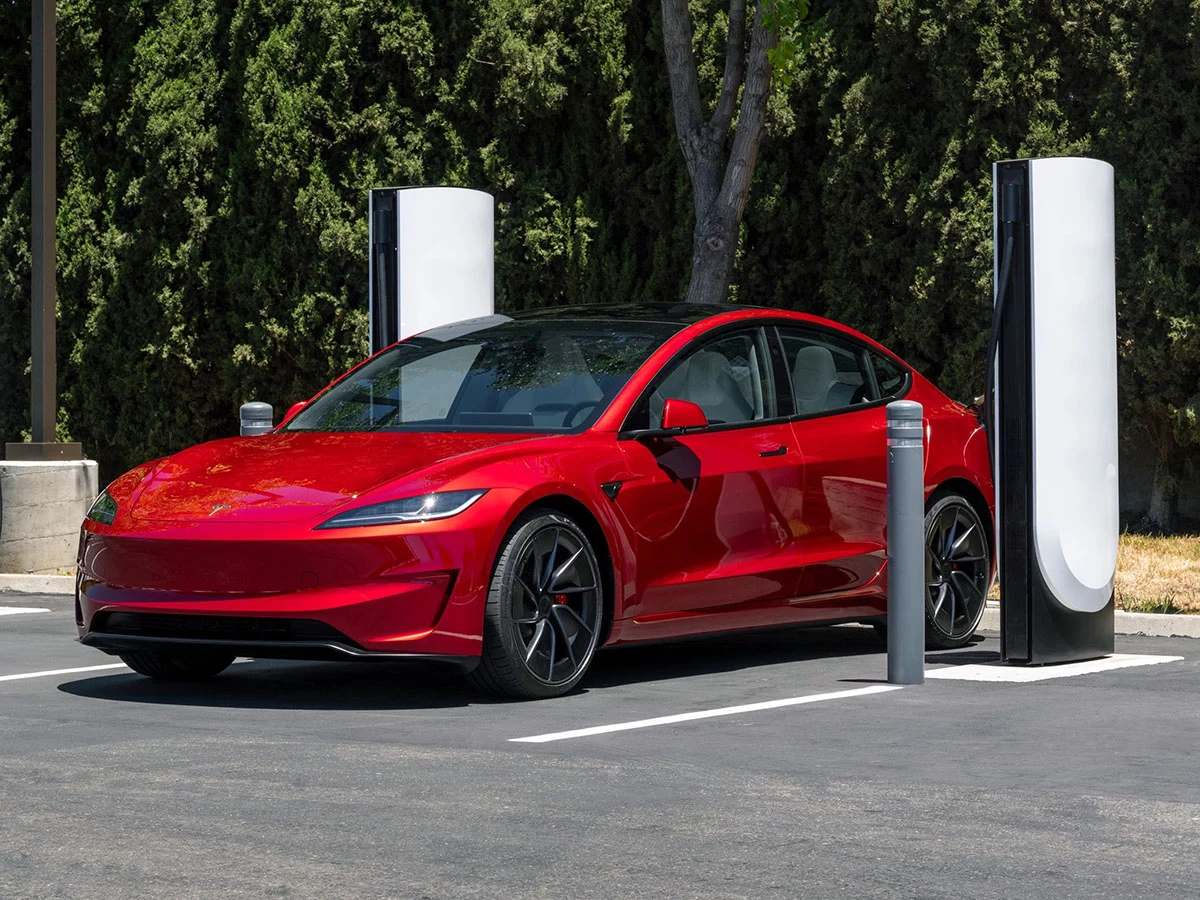
    The battery preconditioning feature in Teslas and other electric vehicles is a handy way to maximize charging efficiency, allowing drivers to spend less time at Superchargers before heading off on their journeys.

    This feature uses energy from the high-voltage battery to heat it up, making it easier for ions to transfer and ensuring the best charging speed when arriving at a Supercharger station. As per Tesla’s engineers, the Tesla Trip Planner activates this warmup process and is smart enough to adapt to changing temperatures, taking into account the weather based on the current season.

    Temperature Impact

    The temperature of the environment plays a crucial role in automatically preconditioning the high-voltage battery. Tesla asserts that by considering seasonal changes, they can reduce Supercharger session times by up to ten minutes. This is significant because Tesla cars charge relatively slowly; many still utilize the older 400V powertrain design and can only handle charging speeds of 250 kW. In contrast, BYD, a major competitor of Tesla, has introduced a new EV platform that supports 1 MW charging speeds, enabling 5-minute charging sessions.

    Cybertruck’s Charging Limitations

    Although the Cybertruck is equipped with a more advanced 800V architecture, the 4680 battery cells it uses aren’t the most thermally efficient available. As a result, its charging performance still leaves room for improvement. Even with Tesla’s quickest 500 kW V4 Superchargers, the Cybertruck requires about 35 minutes to reach an 80% charge—provided it arrives at the station with a low charge level and a warm battery, making every aspect of preconditioning vital.

    Recently, Tesla shared an impressive time-lapse video showcasing how the ambient temperature shifts at its Supercharger stations worldwide, emphasizing the importance of adapting preconditioning.

    Source:
    Link


  • Elon Musk’s New Venture: Selling X Usernames for Millions

    Elon Musk’s New Venture: Selling X Usernames for Millions

    Key Takeaways

    1. Elon Musk faces challenges with Tesla’s declining figures but can leverage other ventures like SpaceX to counterbalance.
    2. Musk is focusing on enhancing his social media platform, X, by introducing a new username marketplace called the X Handle Marketplace.
    3. The X Handle Marketplace allows for the reassignment and sale of inactive or desirable usernames, starting with access for Premium organizations.
    4. Usernames on the marketplace could sell for prices ranging from $2,500 to over $1 million, categorized into priority and rare handles.
    5. Community reactions to the marketplace are mixed, with some praising it as innovative and others criticizing it for past policies against username selling.


    Elon Musk has been encountering some challenges recently, with Tesla experiencing a notable decline in its figures. Despite this, the tech mogul is in a rare situation to counterbalance weaker sectors by utilizing his other ventures. For example, SpaceX has just acquired a fleet of Cybertrucks, which they claim is for electrification efforts. However, some critics believe this move is primarily aimed at improving Tesla’s sales numbers.

    Focus on Social Media

    Currently, Musk seems to be redirecting his attention towards enhancing his social media platform, X. The company has made a formal announcement about the introduction of a new username marketplace. This platform, named the X Handle Marketplace, will facilitate the reassignment and sale of inactive or highly desirable usernames.

    The official debut occurred on October 19 through the @Xhandles account. According to X, this marketplace provides an “industry-first solution” for the organized redistribution of unused usernames. Initially, access will be available to Premium organizations, followed by Premium+ subscribers. Specific details about the exact launch date or the initial sales have not yet been revealed.

    Pricing and Market Potential

    As reported by the tech website WinFuture, some individual usernames could command seven-figure prices. Depending on various factors like popularity, length, or cultural significance, the prices might vary from approximately $2,500 to more than $1 million. X categorizes these handles into two groups: priority handles and rare handles.

    Reactions from the community are quite varied, as is often the case. Many view this initiative as an innovative approach to digital ownership, drawing parallels to domain trading and NFT marketplaces. Some even compare owning a rare handle to having a custom license plate. On the flip side, critics highlight the hypocrisy: just a couple of years ago, selling usernames could lead to suspension, whereas now X is establishing an official marketplace. Others express doubt regarding the unclear criteria for “inactivity,” the rental-like structure associated with priority handles, and the opacity surrounding pricing details.


  • Elon Musk Purchases Inventory as Cybertruck Sales Slow Down

    Elon Musk Purchases Inventory as Cybertruck Sales Slow Down

    Key Takeaways

    1. Tesla’s Cybertruck sales have significantly disappointed, with only about 5,000 sold in Q1 2025, far below the 300,000 annual target.
    2. Elon Musk’s businesses, SpaceX and xAI, have purchased several hundred unsold Cybertrucks, raising skepticism about the true motive behind the acquisitions.
    3. A large number of unsold Cybertrucks are accumulating at Tesla’s Austin factory, despite recent price reductions failing to boost sales.
    4. The Cybertrucks bought by SpaceX and xAI are being deployed at various company sites, possibly to replace older vehicles or for employee use.
    5. Critics question whether the purchases by Musk’s companies will effectively address weak demand for the Cybertruck in the long term.


    Tesla faces challenges: The Cybertruck, once seen as a revolutionary project, is increasingly turning into a headache for the automaker. Recent reports show that sales of the Cybertruck have significantly disappointed, leading Elon Musk to seemingly buy up the unsold stock of this advanced electric vehicle through his own businesses. As stated by Electrek, SpaceX and xAI have recently acquired several hundred units of the Cybertruck. While the company claims this strategy is part of a shift from gas-powered vehicles to electric ones, skeptics suspect the real aim is to clear out unsold inventory and boost sales numbers, which currently don’t reflect well for the American car manufacturer.

    Sales Expectations vs. Reality

    Tesla initially estimated that it could sell up to 300,000 Cybertrucks annually. However, the actual number sold in the first quarter of 2025 is estimated to be only around 5,000. Reports indicate that a large number of unsold Cybertrucks are accumulating at Tesla’s Austin factory. Even significant reductions in price have not led to a lasting improvement in sales.

    Deployment of Cybertrucks

    The Cybertrucks bought by SpaceX and xAI are being deployed across various sites, including Starbase in Boca Chica, the Starlink manufacturing facility in Bastrop, and xAI locations. Observations from the YouTube channel NASASpaceflight confirm that multiple Cybertrucks have been relocated to the Starbase site recently. A YouTube video hints that these vehicles are meant to replace older company cars, although there are some who speculate that they may be given to employees.

    The conclusion: Elon Musk seems to be trying to tackle the weak demand for Cybertrucks from the inside. While supporters view this as a sensible move towards electrifying the fleet, critics argue it’s merely a superficial fix. Whether the purchases by SpaceX and xAI will alleviate the strain on Tesla in the future is still uncertain. For the moment, though, the electric vehicle company can at least find some relief.


    Source:
    Link


  • Tesla Cybertruck Now Available for Orders in the Middle East from $116K

    Tesla Cybertruck Now Available for Orders in the Middle East from $116K

    Key Takeaways

    1. Tesla’s Cybertruck is now available for orders in Saudi Arabia, Qatar, and the UAE, offering AWD and performance options (Cyberbeast).
    2. Pricing for the AWD Cybertruck starts at SAR 434,990 ($116,000) in Saudi Arabia, while the Cyberbeast starts at SAR 484,990 ($129,300).
    3. The AWD model has a range of 523 km, accelerates from 0 to 100 km/h in 4.3 seconds, and can tow up to 4,990 kg; the Cyberbeast does it in 2.7 seconds.
    4. Tesla introduced a more affordable Rear-Wheel Drive (RWD) Cybertruck earlier in the year, with a longer range of 563 km, but has since discontinued it in the US.
    5. The Cybertruck launch aligns with the rising interest in luxury electric vehicles in the Middle East, supported by government incentives and charging infrastructure expansion.


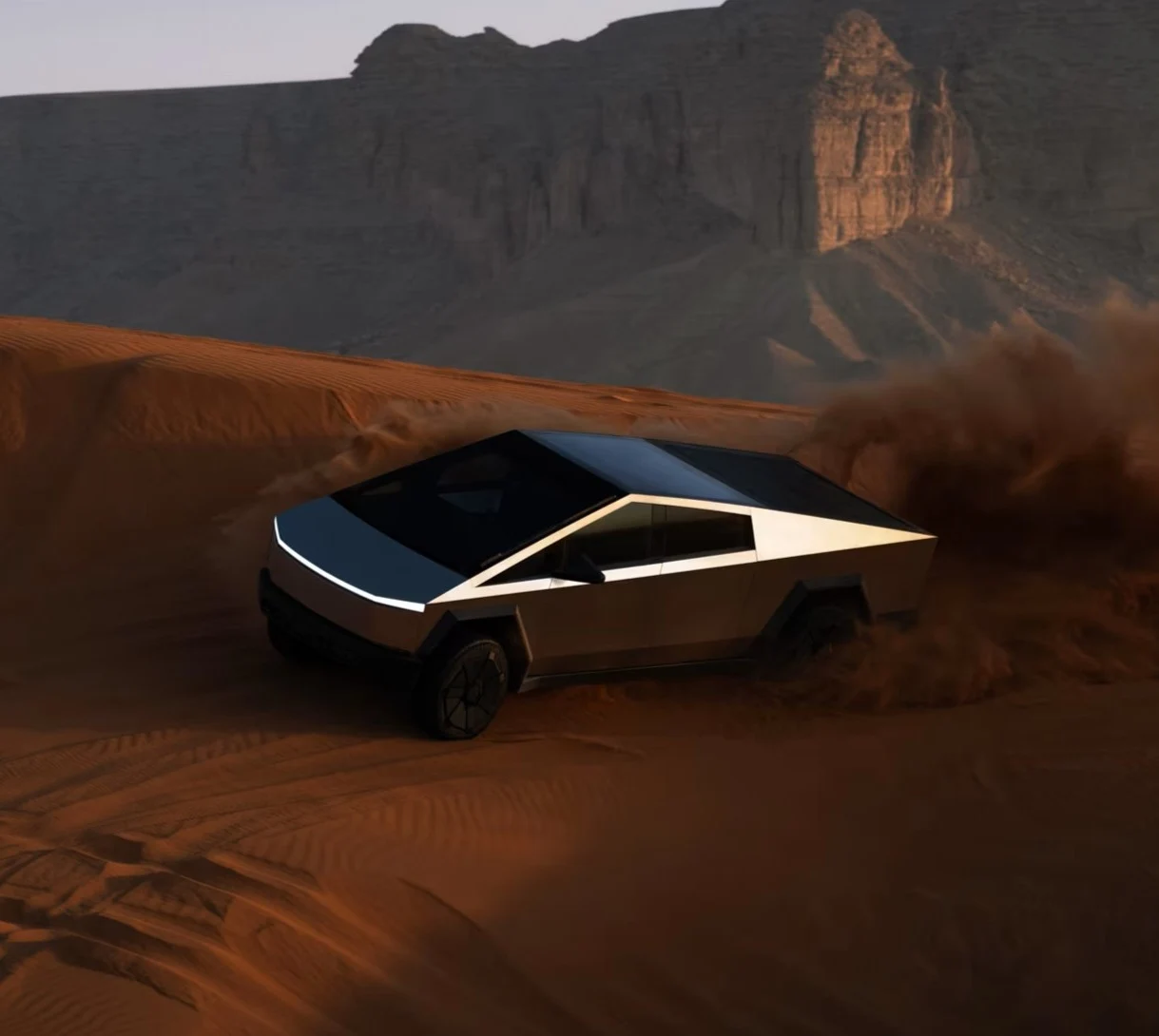
    Tesla’s fully electric Cybertruck is now ready for orders in several key Middle Eastern countries, such as Saudi Arabia, Qatar, and the UAE. The company is providing both the All-Wheel Drive (AWD) and a performance-oriented version known as the Cyberbeast, giving buyers choices that fit their driving preferences.

    Pricing and Specifications

    In Saudi Arabia, the AWD Cybertruck has a starting price of SAR 434,990 (around $116,000), while the Cyberbeast starts at SAR 484,990 (approximately $129,300). Tesla estimates that the AWD model can travel roughly 523 km on a single charge. It accelerates from 0 to 100 km/h in just 4.3 seconds and can tow as much as 4,990 kg. The Cyberbeast takes things a step further, achieving 100 km/h in merely 2.7 seconds.

    Previous Model Introduction

    Earlier this year, Tesla also rolled out the Rear-Wheel Drive (RWD) Cybertruck in Saudi Arabia at a more affordable starting price. This version boasts a slightly longer range of 563 km on a full charge, although its acceleration is not as fast compared to the other trims. Deliveries for this model are anticipated to kick off in late 2025. However, the company recently discontinued the RWD trim in the US last month, raising questions about how long it will remain available in other regions outside of North America.

    Growing Electric Vehicle Interest

    The introduction of the Cybertruck in the Middle East aligns with the increasing interest in luxury electric vehicles within this region. With more government incentives and an expanding network of charging stations, making the switch to electric vehicles is becoming more attractive. For Tesla and electric vehicle enthusiasts in the area, the Cybertruck presents an appealing choice with its long-range capabilities and impressive towing strength.

    South Korea also welcomed the AWD and Cyberbeast trims back in August, demonstrating Tesla’s ongoing efforts to expand into global markets.

    Tesla Middle East

    Source:
    Link


  • Germany Bans Tesla Cybertruck Over EU Safety Violations

    Germany Bans Tesla Cybertruck Over EU Safety Violations

    Key Takeaways

    1. The Cybertruck is not allowed on German streets due to local safety laws.
    2. Significant safety concerns arise from the Cybertruck’s unique design, especially its sharp edges and heavy weight.
    3. EU regulations prohibit vehicles over 3.5 tons from having sharp edges and require speed limiters.
    4. A permit for US military personnel to drive the Cybertruck in Germany was denied due to non-compliance with legal standards.
    5. Tesla faces major challenges in making the Cybertruck available in Europe, particularly in Germany.


    Tesla is slowly broadening the reach of the Cybertruck around the world, but it will still not be seen on the streets of Germany due to local safety laws. Recently, the US Army was told it couldn’t bring the truck into the country.

    Safety Concerns Raised

    The Cybertruck has been flagged for “significant passive safety concerns,” which relate to its unique design. The European Union considers the sharp, angular steel exterior a risk for pedestrians, cyclists, and motorcyclists, in addition to the vehicle’s hefty curb weight.

    According to EU regulations, vehicles that exceed 3.5 tons must have speed limiters and should not feature sharp edges. Clearly, the Cybertruck fails to satisfy both of these conditions.

    Permit Denied

    Even with these evident violations, some US military personnel stationed in Germany tried to get a permit to drive the Cybertruck on public roads. This application was possible thanks to an arrangement known as the USAREUUR-AF, which might allow non-EU-approved cars to be driven in Europe.

    Nevertheless, the German Federal Ministry of Transport (FMoT) turned down the request. The ministry determined that the Cybertruck strays too far from legal standards to grant an individual exception. They also mentioned that the truck’s distinctive look would make it stand out in public, undermining the purpose of the USAREUUR-AF exemptions.

    Conclusion

    In summary, while Tesla is working to make the Cybertruck more available, it faces significant hurdles in Germany due to strict safety requirements. The unique design elements that make the Cybertruck stand out also contribute to its inability to meet local regulations, leaving it off the roads for now.

    Source:
    Link