Tag: Cybertruck

  • Tesla Cancels Cybertruck Range Extender and Issues Full Refund

    Tesla Cancels Cybertruck Range Extender and Issues Full Refund

    Key Takeaways

    1. Tesla has officially discontinued the Cybertruck range extender, previously priced at $16,000.
    2. The Cybertruck’s real-world driving range has faced criticism, with some tests showing less than 100 miles under extreme conditions.
    3. Initial range estimates were adjusted downward, with the maximum range now at 445 miles for the standard model.
    4. Tesla recalled all Cybertrucks made between November 2023 and February 2025 due to rim detachment issues.
    5. Customers who paid a deposit for the range extender are being offered full refunds as Tesla no longer plans to sell the accessory.


    Tesla has officially stopped providing the Cybertruck range extender, just weeks after it was removed from their website. This expensive add-on, priced at $16,000, was intended to improve the vehicle’s range performance, which has faced criticism.

    Range Performance Issues

    Reviewers have pointed out that the Cybertruck’s actual driving range can be as low as 240 miles under real-world conditions. The range becomes even less when transporting heavier loads or in cold weather. In some extreme tests, the vehicle reportedly managed less than 100 miles.

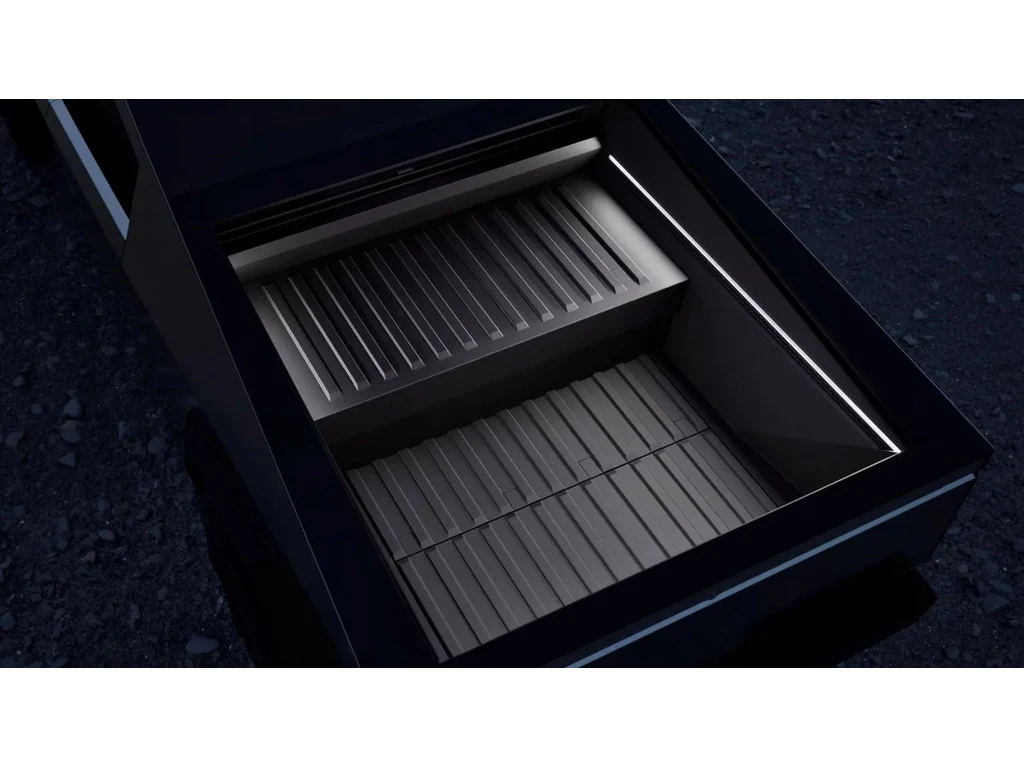
    To tackle these problems, Tesla introduced the modular Cybertruck range extender, which was an extra battery pack designed to fit in the truck’s bed. At first, it was expected to provide ranges of up to 470 miles for the dual-motor Cybertruck and 440 miles for the tri-motor Cyberbeast.

    Adjustments to Ranges

    However, those numbers were later adjusted down to 445 miles for the standard Cybertruck and 415 miles for the Cyberbeast equipped with all-terrain wheels. Compounding these issues, Tesla recalled all Cybertrucks manufactured between November 13, 2023, and February 27, 2025, because of problems with rim pieces detaching.

    Recently, Tesla quietly took the range extender off the online configuration options for the vehicle. It seems that the company has decided to abandon this accessory altogether.

    Customer Communication

    Tesla has begun reaching out to customers who put down a $2000 deposit for the add-on. They are offering full refunds, explaining that they are “no longer planning to sell the Range Extender for Cybertruck.”

    Despite its challenges, the Cybertruck has been recognized for its notable specifications and its off-road capabilities, even if it does not serve as a direct replacement for conventional pickups. The exact reasons behind the cancellation of the accessory remain unclear, and Tesla has yet to provide an official comment regarding this decision.

    Source:
    Link
  • Tesla Cybertruck Owners Receive Free One-Year FSD, Autosteer Removed

    Tesla Cybertruck Owners Receive Free One-Year FSD, Autosteer Removed

    Key Takeaways

    1. Tesla is offering Cybertruck owners a complimentary one-year Full Self-Driving (FSD) package, expanding access beyond just the Foundation Series trim.
    2. Owners must sign up for the FSD offer before June 6, 2025, using a special link, and it’s crucial to cancel the subscription afterward to avoid a $99 monthly charge.
    3. Current FSD subscribers may have their expiration dates extended by an additional 12 months, hinting at exclusivity for early adopters.
    4. The Autosteer feature will only be available through the FSD package for Cybertruck owners, meaning non-subscribers will not have access to it.
    5. Autosteer helps keep the vehicle in its lane but requires drivers to remain alert and ready to take control if needed.


    Tesla has reached out to Cybertruck owners with news about its new promotion: a complimentary Full Self-Driving (FSD) for one year. Previously, the FSD was available only on the Foundation Series trim, but now it is being offered to more models.

    Details of the Offer

    This complimentary offer is not the same as the 30-day FSD trial that some Tesla vehicles come with. To take advantage of this one-year deal, Cybertruck owners need to sign up for FSD before June 6, 2025, using a special link provided for activation. It’s important for them to remember to cancel the subscription afterward to prevent an automatic charge of $99 per month once the trial period ends.

    Subscription Extensions

    Some Cybertruck owners who already have an FSD subscription have noted that their expiration dates have been pushed back by an additional 12 months. The way the email was written hints that this promotion may be exclusive to those who adopted early.

    Autosteer’s Future

    An intriguing detail in the communication is regarding the future of the Autosteer feature in Cybertrucks. While Tesla includes this feature in other models, it is not preloaded in Cybertrucks. Owners of the electric pickup may be disheartened to learn that Autosteer will only be available as part of the FSD package. This means that if they do not renew their FSD subscription, they may never get access to Autosteer.

    Autosteer is designed to help keep the car in its lane by recognizing lane markings, the edges of the road, and other vehicles, although drivers need to stay vigilant to regain control if necessary.

    Source:
    Link

  • Tesla Offers $10,550 Discounts on Inventory Cybertrucks

    Tesla Offers $10,550 Discounts on Inventory Cybertrucks

    Key Takeaways

    1. Tesla has increased discounts on the Cybertruck, ranging from $6,000 to $10,550 for the 2024 model, depending on conditions.
    2. The discounts are specifically for U.S. buyers and apply to both the Foundation and Non-Foundation Series.
    3. The Foundation Series includes free lifetime charging at Superchargers as part of the offer, aimed at clearing last year’s stock.
    4. A new, cheaper version of the Cybertruck is set to be introduced, approximately $10,000 less expensive, but with fewer features.
    5. Despite being the most popular electric pickup in the U.S., the Cybertruck’s sales have not met CEO Elon Musk’s expectations, though expansion to the Middle East may boost sales.


    If you’ve dreamed of having the steel-body Cybertruck, now could be the perfect moment to act. Tesla has raised the discounts on this pickup truck, going from $6,000 to $10,550, depending on certain conditions.

    Special Offers for American Customers

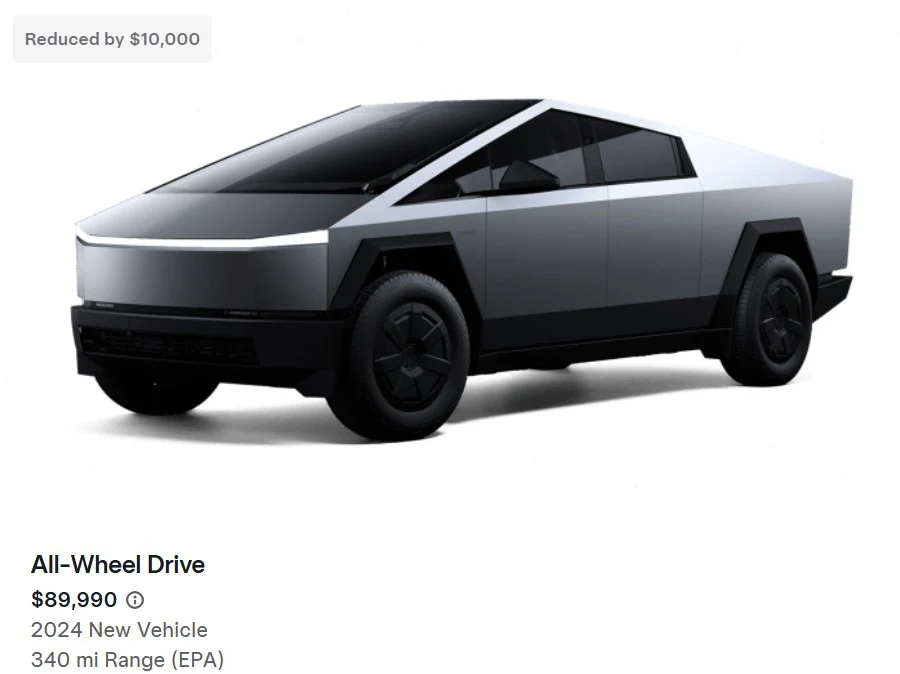
    This limited-time offer is specifically for buyers in the U.S. and applies to the 2024 model year. Tesla is reducing prices by up to $10,000 on the Foundation Series and up to $10,550 on the Non-Foundation Series, leading to significant savings for customers.

    Additional Incentives

    To make the Foundation Series even more attractive, Tesla is including free lifetime charging at its widely-used Superchargers as it works to sell off last year’s stock. However, it’s important to note that the 2025 models eligible for the $7,500 federal tax credits are not part of these discounts.

    A Cheaper Option on the Horizon

    The car manufacturer is also aiming to reach more consumers by introducing a version that is approximately $10,000 less expensive. But those looking for a bargain will miss out on some features, such as Air Suspension, a tonneau cover, and various interior amenities.

    The Cybertruck concluded the first quarter of 2025 as the most popular battery-powered pickup truck in the U.S. Yet, it hasn’t achieved the overwhelming success that CEO Elon Musk envisioned. Still, sales might begin to rise as Tesla expands the Cybertruck’s availability to the Middle East, where luxury vehicles are highly coveted.

  • Tesla Launches Unsupervised FSD Drives with Colorful Lighting

    Tesla Launches Unsupervised FSD Drives with Colorful Lighting

    Key Takeaways

    1. Tesla’s unsupervised Full Self-Driving (FSD) system has exceeded 50,000 miles of operation without human intervention.
    2. The FSD technology utilizes advanced AI4 (Hardware 4.0) for navigation in complex environments, including interactions with pedestrians and other vehicles.
    3. Public testing of the unsupervised FSD is set to begin in Austin in June, with a focus on refining algorithms through extensive mileage logging.
    4. The Cybertruck faces unique challenges, such as navigating a steep incline and may feature multicolored ambient lighting, although its standard inclusion is uncertain.
    5. Tesla plans to integrate FSD algorithms into older models but may need to retrofit them with new hardware, while also aiming to launch the Cybercab robotaxi fleet next year amidst regulatory challenges.


    Tesla has surpassed 50,000 miles of operation using its so-called unsupervised Full Self-Driving (FSD) system, which does not need any human intervention.

    Driving in the Factory

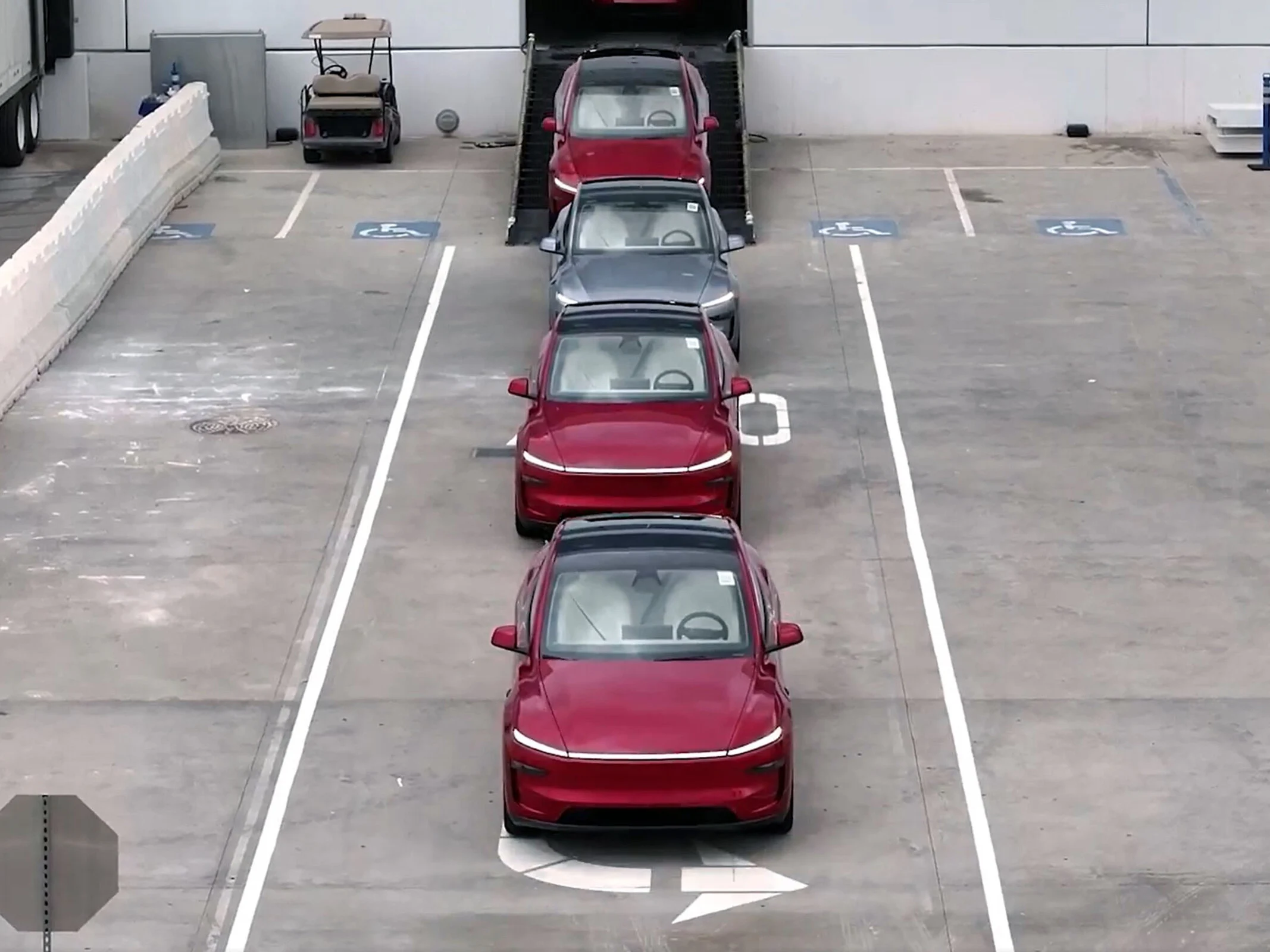
    These drives have taken place at Tesla’s factories, featuring the new Model Y and Cybertruck, which autonomously navigate from production lines to delivery parking areas. The self-driving vehicles utilize the latest AI4 (Hardware 4.0) technology, which includes advanced cameras and computing power to maneuver through complicated road scenarios involving signs, construction, and both pedestrian and vehicle traffic. Additionally, they can communicate with each other to prevent accidents.

    Upcoming Public Testing

    The pilot testing of the unsupervised FSD on public roads is set to start in Austin this upcoming June. Tesla aims to log as many miles as possible to refine its algorithms ahead of this significant rollout. The test drives at Giga Texas and Fremont involve the Model Y, traveling about a mile and a half “on a road shared with pedestrians, cars, semi trucks, construction equipment & more,” as stated by the Tesla AI team.

    Cybertruck’s Unique Challenge

    The Cybertruck is tasked with an even more exciting driverless mission, as it maneuvers up a 17% incline to exit a special Cybertunnel located beneath one of the busiest highways in the United States, continuing on to its delivery lot. Videos showcasing the Cybertruck and Model Y operating with unsupervised FSD and without a human present highlight a potentially new feature of the autonomous technology. Tesla seems to have chosen to equip its FSD vehicles with multicolored ambient lighting, though it remains uncertain if this is for promotional video syncing or if it will be a standard feature for vehicles using unsupervised FSD.

    Future Plans and Retrofits

    Regardless, Tesla is expected to kick off its public road pilot testing with HW4 vehicles like the Model Y and Cybertruck that it manages. These vehicles will likely still have Tesla personnel inside as a backup and to expedite regulatory approval. The Tesla AI team is also attempting to integrate the unsupervised FSD algorithms into older models equipped with HW3 cameras and systems. However, Elon Musk suggested that this may not be feasible, indicating that Tesla might need to retrofit older cars, whose owners wish to participate in its robotaxi service, with HW4 kits at no cost. There may also be a need to install colored LED interior lighting.

    The Cybercab, envisioned as the core of the robotaxi fleet, could join the lineup sometime next year. However, Tesla faces challenges in obtaining the necessary autonomous driving permits to operate vehicles without pedals or a steering wheel on public roads. To navigate this hurdle, Tesla is currently using Model 3 test vehicles fitted with the Cybercab camera setup to assess how the positioning will perform while driving autonomously outside the factory.

    Source:
    Link

  • Tesla to Begin Cybertruck Deliveries Outside North America in 2025

    Tesla to Begin Cybertruck Deliveries Outside North America in 2025

    Key Takeaways

    1. The Cybertruck will be available in the Middle East by the end of 2025, expanding beyond North America.
    2. Initial launch countries include Saudi Arabia, the UAE, and Qatar, with deliveries expected in late 2025.
    3. Customers can already place orders for the Model 3 and Model Y in Saudi Arabia.
    4. The Cybertruck’s size is expected to appeal to the Middle Eastern market, where larger vehicles are favored.
    5. Tesla is working to boost Cybertruck sales following a recent recall, and it’s unclear if the same US models will be shipped or modified for the region.


    The Cybertruck’s Limitations are Lifting

    No longer will the Cybertruck be limited to just North America. Tesla has shared exciting news that their unique steel pickup truck will be making its way to the Middle East before the end of 2025.

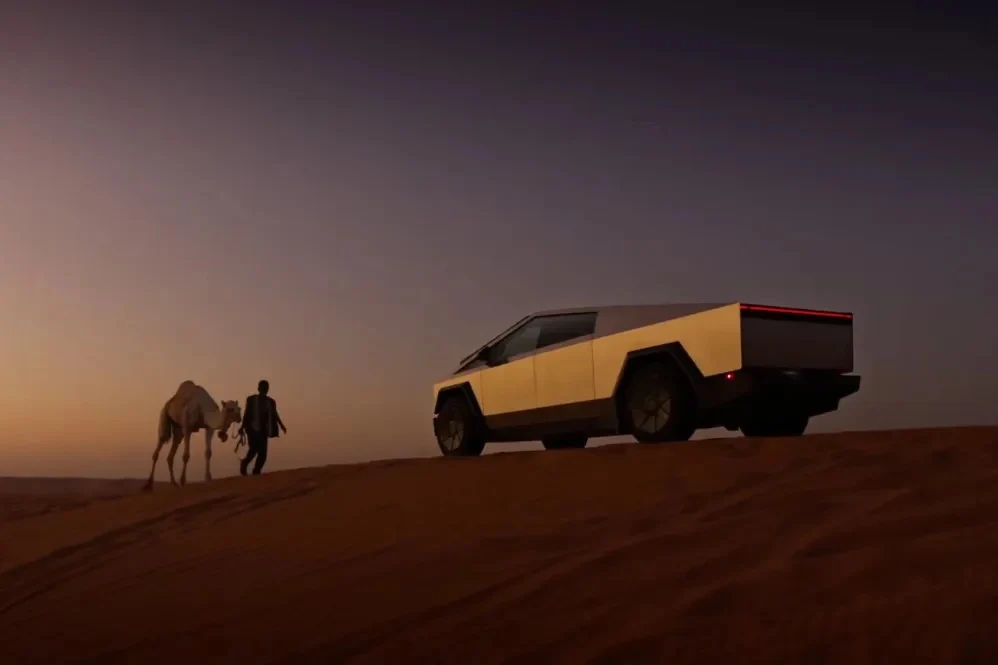
    On X, the Cybertruck’s official account shared a teaser video that features the eye-catching vehicle navigating through tough terrains typical of the Middle East, posing the question, “What if I told you I’m coming to the Middle East this year?”

    Launch Plans for the Cybertruck

    As per details on Tesla’s website, the initial countries set to get the Cybertruck will be Saudi Arabia, the United Arab Emirates (UAE), and Qatar, with deliveries expected in late 2025. Additionally, Tesla has kicked off sales in Saudi Arabia, allowing customers to place orders for the Model 3 and Model Y.

    The Cybertruck is likely to gain a large fanbase in the Middle East, where larger and more luxurious vehicles are quite popular. Its bigger size will also blend well with the expansive roads found in the area.

    Sales Strategy and Recall Issues

    Tesla is eager to enhance Cybertruck sales, especially after a recent recall indicated that the futuristic vehicle hasn’t had the best start. Nevertheless, it remains uncertain if the company will ship the same US models, which are currently banned in the UK, or offer a modified version tailored for the region.

    Source:
    Link

  • Tesla Cybertrucks to Recognize Each Other on the Road Soon

    Tesla Cybertrucks to Recognize Each Other on the Road Soon

    Key Takeaways

    1. The Cybertruck fails to recognize other Cybertrucks on its infotainment screen, displaying them as regular trucks.
    2. A software update is planned to fix the identification issue, but trailer recognition will be prioritized first.
    3. A photo shared on Twitter highlights the Cybertruck’s inability to identify itself among other Cybertrucks.
    4. The Cybertruck boasts a towing capacity of up to 11,000 pounds, used by companies like SpaceX and The Boring Company.
    5. Elon Musk previously claimed that Teslas would identify other Teslas, but this feature has not yet been implemented.


    The Cybertruck stands out as one of the most unique vehicles on the streets today. Ironically, it doesn’t recognize its own uniqueness, displaying other Cybertrucks on its infotainment screen as regular pickup trucks. A frustrated Tesla owner, unhappy with this error, has been told that a software update in the future will fix this issue.

    Image Issue

    A Twitter user known as The Cybertruck Guy shared a photo (credited to Chris Palmer) showing a Cybertruck in front but depicted on the screen as an ordinary truck. Palmer seems to have taken the shot from inside a Cybertruck, sparking The Cybertruck Guy’s curiosity about why the vehicle couldn’t identify its own kind.

    Future Updates

    Wes Morrill, Tesla’s Lead Engineer, replied to the post, confirming that the ability to recognize other Cybertrucks will be included in a future update. However, he remarked that the truck will prioritize recognizing trailers first. “I’ll add it to the list, right after we make it recognize trailers instead of looking like a semi truck is trying to mate with Cybertruck,” he said.

    Towing Capacity

    The Cybertruck has an impressive towing capacity of up to 11,000 pounds. Elon Musk’s other ventures, SpaceX and The Boring Company, frequently utilize these trucks to haul rocket components and equipment for tunnel construction.

    In the past, Musk mentioned that Teslas would eventually be capable of identifying other Teslas, including their model and color, potentially turning it into a game. Nevertheless, it’s been years since he made that claim, and the feature has yet to appear.

    Source:
    Link

  • Tesla Unveils Lowest Cost Battery Per kWh in the Market

    Tesla Unveils Lowest Cost Battery Per kWh in the Market

    Key Takeaways

    1. Tesla claims to have achieved the lowest cost per kWh for its 4680 battery, primarily in comparison to its own suppliers.
    2. The transition to in-house production of the 4680 battery marked a significant improvement for Tesla, moving away from reliance on suppliers like LG and Panasonic.
    3. Future expectations indicate that significant milestones in battery manufacturing cost efficiency are anticipated by 2025, particularly with the ramp-up of dry battery electrode production.
    4. Tesla’s development of a lithium refinery in the U.S. suggests ongoing cost reductions for the 4680 battery, though the impact of tax credits is still uncertain.
    5. The dry cathode production method’s effects on manufacturing costs and charging performance remain unclear, with some concerns about thermal efficiency compared to competitors.


    Tesla has reached a point where it can produce its cylindrical 4680 battery at the most economical cost per kWh, indeed.

    This statement was initially made by Elon Musk during a company-wide meeting last month, although he didn’t provide many specifics. Recently, it was also verified by Tesla’s Director of Cell Manufacturing, who offered some additional information.

    Clarification on Cost Claims

    It appears that when Elon Musk referred to the lowest cost per kWh, he was talking about Tesla’s battery suppliers, not the cheapest EV battery cell in the entire world. That recognition likely goes to one of the major Chinese battery manufacturers, CATL or BYD. Nevertheless, what Tesla has accomplished with its 4680 battery optimizations is definitely noteworthy.

    The company transitioned from nearly giving up and relying on suppliers like LG or Panasonic for 4680 cells to becoming the producer of the most affordable battery it uses in under a year. During the presentation, Elon Musk humorously mentioned, “Please don’t make us do the anode, too,” alluding to the more cost-effective dry cathode method that Tesla has now mastered and is rapidly increasing production of to further reduce 4680 cell costs per kWh.

    Future Expectations

    Michael Guilfoy, Tesla’s Director of Cell Manufacturing, expressed confidence that “2025 will see significant milestones with fully ramped dry battery electrode manufacturing to provide even more cost efficiency.” He also took a moment to appreciate the team for their outstanding accomplishment.

    Tesla is also developing its own lithium refinery in the United States, which suggests that the costs of the 4680 battery are likely on a downward trajectory. However, it’s still uncertain whether Tesla’s achievement of the lowest battery cost per kWh is due to the production of the 4680 cells or the federal tax credits for domestically made batteries, as outlined in the Inflation Reduction Act.

    Uncertain Impact of Production Methods

    Moreover, it is still ambiguous whether the dry cathode production method will only revolutionize manufacturing costs or if it will also enhance the charging performance for the Cybertruck and other vehicles using the 4680 cells.

    A recent teardown compared the 4680 battery with BYD cells and revealed lower thermal efficiency, which contributed to charging issues that do not match the speed suggested by the Cybertruck’s 800V system.

    Once Tesla scales up the production of the dry 4680 battery cathode, it is expected to release the much-anticipated cheapest Cybertruck RWD version, which has already been listed as an eligible trim on the federal tax credit website.

    Source:
    Link

  • BYD to Challenge Tesla’s Dominance in Electric Motors and Batteries

    BYD to Challenge Tesla’s Dominance in Electric Motors and Batteries

    Key Takeaways

    1. BYD is expected to outsell Tesla in electric vehicles by 2025 and may surpass Tesla in technology as well.
    2. Tesla faces financial challenges, including $200 million in unsold Cybertruck inventory, while BYD’s advancements position it as the leading EV manufacturer.
    3. BYD’s new 1 MW EV platform features cutting-edge technology, including a high-speed electric motor and fast-charging battery.
    4. BYD’s vertical integration as a major battery manufacturer gives it a competitive edge in developing efficient EV technologies.
    5. While Tesla excels in production cost management and autonomous driving software, BYD’s new self-driving system will be provided free with its vehicles, enhancing its data collection capabilities.


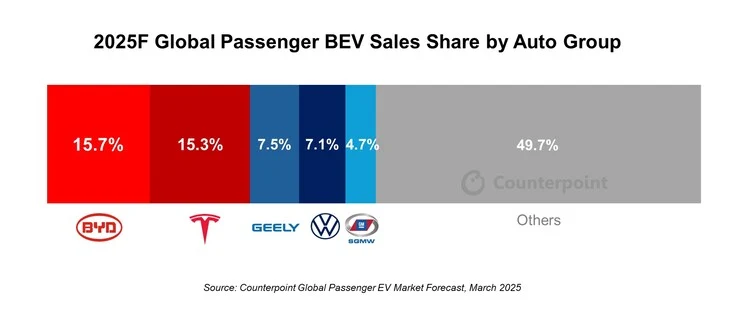
    Tesla is predicted to lose its top spot in the electric vehicle market by 2025, according to a report from market research company Counterpoint.

    BYD’s Rise in Sales

    The report states that BYD is likely to outsell Tesla in electric vehicles for the first time within a year. More troubling for Tesla and Elon Musk, however, is the expectation that BYD will surpass Tesla in technological advancements as well, rather than just sales. This may explain why Chinese authorities are cautious about allowing BYD to establish a factory in Mexico, fearing that it could enable American manufacturers like Tesla to access their technology.

    Financial Challenges Ahead

    Currently, Tesla has $200 million in unsold Cybertruck inventory, based on their recent shipping figures. Nevertheless, the new Model Y might still find success in markets outside of China. Despite this, the Counterpoint study suggests that even in such scenarios, BYD will take the lead as the largest EV manufacturer in the world by 2025, primarily because it now possesses superior technology.

    Innovative Technology from BYD

    BYD has introduced its new 1 MW EV platform, which offers an unmatched combination of powertrain and drivetrain capabilities. For instance, this high-voltage architecture enables the creation of the industry’s fastest electric motor, capable of exceeding 30,000 rpm while maintaining the same size. Additionally, the fast-charging 10C battery designed specifically for the 1MW system can recharge in just 5 minutes. BYD is also planning to establish a network of over 500 charging stations, all expected to be functional in under a month.

    Vertical Integration and Competitive Edge

    Such advancements have been made possible by BYD’s vertical integration, as it is the second-largest battery manufacturer in the world. This strategy not only allows them to develop custom EV powertrain technologies but also to achieve manufacturing efficiencies that may be challenging for Tesla to match, especially given the thermal efficiency issues with its own 4680 batteries.

    Areas Where Tesla Still Excels

    Tesla continues to excel in production cost management and its autonomous driving software. However, BYD has recently announced that it will provide its new self-driving system called Eye of God free of charge with all of its vehicles. This move could enable BYD to quickly gather millions of miles of driving data to analyze, as it works to catch up with Tesla’s $8,000 FSD option.

    Grab Your Tesla Gen 2 Wall Connector

    You can get the 80A Tesla Gen 2 Wall Connector with a 24′ cable on Amazon.

    Source:
    Link


  • Elon Musk: Cybertruck’s 4680 Battery Cheapest Per kWh Yet

    Elon Musk: Cybertruck’s 4680 Battery Cheapest Per kWh Yet

    Key Takeaways

    1. Elon Musk announced that Tesla’s 4680 battery cells are now the most affordable to produce globally on a per kWh basis.
    2. The upcoming RWD Cybertruck launch is positively impacted by potential IRA subsidies, which may last until 2032.
    3. There is confusion regarding the status of mass production for the 4680 battery cells, as earlier demonstrations were only proof of concept.
    4. Challenges remain in implementing the dry cathode production method, which has faced significant issues with machinery and production viability.
    5. Future testing is needed to determine if the new cells will resolve thermal efficiency issues that affect charging speeds.


    Elon Musk recently took the stage at an all-hands meeting to inspire employees, asserting that Tesla’s 4680 battery cells are now the most affordable to produce globally on a per kWh basis.

    It’s not entirely clear if Musk was referencing the 4680 battery’s cost with the generous made-in-America federal subsidy of up to $45/kWh, as outlined in the Inflation Reduction Act (IRA), or if he was speaking about the cost without any subsidies.

    Positive Outlook for Cybertruck

    Regardless, this news is promising for the upcoming price of the RWD Cybertruck, which is set to launch later this year. The IRA subsidies are expected to last until 2032, unless the new Trump administration decides to discontinue them, which seems to be their current plan.

    To support Musk’s statements, Bonne Eggleston, the head of Tesla’s battery division, confirmed that the company will begin mass production of Cybertruck 4680 cells using the economical dry cathode process “in a couple of months.”

    Confusion Over Production Status

    However, there’s some confusion regarding these announcements. Tesla had previously showcased the first Cybertruck utilizing the innovative dry-cathode 4680 battery back in July of last year. It now appears that this was merely a proof of concept and that Tesla was not prepared to mass-produce 4680 cathodes using the quicker, more cost-effective method at that time.

    Tesla has faced challenges for several years in delivering what it promised on Battery Day 2020, aiming for a 50% reduction in manufacturing costs with the 4680 battery. Most of the cost reductions so far have come from the efficiency of the packaging inherent to the 4680 design, as the cells are larger and fewer in number, which lowers the required welding points and allows for structural use in the chassis.

    Challenges in Dry Cathode Production

    Nevertheless, the so-called dry cathode production method, which can reduce the cost of a 4680 cell by 20%-30% as it avoids the baking of electrodes with toxic solvents, has been difficult to implement. Tesla acquired the technology from Maxwell, but it turned out to be unsuitable for large-scale production due to significant issues with the rolling machines needed for applying the dry coating. These machines frequently broke down, resulting in less than a third of the production being viable, in stark contrast to the industry standard rejection rate of just 2%.

    To validate Musk’s claim that the 4680 battery is now the cheapest per kWh, Tesla must have either improved the dry coating cathode machines significantly or found other ways to reduce costs sufficiently so that federal subsidies brought the price below what qualifies as the “cheapest battery.”

    In any case, the company anticipates starting mass production of the dry cathode 4680 battery for the Cybertruck in the upcoming months, with a record output planned at Giga Nevada, at which point a more affordable RWD Cybertruck might be introduced.

    Future Testing Needed

    It remains to be seen whether the new cells will face the same thermal efficiency issues as the current ones, which hinder the Cybertruck from quicker charging, despite its 800V architecture.

    Source:
    Link

  • Elon Musk Aims to Double US Production with Affordable Tesla Launch

    Elon Musk Aims to Double US Production with Affordable Tesla Launch

    Key Takeaways

    1. Tesla plans to double US production from about 665,000 vehicles last year to over 1.3 million by 2027.
    2. The company currently has the capacity to produce around 1.1 million vehicles annually in the US, needing slight expansion for its new goals.
    3. A more affordable vehicle, tentatively called Model 2, is set to be revealed soon, potentially boosting demand.
    4. Tesla is enhancing production of the Model Y Juniper refresh and plans facelifts for the Model S and Model X by late 2025.
    5. Despite challenges like declining global sales and vandalism, Musk is committed to fulfilling his production goals with upcoming models like the Cybercab.


    Tesla is set to increase its production at its US factories by two times over the next two years, according to Elon Musk. This move aligns with the current administration’s push for more goods to be made in America.

    Production Goals

    This shift means Tesla aims to ramp up its output from around 665,000 vehicles produced in the US last year to over 1.3 million by 2027. Considering Tesla manufactured approximately 1.8 million cars worldwide in 2024, this target for US production alone appears quite ambitious.

    Capacity and Demand

    At present, Tesla has the capability to produce about 1.1 million vehicles annually in the US, meaning it just needs to slightly expand that capacity. The more challenging aspect will be securing enough American customers for the increased output, a strategy Musk appears to have carefully considered.

    New Models on the Horizon

    Later this year, Tesla is expected to reveal its most affordable vehicle, tentatively referred to as the Model 2. Elon believes that its lower price could quickly make it a popular choice among buyers. Additionally, the company is gearing up to enhance production of the new Model Y Juniper refresh, which many enthusiasts are eagerly awaiting before making their Tesla purchases.

    The Model S and Model X are also set to receive facelifts by late 2025, and Tesla plans to launch a more affordable rear-wheel drive version of the Cybertruck this year, with this model already listed in the IRS tax credit database.

    Future Production Plans

    The Cybercab, which will use the same production platform as the Model 2, is also scheduled for mass production in 2026. Thus, fulfilling Musk’s commitment to double US production seems achievable, a promise made during an event at the White House.

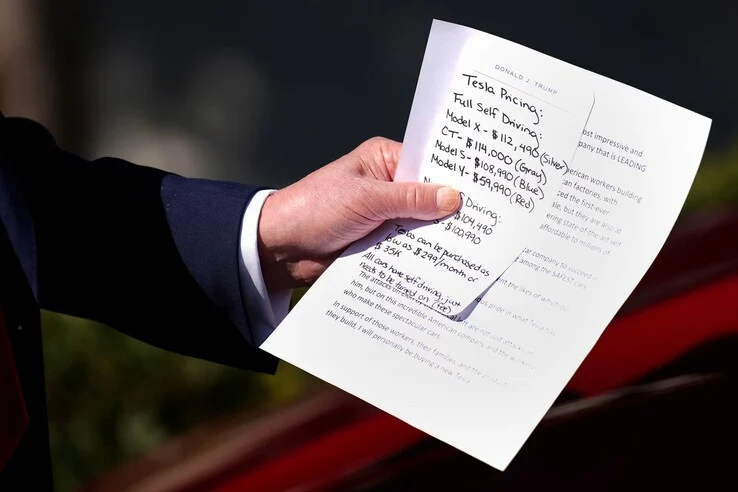
    Despite facing difficulties like a dip in global sales and vandalism issues domestically, Elon Musk organized a promotional event at the White House, where he showcased a price list to President Trump and suggested he buy a red Model S Plaid.

    Trump expressed his support for Tesla amid the backlash related to Musk’s political activities, which have impacted sales and led to vandalism against Tesla’s Supercharger stations and showrooms. As a gesture of this support, he allowed Musk to bring all Tesla models to the White House and confirmed he would buy a Model S Plaid, which Musk mentioned is his daily driver.

    Elon committed to doubling the production of American-made vehicles to around 1.3 million within the next two years, a plan that shouldn’t significantly strain Tesla’s existing budget, as it aligns with prior goals set before the White House endorsement event.

    Source:
    Link