Tag: BYD

  • Full-size BYD SUV: 10-min charge, crabwalk, longest range

    Full-size BYD SUV: 10-min charge, crabwalk, longest range

    Key Takeaway

    – Longest range in its category: 950 km (CLTC) from a 130 kWh battery, with ultrafast charging (10% to full in 9 minutes on 1 MW chargers).
    – Starts at $35,500; RWD trim with max range costs $39,870.
    – 7-degree rear-wheel steering enables crabwalk parking for easy maneuvering in tight spaces.
    – AWD trim accelerates 0-62 mph in under 4 seconds; all trims feature dual-chamber air suspension.
    – Global release with 150,000 preorders, plus localized production planned in Europe.


    Pricing and Specs Revealed

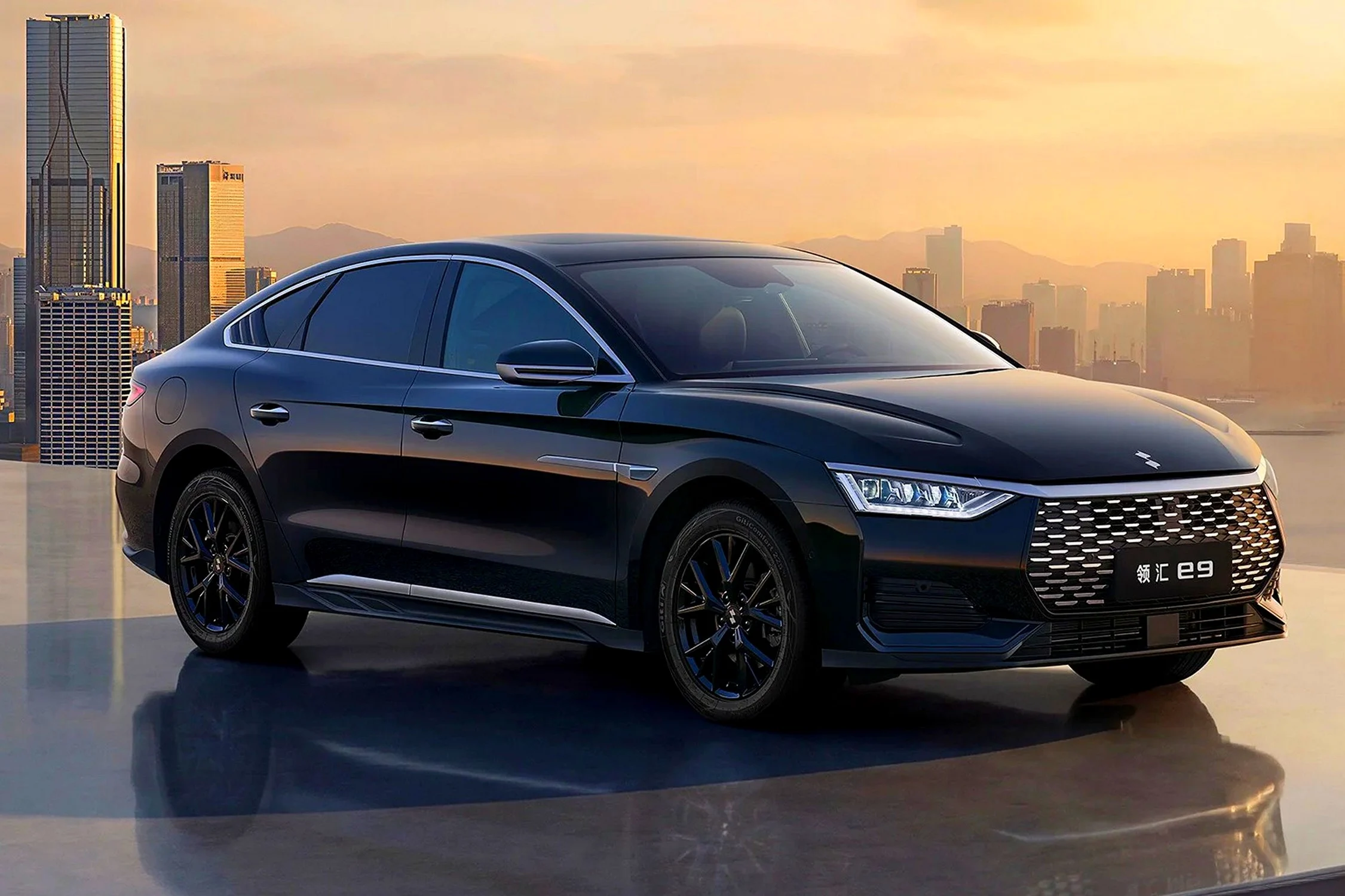
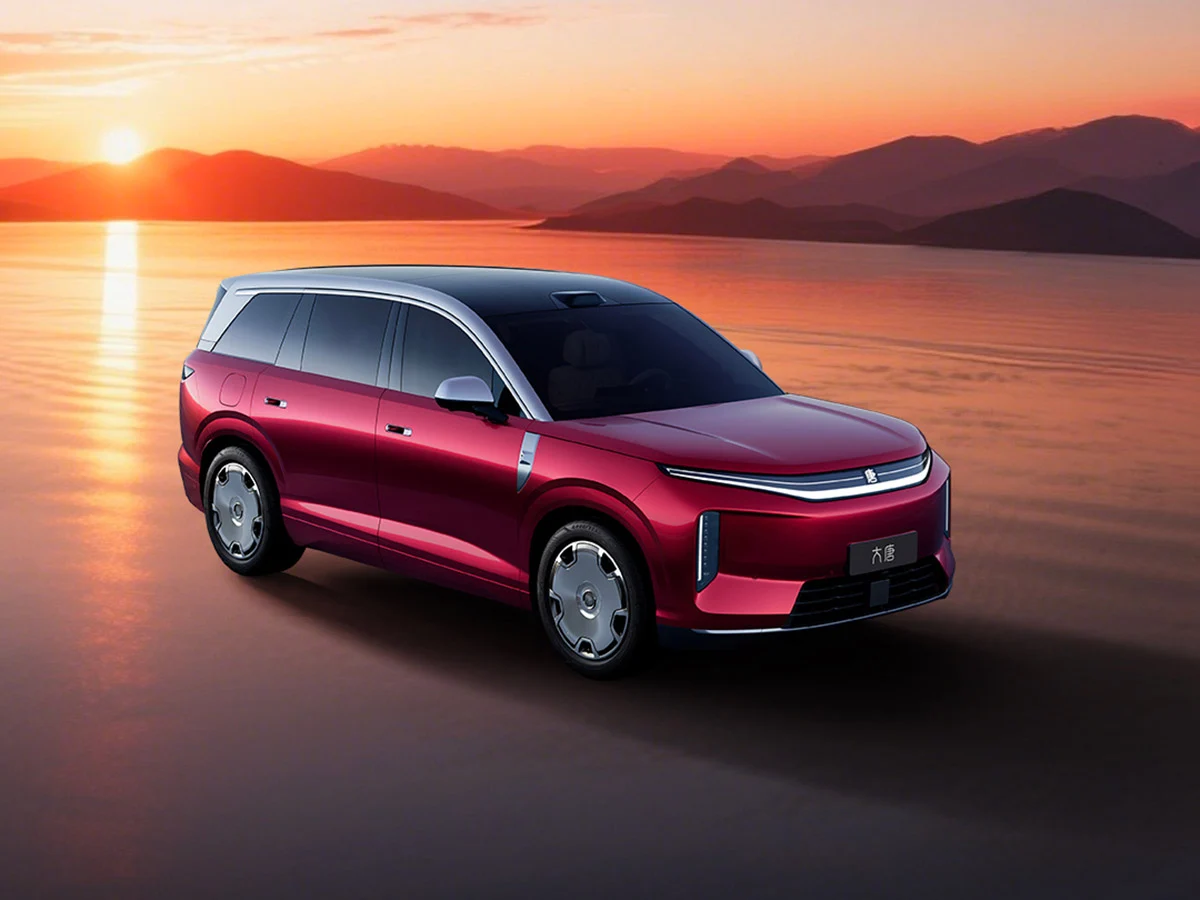
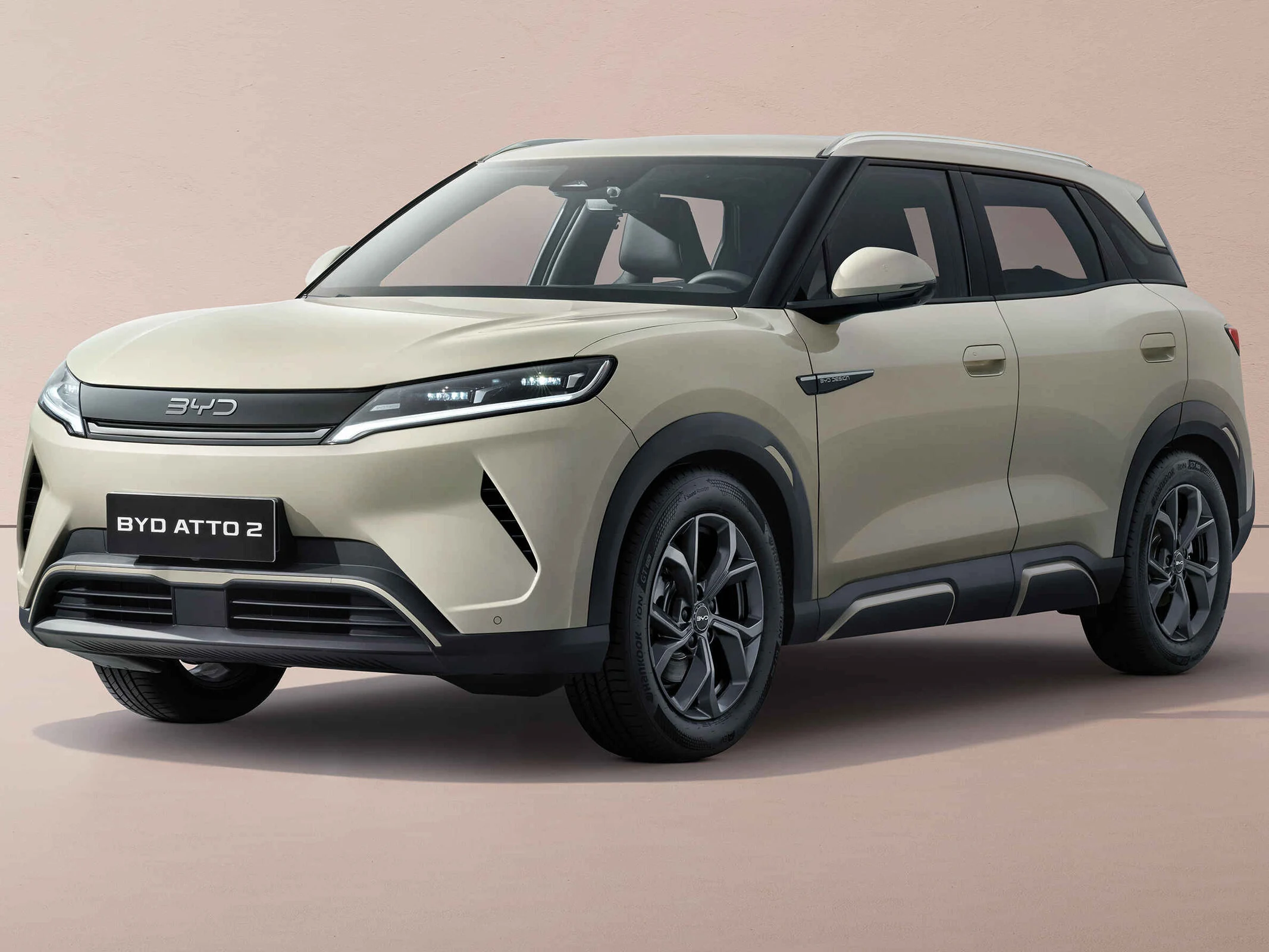
    BYD has announced the price and release specifications of its Great Tang full-size 3-row SUV that comes with the longest range on a charge in its catagory, according to the world’s largest EV maker. The vehicle has a number of tricks up its large family SUV sleve, such as 7-degree rear-wheel steering, which helps it crabwalk into tight parking spaces. Considering its 5,263 mm length and 3,130 mm wheelbase, the crabwalk parking assistance could be a godsend for city driving.

    Battery and Range Details

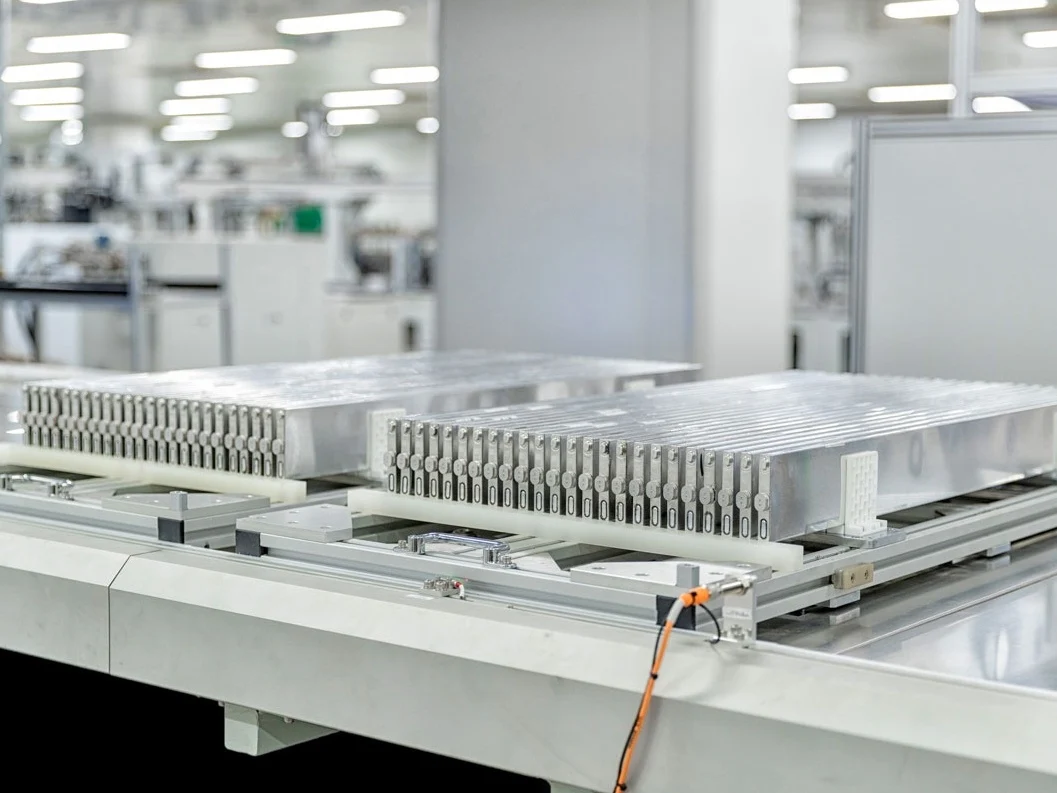
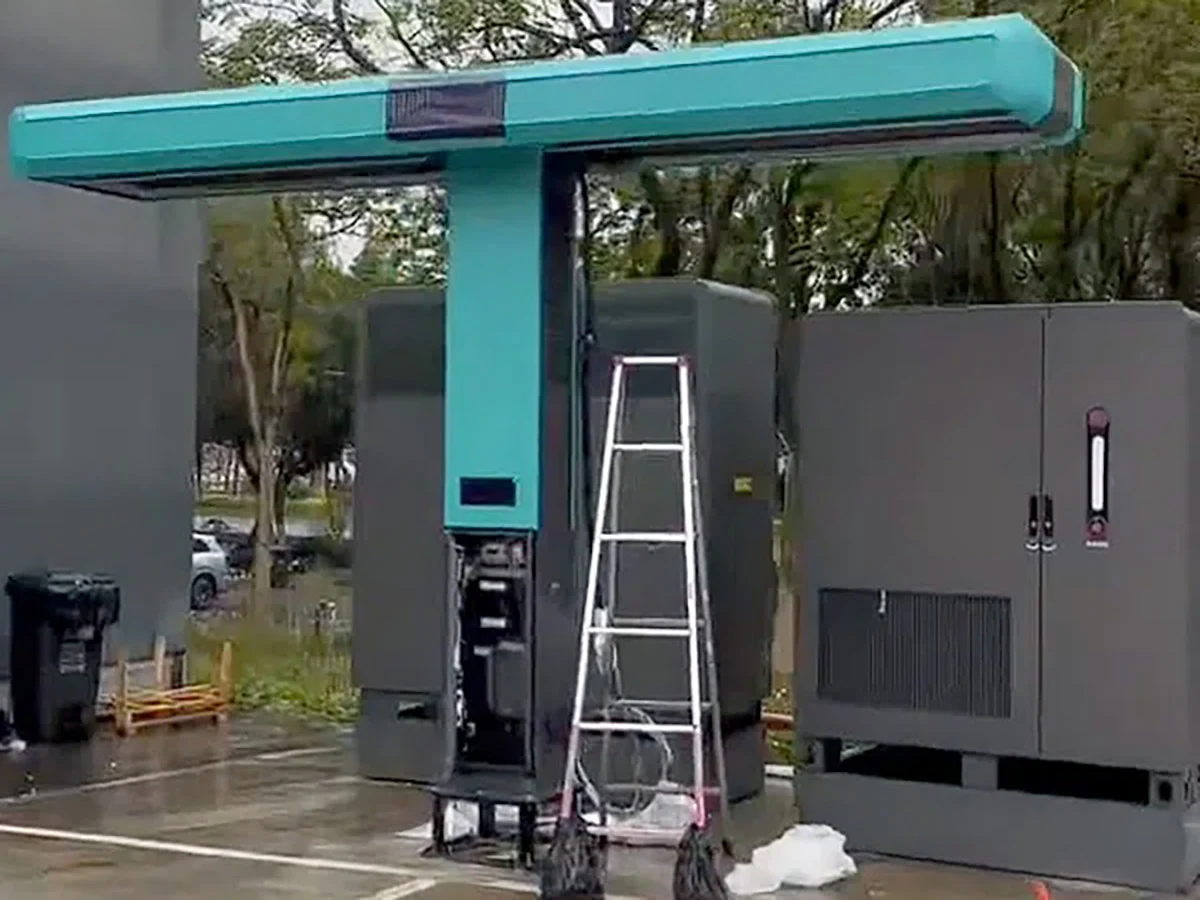
    The Great Tang SUV starts from the equivalent of $35,500, with the RWD trim that offers the largest 130 kWh battery and 950 km range costing $39,870. The latest BYD Blade battery generation comes with ultrafast charging technology that can bring it up from 10% to nearly full charge in just nine minuts. Needless to say, this needs to be done on BYD’s ever-increasing network of 1 MW T-shaped chargers, of which the automaker already has more than 6,600 installed in China and is building out globally, too.

    Performance and Chassis

    The 3-row SUV comes with dynamically adjustable dual-chamber air suspension, and the AWD trim can go from zero to 62 mph in under four seconds, while even the RWD trims start from 402 hp from their single electric motor. The top speed is officially 250 km (155 miles) per hour, though it is unlikely that many owners would need and want their 3-ton family SUV blasting at that full speed in any circumstance despite its low center of gravity.

    Interior and Seating Configuration

    Inside, the BYD Great Tang offers a premium interior with captain seats in a 2 + 2 configuration plus a row of three bench seats, making the configuration spacious enough for seven tall adults even. As for the longest range claim of BYD, the company is likely comparing it to the full-size electric SUVs available in the Chinese market, since 950 km on the CLTC cycle would roughly translate to 400 miles on the stricter EPA test, and the Lucid Gravity already offers 450 miles on a charge in the US.

    Global Release and Preorders

    In any case, BYD is releasing the Great Tang globally, with 150,000 preorders already counted and a factory in Europe slated for localized production later this year, so real-life range comparisons shouldnt be far behind. The vehicle offers a unique combination of size, power, and advanced technology that sets it apart in the full-size electric SUV segment, making it a compelling choice for large families seeking an eco-friendly transportation solution.

    • Starting price: $35,500
    • RWD trim with 130 kWh battery: $39,870
    • 950 km range (CLTC)
    • 10% to full charge in 9 minutes
    • 7-degree rear-wheel steering
    • Dual-chamber air suspension
    • AWD 0-62 mph under 4 seconds
    • RWD 402 hp from single motor
    • Top speed 155 mph
    • 2+2+3 seating for 7 adults


    Sources

  • BYD Spins Off Electric Taxi Unit Linghui Offers $2,300 Free Charging

    BYD Spins Off Electric Taxi Unit Linghui Offers $2,300 Free Charging

    Key Takeaway

    1. BYD is outsourcing commercial EV models to its new sub-brand Linghui to differentiate from its consumer vehicles and maintain brand prestige.
    2. The Linghui e7 features advanced technology, including the Blade Battery and Flash Charging System, enabling rapid charging in just nine minutes.
    3. The company offers aggressive pricing and incentives, such as a year of free charging, to attract ride-hailing drivers and compete in China’s EV market.
    4. The move aims to protect BYD’s core brand image while ensuring profitability in its commercial vehicle segment amidst intense market competition.

    Introduction to BYD’s Electric Vehicle Strategy in China

    When you hail a ride in China nowadays, it’s very likely that the vehicle is an all-electric BYD. While this fact shows how successful the brand’s EVs are, it’s also starting to create some complications for BYD. The problem is, when a car brand gets linked with affordable taxis, it can unfortunately reduce its appeal to private customers. That’s making BYD rethink how to position their electric models in the market and maintain their prestige.

    Market Challenges and Brand Realignment

    Other electric car brands such as GAC Aion and Neta already faced shrinking sales as they became too intertwined with commercial use, and now BYD is tackling this by launching a new sub-brand called Linghui. This move is strategic: they are rebranding their commercial electric vehicles under this new label, aiming to separate the taxi fleet from their premium offerings. By doing this, it helps to sustain the image of BYD’s more luxury-oriented and private vehicles, while still catering to commercial needs.

    New Electric Models and Innovations

    • The electric models under Linghui include the e5, e7, and e9 sedans, as well as the M9 plug-in hybrid van.
    • The spotlight is on the Linghui e7, which measures 4.78 meters in length.
    • This vehicle features the second generation Blade Battery and the cutting-edge Flash Charging System that charges from 10 to 97% in just nine minutes — truly impressive.

    Pricing and Incentives in the Chinese Market

    BYD is pulling out all stops to make Linghui attractive in the fiercely competitive Chinese market. They offer an appealing package: buyers of the E7 receive not just the latest tech but also a year of free charging at all Linghui and Didi stations. For drivers with an annual mileage of around 100,000 km, which is typical in ride-hailing, this benefit could save about 16,000 yuan, roughly 2,300 dollars. This significant saving makes the vehicle more profitable for drivers, boosting its appeal.

    Network Expansion and Market Impact

    The charging infrastructure for Linghui models is well-established, covering 127 cities across China. This extensive network supports the strategic move to promote electric taxis while safeguarding the core BYD brand’s image for private customers. In addition, the approach ensures the fleet remains highly profitable for operators and drivers alike. As for international markets, discussions on customs tariffs are still ongoing, but China’s electric vehicle industry clearly demonstrates just how cutthroat this sector has become.


    Sources

  • BYD Unveils Longest-Range EV and 3-Row SUV with Blade 2.0 Battery

    BYD Unveils Longest-Range EV and 3-Row SUV with Blade 2.0 Battery

    Key Takeaways

    1. BYD has launched its Blade Battery 2.0 technology, enabling the longest range electric vehicles (EVs) on the market.
    2. The Denza Z9 GT can achieve up to 1,036 km on a single charge, claiming a “world range record” based on the CLTC cycle.
    3. The Datang SUV, a premium 3-row family vehicle, can cover 950 km per charge and accelerates from 0 to 62 mph in 3.9 seconds.
    4. BYD’s 1000V architecture allows for megawatt flash charging, enabling quick recharge times, with the Z9 GT reaching 97% capacity in just over nine minutes.
    5. The pricing for the 2026 Z9 GT is set at $39,000, while the luxury Datang SUV is expected to start under $60,000.


    The largest electric vehicle manufacturer and the second-biggest battery producer in the world has revealed its latest iteration of the famous Blade battery system, along with the new electric vehicles (EVs) that it will support.

    Impressive Range Claims

    The 2026 lineup from BYD showcases some remarkable figures, as the Blade Battery 2.0 technology has enabled the creation of both the electric car with the longest range per charge and a full-sized SUV that boasts the same achievement.

    For this launch, BYD has selected its high-end Denza brand, known for introducing cutting-edge technologies such as “crab walking” to maneuver into compact spots, to present what it asserts is the EV with the longest range.

    The Denza Z9 GT Unveiled

    The refreshed Denza Z9 GT now features a rear-wheel drive (RWD) variant that stretches the limits of electric vehicle range. According to BYD, the Z9 GT can achieve an impressive 1,036 km on a single charge, which the company claims is a “world range record.” This distance is likely based on the CLTC cycle, which is more lenient than the EPA estimates in the United States that consider more highway driving.

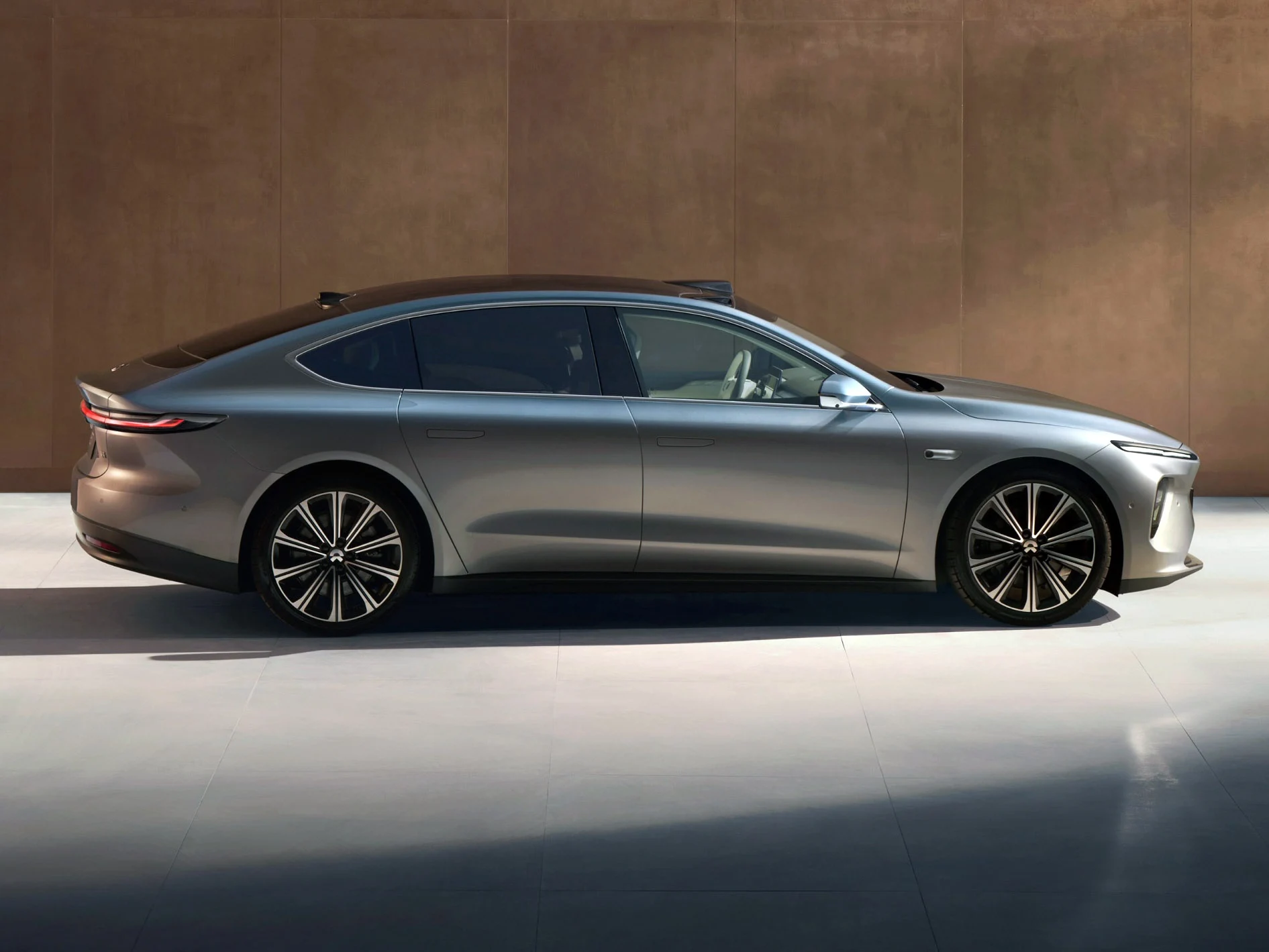
    Initial tests for the Denza Z9 GT are expected to provide real-world numbers that can be compared with other range champions like NIO’s ET7, which utilizes a 150 kWh hybrid liquid-solid battery, or the Air Pure and Lucid’s innovative efficiency in the US market.

    The Datang SUV’s Specifications

    BYD also boasts another range record thanks to its advanced Blade Battery 2.0 energy density technology, this time for its first premium 3-row family SUV in the Dynasty series. The full-size Datang SUV measures 17 feet long and can accelerate from 0 to 62 mph in just 3.9 seconds, despite its size.

    The RWD model is said to cover 950 km on a single charge, based on the CLTC cycle, positioning it alongside the Lucid Gravity SUV’s 450 miles according to EPA standards. This specification will be put to the test in early summer when the Datang hits showrooms.

    Although these impressive range claims have yet to be verified through real-world driving tests, BYD has already secured another top specification concerning charging speed. Its 1000V architecture enables megawatt flash charging, allowing the substantial Blade 2.0 battery of the luxury SUV to be recharged for daily commuting in just five minutes. BYD is in the process of establishing the world’s largest megawatt charging network, featuring 1.5 MW T-shaped stations with a unique hanging cable design.

    Quick Charging for the Z9 GT

    The Z9 GT offers fast charging as well, reaching 97% capacity in just over nine minutes, leaving some room for the additional charge from regenerative braking. Despite its enhanced energy density and megawatt charging capabilities, the second-generation Blade battery is less expensive to produce. This has enabled BYD to set the price for the 2026 Z9 GT record holder at $39,000, while the luxury SUV is expected to start slightly under sixty thousand dollars when it arrives next quarter.

    Source:
    Link


  • BYD’s Fast-Charging Battery: 10% to 97% in 9 Minutes, 620+ Miles

    BYD’s Fast-Charging Battery: 10% to 97% in 9 Minutes, 620+ Miles

    Key Takeaways

    1. Rapid Charging Capabilities: The Blade Battery 2.0 can charge from 10% to 70% in five minutes and from 10% to 97% in nine minutes, significantly reducing charging anxiety for users.

    2. Impressive Range: The new battery offers a range of over 1,000 km (621 miles) under lenient CLTC testing conditions, aiming to balance performance, range, and charging speed.

    3. First Vehicle Launch: The Yangwang U7 will be the first vehicle to use the Blade Battery 2.0, featuring a range of 1,006 km (625 miles), with the Denza Z9 GT also set to incorporate the battery.

    4. Charging Infrastructure Expansion: BYD plans to establish 20,000 flash-charging stations in China by year-end, with upgraded stations capable of 1,500 kW output, far exceeding Tesla’s current offerings.

    5. Market Strategy Amid Slowdown: The introduction of the Blade Battery 2.0 is part of BYD’s strategy to revive demand and stand out in a competitive market, as the company faces declining sales and profits.


    BYD has recently presented its Blade Battery 2.0 during the “Disruptive Technology” event held on March 5. This innovative battery is touted as a new-generation EV battery technology that boasts impressive charging speeds, aiming to tackle what BYD refers to as “charging anxiety,” which they see as a key hurdle for electric vehicle adoption.

    Impressive Charging Speeds

    The new battery is said to charge from 10 to 70 percent in just five minutes, and it can go from 10 to 97 percent in an astounding nine minutes. Even in cold weather (like -22°F / -30°C for a full day), it can still charge from 20 to 97 percent in only 12 minutes. BYD asserts that these charging speeds are currently 30 to 50 percent quicker than most electric vehicles under typical conditions, and they purposely target a 97 percent charge, keeping three percent for regenerative braking.

    Range and Specifications

    Additionally, BYD claims that this new battery can provide over 1,000 km (621 miles) of range, although this has been tested under CLTC conditions, which tend to be more lenient compared to EPA (used in the US) and WLTP (used in Europe). The battery pack will work alongside a high-voltage platform and enhanced thermal management, enabling what BYD describes as the “impossible triangle” of performance, range, and rapid charging.

    Future Vehicles and Market Strategy

    The first vehicle to utilize this new battery will be the Yangwang U7, a four-motor electric vehicle boasting a reported CLTC range of 1,006 km (625 miles). The Denza Z9 GT will also incorporate the new battery pack, with a range of up to 1,036 km (644 miles, still under CLTC) and prices in China expected to start at around $39,115. Furthermore, BYD aims to set up 20,000 flash-charging stations across China by the end of the year, with 18,000 being added to existing locations, each capable of reaching a peak output of 1,500 kW. For context, Tesla’s V4 Superchargers can peak at 500 kW, with only about 40 currently installed in China.

    At a time when the world’s largest EV manufacturer is experiencing a slowdown in sales growth in China, with vehicle sales declining by 35.8 percent year-over-year in early 2026 and net profits dropping by 32.6 percent in the third quarter of last year, the Blade Battery 2.0 seems to be BYD’s strategy to revive demand and distinguish itself in a more competitive domestic market.

    Source:
    Link


  • BYD Unveils 1MW EV Charger with Hanging Cables for Mega Network

    BYD Unveils 1MW EV Charger with Hanging Cables for Mega Network

    Key Takeaways

    1. BYD is launching a 1000V electric vehicle system with 32,000 rpm motors and rapid 5-minute charging capabilities.
    2. The company plans to build 4,000 charging stations and partner for an additional 15,000, aiming to create the largest megawatt-level charging network globally.
    3. BYD’s innovative T-shaped charging piles feature heavy cables on a pulley system for user-friendliness and accessibility to all vehicle charging ports.
    4. The new charging piles can deliver peak outputs of 1360 kW, providing over 200 miles of range from just five minutes of charging.
    5. Tesla is also developing a megawatt charging network, but its current V4 Supercharger stations only reach up to 500 kW, resulting in longer charging times compared to BYD’s system.


    After unveiling its groundbreaking 1000V electric vehicle system that features 32,000 rpm motors and rapid 5-minute charging capabilities, BYD is set to launch an enhanced series of charging piles.

    Ambitious Plans for Expansion

    The company plans to construct 4,000 of these charging stations independently and has partnered with others to create an additional 15,000. This initiative essentially positions BYD to establish the largest megawatt-level charging network globally.

    Innovative Design Features

    What’s particularly fascinating are the charging piles designed by the leading EV manufacturer, focused on user-friendliness. Rather than the traditional Tesla Supercharger setup, the new T-shaped design utilizes two heavy cables that hang from a pulley system, eliminating issues with their weight. The cables are designed to be long enough to reach all charging ports, without touching the ground, no matter where the EV maker has placed them.

    Unmatched Charging Speed

    The latest BYD megawatt charging piles are tall enough to accommodate most electric vehicles, and the dual charging guns can operate simultaneously, delivering exceptional charging speeds that are unmatched in the mainstream EV market. The peak output hits 1360 kW, enabling drivers to gain over a mile of range for every second spent charging, resulting in an impressive 200 miles of range after just five minutes of charging.

    Since BYD is also ranked as the second-largest battery producer worldwide, it supports its liquid-cooled megawatt charging piles with an energy storage and release system that incorporates supercapacitors. This setup allows for efficient electricity offloading during peak hours while utilizing cheaper electricity gathered during off-peak times.

    Tesla’s Competing Efforts

    Meanwhile, Tesla is developing its own megawatt charging network for Semi trucks, utilizing its North American Charging Standard specifications that can achieve peaks of 1.2 MW. However, the standard V4 Supercharger stations it currently deploys only reach up to 500 kW, and there’s only one vehicle, the Cybertruck, that features a relatively modern 800V powertrain architecture to utilize this. Nonetheless, the electric pickup is equipped with Tesla’s 4680 battery cells, which still have a charging curve that leaves much to be desired, resulting in longer charging times compared to BYD’s 1000V vehicles.

    Source:
    Link


  • New Solid-State Battery Standard Sets 2027 EV Performance Benchmarks

    New Solid-State Battery Standard Sets 2027 EV Performance Benchmarks

    Key Takeaways

    1. China is leading the way in solid-state battery technology standardization, aiming to replicate its success in electric vehicles and battery production.
    2. The China Automotive Technology and Research Center (CATARC) has developed new standards for solid-state batteries, focusing on performance and safety criteria.
    3. Solid-state batteries offer benefits like non-flammability, leak-proof design, and improved energy density, with potential ranges of 300-500 Wh/kg.
    4. The push for standardization aims to expedite the commercialization of solid-state and hybrid solid-liquid batteries, with mass production expected by 2027.
    5. Major companies, including BYD and Toyota, are investing in solid-state battery technology, highlighting the urgency for rapid standards and certification processes in the industry.


    As businesses speed up their plans for producing or using solid-state batteries, the world is seeing its first standardization effort to establish minimum performance and safety criteria for this emerging technology.

    China’s Ambitious Goals

    Following a government-led initiative that successfully boosted electric vehicles, energy storage, and battery production over the past decade, China has emerged as a leading manufacturer. Now, its standardization authority aims to replicate this success with the next wave of battery technologies.

    New Standards on the Horizon

    The initial segment of the “Solid-state batteries for electric vehicles: terminology and classification” standard was completed in December. The China Automotive Technology and Research Center (CATARC), responsible for drafting the standard, is now working on standardizing the necessary certification tests. They plan to introduce the first solid-state battery standard by July, which will outline several requirements:

    Solid-state batteries utilize solid electrolytes instead of traditional liquid ones and separators. They are non-flammable, leak-proof, resistant to high temperatures, and can endure punctures. These batteries boast an energy density between 300-500 Wh/kg, offering a 30-100% improvement in range and reduced energy loss in colder conditions.

    Commercialization Push

    This initiative for a solid-state battery standard aims to hasten the commercialization of batteries featuring solid or nearly solid electrolytes, as the new national classification differentiates between the two. Previously referred to as semi-solid, batteries containing 5% liquid and 95% solid electrolyte are now classified as hybrid solid-liquid batteries. They are more affordable to produce compared to 100% solid electrolyte cells while still providing nearly the same safety and significantly higher energy density than current ternary batteries with volatile liquid electrolytes.

    According to CATARC, the urgency for standardization arises from the accelerated product release timelines of both automakers and battery manufacturers. The first mass-produced electric vehicles equipped with solid-state batteries are anticipated as early as 2027. Some local battery startups are opting out of the competitive liquid electrolyte battery market and instead focusing on developing and producing hybrid or solid-state batteries.

    Innovations and Future Outlook

    Their battery models vary, achieving energy densities from 300 to 500 Wh/kg based on the electrolyte technology, safety characteristics, and production costs, which still remain two to three times higher than standard EV batteries. BYD, the largest automaker and second-largest battery producer globally, has recently reported progress in its sulfide-based solid-state battery electrolyte technology, paving the way for mass production of solid electrolyte cells that were previously too expensive or had shorter lifespans than desired. Along with Chinese companies like CATL, Dongfeng, WeLion, and Cherry, which have announced solid-state battery commercialization plans, other firms like Toyota have also targeted 2027 for launching similar products, highlighting the need for rapid standardization and certification efforts.

    Source:
    Link


  • BYD Electric Cars: 250,000 km Warranty & 1000 kW Charging

    BYD Electric Cars: 250,000 km Warranty & 1000 kW Charging

    Key Takeaways

    1. BYD has extended the warranty for its Blade batteries to eight years or 250,000 kilometers, benefiting both new and current owners.
    2. The Blade battery can withstand over 3,000 charging cycles, offering a potential lifespan of over 1.2 million kilometers.
    3. BYD’s production has rapidly grown, reaching 15 million New Energy Vehicles in just 13 months, with a focus on premium models like the Denza N8L.
    4. The company plans to introduce Mega Flash Charging by 2026, enabling rapid recharges and expanding its charging infrastructure in Germany.
    5. BYD is establishing a new production facility in Hungary to reduce costs and improve market competition in Europe, while also expanding its dealer network significantly.


    BYD aims to eliminate concerns regarding the longevity of electric vehicle batteries. In a recent announcement, the Chinese carmaker revealed that it has significantly extended the warranty for its Blade batteries. The new warranty now lasts for eight years or up to 250,000 kilometers, replacing the previously standard terms.

    Key Benefits for Existing Owners

    Importantly, this upgrade isn’t just for new buyers. Current owners of electric BYD vehicles or “Super Hybrids” will automatically receive this enhanced mileage benefit. The guaranteed state of health (SOH) for these batteries remains at a minimum of 70%. BYD states that its Blade battery, which utilizes lithium iron phosphate (LFP) and is free of nickel and cobalt, has been tested to withstand over 3,000 charging cycles, translating to a potential distance of more than 1.2 million kilometers.

    Rapid Growth of BYD

    Recent production numbers highlight the rapid expansion of BYD. The company has recently celebrated the manufacturing of its 15 millionth New Energy Vehicle (NEV), which includes fully electric battery electric vehicles (BEVs) and plug-in hybrid electric vehicles (PHEVs). The pace of growth is astonishing, as it took just 13 months for BYD to move from 10 million to 15 million vehicles, whereas achieving the first million took 13 years.

    The significant milestone vehicle is not a compact model but rather a premium vehicle from the Denza brand, specifically the N8L, which was produced at the Jinan facility. Denza will play a crucial part in BYD’s strategy for Europe in 2026.

    Enhancements and European Expansion

    After an impressive 2025 with over 23,000 new registrations in Germany (a rise of 708%), BYD is enhancing its technology. The company has announced that it will introduce Mega Flash Charging by 2026. This new charging system offers a capacity of up to 1000 kW, allowing drivers to recharge enough energy for 400 kilometers of range in just five minutes. The plan includes the installation of 300 of these superchargers, mainly at dealerships across Germany.

    Furthermore, BYD is strengthening its presence in Europe with plans to start production at a new facility in Hungary in the first half of 2026. This will allow models like the Seal and the Atto to be shipped directly from the EU, reducing delivery times and avoiding tariffs. Additionally, the dealer network is expected to increase from 150 to 350 locations by the end of the year. With the premium Denza brand launching in the spring, BYD is directly entering the European luxury car market.

    Importance of Local Production

    A look at pricing reveals why local manufacturing is essential. A recent study by the Center Automotive Research (CAR) indicates that German consumers currently pay more than double for Chinese electric vehicles compared to their domestic prices. This discrepancy is largely due to customs duties, along with high distribution and logistics expenses. With the new factory in Hungary, BYD is poised to make strides in reducing this price gap and intensifying competition in the market.

    Source:
    Link


  • China Warns: Robot Bubble May Burst Soon

    China Warns: Robot Bubble May Burst Soon

    Key Takeaways

    1. China is focusing on “embodied intelligence” and providing strong support for the robotics industry by 2030.
    2. Over 150 companies, including major names like BYD and Xiaomi, are developing humanoid robots, but many are still in early testing stages.
    3. There is a significant gap between investment in robotics and actual market demand, with robots primarily seen at exhibitions rather than in real-world use.
    4. The industry risks facing a “robot bubble,” similar to the bike-sharing issue in China, if innovative and market-ready products are not developed soon.
    5. A potential collapse in the robotics market could benefit US companies like Tesla and Figure AI, enhancing their global market position.


    China has pointed out “embodied intelligence” as a major industry to focus on by 2030. To take the lead in this growing field, the government is providing strong support to companies in robotics. Currently, over 150 businesses are working on humanoid robots, ranging from small startups to well-known companies like BYD and Xiaomi, which have recently joined the industry. Nevertheless, this surge in robotics also comes with significant challenges.

    Investment vs. Demand

    As reported by Reuters, there’s a clear gap in China between the amount of investment and the actual demand for robots. Robots are often displayed at exhibitions, but they hardly make an appearance in factories or homes. Many of these robots are still in the early stages of development and are only suitable for testing purposes. Another issue is the similarity among many humanoid robots; they tend to look and operate almost the same. Li Chao, a spokesperson for the NDRC, cautions that an influx of “highly similar products” could flood the market and lead to an investment bubble.

    Market Risks and Comparisons

    This scenario reminds us of the bike-sharing issue in China that started around 2017. Back then, countless rental bikes were produced for companies like Ofo, which ended up unused and stacked in junkyards. The robotics industry might face a similar fate if it cannot create truly innovative and market-ready products in a timely manner. If the “robot bubble” were to burst, it could wipe out billions in investments overnight, causing many businesses to fail. Conversely, companies in the US, such as Tesla and Figure AI, could gain from this situation, possibly strengthening their dominance in the global market.

    Source:
    Link


  • Tesla Sales Decline as Competition from BYD Grows in China

    Tesla Sales Decline as Competition from BYD Grows in China

    Key Takeaways

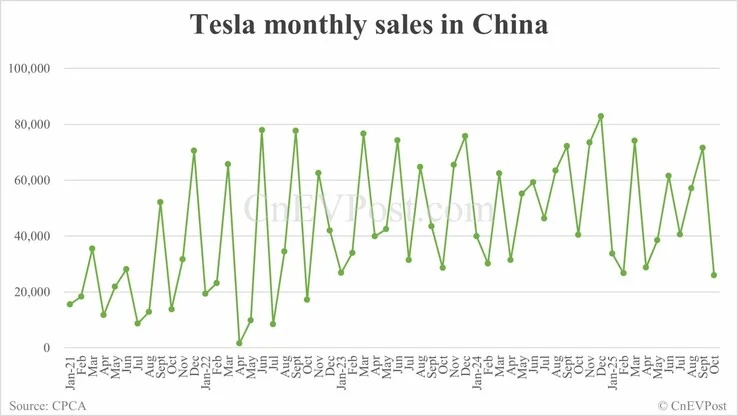
    1. Tesla’s vehicle sales in China fell to the lowest level since 2022, with only 26,006 cars sold in October, a 36% decrease from the previous year.
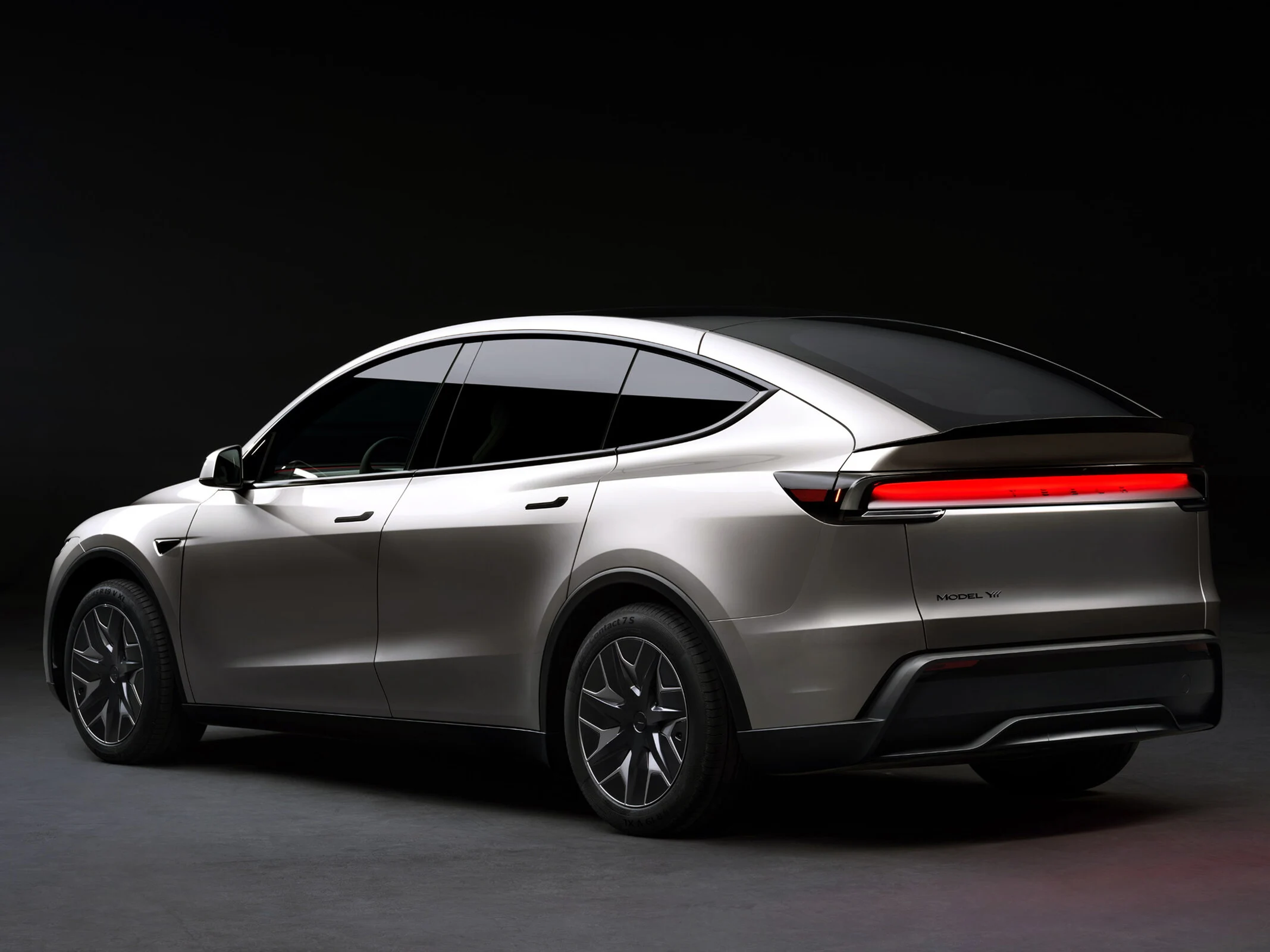
    2. The initial popularity of the new six-seat Model Y L and trims of Model 3 and Model Y did not sustain demand, leading to a sharp decline in sales.
    3. Local electric vehicle manufacturers are intensifying competition by offering cheaper models with more features, impacting Tesla’s market position.
    4. Global sales challenges are evident as BYD, a major competitor, outsold Tesla significantly in key European markets, further distancing Tesla from its brand presence.
    5. In response to declining sales, Tesla is introducing various financing options and incentives, including rental programs and purchase credits, to boost sales in the US market.


    Tesla’s vehicle sales in China have dropped to a level not seen since 2022. Even though the new six-seat Model Y L was initially well-received, along with new trims of the Model 3 and Model Y, Tesla only managed to sell 26,006 cars in China in October.

    Significant Decline in Sales

    This marks the lowest sales figure for Tesla in a month over the past three years, showing a 36% decrease compared to the same time last year. In September, when demand for the Model Y L was high, Tesla sold 63% more vehicles, indicating a decline in interest after the first wave of buyers completed their purchases. While it’s true that Tesla exported 28% more vehicles from China in comparison to last October, the total export volume is down 8% for the year overall.

    Rising Competition and Market Trends

    The surge in competition from local electric vehicle manufacturers, which provide cheaper options with more features, is putting pressure on Tesla. Additionally, the popularity of Extended Range Electric Vehicles (EREVs) in China complicates things further. EREVs not only come with larger batteries but also include a gasoline generator to reduce range anxiety. This trend is so appealing to consumers that even companies that were originally focused on electric vehicles are now either producing or considering EREVs.

    Global Sales Challenges

    In other regions where Tesla faces competition from Chinese brands, sales are also declining. BYD, the largest EV manufacturer in the world, is now closely competing with Tesla in Europe. BYD sold seven times as many cars as Tesla in the UK and four times more in Germany, which are two of the biggest markets for plug-in vehicles. This trend suggests that the European market is continuing to distance itself from the Tesla brand, partly due to Elon Musk’s political actions earlier this year.

    With the federal tax credit in the US coming to an end, Tesla is rolling out various traditional financing options, leasing deals, and free upgrade offers. The company has also come up with creative strategies to boost sales, including a rental option that features free Supercharging and Full Self-Driving (FSD) for just $60 per day. If a customer decides to purchase a Tesla after a 7-day rental period available at select locations, they will receive a $250 purchase credit as a bonus. Whether these incentives can counteract the sales decline in the US, similar to what’s observed in markets facing competition from Chinese brands, remains to be seen.

    Source:
    Link


  • Tesla Roadster 2 Release Date 2027: New Colors & Battery Upgrades

    Tesla Roadster 2 Release Date 2027: New Colors & Battery Upgrades

    Key Takeaways

    1. Tesla is set to showcase a concept for the “flying” supercar within the next few months.
    2. The launch date for the Tesla Roadster 2 is projected for 2027, with a goal to move quickly from concept to sellable product.
    3. The Roadster 2 is still in early development stages, featuring a new high-voltage battery and powertrain design for improved performance.
    4. The Roadster 2 is expected to accelerate from 0 to 60 mph in less than a second and may incorporate technology inspired by SpaceX.
    5. There are potential downforce features for the Roadster 2, similar to systems used in other high-performance vehicles.


    While BYD, Tesla’s main rival, has already launched the fastest production car in the world, Tesla is taking its time to unveil the successor to its very first model, the Roadster.

    Upcoming Supercar Concept

    Franz von Holzhausen, the design chief at Tesla, stated that a concept for the “flying” supercar will be showcased within the next couple of months, just as they had promised.

    The launch date for the Tesla Roadster 2, however, seems to be set for 2027. Franz suggested that Tesla is aiming to “move quicker” from revealing the concept to having a “sellable product” within a two-year timeframe.

    Development Stages

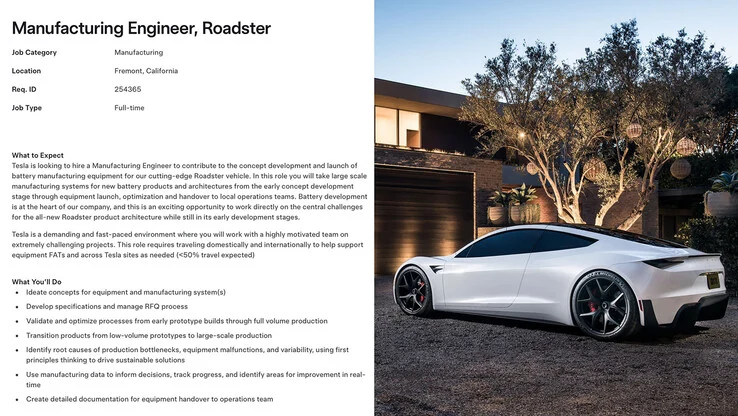
    Sadly, this indicates that the Tesla Roadster 2 is still in its concept phase. Tesla mentioned in a recent job listing that the production is “still in its early development stages.” The ad also points out that the “cutting-edge” Roadster 2 will feature a new high-voltage battery and powertrain design, which suggests a notable improvement in performance over what is currently available, including the Model S Plaid.

    The engineer Tesla plans to hire will be responsible for taking “large scale manufacturing systems for new battery products and architectures from the early concept development stage through equipment launch, optimization and handover to local operations teams.”

    Insane Specifications

    The Tesla Roadster 2 is expected to come with some mind-blowing specifications, allowing it to accelerate from 0 to 60 mph in less than a second. As Elon Musk has stated, the Roadster 2 will even be able to “fly.” Many experts, along with the CEO of Rimac, believe that achieving this feat will likely require some downforce, potentially from the powerful skirt fans Tesla recently patented. This concept is not unlike the McMurtry Spéirling electric hypercar, which can reach 0-60 mph in 1.55 seconds.

    In addition to its remarkable sub-second acceleration capabilities, Tesla has hinted that the Roadster 2 will incorporate technology inspired by SpaceX. However, it remains to be seen whether this entails the alloys used in Starship or the “wings” and downforce system when Tesla reveals the Roadster 2 this holiday quarter.

    Source:
    Link