Tag: BYD

  • BYD Solid-State Battery: 932-Mile Range & 12-Minute Charge Target

    BYD Solid-State Battery: 932-Mile Range & 12-Minute Charge Target

    Key Takeaways

    1. BYD has been developing solid-state batteries for over ten years, aiming for demonstration vehicles by 2027 and full-scale production by 2030.
    2. Unofficial test data suggests these batteries may achieve an energy density of 400 Wh/kg, allowing for driving ranges of up to 932 miles and rapid charging in twelve minutes.
    3. Solid-state batteries use a solid electrolyte, enhancing energy density, charging speed, and safety compared to traditional liquid electrolyte batteries.
    4. BYD is actively testing solid-state batteries in models like the Seal, with energy densities that could nearly double current battery capacities.
    5. While ambitious claims about range and charging speed remain uncertain, BYD’s solid-state batteries could represent significant progress in electric vehicle technology if they achieve cost parity with existing lithium-ion batteries.


    Chinese electric car maker BYD has been focused on creating solid-state batteries for over ten years. They aim to introduce the first demonstration vehicles featuring this technology in 2027, with plans for full-scale production by 2030.

    Promising Test Results

    The Driven has shared some unofficial test data suggesting that these solid-state batteries might achieve an energy density of about 400 Wh/kg. This could allow for driving ranges of up to 932 miles (or 1,500 kilometers) and a quick charging time of just twelve minutes.

    Solid-state batteries are seen as the future of energy storage. They use a solid electrolyte instead of the usual liquid, which leads to higher energy density, quicker charging, and better safety. The solid electrolytes help to stop leaks or evaporation of liquids, lowering the chance of thermal runaway and fire risks. Electrek mentions that BYD was already trialing prototype cells with capacities of 20 Ah and 60 Ah back in 2024.

    Testing in Progress

    Furthermore, The Driven indicates that BYD has fitted test vehicles, such as the Seal model, with these solid-state batteries. These batteries reportedly achieve energy densities of 400 Wh/kg. For context, typical lithium iron phosphate (LFP) batteries have energy densities of around 160–180 Wh/kg, while standard nickel manganese cobalt (NMC) cells range from about 220–260 Wh/kg, and advanced NMC types can reach up to 300 Wh/kg. Achieving an energy density of 400 Wh/kg would nearly double the capacity per kilogram, allowing for significantly greater ranges without increasing vehicle weight.

    Other European car makers, like Mercedes and BMW, are also testing solid-state batteries. Mercedes is collaborating with companies like ProLogium, while BMW is working on its own prototypes alongside Solid Power. BYD may have an advantage in bringing this technology to market due to its strong integration of research, production, and vehicle manufacturing.

    Future Uncertain

    It remains unclear if the lofty claims of reaching 932 miles (1,500 kilometers) in range and charging in just twelve minutes will be realized. Even if the actual performance falls short, BYD’s solid-state batteries could still signify a major leap forward for electric mobility, particularly if they can achieve cost parity with the current lithium-ion batteries.

    Source:
    Link


  • Tesla Sales in Germany Drop 9.4% While BYD Grows 20x

    Tesla Sales in Germany Drop 9.4% While BYD Grows 20x

    Key Takeaways

    1. Tesla experienced a 9.4% decline in new car registrations in Germany in September, with 3,404 units sold.
    2. The overall electric vehicle market in Germany grew by 31.9%, with battery-electric vehicle sales reaching 45,495 units.
    3. BYD, a Chinese electric vehicle manufacturer, registered 3,255 vehicles in September, increasing its sales significantly compared to last year.
    4. Tesla’s total sales in Germany dropped by 50.3% year-to-date, with only 14,845 units sold from January to September.
    5. Tesla is expected to announce plans for more affordable electric vehicles at an event on October 7, aiming to regain market competitiveness.


    Tesla saw a 9.4% decrease in new car registrations in Germany in September compared to the same month last year. Data from the German road traffic authority, KBA, shows that the American car maker had 3,404 new registrations during this period.

    Electric Vehicle Market Growth

    This decline happens even as the overall electric vehicle market in Germany continues to grow. The KBA reported a 31.9% year-on-year increase in battery-electric vehicle sales, reaching 45,495 units sold in September. Though Tesla’s figures have slowed down, rival models, especially those from Chinese companies, have experienced a rise in demand.

    Competition from BYD

    BYD, the biggest electric vehicle manufacturer in China, managed to register 3,255 new vehicles in September, marking an increase of over twenty times its sales from the previous year. Since January, BYD has sold 11,810 cars in Germany, significantly closing the gap with Tesla’s total for the year.

    Tesla’s Year-to-Date Sales

    From January to September, Tesla’s total sales in Germany dropped by 50.3% compared to last year. In the first nine months of this year, the company managed to sell only 14,845 units.

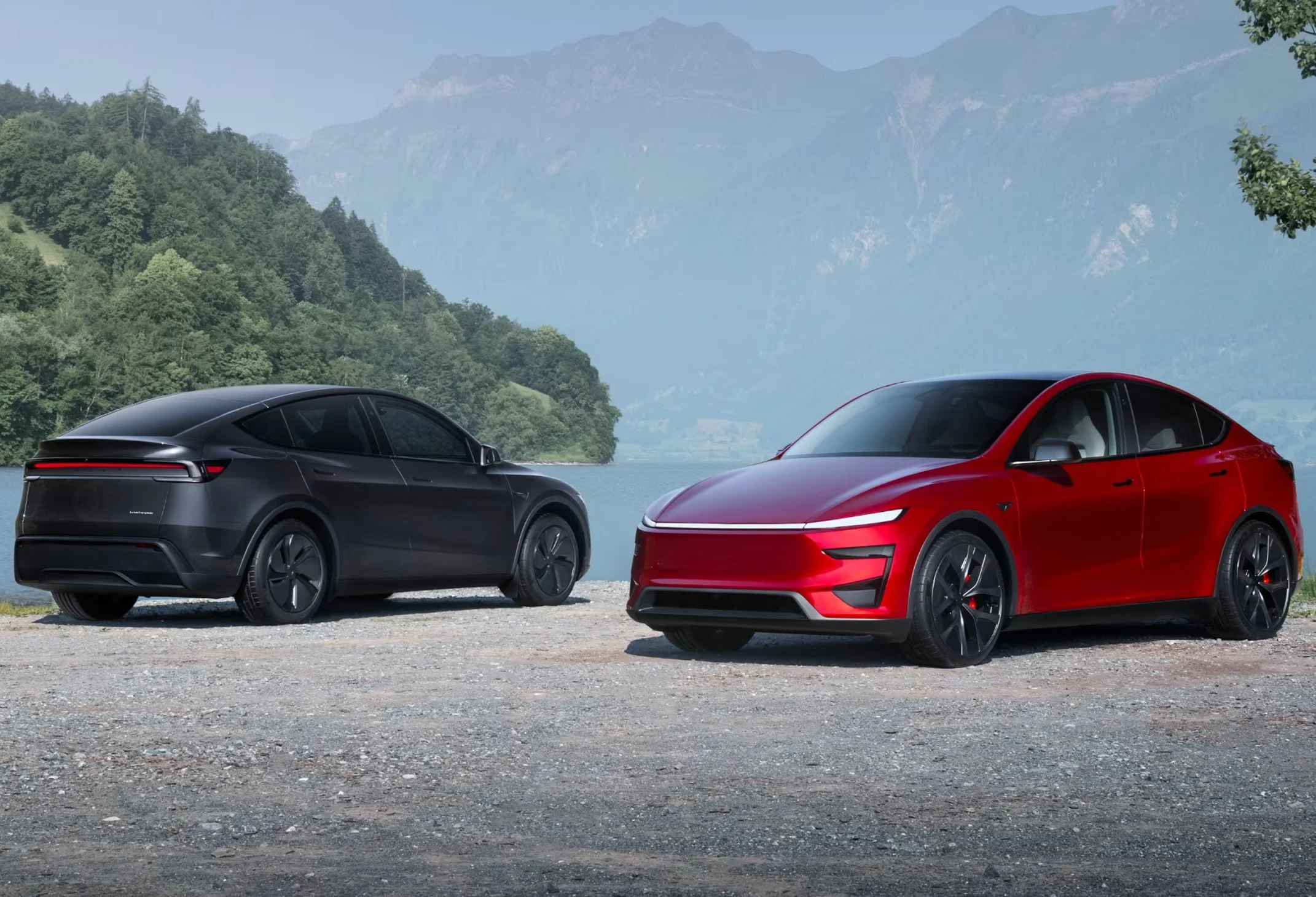
    Despite these challenges, Tesla has seen better results in other European markets. The launch of the refreshed Model Y has likely played a part in this upward trend.

    On a brighter note, the company recently shared a teaser video on X, hinting at an event on October 7. This event is expected to discuss plans for more affordable electric vehicles to help the company regain its market edge.

    KBA, Reuters.

    Source:
    Link


  • BYD Surpasses Tesla by 400K EVs in 2025 Sales Race

    BYD Surpasses Tesla by 400K EVs in 2025 Sales Race

    Key Takeaways

    1. BYD has surpassed Tesla in electric vehicle sales in 2025, leading by 400,000 units.
    2. BYD sold 1.61 million electric vehicles in 2025, a 37% increase from the previous year, while Tesla’s sales decreased by 6% to 1.22 million.
    3. BYD has outsold Tesla for four consecutive quarters, even as Tesla achieved record sales in Q3 2025.
    4. BYD’s plug-in hybrid electric vehicle (PHEV) sales accounted for 46.2% of its total sales in the first half of 2025.
    5. Tesla ended 2024 with 1.79 million sales, narrowly beating BYD’s 1.76 million, but struggles to regain the lead in 2025.


    BYD has taken the lead over all other electric vehicle manufacturers in 2025, surpassing Tesla by a significant margin. The gap between these two competitors stands at 400,000 units.

    Sales Performance

    Since the start of 2025, BYD has sold 1.61 million electric vehicles, marking a 37 percent rise compared to the same time last year. On the other hand, Tesla’s sales have dipped, with only 1.22 million deliveries, reflecting a 6 percent decrease. This means, as we enter the last quarter of the year, Tesla is trailing by 388,000 units.

    Quarter Performance

    Despite Tesla achieving record sales in the last quarter, it still fell short against BYD, which experienced its first year-on-year drop. The trends in the market show that BYD has been consistently outpacing Tesla for a while now, with Q3 2025 being the fourth straight quarter where BYD has outsold Tesla. Notably, these figures do not account for BYD’s plug-in hybrid electric vehicle (PHEV) sales, which represented 46.2 percent of their total sales in the first half of 2025.

    Year-End Comparison

    In contrast, Tesla managed to end 2024 on a high note, with sales reaching 1.79 million units, just beating BYD’s 1.76 million. At the close of Q3 2024, Tesla held a slim lead of 124,000 units. Recently, Tesla introduced the Model Y L in China, aiming to increase demand. This larger six-seat electric SUV reportedly saw around 10,000 daily orders at times in August. However, it seems unlikely that this new model will enable Tesla to catch up with BYD before the year concludes.

    Source:
    Link


  • BYD Exports Over 1 Million Vehicles Annually with New Carrier

    BYD Exports Over 1 Million Vehicles Annually with New Carrier

    Key Takeaways

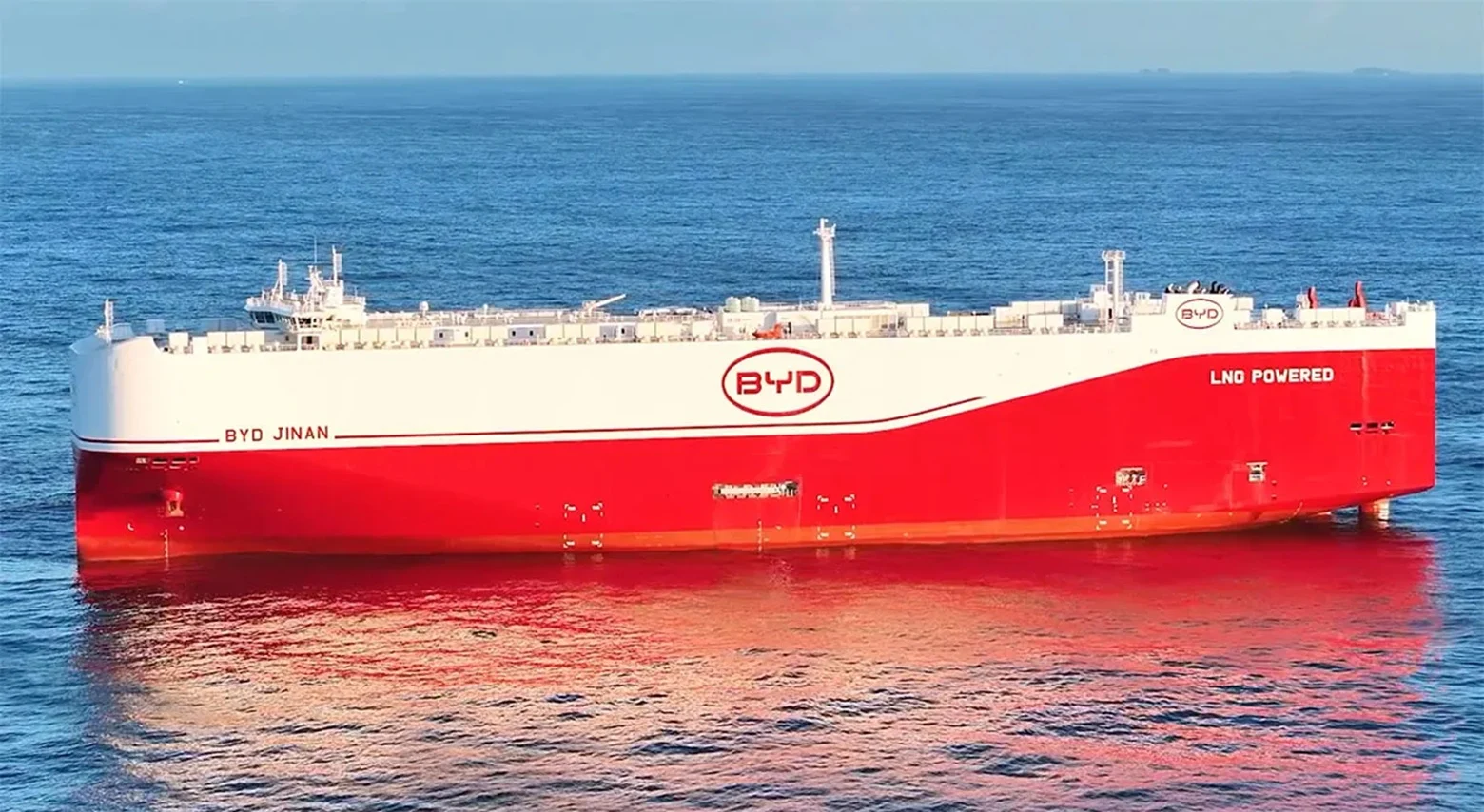
    1. BYD has added the BYD Jinan as its eighth ocean-going ship, enhancing its vehicle export capabilities.
    2. The company can now export over one million vehicles annually, with some ships carrying nearly 10,000 vehicles each.
    3. There are no immediate plans for further fleet expansion after the BYD Jinan.
    4. BYD’s fleet includes vessels named after cities such as Explorer No. 1, Hefei, Changzhou, Shenzhen, Xi’an, Changsha, and Zhengzhou.
    5. In August, BYD sold 373,626 vehicles, with over 80,000 exported, reflecting significant growth in both domestic and international markets.


    BYD has recently expanded its fleet of car-transporting ships, enhancing the company’s ability to export over one million vehicles annually. This update was announced on Weibo.

    Latest Addition to the Fleet

    The BYD Jinan marks the eighth ocean-going ship added by the Chinese electric vehicle manufacturer. True to its tradition, the new vessel is named after a city in the eastern Shandong province, where BYD has a strong manufacturing presence.

    Future Plans Uncertain

    BYD mentioned that this latest ship might be the final addition for some time, as there are no immediate plans for further expansion.

    While the specific carrying capacity of the BYD Jinan hasn’t been shared, it has been disclosed that the company is now capable of exporting more than one million cars each year. Three of its cargo ships can transport nearly 10,000 vehicles, while the majority of the vessels can accommodate around 7,000 vehicles.

    Overview of BYD’s Fleet

    The fleet of BYD includes vessels such as BYD Explorer No. 1, BYD Hefei, BYD Changzhou, and BYD Shenzhen, which had its first trip in April. Other ships in the fleet are BYD Xi’an, BYD Changsha, and BYD Zhengzhou.

    This year has been quite eventful for BYD both in domestic and international markets. In August alone, the company sold 373,626 vehicles, reflecting an 8.52 percent increase from the month prior. Over 80,000 units were exported, which is more than double the amount from the same time last year. So far in 2025, BYD has shipped 625,816 units, marking a 136.27 percent increase compared to the previous year.

    Source:
    Link


  • BYD Launches Electric Bus with Blowout Stability for Safer Rides

    BYD Launches Electric Bus with Blowout Stability for Safer Rides

    Key Takeaways

    1. The e-Bus Platform 3.0 features a high-speed tire blowout stability system that maintains bus balance at speeds up to 63 mph (100 km/h).
    2. A smart emergency button on the dashboard allows passengers to safely stop the bus if the driver becomes incapacitated.
    3. The innovative cell-to-chassis battery system lowers the bus’s ride height and enhances performance, especially for electric double-decker models.
    4. The platform supports faster charging with a 1,000-volt system designed specifically for buses.
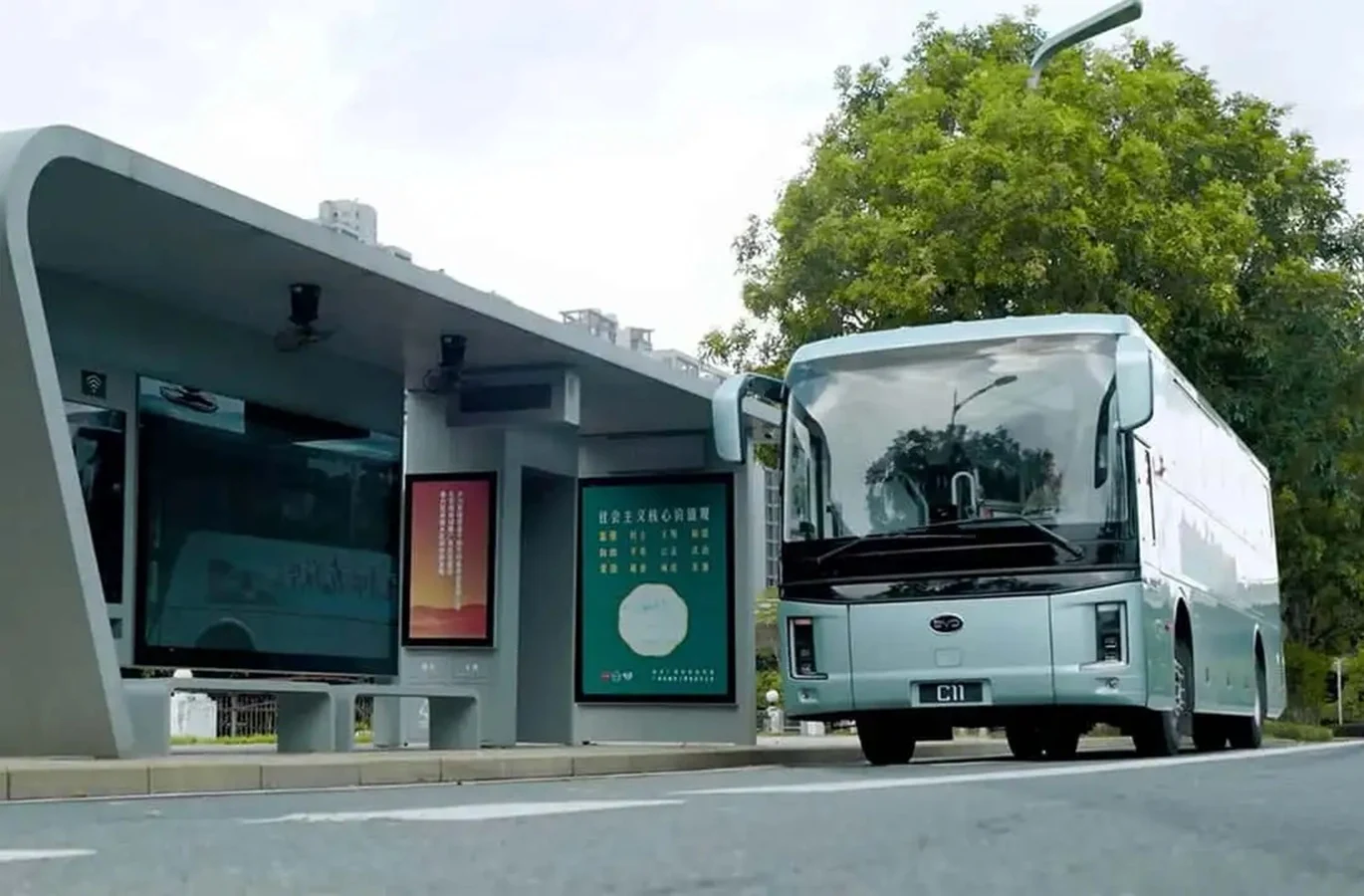
    5. The first bus using this platform is the C11, offered in China with driving ranges up to 453 miles (730 km) and available to American riders through BYD’s California manufacturing.


    BYD has just introduced its latest e-Bus platform, designed to enhance safety for passengers, even in the event of tire blowouts. This innovative technology includes a cell-to-chassis battery arrangement and an adaptive suspension system.

    Safety and Performance Upgrades

    The e-Bus Platform 3.0 boasts improved safety features and performance capabilities. A standout aspect is the high-speed tire blowout stability system, which maintains the bus’s balance at speeds of up to 63 mph (100 km/h). According to BYD, this system is quick to respond, activating in just milliseconds after detecting a problem.

    Emergency Stop Feature

    Additionally, the platform includes a dashboard button that passengers can use to stop the bus if the driver becomes incapacitated or unresponsive. This feature adds another layer of safety for those on board.

    Innovative Battery Design

    The e-Bus Platform 3.0 incorporates a unique cell-to-chassis design that integrates the Blade lithium-iron-phosphate (LFP) battery directly into the chassis. This approach allows for a lower ride height, which may be particularly advantageous for electric double-decker buses.

    Fast Charging Capabilities

    This new platform also facilitates quicker charging with the introduction of the first 1,000-volt system for buses. Nevertheless, BYD has not disclosed the specific charging times for vehicles built on this platform.

    Many of the cutting-edge features found in the latest e-Bus are derived from BYD’s passenger vehicles, showcasing how the company effectively repurposes technology across its product lines.

    The C11 Bus Model

    The first bus utilizing BYD’s new platform is the C11, currently available in China. The model comes in five different trims and offers driving ranges of up to 453 miles (730 km) based on CLTC standards.

    Interestingly, despite BYD’s cars not being sold in the US, American passengers might still use buses like the C11. The Chinese manufacturer has been producing electric buses and trucks in California for over a decade now.

    Source:
    Link


  • Tesla’s EU Market Share Drops as BYD and SAIC Take Lead

    Tesla’s EU Market Share Drops as BYD and SAIC Take Lead

    Key Takeaways

    1. Tesla’s vehicle registrations in Europe fell by 42% in July 2025, with only 6,600 new registrations.
    2. Chinese EV manufacturers BYD and SAIC surpassed Tesla in new car registrations for the first time.
    3. Total new vehicle registrations in the EU grew by 7.4% in July 2025, despite Tesla’s decline.
    4. Hybrids make up 34.7% and electric vehicles account for 15.6% of the EU market share.
    5. Tesla may continue losing market share unless it adjusts prices and expands its model range amid increasing competition.


    Tesla’s market share in Europe has seen a drastic fall, with only 6,600 new vehicle registrations reported in July 2025, marking a 42% drop compared to the same month in the previous year, according to ACEA. This decline in market presence is compounded by the fact that two Chinese EV manufacturers have now outperformed Tesla in the European sales rankings.

    Rising Competitors

    In a recent report, Reuters highlighted BYD’s remarkable success, as it managed to triple its number of new car registrations in the EU, reaching 9,698, thus surpassing Tesla for the first time. Additionally, SAIC, which owns the MG brand, also reported higher sales than the American carmaker during the same timeframe. It’s worth noting that Tesla has not only been overtaken by major rivals but also by smaller Chinese companies.

    Market Insights

    ACEA’s data indicates that July 2025 experienced a year-over-year growth of about 7.4% in total new vehicle registrations throughout the EU, which helped counterbalance the decline seen in June. However, overall sales figures for the year are still slightly below last year’s numbers. Volkswagen has emerged as the leading German automaker, with BMW and Mercedes-Benz also recording positive growth. Hybrids are increasingly popular, making up 34.7% of the market, while electric vehicles account for 15.6% of the market share.

    Tesla’s significant drop in registrations points to increasing challenges in the European market as Chinese brands offer more competitively priced models and are gaining recognition. If Tesla does not make necessary price changes and expand its model range, it risks further losing market share. Moreover, the company’s future remains uncertain due to potential political impacts, especially with the EU’s intentions to lower CO₂ emissions by 2030 and eliminate sales of combustion engine vehicles by 2035.

    Source:
    Link


  • BYD Yangwang Unveils 3,000 HP U9 Electric Supercar Concept

    BYD Yangwang Unveils 3,000 HP U9 Electric Supercar Concept

    Key Takeaways

    1. The BYD Yangwang U9 Track Edition features a powerful total output of 2,977 hp, more than double the standard U9’s 1,287 hp.
    2. It aims to compete with the Tesla Model Y Plaid, which has a peak power of 1,020 hp and accelerates from 0 to 60 mph in 1.99 seconds.
    3. The Track Edition will include significant aerodynamic enhancements and advanced braking systems to handle the increased power.
    4. BYD plans to use high-speed motor technology exceeding 30,000 rpm, previously seen in the Han L EV and Tang L EV.
    5. The U9 supercar will have a top speed of 217 mph and feature specifications like 20-inch wheels, a carbon fibre roof, and adjustable rear components.


    BYD is continuing to push the limits of performance electric vehicles. Recent documents submitted to China’s Ministry of Industry and Information Technology (MIIT) show that the company is about to launch a Track Edition of the Yangwang U9, boasting double the power.

    Stunning Performance Boost

    The U9 Track Edition is equipped with a powerful 744.57 hp electric motor at each wheel, leading to an incredible total output of 2,977 hp. This figure is more than two times the power of the standard U9, which has a maximum power of 1,287 hp.

    Competitive Edge

    For comparison, the tri-motor Tesla Model Y Plaid delivers a peak power of 1,020 hp, reaching 0 to 60 mph in just 1.99 seconds. This performance outpaces the original Yangwang U9 by over half a second, making it a fierce competitor.

    Improved Aerodynamics

    Labeling the new U9 as a Track Edition suggests that BYD is making significant modifications to enhance its aerodynamics. The updated model will feature more robust braking systems to manage the increased power effectively.

    BYD is expected to incorporate its latest high-speed motor technology, which surpasses 30,000 rpm. This cutting-edge tech has already been implemented in the Han L EV and Tang L EV, both of which debuted in the second quarter of 2025.

    Key Specifications

    The new Yangwang U9 supercar will come with 20-inch wheels, a carbon fibre roof, a rear wing, and a rear diffuser with adjustable blades. Customers will have the option to enhance their vehicles with a carbon-fibre front splitter and an electric rear wing.

    Additional details include a top speed of 217 mph. The car has a wheelbase of 114.2 inches and dimensions of 195.5 inches in length, 79.9 inches in width, and 51.6 inches in height.

    Source:
    Link


  • BYD Super-e Platform: 250 Miles in 5 Minutes, 800 HP Power

    BYD Super-e Platform: 250 Miles in 5 Minutes, 800 HP Power

    Key Takeaways

    1. BYD has launched the “Super E-Platform 3.0 Evo” with a 1,000-volt system capable of 1,000 kW charging, enabling 400 km of range in five minutes under optimal conditions.
    2. The platform features a new powertrain with silicon carbide inverters and a “hairpin” electric motor that can reach speeds of 30,000 rpm, allowing for 0 to 100 km/h in under two seconds.
    3. The technology will debut in the Han L sedan (800 hp) and Tang L SUV (650 hp), targeting the premium market.
    4. A 1,000-ampere charging module includes an advanced temperature management system and a multi-pin connector to minimize contact losses and thermal issues.
    5. The availability of vehicles with the Super E-Platform outside China is uncertain, amid rising competition from brands like Porsche, Tesla, and Lucid.


    Chinese firm BYD has recently launched its “Super E-Platform 3.0 Evo,” a thoroughly reimagined electric vehicle framework that aims to set new standards in rapid charging. Central to this platform is a 1,000-volt system that can handle currents reaching up to 1,000 amps, theoretically enabling a charging capacity of up to 1,000 kW. As reported by Electrek, this innovative system can replenish up to 400 kilometers of driving range in merely five minutes under optimal conditions. With the right charging setup, this would greatly surpass the current benchmarks in the industry.

    Advanced Powertrain Features

    This platform includes a newly crafted powertrain featuring silicon carbide inverters, a 1,000-volt battery pack, and an exceptionally efficient “hairpin” electric motor that, according to BYD, can achieve speeds of up to 30,000 rpm—an achievement not previously seen in mass production. Such motor speeds are typically reserved for motorsport or prototype applications. The design emphasizes maximum energy efficiency and enables the vehicle to go from 0 to 100 km/h in less than two seconds.

    Models Featuring the New Technology

    The cutting-edge technology will first appear in two models: the sporty Han L sedan, delivering up to 800 hp, and the spacious Tang L SUV, which boasts a maximum of 650 hp. Both vehicles target the premium market and are meant to showcase the capabilities of BYD’s proprietary technology development.

    A significant aspect of this advancement is the newly designed 1,000-ampere charging module, which benefits from an optimally tuned temperature management system. To facilitate the high currents, BYD employs a multi-pin connector system that is engineered to reduce contact losses and thermal issues. Despite the high charging capabilities, BYD emphasizes that the system is practical for daily use and requires minimal maintenance.

    Future Availability

    It remains uncertain whether, or when, vehicles equipped with the Super E-Platform will be available outside of China. Given the increasing competition in the high-performance electric vehicle sector—from brands like Porsche, Tesla, and Lucid—an early launch for exports cannot be dismissed.

    Source:
    Link


  • Tesla FSD Outperforms Chinese Rivals in Independent Testing

    Tesla FSD Outperforms Chinese Rivals in Independent Testing

    Key Takeaways

    1. Rapid Growth in Autonomous Technologies in China: The number of autonomous driving systems has significantly increased, with companies like BYD offering self-driving technology at no cost.

    2. Independent Assessment of Tesla’s FSD: Tesla’s Full Self-Driving (FSD) system has been independently evaluated and compared favorably against competing Advanced Driver Assistance Systems (ADAS) from brands like Xiaomi, Toyota, and Huawei.

    3. Data Export Restrictions: Tesla faces limitations on exporting driving data from China, leading to a reliance on simulated environments for training its FSD algorithms rather than real-world driving experiences.

    4. Successful Navigation in Challenging Conditions: Tesla has demonstrated its ability to navigate complex driving scenarios in China, including unmarked roads and rush hour traffic, achieving impressive results in rigorous testing.

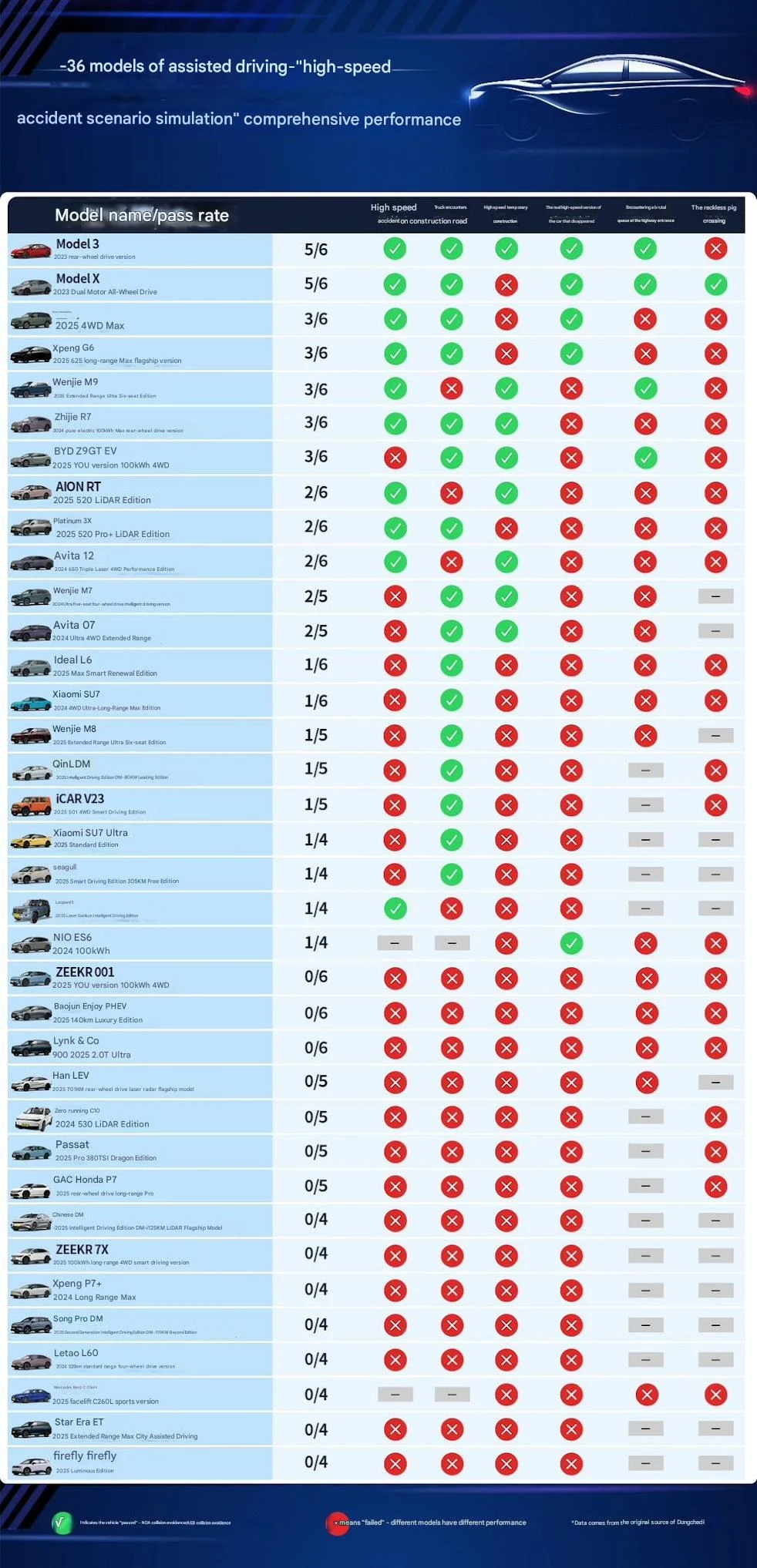
    5. Top Performance in High-Stakes Scenarios: In an assessment involving 36 vehicles and 15 challenging scenarios, Tesla secured the highest rankings, successfully managing difficult situations like sudden obstacles and night driving.


    From the team behind the unique crash tests with a semi-truck, which gained praise for the Tesla Model 3, comes the most extensive evaluation of current autonomous driving technologies to date.

    Rapid Growth in China

    In recent years, the number of autonomous driving systems has surged in China, with BYD, the leading electric vehicle manufacturer, even providing its Eye of God self-driving technology at no cost with every vehicle, unlike Tesla, which charges for its Full Self-Driving (FSD) feature.

    Tesla’s Performance

    Tesla’s FSD system, whether under supervision or fully autonomous, has showcased its worth in an independent assessment that compared it to the Advanced Driver Assistance Systems (ADAS) from well-known competitors like Xiaomi, Toyota, and Huawei.

    Tesla faces restrictions on exporting raw driving data from China and trains its FSD algorithms primarily in a simulated environment using publicly accessible video footage and test tracks, rather than through real-world driving experiences as it does in the US. Elon Musk stated:

    > “So it will train using simulator for bus lanes in China. Bus lanes in China are among the biggest challenges for FSD, as they are quite complex. There are specific hours when you can use them, and if you enter the bus lane at the wrong time, you get an automatic ticket. So, it’s a serious issue. We will incorporate that into our simulator to train on it. The car needs to understand the time of day and read the signs. We will get this sorted out.”

    Tesla’s Success

    Tesla appears to have resolved many complex issues related to driving in China, as its vehicles have undergone rigorous tests since the launch of FSD. This includes navigating unmarked and unlit mountain roads at night and managing rush hour traffic in city centers.

    The results have been impressive; however, the latest independent assessment placed them in edge-case situations, directly competing with some of the most prominent brands and models available in China, including those equipped with LiDAR.

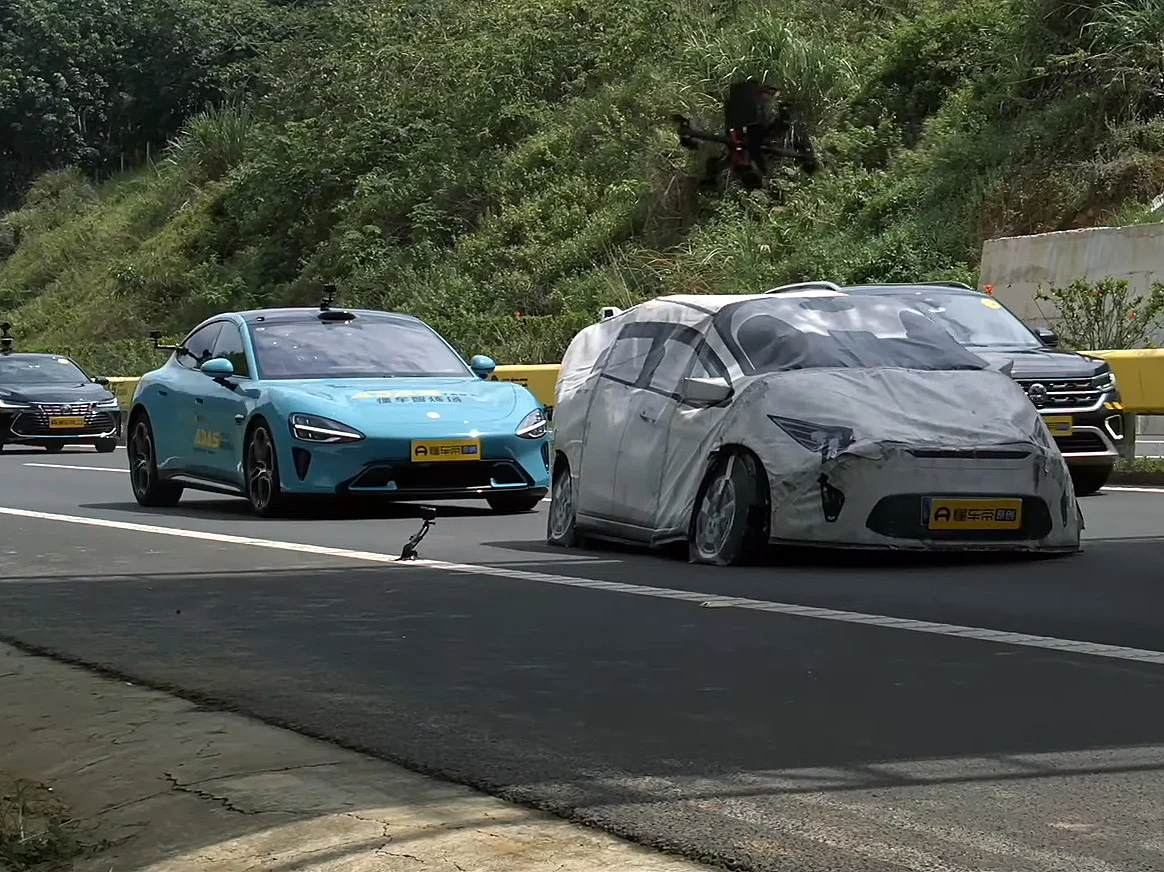
    To cut to the chase, Tesla secured the top position in all demanding tests, which involved scenarios where children or animals suddenly appeared on the road, other cars making abrupt cuts, construction zones, night driving, and various other challenging conditions.

    The ADAS evaluations involved 36 vehicles facing 15 high-stakes scenarios, resulting in a total of 216 collisions, none of which included the Model X. Even during the difficult wild boar test, Tesla’s vision-based strategy for scaling and learning in autonomous systems proved its efficacy.

    Source:
    Link


  • BYD to Cover Self-Parking System Damages Without Insurance Claim

    BYD to Cover Self-Parking System Damages Without Insurance Claim

    Key Takeaways

    1. BYD takes full responsibility for damages caused by its Eye of God autonomous driving technology, eliminating the need for insurance claims.
    2. The Eye of God assisted driving system is included for free with most BYD vehicles, unlike Tesla’s paid Full Self-Driving feature.
    3. BYD’s new Level 4 self-parking feature is the first to receive certification, allowing passengers to relax while the car parks itself.
    4. BYD has the largest self-driving research team and uses extensive cloud data, with Eye of God already in over a million cars.
    5. BYD’s strategy of offering free autonomous driving technology aims to quickly gather data and improve its features, contrasting with Tesla’s paid model.


    Owners of BYD vehicles that come with the Eye of God autonomous driving technology can now reach out to the company’s customer service instead of having to make an insurance claim for damages that occur while using it.

    BYD’s Assurance

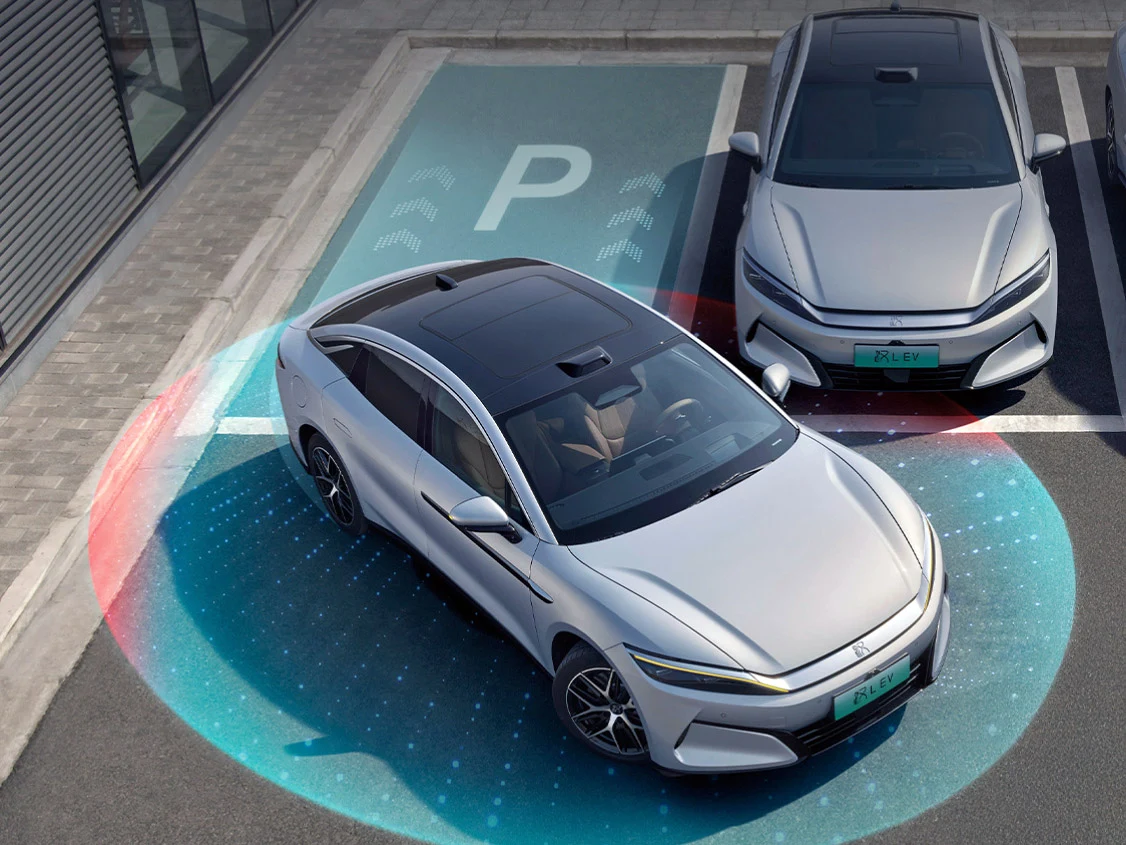
    BYD is stepping up and taking accountability for its new Level 4 self-parking feature, showing strong confidence in how it works. This means drivers won’t need to file insurance claims, and they won’t face higher premiums, which is usually what happens with insurance firms in China.

    “We take full responsibility for the safety and damages of all users of vehicles equipped with God’s Eye in smart parking situations,” stated the largest electric vehicle manufacturer. Their new automated parking feature is the first to earn a Level 4 autonomous driving certification, which allows passengers to relax while it parks, with the manufacturer liable for any accidents.

    Free Features for Customers

    Being the leading electric vehicle producer has advantages, as BYD includes the Eye of God assisted driving system at no extra cost with most of its cars, unlike Tesla, which demands payment for its Full Self-Driving (FSD) feature.

    BYD has built the largest self-driving research and development team in the market and utilizes a massive amount of cloud data, as God’s Eye is already in over a million of its cars and is offered for free. An extensive update for Eye of God is on the way, which will enhance its functions, from highway driving to the previously mentioned Level 4 autonomous parking.

    Competing Strategies

    Offering the self-driving system for free is a different approach from Tesla’s, which either requires an $8,000 payment for the software or a $99 monthly subscription. BYD is in a race to gather autonomous driving data quickly to keep up with Tesla and others, and providing Eye of God at no cost seems like a smart move to collect data and advance its features towards higher levels of autonomy swiftly.

    Source:
    Link