
Key Takeaways
1. Rapid Growth in Autonomous Technologies in China: The number of autonomous driving systems has significantly increased, with companies like BYD offering self-driving technology at no cost.
2. Independent Assessment of Tesla’s FSD: Tesla’s Full Self-Driving (FSD) system has been independently evaluated and compared favorably against competing Advanced Driver Assistance Systems (ADAS) from brands like Xiaomi, Toyota, and Huawei.
3. Data Export Restrictions: Tesla faces limitations on exporting driving data from China, leading to a reliance on simulated environments for training its FSD algorithms rather than real-world driving experiences.
4. Successful Navigation in Challenging Conditions: Tesla has demonstrated its ability to navigate complex driving scenarios in China, including unmarked roads and rush hour traffic, achieving impressive results in rigorous testing.
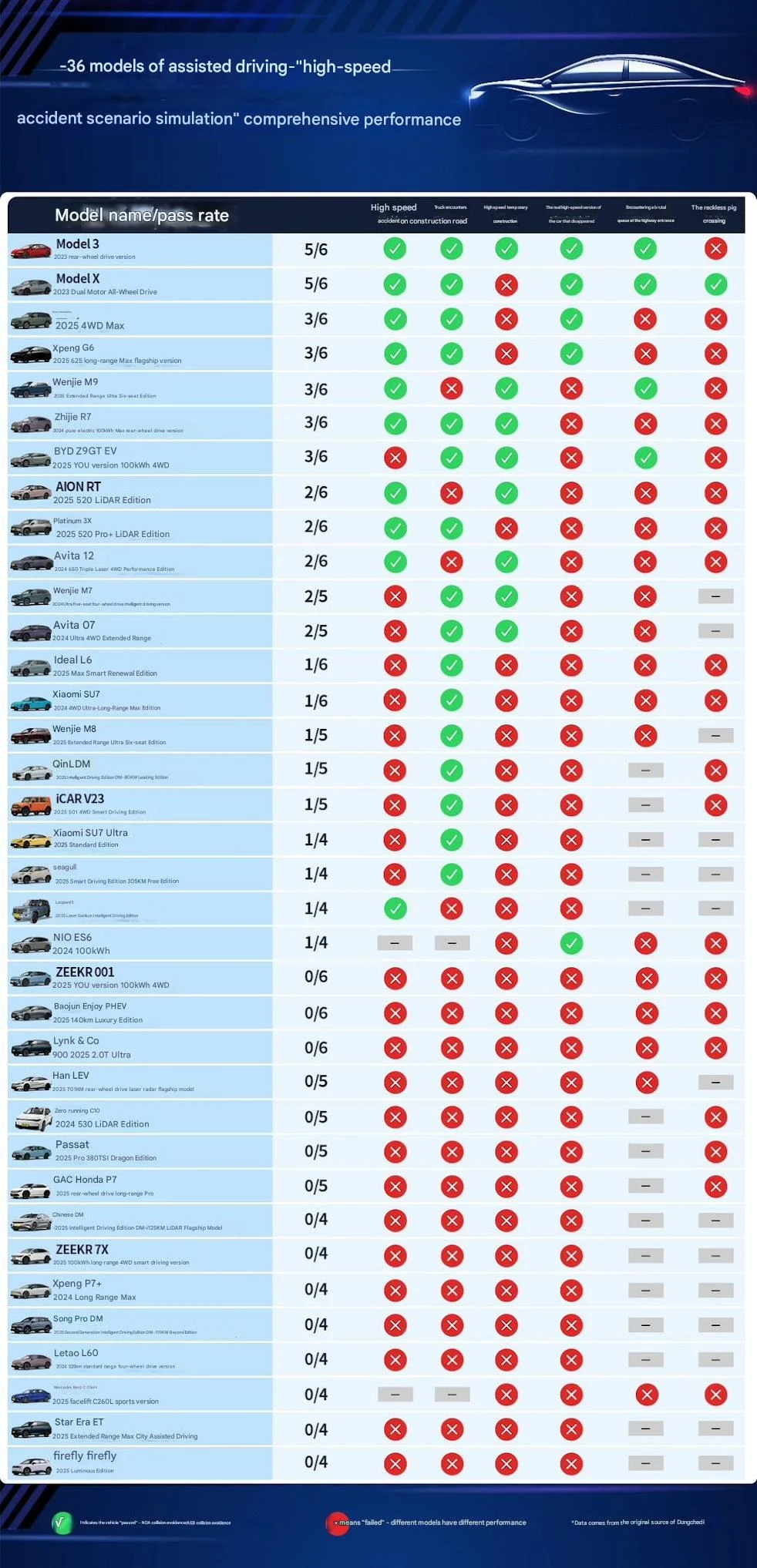
5. Top Performance in High-Stakes Scenarios: In an assessment involving 36 vehicles and 15 challenging scenarios, Tesla secured the highest rankings, successfully managing difficult situations like sudden obstacles and night driving.
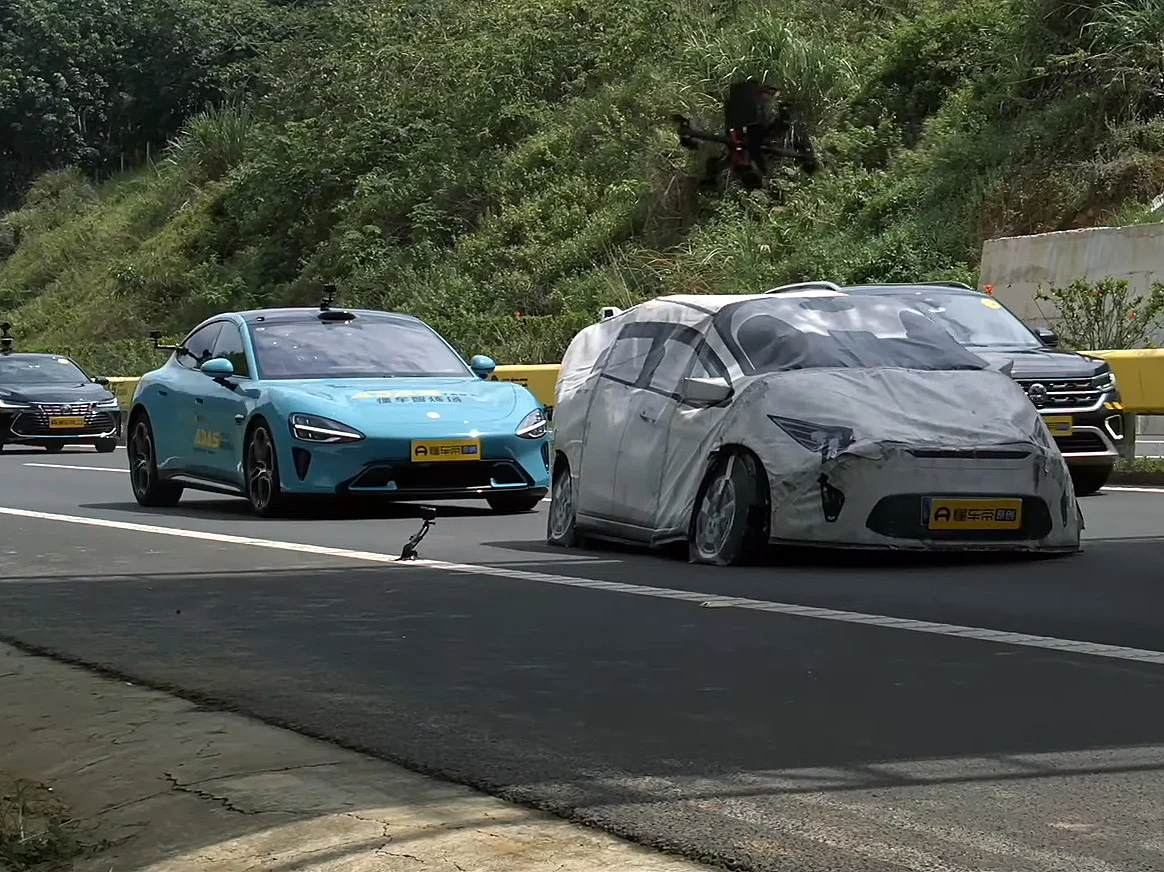
From the team behind the unique crash tests with a semi-truck, which gained praise for the Tesla Model 3, comes the most extensive evaluation of current autonomous driving technologies to date.
Rapid Growth in China
In recent years, the number of autonomous driving systems has surged in China, with BYD, the leading electric vehicle manufacturer, even providing its Eye of God self-driving technology at no cost with every vehicle, unlike Tesla, which charges for its Full Self-Driving (FSD) feature.
Tesla’s Performance
Tesla’s FSD system, whether under supervision or fully autonomous, has showcased its worth in an independent assessment that compared it to the Advanced Driver Assistance Systems (ADAS) from well-known competitors like Xiaomi, Toyota, and Huawei.
Tesla faces restrictions on exporting raw driving data from China and trains its FSD algorithms primarily in a simulated environment using publicly accessible video footage and test tracks, rather than through real-world driving experiences as it does in the US. Elon Musk stated:
> “So it will train using simulator for bus lanes in China. Bus lanes in China are among the biggest challenges for FSD, as they are quite complex. There are specific hours when you can use them, and if you enter the bus lane at the wrong time, you get an automatic ticket. So, it’s a serious issue. We will incorporate that into our simulator to train on it. The car needs to understand the time of day and read the signs. We will get this sorted out.”
Tesla’s Success
Tesla appears to have resolved many complex issues related to driving in China, as its vehicles have undergone rigorous tests since the launch of FSD. This includes navigating unmarked and unlit mountain roads at night and managing rush hour traffic in city centers.
The results have been impressive; however, the latest independent assessment placed them in edge-case situations, directly competing with some of the most prominent brands and models available in China, including those equipped with LiDAR.
To cut to the chase, Tesla secured the top position in all demanding tests, which involved scenarios where children or animals suddenly appeared on the road, other cars making abrupt cuts, construction zones, night driving, and various other challenging conditions.
The ADAS evaluations involved 36 vehicles facing 15 high-stakes scenarios, resulting in a total of 216 collisions, none of which included the Model X. Even during the difficult wild boar test, Tesla’s vision-based strategy for scaling and learning in autonomous systems proved its efficacy.
Source:
Link
Leave a Reply