Tag: Tesla Roadster 2

  • Tesla Roadster 2 Release Date 2027: New Colors & Battery Upgrades

    Tesla Roadster 2 Release Date 2027: New Colors & Battery Upgrades

    Key Takeaways

    1. Tesla is set to showcase a concept for the “flying” supercar within the next few months.
    2. The launch date for the Tesla Roadster 2 is projected for 2027, with a goal to move quickly from concept to sellable product.
    3. The Roadster 2 is still in early development stages, featuring a new high-voltage battery and powertrain design for improved performance.
    4. The Roadster 2 is expected to accelerate from 0 to 60 mph in less than a second and may incorporate technology inspired by SpaceX.
    5. There are potential downforce features for the Roadster 2, similar to systems used in other high-performance vehicles.


    While BYD, Tesla’s main rival, has already launched the fastest production car in the world, Tesla is taking its time to unveil the successor to its very first model, the Roadster.

    Upcoming Supercar Concept

    Franz von Holzhausen, the design chief at Tesla, stated that a concept for the “flying” supercar will be showcased within the next couple of months, just as they had promised.

    The launch date for the Tesla Roadster 2, however, seems to be set for 2027. Franz suggested that Tesla is aiming to “move quicker” from revealing the concept to having a “sellable product” within a two-year timeframe.

    Development Stages

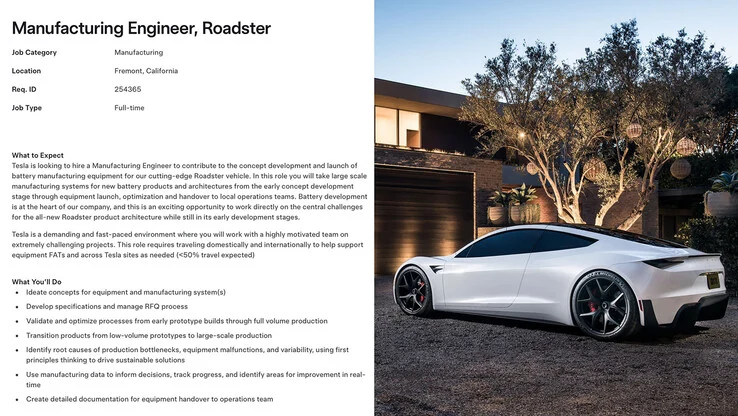
    Sadly, this indicates that the Tesla Roadster 2 is still in its concept phase. Tesla mentioned in a recent job listing that the production is “still in its early development stages.” The ad also points out that the “cutting-edge” Roadster 2 will feature a new high-voltage battery and powertrain design, which suggests a notable improvement in performance over what is currently available, including the Model S Plaid.

    The engineer Tesla plans to hire will be responsible for taking “large scale manufacturing systems for new battery products and architectures from the early concept development stage through equipment launch, optimization and handover to local operations teams.”

    Insane Specifications

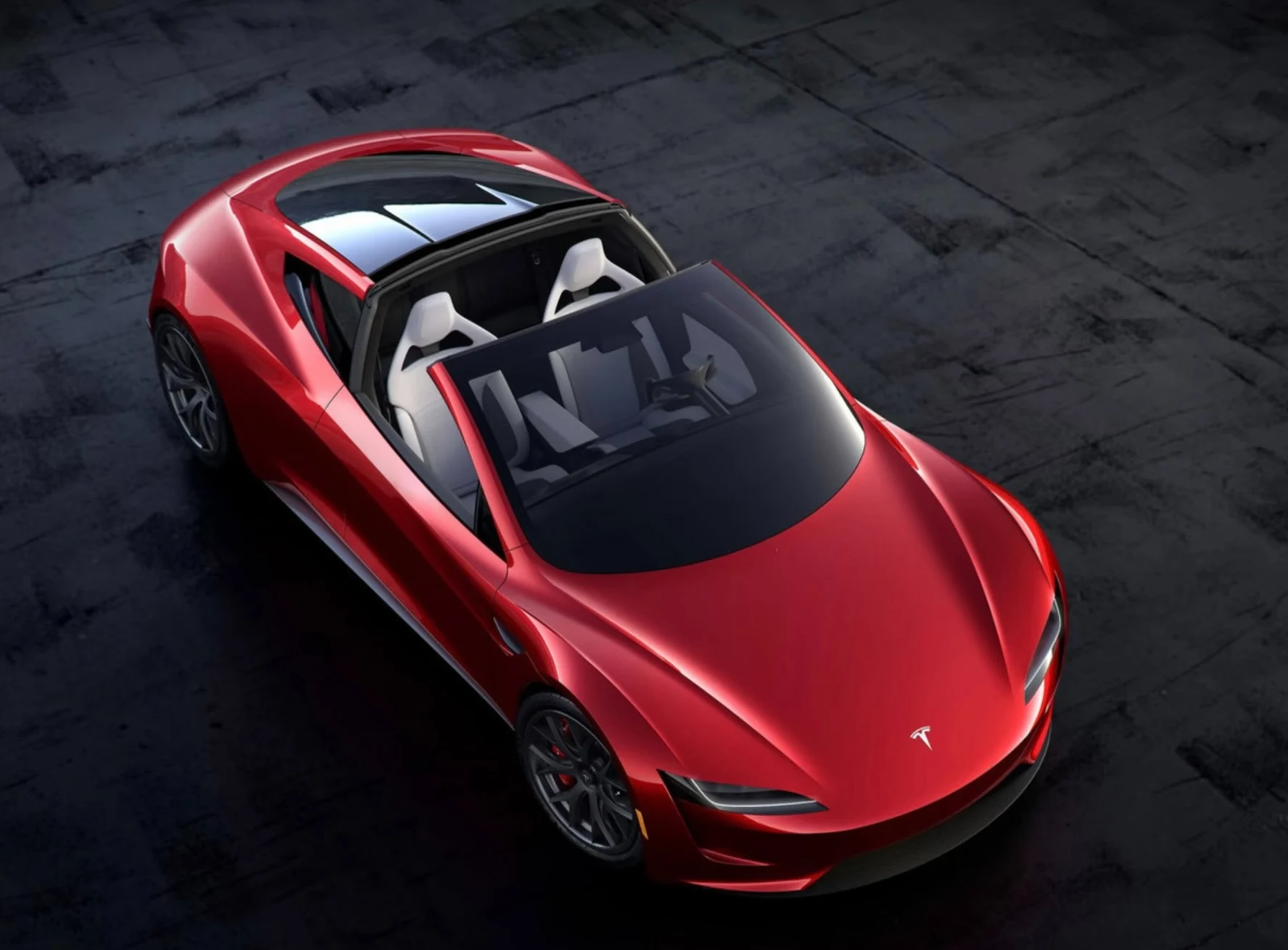
    The Tesla Roadster 2 is expected to come with some mind-blowing specifications, allowing it to accelerate from 0 to 60 mph in less than a second. As Elon Musk has stated, the Roadster 2 will even be able to “fly.” Many experts, along with the CEO of Rimac, believe that achieving this feat will likely require some downforce, potentially from the powerful skirt fans Tesla recently patented. This concept is not unlike the McMurtry Spéirling electric hypercar, which can reach 0-60 mph in 1.55 seconds.

    In addition to its remarkable sub-second acceleration capabilities, Tesla has hinted that the Roadster 2 will incorporate technology inspired by SpaceX. However, it remains to be seen whether this entails the alloys used in Starship or the “wings” and downforce system when Tesla reveals the Roadster 2 this holiday quarter.

    Source:
    Link


  • BYD U9 Sets World Record as Fastest EV with Over 3000 HP

    BYD U9 Sets World Record as Fastest EV with Over 3000 HP

    Key Takeaways

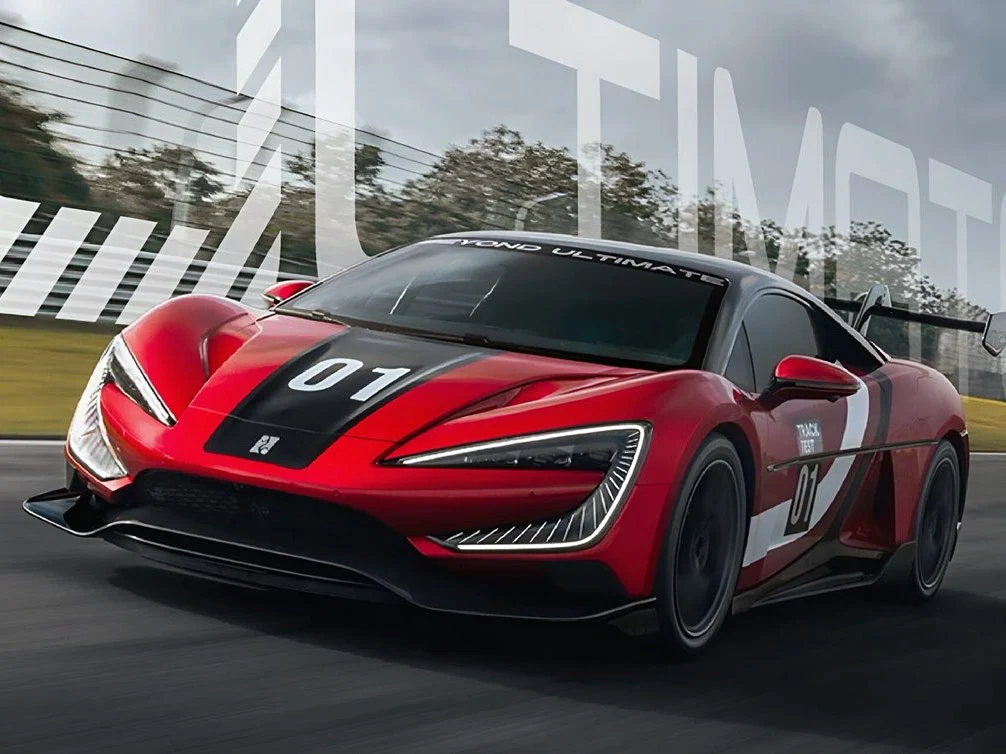
    1. BYD’s U9 Track Edition set a new speed record for electric cars, reaching 472.41 KPH (nearly 300 MPH) at the ATP test track in Germany.
    2. The U9 Track Edition features over 3,000 horsepower from a quad-motor system with advanced 32,000 RPM electric motors and a 1,200 V powertrain.
    3. Compared to the standard U9, which costs $235,000 and produces 1,288 HP, the Track Edition offers significant performance upgrades at a lower price than competitors like the Rimac Nevera R.
    4. BYD claims the U9 Track Edition has the highest power-to-weight ratio of any vehicle, achieving 1,217 Ps from one ton of mass, highlighting its competitive edge in the EV market.
    5. The growing competition in the EV sector includes Xiaomi’s upcoming YU7 Ultra supercar, set to enter the European market in 2027, indicating increased rivalry among electric vehicle manufacturers.


    While the Rimac Nevera R hypercar’s recent acceleration performance has raised eyebrows, the leading electric vehicle manufacturer has now developed a more affordable competitor that has just set a new speed record for electric cars.

    Speed Testing

    The record was achieved using the Track Edition of BYD’s U9, which is marketed under its luxury Yangwang brand. The test took place on a closed course at the ATP test track in Germany, where professional driver Marc Basseng reached an impressive speed of 472.41 KPH, which is nearly 300 miles per hour, before having to brake. To put it into perspective, this top speed is similar to that of the Bugatti Chiron but was reached by an electric vehicle that employs a modest 80 KWh LFP battery, which is significantly cheaper.

    Power and Performance

    The U9 Track Edition boasts over 3,000 horsepower thanks to its innovative quad-motor system that utilizes BYD’s advanced 32,000 RPM electric motors, each capable of peaking at 555 kW. To support this power, BYD has created the first mass-produced 1,200 V electric vehicle powertrain. They’ve also improved the thermal management of the powertrain to handle the high energy demands.

    In comparison to the standard U9, which operates on BYD’s 1 kV platform, costs $235,000, and produces a total of 1,288 HP from four 240 kW motors, the Track Edition is a significant upgrade. While it’s certainly less expensive than the Nevera R, which is priced at $2.7 million and has a top speed of 268.2 MPH, it still represents a leap in performance.

    Market Implications

    BYD claimed that the U9 Track Edition has the highest power-to-weight ratio of any vehicle to date, achieving 1,217 Ps from one ton of vehicle mass. The fact that this record was set in Germany is noteworthy, as BYD and other Chinese electric vehicle manufacturers are aiming for global growth, particularly in Europe, which presents a huge market opportunity.

    Xiaomi has also entered the scene with its YU7 Ultra supercar, which is set to hit the European market in 2027, heightening the competition in the EV sector. Notably, the video showcasing the record run did not provide details on the remaining battery life after reaching such high speeds, but with a charging capacity of 500 kW, the U9 should manage battery depletion effectively.

    Source:
    Link


  • Tesla Roadster 2 Could Use Banned F1 Tech to Achieve Flight

    Tesla Roadster 2 Could Use Banned F1 Tech to Achieve Flight

    Key Takeaways

    1. Elon Musk hints at achieving sub-second acceleration (0-60 mph in 0.99 seconds) for the Tesla Roadster 2, possibly using SpaceX technology.
    2. The CEO of Rimac doubts such acceleration can be achieved without thrusters, emphasizing the need for advanced technology.
    3. Tesla has patented a new aerodynamic system with fans and skirts that adjusts downforce for varying speeds and driving conditions.
    4. The fan-and-skirt system aims to enhance grip and cornering, crucial for breaking racetrack records.
    5. Future developments for the Roadster 2 include a planned “epic demo” in 2024, with uncertainty around the use of thrusters or wings for acceleration.


    Elon Musk has hinted at mind-blowing sub-second acceleration for the new Tesla Roadster 2 hypercar. However, the CEO of Rimac, the company behind the world’s fastest electric car, the Nevera R, expressed doubts that such performance could be achieved without using some type of thrusters.

    Potential Innovations

    Musk suggested that the Roadster 2 may utilize SpaceX’s Starship rocket technology to reach the impressive 0.99 seconds for 0-60 mph acceleration. Tesla might employ a downforce technique that was banned shortly after its Formula 1 introduction because it gave the Brabham BT46 “fan car” an unfair edge on the racetrack.

    The BT46 drew inspiration from fan-based systems on race vehicles like the Chaparral 2J, which dominated the North American Can-Am sports car series in 1970, and the later Tyrrell 008. Both of these cars featured fans powered either by a dedicated motor or the main engine. While they were ostensibly intended for cooling, the fans also helped to draw air from beneath the car, allowing the denser air above to create downforce, keeping the vehicle more stable than traditional spoilers, venturi tunnels, or other aerodynamic devices.

    New Patent for Aerodynamics

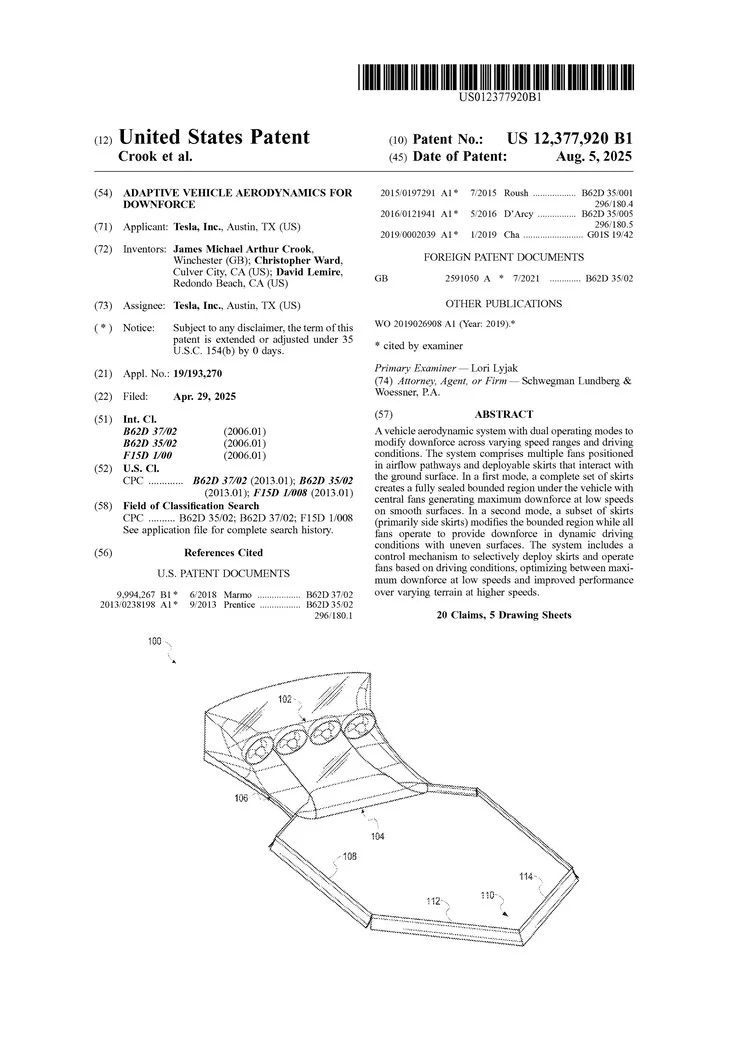
    Recently, Tesla has been awarded a patent for an “adaptive vehicle aerodynamics for downforce” system, which includes fans and skirts designed to create a vacuum under ultra-fast vehicles like the Roadster 2.

    This aerodynamic system operates in two modes to adjust downforce based on different speeds and driving conditions. It features several fans located in airflow paths and deployable skirts that interact with the ground. In the first mode, all skirts form a sealed area under the car, with central fans providing maximum downforce at low speeds on smooth surfaces. In the second mode, some skirts (mainly the side ones) adjust the sealed area while all fans work to generate downforce during dynamic driving on uneven terrains. The system has a control mechanism that selectively uses skirts and fans according to driving conditions, balancing between maximum downforce at lower speeds and better performance on varied terrain at higher speeds.

    The highlight here is “at varying speed ranges” because, unlike standard downforce tools like spoilers, the fan-and-skirt combination applies pressure continuously, thus enhancing grip, cornering, and all other crucial elements needed to break racetrack records in a vehicle that could accelerate from 0-60 mph in just one second.

    Future Developments

    Whether the acceleration boost will come from some sort of thrusters developed by SpaceX or “wings,” as Musk describes them, is still uncertain. However, he recently left a Roadster 2 presentation with the design team feeling quite impressed, mentioning that a “most epic demo” is planned for later this year. Musk previously teased that the Roadster 2 would “fly” in 2024, with promises for the demo to occur in that year.

    The hypercar has taken a back seat while Tesla focused on developing the Cybercab and completing a major portfolio overhaul, which is now finished. Fans are eagerly awaiting the Roadster 2, which could, ironically, also be equipped with fans.

    Source:
    Link


  • BYD Challenges Tesla Roadster 2 with High-Speed Supercar Jump

    BYD Challenges Tesla Roadster 2 with High-Speed Supercar Jump

    As a way to ease the concerns of early Roadster 2 fans who have been waiting for their orders for years, Elon Musk hinted that Tesla’s next-generation supercar will be launched in 2025.

    Exciting Developments for Tesla

    When BYD introduced its first electric hypercar about a year ago, Musk quickly pointed out that the Tesla Roadster 2 would undergo a major redesign, developed in partnership with SpaceX. This new model is expected to feature an astonishing sub-second acceleration, transforming it into what Musk described as an “exciting flying machine with the SpaceX package.”

    SpaceX Technology Integration

    This package could likely include cold air thrusters, as noted by the CEO of Rimac, an electric hypercar brand, with Musk confirming this idea back in 2019. “Will use SpaceX cold gas thruster system with ultra-high pressure air in a composite over-wrapped pressure vessel in place of the 2 rear seats,” Musk had stated previously, which is considered a crucial element for the Roadster 2 to achieve its sub-second speed.

    Challenges and Delays

    Then, delays in the Cybertruck production arose, along with the urgent demand for more affordable vehicles like the Model 2 and Cybercab, pushing the Roadster 2 project down the priority list. Musk even promised a “mind-blowing demo” for the previous year, which never happened. Fans are hopeful that the “flying” Roadster will finally make its appearance in 2025.

    BYD’s Advancements

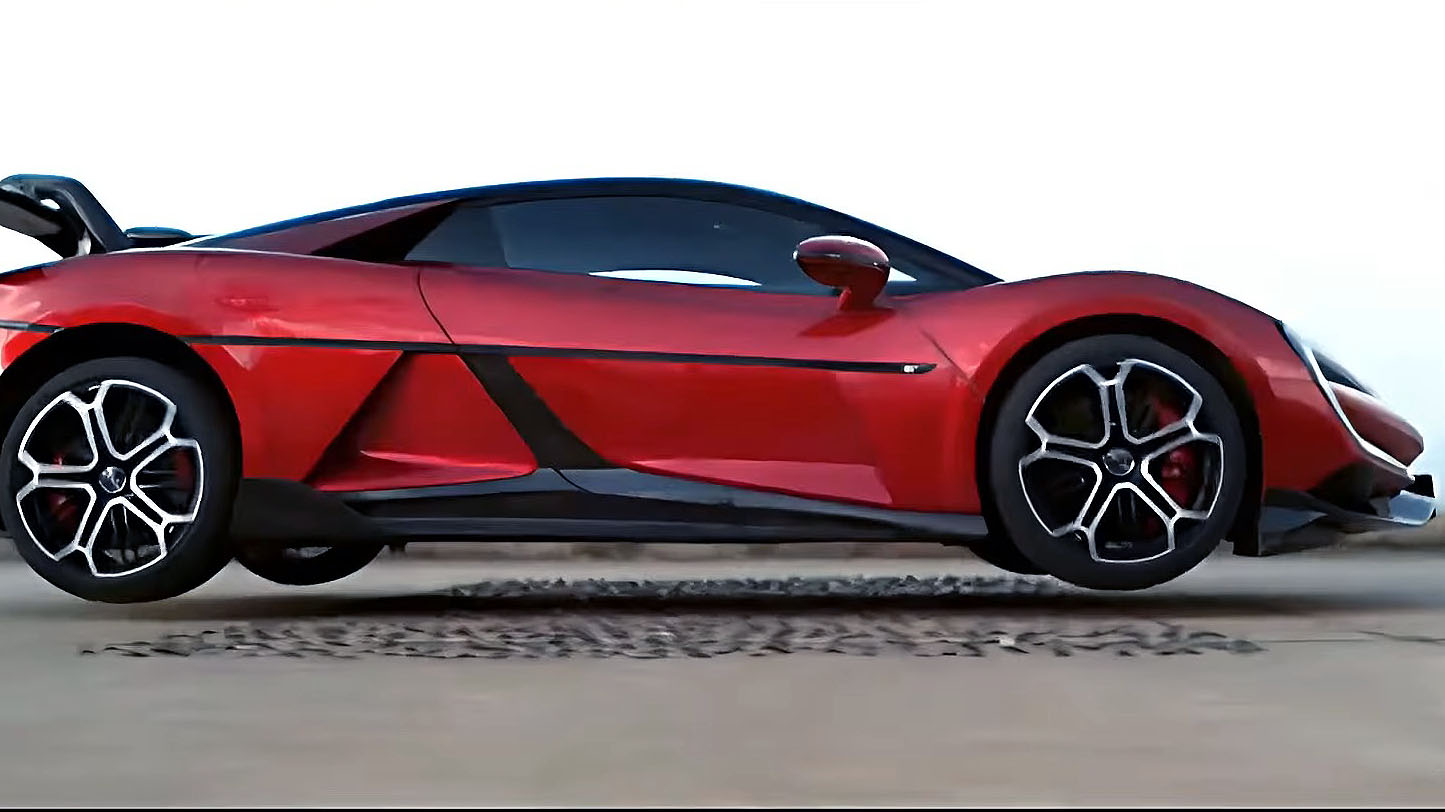
    In contrast, BYD is already on the market with a 1300 HP hypercar that can actually take to the air, albeit briefly. Recently, the largest EV manufacturer showcased the active suspension system of the Yangwang U9, demonstrating its capability by jumping over a pothole with a 20-foot leap.

    Advanced Suspension Features

    The active suspension system from BYD comprises three unique sections – DiSus-C, DiSus-A, and DiSus-P – which manage variable damping, air suspension, and hydraulic functions, respectively. When working together, these systems can individually modify each wheel’s height, allowing the car to perform vertical jumps when necessary—just don’t mention this feature to law enforcement during a chase.

    Conclusion

    A remarkable jump to avoid a pothole can be seen in the video below, and it will be intriguing to see how Elon Musk reacts to this flying hypercar demonstration.

  • BYD Challenges Tesla Roadster 2 with High-Speed Supercar Jump

    BYD Challenges Tesla Roadster 2 with High-Speed Supercar Jump

    As a way to ease the concerns of early Roadster 2 fans who have been waiting for their orders for years, Elon Musk hinted that Tesla’s next-generation supercar will be launched in 2025.

    Exciting Developments for Tesla

    When BYD introduced its first electric hypercar about a year ago, Musk quickly pointed out that the Tesla Roadster 2 would undergo a major redesign, developed in partnership with SpaceX. This new model is expected to feature an astonishing sub-second acceleration, transforming it into what Musk described as an "exciting flying machine with the SpaceX package."

    SpaceX Technology Integration

    This package could likely include cold air thrusters, as noted by the CEO of Rimac, an electric hypercar brand, with Musk confirming this idea back in 2019. "Will use SpaceX cold gas thruster system with ultra-high pressure air in a composite over-wrapped pressure vessel in place of the 2 rear seats," Musk had stated previously, which is considered a crucial element for the Roadster 2 to achieve its sub-second speed.

    Challenges and Delays

    Then, delays in the Cybertruck production arose, along with the urgent demand for more affordable vehicles like the Model 2 and Cybercab, pushing the Roadster 2 project down the priority list. Musk even promised a "mind-blowing demo" for the previous year, which never happened. Fans are hopeful that the "flying" Roadster will finally make its appearance in 2025.

    BYD’s Advancements

    In contrast, BYD is already on the market with a 1300 HP hypercar that can actually take to the air, albeit briefly. Recently, the largest EV manufacturer showcased the active suspension system of the Yangwang U9, demonstrating its capability by jumping over a pothole with a 20-foot leap.

    Advanced Suspension Features

    The active suspension system from BYD comprises three unique sections – DiSus-C, DiSus-A, and DiSus-P – which manage variable damping, air suspension, and hydraulic functions, respectively. When working together, these systems can individually modify each wheel’s height, allowing the car to perform vertical jumps when necessary—just don’t mention this feature to law enforcement during a chase.

    Conclusion

    A remarkable jump to avoid a pothole can be seen in the video below, and it will be intriguing to see how Elon Musk reacts to this flying hypercar demonstration.

    Source: Link