
Key Takeaways
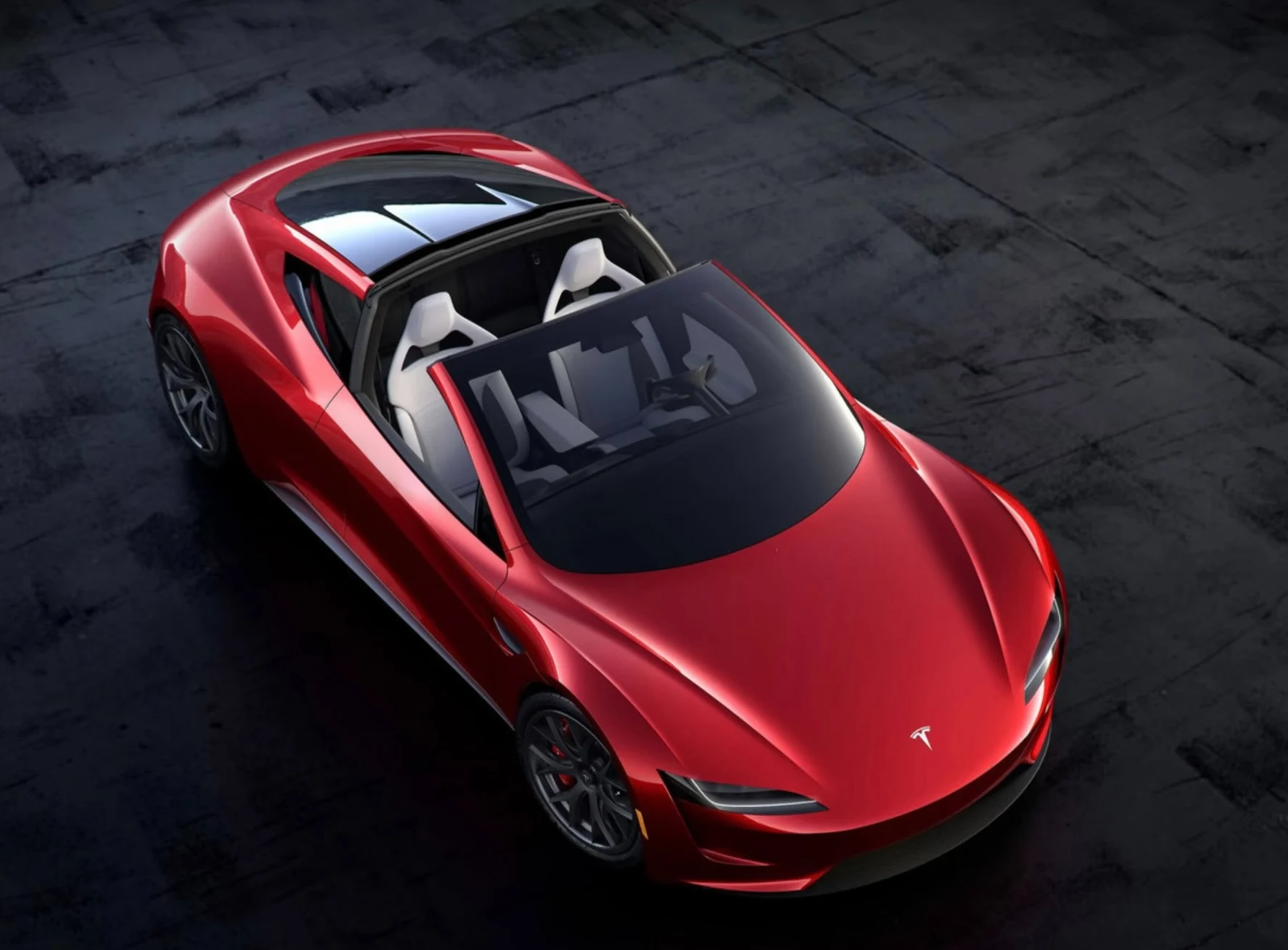
1. Elon Musk hints at achieving sub-second acceleration (0-60 mph in 0.99 seconds) for the Tesla Roadster 2, possibly using SpaceX technology.
2. The CEO of Rimac doubts such acceleration can be achieved without thrusters, emphasizing the need for advanced technology.
3. Tesla has patented a new aerodynamic system with fans and skirts that adjusts downforce for varying speeds and driving conditions.
4. The fan-and-skirt system aims to enhance grip and cornering, crucial for breaking racetrack records.
5. Future developments for the Roadster 2 include a planned “epic demo” in 2024, with uncertainty around the use of thrusters or wings for acceleration.
Elon Musk has hinted at mind-blowing sub-second acceleration for the new Tesla Roadster 2 hypercar. However, the CEO of Rimac, the company behind the world’s fastest electric car, the Nevera R, expressed doubts that such performance could be achieved without using some type of thrusters.
Potential Innovations
Musk suggested that the Roadster 2 may utilize SpaceX’s Starship rocket technology to reach the impressive 0.99 seconds for 0-60 mph acceleration. Tesla might employ a downforce technique that was banned shortly after its Formula 1 introduction because it gave the Brabham BT46 “fan car” an unfair edge on the racetrack.
The BT46 drew inspiration from fan-based systems on race vehicles like the Chaparral 2J, which dominated the North American Can-Am sports car series in 1970, and the later Tyrrell 008. Both of these cars featured fans powered either by a dedicated motor or the main engine. While they were ostensibly intended for cooling, the fans also helped to draw air from beneath the car, allowing the denser air above to create downforce, keeping the vehicle more stable than traditional spoilers, venturi tunnels, or other aerodynamic devices.
New Patent for Aerodynamics
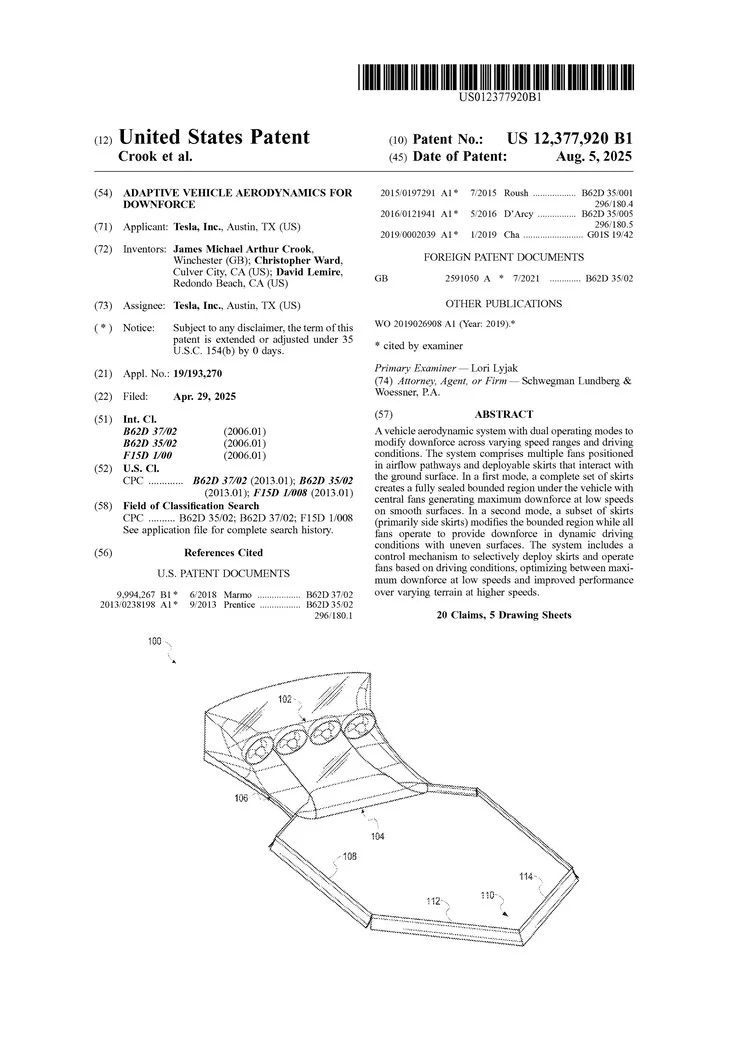
Recently, Tesla has been awarded a patent for an “adaptive vehicle aerodynamics for downforce” system, which includes fans and skirts designed to create a vacuum under ultra-fast vehicles like the Roadster 2.
This aerodynamic system operates in two modes to adjust downforce based on different speeds and driving conditions. It features several fans located in airflow paths and deployable skirts that interact with the ground. In the first mode, all skirts form a sealed area under the car, with central fans providing maximum downforce at low speeds on smooth surfaces. In the second mode, some skirts (mainly the side ones) adjust the sealed area while all fans work to generate downforce during dynamic driving on uneven terrains. The system has a control mechanism that selectively uses skirts and fans according to driving conditions, balancing between maximum downforce at lower speeds and better performance on varied terrain at higher speeds.
The highlight here is “at varying speed ranges” because, unlike standard downforce tools like spoilers, the fan-and-skirt combination applies pressure continuously, thus enhancing grip, cornering, and all other crucial elements needed to break racetrack records in a vehicle that could accelerate from 0-60 mph in just one second.
Future Developments
Whether the acceleration boost will come from some sort of thrusters developed by SpaceX or “wings,” as Musk describes them, is still uncertain. However, he recently left a Roadster 2 presentation with the design team feeling quite impressed, mentioning that a “most epic demo” is planned for later this year. Musk previously teased that the Roadster 2 would “fly” in 2024, with promises for the demo to occur in that year.
The hypercar has taken a back seat while Tesla focused on developing the Cybercab and completing a major portfolio overhaul, which is now finished. Fans are eagerly awaiting the Roadster 2, which could, ironically, also be equipped with fans.
Source:
Link
Leave a Reply