Tag: Tesla Cybertruck

  • BYD Unveils 1MW EV Charger with Hanging Cables for Mega Network

    BYD Unveils 1MW EV Charger with Hanging Cables for Mega Network

    Key Takeaways

    1. BYD is launching a 1000V electric vehicle system with 32,000 rpm motors and rapid 5-minute charging capabilities.
    2. The company plans to build 4,000 charging stations and partner for an additional 15,000, aiming to create the largest megawatt-level charging network globally.
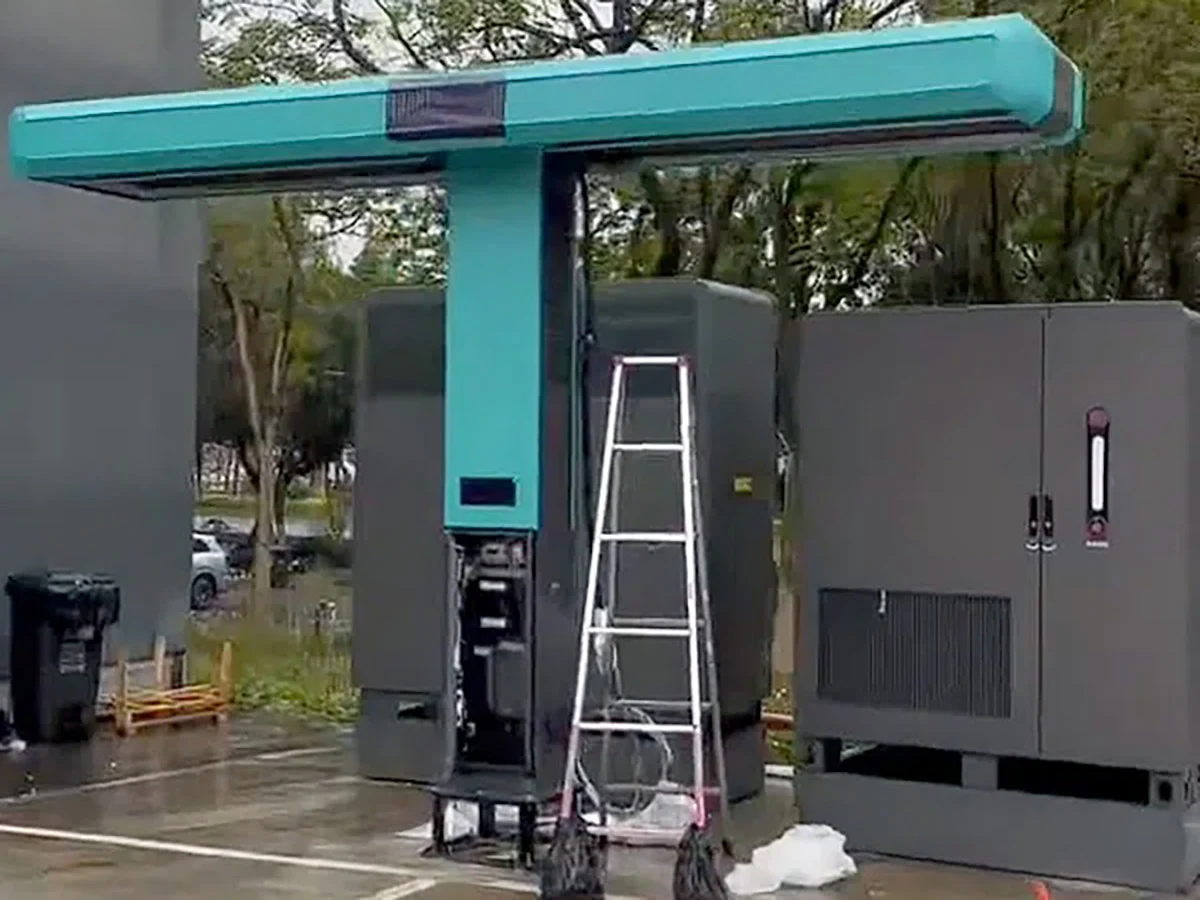
    3. BYD’s innovative T-shaped charging piles feature heavy cables on a pulley system for user-friendliness and accessibility to all vehicle charging ports.
    4. The new charging piles can deliver peak outputs of 1360 kW, providing over 200 miles of range from just five minutes of charging.
    5. Tesla is also developing a megawatt charging network, but its current V4 Supercharger stations only reach up to 500 kW, resulting in longer charging times compared to BYD’s system.


    After unveiling its groundbreaking 1000V electric vehicle system that features 32,000 rpm motors and rapid 5-minute charging capabilities, BYD is set to launch an enhanced series of charging piles.

    Ambitious Plans for Expansion

    The company plans to construct 4,000 of these charging stations independently and has partnered with others to create an additional 15,000. This initiative essentially positions BYD to establish the largest megawatt-level charging network globally.

    Innovative Design Features

    What’s particularly fascinating are the charging piles designed by the leading EV manufacturer, focused on user-friendliness. Rather than the traditional Tesla Supercharger setup, the new T-shaped design utilizes two heavy cables that hang from a pulley system, eliminating issues with their weight. The cables are designed to be long enough to reach all charging ports, without touching the ground, no matter where the EV maker has placed them.

    Unmatched Charging Speed

    The latest BYD megawatt charging piles are tall enough to accommodate most electric vehicles, and the dual charging guns can operate simultaneously, delivering exceptional charging speeds that are unmatched in the mainstream EV market. The peak output hits 1360 kW, enabling drivers to gain over a mile of range for every second spent charging, resulting in an impressive 200 miles of range after just five minutes of charging.

    Since BYD is also ranked as the second-largest battery producer worldwide, it supports its liquid-cooled megawatt charging piles with an energy storage and release system that incorporates supercapacitors. This setup allows for efficient electricity offloading during peak hours while utilizing cheaper electricity gathered during off-peak times.

    Tesla’s Competing Efforts

    Meanwhile, Tesla is developing its own megawatt charging network for Semi trucks, utilizing its North American Charging Standard specifications that can achieve peaks of 1.2 MW. However, the standard V4 Supercharger stations it currently deploys only reach up to 500 kW, and there’s only one vehicle, the Cybertruck, that features a relatively modern 800V powertrain architecture to utilize this. Nonetheless, the electric pickup is equipped with Tesla’s 4680 battery cells, which still have a charging curve that leaves much to be desired, resulting in longer charging times compared to BYD’s 1000V vehicles.

    Source:
    Link


  • 2025 Tesla Cybertruck Crash Test: NHTSA vs IIHS Ratings Revealed

    2025 Tesla Cybertruck Crash Test: NHTSA vs IIHS Ratings Revealed

    Key Takeaways

    1. The IIHS gave the 2025 Tesla Cybertruck mixed ratings, with a ‘good’ score for the Moderate Overlap Front Crash Test applicable only to models produced after April 2025.
    2. The Cybertruck received a ‘marginal’ rating for the Seat Belt Reminder system and ‘poor’ for headlight performance, impacting its eligibility for IIHS’s Top Safety Pick awards.
    3. The Cybertruck was not evaluated in Small Overlap Front and Side Crash test categories by IIHS, limiting its overall safety assessment.
    4. The NHTSA awarded the Cybertruck a top overall rating, scoring five stars in front and side crash tests and four stars for rollover resistance.
    5. The contrasting ratings from IIHS and NHTSA highlight differences in safety assessment criteria between the two organizations.


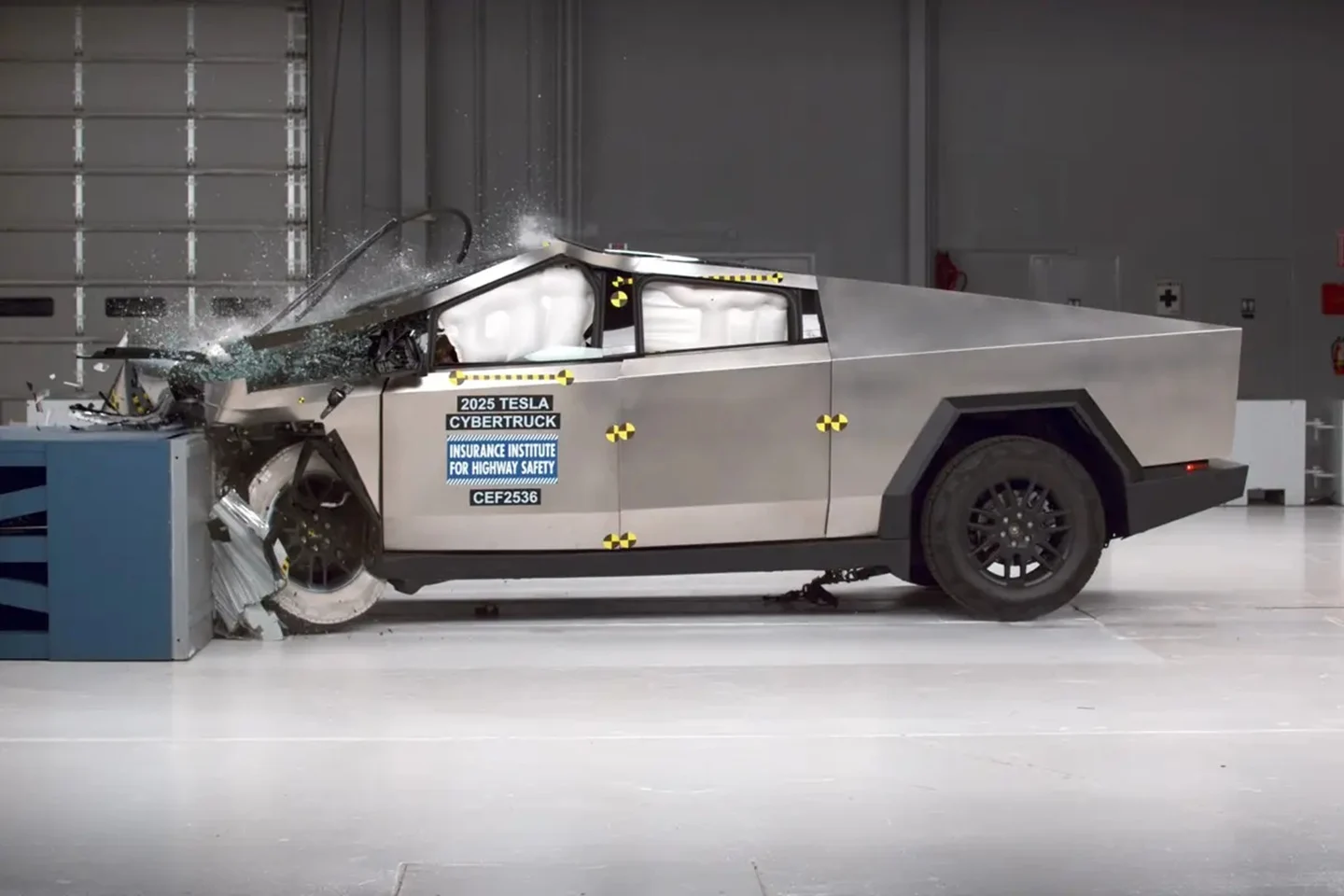
    The crash tests for the 2025 Tesla Cybertruck showed very different results from two different groups. The Insurance Institute for Highway Safety (IIHS), which is a nonprofit that assesses vehicle safety, tested the Cybertruck and gave it mixed ratings. On the other hand, the National Highway Traffic Safety Administration (NHTSA), a government body that gives safety ratings, nearly rated the electric truck perfectly.

    Moderate Overlap Front Crash Test Results

    In the Moderate Overlap Front Crash Test done by IIHS, the Cybertruck got a ‘good’ rating. However, this rating only applies to models produced after April 2025, when Tesla improved the truck’s front underbody. Older models do not meet this standard. The truck also received a ‘good’ score for the Pedestrian Crash Prevention test, but it was not assessed for vehicle-to-vehicle crash prevention.

    Seat Belt and Headlight Ratings

    The Seat Belt Reminder system received a ‘marginal’ rating, while the LATCH system for securing car seats was rated ‘acceptable’. The lower anchors were easy to reach, but the top tether anchors proved to be more difficult to use. The worst score came from the headlights, which the IIHS marked as ‘poor’.

    IIHS did not evaluate the Cybertruck in the Small Overlap Front and Side Crash test categories. Due to the absence of these results and its poor headlight rating, the truck cannot be considered for the organisation’s Top Safety Pick or Top Safety Pick+ awards. To qualify for these awards, a vehicle must have strong crash test ratings, good or acceptable results for headlights, and effective crash prevention systems. The ‘Plus’ category requires a good score in the moderate overlap crash test as well.

    NHTSA’s High Ratings

    In contrast, the NHTSA awarded the Cybertruck its top overall rating. It scored five stars in both the front and side crash tests, and four stars for rollover resistance. According to NHTSA’s criteria, this makes it one of the safest trucks available on the market right now.

    Source:
    Link


  • Tesla Cybertruck Price Increase: Cyberbeast Model Up $15,000

    Tesla Cybertruck Price Increase: Cyberbeast Model Up $15,000

    Key Takeaways

    1. The price of the Tesla Cybertruck’s top-level model has increased by $15,000, starting at $114,990 with the Luxe Package.
    2. The Luxe Package includes Full Self-Driving (Supervised) capability, available for a monthly subscription of $99.
    3. A four-year premium service plan is included, covering services like wheel alignment, tire rotations, and filter replacements.
    4. The package offers lifetime Supercharging, but owners must still pay for certain charging fees and cannot use it for commercial purposes.
    5. The Cyberbeast features impressive performance specs, with 845 hp, a top speed of 128 mph, a 0-60 mph time of 2.6 seconds, and a driving range of up to 320 miles.


    The Tesla Cybertruck isn’t the quickest model in terms of sales, but the company has decided to increase the price of its most expensive version with a necessary Luxe Package.

    Price Increase for Cybertruck

    Purchasers will now need to pay an extra $15,000 for the Cyberbeast. This means the top-level Cybertruck will start at $114,990, but it will come with a few extra features.

    New Features in the Luxe Package

    Tesla has included Full Self-Driving (Supervised) in the Luxe Package. This advanced driver assistance can be subscribed to monthly for $99. Additionally, Tesla is providing a four-year premium service plan that covers things like wheel alignment, tire rotations, front camera cleaning, and the replacement of the HEPA filter and wiper blades.

    Lifetime Supercharging and More

    One of the most significant aspects of the Luxe Package is the lifetime Supercharging. While it is unlimited, Tesla mentions that Cyberbeast owners must still pay for other charging fees, like idle and congestion fees when they apply. There are restrictions, such as no commercial charging, which includes use for taxis, rideshare, or delivery services. Also, Tesla prohibits transferring the charging pass to new vehicle owners or to another vehicle.

    Finally, the Luxe Package offers premium connectivity, which lets users listen to music, stream movies, and check live traffic updates. Some of these features might need paid subscriptions.

    Impressive Performance Specs

    As the most powerful version of the Cybertruck, the all-wheel drive Cyberbeast generates 845 hp from its three electric motors, reaching a maximum speed of 128 mph and going from 0 to 60 mph in only 2.6 seconds. It has a driving range of up to 320 miles per charge and can tow as much as 11,000 lbs.

    Source:
    Link


  • Hyundai Ups Its Game Against Tesla with 48V System Upgrade

    Hyundai Ups Its Game Against Tesla with 48V System Upgrade

    Key Takeaways

    1. Hyundai is set to become the first major car manufacturer to transition its entire fleet from a 12V to a 48V electrical system by 2029.
    2. The shift to a 48V system is necessary for advanced vehicle features like autonomous driving and multimedia systems.
    3. Hyundai is revamping its vehicle electronics supply chain, focusing on a comprehensive 48V architecture rather than partial implementations.
    4. The company aims to create cost savings by developing 48V components that can be used for both vehicles and humanoid robots.
    5. Hyundai’s robotics division, expanded through the acquisition of Boston Dynamics, is also focusing on 48V systems for its humanoid robots.


    Hyundai is on track to be the first major car manufacturer to transition its entire fleet from the outdated 12V low-voltage system to a more modern 48V architecture.

    Upcoming Robot Competitors

    This change will also include Hyundai’s forthcoming humanoid robot competitors, which are being developed through its acquisition of Boston Dynamics.

    Hyundai, similar to Tesla with the Cybertruck, has recognized that the traditional 12V low-voltage system, which has powered vehicle electronics since the 1950s, is inadequate. Advanced features such as autonomous driving assistance, multimedia systems, and drive-by-wire capabilities demand a higher voltage to function effectively.

    Benefits of the 48V System

    Tesla has indicated that switching from a 12V to a 48V system allowed them to significantly reduce wiring and provide sufficient power for the motors used in rear-wheel steering. While the Cybertruck and certain other models utilize a 48V low-voltage system, they only apply it where it is practical.

    For example, the Cybertruck employs a lower voltage converter for its audio amplifiers, and in case the 48V battery fails, a standard 12V jump starter kit can be utilized.

    Hyundai’s Ambitious Plans

    In contrast, Hyundai is requesting its suppliers to completely revamp vehicle electronics to support a comprehensive 48V architecture. Understanding that this is a monumental task that can’t be completed quickly, the company intends to gradually build a 48V electronics supply chain by 2029. This approach aims to reduce the costs associated with this significant transition.

    Tesla also aimed for a similar outcome by making its 48V architecture manual publicly available for other automakers, hoping that as adoption grows, prices for these components will decrease. However, rather than partnering with Tesla or Chinese manufacturers, Hyundai is choosing to independently pursue this path to protect its supplier network. “The key is to maintain the hardware and software ecosystem for four years while slightly reducing profitability and changing the SDV and electrical component standard voltage,” revealed an insider.

    Robotics Division Expansion

    Following its acquisition of Boston Dynamics, Hyundai has established a substantial robotics division that is working on humanoid robots similar to Tesla’s Optimus, which also operates on a 48V system. The company aims to achieve additional cost savings by creating 48V electrical and electronic components that can be used interchangeably in both vehicle and robot production.

    Source:
    link

  • LG Develops Cheaper 4680 Battery for Tesla Cybertruck in US

    LG Develops Cheaper 4680 Battery for Tesla Cybertruck in US

    Key Takeaways

    1. LG Chem has developed a new cathode that eliminates the need for precursors, leading to cheaper and better-performing battery cells in cold weather.

    2. Production of these new cathodes is set to begin by July at LG’s new Arizona factory, which will also manufacture 4680 batteries for Tesla.

    3. The Arizona facility will produce both 4680 batteries for Tesla’s Cybertruck and affordable LFP cells for lower-cost electric vehicles and energy storage.

    4. Tesla has developed a cost-saving dry cathode production technique, allowing for more efficient and cost-effective battery production.

    5. LG’s Arizona plant will have a capacity of 53 GWh, with plans adjusted to focus on 4680 batteries instead of the initially planned 2170 cells.


    Tesla’s battery partner, LG Chem, has made a significant advancement with a new type of cathode that doesn’t require precursors. This innovation is expected to result in less expensive battery cells that perform better in cold weather.

    Production Timeline

    Production for these new cathodes is set to kick off by July. LG plans to implement this technology in its new factory in Arizona, which is scheduled to open next year.

    Battery Types and Applications

    The Arizona facility will manufacture 4680 batteries specifically for Tesla, along with affordable LFP cells aimed at lower-cost electric vehicles and energy storage solutions. Tesla is also gearing up to release a more budget-friendly RWD version of the Cybertruck, which has already been listed in the federal IRS database for electric vehicle tax credits.

    To meet demand, Tesla will require a substantial supply of 4680 batteries, as there are reports that the Cybercab will also use a variant of these batteries, in addition to plans for the refreshed Model Y Juniper.

    Cost Concerns and Production Efficiency

    Tesla’s initial worry regarding the 4680 battery was its inability to produce them at a cost-effective rate, unlike suppliers like LG or Panasonic. However, Tesla has now successfully developed a cost-saving dry cathode production technique, which will likely complement its existing output.

    In the past, LG has stated that it has also perfected the production process, which can be utilized for both anodes and cathodes, resulting in a 30% reduction in the costs of 4680 batteries. Additionally, production facilities and energy usage can be reduced by half since there’s no need for harmful solvents or baking equipment, unlike the traditional wet method.

    Facility Capacity and Adjustments

    LG’s battery plant in Arizona is expected to reach a full capacity output of 53 GWh, with a large portion of that dedicated to producing 4680 cells for Tesla’s Cybertruck, Cybercab, Model Y, and more.

    “To proactively meet market needs for 46-Series batteries, the company altered its original plan for the facility, which was initially designed to produce 2170 cells with an annual capacity of 27 GWh, instead opting to manufacture 46-Series batteries at an expanded capacity of 36 GWh,” LG mentioned at the time.

    Source:
    Link

  • Las Vegas Police Get 10 Tesla Cybertrucks from Anonymous Donor

    Las Vegas Police Get 10 Tesla Cybertrucks from Anonymous Donor

    Key Takeaways

    1. The Las Vegas Metropolitan Police Department (LVMPD) will receive 10 Tesla Cybertrucks as a donation for patrol and SWAT teams.
    2. The Cybertrucks feature bullet-proof capabilities and aim to enhance officer recruitment without financial strain on taxpayers.
    3. The announcement was made by LVMPD Sheriff Kelvin McMahill during the 2025 State of the Department event.
    4. The identity of the donor remains unknown, and Tesla is seeking to boost Cybertruck sales amid slower-than-expected demand.
    5. The Cybertrucks will work alongside the LVMPD’s semi-autonomous drones equipped with shot-spotting technology.


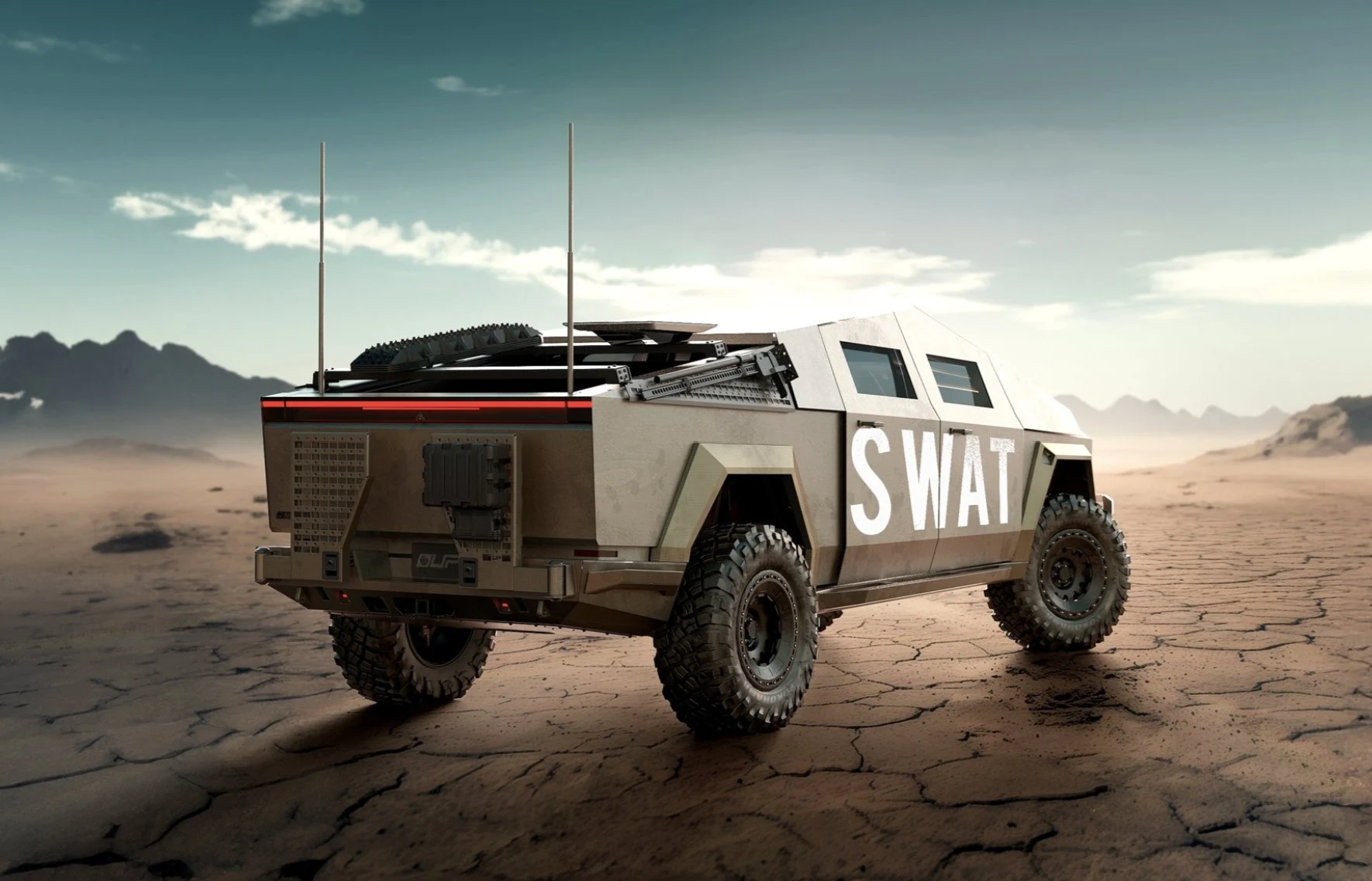
    Crime-fighting in Las Vegas is about to get a high-tech upgrade as a secret donor gifts 10 Tesla Cybertrucks to the local police. These electric vehicles will become part of the Las Vegas Metropolitan Police Department’s (LVMPD) patrol and SWAT teams.

    Exciting Announcement

    LVMPD Sheriff Kelvin McMahill shared the news during Metro’s 2025 State of the Department event. He expressed, “We’re thrilled to announce the addition of 10 Tesla Cybertrucks to our fleet! These innovative vehicles will be tailored for LVMPD patrol and SWAT, empowering our officers to protect and serve with the most advanced technology available.”

    Features and Benefits

    McMahill highlighted the truck’s bullet-proof features and its potential to attract new recruits, ensuring that taxpayers won’t see a burden on the department’s finances. The police chief described the truck as “badass” in a post on X, showcasing a design of a specially modified Cybertruck.

    A Mysterious Donor

    While the identity of the donor remains unknown, it appears that the Cybertruck has not been selling as quickly as Tesla had hoped, leading to a buildup of inventory. To boost demand, Tesla has experimented with several strategies, such as offering free wraps, significant discounts, and lowered lease rates.

    The Cybertrucks will complement the LVMPD’s semi-autonomous drones, which utilize shot-spotting technology to locate suspects effectively.

    Source:
    Link

  • BYD’s Denza EV: 20-Degree Steering for Easy Parking and Crab Walk

    BYD’s Denza EV: 20-Degree Steering for Easy Parking and Crab Walk

    Key Takeaways

    1. Rear Wheel Steering: The BYD Denza Z9 GT features a 20-degree rear wheel steering system, providing superior maneuverability compared to Tesla’s Cybertruck, which has a maximum of 10 degrees.

    2. Compact Parking Capability: The Denza Z9 GT can parallel park in extremely tight spaces nearly as long as the car itself, showcasing its innovative parking technology.

    3. Advanced Drivetrain: It includes a Sanfang drivetrain with three independent motors, enhancing its turning and handling capabilities.

    4. User-Friendly Parking System: The innovative parking system allows the vehicle to slide into parking spots with minimal input, making it easier for inexperienced drivers.

    5. BYD’s Innovative Reputation: The company continues to demonstrate impressive technology in its vehicles, building on its reputation for innovation in the automotive market.


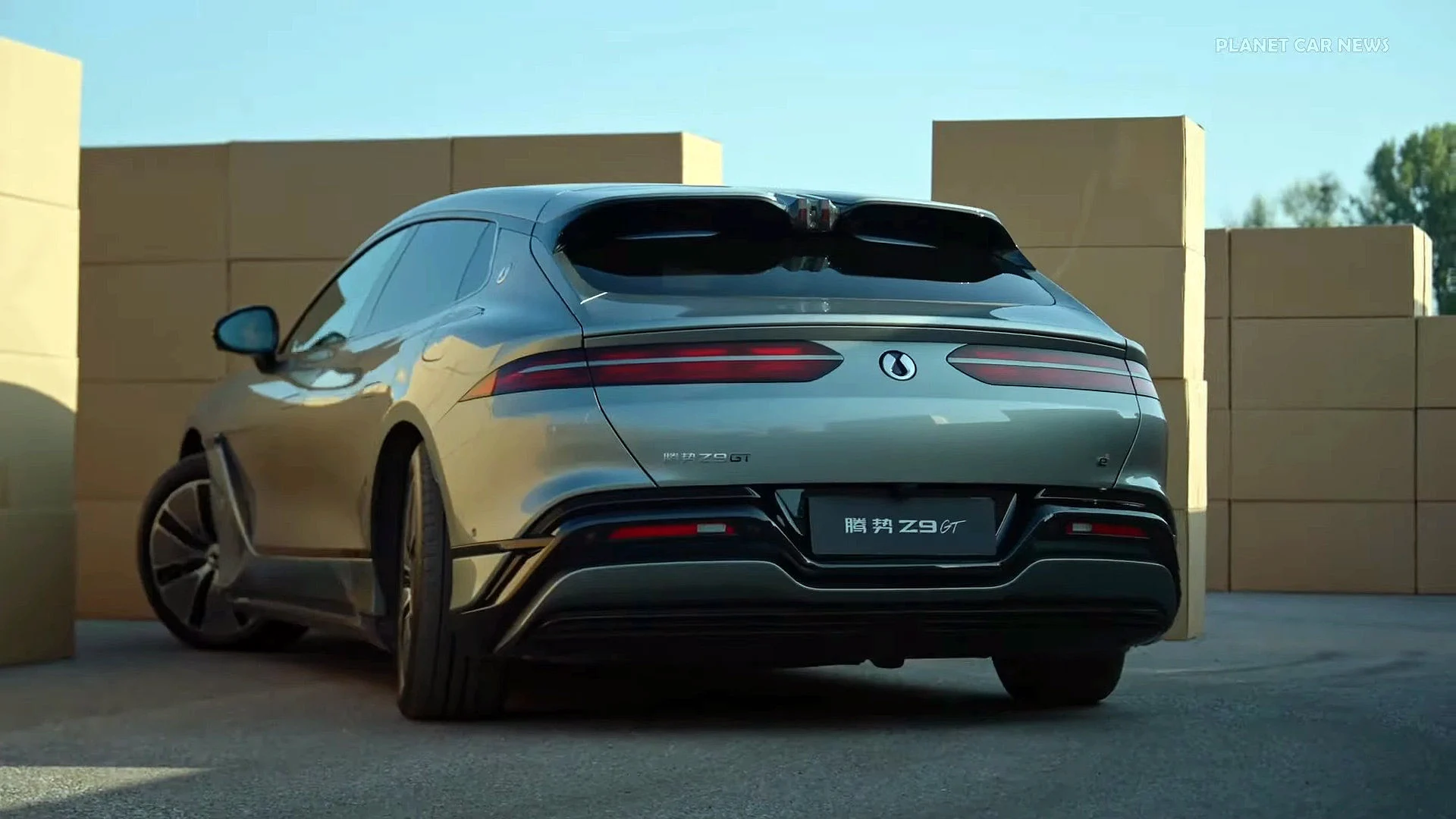
    Tesla’s Cybertruck may have rear steering that allows it to make sharp turns, but the BYD Denza Z9 GT shooting brake takes it a step further by being able to parallel park in incredibly tight spots that are nearly as long as the car itself, thanks to its unique crab walking rear wheels.

    A Showcase of Capability

    Recently, BYD showcased the Denza Z9 GT’s features once again, reminding everyone of its capabilities right before its launch in Europe and other markets.

    The Z9 GT comes with both electric and plug-in hybrid options, and it has a steering motor for each rear wheel, enabling impressive maneuverability for turning, handling, or parking.

    Advanced Steering Technology

    BYD’s state-of-the-art 20-degree rear wheel steering puts Tesla’s Cybertruck to shame, as Tesla initially offered just 3-degree steering and later mentioned a 10-degree upgrade. In comparison, the Denza shooting brake, which is larger than a Porsche Panamera, boasts a turning radius of only 4.62 m (15.2 ft) and can crab-walk at a 15-degree angle to weave between obstacles.

    One of the coolest features of the advanced Sanfang drivetrain with three independent motors is its ability to parallel park in extremely compact spaces almost as long as the vehicle itself.

    Innovative Parking System

    The system works by moving the right rear wheel forward while the left rear wheel moves in reverse, allowing the car to slide into a parking spot with just a simple tap on the central console display. While this might seem to put extra strain on the tires, it could certainly help an inexperienced driver get out of tricky situations from time to time.

    Even though the 965 PS powertrain, dual-chamber air suspension, pillar-to-pillar display, and two refrigerators are all impressive features, it’s such a clever trick that will likely impress car enthusiasts as BYD aims to build its new premium Denza brand.

    BYD’s History of Innovation

    BYD is certainly familiar with such impressive feats, having recently shown how its Yangwang hypercar can utilize the dual-chamber air suspension to briefly leap over potholes and even spike strips when necessary.

    Source:
    Link

  • Tesla Cybertruck Price Drops with Government Tax Credit

    Tesla Cybertruck Price Drops with Government Tax Credit

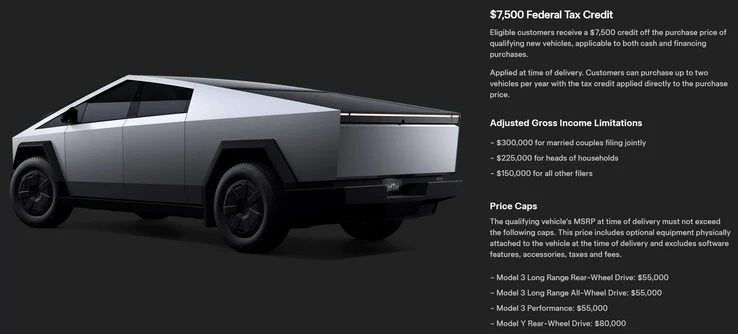
    While the Tesla Cybertruck has a lower percentage of parts made in the US or Canada compared to other American pickups like the Honda Ridgeline, it still qualifies for the federal tax credit. This is because its 4680 battery pack cells are produced and assembled in Texas.

    Timing for Tax Credit Eligibility

    However, there was a waiting period before it could receive the $7,500 discount from the IRS, which manages the new EV tax credit. Tesla took steps to lower the Cybertruck’s price to fall below the tax credit limit around four months ago. This was done when they began configuring non-Foundation Series units, which made the pickup $20,000 less expensive.

    Pricing Details

    In its first Foundation Series edition, the dual-motor AWD trim was priced near $100,000. Similarly, the 2026 Model Y Launch Series edition is now priced over $60,000, which includes the Full Self-Driving (FSD) feature and exclusive badging as part of a package deal. In contrast, the starting price for non-Foundation Series models is $79,990, which allows the Cybertruck to qualify for the federal tax credit for electric SUVs and pickups under the $80,000 threshold.

    Waiting Period for Tax Credit

    Despite this, a full quarter needed to pass before the Cybertruck could take advantage of the tax credit as a privately owned vehicle during the next quarter. The IRS had already added it to their list of qualifying vehicles at the beginning of the year, alongside a more affordable RWD version expected to launch this year. However, Tesla was only allowed to apply the tax credit starting from the first business day of February.

    Now, the Cybertruck’s price is much more reasonable than when it first launched at $99,990. After applying the $1,000 referral credit and military discount, and before any state incentives, the starting price is just above $70,000. This brings it very close to the average price of pickups sold in the US, whether electric or gas. However, with the Trump administration looking to eliminate new EV subsidies, there may be a limited time for the Cybertruck tax credit to remain in effect.

    Source:
    Link


  • Lucid Beats Tesla in Charging Speed: Cybertruck vs Gravity

    Lucid Beats Tesla in Charging Speed: Cybertruck vs Gravity

    Lucid’s latest SUV, the Gravity, isn’t just the electric SUV with the longest range; it might also be the fastest to charge when it connects to Tesla’s Supercharger network later this week.

    Tesla’s Upgrade

    Tesla recently shared that all V4 Superchargers in North America have been enhanced to deliver a charging output of 325 kW. This specific number appears to have been selected as the highest that the Cybertruck, which is the only vehicle equipped with a modern 800V powertrain, can currently manage.

    Early tests with the Cybertruck at the new 325 kW Superchargers showed average results since this peak speed couldn’t be maintained for more than a few minutes. The charging rate quickly dropped off, and the electric pickup took only 90 seconds less to recharge than it would at a 250 kW V3 Supercharger.

    Issues with Battery Technology

    The problem seems to stem from the 4680 battery, which has a reputation for poor charging performance. While it’s not as bad as the first generation seen in some Model Y vehicles, it’s still an issue that Tesla has been trying to resolve with a recent over-the-air update for the Cybertruck.

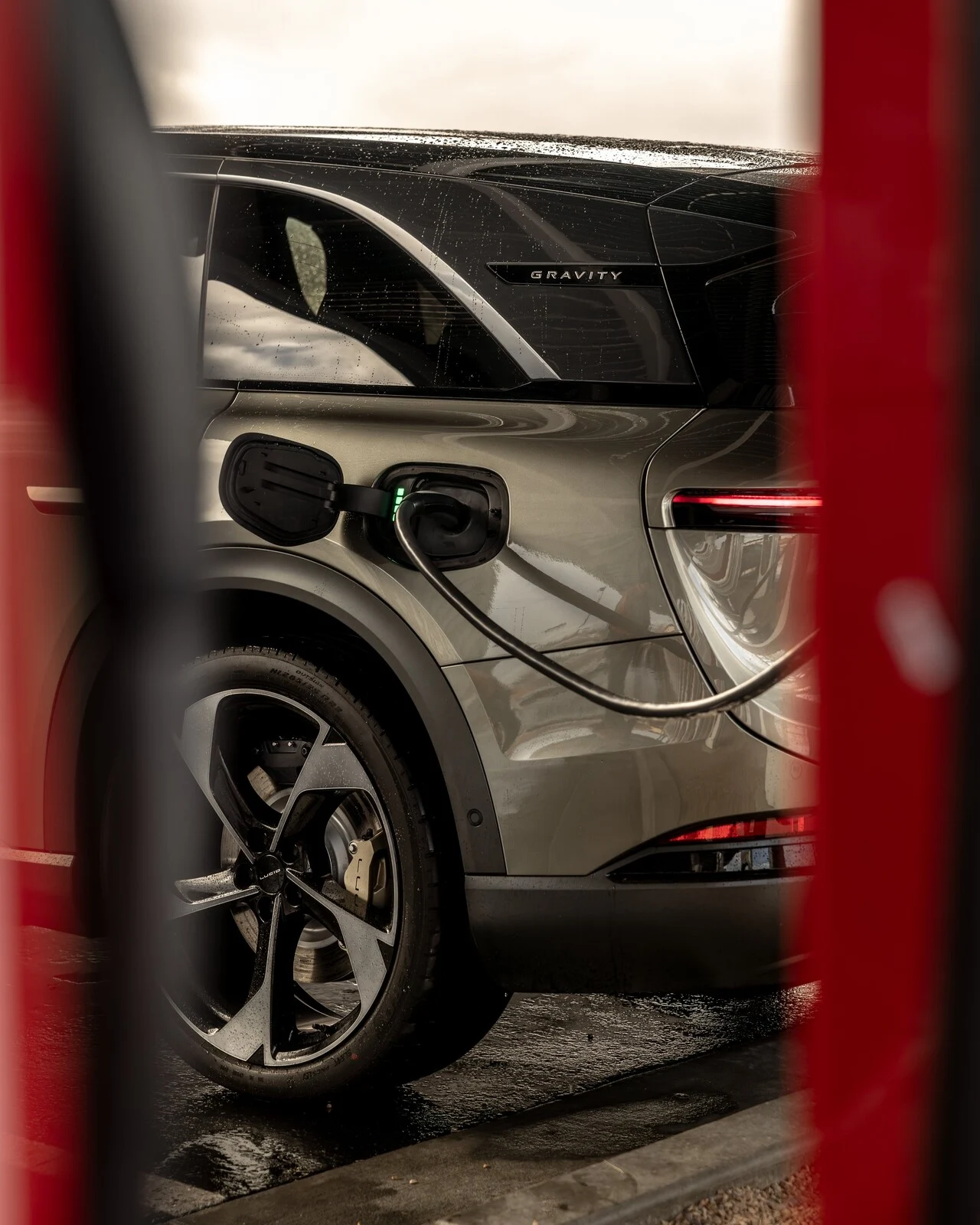
    On the flip side, Lucid collaborated with Panasonic to modify its newest battery generation for the Gravity SUV, equipping it with a 926V powertrain. This has resulted in an electric SUV that boasts a range of 450 miles on a charge from the same 123 kWh battery that allows the Cybertruck to achieve 320 miles, plus it supports ultrafast 400 kW charging.

    Impressive Charging Capabilities

    The Gravity can gain 200 miles of range in just 12 minutes at Tesla’s V4 Superchargers. In contrast, the Cybertruck can only add 150 miles in 15 minutes due to Tesla’s recent OTA charging improvement, making it hard for the Cybertruck to match the Gravity’s performance.

    Additionally, Lucid has made the Gravity the first non-Tesla vehicle to come with an integrated NACS charging port, allowing it to utilize Superchargers directly. Therefore, the first charging comparisons between the Cybertruck and Gravity after the 325 kW V4 upgrade—which is expected to reach 500 kW later this year—should be coming soon.

    Tesla and Lucid are competing in an exciting electric vehicle market, and it’s clear that both companies are pushing the boundaries of what’s possible in terms of range and charging speed.

    Source:
    Link

  • UK Police Confiscate Tesla Cybertruck Over Safety Issues

    UK Police Confiscate Tesla Cybertruck Over Safety Issues

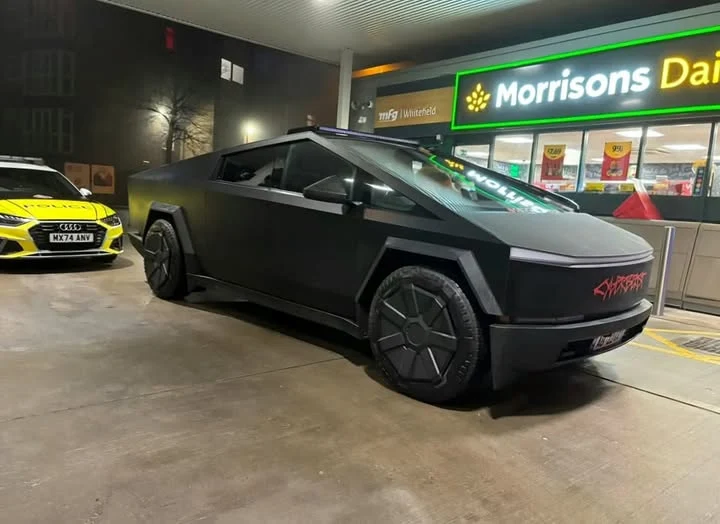
    A Tesla Cybertruck has landed in the UK, but its time on the road was cut short. The vehicle was seized by UK police, who classified it as illegal and hazardous.

    Driver’s Joyride Ends in Trouble

    The Greater Manchester Police (GMP) shared on social media that the driver took the Cybertruck for a joyride in Whitefield. They raised alarms about the potential risks posed to other motorists and pedestrians if the Cybertruck were to get involved in an accident.

    Demonstration Purposes Only

    Tesla brought the Cybertruck to the UK solely for showcasing at the Goodwood Festival of Speed. However, it has not been granted a certificate of conformity, meaning it can’t be used on public roads.

    The Cybertruck was registered and insured in a different country, which is against the law. The UK driver has been “reported” and is facing consequences for operating a vehicle without proper insurance.

    North American Market Focus

    Currently, Tesla is marketing the Cybertruck in North America, where road safety regulations are somewhat alike. The electric vehicle manufacturer has yet to announce any intentions to sell the futuristic pickup truck outside of North America.

    Interestingly, some enthusiasts have managed to acquire the steel truck outside of North America. Customs officials in Lithuania intercepted two units, while some Cybertrucks have been spotted with Chechen leader Ramzan Kadyrov, who has modified them with machine guns.

    Source:
    Link