
Key Takeaways
1. China is focusing on “embodied intelligence” and providing strong support for the robotics industry by 2030.
2. Over 150 companies, including major names like BYD and Xiaomi, are developing humanoid robots, but many are still in early testing stages.
3. There is a significant gap between investment in robotics and actual market demand, with robots primarily seen at exhibitions rather than in real-world use.
4. The industry risks facing a “robot bubble,” similar to the bike-sharing issue in China, if innovative and market-ready products are not developed soon.
5. A potential collapse in the robotics market could benefit US companies like Tesla and Figure AI, enhancing their global market position.
China has pointed out “embodied intelligence” as a major industry to focus on by 2030. To take the lead in this growing field, the government is providing strong support to companies in robotics. Currently, over 150 businesses are working on humanoid robots, ranging from small startups to well-known companies like BYD and Xiaomi, which have recently joined the industry. Nevertheless, this surge in robotics also comes with significant challenges.
Investment vs. Demand
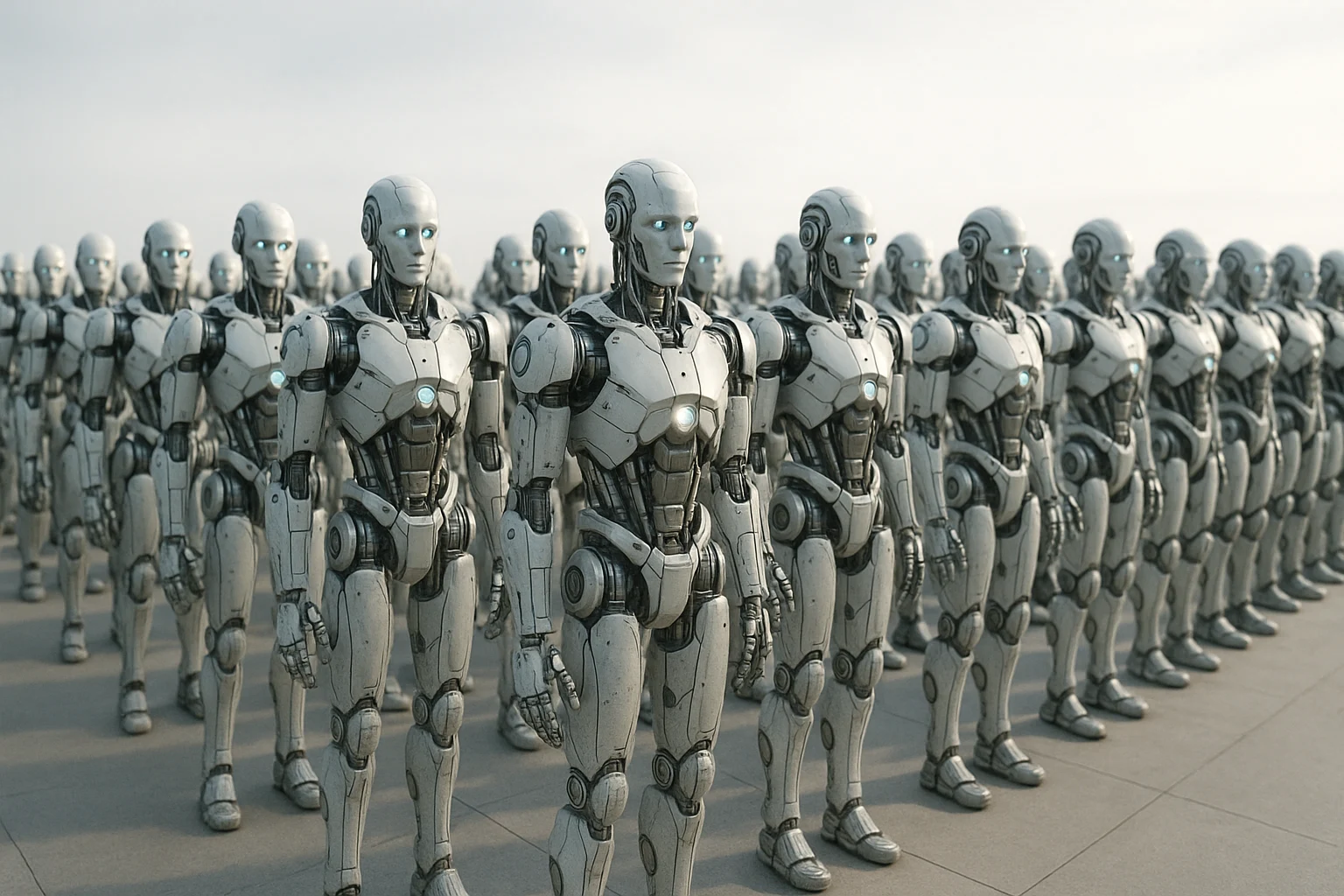
As reported by Reuters, there’s a clear gap in China between the amount of investment and the actual demand for robots. Robots are often displayed at exhibitions, but they hardly make an appearance in factories or homes. Many of these robots are still in the early stages of development and are only suitable for testing purposes. Another issue is the similarity among many humanoid robots; they tend to look and operate almost the same. Li Chao, a spokesperson for the NDRC, cautions that an influx of “highly similar products” could flood the market and lead to an investment bubble.
Market Risks and Comparisons
This scenario reminds us of the bike-sharing issue in China that started around 2017. Back then, countless rental bikes were produced for companies like Ofo, which ended up unused and stacked in junkyards. The robotics industry might face a similar fate if it cannot create truly innovative and market-ready products in a timely manner. If the “robot bubble” were to burst, it could wipe out billions in investments overnight, causing many businesses to fail. Conversely, companies in the US, such as Tesla and Figure AI, could gain from this situation, possibly strengthening their dominance in the global market.
Source:
Link
Leave a Reply