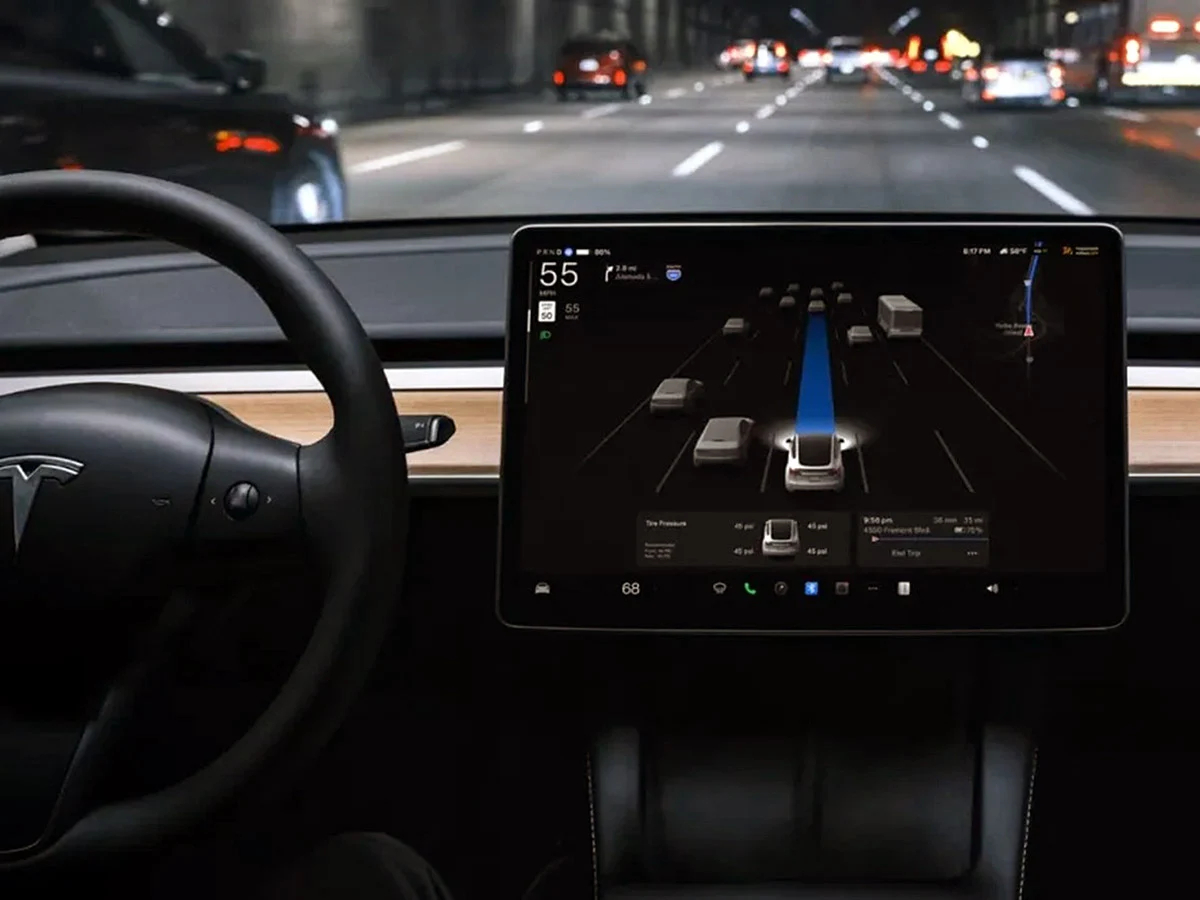
Tag: Full Self-Driving

  • Tesla Insurance Discounts: 50% Off with FSD Driving

    Tesla Insurance Discounts: 50% Off with FSD Driving

    Key Takeaways

    1. Tesla’s Full Self-Driving (FSD) system has a significantly lower collision rate compared to the U.S. average and other driving methods.
    2. FSD leads to seven times fewer major accidents and five times fewer incidents on highways than basic Autopilot or no driver-assist features.
    3. Lemonade, an AI-driven insurance provider, is launching an insurance product specifically for autonomous vehicles, citing Tesla’s FSD safety record.
    4. Lemonade’s analysis shows a 50% reduction in average insurance premiums for miles driven with Tesla’s FSD compared to human drivers.
    5. The new Lemonade Autonomous Car insurance will start on January 26 in Arizona, with plans for expansion to Oregon.


    According to Tesla’s own Full Self-Driving (Supervised) Vehicle Safety Report, when the FSD driver-assist system is active, the rate of collisions—both major and minor—is significantly lower than the U.S. average.

    Safety Comparison

    The FSD system is also safer compared to driving a Tesla using basic Autopilot or without any driver-assist features, as per the same data. Tesla asserts that the FSD system leads to seven times fewer major or minor accidents, and five times fewer incidents on highways.

    To put it in perspective, there is one major collision for every five million miles driven with FSD, while the U.S. average stands at one collision for every 699,000 miles for all types of vehicles, which includes both electric and internal combustion engine cars. Although some question the accuracy of these claims and the NHTSA is looking into accidents involving Tesla’s driver-assist features, insurance companies are starting to notice these trends.

    New Insurance Initiative

    Lemonade, an insurance provider that describes itself as powered by AI, credits Tesla’s FSD safety record for its decision to launch an insurance product aimed at autonomous vehicles. This new offering is touted as a “first-of-its-kind” insurance solution tailored specifically for self-driving cars.

    As per Lemonade’s AI-driven analysis, the accident rate drops considerably when Tesla’s FSD is in control compared to human drivers. This safety advantage has enabled Lemonade to cut its average insurance premium by 50% for miles driven with FSD.

    Collaboration with Tesla

    Lemonade states that its pay-per-mile insurance model has provided an edge that traditional insurers lack: advanced technology for gathering extensive real-world driving data, allowing for accurate and adaptable pricing. They have introduced this new Autonomous Car insurance in partnership with Tesla, utilizing the latest undisclosed FSD safety metrics.

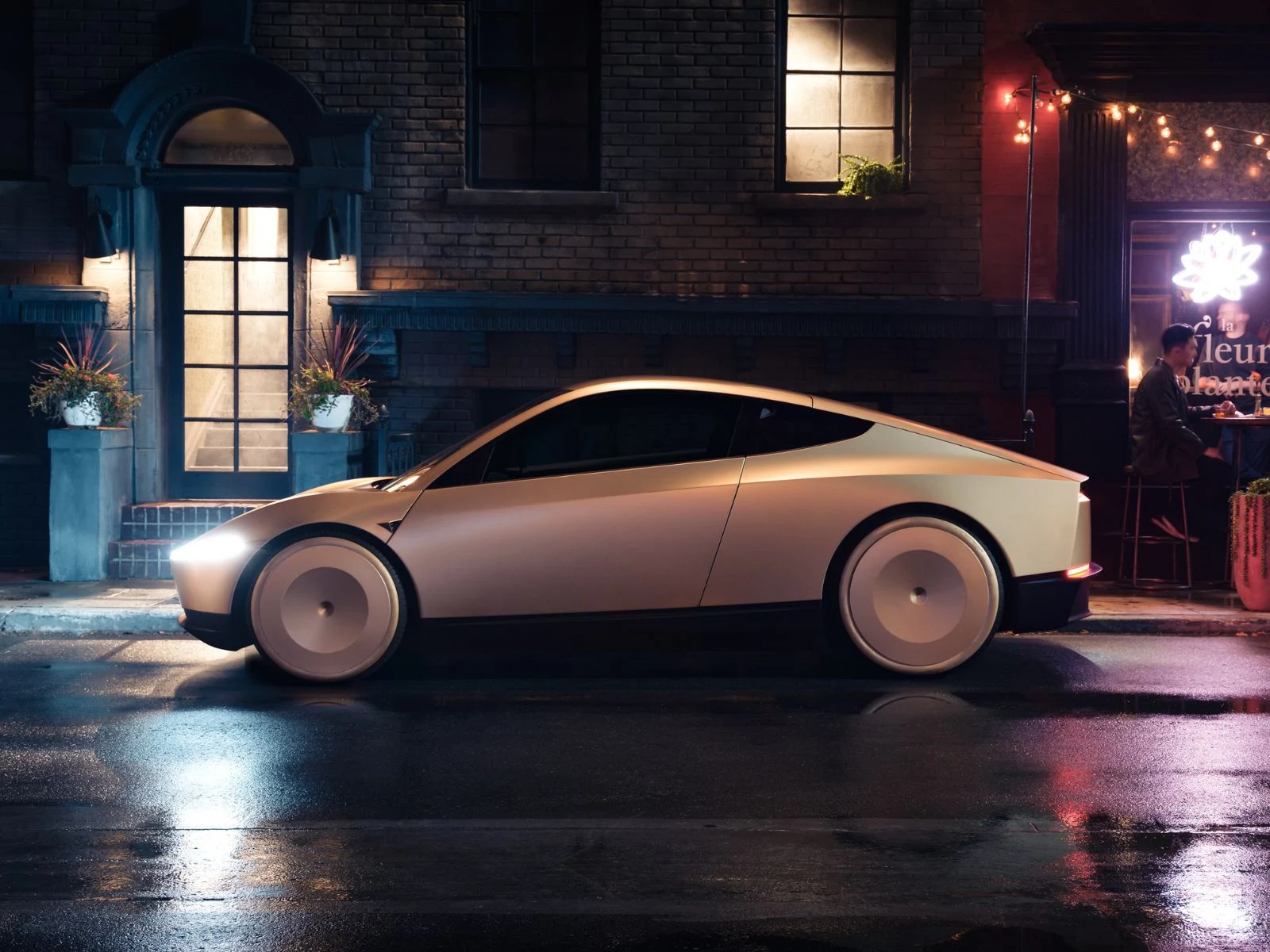
    Tesla has been working to incorporate its impressive FSD safety statistics into its insurance offerings, but this marks the first occasion where a third-party insurer is slashing premiums by half for FSD miles with a product focused on autonomous vehicles. It will be interesting to see if Tesla will use Lemonade’s insurance for its upcoming driverless Cybercab, which won’t have pedals or a steering wheel, once it becomes part of the Robotaxi fleet in 2026.

    The Lemonade Autonomous Car insurance will launch on January 26, starting in Arizona and then expanding to Oregon. Tesla drivers can receive quotes for their new FSD-dependent premiums in just a few seconds via the app or the online platform.

    Source:
    Link


  • Tesla Offers Free FSD Holiday Gift for Most Vehicles, Excludes HW3

    Tesla Offers Free FSD Holiday Gift for Most Vehicles, Excludes HW3

    Key Takeaways

    1. Tesla is offering a free 30-day trial of Full Self-Driving (FSD) software to 1.5 million owners of newer vehicles with HW4 hardware.
    2. Owners of HW3 vehicles are not eligible for the trial, as a lighter version of FSD is being developed for them.
    3. Despite advanced features, many Tesla owners have not subscribed to the FSD for $99/month or paid the $8,000 upfront fee.
    4. The free trial aims to increase awareness of FSD features among users and their friends and family, promoting word-of-mouth marketing.
    5. Eligible vehicles for the trial include newer Model S, Model 3, Model X, Model Y, and Cybertrucks running FSD 14.2 or later in North America and Puerto Rico.


    Tesla is giving away a free trial of its Full Self-Driving (FSD) software to all owners of newer vehicles equipped with the AI4 (or HW4) hardware kit, which includes advanced computers and cameras.

    Free FSD Trial for HW4 Owners

    The free FSD 14 trial is available to about 1.5 million Tesla owners whose vehicles are built on the HW4 platform. This offer comes via email, encouraging users to test out the advanced driver-assist system. However, those with HW3 vehicles will not be eligible, as Tesla is working on a lighter version of FSD 14 specifically for them. This version will be released after the company’s Robotaxi service expands to more major cities later this year and into early 2026.

    Limited Subscription Interest

    Even with the best-equipped cars for the latest FSD 14.2 version, only a small number of Tesla owners have opted for the $99 monthly subscription or have paid the full $8,000 upfront. Elon Musk believes that the FSD 14, especially with the upcoming 14.3 update, represents a significant advancement in self-driving technology.

    FSD 14 can manage both regular driving situations and rare scenarios without any driver input, but its features won’t matter if Tesla owners and the general public are unaware of them.

    Spreading Awareness

    To address this, Tesla has decided to offer a 30-day FSD trial to all HW4 vehicle owners, similar to the offer available for new car buyers. This trial has a value of $99, but more importantly, it allows users to experience features they might have otherwise ignored, such as the Speed Profiles like Mad Max or Sloth Mode, and the self-parking Arrival Options.

    This initiative is likely to increase word-of-mouth promotion among friends and family who ride with these Tesla owners, amplifying the reach beyond the initial 1.5 million HW4 vehicle owners who accept the trial.

    Who Qualifies for the Free FSD Offer

    Eligible for the free FSD trial are owners of newer Model S, Model 3, Model X, Model Y, or Cybertrucks running the Full Self-Driving (Supervised) 14.2 software update in North America and Puerto Rico. Tesla mentions “or later software,” hinting that it might release the much-anticipated “sentient” FSD 14.3 update before the end of the year. Therefore, those who sign up for the free trial now could enjoy some exciting features just in time for the holiday season.

    Source:
    Link


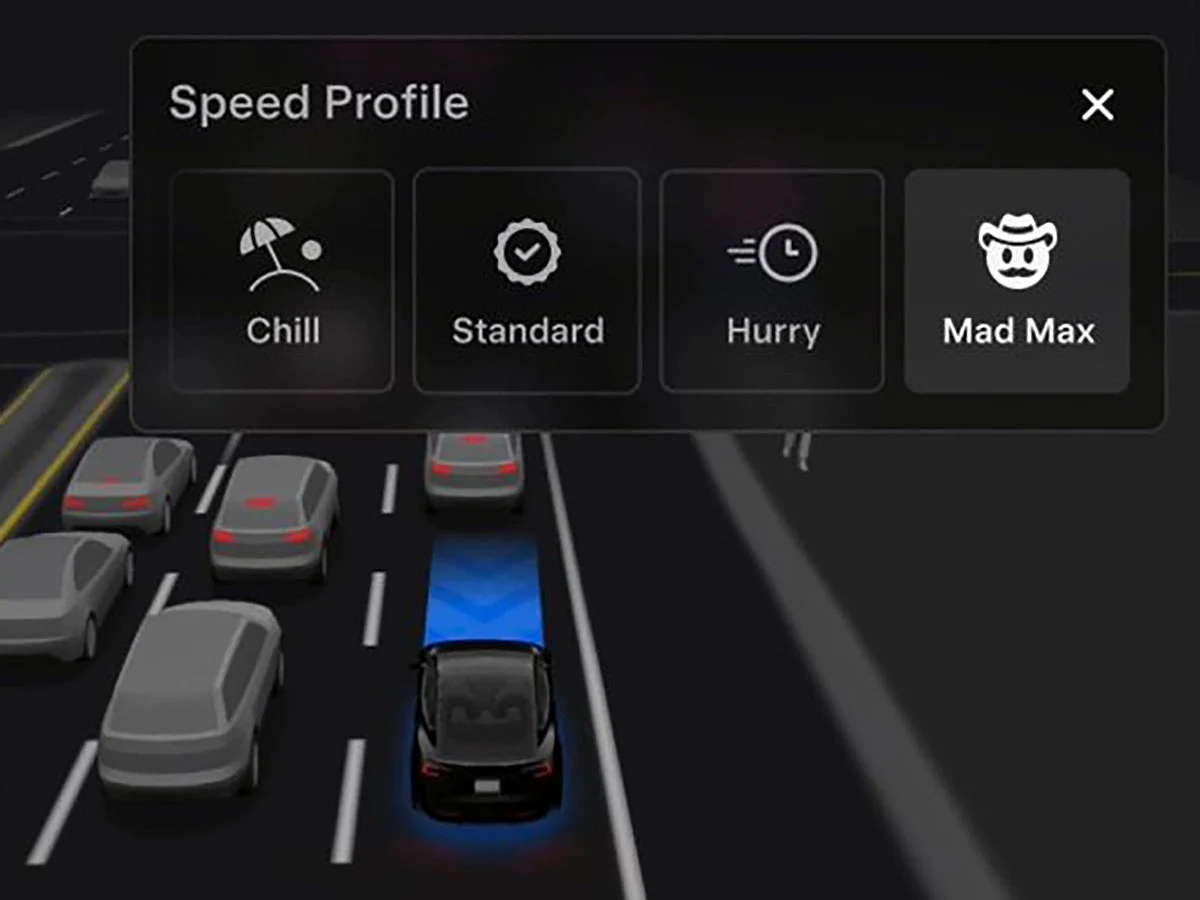
  • Tesla Launches Aggressive FSD Mode: Meet Mad Max Driving Style

    Tesla Launches Aggressive FSD Mode: Meet Mad Max Driving Style

    Key Takeaways

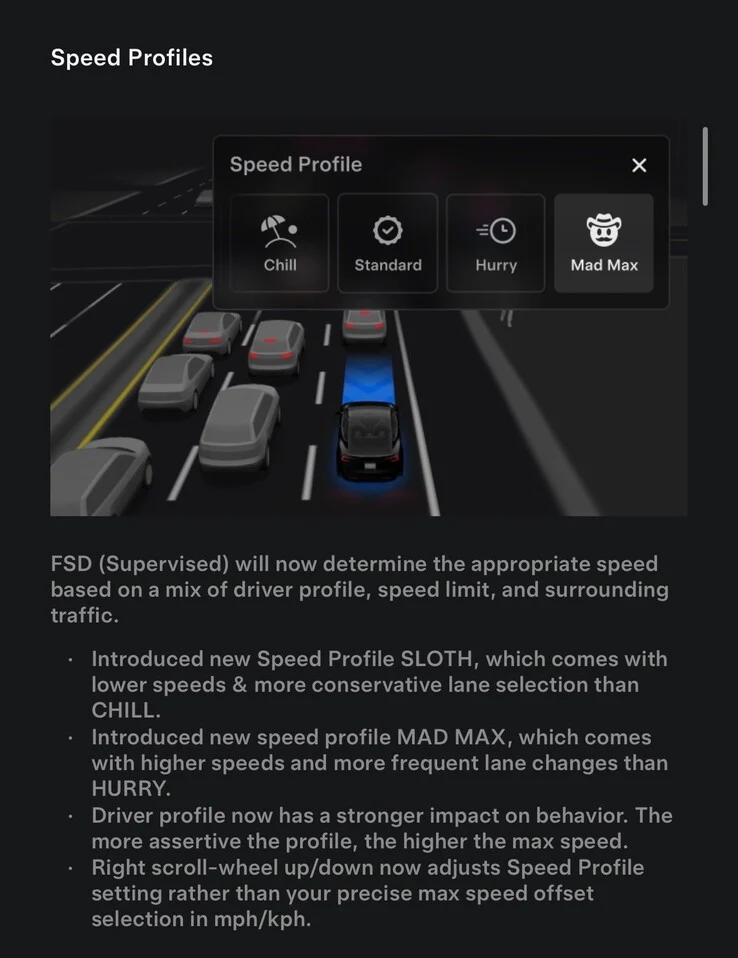
    1. Tesla introduced the Mad Max FSD mode in the 14.1.2 update for a more assertive driving experience.
    2. The new mode allows for frequent lane changes and increased highway speed limits up to 85 mph, while still stopping at stop signs.
    3. Mad Max mode mimics human driving behavior in urgent situations, responding to user requests for a more aggressive FSD option.
    4. The updated FSD 14 can navigate complex scenarios like drive-thrus and tight parking with improved efficiency.
    5. An upcoming FSD 14.2 update will enable Teslas to find parking automatically and summon themselves when needed.


    Tesla has finally responded to the requests from users of its Full Self-Driving feature by introducing a more assertive driving option. The new Mad Max FSD mode is part of the recent 14.1.2 update, where the AI learns to act more like human drivers do when they are in a rush or navigating busy city traffic, such as in LA.

    Enhanced Driving Experience

    This mode does not engage in any illegal actions, but it enhances the previous most aggressive Hurry level. As Tesla’s AI chief mentioned, it’s designed for situations like “when you’re late to your flight, or to pick your kid from school.” The Mad Max mode allows for more frequent lane changes to merge into faster-moving traffic without cutting off other drivers.

    A Long-Awaited Update

    Users have long wanted a more aggressive FSD that mimics how people drive when they’re pressed for time. However, the initial iteration of FSD 14 only introduced a more cautious Sloth mode. The new Mad Max mode increases the highway speed limit to 85 mph, although it still comes to a complete stop at every stop sign instead of rolling through when no vehicles are nearby, which is a behavior often seen in human drivers.

    Improved Features

    The updated Tesla FSD 14 has already shown its capability in various niche scenarios, such as driving through a McDonald’s drive-thru without any manual input or selecting a parking spot at the end of a journey. It also handles tight spaces with greater efficiency and can navigate through rush hour traffic more effectively due to the new Mad Max mode.

    With the upcoming FSD 14.2 update expected in a few weeks, drivers will have the ability to send their Teslas to find parking automatically and then summon them to the front of the store once their shopping is complete, much like a Robotaxi.

    Source:
    Link


  • Tesla FSD Reaches 1 Million Kilometers in Australia and New Zealand

    Tesla FSD Reaches 1 Million Kilometers in Australia and New Zealand

    Key Takeaways

    1. Tesla’s Full Self-Driving (Supervised) feature has covered over 1 million kilometers in Australia and New Zealand shortly after its launch.
    2. The high mileage reflects strong consumer interest and provides valuable data for Tesla’s software improvements.
    3. Tesla drivers in these regions have accumulated the equivalent of 80 years’ driving experience with the FSD feature in just over a week.
    4. FSD (Supervised) is not fully autonomous; it remains a Level 2 driver assistance system, requiring driver attention and readiness to take control.
    5. Data from right-hand-drive markets like Australia and New Zealand is important for Tesla to refine the technology for global use.


    Just a little over a week after Tesla launched Full Self-Driving (Supervised) in Australia and New Zealand, local drivers have already covered more than 1 million kilometers with this feature. This milestone showcases a robust initial interest in the technology, which became available to Model 3 and Model Y cars equipped with Tesla’s newest HW4 hardware in September.

    Consumer Interest and Data Collection

    As per an update from TechAU on X, the total distance driven reflects both consumer enthusiasm for the system and the extensive data now being utilized for Tesla’s software improvements. The update noted that the launch has proceeded without issues so far, with drivers stepping in when needed and without any major incidents reported.

    Driving Habits and Milestone Achievements

    This accomplishment is notable when considering the usual driving patterns in these two nations. Information from the Australian Bureau of Statistics (ABS) shows that the average motorist drives around 33 km daily. This indicates that Tesla drivers have amassed the equivalent of 80 years’ worth of driving experience using FSD in just over a week since its introduction.

    Safety and System Limitations

    Nevertheless, Tesla maintains that FSD (Supervised) is not a fully autonomous system, despite its ability to manage lane changes, roundabouts, intersections, and highway entrances or exits. It is still classified as Level 2 driver assistance, which means drivers need to stay attentive and be prepared to take control at any moment.

    The strong early uptake in Australia and New Zealand is also crucial for Tesla for another reason. It will deliver essential data from right-hand-drive markets, which can assist in fine-tuning the technology for broader global use.

    Source:
    Link


  • Tesla FSD V14 Release: Elon Musk Promises ‘Sentient’ Update V14.2

    Tesla FSD V14 Release: Elon Musk Promises ‘Sentient’ Update V14.2

    Key Takeaways

    1. Tesla is set to launch Version 14 of its Full Self-Driving (FSD) software, with V14.0 releasing next week and V14.1 two weeks later.
    2. FSD is a driver-assistance system that aims for complete autonomy, requiring human oversight for now.
    3. Upcoming FSD updates will reduce annoying steering-wheel alerts and use advanced neural networks for improved decision-making.
    4. Musk describes FSD V14 as the second most important AI upgrade since FSD V12 was released in late 2023.
    5. FSD V14 is distinct from the Unsupervised FSD being tested in the Robotaxi fleet, which can operate without a human driver.


    Tesla is getting ready to launch Version 14 of its Full Self-Driving (FSD) software. This update was revealed after Elon Musk, the CEO, responded to a post on X by Jason Calacanis, who has invested in Tesla.

    FSD Overview

    FSD is Tesla’s sophisticated driver-assistance system that allows cars to drive autonomously, though they still need human oversight for now. The ultimate aim is to achieve complete autonomy everywhere, and each update is intended to enhance the system’s intelligence and safety.

    Calacanis shared his thoughts on his experience with the previous FSD version 13.x, labeling it as ‘absolutely perfect’. However, he also recognized the company’s careful strategy of rolling out updates slowly, advising others to ‘chill and let them cook’.

    Upcoming Releases

    In his response, Musk confirmed that FSD V14.0 will be widely released next week, with V14.1 expected around two weeks later. He mentioned that by the time V14.2 comes out, Tesla cars equipped with FSD should feel nearly ‘sentient’, driving in a more human-like manner.

    Lately, Musk has been generating excitement for V14 in his posts on X, referring to it as Tesla’s second most crucial AI/Autopilot upgrade since the launch of FSD V12 at the end of 2023.

    Expected Improvements

    Among the anticipated enhancements are reduced ‘nags’, as many drivers have found the frequent steering-wheel alerts in the old version annoying. Additionally, the software will utilize neural networks with ten times more parameters than its predecessor, a significant upgrade that promises better decision-making.

    To clarify, Musk pointed out that FSD V14 is different from the Unsupervised FSD currently being tested in the Robotaxi fleet in Austin, Texas. That version can operate entirely without a human driver.

    Source:
    Link


  • Tesla Expands Bay Area Robotaxi Service Hours to 2 AM

    Tesla Expands Bay Area Robotaxi Service Hours to 2 AM

    Key Takeaways

    1. Extended Availability: Tesla’s ride-hailing service now operates from 6 am to 2 am, offering 20 hours of service daily to meet late-night customer needs.

    2. Bay Area Launch: The Robotaxi service began in the Bay Area in June 2025, expanding access beyond Tesla owners to a wider audience through the mobile app.

    3. Service Similarity: Tesla’s rides function like Uber or Lyft, using cars equipped with Full Self-Driving (FSD) technology but currently have a human safety driver present.

    4. Data Collection and Safety: The presence of a human driver ensures legal compliance and safety while allowing Tesla to gather data to improve its FSD software.

    5. Future Plans: Tesla aims for fully autonomous vehicles and has received approval in Nevada for testing without safety drivers, with plans to offer Robotaxi services at airports in the Bay Area.


    Tesla has just announced that its ride-hailing service will now be available from midnight to 2 am, allowing customers to book rides for a total of 20 hours daily, starting from 6 am until 2 am. This update was revealed on the Tesla_AI account on X on September 13.

    Extended Availability

    Previously, individuals leaving late-night gatherings, eateries, or finishing work shifts were unable to access Tesla’s service past midnight. By extending its hours, the electric vehicle manufacturer is responding to this need and showing growing trust in its Robotaxi technology.

    Bay Area Launch

    The Robotaxi service in the Bay Area kicked off in June 2025, shortly after its initial launch in Austin, Texas. At first, only Tesla vehicle owners and a limited group of customers could utilize the service. Now, it’s open to a broader audience in the Bay Area via the Tesla mobile application.

    How It Works

    The rides function similarly to services like Uber or Lyft, but the vehicles are Teslas equipped with the company’s Full Self-Driving (FSD) technology. Currently, a human safety driver is still present in California since state laws do not allow completely driverless cars yet. This means that every Tesla Robotaxi has a driver ready to intervene if any issues arise, keeping the service both legal and safe, while also allowing Tesla to gather data and enhance its FSD software.

    Elon Musk, Tesla’s CEO, has frequently stated that the ultimate aim for these vehicles is to operate entirely autonomously without a human driver. Recently, Tesla obtained approval in Nevada to test vehicles without safety drivers on public roads. The company also seeks authorization to provide Robotaxi services at airports in the Bay Area.

    Source:
    Link


  • Tesla Provides Free FSD Transfer to New Vehicle Ahead of Europe Approval

    Tesla Provides Free FSD Transfer to New Vehicle Ahead of Europe Approval

    Key Takeaways

    1. Tesla is expanding its free Full Self-Driving (FSD) transfer promotion to international markets for new Model Y, Model 3, and refreshed Model S/X buyers.
    2. The promotion is valid until September 30th, with potential for extension, while FSD approval is expected in several European countries by year-end.
    3. In the US, the free FSD transfer has been a regular offer since early 2024, allowing seamless feature transfers for customers.
    4. European customers have faced delays in FSD approval, but improvements with FSD 13 are encouraging regulatory progress, especially for complex driving scenarios.
    5. To assist European Tesla owners awaiting FSD access, Tesla is providing the free transfer promo under specific conditions to boost sales of the refreshed Model Y.


    Tesla is expanding its free FSD transfer promotion to international markets. Customers who buy a new Model Y, Model 3, or refreshed Model S/X can now transfer the Full Self-Driving (FSD) feature they previously paid for to their new car.

    Promotion Period

    The free transfer offer is valid until September 30th, but it might be extended. Tesla anticipates that FSD will receive approval for use in several European nations by the end of this year.

    Ongoing Offers in the US

    In the United States, the free FSD transfer has become a regular promotion. Since early 2024, customers have consistently been able to move the Full Self-Driving feature from their old vehicle to a new one without any issues.

    Delays in Europe

    On the contrary, many European customers who invested in the FSD option have been left watching the US enjoy the perks. This is because local regulators have been slow to approve the feature for public use. However, the situation is starting to change with the introduction of FSD 13, which is significantly better at handling Europe’s narrow streets and tricky roundabouts.

    Tesla has been sharing positive updates about FSD testing in Europe, including successful navigation through the complex Arc de Triomphe roundabout in Paris, known for its many roads and confusing right-of-way rules. With each new FSD software release, Tesla has been gaining favor with regulators, and they are hopeful that countries like the Netherlands will approve their autonomous driving package for public roads soon.

    Helping European Tesla Owners

    To support Tesla owners in Europe who have been waiting a long time for their FSD options to become available, Tesla is now offering the free FSD transfer promo to new vehicles across Germany and the EU under certain conditions.

    This initiative not only aims to placate frustrated legacy FSD owners but also hopes to boost sales of the refreshed Model Y. The European market has faced significant challenges, particularly due to Elon Musk’s controversial political actions, which have resulted in sales drops of over 50% in certain EU nations since early 2025.

    Source:
    Link


  • Tesla FSD Model to Expand 10x Amid Growing Legal Challenges

    Tesla FSD Model to Expand 10x Amid Growing Legal Challenges

    Key Takeaways

    1. Tesla is developing a new version of its Full Self-Driving (FSD) technology with a tenfold increase in parameters and improved video compression, potentially enhancing its capabilities for complex driving situations.

    2. The announcement comes amid legal challenges, including a Florida jury ruling Tesla partially liable for a fatal Autopilot incident, leading to a $243 million damages order.

    3. Tesla faces a class-action lawsuit from shareholders alleging the company misled investors about the capabilities of its Full Self-Driving and robotaxi technologies.

    4. The robotaxi pilot, which began in Austin in June 2025, is encountering issues such as erratic driving behavior, attracting regulatory scrutiny from the NHTSA.

    5. Despite ongoing controversies and investigations related to Autopilot and FSD, Tesla’s stock rose by 2% following Elon Musk’s announcement, though no detailed timeline for the new FSD model has been provided.


    Tesla is working on a new version of its Full Self-Driving (FSD) technology, as mentioned by CEO Elon Musk. In a message on X (previously known as Twitter), Musk indicated that the upcoming FSD architecture will feature “~10X params” along with “a big improvement to video compression loss.” If everything goes well in internal testing, the public might see this update by the end of September.

    Specifications and Expectations

    Even though Tesla hasn’t released detailed specifications, a tenfold increase in parameters suggests that the new model could be at the level of advanced AI systems, which might enhance its capability to navigate and react to complicated driving situations. Currently, Tesla’s Full Self-Driving can manage tasks like navigation, changing lanes, and parking, but it still requires human supervision.

    Legal Challenges and Scrutiny

    This announcement comes at a time when Tesla is under increased scrutiny regarding its self-driving technology. Recently, a Florida jury ordered the company to pay USD 243 million in damages related to a 2019 incident where a Model S on Autopilot failed to stop at a stop sign and collided with a parked SUV, resulting in one death and another injury. The jury found Tesla to be 33 percent liable, even though the company maintained that the driver was entirely responsible. This marks the first significant ruling against Tesla in a fatal Autopilot case.

    Shareholder Concerns

    In addition to this, Tesla is also dealing with a fresh lawsuit from its shareholders. A new class-action suit filed in Texas alleges that the company misled investors by exaggerating the capabilities of its Full Self-Driving and robotaxi technologies. The lawsuit claims that Tesla made “materially false and misleading” statements about the effectiveness and legality of its autonomous features.

    Robotaxi Pilot and Regulatory Attention

    All of this occurs as Tesla’s robotaxi pilot, which began quietly operating in Austin in June 2025, is already drawing attention for the wrong reasons. Initial footage shows the self-driving cars veering into incorrect lanes, braking erratically, and even halting in the middle of crosswalks. The NHTSA has contacted Tesla for more information, suggesting that regulatory scrutiny could be on the horizon.

    As of July, the NHTSA has at least 40 ongoing investigations into crashes related to Tesla’s Autopilot and FSD. Typically, Tesla has addressed concerns through over-the-air updates instead of issuing complete recalls.

    Despite these controversies, Tesla’s stock rose by 2% after Musk’s announcement. However, there has been no official timeline or detailed breakdown regarding the new FSD model yet.

    Source:
    Link


  • Tesla FSD Monitors Toll Booth Payments for Autonomous Driving

    Tesla FSD Monitors Toll Booth Payments for Autonomous Driving

    Key Takeaways

    1. Tesla plans to launch an unsupervised version of its Full Self-Driving (FSD) software for individual users by the end of this year.
    2. The current FSD system is being tested in a few Model Y vehicles for pilot Robotaxi rides in Austin and soon in California.
    3. Tesla is training its self-driving software on various edge case scenarios to improve safety for Level 4 fully driverless rides.
    4. FSD version 13.2.9 can autonomously identify completed payments at tolls and parking booths, enabling it to drive away without human intervention.
    5. Owners of older Tesla models with HW3 kits will miss out on some FSD advancements, but free HW4 retrofits may be offered if unsupervised FSD can’t function on those models.


    Tesla is aiming to launch the unsupervised version of its Full Self-Driving (FSD) software for individual users by the end of this year.

    Current Deployment of FSD

    The non-supervised FSD system is presently available on a small number of Model Y vehicles, which are providing pilot Robotaxi rides in Austin and will soon expand to California. This software has also been installed on a Model Y that made its way directly from the production line to its new owner, and it has been utilized to park completed cars at the factory by themselves.

    Training for Safety

    To reach the desired safety level for Level 4 fully driverless rides and to reduce disturbances for users of the supervised FSD versions, Tesla is currently training its self-driving software on various edge case scenarios. This effort enhances the software’s ability to manage the complicated and often unpredictable conditions faced on public roads, which the AI must recognize and react to. Nevertheless, these scenarios are not the only ones considered by Tesla’s AI team, which has been developing solutions for a wide range of challenges.

    Enhanced Features in FSD v13.2.9

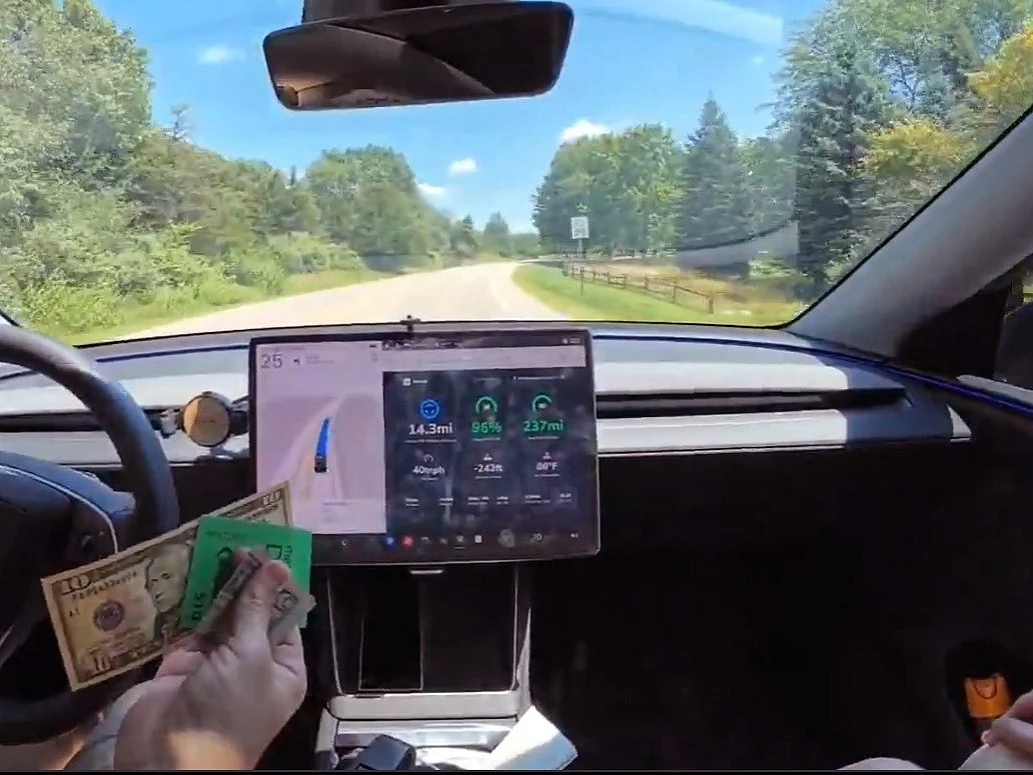
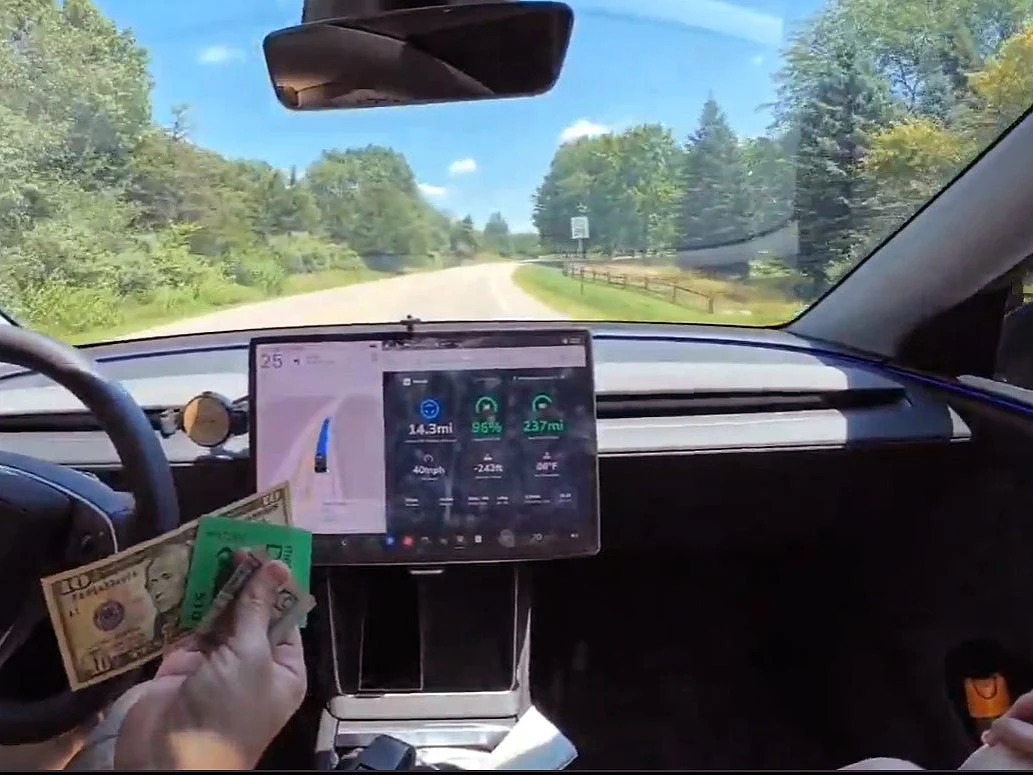
    As demonstrated in the video below, FSD version 13.2.9 can now identify when a payment has been completed at an open road toll or parking booth, allowing it to drive away without any human intervention.

    How did the Model Y accomplish this? Tesla’s AI leader explains that it employed its pillar and side cameras to monitor the money exchange and the handover of parking tickets. It waited until the entire process was finalized before gradually moving away from the toll booth once the payment was complete.

    Interestingly, the Tesla Model Y didn’t require a barrier to be lifted or a green light to proceed. Instead, it relied on its cameras to observe the interaction between the driver and the booth attendant to determine the right moment to move forward.

    Limitations for Older Models

    Sadly, Tesla owners with older vehicles equipped with HW3 kits often miss out on these FSD advancements. For instance, they currently cannot lend their cars to the Robotaxi platform. Elon Musk has stated that free HW4 retrofits will be offered if Tesla cannot make unsupervised FSD function with these older models.

    Source:
    Link

  • Tesla’s FSD Training for Edge Cases: Insights from Xiaomi CEO

    Tesla’s FSD Training for Edge Cases: Insights from Xiaomi CEO

    Key Takeaways

    1. Tesla’s Full Self-Driving (FSD) is now recognized as a Level 4 autonomy system in Austin, allowing unsupervised driving on public roads.
    2. The pilot robotaxi program is expanding access to rides for Tesla account holders in Austin, with a flat fee of $4.20 per ride.
    3. Tesla claims its Autopilot is ten times safer than the average human driver in the U.S.
    4. The FSD system uses cameras for training and is designed to manage complex driving scenarios effectively.
    5. There have been no major incidents during the initial phase of the unsupervised FSD robotaxi operation, and industry leaders are expressing admiration for Tesla’s technology.


    Tesla’s Full Self-Driving (FSD) option has officially been recognized as a Level 4 vehicle autonomy system by the city of Austin. This marks the introduction of its unsupervised version on public roads.

    Understanding Level 4 Autonomy

    A Level 4 autonomous driving system eliminates the need for a human driver. Tesla is currently using its unsupervised FSD version on a fleet of driverless Model Ys as part of a pilot robotaxi ride-share initiative.

    Robotaxi Launch Progress

    The pilot program has now entered its second week, and Tesla is slowly broadening access to rides for everyday people with Tesla accounts in the Austin area, moving beyond just automotive influencers.

    Each robotaxi ride utilizing the unsupervised FSD costs a flat fee of $4.20, no matter the distance traveled, as the testing is currently confined to a geofenced area.

    Safety and Training

    Tesla is confident that its driver-assist technologies, including Autopilot and the paid FSD feature, are the future of driving. Recent stats from its environmental impact report indicate that a Tesla operating on Autopilot is roughly ten times safer than an average human driver in the United States.

    The company has disclosed details on how it trains its FSD system, which relies on cameras instead of LiDAR, to handle edge cases that drivers might encounter daily. These scenarios can include anything from fallen traffic cones to a child running across the street. For instance, a child crossing has been a key focus for Dan O’Dowd, a road safety advocate critical of FSD, highlighting the importance of preparing algorithms for such situations.

    Early Days of Operation

    So far, there haven’t been significant incidents related to the unsupervised FSD during the robotaxi operation in Austin; however, it is important to note that the program is still in its initial phases.

    One individual who seems very impressed with Tesla’s FSD and its camera-based strategy is Lei Jun, the CEO of Xiaomi. Often referred to as the “Elon Musk of China,” Jun has recently shifted his focus from smartphones like the Xiaomi 14 Pro to electric vehicles such as the SU7 sedan and the YU7, a competitor to the Model Y. He commended Tesla’s FSD technology, stating, “Tesla is indeed amazing,” while sharing a video of a Model Y autonomously delivering itself to a customer. He noted, “It has led industry trends in many areas, especially FSD,” and concluded with, “we still have a lot to learn” regarding FSD and its training processes, especially concerning unusual scenarios.