
Key Takeaways
1. Surge in Hybrid Interest: There is a renewed excitement in China for Extended Range EVs (EREVs) that combine electric and internal combustion engines (ICE), leading to increased investments in hybrid powertrains.
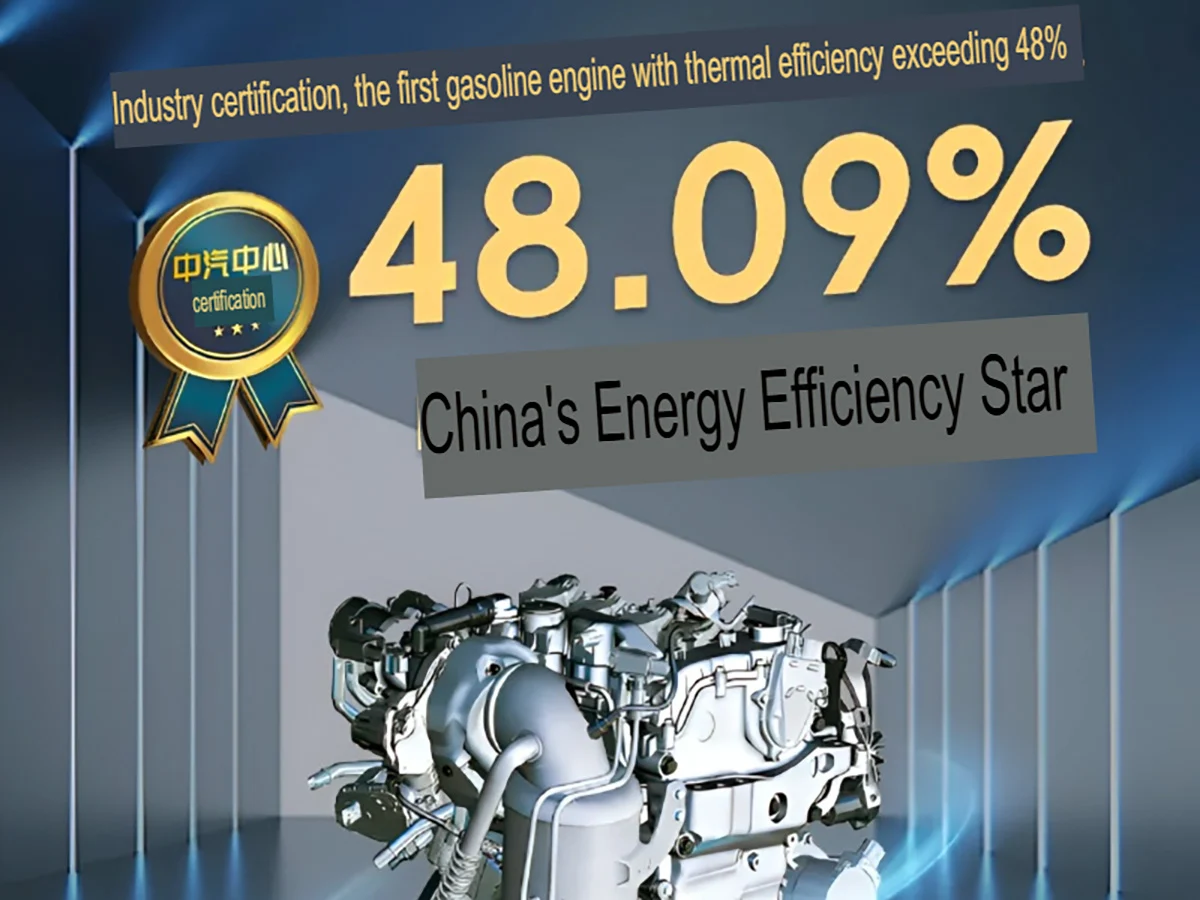
2. Dongfeng’s Breakthrough Engine: Dongfeng has developed the Mach 1.5T gas engine, achieving a thermal efficiency over 48%, surpassing competitors like Toyota and BYD.
3. Innovative Efficiency Techniques: The Mach 1.5T engine’s efficiency improvements come from both traditional methods and new technologies, including thermal spray coatings and integrated oil pumps.
4. Performance Gains: Enhancements in combustion and turbocharger technology allow Dongfeng’s hybrid engine to maintain high efficiency for over half its operational time, increasing range by 10%.
5. Larger Battery Capacities: New hybrid models in China are incorporating larger battery packs, enhancing range for both urban and highway driving, while ICE thermal efficiency advancements continue.
China is currently excited about vehicles referred to as EREVs (Extended Range EVs), which merge the advantages of electric vehicles with internal combustion engines (ICE), boasting impressive total range figures.
Renewed Interest in Hybrids
This fascination has led to a surge in investments in hybrid powertrains. Dongfeng’s new Mach 1.5T gas engine has surpassed both Toyota and the record-holding BYD in thermal efficiency.
The specification highlights how effectively the ICE converts energy from burning fuel into the movement of its parts, which typically ranges from about 20% to nearly 40%. Toyota’s engine in the Prius is a well-crafted example, achieving a thermal efficiency close to the upper limit, while BYD, the largest EV manufacturer, also has hybrid systems with a commendable 46% ICE efficiency.
Dongfeng’s Innovations
Dongfeng has been a pioneer in hybrid technology in China and has successfully created the Mach 1.5T, touted as the most economical engine for mass-market hybrids, boasting a thermal efficiency rating of over 48%. This ICE has received the “Energy Efficiency Star” certification from the China Automotive Technology and Research Center (CATARC), which is in charge of verifying such claims.
The company achieved this remarkable efficiency through traditional methods like raising the compression ratio and accelerating combustion, as well as new techniques such as coating the cylinder bore with thermal spray and integrating the oil pump.
Performance Enhancements
The combustion improvements impact the turbocharger with its variable geometry and the electric VVT system, since the hybrid engine lacks valve seats. This results in an ICE that maintains its top efficiency rating of 48% for over half of its operational time, offering a 10% increase in range from an already economical engine.
It’s still uncertain if Chinese automakers will overreach in hybrid production like they did with fully electric vehicles; however, innovations like the Mach 1.5T engine continue to emerge. Recently, Dongfeng introduced a variant featuring a groundbreaking AWD hub motor system that eliminates the requirement for CV joints and even brakes, resulting in a lighter and more agile vehicle.
Expanding Battery Capacities
The hybrid models emerging from China are also being outfitted with increasingly larger battery capacities, with CATL recently launching dedicated packs that approach the size of traditional electric EVs. This development enables extended range capabilities, both in urban settings and on highways, while advancements in ICE thermal efficiency continue as well.
Source:
Link
Leave a Reply