Category: EV vehicles

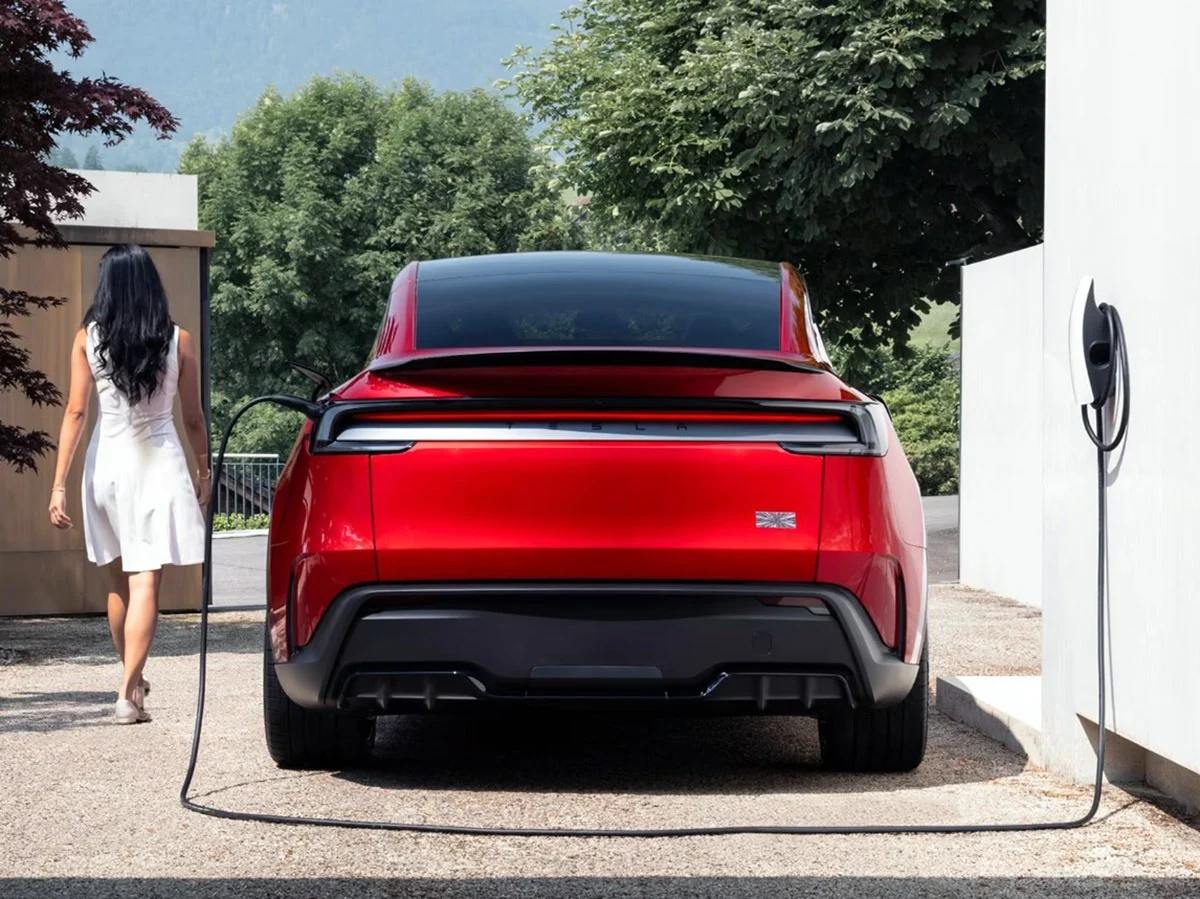
  • Tesla Launches $60/day Electric Car Rental with FSD & Free Charging

    Tesla Launches $60/day Electric Car Rental with FSD & Free Charging

    Key Takeaways

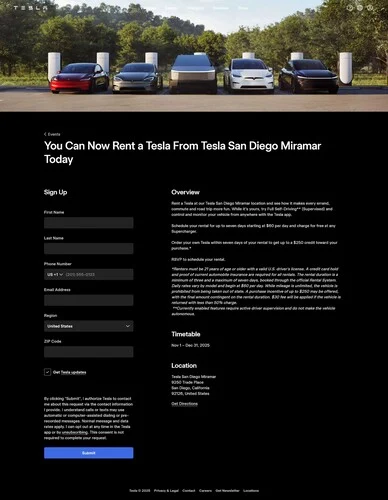
    1. Tesla is launching a rental program in select US locations, starting from November 1, 2025, to attract new customers and reduce inventory.
    2. The rental program allows customers to experience a Tesla for longer periods and is separate from a lease agreement.
    3. Rented Teslas must remain in California, and renters must be at least 21 years old with a valid US driver’s license, credit card, and proof of insurance.
    4. Customers who rent a Tesla can receive a discount of up to $250 on a purchase if they order a new vehicle within a week of renting.
    5. The rental initiative comes as demand for electric vehicles has decreased due to the removal of government subsidies, and Tesla’s profits have dropped by 37% year-over-year.


    Tesla is looking to draw in new customers in the United States with its fresh rental program, which also aims to cut down on its inventory. The pilot phase will kick off in selected Tesla locations, like San Diego, and is set to run from November 1 until December 31, 2025. It seems Tesla is trying to increase its sales numbers before the year’s end. It’s still uncertain whether this initiative will be available in other regions.

    Rental Details

    This deal is perfect for those who wish to experience a Tesla for more than just a couple of hours or for a few days. It’s a typical rental and not a lease agreement.

    Restrictions

    However, there’s a few restrictions: rented Teslas cannot leave California, and renters need to be at least 21 years old, providing a valid US driver’s license, credit card, and proof of insurance.

    Special Offer

    Tesla has a little bonus for potential buyers as well: anyone who places an order for a new Tesla within a week of renting one will get a discount of as much as $250 off the purchase price. Renters should be aware that if they return the electric car with below 50% battery, there will be an additional fee of $30.

    The rental initiative comes at a tough time. The demand for electric vehicles in the US has dropped after the removal of important government subsidies (Federal Tax Credit). Local incentives, like the LDPLIP subsidy in Texas, provide grants of up to $2,500, but they only partially counteract the nationwide decrease. Tesla is also under pressure, with net profits decreasing by 37% in the last quarter compared to the same period last year.

    Source:
    Link


  • Tesla Sales Decline as Competition from BYD Grows in China

    Tesla Sales Decline as Competition from BYD Grows in China

    Key Takeaways

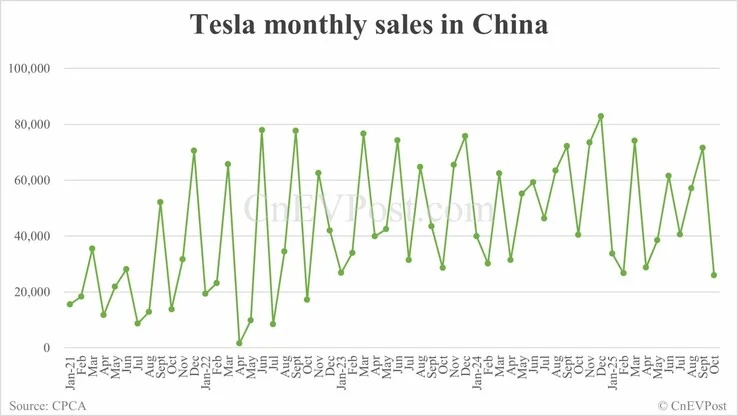
    1. Tesla’s vehicle sales in China fell to the lowest level since 2022, with only 26,006 cars sold in October, a 36% decrease from the previous year.
    2. The initial popularity of the new six-seat Model Y L and trims of Model 3 and Model Y did not sustain demand, leading to a sharp decline in sales.
    3. Local electric vehicle manufacturers are intensifying competition by offering cheaper models with more features, impacting Tesla’s market position.
    4. Global sales challenges are evident as BYD, a major competitor, outsold Tesla significantly in key European markets, further distancing Tesla from its brand presence.
    5. In response to declining sales, Tesla is introducing various financing options and incentives, including rental programs and purchase credits, to boost sales in the US market.


    Tesla’s vehicle sales in China have dropped to a level not seen since 2022. Even though the new six-seat Model Y L was initially well-received, along with new trims of the Model 3 and Model Y, Tesla only managed to sell 26,006 cars in China in October.

    Significant Decline in Sales

    This marks the lowest sales figure for Tesla in a month over the past three years, showing a 36% decrease compared to the same time last year. In September, when demand for the Model Y L was high, Tesla sold 63% more vehicles, indicating a decline in interest after the first wave of buyers completed their purchases. While it’s true that Tesla exported 28% more vehicles from China in comparison to last October, the total export volume is down 8% for the year overall.

    Rising Competition and Market Trends

    The surge in competition from local electric vehicle manufacturers, which provide cheaper options with more features, is putting pressure on Tesla. Additionally, the popularity of Extended Range Electric Vehicles (EREVs) in China complicates things further. EREVs not only come with larger batteries but also include a gasoline generator to reduce range anxiety. This trend is so appealing to consumers that even companies that were originally focused on electric vehicles are now either producing or considering EREVs.

    Global Sales Challenges

    In other regions where Tesla faces competition from Chinese brands, sales are also declining. BYD, the largest EV manufacturer in the world, is now closely competing with Tesla in Europe. BYD sold seven times as many cars as Tesla in the UK and four times more in Germany, which are two of the biggest markets for plug-in vehicles. This trend suggests that the European market is continuing to distance itself from the Tesla brand, partly due to Elon Musk’s political actions earlier this year.

    With the federal tax credit in the US coming to an end, Tesla is rolling out various traditional financing options, leasing deals, and free upgrade offers. The company has also come up with creative strategies to boost sales, including a rental option that features free Supercharging and Full Self-Driving (FSD) for just $60 per day. If a customer decides to purchase a Tesla after a 7-day rental period available at select locations, they will receive a $250 purchase credit as a bonus. Whether these incentives can counteract the sales decline in the US, similar to what’s observed in markets facing competition from Chinese brands, remains to be seen.

    Source:
    Link


  • Fire-Safe Lithium-Ion Battery Design Prevents Thermal Runaway

    Fire-Safe Lithium-Ion Battery Design Prevents Thermal Runaway

    Key Takeaways

    1. Traditional lithium-ion batteries pose a fire hazard due to thermal runaway, which can occur when they are damaged or overcharged.
    2. Researchers from the Chinese University of Hong Kong developed a new battery design that significantly reduces the risk of fire and explosions.
    3. The new battery design only increased in temperature by around 3.5 °C when punctured, compared to a standard battery’s surge of 555.2 °C.
    4. The breakthrough was achieved by addressing ion association, which previously compromised battery safety by lowering the thermal runaway threshold.
    5. The innovative “solvent-relay strategy” in the new electrolyte enhances both safety and durability, allowing the battery to maintain 81.9% capacity after 1,000 cycles.


    Traditional lithium-ion batteries, which are used in many gadgets from automobiles to smartwatches, come with a notable fire hazard. These batteries can experience thermal runaway when they are damaged, overcharged, or defective. This phenomenon is risky because it causes internal parts to fail and emit intense heat. Typically, a battery can heat up by more than 500 °C, resulting in fire or explosions.

    New Research Findings

    Recently, researchers from the Chinese University of Hong Kong have created a new battery design that reduces this danger. Their findings were published in the journal Nature, where they explained their innovative design and the results of their tests. When a nail punctured the newly designed lithium-ion battery, the temperature only increased by around 3.5 °C and remained stable. On the other hand, a standard battery with conventional electrolytes experienced a temperature surge of 555.2 °C, leading to both an explosion and a fire.

    Understanding the Problem

    The breakthrough was achieved after the team pinpointed the problem — ion association. In traditional batteries, the way lithium ions and negative ions group within the electrolyte aids in forming a protective layer known as the solid electrolyte interphase (SEI), crucial for a long battery life. However, the researchers found that this same ion association reduces the temperature threshold for thermal runaway by nearly 94 °C, which compromises the safety of the battery.

    Innovative Solution

    To address this issue, the researchers developed what they refer to as a “solvent-relay strategy.” They created a new electrolyte that reacts differently at varying temperatures. Under normal room-temperature conditions, it encourages the ion association necessary for effective SEI formation. However, when temperatures rise due to damage, a specific solvent named lithium bis(fluorosulfonyl)imide takes over, bonding with the lithium and facilitating ion dissociation. This process prevents the formation of dangerous anion bonds that could lead to heat generation.

    Performance and Durability

    The new battery design has demonstrated both safety and resilience. Cells built using this innovative strategy exhibited remarkable cycle life, maintaining about 81.9% of their capacity even after 1,000 cycles.

    Source:
    Link


  • Tesla Plans AI Chip Terafoundry, Reveals Roadster, Semi, Optimus Dates

    Tesla Plans AI Chip Terafoundry, Reveals Roadster, Semi, Optimus Dates

    Key Takeaways

    1. Tesla plans to start mass production of the Cybercab in April, aiming for one unit every 10 seconds, significantly faster than the Model Y.
    2. The Robotaxi service will expand to major US cities, including Miami, Dallas, Phoenix, and Las Vegas, with the Cybercab designed without pedals or a steering wheel.
    3. The second-generation Semi truck will enter mass production in 2026, featuring improvements like a light bar, increased payload capacity, and enhanced efficiency of 1.7 kWh/mile.
    4. The much-anticipated Roadster 2 reveal is set for April 1, 2026, with a release in 2027, and Tesla plans to start mass production of the Optimus 3 humanoid robot in 2026.
    5. Tesla’s Cybercab and Optimus robots will rely on advanced AI chips and batteries, with plans to establish a lithium refinery and potentially a chip foundry to support production needs.


    Tesla has revealed plans to kick off mass production of its Cybercab in April, aiming to produce one unit every 10 seconds, which is four times faster than the Model Y.

    Expansion of Robotaxi Service

    By that time, Tesla’s Robotaxi service is set to cover most major US cities, with Miami, Dallas, Phoenix, and Las Vegas identified as the next locations for operation. The Cybercab has undergone minor design tweaks since its first introduction, but it will still be manufactured without pedals or a steering wheel.

    Updates on the Semi Truck

    The most significant design overhaul has been reserved for Tesla’s second-generation Semi truck, which is also expected to go into mass production in 2026. The new model will feature a light bar, enhanced payload capacity, and a 15% boost in efficiency, bringing it down to just 1.7 kWh/mile. Additionally, the charging speed has been increased to 1.2 MW, which is the maximum permitted by Tesla’s NACS standard at a V4 Supercharger station.

    Future Roadster and Humanoid Robots

    During the 2025 Annual Shareholder Meeting, where Elon Musk’s $1 trillion pay package was approved by 70% of shareholders, Tesla announced that the much-anticipated Roadster reveal will take place on April 1, 2026. The actual release date for the Roadster 2 is set for 2027, though a demo is planned for this year, where enthusiasts might discover why Musk claims the supercar can “fly.”

    The mass production of the Optimus 3 humanoid robot is also on the horizon for 2026, starting with an initial line of one million units at the Fremont facility, followed by a larger setup in Giga Texas for ten times that amount. Musk is accelerating these plans in response to competitive humanoid robots being announced by Chinese companies such as XPeng, which plan to begin mass production in 2026. “Tesla and Chinese companies will dominate the market,” Musk stated.

    AI Chips and Battery Production

    Both the Cybercab and Optimus robots will rely heavily on AI chips and batteries. Tesla provided an update regarding its lithium refinery, which is set to begin operations next year with a planned capacity of 50 GWh. Alongside its own lithium refinery and battery manufacturing plants, Musk mentioned that Tesla might need to establish its own AI chip foundry.

    “This isn’t just a new chapter for Tesla; it’s an entirely new book. This new book significantly boosts vehicle production and accelerates Optimus production at a pace never seen before in human history. Even with the most optimistic projections for chip production from our suppliers, it’s still insufficient. Therefore, I believe we might have to create a Tesla terafab. It’s like giga, but way larger,” he expressed.

    Chips and Production Plans

    Of course, Musk has a tendency for exaggeration, especially now that he’s just secured a potential trillion-dollar compensation package. However, he did share some insights into the Tesla AI5 chip specifications, stating it will begin production in about a year, boasting a 50x “total” advantage over the AI4. Production will continue to be shared between Samsung and TSMC, while the AI6 chip will be produced solely by Samsung at its Texas facility. This arrangement leaves Tesla’s own chip foundry responsible for the upcoming AI7 and AI8 chips that Musk has hinted at recently.

    Source:
    Link


  • Tesla Supplier LG and Major Oil Refiner Launch Sodium-Ion Batteries

    Tesla Supplier LG and Major Oil Refiner Launch Sodium-Ion Batteries

    Key Takeaways

    1. Sinopec and LG are collaborating to develop sodium-ion batteries for electric vehicles and energy storage.
    2. LG will leverage Sinopec’s expertise in chemicals and large-scale production for innovative battery materials.
    3. Sodium-ion batteries offer advantages over lithium-ion, such as better performance in cold climates and enhanced safety.
    4. The partnership aims to create affordable sodium-ion batteries for budget-friendly electric vehicles and energy storage systems.
    5. LG Chem is also focused on advancing EV battery technology, including the development of high-performance 4680 batteries.


    The largest fossil fuel refiner in the world, Sinopec, has teamed up with LG, a supplier of batteries for Tesla, to create new sodium-ion batteries for electric vehicles and energy storage solutions.

    Partnership Details

    As part of the agreement, LG will focus on creating innovative cathode and anode materials for sodium-ion batteries, utilizing Sinopec’s extensive knowledge in chemicals and large-scale production. This marks the first venture into the sodium-ion battery market for both companies. However, LG has already established its reputation in the EV sector by making advanced batteries for Tesla, including the latest units that have improved energy density, which helped to enhance the range of the Model Y recently.

    Goals and Advantages

    LG expressed that they aim to develop next-gen battery materials quickly through their collaboration with Sinopec. The company highlighted the performance benefits of sodium-ion batteries over traditional lithium-ion types, emphasizing their exceptional performance in cold climates and safety features.

    The main objective of this joint venture between LG and Sinopec is to manufacture affordable sodium-ion batteries that can be used in budget-friendly electric vehicles and energy storage systems.

    Future Innovations

    LG Chem has already achieved significant milestones in EV battery technology thanks to research in its cathode materials division. They plan to produce 4680 batteries that outperform the current Tesla Cybertruck batteries in terms of thermal efficiency and charging capabilities. LG is working on overcoming the challenges related to cost and performance of sodium-ion batteries, though it is yet unclear if Tesla will choose to use these new sodium-ion batteries.

    Source:
    Link


  • Tesla Offers 12-Year Model Y Battery Warranty to Compete with China

    Tesla Offers 12-Year Model Y Battery Warranty to Compete with China

    Key Takeaways

    1. Tesla currently offers an 8-year battery warranty, shorter than competitors like Hyundai and Kia, who provide 10-year coverage.
    2. Chinese automakers, led by NIO and CATL, are advocating for a mandatory 15-year EV battery warranty with an 85% capacity retention.
    3. Tesla plans to introduce extended battery warranties of up to four additional years starting in 2026, available as a subscription service for $100/month.
    4. CATL already offers a 12-year warranty for NIO and aims to extend its own warranties to 15 years, with LFP batteries guaranteed for up to 20 years.
    5. The push for longer warranties is seen as a way to rejuvenate the used EV market, as many electric vehicles will be out of warranty in the next five years.


    As the largest battery manufacturer in the world aims to establish a 15-year warranty for electric vehicles (EVs) in collaboration with leading brands like NIO, Tesla is paying attention.

    At present, Tesla provides an 8-year warranty for its high-voltage battery, which is shorter compared to the 10-year coverage offered by Hyundai or Kia in the U.S. Moreover, this warranty specifies that during its duration, the battery in a Model Y should not drop below 70% of its initial capacity.

    Chinese Automakers’ Initiative

    In contrast, Chinese firms like NIO have teamed up with CATL to push for a mandatory 15-year EV battery warranty across the industry, promising an 85% capacity retention. The technology exists; modern LFP batteries, found in everything from the discounted Anker Solix 2 mobile power station on Amazon to mainstream electric vehicles, have demonstrated their ability to last significantly longer than the typical warranties provided by manufacturers.

    Tesla’s Plans for Extended Coverage

    Tesla is set to roll out battery warranties that extend up to four additional years for the Model Y, Model 3, and other vehicles in its lineup. In a message to customers, Tesla announced that these extended coverage options will be available beginning in 2026. However, this new battery warranty from Tesla is expected to be offered as a subscription service, starting at $100 a month for the longer coverage periods.

    It’s evident that Tesla has calculated the longevity of the new battery technologies it uses in its cars, which can exceed the standard 8-year warranty. This means Tesla could profit from the subscription fees. If Tesla charges $100/month to extend the battery capacity guarantee by another four years, it stands to gain nearly $5,000. In the rare case that some batteries fall below the 70% threshold during this period, Tesla would replace them at minimal expense.

    CATL’s Competitive Edge

    CATL is already providing a 12-year battery warranty for the packs it supplies to NIO’s EV battery swap stations, and it is expanding its own network with the aim of extending the warranty to 15 years. Their LFP batteries used for energy storage are backed by a guarantee of up to 20 years, with no degradation expected in the first five years of use.

    According to NIO, approximately 20 million electric vehicles will be out of warranty in the next five years, which could create a stagnant second-hand EV market. This is why NIO is collaborating with CATL to establish a 15-year battery warranty as a standard, revitalizing the used EV market and addressing a major concern for future electric vehicle owners. Tesla appears to be following a similar path, but with a unique approach to maintain its profit margins by introducing the extended battery warranty as a subscription service.

    Source:
    Link


  • Tesla Recalls 6,200 Cybertrucks Due to Sticky Mistake

    Tesla Recalls 6,200 Cybertrucks Due to Sticky Mistake

    Key Takeaways

    1. Tesla is recalling nearly 6,200 Cybertrucks due to potential issues with off-road LED light bars detaching while driving.
    2. The recall affects Cybertrucks made at the Texas Gigafactory between November 13, 2023, and November 5, 2024.
    3. The problem arose from an assembly error involving the use of incorrect adhesive, which could cause vibrations to loosen the light bars.
    4. Tesla will check all affected vehicles for loose or damaged light bars, replace defective units at no cost, and install a mechanical fuse for added safety.
    5. This recall marks Tesla’s tenth in under two years, and the Cybertruck’s sales have struggled due to regulatory issues in the European Union.


    Following a recent recall involving nearly 13,000 Model 3 and Model Y cars due to a potential drive loss, Tesla is now issuing a recall for the Cybertruck as well. The concern relates to the LED light bars, which are made for off-road use but could come loose while being driven. The US National Highway Traffic Safety Administration (NHTSA) has released a recall notice stating that this issue impacts Cybertrucks manufactured at the Texas Gigafactory between November 13, 2023, and November 5, 2024.

    Affected Vehicles

    This recall includes 6,197 vehicles in the US, with a focus on the high-performance Cyberbeast model. Tesla has received 619 warranty claims and one report from the field about the problem, although there have been no accidents or injuries reported so far. The NHTSA explained that the issue resulted from an assembly mix-up, where BetaSeal adhesive was occasionally used instead of the proper BetaPrime primer. This substitution may lead to the LED light bars detaching because of vibrations while driving.

    Installation Concerns

    It’s important to mention that the off-road light bars in question could either be ordered as a factory option or added afterward through Tesla Service. In some instances, customers had to carry out the installation on their own since Tesla employees aren’t legally allowed to install certain electronic parts. However, it’s still uncertain if this had any effect on the light bar issues currently being faced.

    Tesla has announced that all vehicles affected will undergo checks for any loose or damaged light bars. Any defective units will be replaced at no cost, and a mechanical fuse will be installed to enhance safety in the future. A transparent and customer-driven approach is crucial, especially as Tesla’s reputation is already facing challenges.

    Ongoing Recalls

    This latest recall is Tesla’s tenth within a span of less than two years. Earlier this spring, the company had to call back tens of thousands of vehicles due to loose trim and misaligned pedals. Meanwhile, sales of the Cybertruck have not met expectations, partly because the vehicle does not comply with road regulations in the European Union. In response to these challenges, Elon Musk has reportedly had his companies SpaceX and xAI buy an entire fleet of Cybertrucks, likely to increase visibility and demand.


    Source:
    Link


  • Kia Postpones US Release of EV4 Sedan Indefinitely

    Kia Postpones US Release of EV4 Sedan Indefinitely

    Key Takeaways

    1. Kia has paused the US introduction of its EV4 sedan, originally planned for early 2026.
    2. A Kia representative confirmed the delay but did not specify reasons, mentioning changing market conditions for EVs.
    3. Influencing factors may include the end of EV Tax Credits in the US and tariffs on South Korean imports.
    4. The EV4 sedan, already available in South Korea, features a 150 kW motor and offers two battery options with a range of up to 330 miles.
    5. Future availability of the Kia EV4 sedan in the US remains uncertain, but images of the EV4 GT hatchback were recently released, expected to launch in 2026.


    Kia has decided to pause the US introduction of its EV4 sedan. This electric vehicle was showcased at the 2025 New York International Auto Show in April, with plans from Kia to bring it to market in early 2026.

    Delay Confirmation

    A recent comment from an unnamed Kia representative to InsideEVs appears to confirm that the EV4’s launch is being postponed in this market. The spokesperson for the South Korean company stated, “the release of the upcoming EV4 electric sedan will be delayed until further notice.” While they did not specify the exact reasons for this delay, the spokesperson mentioned that “market conditions for EVs have changed.” This could imply that the end of the EV Tax Credits in the US and existing tariffs on South Korean imports may have influenced this choice.

    Specifications and Features

    The Kia EV4 sedan, which is already available in South Korea, was planned to be sold in three different trim levels in the US. All versions are based on the 400V E-GMP platform and feature a 150 kW front motor. They were supposed to come with either a 58.3 kWh or an 81.4 kWh battery, with the larger option providing a range of up to 330 miles (~531 km). Additionally, equipped with a North American Charging Standard (NACS) port, it was estimated that charging from 10% to 80% would take around half an hour.

    Future Uncertainty

    It is still unclear if or when the Kia EV4 sedan will make its way to the US market. In related news, Kia has also released the first official images of the EV4 GT hatchback, which is expected to launch sometime in 2026.

    Source:
    Link


  • Kia Teases New EV4 GT with Exciting Wrap Reveal

    Kia Teases New EV4 GT with Exciting Wrap Reveal

    Key Takeaways

    1. Kia has revealed initial pictures of the upcoming EV4 GT hatchback, following the debut of the regular EV4 in 2025.
    2. The EV4 GT Wrap features black, gray, and neon green foil, showcasing the brand’s electric GT prototypes with patterns reflecting speed.
    3. Specifications for the EV4 GT are not yet disclosed, but it may include features similar to the EV6 GT and EV9 GT, like a Virtual Gear Shift (VGS) system.
    4. The anticipated launch of the Kia EV4 GT is set for 2026, although a specific release date is still pending.
    5. The premium EV4 GT-Line S is priced at £44,795 in the UK, indicating the EV4 GT’s starting price may be around £50,000.


    Kia has unveiled the initial official pictures of its forthcoming EV4 GT. The regular EV4 made its debut in 2025, and it comes with several GT-Line and GT-Line S versions available in different markets. Additionally, Kia has already introduced GT variants of both the EV6 and EV9 models.

    New GT Wrap Displayed

    In a recent press release regarding a new GT Wrap, Kia is showcasing the EV4 GT hatchback. This GT Wrap features a combination of black, gray, and neon green foil, which is intended to conceal the brand’s electric GT prototypes. Kia claims that the geometric patterns reflect the speed associated with its GT models and emphasize “the emotional character of its (Kia’s) high-performance cars.” The images released also highlight unique rims on this prototype.

    Specifications Still Under Wraps

    Details on the specifications for the Kia EV4 GT are still pending. Just to remind everyone, the standard EV4 has front-wheel drive and comes with a single motor producing 201 bhp, alongside 58.3 kWh and 81.4 kWh battery choices. If it follows the pattern set by the EV6 GT and EV9 GT, it might include a Virtual Gear Shift (VGS) system, which aims to replicate the feel of changing gears in a gasoline-powered vehicle through various shift patterns, tactile feedback, and simulated sounds.

    Anticipated Release and Pricing

    The launch of the Kia EV4 GT is currently slated for 2026, although a specific release date has not yet been announced. In terms of pricing, the premium EV4 GT-Line S with a heat pump retails at £44,795 in the UK, which suggests that the starting price for the EV4 GT will likely be around £50,000.

    Source:
    Link


  • Ford EV Catches Fire While Driving; Company Points to External Factors

    Ford EV Catches Fire While Driving; Company Points to External Factors

    Key Takeaways

    1. Warranty claims can be complex and often leave customers reliant on manufacturers or service providers.
    2. A vehicle owner, Chase Roberts, had his warranty claim denied by Ford after his Mustang Mach-E caught fire.
    3. Ford’s engineer conducted a brief inspection and concluded the fire was caused by an external factor, without a formal report.
    4. Ford stated that the damage was not covered under warranty and would provide no further assistance.
    5. Chase sought support on social media, where he found others with similar experiences.


    Warranty claims can be complicated, often leaving customers dependent on manufacturers or warranty service providers. A notable example of this is a recent situation involving a vehicle owner and Ford Motor Company, which denied a warranty claim after a fire incident.

    The Incident

    Chase Roberts, the affected owner, expressed his frustration on Facebook on October 22, calling out Ford for what he sees as an unjust decision. He claimed that his relatively new Ford Mustang Mach-E caught fire while he was driving. Afterward, he submitted a warranty claim, and his car remained at the dealership for two months before Ford finally dispatched an engineer to examine the vehicle.

    The Inspection

    The engineer conducted a brief inspection lasting only 15 to 30 minutes, and without providing a formal report, he concluded that the fire was caused by an external factor. Ford then followed up with an email stating, “Based on our inspection, we believe the damage was caused by an external factor and is not covered under warranty. Ford will be of no further assistance.”

    Seeking Support

    Left with limited options, Chase turned to social media, posting about the incident several times to draw attention to his situation. Many commenters shared similar experiences, while others encouraged him to keep pushing for resolution.

    Previously, we reported on a comparable case involving a Xiaomi device that exploded during use, where Xiaomi also attributed the cause to external factors.

    Source:
    Link