Category: EV vehicles

  • Toyota Reveals New Corolla Concept with BEV and FCEV Plans

    Toyota Reveals New Corolla Concept with BEV and FCEV Plans

    Key Takeaways

    1. Toyota unveiled the new Corolla Concept at the Japan Mobility Show 2025, aiming to be “a car for everyone.”
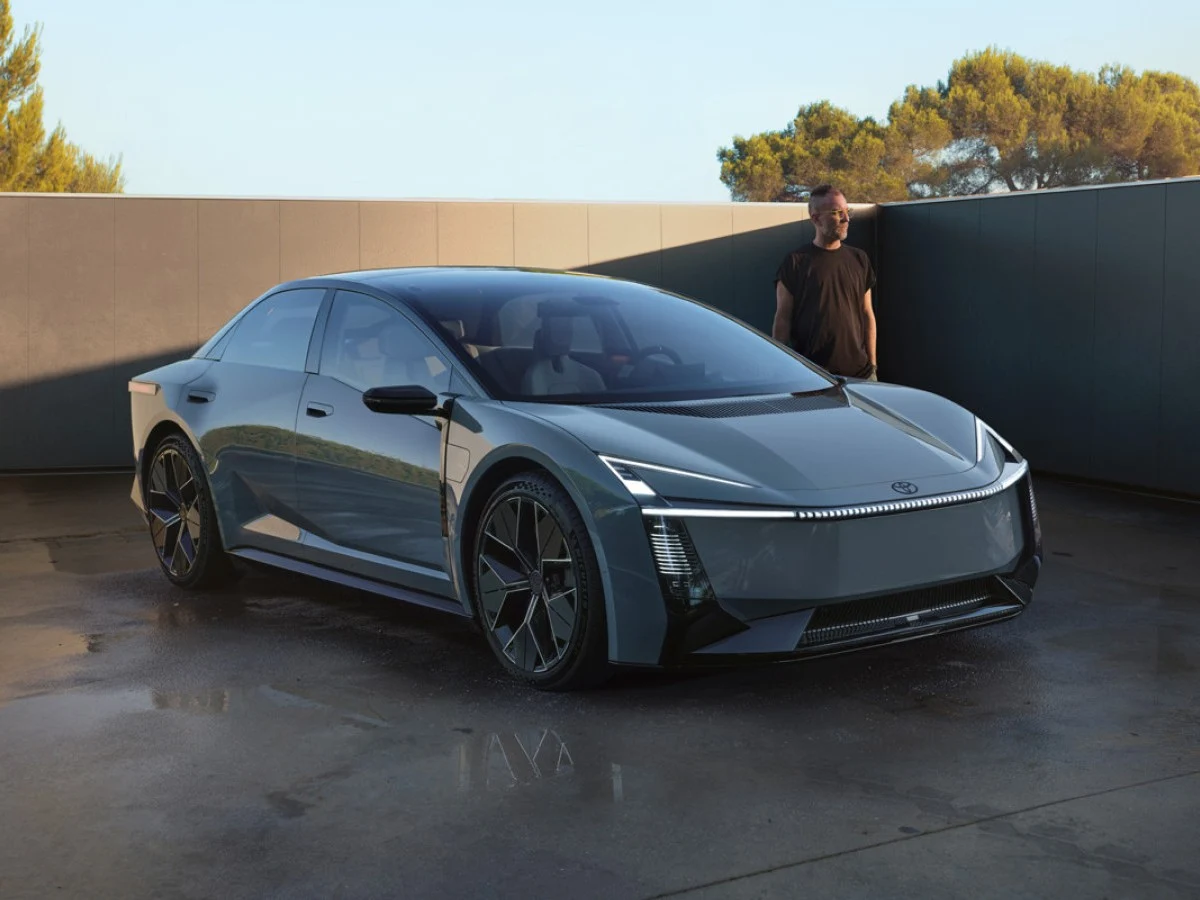
    2. The design features smooth lines, sharp headlights with an LED lightbar, wraparound brake lights, and a unique interior layout with ‘floating’ panels.
    3. The concept may offer multiple powertrain options, including battery-electric, plug-in hybrid, hybrid, and traditional internal combustion engine.
    4. Toyota is also developing a fuel cell electric vehicle (FCEV) version of the Corolla, focusing on a smaller hydrogen cell size.
    5. The production timeline and final design details of the Toyota Corolla Concept are still to be announced.


    Toyota has introduced a new Corolla Concept during the Japan Mobility Show 2025. The company claims this model is “a car for everyone”; it holds the title of the world’s best-selling car, with a remarkable 50 million units sold from 1966 to 2021.

    A Fresh Design

    For the latest Toyota Corolla Concept, the Japanese automaker has revealed an updated design, featuring smooth lines and a contemporary interior. The front of the car showcases sharp headlights, linked by an LED lightbar. The rear includes wraparound brake lights, and the concept is also equipped with a panoramic roof. Inside, the driver faces a unique layout with ‘floating’ panels shaped around the steering wheel, replacing the usual dashboard. The center console has a small model of the car that serves as a gear selector.

    Powertrain Options

    During the event, Toyota expressed its intention to potentially offer this updated model as a battery-electric vehicle (BEV), a plug-in hybrid (PHEV), a hybrid (HEV), or a traditional internal combustion engine (ICE) vehicle. Photos of the Toyota Corolla Concept suggest it may be a battery electric vehicle, as there is a charging port situated behind the front driver’s side wheel.

    Future Developments

    Additionally, a new report indicates that Toyota is also developing a fuel cell electric vehicle (FCEV) variant of the next-gen Corolla. In a discussion with Autocar, Mitsumasa Yamagata, President of Toyota Hydrogen Factory, mentioned that their team is working on a hydrogen-powered engine for the vehicle, aiming for a smaller cell size to prevent a major redesign of the concept.

    It is yet to be determined when the Toyota Corolla Concept will enter production and how similar the final version will be to the model presented this year.

    Source:
    Link


  • Tesla Increases Model 3 and Model Y Lease Prices by Up to $100

    Tesla Increases Model 3 and Model Y Lease Prices by Up to $100

    Key Takeaways

    1. Tesla will increase lease payments for the Model 3 and Model Y starting November 4.
    2. The lease for the Model Y Premium RWD will rise to $529/month, while the Model 3 will increase to $429/month.
    3. The $6,500 lease credit will remain in place despite the increase in monthly payments.
    4. The price gap between leasing a Model Y and Model 3 is now just $100, complicating customer choices.
    5. Tesla aims to protect profit margins after a record number of deliveries, amid rising expenses and declining sales expectations.


    Tesla is set to raise lease payments for the Model 3 and Model Y starting on November 4, as previously warned.

    This adjustment appears to follow a temporary reduction in monthly costs aimed at attracting customers after the federal tax credit expired, with final deliveries pushed to mid-October.

    Updated Lease Costs

    From November 4, the lease for the Model Y Premium RWD will increase to $529/month, up from the current $449. The price hike for the Model 3 is even steeper, rising by $100, from $329 to $429 for a 3-year lease that includes a $3,000 down payment.

    With the gap between leasing a Model Y and a Model 3 narrowing to just $100, Tesla enthusiasts will face some difficult decisions on which model to choose.

    Lease Credit and Financial Outlook

    Fortunately, Tesla is maintaining the $6,500 lease credit that was introduced right after the federal one ended. However, the increase in monthly lease payments appears to be a strategy to recover losses from its own credit program to some extent.

    Despite achieving a record number of vehicle deliveries last quarter, Tesla’s financial situation wasn’t very bright. The surge in revenue from customers racing to take advantage of the $7,500 federal tax credit was countered by higher expenses. Now, Tesla is looking to protect its profit margins during a fourth quarter that could experience a significant decline in sales.

    Source:
    Link


  • EVs Charge While Driving: First-Time Highway Electrification Milestone

    EVs Charge While Driving: First-Time Highway Electrification Milestone

    Key Takeaways

    1. A dynamic inductive charging system has been installed on a public stretch of the A10 near Paris, allowing electric vehicles to charge while driving.
    2. The system delivers up to 300 kilowatts of power through induction coils embedded in the road, enabling wireless charging for compatible vehicles.
    3. Initial tests show charging power averages over 200 kilowatts, similar to current fast-charging stations, with successful evaluations confirming the technology’s durability.
    4. Wider implementation could reduce the size of EV batteries, lower costs, and help meet climate goals by increasing electric vehicle adoption and decreasing CO₂ emissions.
    5. The technology requires compatible receiver coils in vehicles, and a charging payment model is being considered, with details expected as the project develops.


    For the first time, a public stretch of the A10 located southwest of Paris has been enhanced with a dynamic inductive charging system that enables electric vehicles to charge while they drive. This pilot initiative, named “Charge as you drive,” signifies a significant step toward the broader adoption of electric mobility.

    Project Overview

    On a 1.5-kilometer (0.9-mile) trial section of the A10, collaborators such as VINCI Autoroutes, Electreon, VINCI Construction, Gustave Eiffel University, and Hutchinson have set up a system that can deliver up to 300 kilowatts of power to vehicles that are in motion. Induction coils that are embedded in the roadway create a magnetic field, which is transformed into electricity by receiver coils located inside the vehicles. This means that compatible cars, buses, and trucks can charge wirelessly while moving along the road, eliminating the need to pause at a charging station.

    Performance Metrics

    Electreon reports that initial measurements indicate an average charging power exceeding 200 kilowatts, which is similar to what is seen at contemporary fast-charging stations. Presently, four prototype vehicles are in operation, which include a heavy truck, a van, a passenger car, and a bus, all undergoing testing in real traffic situations. The system has successfully passed essential technical assessments: material tests at the Road Research Center in Mérignac and a 25-year durability simulation at LAMES lab in Gustave Eiffel University confirmed the technology’s longevity. After these positive evaluations, the system has received approval for deployment on public roadways.

    Future Implications

    Should the “Charge as you drive” technology be implemented on a larger scale, electric vehicles could potentially come with smaller batteries in the future. This would not only lower the costs of EVs but also diminish the CO₂ emissions tied to battery creation and disposal. Additionally, the wider acceptance of electric vehicles might speed up, aiding in the achievement of climate objectives—particularly in France, where road traffic is responsible for about 95% of emissions related to transportation.

    There are still unanswered questions regarding how drivers will be charged for the electricity used while wirelessly charging on the highway. Electreon is considering a “charging-as-a-service” model, where users might pay either for each use or through monthly subscription fees. A control unit placed in the road will automatically recognize authorized vehicles and activate the power transfer only when necessary. Detailed pricing and tariff information is anticipated to be revealed as the project advances.

    Compatibility and Availability

    In theory, any electric vehicle can charge while it moves, provided it has a compatible receiver coil fitted beneath its chassis. However, this technology is not yet available to the public. It necessitates either retrofitting existing vehicles or incorporating the system into new models during their production phase.

    Source:
    Link


  • Kia Beats Tesla with PV5 Cargo Van Range and Model 3 Efficiency

    Kia Beats Tesla with PV5 Cargo Van Range and Model 3 Efficiency

    Key Takeaways

    1. The Kia PV5 electric van set a Guinness World Record by traveling over 430 miles on a single charge with a 71 kWh battery while carrying nearly 1,500 pounds.
    2. The real-world test was conducted on a 36-mile loop simulating typical city and highway driving, completed in over 22 hours while adhering to the maximum weight rating.
    3. The van achieved an efficiency of around 11 kWh per 100 km (17.7 kWh per 100 miles), outperforming many similar vehicles, including the Tesla Model 3.
    4. The PV5 offers fast DC charging, reaching 80% capacity in just 30 minutes, and has batteries that maintain capacity better over time compared to other brands.
    5. The PV5 series can be configured for passenger or cargo use, with a starting price of around $37,000 projected for the U.S. cargo variant in 2026.


    The Kia PV5 electric van has achieved a remarkable feat by traveling over 430 miles on a single charge from its 71 kWh battery, setting a Guinness World Record for loaded light cargo vehicles.

    Real-World Testing

    Despite carrying a payload of nearly 1,500 pounds, this Kia van completed a journey designed to reflect everyday driving conditions. The test was conducted on a 36-mile (58 km) loop that featured a typical blend of city streets and highways, simulating the routes that delivery drivers commonly navigate.

    It took a dedicated van reviewer along with a PV5 development engineer more than 22 hours to cover this impressive distance, all while adhering to the maximum Gross Vehicle Weight Rating (GVWR).

    Efficiency Stats

    The van’s 430-mile range translates to an efficiency of around 11 kWh per 100 km, or 17.7 kWh per 100 miles. This is quite an achievement for a cargo vehicle that tipped the scales at over 2.5 tons during the test. For context, Tesla Model 3 drivers have reported a similar efficiency of 18 kWh per 100 miles in optimal situations, but the more average figure is around 22 kWh.

    To emphasize its efficiency, Kia conducted additional tests without any cargo. They claim that for every 100 kg (220 pounds) of cargo added, the PV5 only experiences a 1.5% reduction in range when it is empty. This means that Kia’s first electric van, built on Hyundai’s modern modular platform for electric vehicles, could have extended its range by about 40 miles without the hefty 1,500-pound load.

    Charging and Configurations

    In addition to its impressive efficiency, the new Kia van offers the brand’s standard fast DC charging, which can charge the battery up to 80% in just 30 minutes. The battery itself is also expected to have a longer lifespan, as a recent study on EV longevity indicated that Kia’s batteries hold onto their capacity better over time compared to those in Tesla or other electric vehicle brands.

    The PV5 series can be tailored to function as either a passenger or cargo vehicle, and there’s also a version suited for people with reduced mobility. In the United States, the PV5 cargo variant is projected to start around $37,000 when it makes its debut in 2026.


    Source:
    Link


  • Tesla Roadster 2 Release Date 2027: New Colors & Battery Upgrades

    Tesla Roadster 2 Release Date 2027: New Colors & Battery Upgrades

    Key Takeaways

    1. Tesla is set to showcase a concept for the “flying” supercar within the next few months.
    2. The launch date for the Tesla Roadster 2 is projected for 2027, with a goal to move quickly from concept to sellable product.
    3. The Roadster 2 is still in early development stages, featuring a new high-voltage battery and powertrain design for improved performance.
    4. The Roadster 2 is expected to accelerate from 0 to 60 mph in less than a second and may incorporate technology inspired by SpaceX.
    5. There are potential downforce features for the Roadster 2, similar to systems used in other high-performance vehicles.


    While BYD, Tesla’s main rival, has already launched the fastest production car in the world, Tesla is taking its time to unveil the successor to its very first model, the Roadster.

    Upcoming Supercar Concept

    Franz von Holzhausen, the design chief at Tesla, stated that a concept for the “flying” supercar will be showcased within the next couple of months, just as they had promised.

    The launch date for the Tesla Roadster 2, however, seems to be set for 2027. Franz suggested that Tesla is aiming to “move quicker” from revealing the concept to having a “sellable product” within a two-year timeframe.

    Development Stages

    Sadly, this indicates that the Tesla Roadster 2 is still in its concept phase. Tesla mentioned in a recent job listing that the production is “still in its early development stages.” The ad also points out that the “cutting-edge” Roadster 2 will feature a new high-voltage battery and powertrain design, which suggests a notable improvement in performance over what is currently available, including the Model S Plaid.

    The engineer Tesla plans to hire will be responsible for taking “large scale manufacturing systems for new battery products and architectures from the early concept development stage through equipment launch, optimization and handover to local operations teams.”

    Insane Specifications

    The Tesla Roadster 2 is expected to come with some mind-blowing specifications, allowing it to accelerate from 0 to 60 mph in less than a second. As Elon Musk has stated, the Roadster 2 will even be able to “fly.” Many experts, along with the CEO of Rimac, believe that achieving this feat will likely require some downforce, potentially from the powerful skirt fans Tesla recently patented. This concept is not unlike the McMurtry Spéirling electric hypercar, which can reach 0-60 mph in 1.55 seconds.

    In addition to its remarkable sub-second acceleration capabilities, Tesla has hinted that the Roadster 2 will incorporate technology inspired by SpaceX. However, it remains to be seen whether this entails the alloys used in Starship or the “wings” and downforce system when Tesla reveals the Roadster 2 this holiday quarter.

    Source:
    Link


  • CATL Launches Ultra-Thin Magnetic Power Bank for Easy Charging

    CATL Launches Ultra-Thin Magnetic Power Bank for Easy Charging

    Key Takeaways

    1. CATL has launched its first power bank called the Ultra-Thin Magnetic Power Bank in China.
    2. The power bank was introduced during the launch of the Avatr 12 Quad Laser Edition electric vehicle.
    3. The design features a sleek two-tone metal casing and five LED lights to indicate battery level.
    4. Detailed specifications about the power bank’s outputs and battery capacity are currently unavailable.
    5. The power bank is currently only available as a free gift with the purchase of the Avatr 12 EV, with no information on future separate sales.


    CATL has introduced its first power bank in China. This new gadget was presented during the launch of the Avatr 12 Quad Laser Edition electric vehicle. Avatr Technology, the firm responsible for this EV, is a partnership between Changan Automobile, a state-owned company in China, and CATL, a prominent battery manufacturer.

    Details of the Power Bank

    The power bank is named the CATL Ultra-Thin Magnetic Power Bank. It seems to have a pretty sleek design, resembling the Xiaomi Ultra Slim Power Bank 5000 mAh (current price €25.99 at Amazon Germany). Photos of the device reveal a two-tone metal casing with a blue finish and minimal branding from CATL. Additionally, it looks like it has five LED lights that show how much battery is left. Sadly, more information about the outputs on the power bank and its overall battery capacity is not yet available.

    Availability and Future Sales

    Currently, the CATL Ultra-Thin Magnetic Power Bank can only be obtained as a free gift when buying the new Avatr 12 Quad Laser Edition EV. As of now, it’s not clear if this accessory will be sold separately in China later on.

    Source:
    Link


  • Tesla Recalls 13,000 Model 3 and Y for Drive Power Loss Risk

    Tesla Recalls 13,000 Model 3 and Y for Drive Power Loss Risk

    Key Takeaways

    1. Tesla is recalling 12,963 Model 3 and Model Y cars due to a battery component defect that may cause unexpected power loss while driving.
    2. The recall affects specific 2025 Model 3 and 2026 Model Y vehicles produced from March to August 2025.
    3. The issue is linked to a faulty battery pack contactor made with a weak connection, leading to potential loss of acceleration.
    4. Vehicle owners can check if their car is affected using the Tesla or NHTSA VIN Recall Search.
    5. Owners can request repairs through the Tesla app by navigating to the service section and describing the recall concern.


    Tesla, the electric vehicle company, has announced a voluntary safety recall impacting 12,963 Model 3 and Model Y cars because of a battery component defect that might cause unexpected loss of power while driving. This recall has been formally reported to NHTSA under the reference number 25V690. It addresses the concern that vehicles could suddenly be unable to accelerate while they’re in motion.

    Specific Models Affected

    This recall affects certain 2025 Model 3 and 2026 Model Y vehicles that were produced from March to August 2025. Below are the models that are specifically affected:

    The problem is related to the battery pack contactor. The defective contactors were made with an InTiCa solenoid that has a weak coil termination connection. This faulty connection could lead to the contactor unexpectedly opening without any warning. If this occurs while the vehicle is being operated, the driver would abruptly lose the ability to use the accelerator pedal, leading to a loss of movement, while also receiving a visual signal prompting them to safely pull over.

    How to Check if Your Vehicle is Impacted

    Owners of possibly affected vehicles can verify if their vehicle is involved through either the Tesla VIN Recall Search or the NHTSA VIN Recall Search. For the repairs, vehicle owners should open the Tesla app and navigate to Service > Request Service > Other > Something Else, then type “Open Recall Repair – Battery Pack Contactors” into the Describe Concern field.

    Source:
    Link


  • Porsche Faces 99% Profit Drop Due to Major Strategy Change

    Porsche Faces 99% Profit Drop Due to Major Strategy Change

    Key Takeaways

    1. Porsche’s operating profit dropped 99% in Q3 2025, falling from €4.035 billion to €40 million.
    2. The shift to electric mobility is causing significant financial strain, with special costs of €2.7 billion incurred.
    3. Current electric models, the Taycan and Macan, are not gaining popularity, impacting sales.
    4. The Chinese market, previously a stronghold for Porsche, is facing decreased demand and increased competition.
    5. For 2025, Porsche forecasts sales between €37 and €38 billion, with an operating return of 0% to 2%, aiming for recovery in 2026.


    For a long time, Porsche was seen as the pinnacle of high profits, especially with models like the 911. Now, the company’s shift towards electric mobility is costing it billions in adjustments, which is evident in the latest statistics.

    Profit Drop

    A press release from October 24 reveals that Porsche faced a significant decrease in profits during the third quarter of 2025. Operating profit plummeted from €4.035 billion last year to merely €40 million, representing a staggering 99% drop. Revenue also declined by 6%, totaling €26.86 billion. The operating return on sales has dramatically decreased from 14.1% to just 0.2%.

    Shift to Electric

    The primary cause for this poor performance in the third quarter is the transition to electric mobility. Currently, Porsche has two electric vehicles available: the sporty Taycan (available in various models) and the compact Macan SUV. However, neither of these models is particularly popular. According to their own reports, Porsche has incurred special costs of €2.7 billion to enhance profitability in its electric vehicle sector, amounting to around €3.1 billion when including customs duties. Plans for future electric models have been delayed, and they are redesigning the current electric platform to accommodate combustion engines and hybrid systems for about €1.8 billion. Concurrently, a new electric platform for the 2030s is being developed in partnership with other VW brands.

    Changing Market Dynamics

    Another factor impacting Porsche is the evolving Chinese market, historically its strongest sales area. Recently, the demand for luxury cars has decreased, while competition from companies like BYD, Nio, and Xpeng is intensifying. Consequently, Porsche is scaling back its dealer networks and workforce in China.

    For the entirety of 2025, Porsche anticipates sales between €37 and €38 billion and an operating return ranging from 0% to 2%. The company hopes for a notable recovery starting in 2026. Their goal is to make Porsche more resilient and profitable in the long run. Whether they will succeed in this endeavor remains uncertain.

    Source:
    Link


  • Tesla Battery Preconditioning Saves 10 Minutes at Supercharger

    Tesla Battery Preconditioning Saves 10 Minutes at Supercharger

    Key Takeaways

    1. Battery Preconditioning: Tesla’s feature heats the battery for optimal charging efficiency, reducing Supercharger wait times.
    2. Temperature Influence: Environmental temperature significantly impacts battery performance, with seasonal adjustments potentially cutting charging times by up to ten minutes.
    3. Charging Speed Comparison: Tesla vehicles, many with older 400V designs, can charge at 250 kW, while competitors like BYD offer platforms supporting 1 MW charging speeds.
    4. Cybertruck Limitations: Despite having an 800V architecture, the Cybertruck’s 4680 battery cells are less thermally efficient, affecting its charging performance.
    5. Importance of Preconditioning: For the Cybertruck, preconditioning is crucial to achieve faster charging times at Supercharger stations.


    The battery preconditioning feature in Teslas and other electric vehicles is a handy way to maximize charging efficiency, allowing drivers to spend less time at Superchargers before heading off on their journeys.

    This feature uses energy from the high-voltage battery to heat it up, making it easier for ions to transfer and ensuring the best charging speed when arriving at a Supercharger station. As per Tesla’s engineers, the Tesla Trip Planner activates this warmup process and is smart enough to adapt to changing temperatures, taking into account the weather based on the current season.

    Temperature Impact

    The temperature of the environment plays a crucial role in automatically preconditioning the high-voltage battery. Tesla asserts that by considering seasonal changes, they can reduce Supercharger session times by up to ten minutes. This is significant because Tesla cars charge relatively slowly; many still utilize the older 400V powertrain design and can only handle charging speeds of 250 kW. In contrast, BYD, a major competitor of Tesla, has introduced a new EV platform that supports 1 MW charging speeds, enabling 5-minute charging sessions.

    Cybertruck’s Charging Limitations

    Although the Cybertruck is equipped with a more advanced 800V architecture, the 4680 battery cells it uses aren’t the most thermally efficient available. As a result, its charging performance still leaves room for improvement. Even with Tesla’s quickest 500 kW V4 Superchargers, the Cybertruck requires about 35 minutes to reach an 80% charge—provided it arrives at the station with a low charge level and a warm battery, making every aspect of preconditioning vital.

    Recently, Tesla shared an impressive time-lapse video showcasing how the ambient temperature shifts at its Supercharger stations worldwide, emphasizing the importance of adapting preconditioning.

    Source:
    Link


  • Affordable Solid-State Battery with Polymer Electolyte Launches

    Affordable Solid-State Battery with Polymer Electolyte Launches

    Key Takeaways

    1. Sunwoda is starting large-scale production of solid-state batteries in 2023, aiming to expand capacity by 2026.
    2. Their first-generation solid-state battery has an energy density of 400 Wh/kg, nearly double that of current liquid electrolyte batteries.
    3. Sunwoda’s semi-solid batteries are seen as a cost-effective alternative, and if their solid-state batteries match these costs, they may attract major car manufacturers.
    4. Future prototypes aim for energy densities of 700 Wh/kg, with advancements in polymer electrolyte technology enhancing performance and safety.
    5. Ongoing research is pushing the boundaries of solid-state battery technology, with prototypes already exceeding the previously thought limits of 500 Wh/kg.


    One of China’s leading battery manufacturers, Sunwoda, is set to begin large-scale production of solid-state batteries this year, with plans to expand capacity by 2026.

    First Generation Battery

    The company’s initial polymer electrolyte has led to the creation of a solid-state battery ready for production, boasting an energy density of 400 Wh/kg. This figure is nearly twice the average energy density found in current liquid electrolyte batteries used in mass electric vehicles and power stations, such as the new Anker Solix, which is currently 50% off on Amazon. Additionally, Sunwoda has made strides in reducing costs.

    While solid-state battery cells can offer higher capacities and enhanced safety due to the absence of volatile liquid electrolytes, manufacturing them in lower volumes remains costly. However, upon revealing its 400 Wh/kg solid-state battery, Sunwoda indicated that it could mass-produce this at prices similar to semi-solid batteries that contain 5% liquid and 95% solid electrolyte.

    Bridge Technology

    These semi-solid batteries are being utilized by car manufacturers such as NIO, where a 150 kWh pack enables the ET7 sedan to achieve over 650 miles per charge. Moreover, CATL, the largest battery producer globally, regards semi-solid state batteries as a favorable compromise between performance and cost per kWh. If Sunwoda’s all-solid-state battery can match the costs of these semi-solid options, it is likely to attract attention from car makers.

    In addition to the solid-state battery with an energy density of 400 Wh/kg, Sunwoda has also developed a prototype boasting 520 Wh/kg, similar to innovations from firms like Toyota, CATL, and Samsung. This prototype features a 3D composite anode that enhances ion transfer, along with a layer filled with tiny bubbles that contains an interface repair agent, which helps maintain the solid electrolyte interphase and minimize dendrite growth that can have harmful effects. Production for this model is anticipated to commence around 2027 when many other solid-state battery manufacturers plan to start their mass production as well.

    Future Expectations

    By that time, Sunwoda aims to achieve an energy density of 700 Wh/kg across various prototypes, aided by its unique polymer electrolyte technology. The record for solid-state battery energy density was previously held by Chery, China’s largest car exporter, which recently stated it would have vehicles equipped with a 600 Wh/kg solid-state battery available in 2027, utilizing a similar polymer electrolyte method.

    The solid-state battery from Sunwoda features a cathode porosity of only 5%, which is five times lower than the usual, yet it enhances ion conductivity by three times. Its “nano-structured high-entropy anode” offers seven times the capacity of conventional graphite anodes and has double the cycle life. The composite polymer electrolyte membrane developed by Sunwoda not only improves ion conductivity but is also elastic and long-lasting. Furthermore, the flexible cell interface coating provides “high ion conduction, robust adhesion, high ductility, and self-healing” properties, according to the company. The resulting 20 Ah cells promise a lifespan of 1,200 cycles and have successfully passed nail penetration and high-temperature safety tests at 200°C.

    Continued advancements in this exciting technology are being made in research facilities, with the Chinese Academy of Sciences recently unveiling a flexible solid-state battery prototype featuring a polymer electrolyte that claims to deliver energy density up to 86% greater than current production-ready solid-state options, which range from 350 Wh/kg to 400 Wh/kg depending on the manufacturer.

    The 500 Wh/kg solid-state batteries, once believed to be the theoretical limit for today’s technology, are already undergoing testing in prototype vehicles like the Mercedes EQS, capable of covering 750 miles on a single charge. However, their mass production is not expected until 2027, and it will only be in limited quantities for premium electric vehicles.