Tag: Battery Safety

  • Fire-Safe Lithium-Ion Battery Design Prevents Thermal Runaway

    Fire-Safe Lithium-Ion Battery Design Prevents Thermal Runaway

    Key Takeaways

    1. Traditional lithium-ion batteries pose a fire hazard due to thermal runaway, which can occur when they are damaged or overcharged.
    2. Researchers from the Chinese University of Hong Kong developed a new battery design that significantly reduces the risk of fire and explosions.
    3. The new battery design only increased in temperature by around 3.5 °C when punctured, compared to a standard battery’s surge of 555.2 °C.
    4. The breakthrough was achieved by addressing ion association, which previously compromised battery safety by lowering the thermal runaway threshold.
    5. The innovative “solvent-relay strategy” in the new electrolyte enhances both safety and durability, allowing the battery to maintain 81.9% capacity after 1,000 cycles.


    Traditional lithium-ion batteries, which are used in many gadgets from automobiles to smartwatches, come with a notable fire hazard. These batteries can experience thermal runaway when they are damaged, overcharged, or defective. This phenomenon is risky because it causes internal parts to fail and emit intense heat. Typically, a battery can heat up by more than 500 °C, resulting in fire or explosions.

    New Research Findings

    Recently, researchers from the Chinese University of Hong Kong have created a new battery design that reduces this danger. Their findings were published in the journal Nature, where they explained their innovative design and the results of their tests. When a nail punctured the newly designed lithium-ion battery, the temperature only increased by around 3.5 °C and remained stable. On the other hand, a standard battery with conventional electrolytes experienced a temperature surge of 555.2 °C, leading to both an explosion and a fire.

    Understanding the Problem

    The breakthrough was achieved after the team pinpointed the problem — ion association. In traditional batteries, the way lithium ions and negative ions group within the electrolyte aids in forming a protective layer known as the solid electrolyte interphase (SEI), crucial for a long battery life. However, the researchers found that this same ion association reduces the temperature threshold for thermal runaway by nearly 94 °C, which compromises the safety of the battery.

    Innovative Solution

    To address this issue, the researchers developed what they refer to as a “solvent-relay strategy.” They created a new electrolyte that reacts differently at varying temperatures. Under normal room-temperature conditions, it encourages the ion association necessary for effective SEI formation. However, when temperatures rise due to damage, a specific solvent named lithium bis(fluorosulfonyl)imide takes over, bonding with the lithium and facilitating ion dissociation. This process prevents the formation of dangerous anion bonds that could lead to heat generation.

    Performance and Durability

    The new battery design has demonstrated both safety and resilience. Cells built using this innovative strategy exhibited remarkable cycle life, maintaining about 81.9% of their capacity even after 1,000 cycles.

    Source:
    Link


  • Energy Storage Systems Boost Battery Safety Significantly

    Energy Storage Systems Boost Battery Safety Significantly

    Key Takeaways

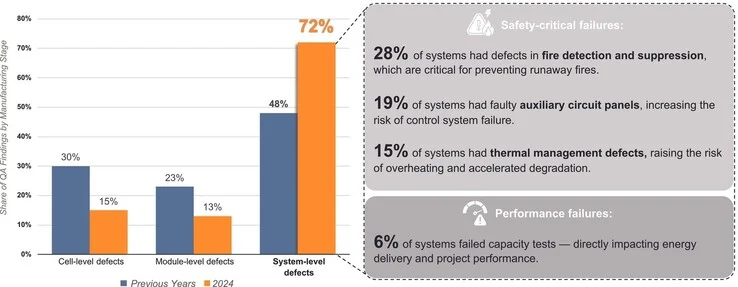
    1. Most failures in energy storage systems (ESS) are due to auxiliary systems, not battery defects, with battery cells accounting for only 15% of defects.
    2. Battery safety ratings have improved significantly, with a doubling of safety ratings in the past year.
    3. By 2024, 72% of failures will stem from secondary systems rather than battery cells, indicating a shift in failure sources.
    4. Safer battery chemistries, like sodium-ion and lithium iron phosphate, are contributing to improved safety in ESS.
    5. Mandatory large-scale fire tests for ESS will be implemented by 2026 to enhance safety standards in North America.


    As energy storage systems (ESS) increase in capacity to levels that can supply energy to a home for more than five years, the safety record of these batteries is also improving.

    Battery Defects Decline

    A recent study reveals that most failures in ESS are not caused by defects in the batteries themselves but rather by problems in their auxiliary systems. Currently, battery cells and modules account for only about 15% of all defects in energy storage systems, showing a significant decline in failure rates.

    Research from Clean Energy Associates (CEA), which included random testing of over 65 GWh in energy storage projects, found that battery safety ratings have doubled in the past year. In 2023, battery cells were responsible for 30% of ESS failures, while auxiliary systems, including fire suppression and thermal management systems, made up 48% of all defects.

    Shift in Failure Sources

    By 2024, the situation had shifted dramatically, with 72% of manufacturing, installation, or operational failures arising from secondary systems of the ESS rather than the battery cells themselves.

    This change may be attributed to the rise of safer battery chemistries, like sodium-ion and lithium iron phosphate (LFP), which are commonly found in popular portable power stations such as the Anker Solix C1000.

    Additionally, the implementation of new safety standards and certification tests has also played a role in ensuring that batteries in energy storage systems are no longer the primary safety concern.

    Future Safety Standards

    Looking ahead to 2026, the ESS industry in North America will face mandatory large-scale fire tests designed to simulate thermal runaway scenarios. According to the CEA, “Product certification, third-party quality assurance, and direct communication with communities are essential to build trust.”

    CEA via The Elec

    Source:
    Link


  • Anker Recalls Power Bank Model Over Fire Risk Concerns

    Anker Recalls Power Bank Model Over Fire Risk Concerns

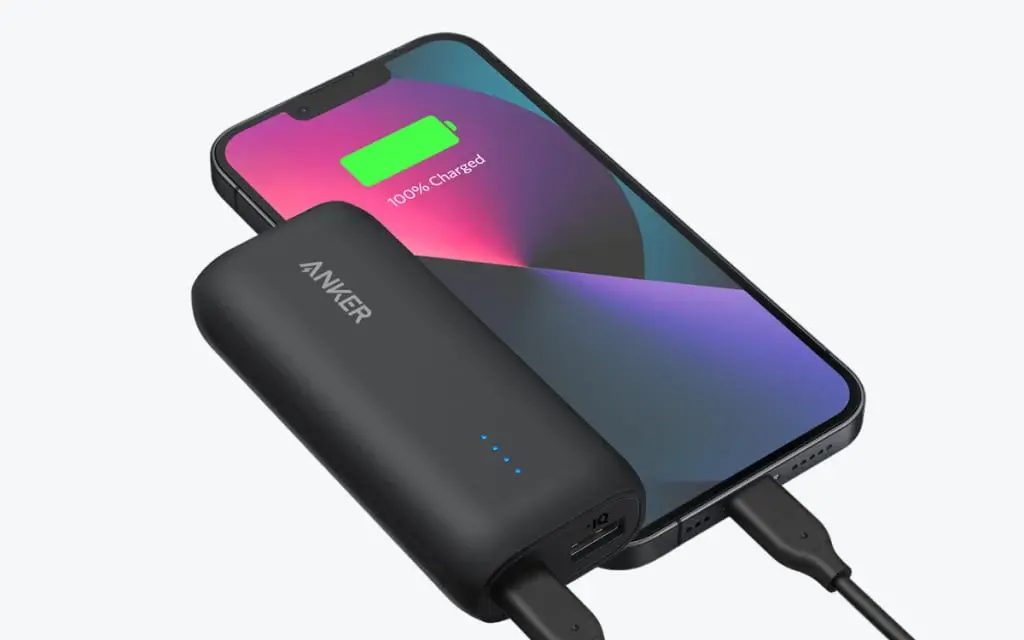
    Anker, a prominent brand in mobile accessories, has announced a recall of a particular model of its portable power bank due to a possible fire risk. The product in question is the Anker 321 Portable Power Bank (PowerCore 5K, Model A1112), with units manufactured after March 2023 being affected.

    Anker Issues Urgent Recall for Portable Power Banks

    Anker has identified a manufacturing flaw that may cause the lithium-ion battery in these power banks to overheat. This overheating can lead to the melting of the device’s plastic parts, release of smoke, or even a fire hazard.

    While Anker emphasizes that only a small batch of power banks made after March are implicated, the company is proactively recalling all units of this model.

    If you possess an Anker 321 Power Bank, it’s essential to check if it is part of the recall. Look for the white label on the bottom of the device, which should read “Anker 321 Power Bank (PowerCore 5K, Black), Model: A1112.” If your unit matches this description, Anker advises you to stop using the power bank immediately.

    Recall Verification and Replacement Process

    Anker has created a special webpage to manage the recall process. Consumers can visit the page to check their power bank’s serial number and confirm if it is included in the recall. If verified, Anker is offering a complimentary replacement with the Anker 533 Portable Power Bank. To speed up the replacement process, Anker suggests having proof of purchase ready when completing the online form.

    Anker also highlights the importance of proper battery disposal. Discarding them in regular trash cans or recycling bins can be dangerous to the environment and pose fire risks. Anker’s website offers guidance on responsible battery disposal methods specific to various regions.

    Consumer Safety Tips

    This event underscores the importance of caution when using portable power banks. Always buy these devices from reputable brands and authorized sellers. Look for certifications from recognized organizations that ensure safety standards are upheld. Regularly check your power bank for any damage and avoid using any device that appears to be faulty.