Category: EV vehicles

  • Mercedes CLA EQ Test Drive: Performance of the 800-Volt Sedan

    Mercedes CLA EQ Test Drive: Performance of the 800-Volt Sedan

    Key Takeaways

    1. The all-electric Mercedes CLA EQ is currently available as a sedan, with a Shooting Brake version set to launch in early 2026, followed by internal combustion engine options.
    2. Interior quality is high, featuring a sturdy design, but some areas have hard plastic, and the touchpads on the steering wheel can be difficult to use.
    3. The driving experience offers impressive acceleration, low interior noise, but the artificial driving sound can be irritating, and the chassis may feel spongy at higher speeds.
    4. Efficiency is notable in city driving, averaging around 13 kWh per 100 km, suggesting a potential city range of about 600 km (373 miles).
    5. The 800-volt technology allows rapid charging speeds up to 320 kW, enabling a charge from 10 to 80% in 22 minutes, but it currently cannot be charged at 400-volt stations until a solution is provided next year.


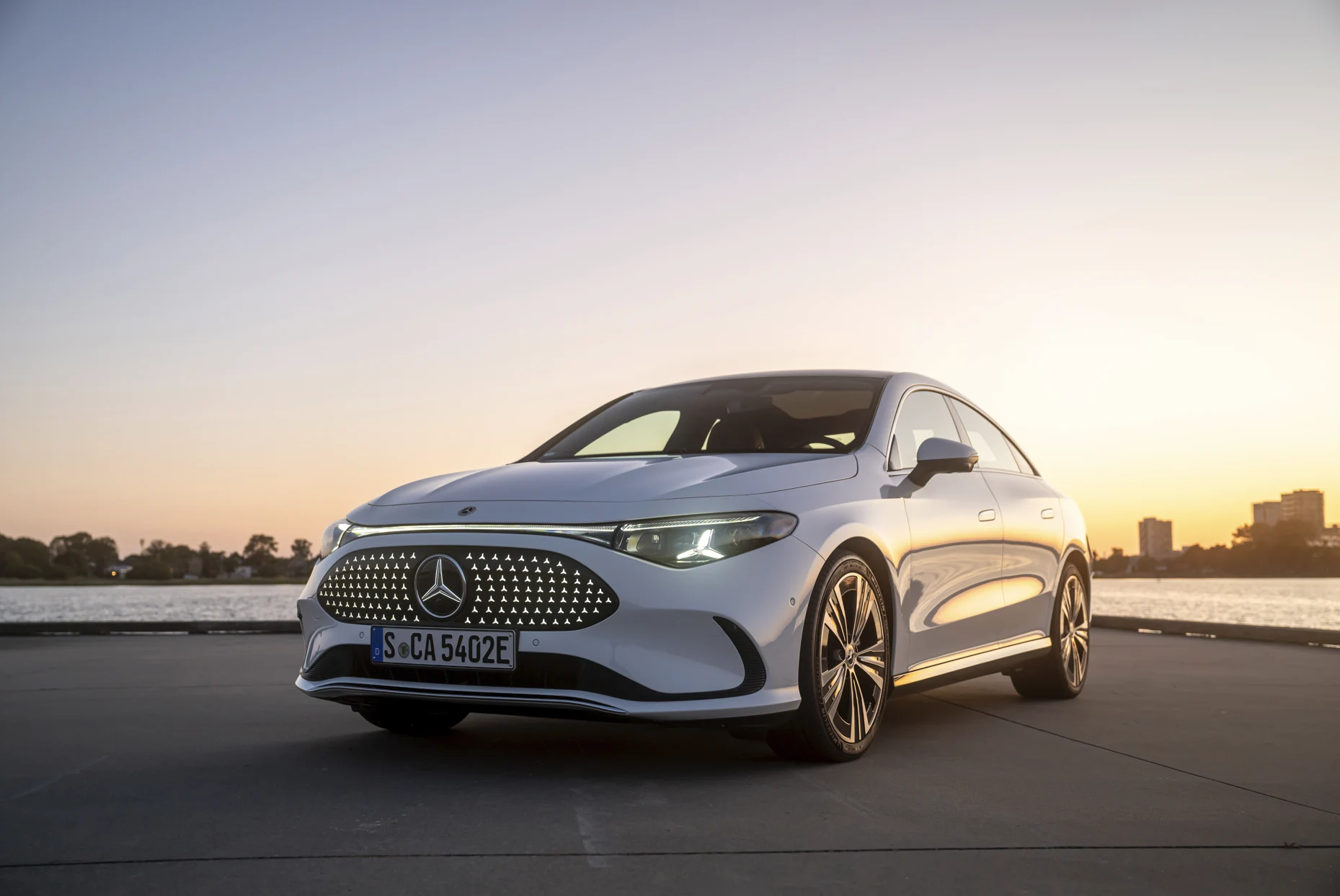
    With the launch of the CLA EQ, Mercedes is stepping into the next generation of electric vehicles. Right now, the all-electric CLA is only available as a sedan, but a Shooting Brake version is set to debut in early 2026. Later, options with internal combustion engines will be introduced. During a three-hour test drive, we experienced the CLA 350 4Matic EQ in both urban and highway settings. This model features the Progressive trim, 17-inch wheels, an 85-kWh battery, and offers up to 349 hp.

    Initial Impressions

    Our first look at the Mercedes EV was quite positive, especially since the automaker has included a reasonably sized frunk. From what we observed, it’s ideal for storing the charging cable, which otherwise takes up too much room in the trunk. Upon entering the car, you notice that you sit slightly higher than you might expect when viewing the vehicle from the outside. This is due to the battery placement in the underbody, although we would have preferred a slightly lower seat position.

    Interior Quality

    The interior gives off a sense of high quality and sturdiness, though you can find hard plastic in some lower sections. The absence of a high-gloss finish in the center console is a nice touch. Drivers can quickly turn off the speed limit warning by pressing and holding the traffic sign on the touchscreen. However, using the touchpads on the steering wheel can be tricky, leading to multiple incorrect commands. Those who appreciate extensive ambient lighting will likely enjoy this electric vehicle, particularly the numerous illuminated stars on the passenger-side dashboard. Unfortunately, there is no sunshade for the panoramic glass roof.

    Driving Experience

    The “driving sound” is noticeable right away but can thankfully be turned off. In our view, the various sound profiles seem artificial and detract from the driving experience, as they can become irritating quickly. On the plus side, acceleration is impressive, with the claimed 4.9 seconds to 100 kph (62 mph) seeming accurate. The electric CLA also reaches its top speed of 210 kph (130 mph) swiftly. Other positives include low interior noise levels; we could converse easily without raising our voices even at speeds over 160 kph (100 mph). The standard seats are comfy but lack lateral support.

    Chassis Comfort

    The chassis is designed for comfort, effectively absorbing bumps in the road. However, the Mercedes EV feels somewhat spongy at higher speeds, lacking a sense of security and stability. Additionally, the chassis is too soft during cornering, making it feel less sporty. In urban driving, the brakes did not fully impress us either. Just before coming to a complete stop, there was always a slight jolt. Even after halting, we had to keep our foot on the brake for about 2 seconds until the auto hold feature kicked in.

    Efficiency on the Road

    We were pleasantly surprised by the efficiency in city driving. During the afternoon rush hour in the Ruhr area (dry, 16° C / 61° F) with lots of stop-and-go traffic, we averaged around 13 kWh per 100 km, which is pretty good. This suggests a city range of about 600 km (373 miles) is achievable. On our short journey on the Autobahn, where we reached the top speed of 210 kph / 130 mph, the CLA EQ used 20 kWh per 100 km. A more relaxed driving style could certainly conserve more energy.

    Charging Capabilities

    The 800-volt technology enables charging speeds of up to 320 kW, allowing for a charge from 10 to 80% in just 22 minutes, according to Mercedes. However, we couldn’t test these rapid charging features during our brief drive. AC charging supports up to 11 kW, but there’s an optional 22 kW charger available for an additional €654.

    The downside is that as of now, the new CLA EQ cannot be charged at 400-volt stations. A solution for this will be available early next year. The 400-volt charging option is also available on the new Mercedes GLC EQ for €654. The navigation system accounts for this limitation and avoids such stations. Without this option, you would be unable to use many 50 kW chargers at supermarkets or most Tesla charging stations in Germany, for instance.

  • Kia’s Emotional Shift: Electric Mobility with a Gasoline Feel

    Kia’s Emotional Shift: Electric Mobility with a Gasoline Feel

    Key Takeaways

    1. Kia is launching a campaign to promote its new EV4, offering buyers a petrol-scented air freshener to ease the transition from gas-powered vehicles.
    2. The campaign, created by Astara Auto Finland, aims to address the nostalgic feelings associated with the smell of gasoline that many drivers miss when switching to electric cars.
    3. The fragrance was crafted by professional perfumer Max Perttula, combining scents of motor oil, petrol, amber, birch tar, and jasmine to evoke the feel of a garage.
    4. The air freshener is designed to resemble a small petrol can and is exclusive to purchasers of the Kia EV4 in Finland, which is expected to arrive in the U.S. by early 2026.
    5. The social media reaction to the campaign has been mixed, with both jokes and positive feedback, highlighting the conversation around the shift to electric vehicles.


    Choosing an electric vehicle offers a smooth and quiet ride along with better efficiency, but it also means letting go of the familiar feelings associated with a gas-powered engine: the vibrations beneath you, the engine’s soft hum, and the distinct smell of oil and fuel. For some drivers, the scent of gasoline is especially difficult to give up. To help ease this change, Kia is launching an interesting campaign with the introduction of its new EV4. As part of this promotion, buyers will receive an air freshener that smells like petrol.

    Unique Promotion

    This idea has been brought to life by Astara Auto Finland, the official Kia importer. “Leaving behind the combustion engine can feel like a significant change,” says Klaus Pohjala, the Marketing Head. Kia Finland is showcasing this campaign on social media with a fun twist: “A petrol-scented air freshener can help with the symptoms of withdrawal when you move from a combustion engine to electric.” Although this concept grabs attention, it isn’t completely original; Ford introduced a fragrance called Mach-Eau for the Mustang Mach-E GT back in 2021. This scent aimed to mimic the aromas of gasoline, rubber, and metal. Ford discovered that nearly 70% of drivers miss the smell of petrol when they switch to electric cars.

    Creating the Scent

    The fragrance was crafted by Max Perttula, who is Finland’s sole professional perfumer. Perttula explains that the scent focuses on strong motor oil and petrol, enhanced with hints of amber, birch tar, and galbanum. Jasmine was included due to its chemical resemblance to gasoline. “If we added any more petrol, it would have just smelled like sweet jasmine,” he notes. The intent was to capture the nostalgic feel of a real garage – memorable but not overwhelming.

    Product Details

    The air freshener resembles a small petrol can and is only available to those purchasing the Kia EV4 in Finland. The EV4 is anticipated to arrive in the U.S. by early 2026, featuring two battery sizes: a 58.3 kWh option with an estimated range of about 235 miles and an 81.4 kWh variant that can achieve up to 330 miles. The power output can reach up to 150 kW, depending on how it’s set up.

    On social media, Kia’s campaign has led to more jokes than compliments. On platforms like Reddit, users have made fun of the concept with remarks such as “The scent of cancer in a tree, yay.” Yet, some view it as a smart marketing tactic. The petrol-scented air freshener highlights the transition to electric vehicles while tapping into fond memories. While it may not become essential for EV owners, Kia has done well in one important area – sparking conversations.


  • Tesla Model Y HW3 to Receive FSD 14 Lite Update in 2026

    Tesla Model Y HW3 to Receive FSD 14 Lite Update in 2026

    Key Takeaways

    1. Tesla’s older HW3 systems in legacy Model Y vehicles won’t support the full FSD 14 version but will receive a “light” version instead.
    2. Tesla aims to prioritize the growth of its Robotaxi service before focusing on integrating FSD 14 into HW3 vehicles.
    3. The FSD 14 Lite update for HW3 may lack some features due to hardware limitations.
    4. Tesla remains committed to supporting HW3 owners and has allowed FSD transfers to new cars with promotional offers.
    5. The launch of the FSD 14 Lite update is expected to coincide with the mass production of Cybercabs in Q2 2026.


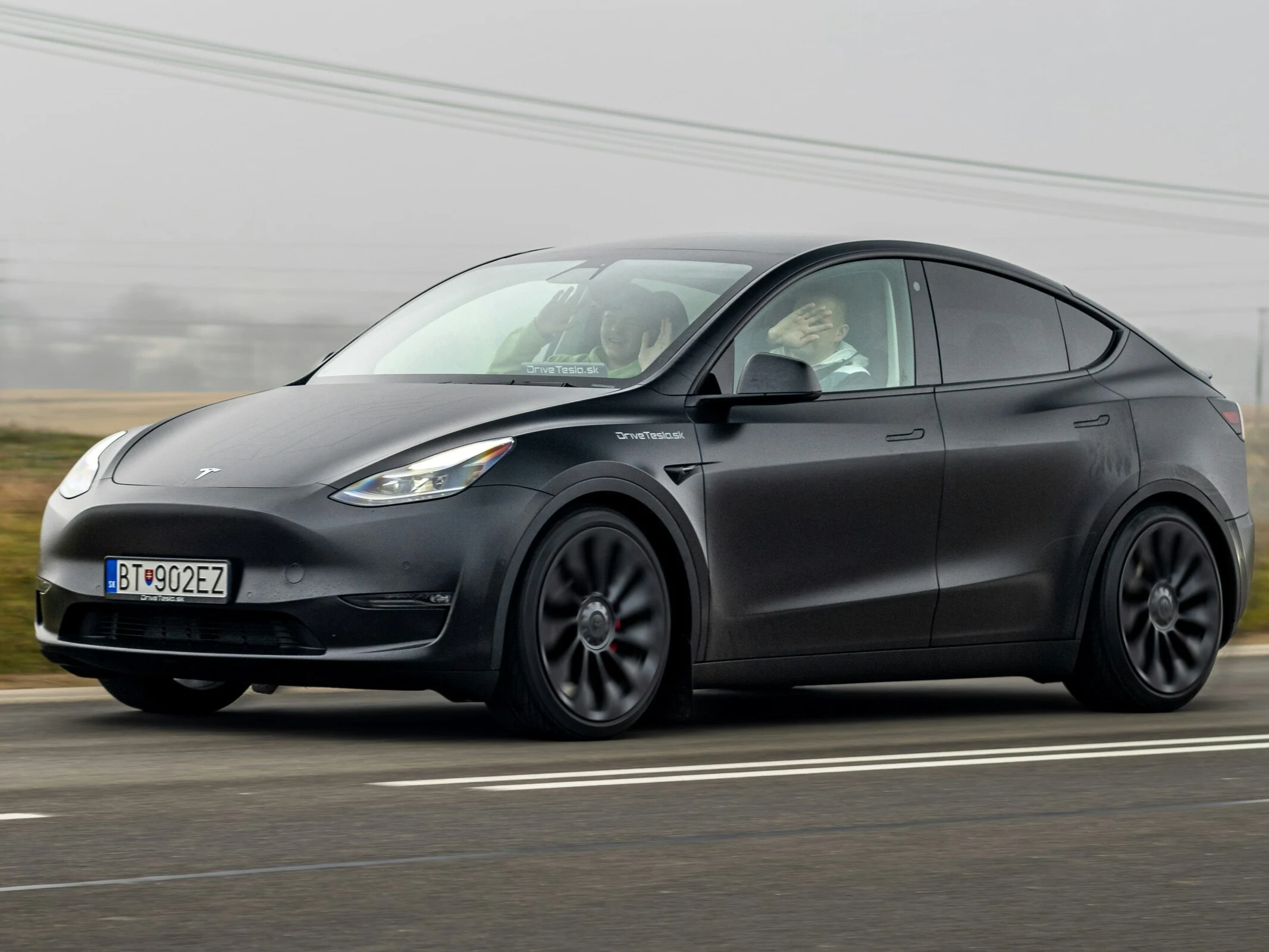
    The bulk of Tesla’s vehicles currently driving around are still outfitted with the older HW3 systems, including the computer and cameras needed for self-driving capabilities. These models can’t support the newest version of FSD 14.

    New Update for Legacy Model Y Owners

    Tesla is hinting that it hasn’t overlooked the legacy Model Y drivers. Instead of upgrading their cars to the HW4 (or AI4) setup, Tesla plans to introduce a “light” version of FSD 14 that will function on the HW3 computer system.

    Elon Musk had previously assured that if Tesla couldn’t get HW3 to operate the unsupervised FSD version—used in the Robotaxi platform and now being released as FSD 14 for newer models—they would retrofit older cars with AI4 hardware.

    Focus on Robotaxi Expansion

    However, Ashok Elluswamy, Tesla’s AI chief, stated that the team has discovered a method for FSD 14 to work on a HW3 computer. Right now, they are prioritizing the growth of the Robotaxi service and updates for the unsupervised FSD. Once the Robotaxi service is available in most major US cities, the AI team will shift its attention back to integrating FSD 14 into HW3 capabilities.

    It’s unclear what features might be removed from the FSD 14 Lite version for HW3 vehicles, but Ashok suggested that its launch will likely align with the beginning of mass production for Cybercabs in Q2 of 2026. Tesla’s CFO also reassured HW3 vehicle owners regarding the FSD 14 update:

    Commitment to HW3 Owners

    “We haven’t completely given up on Hardware 3. Over the past year, we’ve allowed customers to transfer FSD to their new cars, sometimes with promotional offers. If they acquired FSD, they got better rates. We are certainly looking after these customers, but our priority is solving autonomy first, then we’ll find a way to assist these customers, as they are incredibly important to us. They were the early adopters. For what it’s worth, my everyday driver is a Hardware 3 vehicle, and I use FSD every day. So we will absolutely take care of you all.”

    With FSD 14, Tesla is delivering to customers essentially what its autonomous Robotaxis benefit from, operating unsupervised on the streets in Austin and other cities, particularly in Model Y units. “Naturally, customers have some additional features, like choosing where their car parks, which isn’t super necessary for Robotaxi,” Ashok explained, “but there are just a few minor adjustments like this.”

    Nonetheless, the FSD 14 Lite update for HW3 cars may not include all the unsupervised FSD features due to hardware constraints. Therefore, it remains uncertain if older Model Ys will be able to access these features on the Robotaxi platform when it’s opened up to the general Tesla public in 2026, as promised.

  • Kia Surpasses Tesla in EV Battery Capacity Longevity

    Kia Surpasses Tesla in EV Battery Capacity Longevity

    Key Takeaways

    1. Nearly 80% of used electric vehicles retain over 90% of their original battery capacity after several years.
    2. Kia is recognized for having the most durable batteries, with models like the EV6 and Sportage SUV leading in battery longevity.
    3. Tesla ranks second for battery health, despite slower charging rates and a decline in European sales this year.
    4. Battery State of Health (SoH) is crucial for used EV buyers, with Kia offering a comprehensive 7-year/150,000 km warranty.
    5. Current EV batteries are estimated to be suitable for at least 15 years, indicating a need for extended warranties to boost the used EV market.


    With the rise in sales of used electric vehicles, a recent test on their battery capacity retention over time has shown some truly impressive results regarding longevity.

    Battery Retention Findings

    Almost 80% of the 723 electric cars and 643 plug-in hybrids evaluated were able to keep over 90% of their original battery capacity after several years, once factors like charging levels, weather conditions, vehicle age, and mileage were averaged out.

    Yet, certain EV brands utilize more robust battery cells equipped with advanced cooling and energy management systems, which excelled in the study that involved KVD’s three-star testing system to assess their batteries’ State of Health (SoH).

    Top Brands for Battery Longevity

    Kia stands out as the manufacturer of the most durable, long-lasting batteries with the highest capacity retention over time, applicable to their electric vehicles such as the EV6 and plug-in hybrids like the Sportage SUV. Another Kia model claimed the second position in the battery capacity retention ranking, closely followed by the Model Y, despite Tesla vehicles having considerably slower charging rates compared to those from Kia or Hyundai.

    Tesla’s ranking as second best among EV brands for battery health is noteworthy, particularly since the Model Y is sold in much larger numbers than models from other brands in Europe, where the battery longevity assessment was conducted. This is despite a significant decline in Tesla’s sales in Europe this year, influenced by Elon Musk’s political actions and the growing presence of BYD and other Chinese brands.

    Key Insights on Battery Longevity

    There are several key insights regarding the potential longevity of EV batteries, according to KVD’s Martin Reinholdsson:

    The used EV market has become more dynamic and diverse than ever, with the battery SoH of second-hand vehicles now being a critical factor for buyers. Kia provides a 7-year or 150,000 km warranty in Europe, covering both the battery and drivetrain, while Tesla offers a basic vehicle warranty of four years and 80,000 km, with an 8-year warranty specifically for the battery. In the US, Kia’s battery warranty leads the industry with a ten-year coverage.

    Both manufacturers guarantee that the battery will maintain at least 70% of its original capacity during this period, while Chinese brands are aiming to standardize 15-year warranties with an 85% capacity retention. The world’s largest battery producer, CATL, is already issuing a 12-year warranty for NIO’s battery swap stations and 20 years for some LFP energy storage units, indicating the chemistry advancements are well-established.

    The largest EV battery recycler in the US, Redwood Materials, has indicated that current EV batteries are suitable for at least 15 years, so the longevity potential revealed in the recent study isn’t particularly surprising. However, for the used EV market to become as vibrant as that of internal combustion engine vehicles, official battery warranties will need to be significantly extended.

    Source:
    Link


  • Chery Rhino S Solid-State Battery for 800-Mile EV by 2027

    Chery Rhino S Solid-State Battery for 800-Mile EV by 2027

    Key Takeaways

    1. Chery has introduced a solid-state battery, the Rhino S, featuring a polymerized electrolyte and manganese cathode, targeting mass production by 2027.
    2. The Rhino S battery achieves an energy density of 600 Wh/kg, nearing theoretical limits and outperforming previous models.
    3. Chery plans to begin pilot production of the Rhino S batteries in March, aiming to integrate them into vehicles by 2027.
    4. China’s national task force is focused on advancing solid-state battery technology, with a goal to transition from lab research to practical application.
    5. Chery’s solid-state batteries promise greater safety, faster charging, and an anticipated range of 800 miles for electric vehicles, addressing range anxiety concerns.


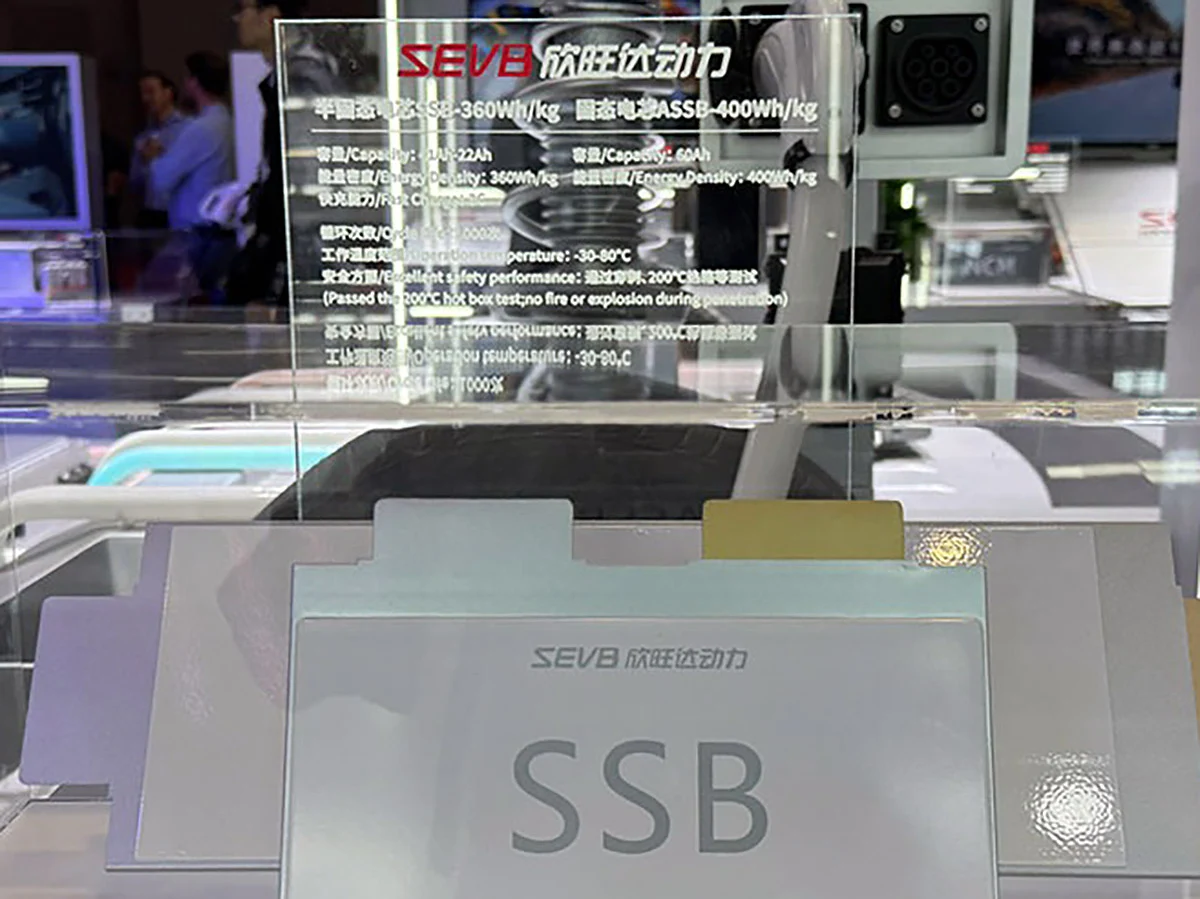
    After Toyota, CATL, and Samsung announced that they would begin mass production of solid-state batteries in 2027, a new contender has emerged, potentially outshining their plans.

    Chery’s Bold Move

    Chery, China’s largest car exporter, has revealed its own solid-state battery featuring a polymerized electrolyte and manganese cathode. The company sold over 1.2 million vehicles globally in the first half of this year, showcasing its market strength.

    The Rhino S battery employs a unique polymer electrolyte, akin to the flexible solid-state battery prototype introduced by the Chinese Academy of Sciences (CAS). This polymerization boosts ion conductivity and decreases transfer times, resulting in an improved energy density within the same size. Furthermore, the addition of manganese to the cathode resembles the technology developed by GM and LG for production in the US.

    Impressive Energy Density

    With its innovative electrolyte and cathode materials, the Rhino S battery achieves an impressive energy density of 600 Wh/kg, nearing the theoretical limits of solid-state battery technology. Although the flexible solid-state battery designed by CAS has shown potential for an 86% increase in energy density compared to previously announced models, it remains in the lab and prototyping phase.

    Chery plans to commence pilot production of its Rhino S solid-state battery cells, maintaining the 600 Wh/kg energy density, next year, and aims to integrate these batteries into vehicles by 2027. Due to the high manufacturing costs of solid-state batteries at low volumes, industry giants like CATL or Panasonic view them as better suited for applications requiring high volumetric density, such as drones or humanoid robots.

    Future of Solid-State Batteries

    Toyota has indicated that its initial solid-state battery cars will be luxury models under the Lexus brand. Meanwhile, Chery’s large exports of hybrid vehicles present another potential market avenue. Competing with well-established brands like CATL or BYD in the current mass market for EV batteries proved challenging for Chery, which is why it has pivoted to focus its significant R&D resources on emerging technologies like solid-state batteries.

    The Rhino S battery has undergone rigorous testing, including extreme temperature and nail penetration assessments, passing with exceptional results. This success paves the way for pilot production at Chery’s Anwa New Energy Technology facilities, scheduled for March. The first generation of solid-state batteries previously had an energy density of 350 Wh/kg, whereas companies like Samsung, Toyota, and CATL aim to develop commercially viable batteries with 500 Wh/kg energy density by 2028.

    China is striving to be a leader in the next generation of EV battery technology and has formed a national task force dedicated to advancing solid-state battery research. A recent report from state media indicates that the transition from lab research to practical application is underway. “In the past, a 100-kilogram battery could only provide a maximum range of 500 kilometers, but now it is anticipated to surpass the 1,000-kilometer mark,” the report states.

    Chery’s Rhino S stands out as a next-generation solid-state battery with the highest density for a production-ready technology revealed to date. With its 600 Wh/kg solid-state battery, Chery aims to develop electric vehicles with a range of 800 miles, significantly reducing range anxiety. These batteries are also generally safer and can charge more quickly than current EV batteries. The main question remaining is how much will the first mass-produced electric vehicles with solid-state batteries cost when they arrive in 2027.

    Source:
    Link


  • BMW iX3 Long-Term Test: Impressive Performance After 62,000 Miles

    BMW iX3 Long-Term Test: Impressive Performance After 62,000 Miles

    Key Takeaways

    1. The Auto Bild test of the BMW iX3 was largely positive, with only minor issues noted such as rare jerkiness from the recuperation system and slower charging speeds compared to newer models.
    2. The iX3’s battery maintained 100% health during testing, with no major flaws identified, and only slight wear on the rear-wheel-drive motor’s carbon brushes.
    3. The car’s chassis is well-designed to handle its weight, with no issues like rust or wear found during inspections.
    4. The test results are encouraging for potential buyers, indicating reliability for both new and used versions of the iX3.
    5. Used iX3 prices in Germany start around €24,000, with more reliable models and facelifts priced higher, while the all-electric G08 model is not available in North America.


    The German magazine Auto Bild didn’t face any major problems while testing the iX3. The only issue they mentioned was a rare jerkiness linked to the car’s recuperation system. The radar sensor that went missing wasn’t BMW’s responsibility, and feedback from various drivers in the logbook highly commends the electric compact SUV. However, there was some minor feedback about the charging speed being a bit slow in comparison to newer electric vehicles. Back in 2021, the BMW iX3 with its 150kW was quite impressive for a 74kWh battery.

    Battery Performance Revealed

    The teardown inspection showed no major flaws. The battery maintained a remarkable health state of 100% during a quick dynamic test conducted by Dekra. The rear-wheel-drive motor did show a slight wear on the carbon brushes, which is expected. BMW chose an externally excited synchronous motor that delivers a peak power of 210 kW. The chassis components seem to be adequately designed to support the G08’s hefty weight of around 5,000 lbs, with no noticeable irregularities. Moreover, Dekra’s engineers did not discover any other issues, such as rust or wear and tear inside, as indicated in the video.

    Good News for Buyers

    In general, these results are very promising for BMW and a positive indicator for the new iX3 Neue Klasse. Even a press car selected by BMW must demonstrate its reliability over an extended test period. This is reassuring news for those looking to buy a used car or an electric vehicle. The most affordable used iX3 in Germany starts at about €24,000, but it has nearly 124,000 miles on it. More reliable models begin at approximately €30,000, while the facelift from late 2021 is currently priced around €35,000. It’s important to note that this test focuses on the German version of the BMW iX3, and the all-electric G08 is not available in North America.

    Source:
    Link


  • First Electric SUV with Oxygen Generator and Snapdragon 8797 Chip

    First Electric SUV with Oxygen Generator and Snapdragon 8797 Chip

    Key Takeaways

    1. Leapmotor’s D19 SUV is its first high-end model, competing with the Tesla Model Y L.
    2. The company saw nearly double sales year-on-year in the first half of 2025, driven by the D19’s introduction.
    3. The D19 is priced about 10% lower than its competitor, the Tesla Model Y L, and offers quicker charging and premium features.
    4. A unique feature of the D19 is its integrated oxygen generator, providing up to 8 liters of oxygen per hour, beneficial for high-altitude driving.
    5. The competitive landscape in China’s automotive sector demands innovative technologies and distinctive features for electric vehicle startups to succeed.


    Leapmotor, a leading car maker among “new energy” vehicle startups in China for the first half of this year, has introduced its first high-end model, the D19 SUV. This vehicle is set to go toe-to-toe with competitors like the Tesla Model Y L.

    Sales Surge and New Model

    The company, partly owned by Stellantis with a 20% share, saw its sales nearly double year-on-year in the first half of 2025. The new D19 is a key reason for this growth. The SUV is available in a fully electric variant featuring a 115 kWh hybrid LFP/nickel battery pack, alongside an extended-range model equipped with an 80 kWh battery and an internal combustion engine generator.

    Competitive Pricing and Features

    The Leapmotor D19 is projected to be priced about 10% lower than the Tesla Model Y L. It promises quicker charging times, a more spacious and bold design, and numerous premium amenities. Notably, it is the first SUV—electric or otherwise—to include an integrated oxygen generator.

    While it may not be as advanced as the dual Qualcomm Snapdragon 8797 chips that deliver 1,280 TOPS AI computing for cabin control and self-driving features, or the 60-inch augmented reality heads-up display, the oxygen generator on the D19 offers a distinctive advantage. This feature can generate up to 8 liters of oxygen per hour, similar to the P8 portable generator found on Amazon. It could be really useful during long family drives in high altitudes, especially on trips to the Tibetan Plateau, which is becoming a popular vacation spot.

    Addressing Altitude Challenges

    The Tibetan Plateau, averaging an altitude of 4,500 meters (2.8 miles), often causes altitude sickness for unaccustomed visitors. For example, the Tibetan railways activate a diffused oxygen supply via a generator when their trains reach specific heights, enhancing cabin air with up to 23% oxygen. Those journeying in a Leapmotor D19 can enjoy the same comfort from their SUV.

    This scenario illustrates the fierce competition in the automotive sector in China, which is home to numerous electric vehicle startups producing a vast array of models. These companies must not only offer great value for their prices but also increasingly need to differentiate themselves with innovative technologies and unique features like the D19’s oxygen generator.

    Source:
    Link


  • Tesla Launches Aggressive FSD Mode: Meet Mad Max Driving Style

    Tesla Launches Aggressive FSD Mode: Meet Mad Max Driving Style

    Key Takeaways

    1. Tesla introduced the Mad Max FSD mode in the 14.1.2 update for a more assertive driving experience.
    2. The new mode allows for frequent lane changes and increased highway speed limits up to 85 mph, while still stopping at stop signs.
    3. Mad Max mode mimics human driving behavior in urgent situations, responding to user requests for a more aggressive FSD option.
    4. The updated FSD 14 can navigate complex scenarios like drive-thrus and tight parking with improved efficiency.
    5. An upcoming FSD 14.2 update will enable Teslas to find parking automatically and summon themselves when needed.


    Tesla has finally responded to the requests from users of its Full Self-Driving feature by introducing a more assertive driving option. The new Mad Max FSD mode is part of the recent 14.1.2 update, where the AI learns to act more like human drivers do when they are in a rush or navigating busy city traffic, such as in LA.

    Enhanced Driving Experience

    This mode does not engage in any illegal actions, but it enhances the previous most aggressive Hurry level. As Tesla’s AI chief mentioned, it’s designed for situations like “when you’re late to your flight, or to pick your kid from school.” The Mad Max mode allows for more frequent lane changes to merge into faster-moving traffic without cutting off other drivers.

    A Long-Awaited Update

    Users have long wanted a more aggressive FSD that mimics how people drive when they’re pressed for time. However, the initial iteration of FSD 14 only introduced a more cautious Sloth mode. The new Mad Max mode increases the highway speed limit to 85 mph, although it still comes to a complete stop at every stop sign instead of rolling through when no vehicles are nearby, which is a behavior often seen in human drivers.

    Improved Features

    The updated Tesla FSD 14 has already shown its capability in various niche scenarios, such as driving through a McDonald’s drive-thru without any manual input or selecting a parking spot at the end of a journey. It also handles tight spaces with greater efficiency and can navigate through rush hour traffic more effectively due to the new Mad Max mode.

    With the upcoming FSD 14.2 update expected in a few weeks, drivers will have the ability to send their Teslas to find parking automatically and then summon them to the front of the store once their shopping is complete, much like a Robotaxi.

    Source:
    Link


  • Texas Introduces Tesla Model Y Subsidy for Previous Buyers

    Texas Introduces Tesla Model Y Subsidy for Previous Buyers

    Key Takeaways

    1. Texas has introduced grants for electric vehicle purchases through the Light-Duty Motor Vehicle Purchase or Lease Incentive Program (LDPLIP), benefiting future Tesla buyers.

    2. The program allows for rebates on vehicles powered by alternative fuels, including electric cars, plug-in hybrids, and those using LPG, CNG, or hydrogen.

    3. Buyers who acquired vehicles after September 1, 2025, and have a Texas title and registration can apply for the grant, with funding available until March 2026 or until funds are used up.

    4. Eligible electric vehicles like the Tesla Model Y can receive up to $2,500, with varying amounts based on lease duration; shorter leases receive reduced grants.

    5. Required documentation for the grant includes a buyer’s order, proof of payment, a signed finance agreement, and a state ID, with applications processed on a first-come, first-served basis.


    The state of Texas is stepping up to help offset the loss of the federal tax credit for new electric vehicles, which is great news for future Tesla buyers.

    Texas Electric Vehicle Grants

    Texas has launched grants for individuals purchasing electric vehicles through its Light-Duty Motor Vehicle Purchase or Lease Incentive Program (LDPLIP). This program is designed “for buying or leasing new vehicles or conversion systems that are powered by alternative fuel,” and Tesla’s Model Y definitely qualifies as one of those vehicles.

    Alternative Fuel Vehicle Definition

    In addition to electric power, the category of “alternative fuel” includes vehicles that weigh 10,000 pounds or less and are either plug-in hybrids or operate on LPG, CNG, and hydrogen. Importantly, those who bought or leased a Tesla in September while benefiting from the federal tax credit can still apply for the state rebate.

    Eligibility and Application Details

    Anyone who acquired a vehicle after September 1, 2025, and has applied for or already received a Texas title and registration can qualify. The LDPLIP program, which opened on October 13, allows applications to be submitted only after the vehicle has been delivered.

    The funding for this program will continue until 5 PM in March 2026 or until the funds are depleted. Eligible electric vehicles like the Tesla Model Y can receive up to $2,500, while those powered by LPG or CNG can get as much as $5,000.

    Grant Amount Breakdown

    To qualify for the full $2,500 grant, buyers must either purchase a Model Y outright or lease it for three years or more. Those leasing for two years will receive 66% of the grant, totaling $1,665. For leases shorter than two years, participants will only be eligible for one-third of the subsidy, amounting to $832.50.

    Required Documentation

    To access the $2,500 grant, even if applicants acquired a Model Y in September with the federal tax credit, the Texas Commission on Environmental Quality has outlined several documents needed:

    Texas will accept a buyer’s order along with a canceled check or a bank statement that shows full payment, as well as a finance agreement or a retail installment contract that has been signed by both the applicant and the lending institution. Individual owners must also provide a state ID, such as a driver’s license. The LDPLIP grant program in Texas will operate on a first come, first served basis until the funds run out.

    Source:
    Link


  • Tesla Revives $25,000 Model 2 as Affordable Model Y Alternative

    Tesla Revives $25,000 Model 2 as Affordable Model Y Alternative

    Key Takeaways

    1. Tesla is set to launch more affordable versions of the Model Y and Model 3 in China, customizing features to meet local preferences.
    2. The new Standard trims may differ significantly from the US versions, with changes in hardware and design to compete with local rivals like BYD.
    3. Tesla is reviving projects for a $25,000 vehicle, informally called Model 2, which will be a smaller, budget-friendly option.
    4. The Model 2 is expected to launch by Q4 2026, featuring a 54 kWh battery and AI5 FSD hardware.
    5. Tesla’s strategy includes introducing Standard trims to maintain profit margins before focusing on mass production of the Model 2.


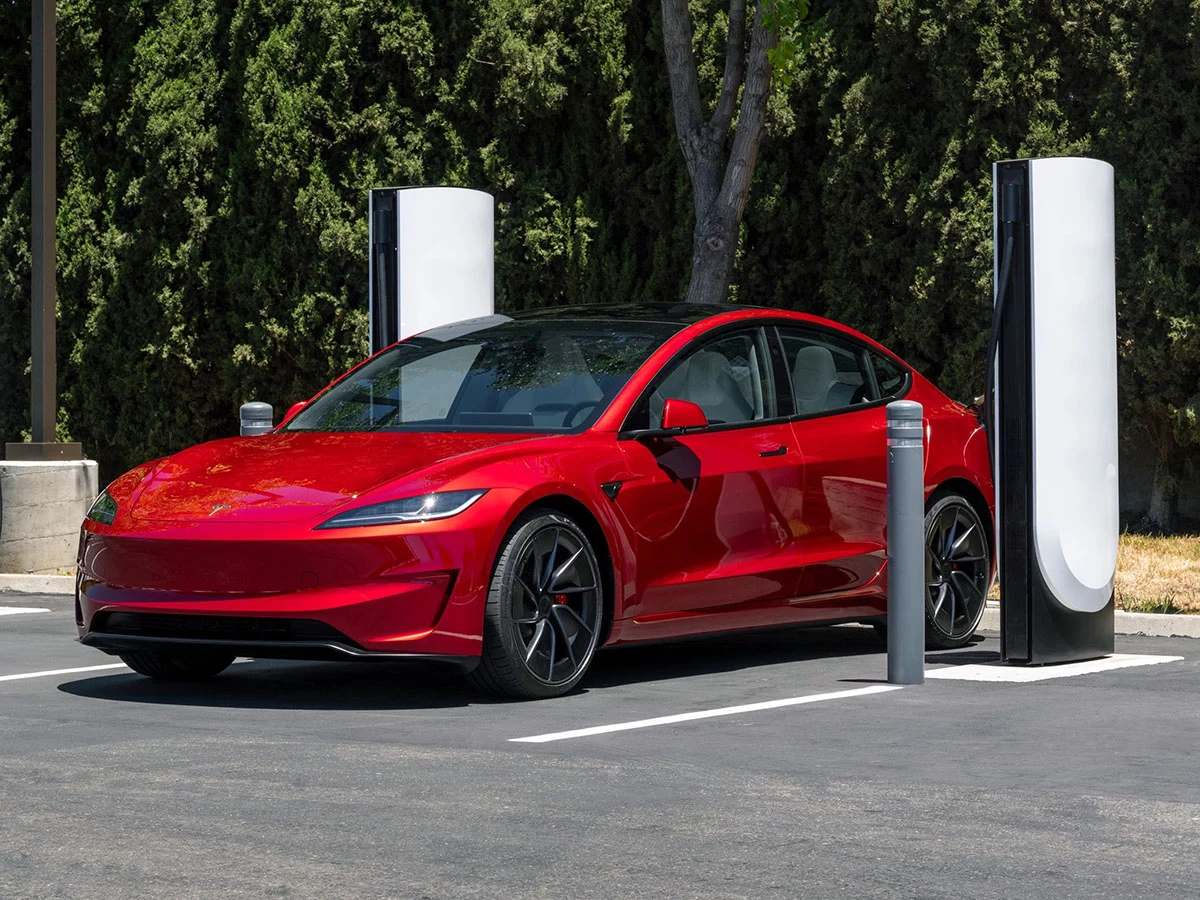
    Tesla is getting ready to introduce more affordable versions of the Model Y and Model 3 in its most competitive market, similar to the Standard trims it revealed in the US.

    Local Adaptation

    However, the company won’t just roll out a Model Y Standard in China; it plans to customize the hardware features and comfort designs to fit local preferences. In the US, Tesla removed over 20 features and options to achieve the under-$40,000 price tag for the Model Y Standard, including light bars and changes to the battery capacity. Given the wide range of cheaper and better electric vehicles available from Tesla’s main rival BYD and others in China, a simplified Model Y might look quite different from the US Standard trim.

    New Trims and Developments

    This could explain why Tesla is only set to launch the basic Model Y and Model 3 trims there next year. They are expected to include AI5 FSD hardware to help distinguish them from competitors. In addition to the E41 and D50 trims that represent the Model Y and Model 3 Standard versions for China, insiders say Tesla is also reviving the NV91 and NV93 projects. These are variations of the anticipated $25,000 Tesla vehicle, informally known as the Model 2, which were initially developed in the US under the Project Redwood name.

    The $25,000 Model

    The NV91 (which means “new vehicle”) was reportedly in a very advanced stage of development as an affordable option, designed similarly to the Model Y crossover but featuring a smaller battery and more compact size. This $25,000 model was put on hold while Tesla shifted its focus to launching the Cybercab and Robotaxi platforms, as well as making the Model Y and Model 3 more budget-friendly by removing certain features and comforts.

    At that time, Tesla’s chief designer, Franz von Holzhausen, mentioned that the speculation about Tesla abandoning its $25,000 Model 2 is highly exaggerated, saying to “stay tuned.” According to Elon Musk, the upcoming Model 2 is expected to be “smaller, to be clear,” equipped with a 54 kWh battery that should provide around 250 miles of range, along with next-gen AI5 FSD hardware.

    Future Launches

    This likely indicates that the Model 2 could launch as early as Q4 2026, coinciding with Tesla’s plans to start installing HW5 computers and cameras in its vehicles on a large scale. This aligns with earlier rumors that the much-anticipated $25,000 Model 2 would not be available until 2026, after Tesla has updated all its other models in 2025 and introduced Standard base trims to maintain margins before embarking on its major experiment with its first mass-market electric vehicle, which is planned to produce four million units of.

    Source:
    Link