Key Takeaways
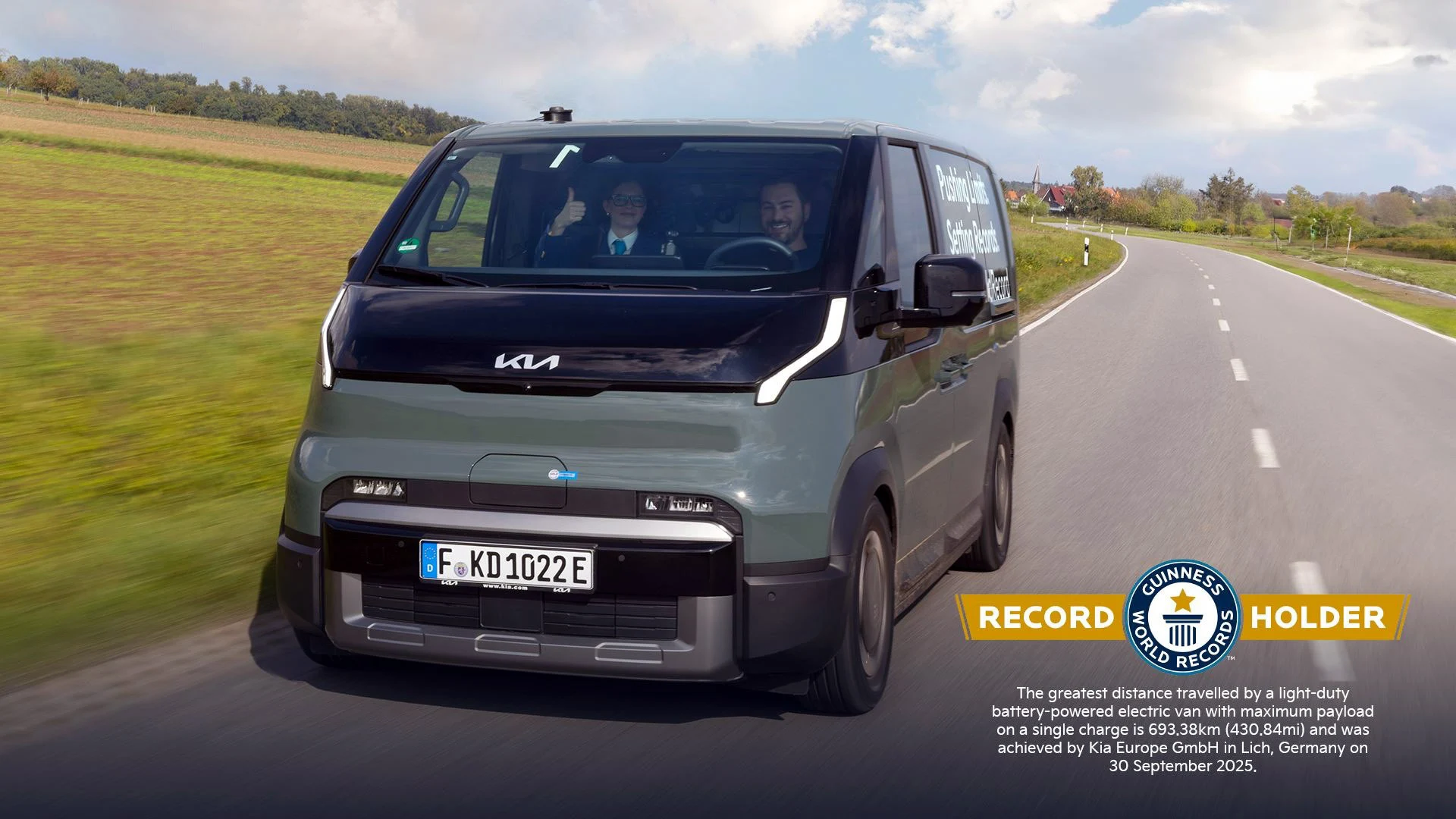
1. The Kia PV5 electric van set a Guinness World Record by traveling over 430 miles on a single charge with a 71 kWh battery while carrying nearly 1,500 pounds.
2. The real-world test was conducted on a 36-mile loop simulating typical city and highway driving, completed in over 22 hours while adhering to the maximum weight rating.
3. The van achieved an efficiency of around 11 kWh per 100 km (17.7 kWh per 100 miles), outperforming many similar vehicles, including the Tesla Model 3.
4. The PV5 offers fast DC charging, reaching 80% capacity in just 30 minutes, and has batteries that maintain capacity better over time compared to other brands.
5. The PV5 series can be configured for passenger or cargo use, with a starting price of around $37,000 projected for the U.S. cargo variant in 2026.
The Kia PV5 electric van has achieved a remarkable feat by traveling over 430 miles on a single charge from its 71 kWh battery, setting a Guinness World Record for loaded light cargo vehicles.
Real-World Testing
Despite carrying a payload of nearly 1,500 pounds, this Kia van completed a journey designed to reflect everyday driving conditions. The test was conducted on a 36-mile (58 km) loop that featured a typical blend of city streets and highways, simulating the routes that delivery drivers commonly navigate.
It took a dedicated van reviewer along with a PV5 development engineer more than 22 hours to cover this impressive distance, all while adhering to the maximum Gross Vehicle Weight Rating (GVWR).
Efficiency Stats
The van’s 430-mile range translates to an efficiency of around 11 kWh per 100 km, or 17.7 kWh per 100 miles. This is quite an achievement for a cargo vehicle that tipped the scales at over 2.5 tons during the test. For context, Tesla Model 3 drivers have reported a similar efficiency of 18 kWh per 100 miles in optimal situations, but the more average figure is around 22 kWh.
To emphasize its efficiency, Kia conducted additional tests without any cargo. They claim that for every 100 kg (220 pounds) of cargo added, the PV5 only experiences a 1.5% reduction in range when it is empty. This means that Kia’s first electric van, built on Hyundai’s modern modular platform for electric vehicles, could have extended its range by about 40 miles without the hefty 1,500-pound load.
Charging and Configurations
In addition to its impressive efficiency, the new Kia van offers the brand’s standard fast DC charging, which can charge the battery up to 80% in just 30 minutes. The battery itself is also expected to have a longer lifespan, as a recent study on EV longevity indicated that Kia’s batteries hold onto their capacity better over time compared to those in Tesla or other electric vehicle brands.
The PV5 series can be tailored to function as either a passenger or cargo vehicle, and there’s also a version suited for people with reduced mobility. In the United States, the PV5 cargo variant is projected to start around $37,000 when it makes its debut in 2026.
Source:
Link