Tag: Nio ET7

  • Solid-State Battery Breaks Energy Density Record, Doubles Limit

    Solid-State Battery Breaks Energy Density Record, Doubles Limit

    Key Takeaways

    1. A new record for solid-state battery energy density has been set at 824 Wh/kg, surpassing the previous theoretical limit by 20%.
    2. WeLion claims to have achieved 1,000 Wh/kg energy density, which is double the current standards, but this technology is not yet viable for large EV production.
    3. Major companies like Samsung, CATL, and Toyota aim to launch solid-state batteries with 500 Wh/kg energy density by 2027, enabling electric vehicles to potentially travel 750 miles on a single charge.
    4. WeLion’s existing 150 kWh packs are used in NIO vehicles, allowing ranges over 600 miles, but new advancements may exceed 1,000 miles once production is viable.
    5. High energy density solid-state batteries may be more suitable for drones and robots due to their elevated costs, rather than for mainstream electric vehicles.


    One of the leaders in solid-state battery technology has declared a new record for energy density at 824 Wh/kg. The earlier record holder, Cherry, recently revealed that it has developed a 600 Wh/kg solid-state battery that is set to go into mass production by 2027.

    New Heights in Energy Density

    This new achievement surpasses the previous theoretical limit by 20% due to innovative polymer electrolyte tech. However, it is still significantly less than WeLion’s claim of achieving 1,000 Wh/kg energy density, which is double the current ratings for solid-state battery technologies.

    Big names like Samsung, CATL, and Toyota have expressed excitement about launching solid-state batteries that meet the previously theoretical maximum of 500 Wh/kg by 2027. These advancements could allow electric vehicles to travel 750 miles on a single charge while maintaining the same size as today’s batteries, like those in the Tesla Model Y, which currently offer a 300-mile range.

    Real-World Applications

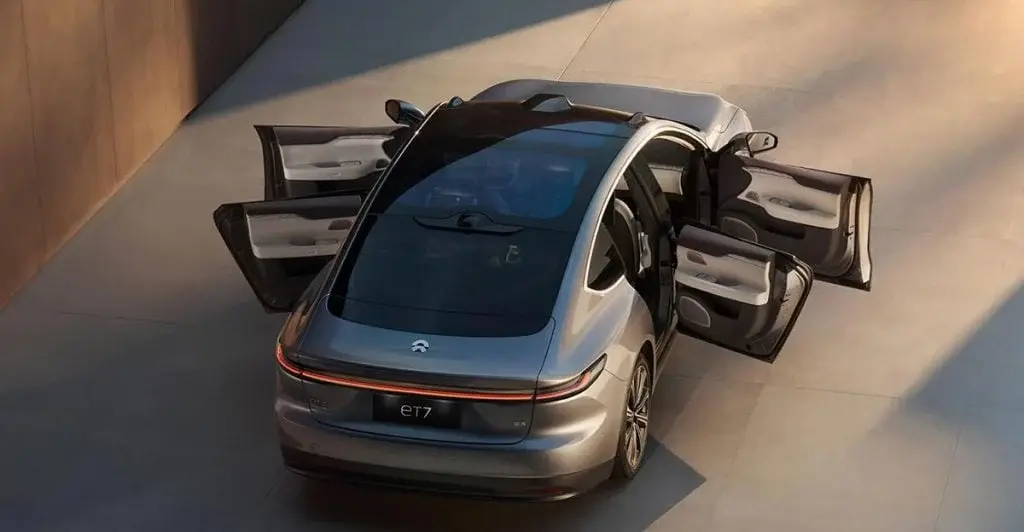
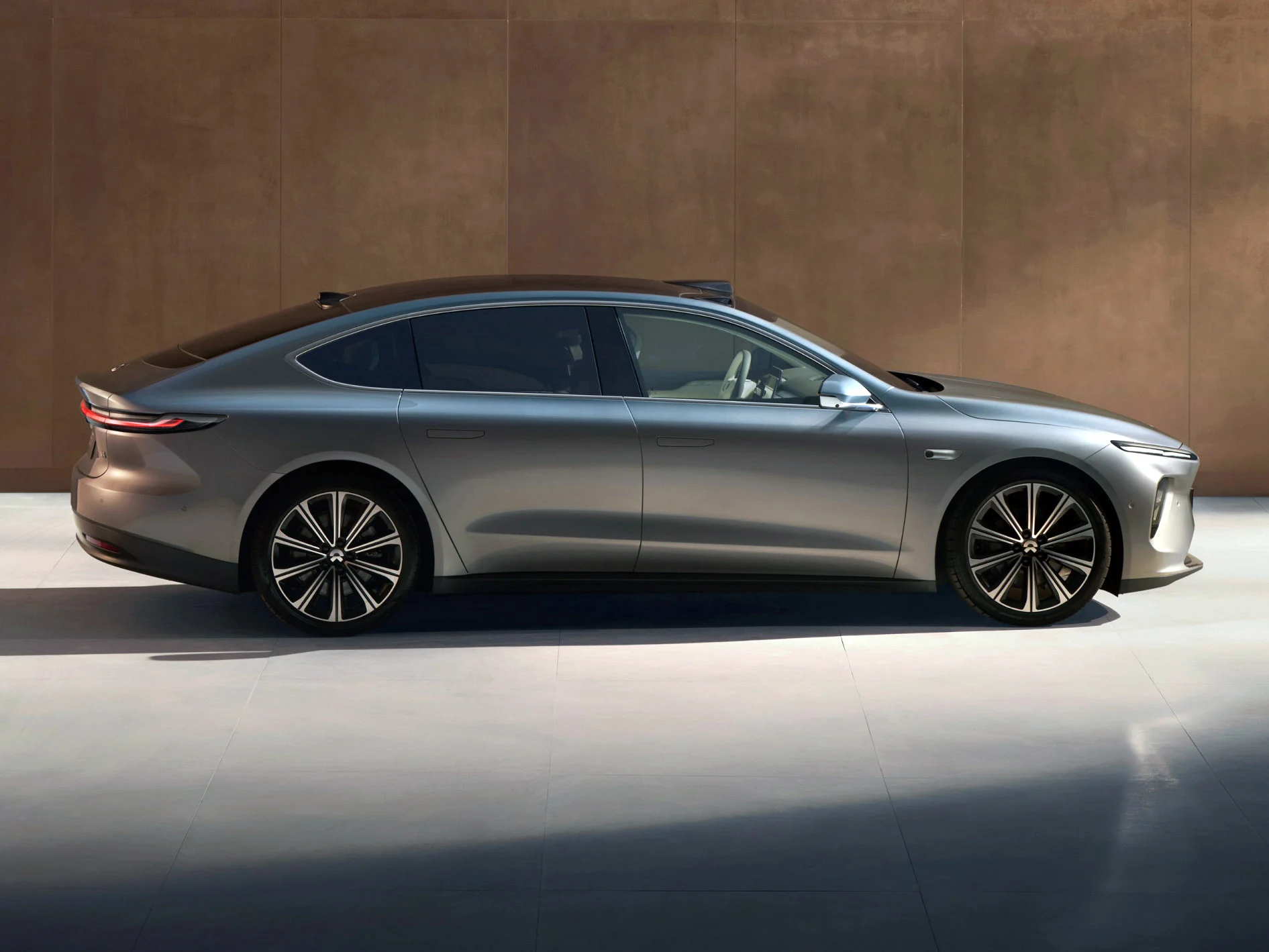
    WeLion has already developed 150 kWh packs featuring 95% solid electrolyte that are currently being used in NIO vehicles such as the ET7 sedan, allowing them to achieve ranges exceeding 600 miles on one charge. Once WeLion’s new energy density breakthrough is ready for production, the same vehicle could potentially exceed 1,000 miles of range. Nevertheless, WeLion’s chairman warns that such battery packs will be very costly.

    For example, the semi-solid electrolyte battery used in the NIO ET7 is priced comparably to an entire electric vehicle, which is why NIO only offers it for rental on longer summer trips at their battery swap stations. WeLion acknowledges that the 1,000 Wh/kg solid-state electrolyte technology it created in collaboration with BASF is not yet viable for large EV batteries, at least until it can be manufactured on a larger scale. However, applications like Tesla’s Optimus, where energy density and battery safety are crucial, could benefit greatly from this new technology.

    Market Trends and Future Outlook

    This aligns with insights from CATL, the world’s largest battery market player, and Panasonic, a key supplier for Tesla. Both companies share the perspective that solid-state batteries characterized by high energy density and elevated costs might be more appropriate for use in drones and robots, rather than electric vehicles, unless they target the luxury market.

    Source:
    Link


  • Affordable Solid-State Battery with Polymer Electolyte Launches

    Affordable Solid-State Battery with Polymer Electolyte Launches

    Key Takeaways

    1. Sunwoda is starting large-scale production of solid-state batteries in 2023, aiming to expand capacity by 2026.
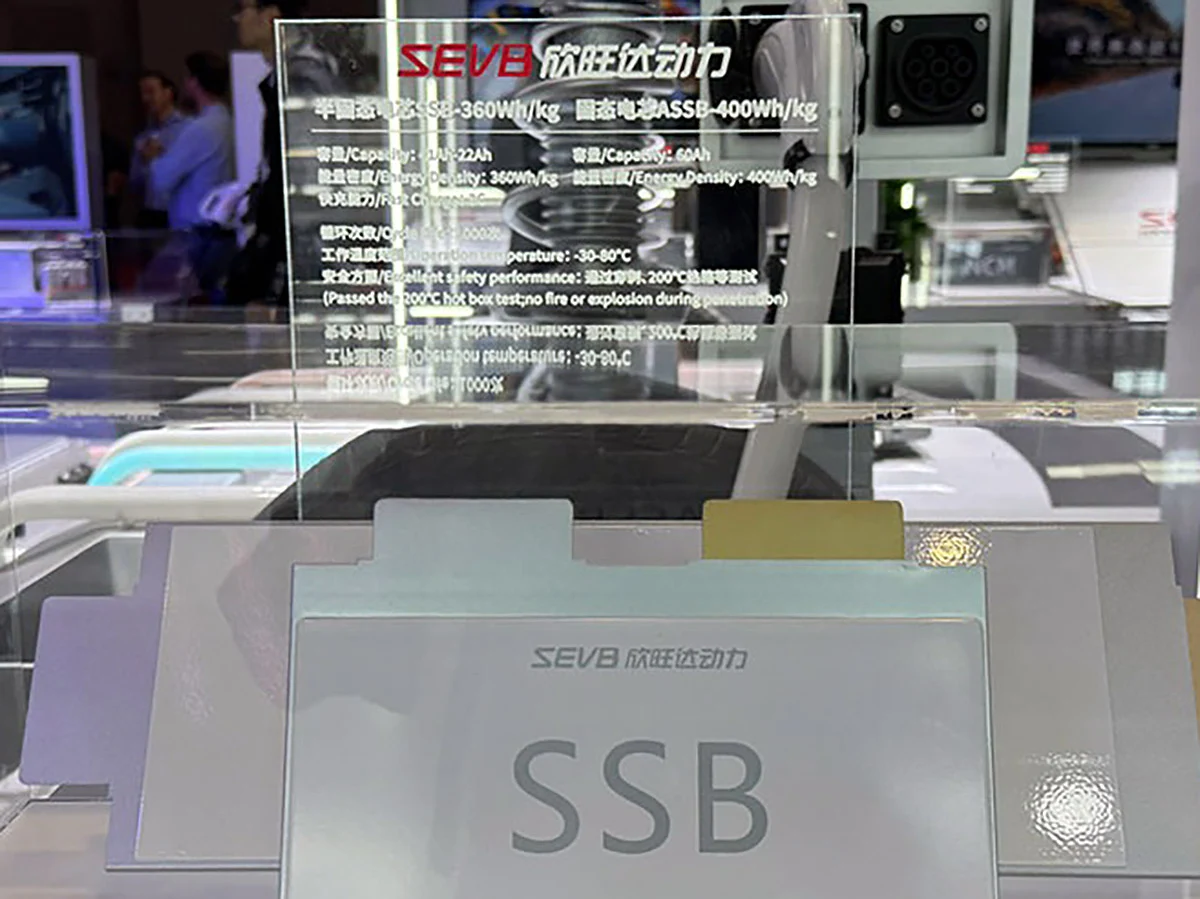
    2. Their first-generation solid-state battery has an energy density of 400 Wh/kg, nearly double that of current liquid electrolyte batteries.
    3. Sunwoda’s semi-solid batteries are seen as a cost-effective alternative, and if their solid-state batteries match these costs, they may attract major car manufacturers.
    4. Future prototypes aim for energy densities of 700 Wh/kg, with advancements in polymer electrolyte technology enhancing performance and safety.
    5. Ongoing research is pushing the boundaries of solid-state battery technology, with prototypes already exceeding the previously thought limits of 500 Wh/kg.


    One of China’s leading battery manufacturers, Sunwoda, is set to begin large-scale production of solid-state batteries this year, with plans to expand capacity by 2026.

    First Generation Battery

    The company’s initial polymer electrolyte has led to the creation of a solid-state battery ready for production, boasting an energy density of 400 Wh/kg. This figure is nearly twice the average energy density found in current liquid electrolyte batteries used in mass electric vehicles and power stations, such as the new Anker Solix, which is currently 50% off on Amazon. Additionally, Sunwoda has made strides in reducing costs.

    While solid-state battery cells can offer higher capacities and enhanced safety due to the absence of volatile liquid electrolytes, manufacturing them in lower volumes remains costly. However, upon revealing its 400 Wh/kg solid-state battery, Sunwoda indicated that it could mass-produce this at prices similar to semi-solid batteries that contain 5% liquid and 95% solid electrolyte.

    Bridge Technology

    These semi-solid batteries are being utilized by car manufacturers such as NIO, where a 150 kWh pack enables the ET7 sedan to achieve over 650 miles per charge. Moreover, CATL, the largest battery producer globally, regards semi-solid state batteries as a favorable compromise between performance and cost per kWh. If Sunwoda’s all-solid-state battery can match the costs of these semi-solid options, it is likely to attract attention from car makers.

    In addition to the solid-state battery with an energy density of 400 Wh/kg, Sunwoda has also developed a prototype boasting 520 Wh/kg, similar to innovations from firms like Toyota, CATL, and Samsung. This prototype features a 3D composite anode that enhances ion transfer, along with a layer filled with tiny bubbles that contains an interface repair agent, which helps maintain the solid electrolyte interphase and minimize dendrite growth that can have harmful effects. Production for this model is anticipated to commence around 2027 when many other solid-state battery manufacturers plan to start their mass production as well.

    Future Expectations

    By that time, Sunwoda aims to achieve an energy density of 700 Wh/kg across various prototypes, aided by its unique polymer electrolyte technology. The record for solid-state battery energy density was previously held by Chery, China’s largest car exporter, which recently stated it would have vehicles equipped with a 600 Wh/kg solid-state battery available in 2027, utilizing a similar polymer electrolyte method.

    The solid-state battery from Sunwoda features a cathode porosity of only 5%, which is five times lower than the usual, yet it enhances ion conductivity by three times. Its “nano-structured high-entropy anode” offers seven times the capacity of conventional graphite anodes and has double the cycle life. The composite polymer electrolyte membrane developed by Sunwoda not only improves ion conductivity but is also elastic and long-lasting. Furthermore, the flexible cell interface coating provides “high ion conduction, robust adhesion, high ductility, and self-healing” properties, according to the company. The resulting 20 Ah cells promise a lifespan of 1,200 cycles and have successfully passed nail penetration and high-temperature safety tests at 200°C.

    Continued advancements in this exciting technology are being made in research facilities, with the Chinese Academy of Sciences recently unveiling a flexible solid-state battery prototype featuring a polymer electrolyte that claims to deliver energy density up to 86% greater than current production-ready solid-state options, which range from 350 Wh/kg to 400 Wh/kg depending on the manufacturer.

    The 500 Wh/kg solid-state batteries, once believed to be the theoretical limit for today’s technology, are already undergoing testing in prototype vehicles like the Mercedes EQS, capable of covering 750 miles on a single charge. However, their mass production is not expected until 2027, and it will only be in limited quantities for premium electric vehicles.


  • Nio ET7 2024 Model Launches with 180+ Upgrades

    Nio ET7 2024 Model Launches with 180+ Upgrades

    The Beijing Auto Show has recently showcased a range of new electric vehicles from different manufacturers. One notable introduction is the 2024 Nio ET7, an electric sedan that represents an update to the entire 2023 Nio ET7 lineup. Despite featuring 180 upgrades, the new lineup maintains the same initial price as its predecessor.

    Evolution of Nio ET7

    The original Nio ET7 made its debut in 2021 at the Nio Day 2020 event. Deliveries of the model commenced in March 2022, marking the first Nio vehicle built on the NT 2.0 platform. In April 2023, the 2023 Nio ET7 was unveiled at the Shanghai auto show with an initial price of 458,000 yuan ($63,204). Subsequently, Nio reduced the price by 30,000 yuan ($4,140) and introduced a paid option for a free battery swap service package. The ET7 has proven popular in the Chinese market, with over 30,000 units already sold.

    Upgrades and Variants

    The 2024 ET7 now offers two variants – Executive and Executive Signature, a shift from the standard and Signature Editions of its predecessor. The 2023 Nio ET7 featured a 100kWh battery pack, providing considerable range for the electric vehicle. The new model’s Signature Edition offers a choice between 75kWh and 100kWh battery packs.

    Pricing & Availability

    The latest iteration of the Nio ET7 starts at 458,000 yuan ($63,204) for the standard range Executive Signature Edition, while the long-range version is priced at 516,000 yuan ($71,208). The long-range model commands a 10,000 yuan ($1,380) premium compared to its 2023 counterpart, positioning it as the top-trim model in the lineup. Orders for the 2024 ET7 are now being accepted, with deliveries scheduled to commence on April 30. Interested customers can already test drive show cars.


    Nio ET7 2024 Model Launches with 180+ Upgrades