Category: EV vehicles

  • Tesla Introduces Dynamic Robotaxi Fare Pricing in Austin

    Tesla Introduces Dynamic Robotaxi Fare Pricing in Austin

    Key Takeaways

    1. Tesla’s Robotaxi service started with a flat fee of $4.20 but increased to $6.90 after expanding the service area.
    2. The latest app update (version 25.7.10) introduced dynamic pricing based on travel distance.
    3. Fares can start as low as $2.10 for short trips and go up to $12.04 for longer distances (3 to 9 miles).
    4. Dynamic pricing aligns Tesla’s service with traditional taxis and ride-hailing platforms like Uber and Lyft.
    5. Tesla plans to expand Robotaxi services to California’s Bay Area and Arizona, with safety drivers required in California initially.


    Tesla started their Robotaxi service back in June, offering a flat fee of $4.20 for each ride. However, after expanding the service area, this price rose to $6.90. With a recent update to the app, riders can now pay according to how far they travel.

    New Pricing Updates

    The latest version of the Robotaxi app, version 25.7.10, introduces dynamic pricing. This change comes after Tesla widened the geofenced area to include downtown Austin, the University of Texas, and additional neighborhoods. Along with this, Tesla made some smaller fixes and enhancements.

    Pricing Breakdown

    As per a chart shared by X user @Tslachan, users can now find rides for as little as $2.10 for a distance of approximately 0.9 miles. For trips ranging from 3 to 9 miles, fares can go up to $12.04.

    Competing with Traditional Services

    The introduction of dynamic pricing aligns Tesla’s Robotaxi service more closely with traditional taxis and ride-hailing platforms like Uber and Lyft. This will also encourage users who have shorter trips to experience the service.

    Aside from this, Tesla has also made a few other updates to the Robotaxi app since its launch. Users can now modify their destinations post-booking, and the app provides directions from the user’s current location to their pickup spot.

    Looking ahead, Tesla plans to roll out Robotaxi services in the Bay Area of California and Arizona. However, in California, they will need to have safety drivers present behind the wheel, at least during the initial phase.

    Source:
    Link

  • NASA Tests Air Taxi Model for Safety Standards

    NASA Tests Air Taxi Model for Safety Standards

    Key Takeaways

    1. NASA is crash-testing a full-sized electric aircraft model to enhance safety in the air taxi sector.
    2. The tests aim to produce public data to help manufacturers design safer aircraft and support FAA safety regulations.
    3. The aircraft features energy-absorbing technologies similar to car crumple zones to protect passengers during crashes.
    4. The drop test mimicked FAA certification scenarios, with the aircraft released at a 10-degree twist.
    5. Successful validation of computer models during the tests will aid the industry in better assessing aircraft designs, with findings to be publicly shared.


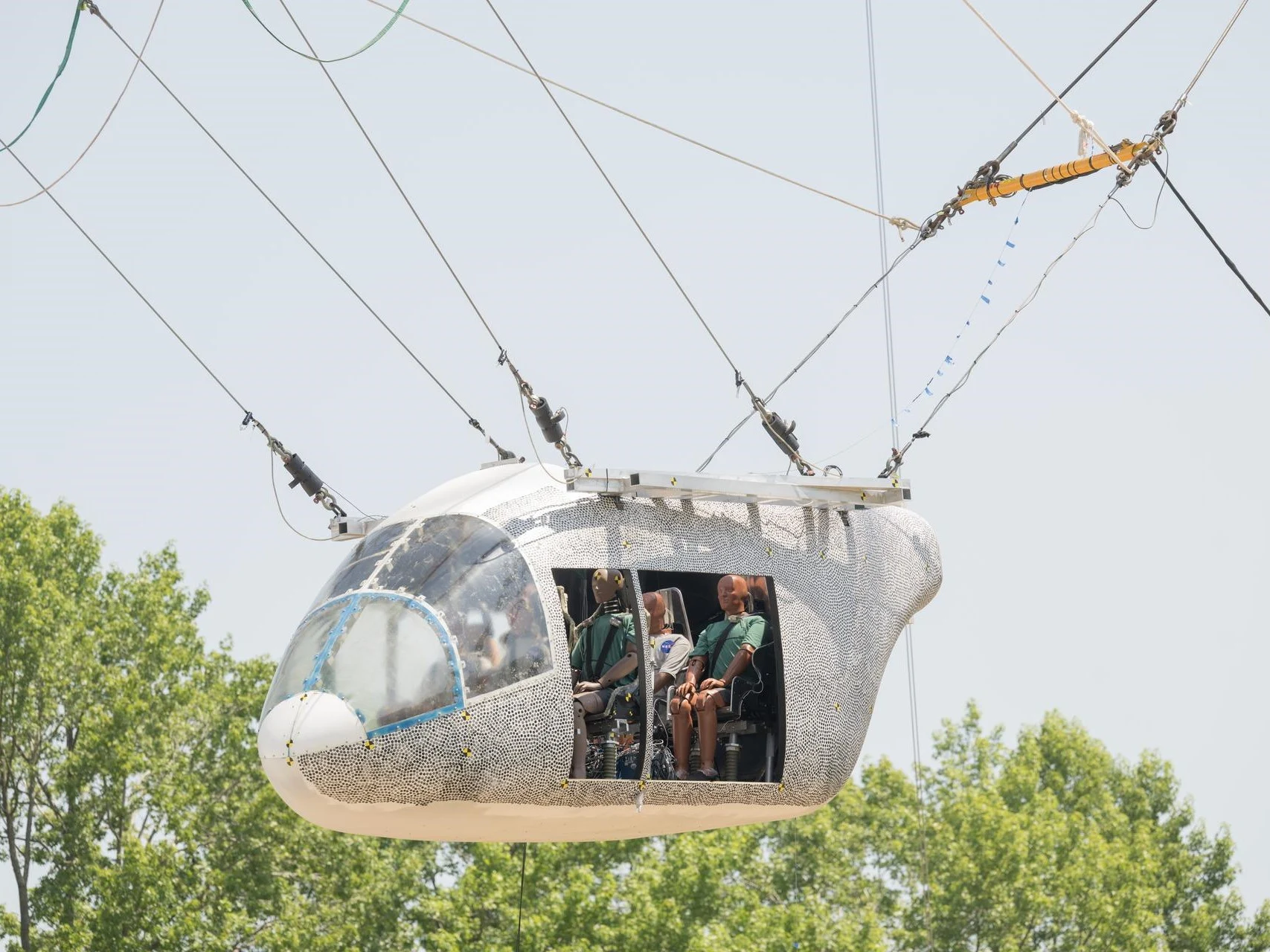
    NASA scientists are working on creating a secure air taxi sector by crash-testing a full-sized electric aircraft model. On June 26, at Langley Research Center, a team let the aircraft fall from a height of 35 feet (10.67 meters) to observe how its unique, lightweight materials react during impact.

    Supporting Advanced Air Mobility

    This experiment is an essential part of NASA’s goal to aid the growing advanced air mobility sector. By producing public data on how well the aircraft withstand crashes, the agency hopes to assist manufacturers in designing safer models and to aid the Federal Aviation Administration (FAA) in establishing the safety rules necessary for certification.

    Enhancing Safety Regulations

    “We are demonstrating aspects of a crash and how new energy-absorbing technology can strengthen the aircraft,” said Justin Littell, the test lead. These experiments will contribute to the creation of safety regulations for advanced air mobility vehicles, ultimately resulting in improved designs.

    The test was structured to be quite demanding. The team released the aircraft with a 10-degree twist or yaw, mimicking a particular certification scenario required by the FAA. The model had energy-absorbing subfloors, akin to crumple zones found in cars, which compressed as expected to help safeguard the passenger area.

    Validating Predictions

    Post-drop, researchers noted that the material failures they recorded closely aligned with their predictions from computer models. This successful confirmation of their simulations will assist the entire industry in assessing aircraft designs more effectively. NASA plans to make all data and findings from the test accessible to the public, fostering further research and development before these innovative vehicles take to the skies over populated areas.

    Source:
    Link

  • 2025 Tesla Model Y Wins IIHS Top Safety Pick+ for 7th Year

    2025 Tesla Model Y Wins IIHS Top Safety Pick+ for 7th Year

    Key Takeaways

    1. The Tesla Model Y has received the highest safety rating from the IIHS for the seventh consecutive time.
    2. The IIHS conducts thorough crash tests and rates vehicles on safety from Good to Poor.
    3. The Model Y excelled in occupant protection and crash avoidance technologies, achieving a “five-star safety grand slam.”
    4. The Model Y has received top safety ratings from multiple global organizations, including C-IASI, ANCAP, NHTSA, and Euro NCAP.
    5. In 2024, the Model Y made up 10.9% of all battery electric vehicle sales and was the first electric vehicle to lead global car sales.


    The Tesla Model Y has received the highest safety rating from the Insurance Institute for Highway Safety (IIHS). This marks the seventh time in a row that the SUV has achieved this prestigious recognition.

    Tesla China’s official Weibo account announced this achievement. CEO Elon Musk was quoted in a post by @Muskonomy on X, saying, “Model Y rated highest in safety.”

    About IIHS Ratings

    The IIHS is an independent, non-profit organization based in the US that conducts thorough crash tests and evaluates vehicle safety. Their safety ratings, which are highly sought after, range from Good, Acceptable, Marginal, to Poor. They test vehicles for frontal, side, rollover, and rear-impact scenarios.

    Model Y’s Performance

    Tesla China reported that the Model Y received the top scores for occupant protection and crash avoidance technologies. They stated that the electric SUV achieved a “five-star safety grand slam.”

    Global Recognition

    Globally, the Model Y has been recognized for its high safety standards. It has received top ratings from the China Insurance Automotive Safety Index (C-IASI), the Australasian New Car Assessment Program (ANCAP), the US National Highway Traffic Safety Administration (NHTSA), and the European New Car Assessment Programme (Euro NCAP).

    The Tesla Model Y continues to be the leading battery electric vehicle worldwide, making up 10.9 percent of all BEV sales in 2024, as reported by AutoVista24. It was also the first electric vehicle to lead car sales on a global scale.

    Source:
    Link

  • Tesla FSD Monitors Toll Booth Payments for Autonomous Driving

    Tesla FSD Monitors Toll Booth Payments for Autonomous Driving

    Key Takeaways

    1. Tesla plans to launch an unsupervised version of its Full Self-Driving (FSD) software for individual users by the end of this year.
    2. The current FSD system is being tested in a few Model Y vehicles for pilot Robotaxi rides in Austin and soon in California.
    3. Tesla is training its self-driving software on various edge case scenarios to improve safety for Level 4 fully driverless rides.
    4. FSD version 13.2.9 can autonomously identify completed payments at tolls and parking booths, enabling it to drive away without human intervention.
    5. Owners of older Tesla models with HW3 kits will miss out on some FSD advancements, but free HW4 retrofits may be offered if unsupervised FSD can’t function on those models.


    Tesla is aiming to launch the unsupervised version of its Full Self-Driving (FSD) software for individual users by the end of this year.

    Current Deployment of FSD

    The non-supervised FSD system is presently available on a small number of Model Y vehicles, which are providing pilot Robotaxi rides in Austin and will soon expand to California. This software has also been installed on a Model Y that made its way directly from the production line to its new owner, and it has been utilized to park completed cars at the factory by themselves.

    Training for Safety

    To reach the desired safety level for Level 4 fully driverless rides and to reduce disturbances for users of the supervised FSD versions, Tesla is currently training its self-driving software on various edge case scenarios. This effort enhances the software’s ability to manage the complicated and often unpredictable conditions faced on public roads, which the AI must recognize and react to. Nevertheless, these scenarios are not the only ones considered by Tesla’s AI team, which has been developing solutions for a wide range of challenges.

    Enhanced Features in FSD v13.2.9

    As demonstrated in the video below, FSD version 13.2.9 can now identify when a payment has been completed at an open road toll or parking booth, allowing it to drive away without any human intervention.

    How did the Model Y accomplish this? Tesla’s AI leader explains that it employed its pillar and side cameras to monitor the money exchange and the handover of parking tickets. It waited until the entire process was finalized before gradually moving away from the toll booth once the payment was complete.

    Interestingly, the Tesla Model Y didn’t require a barrier to be lifted or a green light to proceed. Instead, it relied on its cameras to observe the interaction between the driver and the booth attendant to determine the right moment to move forward.

    Limitations for Older Models

    Sadly, Tesla owners with older vehicles equipped with HW3 kits often miss out on these FSD advancements. For instance, they currently cannot lend their cars to the Robotaxi platform. Elon Musk has stated that free HW4 retrofits will be offered if Tesla cannot make unsupervised FSD function with these older models.

    Source:
    Link

  • Openreach Hits 5,000 Electric Vans Milestone in the UK

    Openreach Hits 5,000 Electric Vans Milestone in the UK

    Key Takeaways

    1. Openreach has added its 5,000th electric van, aiming for carbon neutrality by March 2031.
    2. The electric fleet will reduce carbon emissions by 10,000 tonnes annually, equivalent to removing 7,000 petrol cars.
    3. A specially designed van with the slogan “Let’s Reach Zero” celebrates Openreach’s commitment to sustainability.
    4. The company plans to add 2,000 more electric vehicles by March 2026 and has installed over 2,500 EV chargers.
    5. Openreach is focused on improving air quality and supporting the UK’s net-zero goals by replacing most of its 23,000 conventional vehicles.


    Openreach has successfully added its 5,000th electric van to its fleet, marking a significant milestone. The company is a key player in providing telecommunications infrastructure services across the UK and aims to achieve carbon neutrality by March 2031.

    Environmental Impact

    With this 5,000-strong electric fleet, Openreach plans to cut down 10,000 tonnes of carbon emissions each year. This reduction is comparable to taking 7,000 petrol cars off the roads, showcasing the company’s commitment to sustainability.

    Celebrating the Achievement

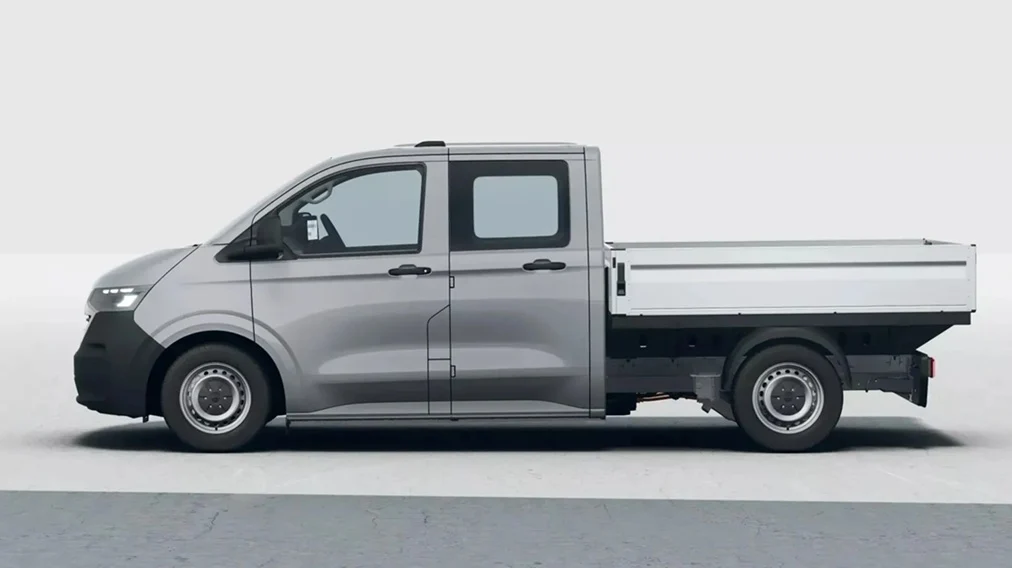
    To celebrate this achievement, Openreach has introduced a uniquely designed van featuring the slogan “Let’s Reach Zero.” This motto highlights their dedication to cutting emissions, reducing waste, and protecting the environment.

    Future Plans

    Openreach intends to bring in an extra 2,000 electric vehicles by March 2026. They will also establish EV charging stations at their operational sites and at the homes of their engineers to support their electric vehicle fleets. So far, over 2,500 chargers have been set up. One partnership will allow drivers to charge their vans at First Bus depots, which is especially important for those without access to off-road parking.

    The company’s aim is to drastically reduce emissions by replacing most of its 23,000 conventional vehicles. Openreach is focused on improving air quality and aiding the UK in reaching its net-zero objectives.

    Clive Selley, the CEO of Openreach, mentioned, “We understand the effect of our operations, and seeing our 5,000th electric van on the road is a proud moment for everyone here at Openreach. By continually upgrading our fleet and installing EV chargers at our engineers’ homes and operational sites, we’re breaking down barriers to adoption, enhancing air quality, and supporting the communities that we serve.”

    Source:
    Link

  • Samsung Foundry Secures $16.5B Deal with Tesla for Auto Chips

    Samsung Foundry Secures $16.5B Deal with Tesla for Auto Chips

    Key Takeaways

    1. Samsung Foundry is experiencing challenges with its advanced SF2 node but has seen increased demand for earlier processes, especially from Nintendo for the Switch 2.
    2. Samsung Electronics secured a significant $16.5 billion deal to produce Tesla’s next-gen AI6 chip at its new Texas fab.
    3. Tesla is likely to use one of Samsung’s older nodes (5 nm or 4 nm) for the A16 chip, rather than cutting-edge technology.
    4. The possibility exists that the node for Tesla’s chips could be SF2A, Samsung’s 2nm node meant for automotive components, with work not starting until late 2033.
    5. Elon Musk will personally oversee efforts to expedite the production process for Tesla’s A16 chip, which may have a larger die size than the Exynos 2600.


    While Samsung Foundry has been facing difficulties with its advanced SF2 node recently, there has been an uptick in demand for some of its earlier processes, especially from companies like Nintendo. The gaming giant has utilized Samsung’s 8N node for the Tegra T239 SoC in the upcoming Nintendo Switch 2. Recently, Samsung Foundry has landed what might be its biggest order yet.

    Major Deal Unlocked

    According to Reuters, Samsung Electronics, which owns Samsung Foundry, has secured a deal worth $16.5 billion with a “global firm.” This mystery was unveiled by Elon Musk, the founder of Tesla, who shared on X that, “Samsung’s massive new Texas fab will be focused on producing Tesla’s next-gen AI6 chip.”

    Speculations on Technology

    However, it’s probable that Tesla is opting for one of Samsung’s older nodes for the A16 chip. Reuters mentions that “the order is unlikely to involve the cutting-edge tech.” While the specific node has not been disclosed, it is likely to be either 5 nm or 4 nm. A report from 2023 suggested that the yields for these nodes were around 75%, making them suitable for large-scale production.

    What’s Next for SF2A?

    In contrast, X analyst Jukanlosreve and the South Korean news source Chosun have pointed out that the node in question may be SF2A, which is Samsung’s 2nm node designed for automotive components. This possibility isn’t far-fetched since the Reuters article indicates that “until the contract is completed at the end of 2033,” Samsung may not begin working on the chips for Tesla right away.

    At present, there is no public information about the yield rates for Samsung’s SF2A node. However, its non-A variant, SF2, is believed to be yielding around 40%, likely intended for the Exynos 2600, which could have a die size of approximately 150 mm². While Tesla’s A16 chip is expected to be bigger, Samsung should have ample time to refine its processes. Elon Musk has stated that he will “personally oversee efforts to speed up progress.”

    Source:
    Link

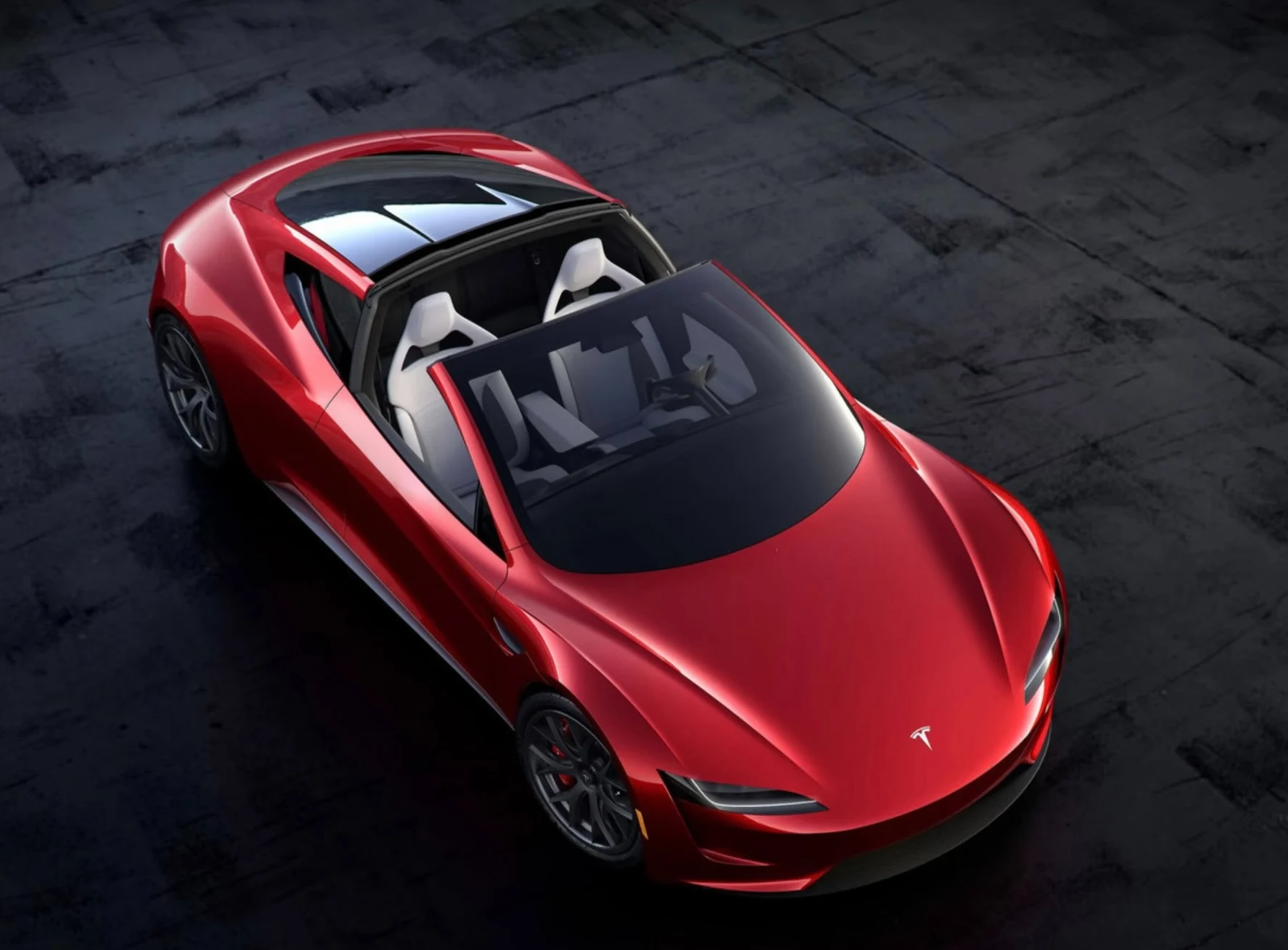
  • Budget Tesla Model Y: No Glass Roof Leaks, Simple Interior

    Budget Tesla Model Y: No Glass Roof Leaks, Simple Interior

    Key Takeaways

    1. The upcoming budget Model Y, known as project E41, will likely miss features like a glass roof, LED light strip, and rear reflector.
    2. Interior changes include the absence of ventilated seats, reduced audio system speakers, and modified central console without cupholder storage.
    3. The budget Model Y will maintain similar dimensions to current models, avoiding changes to the wheelbase for cost reasons.
    4. Tesla aims to price the budget Model Y around $35,000, targeting affordability as tax credit subsidies expire in 2025.
    5. A larger six-seat Model YL is set to launch this fall, priced over $10,000 higher than the existing Model Y.


    The upcoming Model Y from Tesla, which is set to launch next quarter, might miss out on some features. This budget version may not come with a glass roof, LED light strip, or rear reflector that were part of the Juniper refresh. Additionally, it is expected to lack vented seats, cupholder storage, A-pillar speakers, and even clothing hooks.

    First Sightings of Project E41

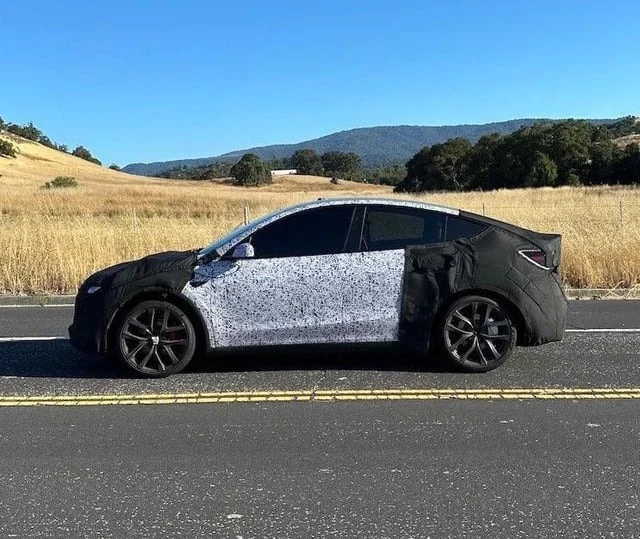
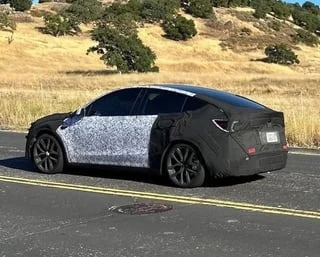
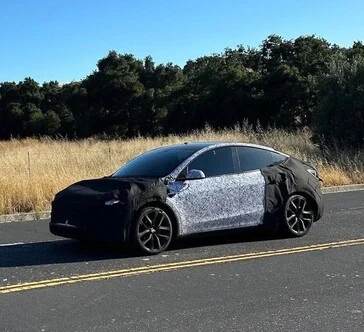
    This more basic Model Y, known internally as project E41, was spotted for the first time near the Giga Shanghai factory, covered in camouflage for testing. The headlights have been repositioned, suggesting that the LED light bar seen in the Juniper refresh could be absent in this more affordable model. The unique rear reflector that casts red light on the ground is also likely to be removed.

    Changes Inside the Vehicle

    The interior of this supposed budget Model Y is missing several features found in the current Juniper refresh. The ventilated front seats are not included, and the upholstery appears to be a mix of vegan leather and some fabric. There is no rear display, and the central console has been modified to eliminate cupholder storage, similar to what Tesla did with the lower-cost Cybertruck. The audio system has fewer speakers, particularly lacking those in the A-pillar, and the clothing hooks above the window have also been taken out.

    Size and Future Plans

    Besides these changes, the anticipated budget Model Y looks to be about the same size as its more equipped counterparts, as seen in the video below. This indicates that Tesla might keep the dimensions unchanged instead of undergoing the hassle of shortening the wheelbase. Elon Musk mentioned that Tesla’s affordable vehicle would be “smaller, to be certain,” but he was actually discussing a different model, tentatively called the Model 2, rather than this simplified Model Y.

    During the Q2 investor call, Musk clarified that the less expensive Tesla set to be released in Q4 will just be “a Model Y” trim aimed at lowering costs, without calling it more compact. Adjusting production lines for a shorter version could be pricier than maintaining the current frame and components.

    Pricing Strategy

    While Tesla plans to introduce a larger six-seat Model YL with an extended wheelbase this fall, it will reportedly be priced over ten thousand dollars higher than the existing Model Y. The aim with the budget Model Y, however, is to keep costs as low as possible, utilizing the current production lines. Tesla is said to target a price of $35,000 to offset the loss of tax credit subsidies, as this budget version is expected to launch after the subsidies expire on September 30, 2025.

    Source:
    Link

  • TSMC’s Kumamoto Fab Delay to 2029 Amid U.S. Expansion Focus

    TSMC’s Kumamoto Fab Delay to 2029 Amid U.S. Expansion Focus

    Key Takeaways

    1. TSMC’s second plant in Kumamoto will start volume production in the first half of 2029, 18 months later than planned.
    2. The groundbreaking for the second plant has been delayed to “sometime in 2025” due to site congestion and traffic issues.
    3. Resource reallocation to U.S. facilities for tariff management contributes to uncertainty in the new start date.
    4. Limited demand for advanced 6 nm and 7 nm technologies in Japan is causing further delays in the project’s urgency.
    5. The overall investment for TSMC’s plants is around ¥2.96 trillion, with potential subsidies from the Japanese government of up to ¥1.2 trillion.


    TSMC’s efforts to grow its presence in Japan are facing setbacks. The company’s second plant in Kumamoto is now projected to start volume production in the first half of 2029, which is about eighteen months later than previously planned, as reported by Nikkan Kogyo Shimbun through MoneyDJ.

    Construction Timeline Changes

    The construction schedule has also been altered. Initially, the groundbreaking was set for the first quarter of 2025, but it has since been adjusted to “sometime in 2025.” C.C. Wei, the chair and CEO of TSMC, explained that the delays are due to congestion and traffic complications at the site. Additionally, The Wall Street Journal noted that TSMC is reallocating resources to its facilities in the U.S. to better manage tariff regulations, making the new start date uncertain.

    Market Conditions Impacting Progress

    Market conditions seem to be another challenge. According to Economic Daily News, the 6 nm and 7 nm processes intended for the second Kumamoto plant aim at clients like Sony and Denso. However, there is currently a limited demand in Japan for such advanced technologies, which diminishes the urgency for rapid development and leads to further delays.

    Despite the troubles with Kumamoto 2, the first Kumamoto plant is progressing well. Wei informed investors that this initial plant, which specializes in 12 nm to 28 nm chips, began mass production in the latter half of 2024 and is already seeing favorable output.

    Future Expectations

    Looking forward, both plants are anticipated to produce over 100,000 12-inch wafer equivalents monthly once they are fully operational. The overall investment is projected to be around ¥2.96 trillion (approximately $20.04 billion), with the Japanese government providing up to ¥1.2 trillion (about $8.12 billion) in subsidies. The timely arrival of that capacity now hinges on how quickly infrastructure issues can be resolved and how the demand for advanced automotive and imaging chips in Japan develops throughout the decade.

    Source:
    Link

  • Tesla Model 3 Performance Lease: Free Colors & Tax Credit White Interior

    Tesla Model 3 Performance Lease: Free Colors & Tax Credit White Interior

    Key Takeaways

    1. Tesla is maximizing car sales with promotions and incentives before the federal tax credit expires.
    2. A new lease offer for the Model 3 Performance trim is introduced, keeping it under the $55,000 limit to qualify for the full $7,500 federal tax credit.
    3. Tesla offers zero interest financing on the Model 3 with FSD purchase and a free Supercharging promo for the first 18 months.
    4. The $699 monthly lease for the Model 3 Performance offers good value compared to the average car lease in the US, which is $745.
    5. The Model 3 Performance’s speed and pricing make it a competitive choice against other sports sedans, potentially boosting Tesla’s sales before the tax credit deadline.


    Tesla has clearly gone all out with promotions and incentives to maximize car sales before the federal tax credit expires at the end of the quarter.

    New Lease Deal Introduced

    It seems they are not finished yet, as they have introduced a lease offer for the powerful Model 3 Performance trim, which can accelerate as fast as vehicles that cost three times more. To keep the Model 3 Performance below the $55,000 price limit—allowing the popular white interior trim to qualify for the full $7,500 federal tax credit—Tesla is now providing any color at no extra cost, including the Ultra Red, which typically costs $2,000.

    Financing Offers and Promotions

    In addition to this, Tesla continues to offer zero interest financing on the Model 3 with FSD purchase, alongside a free Supercharging promo available for the first 18 months of ownership. Since most Tesla owners choose to lease, the company has just announced a Model 3 Performance lease that requires $3,000 down and then $699 per month, which includes the federal tax credit, even if you select the popular Ultra Red paint with the white interior.

    Value of the Performance Trim

    Although a $700 lease might not sound like a bargain, it is a good deal for the Performance variant that can sprint from 0-60 mph in just 2.9 seconds. Considering that the average monthly car lease in the US is currently $745, enthusiasts of sports sedans will definitely receive more value for their investment compared to the average vehicle.

    With this new lease and color offer, Tesla continues to expand its already remarkable range of promotions, with the Model 3 being the focus of nearly every incentive type the sales team has ever created.

    Despite the monthly lease payment seeming high at first glance, the Model 3 Performance remains a top choice for affordable sports sedans.

    The recently announced Hyundai Ioniq 6 N competitor, for example, is slower and carries a higher price tag, suggesting that Tesla might experience a boost in sales before the tax credit ends on September 30, 2025.

    Source:
    Link

  • Tesla FSD Outperforms Chinese Rivals in Independent Testing

    Tesla FSD Outperforms Chinese Rivals in Independent Testing

    Key Takeaways

    1. Rapid Growth in Autonomous Technologies in China: The number of autonomous driving systems has significantly increased, with companies like BYD offering self-driving technology at no cost.

    2. Independent Assessment of Tesla’s FSD: Tesla’s Full Self-Driving (FSD) system has been independently evaluated and compared favorably against competing Advanced Driver Assistance Systems (ADAS) from brands like Xiaomi, Toyota, and Huawei.

    3. Data Export Restrictions: Tesla faces limitations on exporting driving data from China, leading to a reliance on simulated environments for training its FSD algorithms rather than real-world driving experiences.

    4. Successful Navigation in Challenging Conditions: Tesla has demonstrated its ability to navigate complex driving scenarios in China, including unmarked roads and rush hour traffic, achieving impressive results in rigorous testing.

    5. Top Performance in High-Stakes Scenarios: In an assessment involving 36 vehicles and 15 challenging scenarios, Tesla secured the highest rankings, successfully managing difficult situations like sudden obstacles and night driving.


    From the team behind the unique crash tests with a semi-truck, which gained praise for the Tesla Model 3, comes the most extensive evaluation of current autonomous driving technologies to date.

    Rapid Growth in China

    In recent years, the number of autonomous driving systems has surged in China, with BYD, the leading electric vehicle manufacturer, even providing its Eye of God self-driving technology at no cost with every vehicle, unlike Tesla, which charges for its Full Self-Driving (FSD) feature.

    Tesla’s Performance

    Tesla’s FSD system, whether under supervision or fully autonomous, has showcased its worth in an independent assessment that compared it to the Advanced Driver Assistance Systems (ADAS) from well-known competitors like Xiaomi, Toyota, and Huawei.

    Tesla faces restrictions on exporting raw driving data from China and trains its FSD algorithms primarily in a simulated environment using publicly accessible video footage and test tracks, rather than through real-world driving experiences as it does in the US. Elon Musk stated:

    > “So it will train using simulator for bus lanes in China. Bus lanes in China are among the biggest challenges for FSD, as they are quite complex. There are specific hours when you can use them, and if you enter the bus lane at the wrong time, you get an automatic ticket. So, it’s a serious issue. We will incorporate that into our simulator to train on it. The car needs to understand the time of day and read the signs. We will get this sorted out.”

    Tesla’s Success

    Tesla appears to have resolved many complex issues related to driving in China, as its vehicles have undergone rigorous tests since the launch of FSD. This includes navigating unmarked and unlit mountain roads at night and managing rush hour traffic in city centers.

    The results have been impressive; however, the latest independent assessment placed them in edge-case situations, directly competing with some of the most prominent brands and models available in China, including those equipped with LiDAR.

    To cut to the chase, Tesla secured the top position in all demanding tests, which involved scenarios where children or animals suddenly appeared on the road, other cars making abrupt cuts, construction zones, night driving, and various other challenging conditions.

    The ADAS evaluations involved 36 vehicles facing 15 high-stakes scenarios, resulting in a total of 216 collisions, none of which included the Model X. Even during the difficult wild boar test, Tesla’s vision-based strategy for scaling and learning in autonomous systems proved its efficacy.

    Source:
    Link