
Key Takeaways
1. NASA is crash-testing a full-sized electric aircraft model to enhance safety in the air taxi sector.
2. The tests aim to produce public data to help manufacturers design safer aircraft and support FAA safety regulations.
3. The aircraft features energy-absorbing technologies similar to car crumple zones to protect passengers during crashes.
4. The drop test mimicked FAA certification scenarios, with the aircraft released at a 10-degree twist.
5. Successful validation of computer models during the tests will aid the industry in better assessing aircraft designs, with findings to be publicly shared.
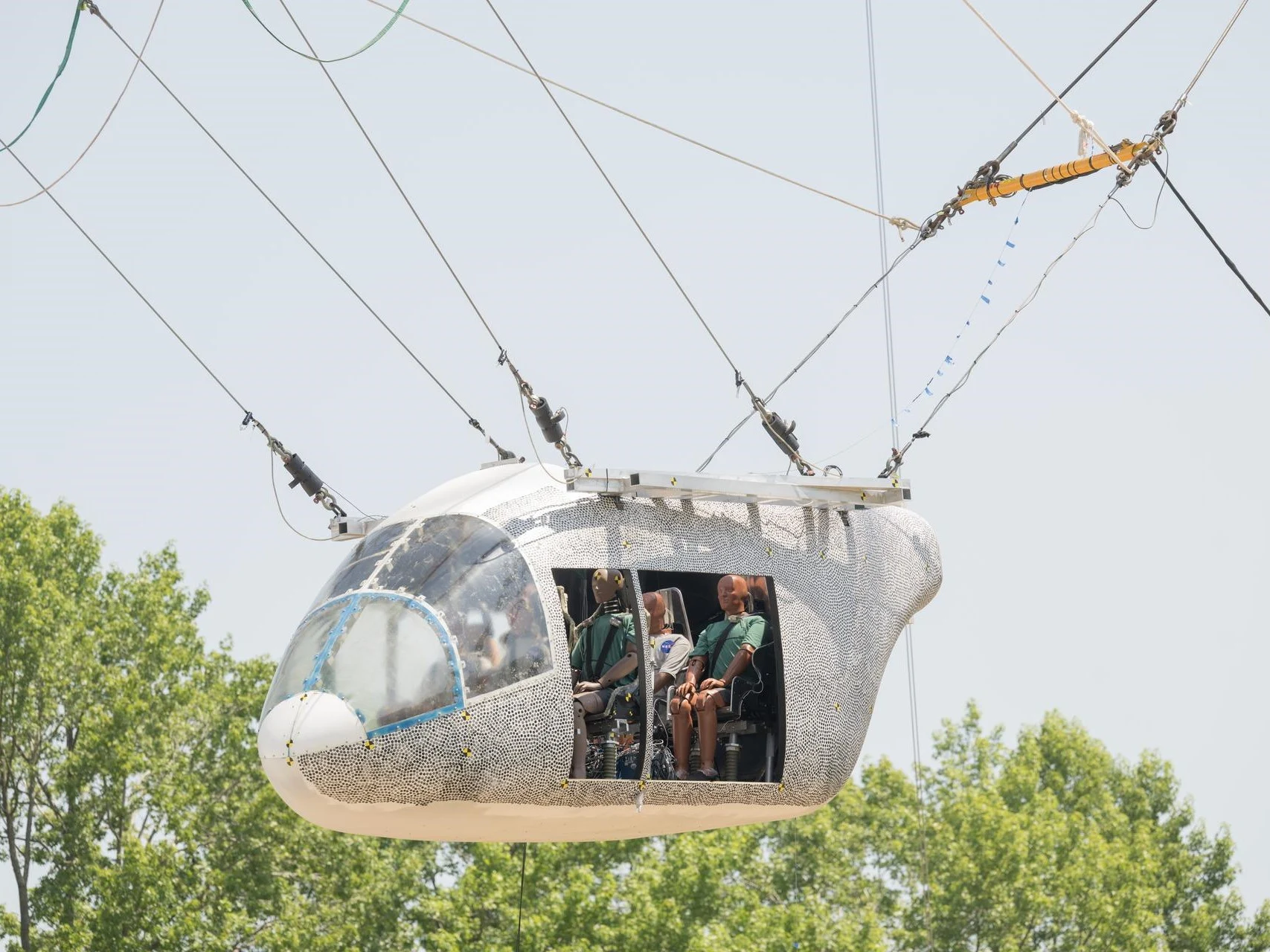
NASA scientists are working on creating a secure air taxi sector by crash-testing a full-sized electric aircraft model. On June 26, at Langley Research Center, a team let the aircraft fall from a height of 35 feet (10.67 meters) to observe how its unique, lightweight materials react during impact.
Supporting Advanced Air Mobility
This experiment is an essential part of NASA’s goal to aid the growing advanced air mobility sector. By producing public data on how well the aircraft withstand crashes, the agency hopes to assist manufacturers in designing safer models and to aid the Federal Aviation Administration (FAA) in establishing the safety rules necessary for certification.
Enhancing Safety Regulations
“We are demonstrating aspects of a crash and how new energy-absorbing technology can strengthen the aircraft,” said Justin Littell, the test lead. These experiments will contribute to the creation of safety regulations for advanced air mobility vehicles, ultimately resulting in improved designs.
The test was structured to be quite demanding. The team released the aircraft with a 10-degree twist or yaw, mimicking a particular certification scenario required by the FAA. The model had energy-absorbing subfloors, akin to crumple zones found in cars, which compressed as expected to help safeguard the passenger area.
Validating Predictions
Post-drop, researchers noted that the material failures they recorded closely aligned with their predictions from computer models. This successful confirmation of their simulations will assist the entire industry in assessing aircraft designs more effectively. NASA plans to make all data and findings from the test accessible to the public, fostering further research and development before these innovative vehicles take to the skies over populated areas.
Source:
Link