Category: EV vehicles

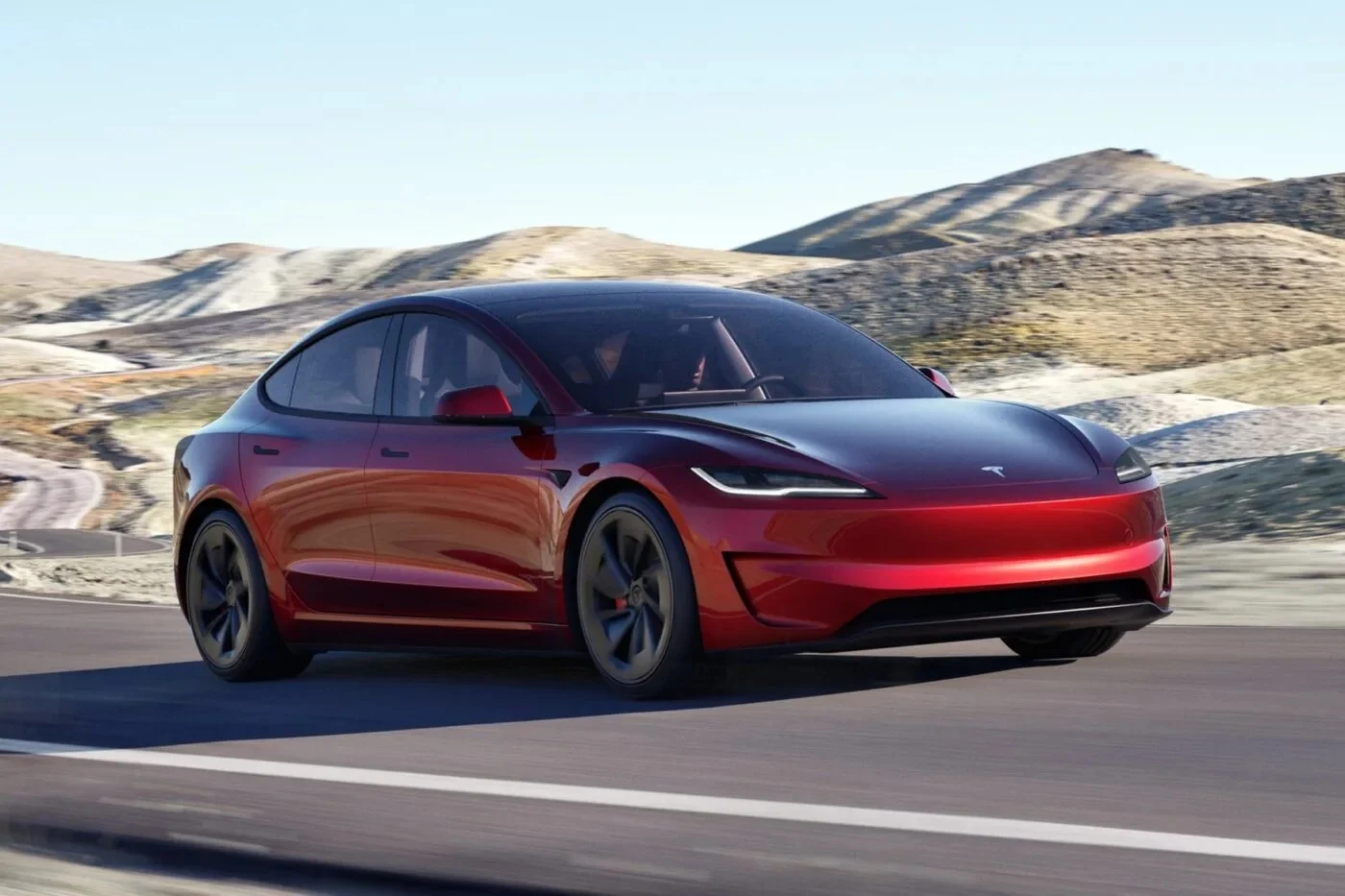
  • Tesla Model 3 Hits 3 Million Sales, World’s Top Electric Sedan

    Tesla Model 3 Hits 3 Million Sales, World’s Top Electric Sedan

    Key Takeaways

    1. Tesla Model 3 was launched in 2016 to provide budget-friendly electric vehicles, with over three million units sold since 2017.
    2. The Model 3 has been the world’s leading battery-electric sedan for seven years, with a new unit delivered every 90 seconds.
    3. Attractive financing options include zero-interest loans in China and 0% APR offers in the US with Full Self-Driving purchase.
    4. Recent updates to the Model 3 include the “Highland” version with improved design and increased driving range.
    5. A new Model 3 Plus in China features a higher-capacity battery for enhanced range, alongside a new Model Y L with three rows of seating.


    Tesla introduced the Model 3 back in 2016, aiming to create more budget-friendly electric vehicles (EVs). Since then, the company has made great strides, with over three million units of this electric sedan sold since production kicked off in 2017.

    A Record-Breaking Sedan

    Per a Weibo post from Tesla China (translated via Google Translate), the Model 3 continues to be the world’s leading battery-electric sedan, holding this position for an impressive seven years. It has become the epitome of mass-market EVs, with a new Model 3 being delivered every 90 seconds.

    Attractive Financing Options

    The post also highlights financing opportunities for the Model 3 in China, offering zero-interest loans for a period of five years, starting at just RMB 2,460 monthly. In the US, Tesla is running a similar deal, providing 0% APR for up to 60 months, although this is only available with the purchase of Full Self-Driving (FSD).

    Recent Updates and Variants

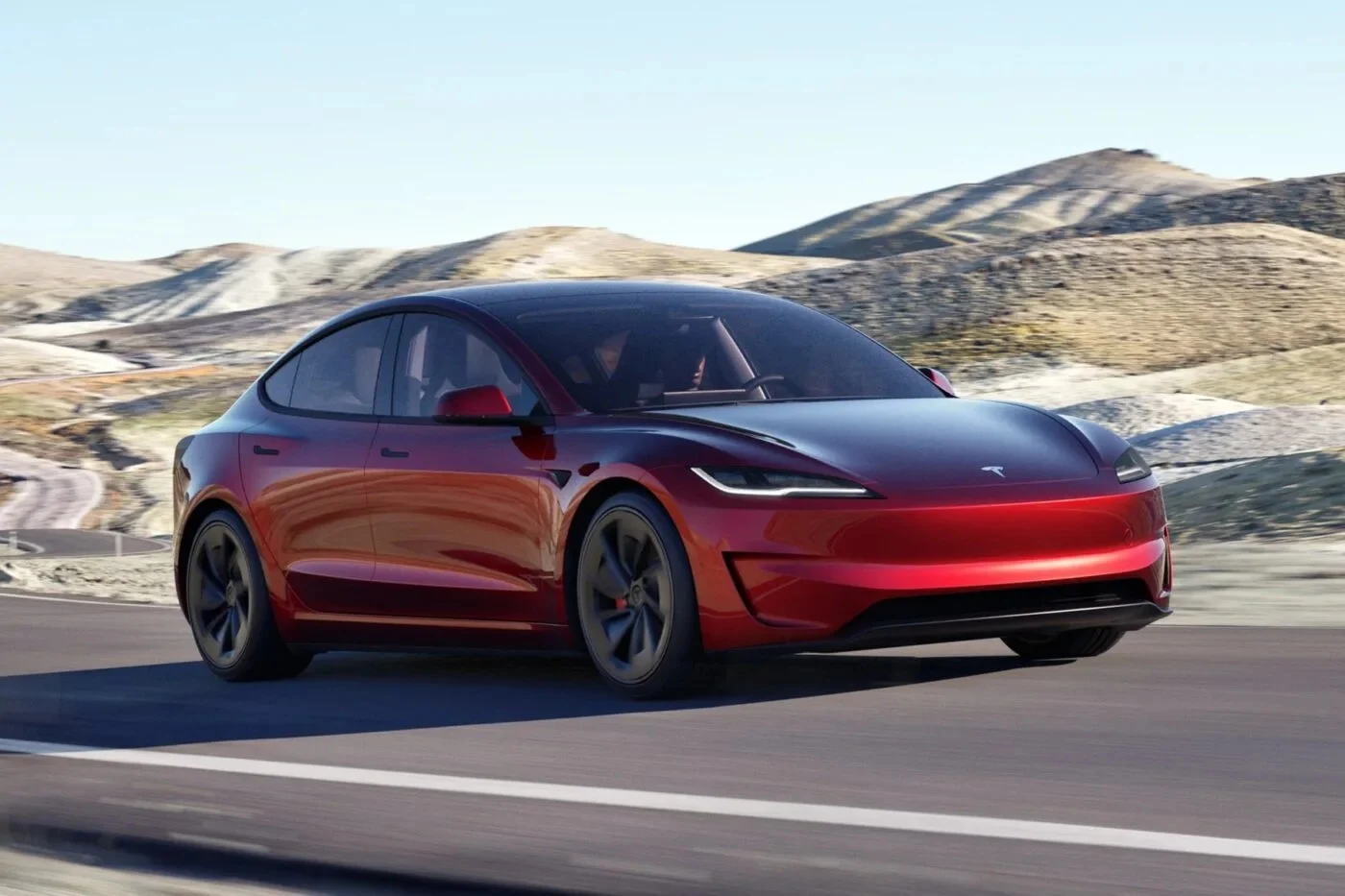
    Tesla has rolled out several updates for the Model 3, the most recent being the “Highland” version, which features a more stylish font and sleeker headlights. These aerodynamic changes have also led to a slight increase in the driving range.

    In addition, Tesla has introduced a Model 3 Plus in China, which comes equipped with a higher-capacity NMC battery from LG, potentially enhancing the EV’s driving range considerably. This was revealed alongside a new Model Y L that offers three rows of seating.

    In conclusion, Tesla continues to innovate and dominate the EV market with its Model 3 and related offerings.

    Source:
    Link

  • Xiaomi YU7 SUV: New 681 HP Electric SUV with 800V Technology

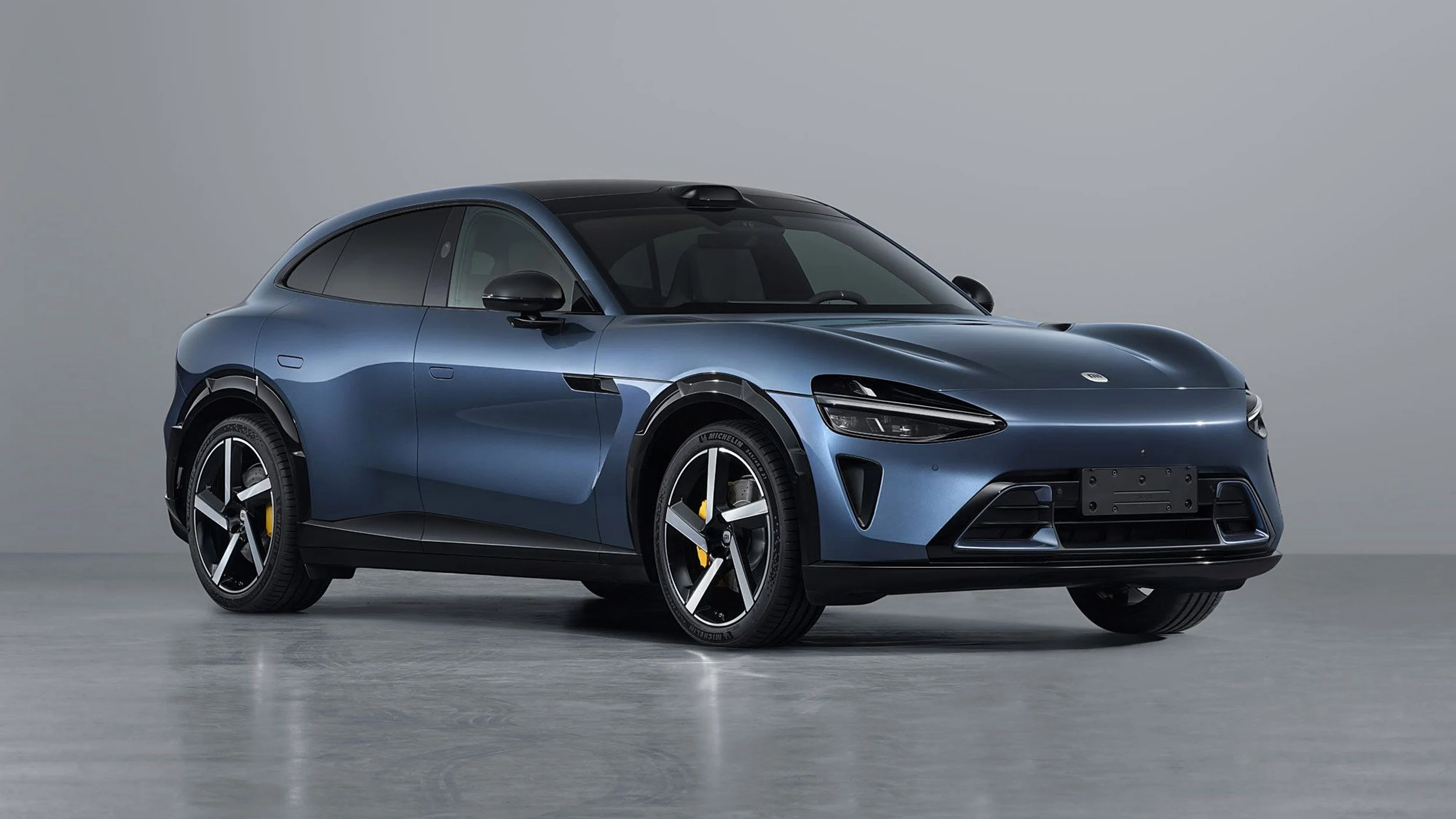
    Xiaomi YU7 SUV: New 681 HP Electric SUV with 800V Technology

    Key Takeaways

    1. The Xiaomi YU7 SUV features up to 681 HP, an 800-volt system, and a range of up to 835 kilometers, debuting in China on June 24, 2025.
    2. It includes advanced 800-volt charging technology, allowing the battery to charge from 10% to 80% in just twelve minutes.
    3. The SUV is available in three versions: standard rear-wheel drive, all-wheel drive Pro model, and premium Max variant, with power outputs ranging from 428 hp to 681 hp.
    4. The luxurious interior boasts a 16.1-inch display, a wide head-up display, adaptive chassis, and premium features like nappa leather seats and Dolby Atmos sound.
    5. Targeted at tech-savvy consumers in the premium market, the YU7 is more affordable than competitors, with pre-orders starting in June 2025 and future plans for European market expansion.


    With the introduction of the Xiaomi YU7 SUV, the Chinese brand is rolling out a robust electric vehicle that boasts up to 681 HP, an 800-volt system, and an impressive range of up to 835 kilometers. This vehicle made its debut in China on June 24, 2025, and is built on Xiaomi’s own EV platform. It is available in three versions: the standard rear-wheel drive, the all-wheel drive Pro model, and the premium Max variant. Power output varies from 315 kW (428 hp) to 508 kW (681 hp), based on the selected configuration.

    Impressive Charging Technology

    One of the standout features is the 800-volt charging technology, which supports rapid charging at rates up to 5.2 C. Xiaomi claims that this allows the battery to charge from 10% to 80% in only twelve minutes, providing a range of about 620 kilometers after just fifteen minutes of charging. Depending on the variant, the SUV is equipped with batteries that have a capacity of up to 101.7 kWh, making it a formidable competitor in the EV market.

    Luxurious Interior Features

    The interior of the YU7 is also top-notch. It includes a 16.1-inch display, a head-up display wider than 1 meter, and a multitude of digital features that create a ‘connected’ driving experience. Additionally, it comes with an adaptive chassis, several assistance systems (like LiDAR sensors), and a premium cabin outfitted with nappa leather seats and Dolby Atmos sound.

    Targeting Tech-Savvy Consumers

    The Xiaomi YU7 SUV is targeted primarily at tech-oriented consumers in the premium market, yet it remains significantly more affordable than many well-established rivals. Pre-orders commenced in China in June 2025, with the first deliveries expected in the summer. It is uncertain when or if this model will be offered in international markets beyond China. Nevertheless, Xiaomi has expressed a clear intention to launch its electric vehicles in Europe in the future.

    Source:
    Link


  • Tesla Vehicles Get Robotaxi FSD Upgrade for Major Autonomy Boost

    Tesla Vehicles Get Robotaxi FSD Upgrade for Major Autonomy Boost

    Key Takeaways

    1. Tesla’s Robotaxi platform expansion will be closely evaluated ahead of the earnings announcement on July 23, with a focus on the upcoming significant Full Self-Driving (FSD) release.

    2. The Model Y robotaxis in Austin use unique FSD software that differs from the version available to regular Tesla owners, with plans for careful integration in the future.

    3. The “unsupervised” FSD used by the robotaxis operates without driver input and is classified as Level 4 autonomous vehicle software by the Austin transportation department.

    4. Tesla employs geofencing for its Robotaxi operations to ensure regulatory compliance and safe navigation, while conducting extensive testing before merging the robotaxi software with the public FSD version.

    5. Tesla emphasizes the advantages of its camera-only FSD system over competitors and plans to enhance the robotaxi software with a fourfold increase in parameters, focusing on efficient memory use for improved algorithm processing.


    Ahead of Tesla’s earnings announcement on July 23, the expansion of its Robotaxi platform is set to be closely examined. Elon Musk has promised a “step change improvement” for the next significant Full Self-Driving (FSD) release, drawing from experiences gained through operating the driverless ride-sharing service.

    Unique Software for Robotaxis

    Tesla has modified a small fleet of Model Y vehicles to operate as robotaxis in Austin. While these units are equipped with factory hardware, their FSD software differs from what is available to regular Tesla owners. Musk stated that Tesla plans to integrate the separate FSD software used by the robotaxis with the commercial version currently employed in its other vehicles, but this will be done cautiously.

    Unsupervised FSD Explained

    Tesla has labeled the FSD branch utilized by its robotaxi fleet during the pilot phase in Austin as “unsupervised” FSD. This is distinct from the Full Self-Driving (Supervised) designation given to the paid driver assistance feature. The term “unsupervised” indicates that it does not require any driver input or attention. The transportation department in Austin has classified this system as Level 4 autonomous vehicle software, meaning it can operate without human intervention.

    Regulatory Challenges and Testing

    To achieve the necessary regulatory approvals, Tesla operates its Model Y robotaxi quite differently from the FSD versions accessible to the general public. For instance, Tesla has geofenced the operational area for its Robotaxi platform, similar to Waymo, to verify that the “unsupervised” vehicles navigate routes in the same manner as its other cars. This explains the variety of Tesla validation vehicles equipped with additional camera setups seen driving around Austin before the launch of the Robotaxi service.

    Before merging the robotaxi FSD with the version available to the public, Tesla aims to conduct more tests to ensure a seamless transition. Musk emphasized, “We need to validate that improvements for Austin don’t cause regressions elsewhere.”

    Safety Measures and Future Plans

    Tesla takes pride in the advantages of its camera-only FSD system compared to the geofenced methods and extra sensors, like LiDAR, used by competitors such as Waymo. However, in Austin, Tesla continues to employ geofencing for enhanced safety and regulatory compliance. The company wants to ensure that the performance of its robotaxis within this controlled environment aligns with the behavior of Tesla vehicles outside of mapped areas.

    The merging of the robotaxi software with the general FSD version is set to take place later this year. Musk hinted at a fourfold increase in parameters and emphasized a “super frugal use of memory bandwidth, caching exactly what is needed” to facilitate the processing of additional algorithms.

    Source:
    Link

  • Tesla Model Y Redesign: Folding Seats, Bigger Battery, 3-Row SUV

    Tesla Model Y Redesign: Folding Seats, Bigger Battery, 3-Row SUV

    Key Takeaways

    1. Spacious Design Enhancements: The six-seat Model Y L features a longer wheelbase and taller frame, improving legroom and headspace with captain chairs in the first two rows and standard seats in the third row.

    2. Unique Seating Configuration: The Model Y L will have individual, separated seats in the third row, allowing for more comfort and legroom compared to the six-seat Model X.

    3. Improved Headroom and Specs: The vehicle’s increased height provides better headroom for back passengers, and it’s expected to include a larger battery with up to 90 kWh capacity and dynamic electromagnetic suspension for enhanced ride comfort.

    4. Cargo Space Concerns: Previous Tesla three-row SUVs struggled with cargo space; the Model Y L may need flexible seating options, like folding down second-row captain chairs, to improve storage capacity.

    5. Promising Future Developments: Tesla China hints that the Model Y L will be a versatile “full-scene” SUV, potentially allowing all rear seats to fold flat automatically, enhancing its functionality for transporting passengers and cargo.


    Tesla enthusiasts have been eagerly waiting for a proper three-row SUV, but the electric vehicle manufacturer now claims that the closest option will be the Model Y L.

    Spacious Design Enhancements

    The new six-seat Model Y, which expands on the original five-seat version, boasts a wheelbase that is seven inches longer and a taller frame. Tesla has made significant improvements instead of simply adding extra child seats in the trunk and labeling it a family SUV.

    Passengers can expect enhanced legroom and headspace, with four captain chairs in the first two rows and two standard-sized seats in the third row, which differ from those found in the six-seat Model X.

    Unique Seating Configuration

    A source from Tesla China, known for accurate information about vehicles from Giga Shanghai, has revealed that the seating layout of the Model Y L will be unprecedented for Tesla.

    The second row will still feature two captain chairs with armrests, but the third row will now include individual separated seats. Unlike the six-seat Model X, where the third row has two seats connected, the new design allows a taller passenger to comfortably sit in the middle with more legroom.

    In the Model Y L, the second-row seats will be motorized, allowing for adjustments to the spacing between the rows. The seats are said to have a completely new design and ventilation, though it remains unclear if the third row also has this feature.

    Improved Headroom and Specs

    The third row, however, is reportedly positioned lower than the other two rows. With the increased height of the vehicle and the redesigned C-pillar, passengers in the back may enjoy similar headroom as those in the front.

    The specifications of the Model Y L are expected to include a larger battery, offering up to 90 kWh of nominal capacity, which is a 20% boost over the current Model Y battery. Additionally, Tesla has fitted the Model Y L with dynamic electromagnetic suspension to enhance ride comfort for passengers.

    Cargo Space Concerns

    But what about cargo space? The issue with Tesla’s previous attempts at three-row SUVs is that they fall short in size for that category. They struggle to fit more than five adult passengers and enough cargo in the trunk, leaving limited storage space.

    Certainly, a compromise might work if all the rear seats could be folded flat, allowing for either passengers or cargo. Fans are open to this idea, yet Tesla only allows the third bench in the Model X to fold down, which doesn’t create sufficient cargo space.

    If the captain chairs in the second row of either the six-seat Model X or Model Y L could fold down, it would transform Tesla’s so-called “3-row SUV” lineup into something genuinely functional.

    Promising Future Developments

    This is exactly what Tesla China seems to be suggesting. Grace Tao Lin, a senior executive managing government affairs and marketing in Greater China, mentioned on social media that the six-seat Model Y L will be a “full-scene 6-seat luxury SUV.”

    Insiders familiar with the local automotive terminology now interpret “full scene” as an all-purpose vehicle in China, or as a “vehicle for all scenarios,” hinting at versatile capabilities.

    In essence, the Model Y L is shaping up to be a three-row SUV designed to transport both passengers and cargo, likely by allowing all four rear seats to fold flat. The rumored capability of adjusting the second row also adds to this confirmation.

    The 2026 Model Y has the feature to fold its back seats at the push of a button, which also moves the front seats forward to create a completely flat surface, perfect for accommodating a Model Y air mattress.

    Tesla may be gearing up for something similar with the Model Y L, potentially enabling all four rear seats to fold flat automatically, which would be a welcome enhancement.

    Source:
    Link

  • Larger Model Y L Spotted in Camo: Chubby Rear and C-Pillar Hidden

    Larger Model Y L Spotted in Camo: Chubby Rear and C-Pillar Hidden

    Key Takeaways

    1. A longer version of the Tesla Model Y, potentially a six-seat Model Y L, has been spotted in China, suggesting a fall launch.
    2. The vehicle is camouflaged, hiding design elements that may indicate a new C-pillar for increased headroom and a bulkier design for a more spacious interior.
    3. Leaked specifications confirm the Model Y L will be seven inches longer, six inches longer in wheelbase, and nearly two inches taller than the five-seat version.
    4. The camouflage complicates the assessment of the third row’s presence and spaciousness, with comparisons made to the six-seat Model X regarding seat layout and access.
    5. There are rumors that the Model Y L might be released outside of China, with hints of a possible seven-seater version for the US later this year.


    A longer version of the Tesla Model Y has been spotted driving on public roads in China, raising questions that this could be the much-anticipated six-seat Model Y L that Tesla mentioned for a fall launch in the region.

    Camouflaged Design

    The suspected Model Y is seen wrapped in camouflage, hiding both its front and rear sections. Interestingly, Tesla has also concealed part of the C-pillar and the rear door handles from view.

    Possible Features

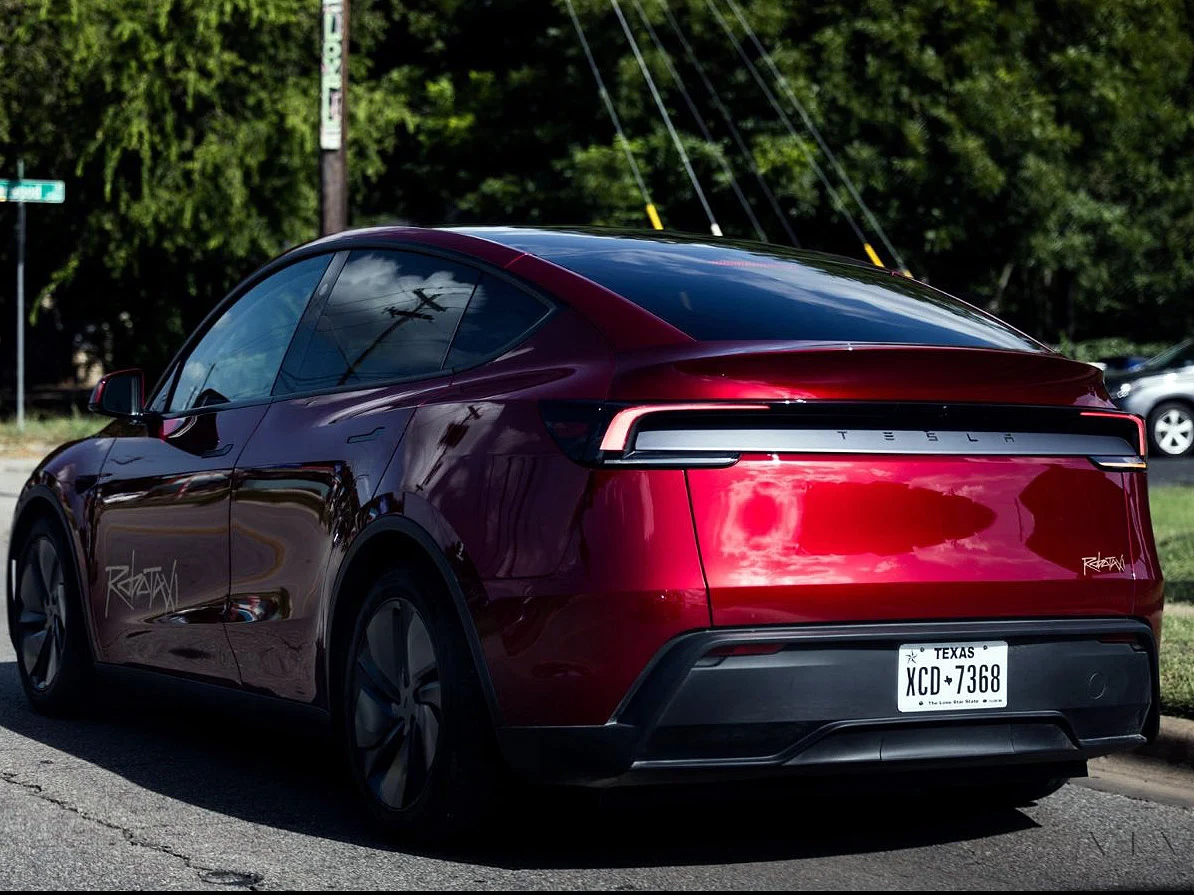
    This might suggest that Tesla is covering a newly designed C-pillar, which could elevate the SUV to provide more headroom for the rumored third row of seats. The back of the vehicle appears somewhat bulkier than the current sleek design of the five-seat Model Y, showing less slope on the trunk door, suggesting a more spacious interior.

    The Model Y L logo implies that there will indeed be three rows of seats, and more information is expected to emerge before its release this fall.

    Leaked Specifications

    Tesla likely didn’t need to hide so much, as the design of the Model Y L has already been revealed through the local vehicle certification database. This has confirmed that the six-seat Model Y will have larger measurements, including a body that is seven inches longer, a six-inch longer wheelbase, and an increase in height of nearly two inches.

    This indicates that the first three-row Model Y will offer a more comfortable experience for passengers in the back compared to the seven-seater, which merely adds two child seats to the trunk of the five-seater and calls it done.

    Design Uncertainties

    However, the way the vehicle is camouflaged makes it hard to determine whether there is indeed a third row of seats or how spacious they might be. A good comparison is the six-seat Model X, which features four captain chairs in the first two rows and two standard seats in the back. Accessing that third row is much simpler in the Model X due to its falcon wing doors, but it remains uncertain how Tesla will manage this in the Model Y L.

    Future Possibilities

    There are some rumors suggesting that the Model Y L could be released outside of China, and Tesla’s Lars Moravy hinted that a version with additional seats might be making its way to the US later this year, though he probably referred to a seven-seater model, ideally with a longer wheelbase as well.

    Source:
    Link

  • Xiaomi YU7 Tests Reveal China’s EV Range Claims Are Overstated

    Xiaomi YU7 Tests Reveal China’s EV Range Claims Are Overstated

    Key Takeaways

    1. The Xiaomi YU7 Max SUV claims a range of 466 miles, but independent testing shows it only achieves 306 miles, over a third less than advertised.

    2. Chinese CLTC testing standards often inflate electric vehicle range estimates compared to the stricter EPA standards used in the US, which are more reliable.

    3. Official range claims for electric vehicles from Chinese manufacturers should be viewed skeptically, as testing conditions and methods can distort actual performance.

    4. Huawei’s claim of a solid-state battery achieving 1,864 miles on a five-minute charge is likely exaggerated; realistic estimates suggest around 800 miles after accounting for testing methods and material inefficiencies.

    5. The EPA testing routine, despite its flaws, remains the most accurate measure of electric vehicle range compared to other standards, indicating a need to reduce Chinese EV claims by roughly one-third for fair comparisons.


    A test of the Xiaomi YU7 Max SUV, a key rival to the Tesla Model Y in China, has revealed that the bold range claims made by Chinese car makers should be viewed skeptically.

    At first glance, the YU7 boasts an impressive range of 466 miles, which greatly surpasses the Tesla Model Y’s longest range variant in the US, with a maximum of 344 miles on a full charge.

    Testing Standards Comparison

    However, anecdotal observations indicate that the Chinese CLTC testing standard often inflates range estimates compared to the stricter EPA standards used in the US. The new EPA testing process, which includes a balanced mix of city and highway driving, has also been shown to be more reliable than the European WLTP standard by about 10-15%.

    To further back up these claims, independent testing of the Xiaomi YU7 Max has revealed that it falls significantly short of its claimed CLTC range. Instead of reaching 466 miles, the YU7 Max only achieved 306 miles in testing, which is over a third less than its advertised range. This test took place in warm weather, with the correct tire pressure, and at an average speed of 62 mph, simulating typical highway conditions around Beijing.

    Implications for Range Claims

    Even though the CLTC tests lean more towards city driving, which can distort the figures, this assessment highlights that the official range claims for electric vehicles in China should not be taken at face value, as the driving conditions differ.

    A recent example includes Huawei’s patent for a solid-state battery that made waves with its astonishing claim of 3,000 km (1,864 miles) on a five-minute charge. While fast charging from 10% to 80% is common with solid-state batteries, achieving such an energy density to support that range is not. Although prototypes could theoretically double current battery energy densities, Huawei also cites the same 500 Wh/kg limit as other developers in this field.

    Realistic Expectations for Future Batteries

    If the CLTC testing method is employed, the stunning 1,864-mile range begins to make more sense. This figure would need to be reduced by at least a third to align it with EPA estimates, and then another third for weight material and thermal inefficiencies from prototype to finished battery, according to researchers in Korea.

    This suggests that a realistic range for Huawei’s eventual solid-state battery would be around 800 miles, which aligns better with what other companies like Toyota and Samsung are predicting for mass production.

    In conclusion, while the EPA testing routine used in the US to assess electric vehicle ranges is not without its flaws, it remains the most accurate reflection of actual EV range compared to other official standards. When it comes to Chinese EV claims, it’s advisable to reduce their figures by roughly one-third for a fair comparison with the EPA estimates.

    Ultimately, the Xiaomi YU7 Max SUV has shown a power consumption rate of just over 20 kWh/100 km, which is typical for a high-performance AWD electric SUV during highway travel. This indicates that Xiaomi and other Chinese EV manufacturers are not providing anything particularly exceptional in terms of efficiency, despite their lofty range claims.

    Source:
    Link

  • World’s Fastest E-Scooter: Bo’s Turbo Hits 100 MPH, 150-Mile Range

    World’s Fastest E-Scooter: Bo’s Turbo Hits 100 MPH, 150-Mile Range

    Key Takeaways

    1. Bo has developed “The Turbo,” a high-performance electric scooter aiming for speeds over 100 mph, leveraging experience from Formula One.
    2. The Turbo features a powerful 24,000 W dual motor system, advanced traction control, and a high power-to-weight ratio, marketed as the fastest electric scooter in the world.
    3. The scooter incorporates engineering techniques like ram-air intakes for cooling, and is powered by a 1,800 Wh battery, offering a range of 150 miles on a full charge.
    4. A limited edition of The Turbo will be available at an introductory price of $29,500.
    5. Bo is also preparing to launch the Model-M e-scooter in the US market by August 2025, featuring a 400 W motor and a top speed of 21 mph.


    UK-based electric scooter maker Bo has announced the development of a super high-performance electric scooter known as “The Turbo.” Drawing from the team’s experience with Williams Formula One, this e-scooter aims to achieve speeds of over 100 mph under the watchful eyes of Guinness World Records.

    Performance Features

    The Turbo e-scooter is built on an aluminum monocurve frame, similar to the chassis of Bo’s Model-M e-scooter. Marketed as the fastest electric scooter in the world, The Turbo is equipped with a powerful 24,000 W dual motor system, which includes sophisticated traction control and an impressive power-to-weight ratio. Bo claims that this motor can reach a top speed of 100 mph (160 kph), asserting that the Turbo is designed to exceed this speed, outperforming even a Tesla.

    Engineering Excellence

    To ensure the rider maintains control at such high speeds, the Turbo incorporates advanced engineering techniques from the Bo M model. It features ram-air intakes inspired by the brake duct designs used in Formula One, which help meet the cooling demands of the powerful drivetrain. Powered by a substantial 1,800 Wh battery, the scooter is said to offer an extensive range of 150 miles (241.1 km) on a full charge.

    A limited edition of the Turbo is currently in the works, with an introductory price set at $29,500, as stated by Bo in their press release. For more information about Bo The Turbo, you can visit its official product page.

    Upcoming Model

    In addition to The Turbo, Bo is preparing to launch its road-ready Bo Model-M in the US market, with availability expected from August 2025. However, the price for the Model-M e-scooter in the US has not yet been disclosed.

    Notable features of the Bo Model-M include a 400 W motor with a peak power of 1200 W, a 672 Wh battery, a top speed of 21 mph (35 kph), a maximum assistance range of 37.2 miles (60 km), an aluminum monocurve design, app-based controls, and a regenerative e-braking system equipped with e-ABS.

    Source:
    Link


  • Tesla Pushes Owners to Upgrade for Robotaxi as Uber Launches SUV

    Tesla Pushes Owners to Upgrade for Robotaxi as Uber Launches SUV

    Key Takeaways

    1. Tesla is encouraging individuals interested in its Robotaxi platform to upgrade to newer vehicles to access the service.
    2. The current pilot robotaxi service in Austin uses Tesla’s Model Y SUVs, but plans to allow vehicle owners to participate starting next year.
    3. Only vehicles with Full Self-Driving (FSD) feature and hardware version 4 or newer will be eligible for the Robotaxi platform.
    4. Uber is enhancing its robotaxi offerings by partnering with Lucid to acquire 20,000 Gravity SUVs equipped with Nuro’s autonomous driving technology.
    5. Tesla faces increasing competition in the robotaxi sector, with differing strategies on autonomous vehicle technology between Tesla and its rivals like Uber and Waymo.


    Tesla has begun sending out notifications to individuals who expressed interest in its Robotaxi ride-sharing platform, encouraging them to consider upgrading to a newer vehicle to benefit from the service.

    Current Operations

    At present, Tesla runs a pilot robotaxi service in Austin, Texas, using Model Y SUVs that are owned and operated by the company itself for this trial.

    Future Plans

    However, starting next year, Tesla plans to allow vehicle owners to use the Robotaxi platform. Based on the Austin pilot, it appears that only those with the Full Self-Driving (FSD) feature using hardware version 4 or newer will be eligible, which is the reason for the upgrade notifications.

    After Tesla’s announcement to broaden the robotaxi service area in Austin, Waymo responded similarly. Now, Uber, which operates a robotaxi service utilizing Waymo’s vehicles, has partnered with premium electric vehicle manufacturer Lucid to enhance its offerings.

    Major Developments

    Uber plans to acquire at least 20,000 Gravity SUVs from Lucid, which will come equipped with Nuro’s autonomous driving technology right from the factory. This represents a significant intensification in the competition for robotaxi services, and Tesla’s upgrade notifications could be a strategy to quickly expand its driverless vehicle fleet in response to rivals like Uber.

    One of Tesla’s advantages is its ability to utilize the standard HW4 computer and cameras that are included with its newer models, potentially allowing for a swift transition of many vehicles into the robotaxi fleet all at once. Conversely, Uber’s Lucid Gravity SUVs will feature Nuro’s autonomous driving tech, which is more streamlined than Waymo’s but still necessitates retrofitting.

    Industry Perspectives

    While competing autonomy companies acknowledge that Elon Musk’s camera-only approach may facilitate faster learning and scaling, they tend to favor a more cautious method that includes additional sensors and safety redundancies. The outcome of these differing strategies is yet to be determined, but Tesla is facing increasing competition in the robotaxi sector just as it plans to expand into more cities in the U.S. and incorporate owners’ cars into its fleet.

    Uber’s collaboration with Lucid and Nuro is set to launch on public roads by 2026, coinciding with Tesla’s anticipated introduction of the Cybercab two-seater into its robotaxi fleet. However, Tesla currently lacks a true three-row SUV in its lineup, meaning it won’t be fully equipped to compete with Uber’s driverless Lucid Gravity vehicles when they are deployed.

    Source:
    Link


  • 2025 Volkswagen ID.4: 0% APR for 72 Months or $5,000 Bonus

    2025 Volkswagen ID.4: 0% APR for 72 Months or $5,000 Bonus

    Key Takeaways

    1. Volkswagen offers 0% APR financing or a $5,000 Customer Bonus for the 2025 ID.4, available until July 31.
    2. The 0% APR financing option requires no down payment, with monthly payments starting at $13.89 per $1,000 financed.
    3. The $5,000 Customer Bonus can be used for purchases or leases but cannot be combined with certain promotions or used for used vehicles.
    4. Additional incentives include a federal $7,500 EV lease bonus, and $500 bonuses for college graduates, military, veterans, and first responders.
    5. The 2025 Volkswagen ID.4 starts at $45,095, offers up to 291 miles of range, and features a 12.9-inch touch screen and 19.2 cubic feet of cargo space.


    Hunting for a compact electric SUV that suits the family? The current financing or cash offer for the 2025 Volkswagen ID.4 is definitely worth looking into before it wraps up on July 31.

    Great Financing Options

    Volkswagen is presenting an attractive deal with either 0% APR financing or a $5,000 Customer Bonus, which can help families save on a practical vehicle in the U.S. This offer is available at participating Volkswagen dealerships, but it doesn’t include Puerto Rico.

    The 0% APR option doesn’t need a down payment, allowing for monthly payments as low as $13.89 for each $1,000 financed. Still, customers need to be well-qualified and get credit approval from Wells Fargo.

    Customer Bonus Details

    Volkswagen mentions that the $5,000 Customer Bonus can be used for outright purchases and leasing options. However, it cannot be exchanged for cash or used alongside any special lease, APR deals, fleet sales, or dealership sale vehicles.

    It’s important to note that these offers do not apply to used versions of the 2025 Volkswagen ID.4.

    Additional Incentives

    On another note, the federal $7,500 EV lease bonus is still valid until the end of September. Customers can also benefit from the $500 College Graduate Bonus or the $500 Military, Veterans & First Responders Bonus, which do not have any time limits.

    The price for the 2025 Volkswagen ID.4 starts at $45,095 and comes in five different trims: Pro, AWD Pro, Pro S, AWD Pro S, and AWD Pro S Plus. It provides a driving range of up to 291 miles (according to EPA standards) and delivers 335 horsepower in the AWD configuration. The interior boasts a 12.9-inch touch screen center display and offers 19.2 cubic feet of rear cargo space.

    Source:
    Link

  • Tesla Launches New Model 3 Plus with Longest Range in China

    Tesla Launches New Model 3 Plus with Longest Range in China

    Key Takeaways

    1. Tesla is launching a new Model 3 variant called the Model 3+ in China, offering improved specifications.
    2. The Model 3+ is expected to have a range exceeding 800 km (498 miles) on a single charge, surpassing the current Long Range AWD model.
    3. It will feature a single rear motor with 225 kW (301 hp) and use the same LG ternary battery pack as the Long Range AWD version.
    4. The Model 3+ is set to be released in September and will be the longest-range vehicle Tesla offers in China.
    5. The range figures are based on the CLTC cycle, which may inflate numbers compared to EPA estimates used in the US.


    Tesla is set to launch a new variant of the Model 3 in China, called the Tesla Model 3+. This new model will offer improved specifications compared to the current Highland refresh lineup available in the region.

    Current Offerings

    At present, Tesla provides a single-motor AWD variant that boasts a tested range of 634 kilometers (393 miles) on the local CLTC cycle. Additionally, there is a dual-motor AWD Model 3 that enhances the range to 753 km, alongside the Performance model, which is more sport-oriented.

    Expectations for the Model 3+

    The upcoming Model 3+ is anticipated to surpass the Long Range AWD model in terms of how far it can travel on just one charge. A recent certification filing from the Ministry of Industry and Information Technology (MIIT) suggests that the Model 3+ will utilize the same LG ternary battery pack as the LR AWD version. However, it will feature a single rear motor that produces 225 kW (301 hp).

    The new Model 3+ will essentially mirror the existing Long Range AWD trim, but without the front motor. This design choice is expected to reduce the vehicle’s weight and enable a range exceeding 800 km or 498 miles on a single charge.

    Release Timeline and Market Impact

    Insiders suggest that the Model 3+ will hit the market in September, making it the vehicle with the longest range that Tesla offers in China. The only other option available for import is the Model S Plaid, which has a range of 672 km on a single charge.

    It’s important to note that all these range figures are based on the local CLTC cycle, which tends to include more urban driving scenarios than the stricter EPA estimates used in the US. In reality, EPA range tests have shown to be much closer to actual driving conditions, whereas CLTC often inflates the numbers by about a third. Therefore, it’s possible that the Model 3+ will be similar in range to the current base RWD version sold in the US.

    Tesla previously offered a Long Range RWD version in China a few years ago, but that had a smaller battery pack and a shorter range. The rollout of this longest-range vehicle, along with the six-seat Model Y L, seems strategically planned to enhance sales in China during the crucial last quarter of the year.

    Source:
    Link