Category: EV vehicles

  • 0% APR for 72 Months on 2025 Kia Niro EV – Limited Time Offer

    0% APR for 72 Months on 2025 Kia Niro EV – Limited Time Offer

    Key Takeaways

    1. Kia is offering 0% APR financing for up to 72 months on the 2025 Kia Niro EV.
    2. The special financing offer is only for brand new 2025 Kia Niro EVs and must be completed by August 4.
    3. The starting price for the 2025 Kia Niro EV is $39,600, with an estimated driving range of 253 miles.
    4. The Kia Niro EV features 201 hp, 188 lb-ft of torque, and includes advanced tech like a 20-inch Dual Panoramic Display and support for Apple CarPlay and Android Auto.
    5. The Kia Niro EV does not qualify for the $7,500 federal EV tax credit, which is set to expire in September.


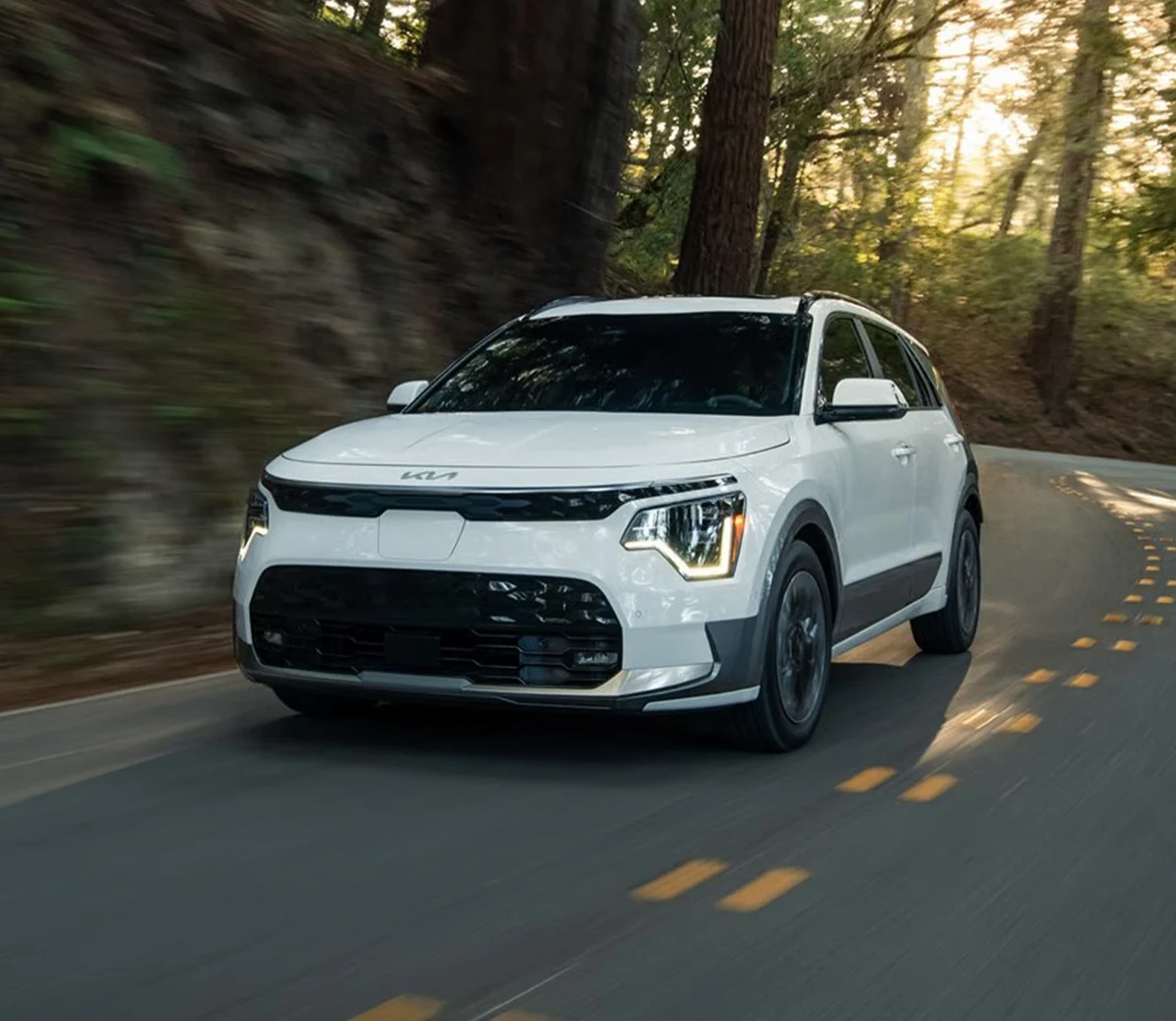
    Kia is having awesome summer deals that let people get behind the wheel of an electric vehicle for a really low price. The automaker is providing no-interest financing for the 2025 Kia Niro EV.

    Great Financing Offers

    This electric compact crossover SUV comes with a 0% APR for up to 72 months. This means that buyers could end up paying just $13.89 for every $1,000 they finance on this chic and efficient electric vehicle.

    This special offer is only available through Kia Finance America for buyers who qualify. Approval will depend on a credit check and availability at participating dealers, so it’s important to hurry if you want to take advantage of this deal.

    Important Deal Details

    The 0% APR offer is only for brand new 2025 Kia Niro EVs. The vehicle must be taken from retail stock, and all paperwork has to be completed by August 4.

    Potential buyers should be aware that the Kia Niro EV does not meet the requirements for the $7,500 federal EV tax credit, which is about to expire in September.

    Specifications and Features

    The starting price for the 2025 Kia Niro EV is $39,600. It comes in two trim options: Wind and Wave. This 5-passenger compact SUV offers an estimated driving range of 253 miles using a 64.8 kWh battery. You can also charge it using Tesla’s Superchargers with a NACS adapter. Additionally, the V2L capability allows the vehicle to power laptops, electric bikes, or camping gear.

    In terms of performance, the Kia Niro EV generates 201 hp and 188 lb-ft of torque. Other notable features include 22.8 cu-ft of cargo space, a 20-inch Dual Panoramic Display for settings and navigation, a 10-inch Head-Up Display (HUD), and support for Apple CarPlay and Android Auto, among other things.

    Final Note

    Disclaimer: Notebookcheck cannot be held accountable for any price changes made by sellers. The discounted price or offer mentioned in this article was valid at the time of writing and may be limited by time or availability of units.

    Source:
    Link

  • Affordable New Tesla Model in Production Before Tax Credits End

    Affordable New Tesla Model in Production Before Tax Credits End

    Key Takeaways

    1. Tesla’s less expensive cars are entering pilot production and quality testing, with a planned release between October and December.
    2. The upcoming budget-friendly model, possibly named Model Z, is expected to be a smaller version of the Model Y.
    3. Tesla may introduce multiple affordable models, including a compact Model Y and a budget version of the Model 3.
    4. The company aims for the lowest monthly lease options, with current leases for Model 3 starting at $299 per month.
    5. The release of the new models is focused on creating a desirable car at a lower price, potentially after the federal tax credits expire.


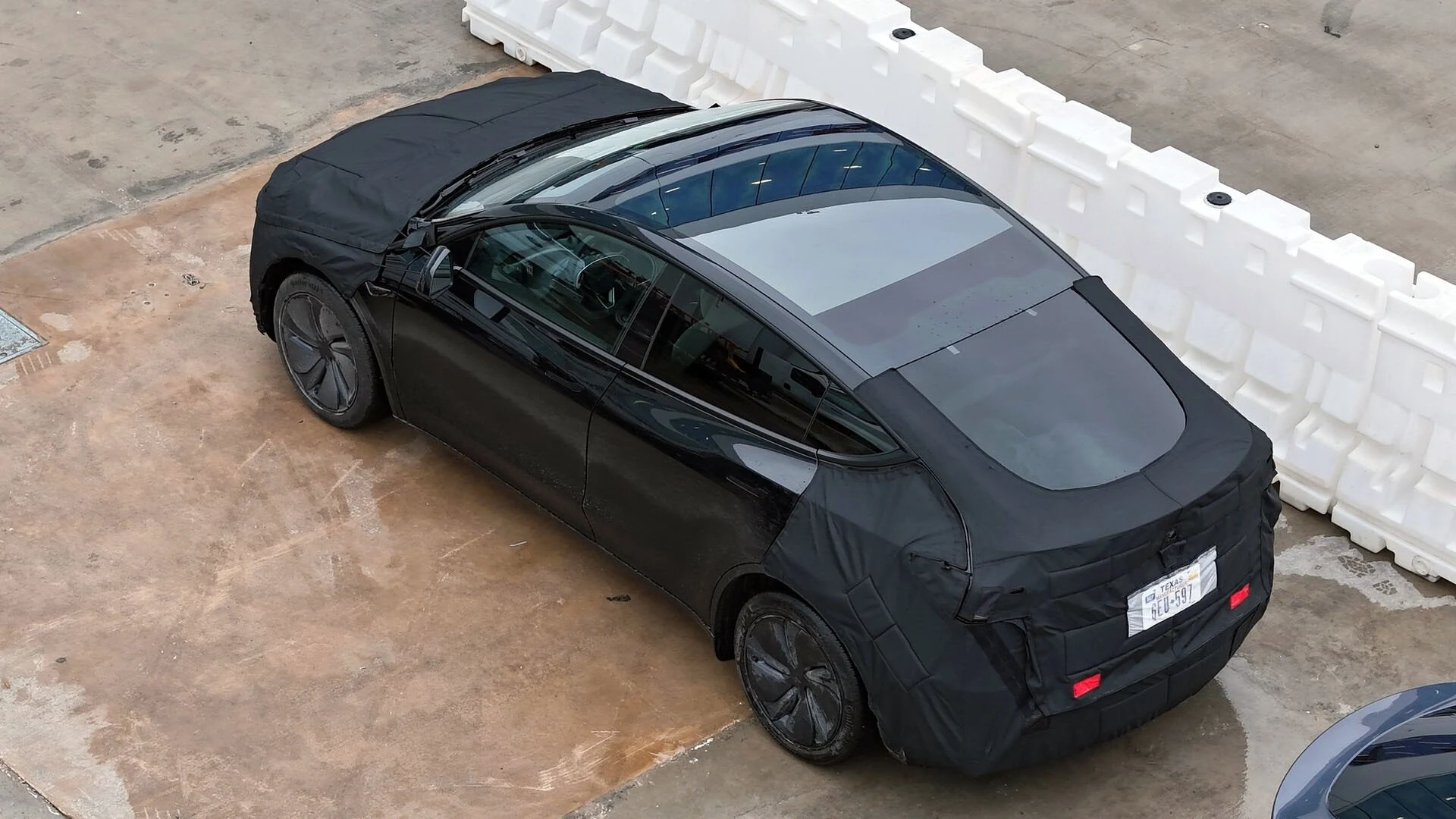
    The less expensive cars that Tesla has been hinting at for some time are now entering the pilot production and quality testing phase, with a planned release between October and December.

    In a call about the company’s quarterly results, the CFO stated, “we began producing the lower-cost model as we scheduled in the first half,” indicating that Tesla is actively working on and testing its most affordable vehicle yet.

    Naming the New Model

    Originally known as the Model 2 or Model Q, Tesla’s upcoming budget-friendly car might actually be named Model Z. This new model is expected to be a smaller, less expensive version of the well-liked Model Y crossover SUV.

    Lars Moravy, the chief engineer, confirmed that these more affordable Tesla models have been in production aimed at quality validation since June, and will be announced in the fourth quarter. This is also when production will increase, as Tesla is currently prioritizing the output of Model Y and Model 3 units that meet the federal tax credit criteria before it ends on September 30, 2025.

    More Than One Model?

    Interestingly, Lars mentioned “new, more affordable models” as a plural term. The speculation is that Tesla might introduce a compact version of the Model Y with simpler features and a smaller battery, along with a budget option of the Model 3 based on the cloth-seated version they have been selling intermittently, hence the use of plural.

    Regarding pricing, Moravy noted in the Q1 earnings call that they aim for the lowest monthly lease option available, as most customers in the U.S. are looking to lease cars. Presently, leases for the Model 3 begin at $299 per month, but this includes the tax credit.

    Commitment to Affordability

    Tesla’s engineering head expressed that they are postponing the release of the more affordable Tesla models “just to create a car that everyone loves and wants at a lower price.” However, the timing of the release of the Model 2/Q/Z, or whatever it may be called, after the tax credits run out, may not solely be about enhancing the customer experience.

    Source:
    Link

  • UK EV Charging Network Grows 27% to Over 82,000 Chargepoints

    UK EV Charging Network Grows 27% to Over 82,000 Chargepoints

    Key Takeaways

    1. The UK’s charging network for electric vehicles has increased by 27% in the past year, adding over 17,370 public charging stations.
    2. Significant growth in charging points has been noted in the north-east, East of England, and West Midlands regions.
    3. New government incentives allow drivers to save up to £3,750 on new electric vehicle purchases, with support for home charger setups.
    4. A total of £4.5 billion has been allocated by the government to encourage the transition to electric vehicles and support job creation in the EV sector.
    5. The government aims to reduce EV operating costs, with a suggestion that driving an EV can cost as little as 2p per mile.


    In a thrilling development for electric vehicle (EV) users in the UK, the charging network has seen a 27% increase over the past year, boosting confidence in electric mobility as the government rolls out new discounts for EVs.

    Growth in Charging Points

    Recent statistics from the UK government reveal that over 17,370 public charging stations have been introduced since July 2024. The most significant growth has occurred in the north-east, East of England, and West Midlands regions.

    New Incentives for Electric Vehicle Purchases

    The UK government has unveiled fresh incentives that could allow drivers to save as much as £3,750 when buying a new electric vehicle. Additionally, they are supporting a program designed to assist with the setup of home chargers. These discounts will come into effect as soon as manufacturers enroll their EVs in the initiative and will continue until the financial year of 2028/2029.

    Investment in EV Transition

    Furthermore, the government has allocated £4.5 billion to motivate UK drivers to transition to electric vehicles and to aid automakers in creating jobs and drawing in investments.

    In response to the surge in available charging points, Future of Roads Minister Lilian Greenwood expressed, “Just last week, we revealed record discounts to make EV ownership possible for many more individuals, while also simplifying home charging, enabling more drivers to operate their EV for merely 2p per mile, which means a trip from London to Birmingham costs only £2.50.”

    “Today’s statistics regarding charging points highlight that in addition to reducing initial costs, we’re achieving remarkable strides in expanding our charging network throughout the UK. With a new chargepoint being added to the network every thirty minutes, we are effectively eliminating range anxiety.”

    Source:
    Link

  • Tesla Q2 2025 Earnings: $22.5B Revenue, $1.17B Net Income

    Tesla Q2 2025 Earnings: $22.5B Revenue, $1.17B Net Income

    Key Takeaways

    1. Tesla’s revenue for Q2 2025 was $22.5 billion, a 12% drop from last year but an increase from Q1 2025’s $19 billion.
    2. The company’s net income was $1.17 billion, down 16% from Q2 2024, but significantly up from Q1 2025’s $409 million.
    3. Regulatory credits revenue fell by 50% year-over-year, bringing in only $439 million, as a new bill ended this revenue source.
    4. Tesla’s operating income decreased by 42% year-over-year to $923 million.
    5. The company plans to expand its focus beyond electric vehicles and renewable energy to include AI and robotics in response to an uncertain macroeconomic environment.


    Tesla has recently wrapped up its quarterly earnings call, revealing that its financial performance faced challenges in the second quarter of 2025. Despite a decrease in sales and regulatory credits, the company managed to stay in the black.

    Revenue Insights

    Tesla’s overall revenue reached $22.5 billion, marking a 12 percent drop compared to last year’s figures for the same period. Yet, it’s worth noting that this is an increase from Q1 2025, when revenue was reported at $19 billion.

    Profit and Loss

    The electric vehicle manufacturer recorded a net income of $1.17 billion. This figure shows a decline of 16 percent from Q2 2024. Still, it was a notable rise from Q1 2025, where the net income was just $409 million. On the other hand, operating income fell significantly, down 42 percent year-over-year to $923 million.

    Regulatory Credits Impact

    A notable point from the report was the decline in regulatory credits, which Tesla often counts on for maintaining profitability. This revenue stream decreased by 50 percent year-over-year, bringing in $439 million in Q1. In contrast, the previous quarter saw earnings of $595 million from the sale of zero-emission tax credits.

    Recently, Tesla will not be able to earn revenue from regulatory credits anymore, as a new bill has removed the penalties for breaching Corporate Average Fuel Economy (CAFE) standards, effectively ending this revenue source.

    Future Outlook

    Tesla pointed out that its Q2 results were influenced by an “uncertain macroeconomic environment” due to changing tariffs and “ambiguous impacts from fiscal policy and political climate.” The company also mentioned its shift from being solely an EV and renewable energy leader to expanding its focus into AI and robotics.

    Source:
    Link

  • Tesla Robotaxi Service Expanding to California and Florida Soon

    Tesla Robotaxi Service Expanding to California and Florida Soon

    Key Takeaways

    1. Tesla plans to launch robotaxis in California by September, with potential expansion to states like Florida, Arizona, and Nevada.
    2. The goal is to reach 50% of the US population with the ride-sharing service by the end of 2025, aiming for significant financial impact by the end of 2026.
    3. Insights from the current robotaxi pilot in Austin will help rapidly scale the network once regulatory approvals are obtained.
    4. Tesla’s robotaxi service is expected to have a competitive cost per mile, starting at around $0.50 for existing models and potentially dropping to $0.30 with the introduction of the Cybercab in 2026.
    5. The Nevada DMV has confirmed discussions with Tesla regarding the robotaxi launch, indicating no major obstacles to expansion once documentation is submitted.


    Tesla is set to launch its robotaxis in California after the summer and is also discussing opportunities with other states that have more lenient laws on self-driving vehicles, like Florida, Arizona, and Nevada.

    Expansion Plans

    Elon Musk has indicated that the rapid rollout of the ride-share platform is expected to begin in just a few weeks, with robotaxis anticipated to be operational in the Bay Area by September. The target for Tesla’s ride-sharing service is to reach 50% of the US population by the end of 2025, with hopes that robotaxi rides will significantly affect its financial performance by the end of 2026. Musk mentioned, “I think the actual cost per mile of Cybercab will be very low. The cost per mile of our existing fleet will be higher, but still competetive. So maybe something over $0.50… This suggests that robotaxi operations will grow from small to massive in a relatively short timeframe. I believe it will have a significant impact on our finances around the end of next year.”

    Learning from Experience

    During the recent quarterly earnings call, Tesla representatives noted that insights gained from the current robotaxi pilot in Austin, which is not limited by a specific service area, can be utilized anywhere. This flexibility will enable rapid scaling of the Robotaxi network from a technical perspective, once state authorities provide the necessary approvals. The service area in Austin is set to expand tenfold this summer, surpassing the efforts of competitors like Waymo. Tesla’s vision-only approach facilitates quicker validation and scaling.

    Future Revenue Streams

    The Nevada DMV has confirmed that discussions with Tesla regarding the robotaxi launch have taken place and that there are no obstacles once required documentation is submitted. Regarding when the swift expansion of robotaxis will start generating revenue for Tesla, Musk stated that the current service using factory Model Y units incurs costs of about fifty cents per mile, which remains very competitive.

    When the Cybercab, a two-seater designed specifically as a robotaxi, joins the fleet in 2026, its estimated cost per mile of around thirty cents will lower overall service costs. This reduction will help Tesla finance quicker expansion through loans rather than relying solely on its own funds.

    Source:
    Link

  • Kia Launches PV5 Modular Electric Van with 16 Fleet Configurations

    Kia Launches PV5 Modular Electric Van with 16 Fleet Configurations

    Key Takeaways

    1. The PV5 is designed for business clients, focusing on industries like logistics, delivery, and utilities.
    2. It uses the enhanced E-GMP.S platform, allowing for standardized parts and a shorter development timeline.
    3. Key benefits of modular design include lower maintenance costs, improved durability, and reduced noise and vibration.
    4. The PV5 can offer up to 16 different variants due to its modularity, with customizable body components and features.
    5. Initial launch will include seven configurations, with production expected to start before the end of July.


    Kia has revealed more information regarding its modular electric van program during the PV5 Tech Day event held in South Korea. The PV5 is designed specifically for business clients and has been developed with feedback from industries such as logistics, delivery, and utilities.

    Platform and Design

    The PV5 is constructed on Hyundai’s E-GMP.S (Electric-Global Modular Platform for Service), an enhanced version of the original E-GMP. This improved platform uses standardized parts like batteries, motors, and suspension systems, which not only provide greater flexibility but also help to shorten the development timeline.

    Benefits of Modularity

    One of the key benefits of this modular design includes lower maintenance expenses, better durability, and diminished noise and vibration levels. Nonetheless, the outer panels remain consistent to ensure a uniform look across different variants.

    The E-GMP.S supports three different battery options: 43.3 kWh (LFP), 51.5 kWh (NCM), and 71.2 kWh (NMC). These batteries will fuel a front-mounted electric motor producing 161 hp and 184 lb-ft of torque.

    Customization Options

    Thanks to its modularity, Kia claims that it can create up to 16 different variants using only a few assembly lines. The design allows for swapping body components like doors, tailgates, and panels. Customers will also have the ability to select from a range of rear modules, quarter glasses, and additional customization choices.

    The PV5 features a wheelbase of 9.83 feet and can provide up to 180 cubic feet of cargo space. Additional elements include removable seating, walk-through cabins, USB ports, and an option for wheelchair access with a side-entry ramp.

    Kia has announced that it will launch seven configurations initially, which include passenger long, cargo standard, cargo long, and cargo high roof. Production is anticipated to start before the end of July.

    — Motor Illustrated, The EV Report

    Source:
    Link


  • Affordable $15,000 EV with Semi Solid-State Battery Launches

    Affordable $15,000 EV with Semi Solid-State Battery Launches

    Key Takeaways

    1. Major companies are committing to solid-state batteries in electric vehicles by 2027, with some using semi solid-state batteries now.
    2. Semi solid-state batteries, initially for high-end models, are becoming more affordable and accessible to mainstream vehicles.
    3. The MG4 hatch will be the first affordable car featuring a semi solid-state battery, priced at $15,000 in China.
    4. Leading automakers like BMW and Mercedes are planning mass production of solid-state batteries, enhancing vehicle range and safety.
    5. CATL predicts that true solid-state batteries will not be widespread in mass-market vehicles until after 2030, with 95% solid electrolyte batteries serving as a transitional solution.


    Solid-state batteries, including their commercial version that features 95% solid electrolyte, are gradually transitioning from research and development into actual production lines and usable vehicles. This shift is happening ahead of the 2027 target set by the industry.

    Electric Vehicle Commitments

    Major companies like Toyota, Samsung, CATL, and BYD have committed to introducing electric vehicles equipped with solid-state batteries by 2027. However, a transitional technology known as the semi solid-state battery, which consists of 95% solid and just 5% liquid electrolyte, is already being used in electric cars today.

    Premium to Mass Market

    Initially, semi solid-state batteries were exclusive to high-end electric vehicles, such as the NIO ET9 sedan, which can travel 650 miles on a single charge thanks to its 150 kWh semi solid-state battery. This battery was developed by NIO in collaboration with a startup called WeLion, after CATL expressed concerns about costs. NIO’s chief revealed that the nearly solid electrolyte battery pack is as expensive as some of their less costly cars. To manage this, NIO opted for a battery rental system for extended summer trips, utilizing its battery swap technology, which now sees around 100,000 swaps daily in just a few minutes.

    Cost Reductions and New Models

    Over time, increased production has led to significant price reductions for these batteries, making them viable for mainstream electric vehicles. The MG4 hatch, set to be revealed on August 5, will be the first affordable electric car featuring a semi solid-state battery, priced at $15,000 for the top version in China.

    The QingTao Energy battery utilizes a nearly solid electrolyte that contains only 5% of a flammable liquid, enhancing safety compared to conventional lithium batteries that use all-liquid electrolytes. The 70 kWh battery pack of the MG4 has successfully passed necessary shock, puncture, and thermal runaway tests. According to MG, its battery chemistry offers 14% improved capacity retention in cold conditions, which extends the vehicle’s range in freezing temperatures.

    Industry Developments

    Both BMW and a subsidiary of Mercedes have unveiled plans for mass production of solid-state batteries that contain 95% solid electrolyte. Svolt will begin trial production of an affordable semi solid-state battery for the next-gen BMW Mini in the next quarter. Meanwhile, Farasis Energy, supported by Mercedes, is setting up a pilot production line for sulfide solid-state batteries.

    Mercedes was the pioneer in incorporating a solid-state battery into a production electric vehicle platform, retrofitting the EQS sports sedan with a battery pack that allows for a range of 620 miles on a single charge. This solid-state battery in the EQS boasts 25% higher energy density compared to the older battery pack, yet Mercedes has not disclosed the cost of this development.

    Future Perspectives

    CATL, the leading battery manufacturer, believes that true solid-state batteries will not become widespread in mass-market vehicles until after 2030. However, they assert that batteries with 95% solid electrolyte can act as a transitional solution until then. Historically, CATL’s forecasts have been accurate, as evidenced by the upcoming launch of the first affordable electric vehicle featuring a semi solid-state battery.

    Source:
    Link


  • Tesla Diner Supercharger Station in China Opening This Spring

    Tesla Diner Supercharger Station in China Opening This Spring

    Key Takeaways

    1. Elon Musk plans to expand the Tesla Diner Supercharger concept globally if the Hollywood site is successful.
    2. The Tesla Diner features a fast-food menu with local organic ingredients and unique merchandise.
    3. Tesla is set to open its first international diner in Shanghai, adapting prices to local markets.
    4. The concept includes a potential fast-food chain with Supercharger stations and a movie theater for EV owners.
    5. More details on expansion plans may be revealed during Tesla’s earnings announcement on July 23.


    Elon Musk has made a bold statement that if the new Tesla Diner Supercharger station proves successful at its Hollywood site on Santa Monica Boulevard, the idea will spread worldwide.

    Buzz Around the Tesla Diner

    Since the Tesla Diner opened on Monday, it has generated a ton of excitement and attention. Visitors have been sharing their experiences about the fast-food menu that features local organic ingredients, exclusive merchandise like Supercharged Gummies candy, and the new Optimus action figure, as well as the unique spaceship-style restrooms.

    With all this excitement, it seems nearly certain that the retro-futuristic Supercharger station concept will expand. Reports indicate that the first Tesla Diner could launch in Shanghai right after the Chinese New Year.

    Plans for Global Expansion

    Tesla has reportedly obtained the necessary permits for a 3,000 m2 area close to its Gigafactory in Shanghai. Construction is set to begin on a series of Supercharger stalls, diner facilities, and large 66-foot LED screens similar to those found at the Tesla Diner in Hollywood.

    However, the prices on the Tesla Diner menu in China will not be the same. The Tesla Burger, priced at $13.5 in Hollywood, is expected to be under ten bucks in China. This shows that Tesla’s drive-in Supercharger concept will adjust to local tastes and financial situations as it expands.

    A Unique Fast-Food Experience

    Tesla could potentially build a real fast-food chain of diners paired with Supercharger stations and a movie theater. This would target the EV community with distinct experiences, such as ordering through a vehicle app that is exclusive to Tesla owners.

    Tesla is set to announce important earnings on July 23, and Elon Musk might reveal more about the expansion plans for the Tesla Diner. This comes on the heels of his recent posts about organic ingredients and sourcing from local farms.

    Source:
    Link

  • Tesla Model Y Frunk LED Light Strip and Pricey Supercharged Gummies

    Tesla Model Y Frunk LED Light Strip and Pricey Supercharged Gummies

    Key Takeaways

    1. Tesla has launched its long-awaited Supercharged Gummies, featuring flavors like Cyberberry, Mango Bolt, and Dog Mode Chill.
    2. The gummies are packaged in a box shaped like a lightning bolt and are priced at $35, also included in goodie bags at the grand opening of a new Tesla diner.
    3. The new Supercharger station on Santa Monica Boulevard is inspired by 1950s drive-in theaters and offers organic food items along with the gummies.
    4. Tesla is also introducing an LED lighting strip for the frunk of Model Y and Model 3, with easy installation and a $100 price tag.
    5. There are concerns about the pricing of the frunk LED strip, as it is considered high for a feature that many believe should come standard.


    After the release of Tesla’s tequila and beer set, the car manufacturer has introduced its long-anticipated gummy candies, which have been talked about since they were trademarked last year.

    Supercharged Gummies Launch

    Named Supercharged Gummies, this clever name plays on words perfectly. The Tesla candy options feature a strawberry-flavored Cyberberry, a Mango Bolt, and a raspberry Dog Mode Chill.

    The Supercharged Gummies are packaged in a box shaped like a Tesla lightning bolt, which appears to be influenced by its Diner Supercharger, similar to the themed salt and pepper shakers. They are now available at the diner for $35, and were also included in the goodie bags for guests who attended its grand opening on Monday.

    Diner Inspiration

    The newly opened Supercharger station on Santa Monica Boulevard draws inspiration from 1950s drive-in movie theaters and diners. It offers organic burgers, milkshakes, and other exclusive items beyond the Supercharged Gummies, including a new black Optimus action figure where the robot is dressed as a fast-food server.

    To keep up with the festive product launches, Tesla is also introducing an LED lighting strip designed for the frunk of the Model Y and Model 3. The installation is said to be simple, as the Model Y frunk lighting strip connects directly to the SUV’s power supply. The ambient lighting for the front box in both the Model 3 and Model Y comes with a constant current control module and boasts an IP67 water-resistance rating, perfect for those occasions when the frunk is used as a cooler for parties.

    Pricing Concerns

    However, similar to the Supercharged Gummies, the $100 price tag for the Model Y frunk LED strip feels steep for an ambient lighting feature that arguably should have been included as standard.

    Source:
    Link


  • 2025 Chevrolet Silverado EV: 0% APR for 60 Months + $1,250 Off

    2025 Chevrolet Silverado EV: 0% APR for 60 Months + $1,250 Off

    Key Takeaways

    1. Chevrolet offers 0% APR financing for the 2025 Silverado EV for 60 months, requiring a down payment.
    2. Costco members can receive additional discounts: $1,250 for executives and $1,000 for non-executives.
    3. Buyers must be well-qualified, order from new stock, and take delivery by August 4 to qualify for the offers.
    4. A $7,500 federal tax credit is available on specific trim levels until the end of September.
    5. The Silverado EV starts at $73,000, has a driving range of up to 460 miles, and can tow up to 12,500 lbs.


    Pickups are really popular in the US, and Chevrolet is making it more affordable to get a new one with its recent deal. The 2025 Silverado EV can be financed with zero interest, and if you’re a Costco member, there’s an extra discount you can get.

    Great Financing Offer

    This summer, Chevrolet is offering a great promotion for the 2025 Silverado EV with 0% APR for 60 months. While a down payment is needed, customers will be happy with the savings. For instance, if you make a 12.4% down payment, your monthly payment will only be $16.67 for each $1,000 you finance, which is a fantastic offer for such a well-liked electric pickup truck.

    Additional Savings for Costco Members

    Costco members have the chance to save even more money. Executives can enjoy a $1,250 discount, while Non-Executives get a $1,000 discount.

    To qualify for this offer, buyers need to be well-qualified, order from new stock, and take delivery by August 4. It’s important that financing is arranged through GM Financial. Also, a $7,500 federal tax credit is available on specific trim levels until the end of September.

    Specifications of the Silverado EV

    The starting price for the 2025 Chevrolet Silverado EV is $73,000. It has an impressive driving range of up to 460 miles (according to GM) and can add 100 miles of range in just 10 minutes of DC fast charging. In terms of performance, this electric truck is powerful, offering up to 760 hp, which lets it go from 0 to 60 mph in less than 4.5 seconds, and it can tow an impressive 12,500 lbs.

    Work crews will find the six 120V outlets helpful, as they can use them to power electric tools directly from the truck’s battery, even when they are off-grid.

    Source:
    Link