Tag: Tesla Robotaxi

  • Uber vs Lyft vs Waymo vs Model Y: Ride Share Price & Wait Time Comparison

    Uber vs Lyft vs Waymo vs Model Y: Ride Share Price & Wait Time Comparison

    Key Takeaways

    1. Tesla has launched its Robotaxi service in cities like Austin and San Francisco, offering significantly lower prices compared to competitors.
    2. Tesla’s fares are often two to three times cheaper than established ride-sharing services like Uber and Lyft, with rides in San Francisco averaging only $8.
    3. Waymo’s pricing has improved, reducing the gap with Uber from 40% to just 13%, but Tesla’s rates remain considerably lower.
    4. Tesla’s estimated wait time for a ride is about 15 minutes, while Waymo and Lyft have shorter average wait times of just over five minutes.
    5. Tesla is rapidly expanding its Model Y robotaxi fleet and plans to increase the number of unsupervised rides, addressing challenges related to vehicle availability and wait times.


    Tesla has launched its new Robotaxi ride-sharing service in cities such as Austin and San Francisco, using the 2026 Model Y vehicles. This service has significantly reduced prices, undercutting competitors by two to three times.

    Competing with Established Brands

    This pricing advantage extends to established companies like Uber and Lyft, as well as fully autonomous rides from Google’s Waymo. Although Waymo has historically been pricier than Uber or Lyft, its rates are quickly decreasing. The price gap between Waymo and Uber has shrunk from as much as 40% to just 13%, and it’s only 2% for rides under six miles.

    Unmatched Pricing from Tesla

    Tesla’s Robotaxi fares are unmatched, with rides in San Francisco costing less than ever before. The average fare for a Tesla ride there is only $8, while Lyft charges double that amount. According to a study on average ride share prices, Tesla charges $1.99 per kilometer ($3.20 per mile), while Waymo’s rates are nearly three times higher. This data comes from an analysis of 94,348 rides, which includes both trip costs and waiting times.

    Wait Times Compared

    While Tesla excels at pricing, the estimated time of arrival (ETA) for a Model Y is about 15 minutes when requested. In contrast, Waymo, the other player focused on robotaxis, has an average wait time of just over five minutes, similar to Lyft’s ETA.

    It’s important to note that Tesla has far fewer robotaxis operating than Waymo, with around 156 Model Y units in the Bay Area using the FSD (Unsupervised) software. Waymo boasts over a thousand automated vehicles, which naturally leads to shorter wait times.

    Rapid Expansion of Tesla’s Fleet

    Tesla is rapidly increasing its Model Y robotaxi fleet and has begun offering unsupervised rides in Austin, much like Waymo. According to Tesla’s AI chief, as time goes on, the proportion of unsupervised rides will grow, along with the fleet size, and this process has already been initiated.

    In summary, Tesla is providing unbeatable prices for ride-sharing to encourage quicker adoption of its Robotaxi app and services, similar to how Uber and Lyft did when they started. This strategy aims to counteract the common challenges faced by new entrants, such as a limited number of vehicles leading to longer wait times. A survey of respondents indicates that robotaxis are already becoming a norm in the Bay Area, as nearly half expect one to arrive after a ride share request, which is promising for the future of autonomous car-sharing services.

    Source:
    Link


  • Tesla Robotaxi Launches in California, Cheaper Than Uber

    Tesla Robotaxi Launches in California, Cheaper Than Uber

    Key Takeaways

    1. Tesla has launched its Robotaxi service in Austin with initial flat fares of $4.20 and $6.90, reflecting Elon Musk’s playful pricing approach.
    2. The company introduced a dynamic pricing model for rides based on distance, making them more affordable than competitors.
    3. Tesla’s Robotaxi fares are at least 50% cheaper than Uber, especially over longer distances (e.g., $1.25 per mile for Tesla vs. $2.08 per mile for Uber).
    4. Regulatory challenges in California require Tesla to have a supervising driver for its Robotaxi service, which affects pricing and operations compared to Austin.
    5. Future expansion of Tesla’s Robotaxi service is planned for more US cities, leading to more direct fare comparisons with other ride-hailing services.


    Tesla has rolled out its Robotaxi ride-hailing service in Austin with a playful flat fee of $4.20 per ride, a nod to one of Elon Musk’s favored numbers. They then increased the geofenced area and jokingly bumped the fare to $6.90.

    Introduction of Dynamic Pricing

    Now, Tesla has launched a dynamic pricing model for its Model Y robotaxi rides based on the distance traveled, making it clear that this service will be more affordable than its rivals.

    Price Comparisons with Competitors

    Dynamic pricing for ride-hailing services can differ by city, distance, time of day, and availability of vehicles. However, initial comparisons between Tesla’s Robotaxi and Uber show that Tesla rides are at least 50% less expensive. The disparity in pricing is especially noticeable over longer distances. For example, an 11-mile journey with a Model Y robotaxi in Austin costs $13.71, which breaks down to $1.25 per mile, while a 9-mile Uber ride in the same vicinity costs $2.08 per mile, making it roughly 70% pricier.

    Direct Comparisons Highlight Savings

    In another direct comparison, a Tesla robotaxi ride was quoted at $3.12 for the same distance where the cheapest Uber option charged $7.98. This is more than twice the fare of the driverless Model Y, and an added benefit is that Tesla robotaxis do not require tips. In the Bay Area, Tesla’s geofenced robotaxi area has expanded considerably beyond Waymo’s, with charges around $2 per mile. This is higher than in Austin, where the current dynamic pricing offers rides for about $1 per mile on average.

    Regulatory Challenges in California

    The difference in pricing could stem from the need for an employee to supervise the vehicle in California, as the permit there is strictly for ride-hailing services, unlike in Austin where Model Y robotaxis are classified as Level 4 autonomous vehicles. California has more stringent rules regarding fully autonomous cars without a driver. Tesla has been in talks with the DMV to understand what it needs to do to obtain the proper permit. Authorities in California are skeptical about Tesla’s “Rodeo drivers” who are testing the limits of the company’s unsupervised driving technology on public roads, cautioning that they may be bending the rules of the autonomous vehicle permit.

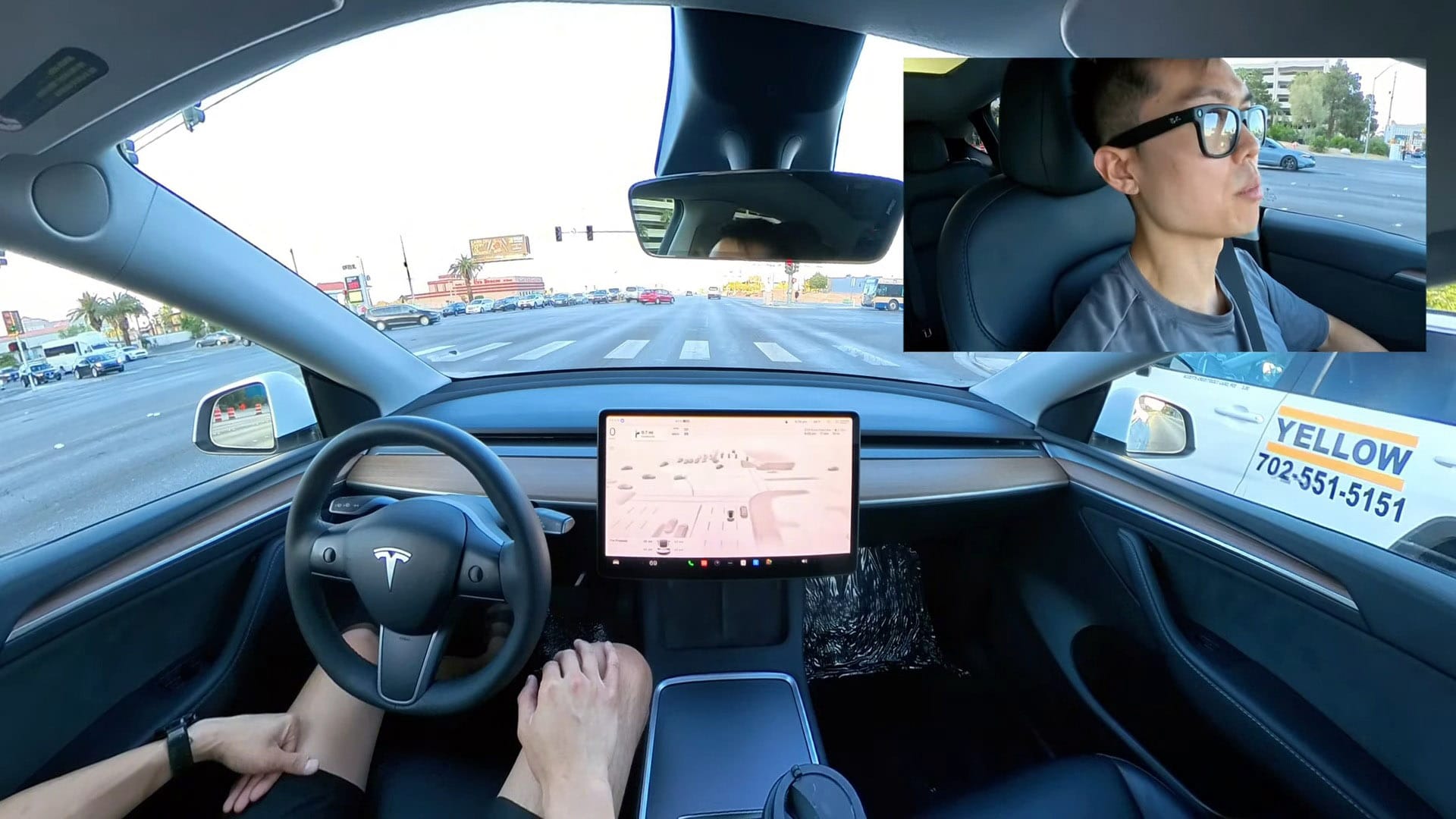
    “Rodeo drivers are trained to respond at once if they think their vehicles might create a dangerous situation for themselves or other drivers,” Tesla stated. The Robotaxi service has been launched in the Bay Area with such safety personnel present in the driver’s seat, as shown in the accompanying video, even though the robotaxis are equipped with specialized unsupervised Full Self-Driving software that does not require human oversight.

    Future Expansion Plans

    Expect further comparisons between the Tesla Robotaxi and Uber ride-hailing services as the platform is set to expand into additional US cities.

    Source:
    Link


  • Tesla Pushes Owners to Upgrade for Robotaxi as Uber Launches SUV

    Tesla Pushes Owners to Upgrade for Robotaxi as Uber Launches SUV

    Key Takeaways

    1. Tesla is encouraging individuals interested in its Robotaxi platform to upgrade to newer vehicles to access the service.
    2. The current pilot robotaxi service in Austin uses Tesla’s Model Y SUVs, but plans to allow vehicle owners to participate starting next year.
    3. Only vehicles with Full Self-Driving (FSD) feature and hardware version 4 or newer will be eligible for the Robotaxi platform.
    4. Uber is enhancing its robotaxi offerings by partnering with Lucid to acquire 20,000 Gravity SUVs equipped with Nuro’s autonomous driving technology.
    5. Tesla faces increasing competition in the robotaxi sector, with differing strategies on autonomous vehicle technology between Tesla and its rivals like Uber and Waymo.


    Tesla has begun sending out notifications to individuals who expressed interest in its Robotaxi ride-sharing platform, encouraging them to consider upgrading to a newer vehicle to benefit from the service.

    Current Operations

    At present, Tesla runs a pilot robotaxi service in Austin, Texas, using Model Y SUVs that are owned and operated by the company itself for this trial.

    Future Plans

    However, starting next year, Tesla plans to allow vehicle owners to use the Robotaxi platform. Based on the Austin pilot, it appears that only those with the Full Self-Driving (FSD) feature using hardware version 4 or newer will be eligible, which is the reason for the upgrade notifications.

    After Tesla’s announcement to broaden the robotaxi service area in Austin, Waymo responded similarly. Now, Uber, which operates a robotaxi service utilizing Waymo’s vehicles, has partnered with premium electric vehicle manufacturer Lucid to enhance its offerings.

    Major Developments

    Uber plans to acquire at least 20,000 Gravity SUVs from Lucid, which will come equipped with Nuro’s autonomous driving technology right from the factory. This represents a significant intensification in the competition for robotaxi services, and Tesla’s upgrade notifications could be a strategy to quickly expand its driverless vehicle fleet in response to rivals like Uber.

    One of Tesla’s advantages is its ability to utilize the standard HW4 computer and cameras that are included with its newer models, potentially allowing for a swift transition of many vehicles into the robotaxi fleet all at once. Conversely, Uber’s Lucid Gravity SUVs will feature Nuro’s autonomous driving tech, which is more streamlined than Waymo’s but still necessitates retrofitting.

    Industry Perspectives

    While competing autonomy companies acknowledge that Elon Musk’s camera-only approach may facilitate faster learning and scaling, they tend to favor a more cautious method that includes additional sensors and safety redundancies. The outcome of these differing strategies is yet to be determined, but Tesla is facing increasing competition in the robotaxi sector just as it plans to expand into more cities in the U.S. and incorporate owners’ cars into its fleet.

    Uber’s collaboration with Lucid and Nuro is set to launch on public roads by 2026, coinciding with Tesla’s anticipated introduction of the Cybercab two-seater into its robotaxi fleet. However, Tesla currently lacks a true three-row SUV in its lineup, meaning it won’t be fully equipped to compete with Uber’s driverless Lucid Gravity vehicles when they are deployed.

    Source:
    Link


  • Cybertruck: Tesla’s Robotaxi with the Biggest Screen Yet

    Cybertruck: Tesla’s Robotaxi with the Biggest Screen Yet

    Elon Musk has delayed the "We, Robot" event for Tesla where they planned to showcase the Robotaxi, so they could make some alterations to its front appearance.

    A Cybertruck Influence

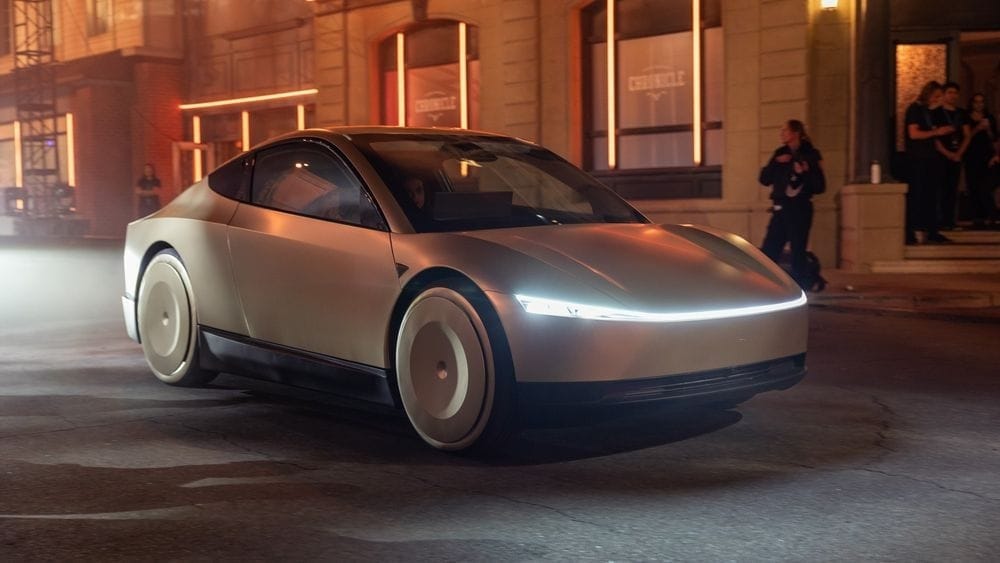
    If the goal was to give it a look similar to a Cybertruck, complete with light bar headlights, they definitely succeeded. But it’s not just the front that resembles the Cybertruck; the entire Robotaxi has hints of Cybertruck design, as its shiny silver color makes it look like it’s crafted from stainless steel.

    Looks Can Be Deceiving

    However, the Cybertruck-inspired aesthetic is mostly superficial. The futuristic design of the Robotaxi is actually made with basic aluminum panels, which are painted to shine like the Cybertruck’s stainless steel. The self-driving Robovan also has a similar vibe, reminiscent of an Airstream trailer, yet it isn’t made of stainless steel either.

    Tesla’s head designer, Franz von Holzhausen, stated during the unveiling that producing it in stainless steel would have been overly expensive and would contradict the aim of creating Tesla’s first vehicle priced under $30,000.

    Cost-Saving Features

    Apart from saving costs by not including rear seats, pedals, or a steering wheel, Tesla has also cut expenses by optimizing the battery. The Robotaxi will offer a range of approximately 200 miles powered by a roughly 40 kWh battery, which is the smallest offered by Tesla.

    The wheels of the Robotaxi are designed to appear unusually large and modern by painting half of the tires in the same color as the wheel caps, creating an illusion that the 21-inch Continentals look much sleeker than they actually are.

    Impressive Technology

    Where Tesla invested more in the Robotaxi is in its central console screen. With a diagonal size of 21 inches, it’s the biggest screen Tesla has ever included in any vehicle.

    This large panel highlights the infotainment capabilities of the purpose-built autonomous Robotaxi, allowing passengers to watch movies or surf the web while the vehicle drives them to their location. For reference, the Cybertruck has the second-largest display in a Tesla, but its "infinity touchscreen" measures only 18.5 inches diagonally.

  • Tesla Rideshare Drivers Use Self-Driving Mode for Safety

    Tesla Rideshare Drivers Use Self-Driving Mode for Safety

    Tesla is set to reveal a fully autonomous Robotaxi and potentially a ride-sharing platform, likely named the Cybercab service, on October 10.

    Current Use of Tesla Vehicles

    Meanwhile, Uber and Lyft drivers have been taking advantage of their Tesla vehicles as makeshift Robotaxis. They enter their destinations and let the cars navigate themselves.

    One unfortunate incident involved a serious crash where the Tesla failed to detect an SUV cutting into its path. The driver intervened only to lessen the impact, resulting in the SUV driver being sent to the hospital.

    Driver Experiences and Concerns

    Reports from ride-share drivers interviewed by Reuters indicate that around 40% are using Tesla’s Full Self-Driving (FSD) feature regularly. While some express dissatisfaction with the $99/month service’s inconsistencies, they acknowledge that it significantly reduces the stress of driving in congested urban areas, allowing them to extend their working hours.

    In contrast, some drivers choose not to use FSD when carrying passengers, especially in situations they believe the software struggles with, such as in construction zones or busy airport areas.

    Responsibility and Safety

    When questioned about these practices, Uber and Lyft distanced themselves, stating that the responsibility for passenger safety falls solely on the driver. They referenced the Tesla FSD manual, which highlights the necessity for constant supervision of the feature.

    "Drivers must maintain a safe environment for riders, even if their driving methods don’t break any laws," Uber stated, while Lyft added that "drivers agree to avoid reckless behavior." Despite this, both platforms continue to enhance the experience for drivers using FSD.

    Uber has introduced a software update that sends passenger pickup and destination information directly to the Tesla navigation system, simplifying the process for drivers using FSD.

    Regulatory Landscape and Future Expectations

    Tesla’s self-driving feature is not subjected to the same limitations as fully autonomous services like Waymo or Cruise, as it is classified as a Level 2 driver-assist system. This classification allows Uber and Lyft drivers to use it nearly anywhere, provided they supervise it.

    However, some regulation or even a ban on this practice may be on the horizon, as the NHTSA is currently looking into accidents involving FSD.

    For the time being, many Uber and Lyft drivers are looking forward to Tesla’s announcements during the Robotaxi event on October 10, eagerly anticipating that FSD 13 will further simplify their work.

    You can find the Tesla Universal Wall Connector EV Charger with Dual Plug on Amazon.

    Source: Reuters, Project Robotaxi (YT)

  • Tesla Delays Robotaxi Unveiling to October, Market Impact Expected

    Tesla Delays Robotaxi Unveiling to October, Market Impact Expected

    Tesla has delayed its much-awaited Robotaxi unveiling event, originally set for August, to October. As reported by Bloomberg, this internal decision was made to allow teams more time to create additional prototypes.

    Tesla’s design team was instructed to revise certain car elements. This communication underscores the company’s dedication to ensuring the prototypes are of the highest quality and ready for public introduction.

    Initial Announcement and Market Reaction

    CEO Elon Musk had initially set the event date eight months ago. Anticipation around the event led to an 11-day streak of gains for Tesla’s stock, adding over $257 billion to the company’s market capitalization. However, the delay has resulted in an 8.4% drop in Tesla’s stock on Thursday, the largest decline since January. Conversely, shares of competitors Uber Technologies and Lyft soared on the news, with Uber’s stock rising by 6.1% and Lyft’s shares increasing by 4.6%.

    What is the significance of the Robotaxi Project?

    The idea of an autonomous taxi service stems from Elon Musk‘s second “master plan” for Tesla in 2016. Musk has prioritized this project over the development of an affordable electric vehicle. Despite years of promotion, Tesla’s Full Self-Driving (FSD) technology still requires constant monitoring and does not make the cars fully autonomous. Nevertheless, Musk and his engineers have recently become more optimistic about FSD’s potential.

    Tesla’s Recent Performance and Analyst Perspectives

    Tesla delivered 6.6% fewer cars in the first half of the year and produced 14% fewer vehicles in the second quarter compared to the previous year, in an effort to reduce inventory. The addition of the Cybertruck to Tesla’s lineup has also been a recent focus.

    Wedbush analyst Dan Ives suggests that the timing of the Robotaxi showcase is less critical than the content and posits that the delay may lead to a more robust and well-prepared event. Ives advises investors not to fret over the delay, emphasizing that the timeline for robotaxis, partnerships, and autonomous technology remains unchanged for Tesla’s bullish outlook.

    The original event date of August 8, set in April, may have been overly optimistic. Tesla is likely ensuring that the prototypes meet quality standards before the event. Reports indicate that Tesla is using current vehicle mules equipped with exterior cameras to collect data for the Robotaxi development.

    Despite the delay, the focus remains on the event’s content and the preparedness of the prototypes. Investors and experts are optimistic that the postponed event in October will provide a more detailed and impressive showcase of Tesla’s Robotaxi initiative.

    The success of the event and the eventual launch of the Robotaxi service are critical for Tesla’s positioning in the autonomous vehicle market and its future as a technology leader.