Key Takeaways
1. The Segway GT3 Pro SuperScooter is priced at $2,699.99 and can be bought from Segway’s website or Amazon.
2. It features dual 3,500W motors, a 72V 2,160Wh battery, and can reach speeds of up to 50 mph with a range of 34 to 86 miles.
3. The scooter has advanced safety features, including anti-lock disc brakes and the SegRide Stability Enhancement System.
4. Off-road capabilities include adjustable suspension with 15 levels and the ability to handle inclines up to 38%.
5. User-friendly features include a 2.4-inch TFT display for tracking battery life and notifications, automatic headlights, and an IPX6 water protection rating.
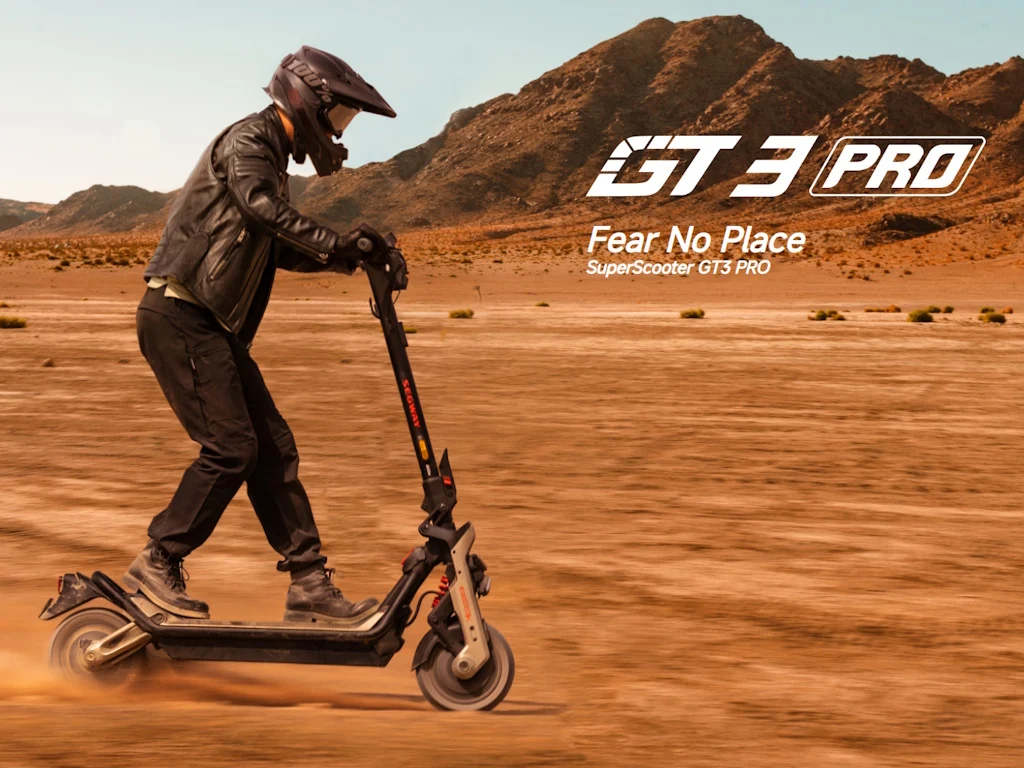
Segway has introduced the GT3 Pro SuperScooter, its quickest electric scooter to date. This new model is priced at $2,699.99 and can be purchased directly from Segway’s official website. Customers can also explore the Segway store on Amazon for more options.
Impressive Specs
The GT3 Pro features dual motors with a power of 3,500W each and is powered by a 72V 2,160Wh battery, enabling it to achieve a maximum speed of 50 mph (80 kph) while riding on 11-inch self-sealing tires. The scooter boasts a range that varies from 34 miles when traveling at 50 mph to an impressive 86 miles at a leisurely speed of 15.5 mph. To enhance safety during braking, it is equipped with anti-lock disc brakes and the SegRide Stability Enhancement System, which helps reduce the risk of slips and falls on slippery or uneven surfaces.
Off-Road Capabilities
For those who enjoy off-road experiences, the GT3 Pro is designed with a hydraulic rear trailing arm paired with a hydraulic front linkage, allowing for 15 different levels of suspension stiffness adjustment. Segway states that the scooter has a ground clearance of 5.7 inches and can conquer inclines with grades up to 38%.
User-Friendly Features
Riders can keep track of battery life, get map directions, and see incoming call notifications on a 2.4-inch TFT color display. At night, the headlight turns on automatically, lighting up the path for up to 246 feet ahead. This electric scooter also includes turn signals and a rear brake light for additional safety.
Charging the battery takes between 7.5 to 8.5 hours. The GT3 Pro has an IPX6 rating, meaning it is protected from water jets coming from any angle. Weighing in at 117 lbs. (53.1 kg), this scooter can accommodate passengers with a maximum weight of 330 lbs. (150 kg).
Source:
Link