Category: EV vehicles

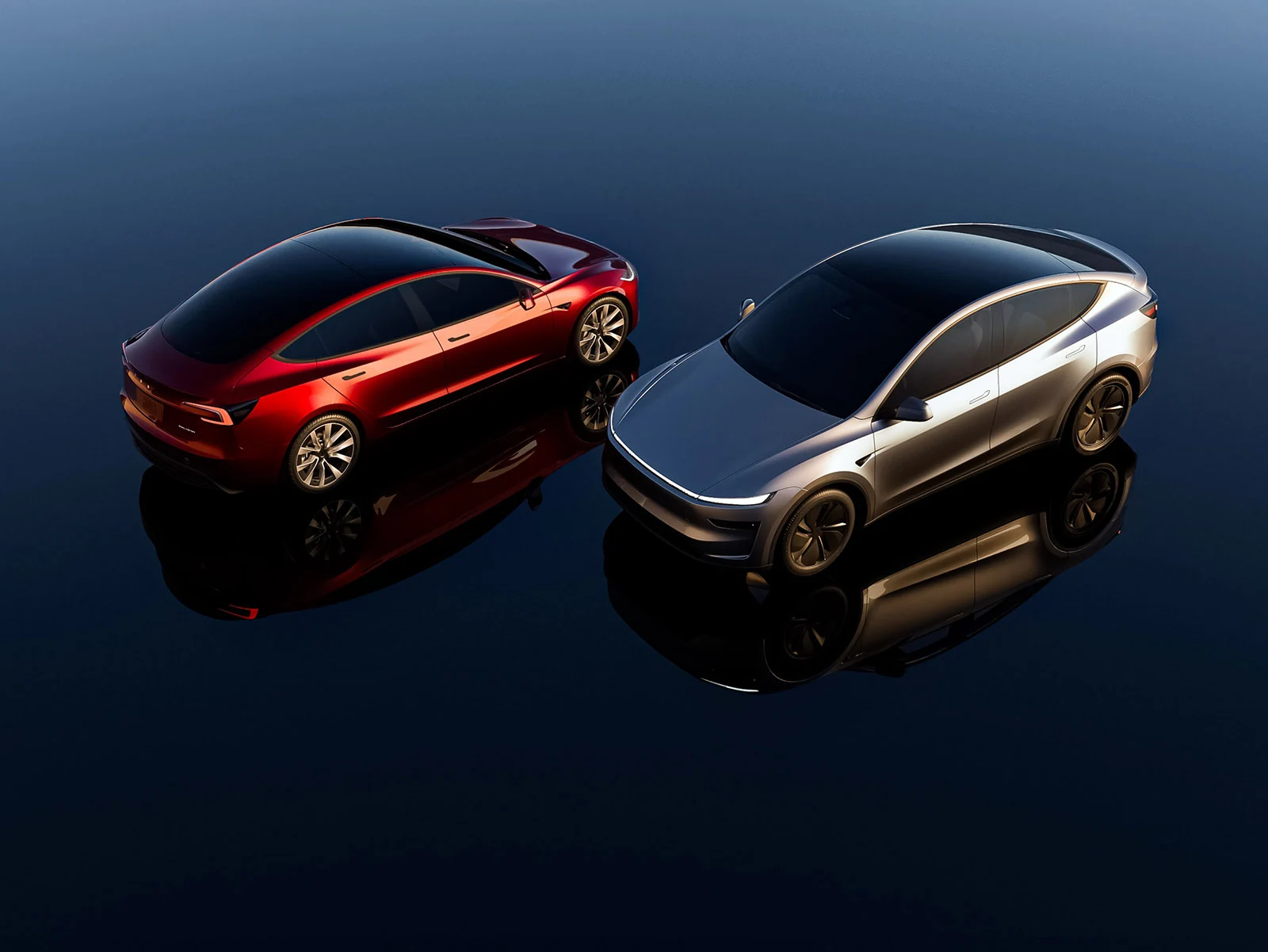
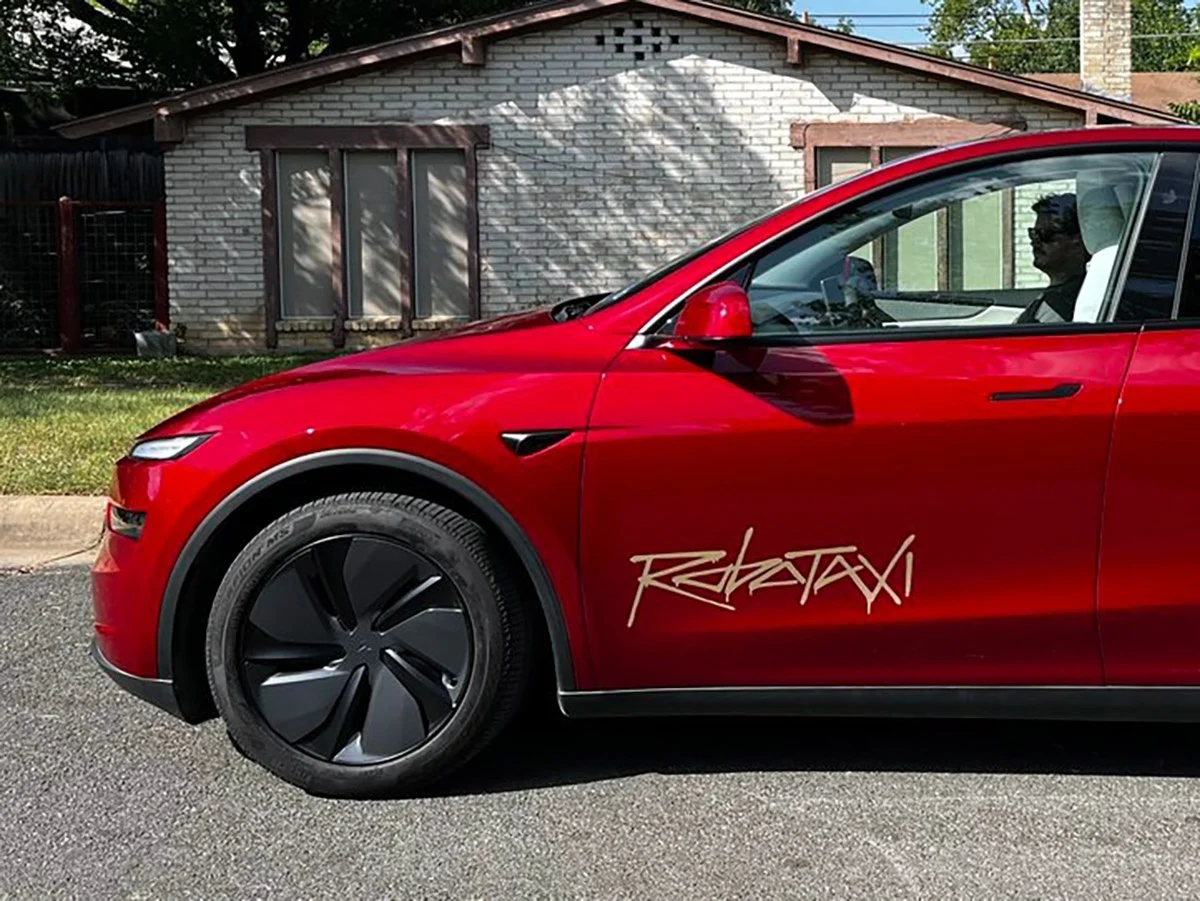
  • Tesla Offers 0.99% APR Financing on Model Y Amid Sales Drop

    Tesla Offers 0.99% APR Financing on Model Y Amid Sales Drop

    Key Takeaways

    1. Tesla is facing a significant sales slump, with a 17% decrease in US car deliveries in January compared to last year.
    2. The company has introduced zero APR financing for the affordable Model Y Standard RWD to boost sales, but it hasn’t had the desired effect.
    3. Tesla is offering a new AWD Model Y that is $7,000 less expensive than the Premium version, along with five different trim options.
    4. The financing rates for the Premium RWD and Premium AWD trims have been reduced to 0.99% from 2.99%, aiming to stimulate interest.
    5. Monthly payments for the Premium AWD trim are $674, while the base AWD version is $557 with zero-interest financing, which may complicate sales of the base trims.


    Faced with a huge slump in sales and the first yearly revenue decline after the federal tax credit ended last year, Tesla is hastening its incentives program in an effort to improve its situation.

    In January, Tesla delivered 17% fewer cars in the US than during the same month last year. The electric vehicle manufacturer is now rolling out an APR financing offer for its top-selling Model Y vehicle to create some excitement before it potentially reports another lackluster quarter that could threaten its high stock valuation.

    New Financing Offers

    When Tesla noticed that the affordable Model Y Standard RWD version was not performing as expected, it began providing it with zero APR financing in December. However, this strategy didn’t significantly boost holiday sales, as consumers were not inclined to purchase the stripped-down Model Y Standard, which has over 20 fewer features compared to its Premium counterpart, along with a considerably shorter driving range per charge.

    Increased Options

    In response, Tesla launched an AWD Model Y that is $7,000 less expensive than its long-range Premium version and is currently offering five different trims of the Model Y in the US.

    The effectiveness of this new AWD Model Y is still uncertain since Tesla somewhat undermined it by introducing a 0.99% APR financing option for the Premium RWD and Premium AWD trims, down from a previous rate of 2.99%. This new financing offer applies to all terms except for the 84-month option, which remains at over 6% APR.

    Monthly Payments

    With the latest Model Y APR financing promotion, buyers can now obtain the Premium AWD trim for $674 per month after making a $3,300 down payment over a 72-month period at the 0.99% interest rate. In contrast, the least expensive AWD version costs $557 per month with its zero-interest financing, making the Premium Model Y seem more accessible, but this might complicate the sales of the base trims.

  • 20,000-Ton Production Line Boosts Lithium Recovery Efficiency Over 90%

    20,000-Ton Production Line Boosts Lithium Recovery Efficiency Over 90%

    Key Takeaways

    1. China has launched a new lithium production line processing 20,000 metric tons from salt lake brine.
    2. The project is led by Qinghai CITIC Guoan Technology Development Co., Ltd. and focuses on efficiency and sustainability.
    3. Traditional lithium extraction methods faced significant material loss, which the new technology addresses.
    4. The new process also allows for the extraction of other valuable resources like boron and potassium.
    5. This development supports the growing demand for electric vehicles and energy storage, enhancing China’s lithium supply chain.


    China has made a significant move in the global energy market by introducing a new production line capable of processing 20,000 metric tons of lithium from salt lake brine. This project, led by Qinghai CITIC Guoan Technology Development Co., Ltd., marks a major improvement in how lithium is processed, focusing on both efficiency and sustainability.

    Historical Challenges

    Traditionally, the method of extracting lithium from salt flats through solar evaporation has suffered from severe material loss. A recent report highlights that the new proprietary technology, which is protected by several patents, eliminates these significant shortcomings. The numbers speak for themselves:

    Efficient Resource Extraction

    Notably, this faster processing method does not hinder the extraction of other valuable resources such as boron and potassium. By reducing waste and increasing the amount of lithium obtained, the 20,000-ton production line sets a standard for environmentally friendly and larger-scale operations. With the rising demand for electric vehicles, consumer electronics, and extensive energy storage solutions, this development strengthens a dependable and self-sufficient lithium supply chain.

    China Daily

    Source:
    Link


  • Drunk Driver Sentenced for Trying to Misuse Level 2 FSD System

    Drunk Driver Sentenced for Trying to Misuse Level 2 FSD System

    Key Takeaways

    1. The owner installed an aftermarket device to avoid alerts from the Level 2 autonomous driving system, which cannot fully take over driving tasks.

    2. The driver, Wang Mouqun, had a history of drunk driving and used the device to simulate steering wheel contact while he was intoxicated.

    3. Wang fell asleep in the passenger seat while the car continued driving, due to the device bypassing the monitoring system.

    4. Authorities were alerted when the car stopped on its own with him asleep inside, leading to a blood test that confirmed he was over the legal alcohol limit.

    5. Wang was found guilty of driving under the influence and tampering with the self-driving system, receiving a fine and a prison sentence.


    The owner of an electric vehicle equipped with a Level 2 autonomous driving system, akin to Tesla’s FSD (Supervised), opted to install an aftermarket device to avoid the relentless alerts reminding him to stay attentive.

    Circumventing Alerts

    This individual had a past conviction for drunk driving and sought a way to escape the constant reminders from FSD-like features that emphasize the limitations of Level 2 systems, which can’t fully take over driving tasks. The court documents reveal that he used a gadget that simulates a hand on the steering wheel every few minutes, as required by the driver-assist system to prevent it from issuing warnings to the driver.

    Incident Details

    At around 00:30 on September 13, 2025, the defendant, Wang Mouqun, drove his vehicle after drinking alcohol near a restaurant located in Tangqi Town, Linping District, Hangzhou City, Zhejiang Province. By approximately 01:15 on the same night, he left his community again, activated the car’s assisted driving feature, set a destination, and utilized a privately installed “smart driving device” that bypassed the monitoring of the assisted driving system, enabling the car to operate without supervision. He then reclined in the passenger seat and fell asleep.

    Legal Consequences

    While Wang was dozing off in the passenger seat, the car continued on its route, fooled by the aftermarket gadget that kept making contact with the steering wheel. At one point, the driver-assist system disengaged and halted on a local road. The sight of a vehicle stopping by itself with a person asleep in the passenger seat caught the attention of passersby, who promptly notified the authorities.

    A subsequent blood test revealed that Wang’s alcohol levels exceeded the legal limits, marking his second offense within two years. This is not the first instance in China where a drunk driver tried to exploit an FSD-like feature, although prior cases involved drivers attempting to blame the self-driving system for accidents they caused.

    The courts found the electric vehicle owner guilty of both driving under the influence and tampering with the Level 2 self-driving system, despite his awareness of its limitations when he bought the car. He received a fine and a prison sentence of one and a half months, making this one of the first cases where someone attempted to deceive a Level 2 driver-assist system into functioning without supervision.


    Source:
    Link


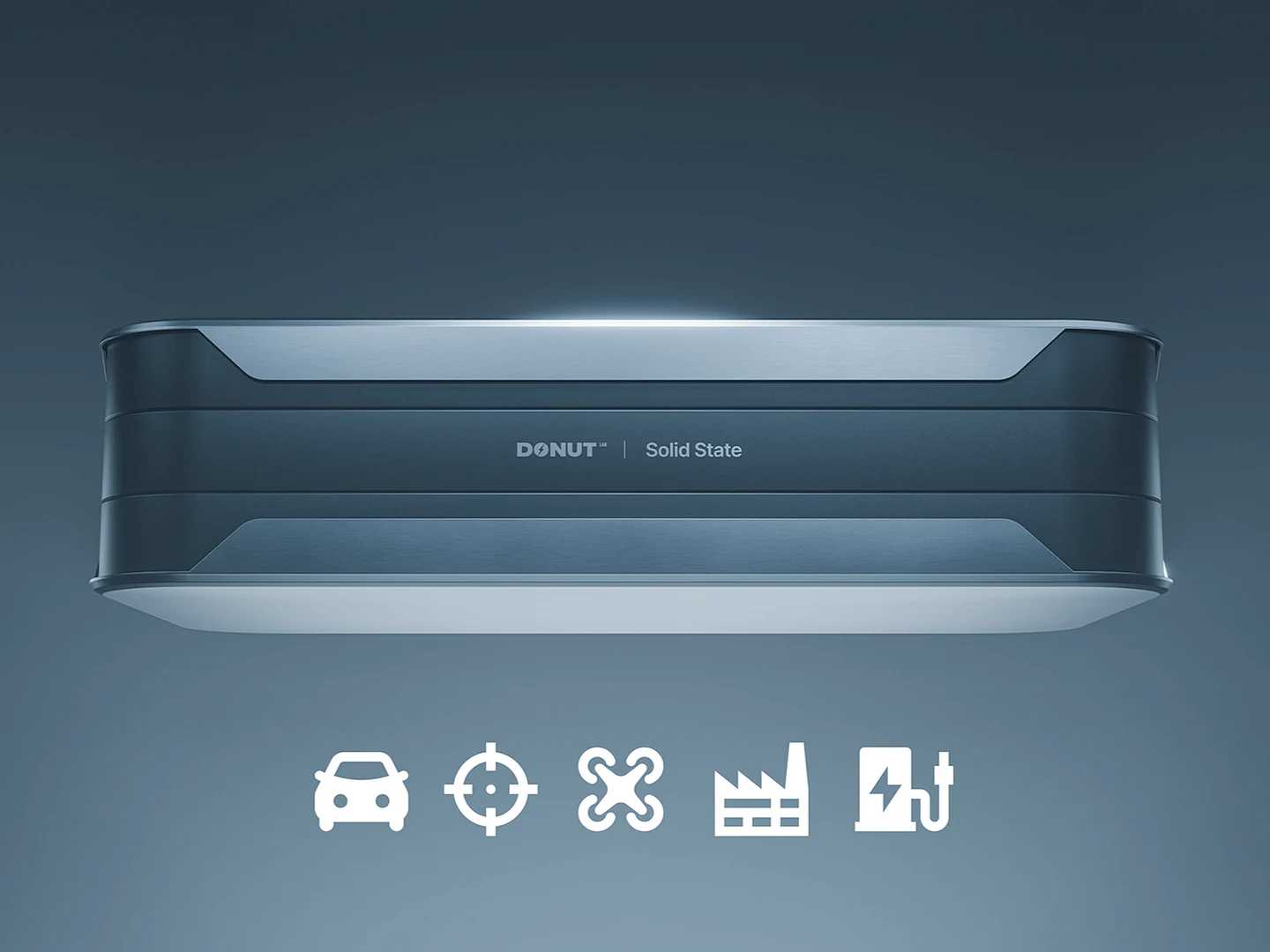
  • New Solid-State Battery Standard Sets 2027 EV Performance Benchmarks

    New Solid-State Battery Standard Sets 2027 EV Performance Benchmarks

    Key Takeaways

    1. China is leading the way in solid-state battery technology standardization, aiming to replicate its success in electric vehicles and battery production.
    2. The China Automotive Technology and Research Center (CATARC) has developed new standards for solid-state batteries, focusing on performance and safety criteria.
    3. Solid-state batteries offer benefits like non-flammability, leak-proof design, and improved energy density, with potential ranges of 300-500 Wh/kg.
    4. The push for standardization aims to expedite the commercialization of solid-state and hybrid solid-liquid batteries, with mass production expected by 2027.
    5. Major companies, including BYD and Toyota, are investing in solid-state battery technology, highlighting the urgency for rapid standards and certification processes in the industry.


    As businesses speed up their plans for producing or using solid-state batteries, the world is seeing its first standardization effort to establish minimum performance and safety criteria for this emerging technology.

    China’s Ambitious Goals

    Following a government-led initiative that successfully boosted electric vehicles, energy storage, and battery production over the past decade, China has emerged as a leading manufacturer. Now, its standardization authority aims to replicate this success with the next wave of battery technologies.

    New Standards on the Horizon

    The initial segment of the “Solid-state batteries for electric vehicles: terminology and classification” standard was completed in December. The China Automotive Technology and Research Center (CATARC), responsible for drafting the standard, is now working on standardizing the necessary certification tests. They plan to introduce the first solid-state battery standard by July, which will outline several requirements:

    Solid-state batteries utilize solid electrolytes instead of traditional liquid ones and separators. They are non-flammable, leak-proof, resistant to high temperatures, and can endure punctures. These batteries boast an energy density between 300-500 Wh/kg, offering a 30-100% improvement in range and reduced energy loss in colder conditions.

    Commercialization Push

    This initiative for a solid-state battery standard aims to hasten the commercialization of batteries featuring solid or nearly solid electrolytes, as the new national classification differentiates between the two. Previously referred to as semi-solid, batteries containing 5% liquid and 95% solid electrolyte are now classified as hybrid solid-liquid batteries. They are more affordable to produce compared to 100% solid electrolyte cells while still providing nearly the same safety and significantly higher energy density than current ternary batteries with volatile liquid electrolytes.

    According to CATARC, the urgency for standardization arises from the accelerated product release timelines of both automakers and battery manufacturers. The first mass-produced electric vehicles equipped with solid-state batteries are anticipated as early as 2027. Some local battery startups are opting out of the competitive liquid electrolyte battery market and instead focusing on developing and producing hybrid or solid-state batteries.

    Innovations and Future Outlook

    Their battery models vary, achieving energy densities from 300 to 500 Wh/kg based on the electrolyte technology, safety characteristics, and production costs, which still remain two to three times higher than standard EV batteries. BYD, the largest automaker and second-largest battery producer globally, has recently reported progress in its sulfide-based solid-state battery electrolyte technology, paving the way for mass production of solid electrolyte cells that were previously too expensive or had shorter lifespans than desired. Along with Chinese companies like CATL, Dongfeng, WeLion, and Cherry, which have announced solid-state battery commercialization plans, other firms like Toyota have also targeted 2027 for launching similar products, highlighting the need for rapid standardization and certification efforts.

    Source:
    Link


  • BYD Atto 3 Evo Electric SUV: Longer Range & 800V Architecture

    BYD Atto 3 Evo Electric SUV: Longer Range & 800V Architecture

    Key Takeaways

    1. The BYD Atto 3 Evo offers new rear-wheel drive (RWD) and all-wheel drive (AWD) options, enhancing drivetrain versatility.
    2. Charging time is significantly reduced, with a 10% to 80% charge taking only 25 minutes, thanks to the new 800V architecture and 220 kW charging rate.
    3. The battery capacity has increased from 60 kWh to 74.8 kWh, improving overall range while still using an LFP battery.
    4. Powertrain options include a RWD model with 230 kW and 280 lb-ft torque, and an AWD model with 330 kW and 413 lb-ft torque.
    5. The base price for the Atto 3 Evo starts at €44,990 in Europe, with the AWD “Excellence” trim priced at €50,990.


    The BYD Atto 3 Evo brings significant enhancements over the 2023 version. While the dimensions remain the same, there have been notable improvements in its technical specs. Now, instead of just being front-wheel drive (FWD), the electric vehicle (EV) offers rear-wheel drive (RWD) or all-wheel drive (AWD) options. Additionally, its range has been boosted thanks to a larger battery capacity, and charging times have improved considerably due to the new 800V architecture.

    Fast Charging Capabilities

    According to BYD, charging from 10% to 80% takes only 25 minutes. This quick charge capability is attributed to the 800-volt system, which allows for a maximum charging rate of 220 kW. In contrast, the previous 2023 BYD Atto 3 was capped at 88 kW, making it much slower to charge.

    Battery and Technology Enhancements

    The Atto 3 Evo continues to utilize an LFP battery rather than switching to an NMC battery pack. However, its capacity has been increased from 60 kWh to 74.8 kWh compared to the 2023 model. BYD employs a technology known as Cell-to-Body for optimizing battery performance.

    Powertrain Options and Pricing

    The electric SUV comes with two different powertrains. The entry-level “Design” model features RWD with an output of 230 kW and 280 lb-ft of torque. On the other hand, the AWD variant called “Excellence” uses both a front and rear motor, delivering a total of 330 kW and 413 lb-ft of torque.

    The starting price for the base trim of the BYD Atto 3 Evo in Europe is €44,990, whereas the AWD “Excellence” trim is priced at €50,990. Both configurations of this all-electric compact SUV can be ordered now, with first deliveries anticipated for this spring.

    BYD (website)

    Source:
    Link


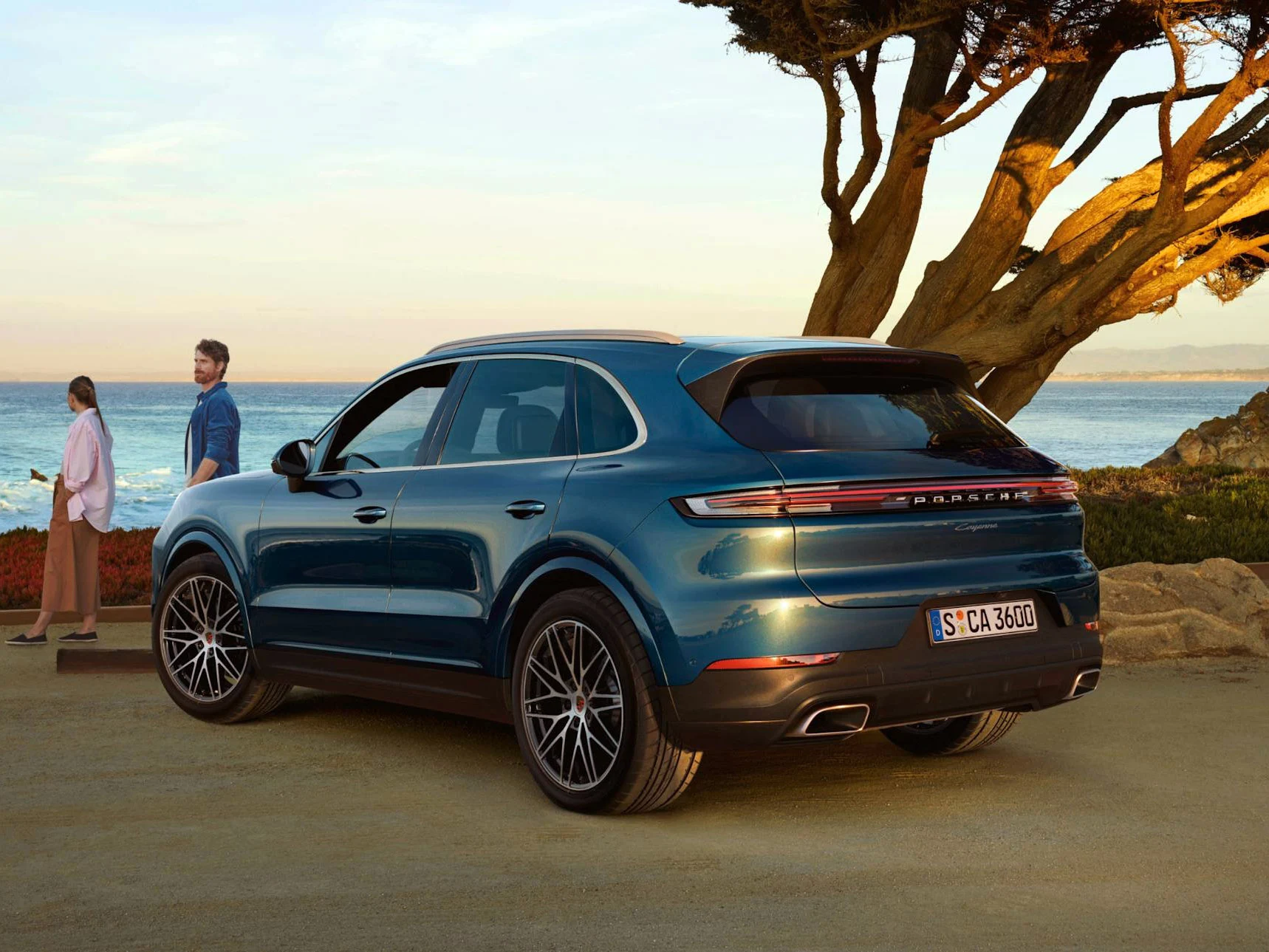
  • Toyota Launches All-Electric Highlander SUV with 320-Mile Range

    Toyota Launches All-Electric Highlander SUV with 320-Mile Range

    Key Takeaways

    1. Toyota is expanding its electric vehicle lineup with the introduction of the 2027 Highlander, its first three-row electric SUV.
    2. The 2027 Highlander features two battery options (77 kWh and 96 kWh) and has a starting price below $50,000.
    3. The SUV includes modern redesign elements while retaining popular safety and comfort features, along with new electric vehicle technologies like vehicle-to-load (V2L) capabilities.
    4. It boasts a range of up to 320 miles on a single charge with the larger battery and is compatible with Tesla’s Supercharger network.
    5. The Highlander is equipped with Toyota’s Safety Sense 4.0 features, which are provided for free, unlike Tesla’s subscription model for certain driver-assist options.


    While Toyota’s managers have been proven right about their cautious approach to electric vehicles, they’re not just sitting back and enjoying their hybrid success. The company is rolling out new all-electric models, including some of its most famous names.

    Introducing the 2027 Highlander

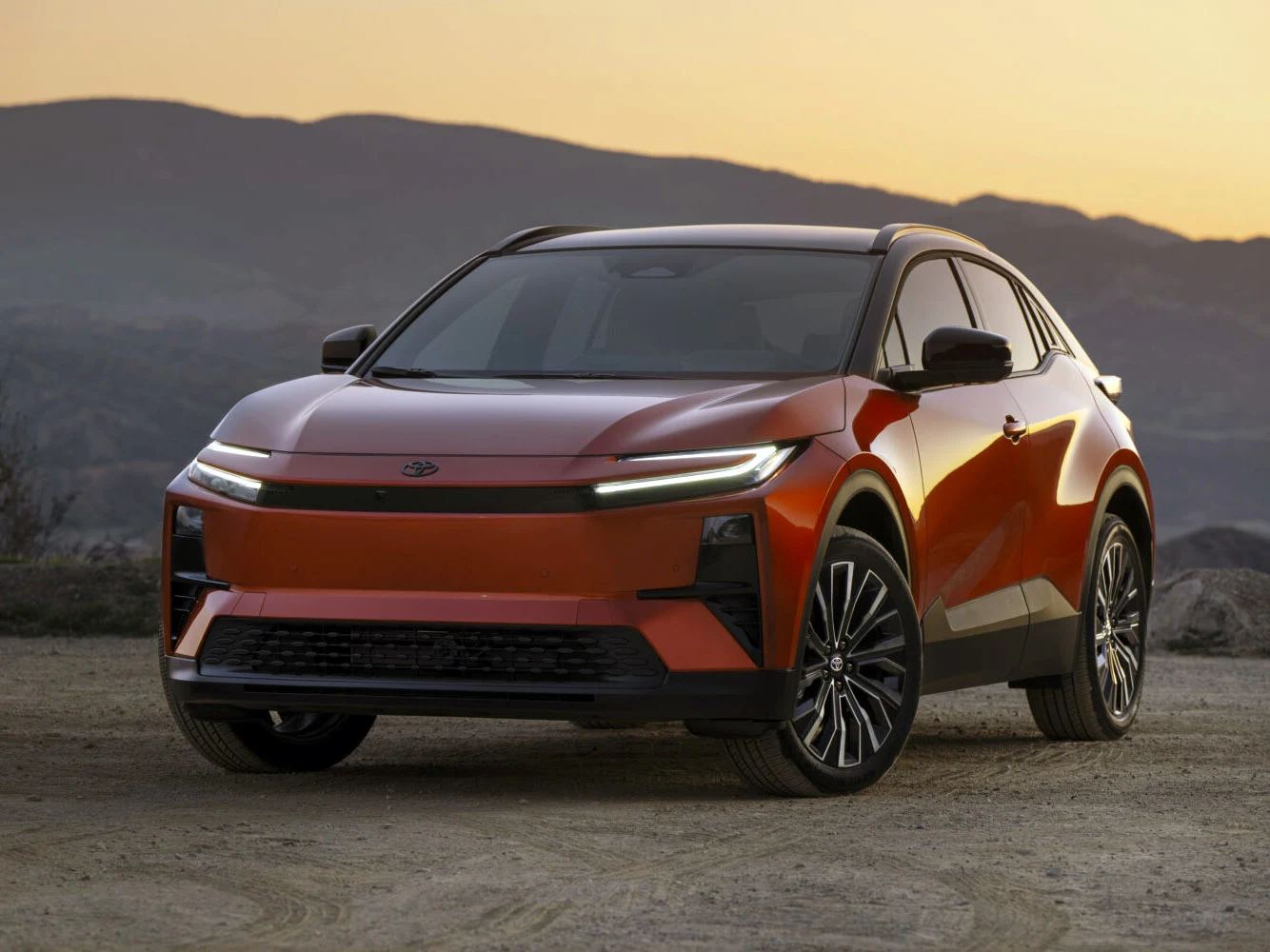
    Toyota has unveiled its first electric SUV with three rows, the 2027 Highlander. In the United States, this model is equipped with relatively small for its size family batteries of 77 kWh and 96 kWh, which allows the starting price to stay below $50,000.

    A Much-Needed Update

    The iconic Highlander was in urgent need of a makeover, and Toyota has provided it with a modern redesign. They’ve kept all the features that customers love for safety and comfort, while also introducing new technologies from the electric vehicle world, such as vehicle-to-load (V2L) capabilities that can power home devices during emergencies.

    The 2027 Toyota Highlander has an impressive range of up to 320 miles on a single charge when using the larger battery. It features a NACS charging port, making it compatible with Tesla Superchargers across the United States. The third row of seating comes with USB-C charging ports and can fold down to create 45 cubic feet of cargo space.

    Safety Features Included

    This electric Highlander comes loaded with all the Safety Sense 4.0 features like pedestrian detection, adaptive cruise control, lane-keeping assistance, and proactive driving aids. In contrast to Tesla, which removed its Autopilot driver-assist option to encourage customers to subscribe to FSD, Toyota provides all these safety features for free with the new electric Highlander.

    Source:
    Link


  • Jony Ive Designs Apple Car with Ferrari Luce Interior, Ditches Touchscreens

    Jony Ive Designs Apple Car with Ferrari Luce Interior, Ditches Touchscreens

    Key Takeaways

    1. Jony Ive, Apple’s former design chief, has designed the interior of the electric Ferrari Luce, emphasizing a human-centric approach.
    2. Ive criticizes Tesla’s minimalistic interiors, describing them as “easy and lazy,” and believes they lack necessary frameworks for effective use.
    3. The Ferrari Luce combines traditional design elements with modern technology, featuring mechanical buttons and a retro aesthetic.
    4. Ive’s design philosophy aims to maintain Ferrari’s heritage while adapting to the digital age, enhancing user interaction.
    5. The Ferrari Luce is set to be revealed in May, showcasing the results of Ive’s five-year design project.


    Apple’s previous design chief, known for his human-centric approach, has developed a skeuomorphic interior for the inaugural electric Ferrari, now named “Luce.” This design may represent what the Apple Car could have resembled.

    Jony Ive’s Influence

    Sir Jony Ive has been a key figure in the triumph of Apple’s iPhone, striving to create technology that feels intuitively familiar for users from the moment they interact with it. After departing from Apple, he founded an independent design studio that has collaborated with OpenAI. He has also had the liberty to take on various projects, one of which—the interior of the Ferrari Luce—has taken five years to complete.

    A Stand Against Minimalism

    As you might expect, Apple’s ex-leading designer isn’t particularly fond of Tesla’s trendy minimalistic interiors, which lack buttons and focus heavily on screens. He refers to this style as “easy and lazy.” He mentioned that the idea of relying solely on a touchscreen for vehicle control has become boring and now gives off a vibe of “cost savings” rather than innovation.

    “Effective tools” such as touchscreens “require frameworks and structures to be used properly, and things are moving so quickly now that I don’t think those frameworks were established” in automotive interiors, he expressed.

    Embracing Heritage with Modern Touch

    In contrast to this trend, Ferrari chose to embrace Jony Ive’s human-centered design philosophy to infuse its traditional Italian sports car identity into the new electric vehicle era without sacrificing its essence. The Ferrari Luce features “precision-engineered mechanical buttons, dials, toggles, and switches” for user interactions, combined with “multifunctional digital displays” that showcase a distinctly retro aesthetic.

    Volkswagen has taken a similar route with the interior design of its forthcoming electric vehicles, leveraging a long-standing and recognizable style. Jony Ive appears to have reinvented the Ferrari interior for today’s digital world while remaining faithful to its roots, celebrating the tactile experience. Ferrari is set to reveal the Luce in May, allowing enthusiasts to see what Sir Jony Ive’s studio has accomplished in terms of the car’s overall design.

    Source:
    Link


  • Room Temperature CO₂ Process Recycles Lithium-Ion Batteries

    Room Temperature CO₂ Process Recycles Lithium-Ion Batteries

    Key Takeaways

    1. The number of lithium-ion batteries is rapidly increasing, with 7.8 billion in use worldwide by 2016, raising environmental and health concerns due to inadequate recycling laws in developing nations.

    2. Researchers from the Chinese Academy of Sciences and Beijing Institute of Technology have developed a “three-in-one” method for recycling lithium-ion batteries that operates at room temperature without harsh chemicals.

    3. The innovative mechanochemical treatment uses high-energy ball milling to rearrange battery materials, facilitating the selective extraction of lithium and transition metals.

    4. The new recycling process employs water and pressurized carbon dioxide (CO2) to achieve over 95% lithium recovery while effectively capturing CO2, preventing greenhouse gas emissions.

    5. The method also repurposes leftover metals into high-performance catalysts for green hydrogen production, promoting a sustainable approach to battery waste management and renewable energy.


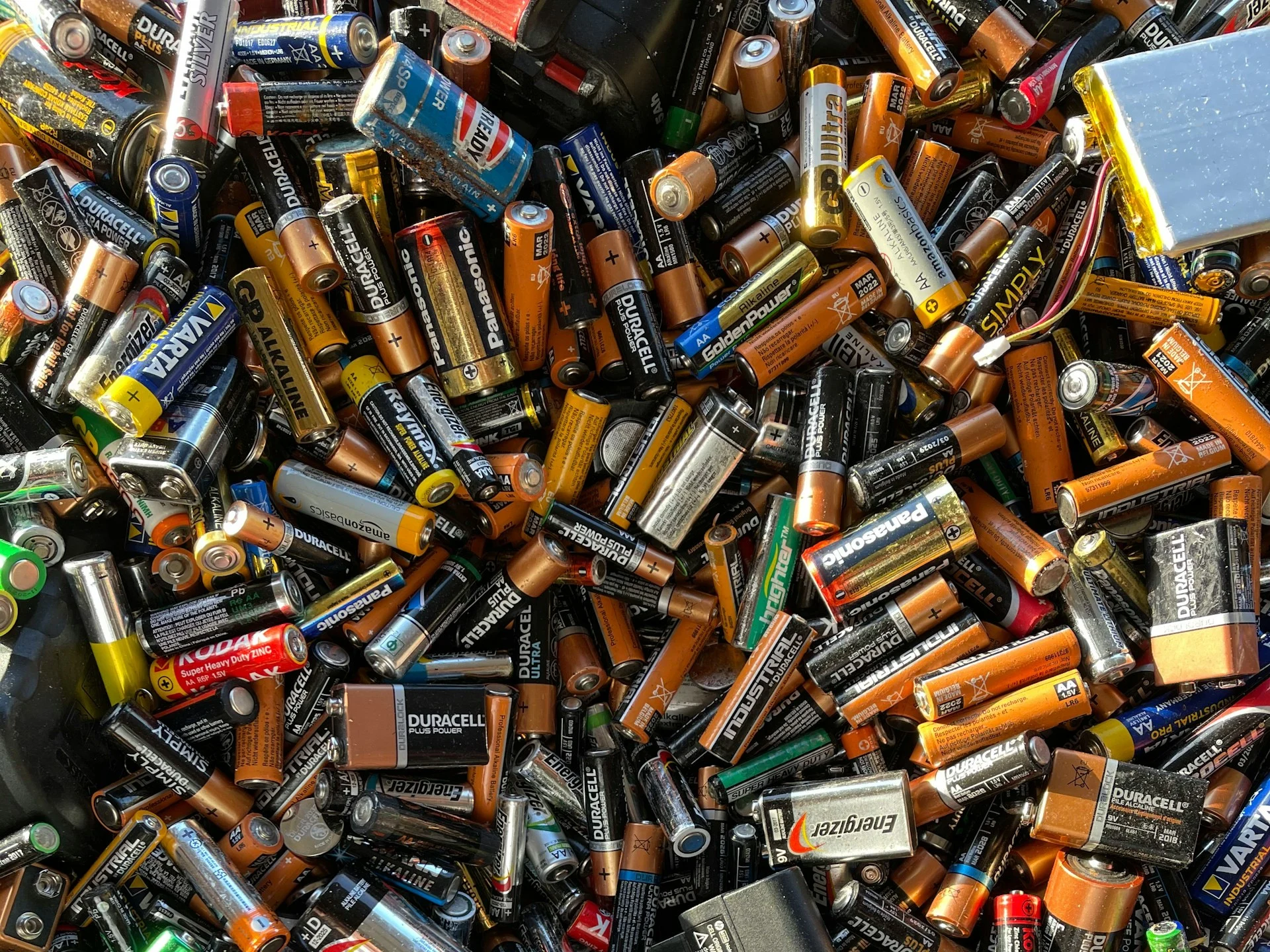
    Every year, the amount of lithium-ion batteries increases, reaching 7.8 billion worldwide in 2016 alone. However, many developing nations do not have adequate recycling laws in place. With billions of these batteries in use globally, the rising number of spent batteries poses significant dangers to both the environment and public health.

    Innovative Solutions

    Recently, scientists from the Chinese Academy of Sciences and Beijing Institute of Technology have introduced a groundbreaking “three-in-one” approach to address the escalating issue of discarded lithium-ion batteries. Their research, published in Nature Communications, outlines a method for reclaiming essential metals at room temperature without the need for energy-heavy furnaces or harsh chemicals that are usually necessary in recycling processes.

    Mechanochemical Treatment

    The focus of this innovation is on mechanochemical treatment, a type of high-energy ball milling that causes cationic disorder in the atomic structure of the battery. This mechanical force leads to micro-segregation, pushing lithium atoms to the surface while gathering transition metals like nickel and cobalt in the center. This rearrangement increases the reactivity of lithium, making it easier to extract selectively.

    Sustainable Metal Recovery

    To retrieve the metals, the researchers implemented a combination of water and pressurized carbon dioxide (CO2). The CO2 serves as the leaching agent, interacting with the lithium-rich surface to create high-purity lithium bicarbonate. This technique results in a lithium recovery rate of over 95% while successfully capturing CO2, thereby stopping the greenhouse gas from being released into the atmosphere.

    Upcycling Metal Waste

    Additionally, the method addresses the issue of secondary waste. Instead of throwing away leftover metal pieces, the process repurposes them into high-performance Oxygen Evolution Reaction (OER) catalysts for producing green hydrogen. In experiments, these catalysts showed a low overpotential of 322 mV and remained stable for more than 200 hours during operation.

    A Cleaner Future

    By functioning at normal temperature and pressure, this system removes the toxic liquid waste and high carbon emissions linked to traditional pyrometallurgy and hydrometallurgy. The researchers are confident that this closed-loop method — particularly suitable for high-nickel cathode systems — offers a sustainable, large-scale solution that connects battery waste management with renewable energy production.

    ScienceDirect and Nature via Tech Xplore.

    Source:
    Link


  • Chinese Aerospace Giant Tests Modular eVTOL Flying Car Design

    Chinese Aerospace Giant Tests Modular eVTOL Flying Car Design

    Key Takeaways

    1. CASC successfully conducted the first flight of its eVTOL aircraft on February 6 at Yongchuan Da’an Airport in Chongqing.
    2. The aircraft features a modular design with three main components: wings, a cabin, and a chassis, allowing for easy transport mode shifts.
    3. It can carry two passengers, reaching speeds of up to 150 km/h at elevations below 3,000 meters, with a ground operational range exceeding 300 kilometers.
    4. The developers integrated advanced automotive technologies and smart systems to create a versatile platform for various travel needs.
    5. The aircraft meets rigorous airworthiness standards and is expected to serve in personalized transport, logistics, and emergency response in the future.


    The Ninth Academy of the China Aerospace Science and Technology Corporation (CASC) has successfully carried out the first flight of its new electric vertical takeoff and landing (eVTOL) aircraft. This testing happened on February 6 at Yongchuan Da’an Airport in Chongqing, and it confirmed the capabilities of a distinctive flying car design that merges aerospace with automotive technology.

    Innovative Design Features

    The aircraft features a modular and split-type structure that includes three main components: wings, a cabin, and a chassis. This innovative setup facilitates an easy shift between different modes of transport thanks to a self-developed automatic alignment and coupling system, which allows for the modules to connect or disconnect autonomously under programmed guidance.

    Performance and Capabilities

    The airborne component can carry two passengers, reaching speeds of up to 150 km/h at elevations below 3,000 meters. When on the ground, the vehicle employs a fully electric, intelligent by-wire chassis that has an operational range exceeding 300 kilometers. By integrating industrial capabilities from top automotive manufacturers and employing tiltrotor control along with smart driving systems, the developers aim to establish a versatile platform that caters to a variety of travel requirements.

    Future Prospects

    As stated by CASC, the aircraft has been developed following rigorous airworthiness standards. Its modular design permits the swapping of customized cabins and different chassis types based on specific missions. Looking forward, the company anticipates that this multifunctional low-altitude aircraft will be utilized in areas such as personalized transport, logistics, and emergency response tasks.

    Source:
    Link


  • New YH-1000S Hybrid Cargo Drone Successfully Completes First Flight

    New YH-1000S Hybrid Cargo Drone Successfully Completes First Flight

    Key Takeaways

    1. The YH-1000S is China’s first unmanned cargo drone with a hybrid power system, combining a traditional fuel engine and an electric motor.
    2. The dual-source power setup improves efficiency, extends range, and increases payload capacity compared to the earlier YH1000 model.
    3. The YH-1000S can accommodate four one-cubic-meter pallets for cargo, featuring front-loading access and a belly-mounted delivery system.
    4. This launch supports China’s growth in the “low-altitude economy,” alongside other heavy-lift drones like the Sunny-T2000.
    5. The YH-1000S aims to serve various global market needs, including logistics, emergency rescue, and maritime oversight.


    China has marked a significant milestone by successfully carrying out the first flight of the YH-1000S, a sizable unmanned cargo drone that is touted to be the first to implement a hybrid power system. This aircraft was created by the China Academy of Aerospace Aerodynamics (CAAA) in partnership with a local new energy vehicle company. The inaugural flight took place on February 1 under the foggy skies of Chongqing municipality.

    Unique Power System

    The YH-1000S includes a propulsion system that integrates a traditional fuel engine alongside an electric motor. This dual-source setup enables the aircraft to function using either power source on its own or both at once. It is anticipated that this will enhance efficiency, extend range, and increase payload capacity when compared to its earlier model, the YH1000. Furthermore, the hybrid design reduces the distances required for takeoff and landing, allowing for operations in less developed settings like compact dirt runways, grassy areas, and minor roads.

    Specifications and Capabilities

    While detailed specifications for the new aircraft were not disclosed, the previous YH-100 model showcased a capacity of 1,200 kilograms and could cover approximately 1,500 kilometers. The upgraded “S” version features a cargo compartment that can accommodate four one-cubic-meter pallets, equipped with front-loading access and a belly-mounted system for accurate aerial deliveries.

    Progress in China’s Low-Altitude Economy

    This launch aligns with other recent strides in China’s “low-altitude economy,” including the Sunny-T2000 drone crafted by Shenyang Sunny Aeronautics. As mentioned in earlier reports, the Sunny-T2000 is another heavy-lift drone intended for regional logistics, featuring an impressive 2-ton payload and a 15-cubic-meter cargo area, specifically aimed at catering to remote or rugged terrains.

    According to the CAAA, the YH-1000S is intended to meet global market needs, with potential uses that span international logistics and emergency rescue operations to artificial weather modification and maritime oversight.

    Source:
    Link