
Key Takeaways
1. China is introducing a standardization and classification system for solid-state batteries, focusing on solid-state electrolytes in its 5-year strategy, set to be official by July.
2. Hybrid solid-liquid batteries, containing 95% solid electrolyte, are seen as a temporary solution before fully solid-state batteries, with companies like CATL continuing to use existing production lines.
3. A new hybrid solid-liquid battery developed by FAW and Nankai University features manganese for the cathode, doubling the energy density to 500 Wh/kg compared to current LFP batteries.
4. The innovative battery design incorporates in-situ-cured composite electrolyte technology, enhancing ionic conductivity, safety, and cost-effectiveness while extending battery lifespan.
5. Prototype tests suggest that the hybrid battery could achieve over 1,000 km on a charge under favorable conditions, with plans for a future 200 kWh pack aiming for nearly 700 miles.
As China focuses on solid-state electrolytes for the future of electric vehicle (EV) batteries in its new 5-year strategy, it is rolling out the first-ever standardization and classification system for solid-state batteries, which is set to be official by July.
Classification of Batteries
In this system, batteries are sorted based on the liquid content in their electrolyte. Those that contain 95% solid electrolyte have been termed hybrid solid-liquid batteries. Companies like CATL view this hybrid technology as a temporary solution leading up to fully solid-state batteries, which are known to be costly and typically have a shorter lifespan. The hybrids can still be manufactured using current lines designed for liquid electrolyte production.
Breakthrough in Battery Technology
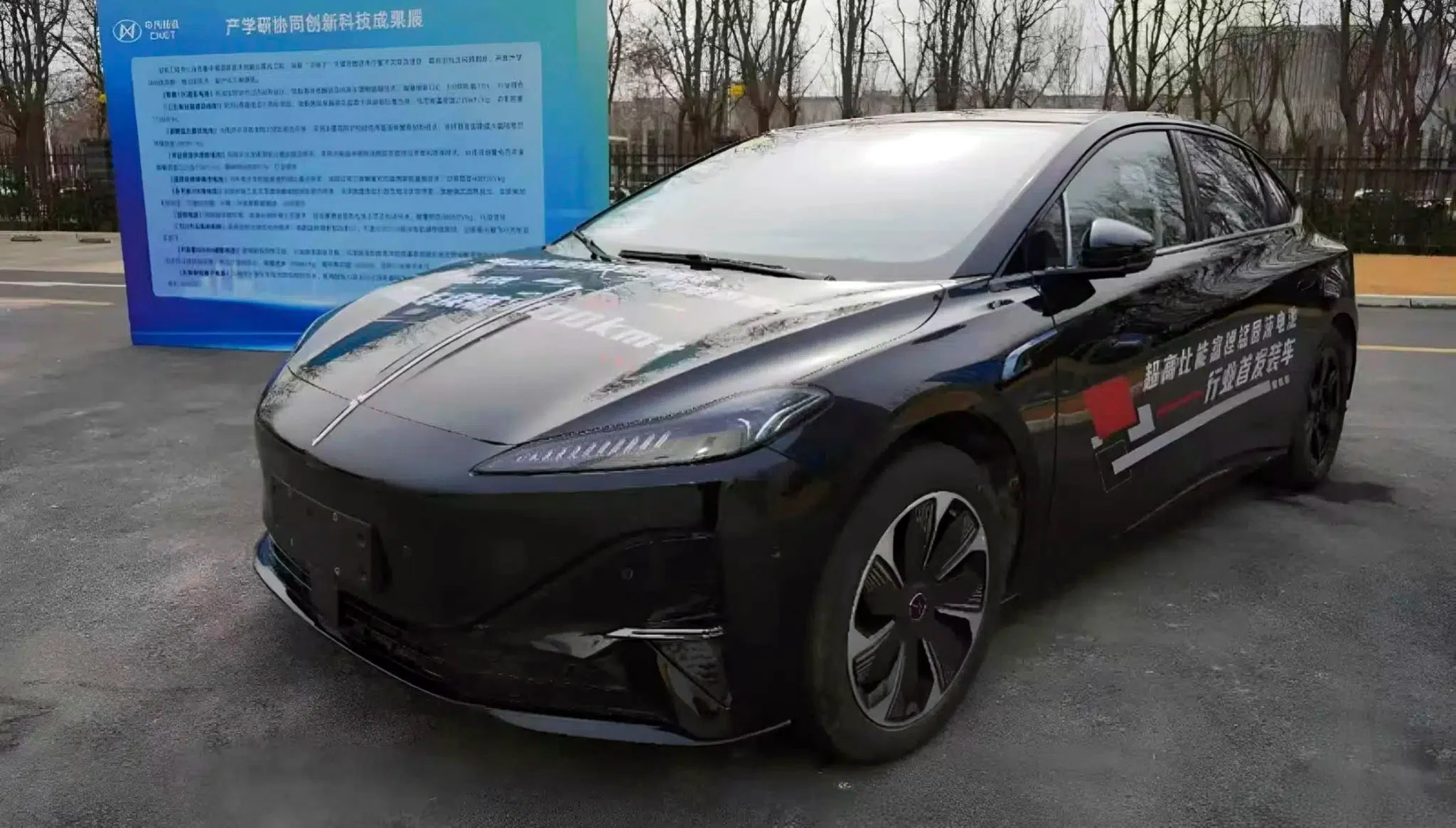
Recent advancements in hybrid solid-liquid batteries are supporting CATL’s assertions. A new 142 kWh battery pack has been integrated into a FAW Group sedan, replacing an LFP battery that had about half the capacity of the new one.
This innovative hybrid solid-liquid battery utilizes manganese for the cathode rather than the more costly nickel, achieving an energy density of 500 Wh/kg. This figure doubles the energy density of contemporary LFP batteries and aligns with the theoretical boundaries of first-generation all-solid-state batteries, which Toyota has claimed will be in its vehicles by 2028 amid much excitement.
Collaborative Development
The lithium-manganese battery with a solid-liquid electrolyte has been developed together by FAW, which is VW’s partner in China, and researchers from Nankai University. They have taken a different approach than existing semi-solid electrolyte batteries, such as the 150 kWh pack that NIO rents out for longer journeys, as it’s too pricey to sell with the car. NIO was a pioneer in this technology with its sedans, now capable of traveling over 650 miles on a charge of the hybrid liquid-solid battery.
By replacing nickel with manganese, the researchers have successfully reduced the costs of the hybrid pack while maintaining energy density comparable to solid-state batteries. “The battery employs in-situ-cured composite electrolyte technology, which ensures high ionic conductivity, a broad electrochemical window, strong interfacial compatibility, flame resistance, and cost benefits,” the report reveals. The anode is also created in situ to enhance the battery’s longevity and safety, with the lithium-manganese cathode boasting an energy density of 300 mAh/g, surpassing even top LFP cells by a factor of two.
Anticipated Performance
Prototype range tests in FAW vehicles are projected to achieve over 1,000 km on a single charge. However, this figure is based on the more favorable local CLTC standard. With the average EV efficiency being about 30 kWh for every 100 miles, the hybrid battery is estimated to reach a 500-mile range according to EPA standards. The next version being prepared by the team is a 200 kWh pack that aims to deliver nearly 700 miles on a charge, all while maintaining a compact design.
Source:
Link