Category: EV vehicles

  • Xiaomi SU7 Sales Hit 16,000 in September, Aiming for 20,000 in October

    Xiaomi SU7 Sales Hit 16,000 in September, Aiming for 20,000 in October

    Amid growing rivalry in the worldwide electric vehicle market, Xiaomi’s recent results are attracting notable interest. On October 1, the firm revealed that its sales for September exceeded 10,000 units, achieving this for four straight months. This achievement lays a strong groundwork for the company’s goal of delivering 20,000 units in October, as mentioned by Lei Jun, the founder of Xiaomi Group, during a live show on CCTV.

    Aspirational Goals

    Since its debut in April, the Xiaomi SU7 has established a position in the market, going head-to-head with Tesla’s Model 3 and Model Y. The SU7 is particularly appealing due to its lower price and advanced technology. Reports suggest that deliveries in September were between 15,000 and 16,000 units, showing an increase in consumer awareness and confidence in the Xiaomi brand.

    If the goal for October is achieved, the weekly delivery rate could hit 5,000 units, which puts pressure on the production lines. Yet, Xiaomi’s ability to adapt and strategize has turned potential issues into advantages.

    Production Improvements

    To boost production capacity, Xiaomi has introduced multiple enhancements in its factory setup and manufacturing techniques. From intelligent manufacturing to automated systems, the continuous technological improvements have greatly increased production efficiency. The integration of AI technologies has optimized every stage of the production process, ensuring consistent product quality while minimizing labor expenses.

    User Experience

    The SU7’s carefully designed interiors and cutting-edge multimedia and AI driving assistance systems provide excellent comfort for users. Reports from owners highlight outstanding performance in navigation and voice assistant capabilities. As Xiaomi moves forward in increasing production and broadening its retail footprint, the SU7 is well-positioned to enhance its competitiveness against established brands like Tesla. With a target of 20,000 units for October, Xiaomi is making notable progress in the electric vehicle sector.


    Image 1
  • Biden Administration Spends $2 Billion on EV Tax Credits for Teslas

    Biden Administration Spends $2 Billion on EV Tax Credits for Teslas

    The U.S. Treasury Department has revealed the total amount of electric vehicle subsidies it has provided since the start of this year.

    Monthly Expenditures

    Previous estimates suggested that the government was spending around $200 million each month on EV tax credits, and those figures were quite accurate. Thanks to the Inflation Reduction Act from the White House administration, American consumers have received at least $2 billion in subsidies for purchasing electric cars. The Treasury refers to these as “upfront savings,” as the tax credit is now taken directly off the retail price by dealers.

    Savings Breakdown

    Janet Yellen from the Treasury noted that the "Biden-Harris Administration’s Inflation Reduction Act is lowering upfront costs for electric and plug-in hybrid vehicles, saving Americans more than $2 billion since January." These savings have benefited approximately 250,000 new clean vehicles, each receiving a $7,500 federal tax credit, along with 50,000 used cars that qualify for a $4,000 subsidy.

    Tesla’s Position

    Recently, Elon Musk stated that Tesla doesn’t rely on these tax credits to sell more vehicles; however, the company did lower the price of its cheapest Model 3 since it didn’t meet the qualification criteria. Additionally, the popular Model Y SUV likely wouldn‘t have sold as well if it weren’t for the federal $7,500 incentive that makes its pricing competitive with gas-powered vehicles.

    The federal EV tax credit is set to continue until 2032, and it will be interesting to see how much the Treasury ultimately spends on this initiative, especially with the variety of electric car models and battery factories expected to qualify for subsidies in the upcoming years.

    Future Earnings

    Tesla is poised to gain the most from this program. With its lineup of electric vehicles, 4680 batteries, Supercharger network, and energy storage solutions, it’s projected to receive at least $41 billion from the government throughout the duration of the subsidy program.

  • Rivian R1T Survives 100+ Feet of Flooding in Hurricane

    Rivian R1T Survives 100+ Feet of Flooding in Hurricane

    In a recent Facebook video, Micheal, a resident of Ashville, North Carolina, shared how a hurricane affected his truck. Surprisingly, he discovered that his vehicle was still working, though it was covered in a thick layer of mud. Before the storm hit, Micheal had parked his truck outside a U-Haul store located on Swannanoa River Road in Asheville. After Hurricane Helen passed on Saturday afternoon, he went back to find that his 7,000-pound truck had floated down the street and ended up at a Walgreens nearby. Micheal noted that he did not see the truck floating; it was simply missing from its original parking spot. At first, he thought the truck was damaged beyond repair, but as he got closer, he noticed the doors were unlocked and he was able to start the R1T without any problems.

    Built for Adventure

    The R1T was designed by Rivian to excel in outdoor situations. This truck is known for its ability to navigate through challenging terrains like rock crawling, deep sand, and snow, thanks to its various drive modes. Furthermore, Rivian mentions on its website that all of its rugged vehicles are built to withstand extreme environments. The R1T has a specified water fording height of 43.1 inches, but it’s fair to think that this measurement may not include the truck’s capability to float a bit further down the road. For more details about the video and the Rivian R1T, check the resources below.

    More Info Available

    For those who are interested, additional information can be found through Electrek and Rivian’s official channels.

  • New Material Prevents EV Battery Fires from Thermal Runaway

    New Material Prevents EV Battery Fires from Thermal Runaway

    While Tesla’s data debunks the common belief that electric vehicle (EV) battery fires are frequent, it’s clear that when they do occur, extinguishing them is quite difficult.

    Difficulty in Extinguishing EV Fires

    It requires significantly more water to put out a fire started by an electric vehicle battery. This is due to a phenomenon called thermal runaway, which causes the battery packs to combust spontaneously, and regular fire extinguishers are ineffective against it.

    Before Hurricane Helene struck Florida, Governor DeSantis cautioned electric car owners to move their vehicles to higher ground. After the hurricane, the Dunedin Fire Rescue department tweeted a warning: "if your electric vehicle came in contact with flood water, don’t charge or start it," advising inspections by firefighters for flooded EVs.

    Recent Incidents Highlight Risks

    In a recent incident, the battery pack of a flooded Model X ignited after contact with corrosive saltwater while parked in a garage, leading to a complete structure fire. Previous hurricanes have also seen a rise in EV fires, and one Tesla even caught fire months after being submerged and taken to a junkyard. It required immersing the Model S in a pool of water to extinguish the flames, all due to thermal runaway that can cause short-circuiting in isolated cells to spread throughout the entire battery pack.

    A new material from LG Chem aims to combat thermal runaway effectively. Their researchers developed a composite that quickly reacts to temperature changes by significantly altering its electrical resistance. This material can be fashioned into a thermal runaway prevention layer that is just 1μm thick, positioned between the cathode and the aluminum foil that collects electrons in a lithium battery.

    Innovative Material Design

    This reinforced safety layer is made from polythiophene, which is engineered to change its molecular structure at temperatures exceeding the usual operating range of 90°C – 130°C. As temperatures rise, the material sees a swift increase in electrical resistance, measuring 5,000 ohms for every 1°C increase. Its maximum resistance can reach up to 1,000 times that of standard battery operating temperatures, effectively cutting off the electric current during an ignition event. Thus, this layer functions as a fuse for each battery cell, halting electricity flow and preventing thermal runaway and subsequent fires.

    While previous strategies included inserting temperature-sensitive materials inside the battery cells, they often struggled with slow response times or decreased energy density. However, LG Chem has developed a material that addresses these problems, utilizing their expertise and patented design to facilitate rapid mass production.

    In testing, LG Chem researchers punctured and dropped weights on batteries with and without the new safety layer. None of the modified polythiophene layer batteries experienced full thermal runaway, while all regular batteries in the drop test and 84% of those in the puncture test were completely destroyed.

    Scaling Up Production

    The highlight of this fire prevention innovation is that the new material can be quickly scaled for roll-to-roll mass production. LG has already completed safety verification for phone batteries using this protective layer and plans to certify it for larger electric vehicle packs next year.

    "This is a significant research milestone that can be swiftly implemented in mass production," says the CTO of LG Chem, expressing excitement that this material discovery will "improve safety technology to ensure customers can confidently use electric vehicles."

    LG Chem via Nature.

  • Model Y Zero Down Payment Deal Continues in Q4 Without 1.99% APR

    Model Y Zero Down Payment Deal Continues in Q4 Without 1.99% APR

    Tesla appears to be gearing up for its holiday promotions for the Model Y, having quickly rolled out a new offer at the start of the fourth quarter. This new deal is essentially an extension of an existing promotion.

    New Lease Offer

    The latest offer includes a Model Y lease with no down payment required, allowing customers to drive away in a Model Y without any initial payment. While a similar zero-down deal was offered just a few weeks ago to boost third-quarter delivery numbers, this one suggests that the Model Y has secured its position as the top-selling vehicle in the US, surpassing the Toyota RAV4.

    With this current offer, buyers can lease the highly popular Model Y for $633 per month without any upfront cost, following the standard 72-month financing plan.

    Pricing Changes

    Even though this monthly payment exceeds the previous $580/month rate that included a federal tax credit during the last quarter, the increase is due to the removal of the APR financing discount. In the earlier promotion, Tesla had slightly raised the APR from a promotional rate of 1.99% to a still favorable 2.49% for most lease terms, except for those lasting 84 months.

    Now, all financing promotions for the Model Y have come to an end, and the current terms do not offer the same incentives. Whether customers opt for the zero-down lease or provide a cash payment, the APR has significantly increased to 5.29%, which is a notable rise compared to last month’s offer.

    Future Prospects

    Additionally, those who select the 84-month financing option will face an even higher APR of 6.29%, making the new offer less attractive than the one introduced earlier. Tesla is expected to announce its quarterly sales figures soon, and there remains a chance for the company to unveil financing rate discounts for the Model Y that buyers are anticipating.

    As Tesla aims to enhance its fourth-quarter numbers, it is also preparing for the upcoming launch of the Model Y Juniper refresh, which is expected to debut next quarter. This new version will feature various specifications and design updates, potentially leading to a significant upgrade cycle for the Model Y.

  • Cheapest Tesla Model 3 Offers Longest Range and Tax Credit

    Cheapest Tesla Model 3 Offers Longest Range and Tax Credit

    If the basic Model 3 RWD didn’t seem to fit Tesla’s lineup in the U.S. until now, it has become even less relevant with President Biden’s new tariffs on Chinese electric vehicles and parts now in effect.

    New Tariffs Impacting the Market

    Earlier this year, the Biden administration announced a significant increase in tariffs on electric vehicles and their components imported from China, which took effect on September 27. The 100% tariff on Chinese electric vehicles marks a steep rise from the previous 25% rate, but it is mostly symbolic since there are currently no such vehicles available in the U.S. market. However, the rise in lithium cell import tariffs from 7.5% to 25% is impacting several automakers, including Tesla, as China is home to the major manufacturers of EV batteries.

    Discontinuation of the Base Model

    As a result of these changes, Tesla has decided to discontinue the base Model 3 RWD, which was previously the most affordable Tesla model. Although it was the cheapest based on MSRP, its actual pricing ended up being higher than that of the next model up, the RWD Model 3 Long Range. The basic Model 3 RWD was equipped with cost-effective iron phosphate LFP batteries produced by CATL, the largest battery manufacturer in the world. Since CATL is based in China, this model no longer qualifies for the federal tax credit.

    New Options for Buyers

    In contrast to the discontinued base RWD Model 3, the recently reintroduced Tesla Model 3 LR RWD features a battery pack that qualifies for the full $7,500 federal tax credit. This change has brought its price down from $42,490 to just $34,990, making it the new entry-level Tesla vehicle. The price gap between this and the base Model Y RWD is now only $2,500, making the Model Y an attractive choice for many buyers. Additionally, this new affordable Tesla offers an impressive range of 363 miles, providing a more balanced selection in Tesla’s offerings now that the basic RWD Model 3 is no longer available.

  • Tesla Market Share Falls Below 50% as Model Y Gains Popularity

    Tesla Market Share Falls Below 50% as Model Y Gains Popularity

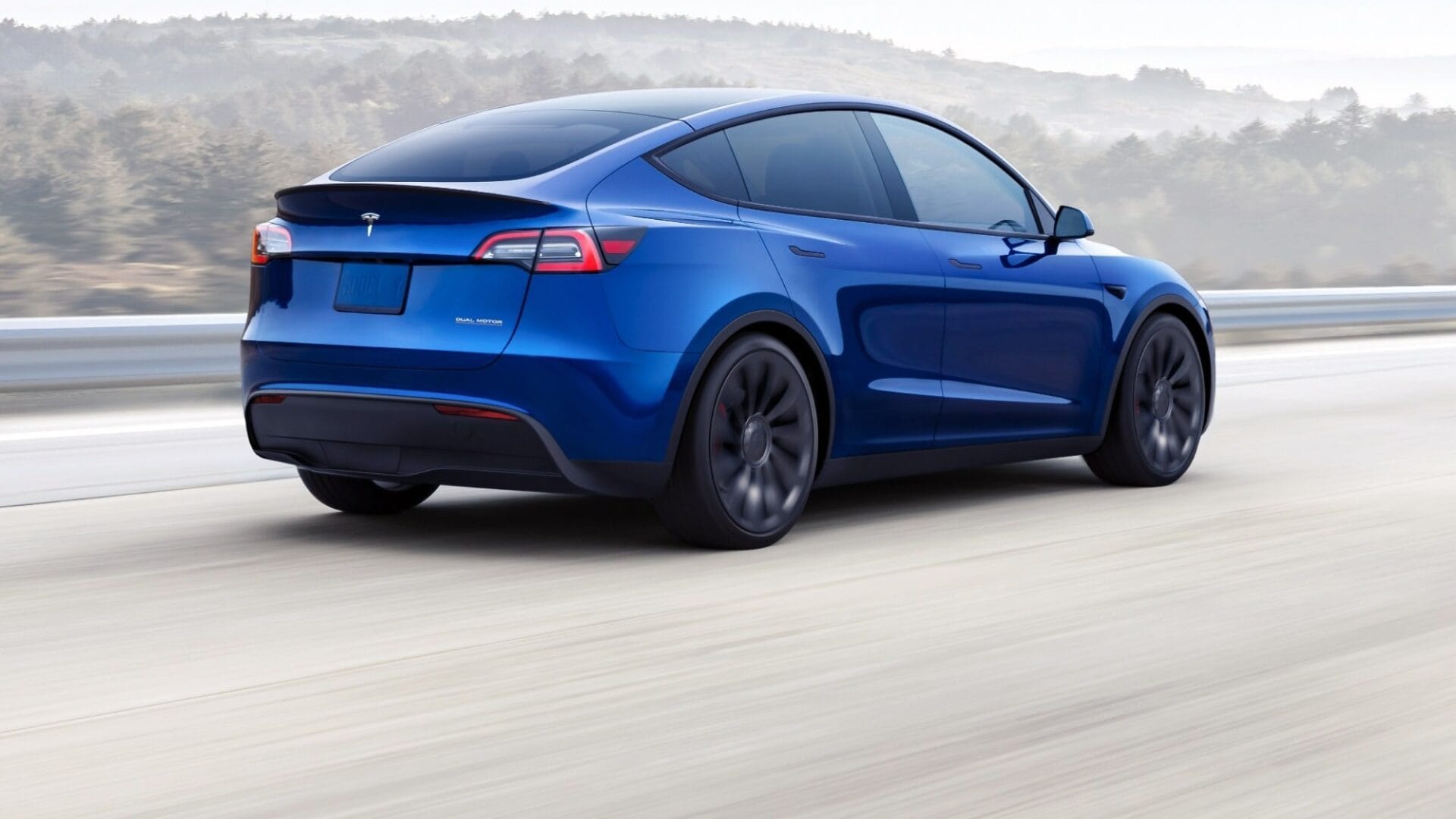
    Tesla’s Model Y is nearing the title of the best-selling car in the United States, surpassing the Toyota RAV4, just as it previously did with the Ford F-150 truck. As the most American-made passenger vehicle, the Model Y has gained popularity thanks to various deals and tax incentives, despite an upcoming facelift called Juniper.

    Market Share Dynamics

    While the Model Y is currently the world’s top-selling passenger vehicle, Tesla’s overall electric vehicle (EV) market share in the US appears to be declining. Just a couple of years ago, Tesla accounted for over 80% of the electric vehicle sales in the country. Recent analyses suggest that this figure may have dipped below 50% for the first time, as preliminary delivery data is set to be revealed tomorrow.

    The decline in Tesla’s popularity among electric vehicle buyers is due to increasing competition and a lack of new models. Rivals such as Hyundai, Kia, and Ford are gaining market share, while Tesla experiences an unprecedented loss. This downturn occurs even as the overall EV market has grown, reaching 9% of total vehicle sales in the US—its highest point ever.

    Q3 Delivery Estimates

    Tesla’s delivery estimates for the third quarter are projected to reach 472,000 units, which would still keep the company in the “less than 50%” market share territory since the launch of the Model Y. In 2022, Tesla’s brand loyalty fell below the industry average for the first time, leading S&P analysts to predict a gradual decline toward a 20% market share, driven by the influx of competitive electric vehicle options.

    Analysts have identified 2025 as a critical year when Tesla may drop to the 20% market share threshold, with many automakers preparing to launch their own mass-market EVs. However, a general drop in demand for electric cars might require a reassessment of this prediction. The rapid decline from 80% to below 50% market share in just two years suggests that increased competition could exert further pressure on Tesla’s market position.

    Future Prospects

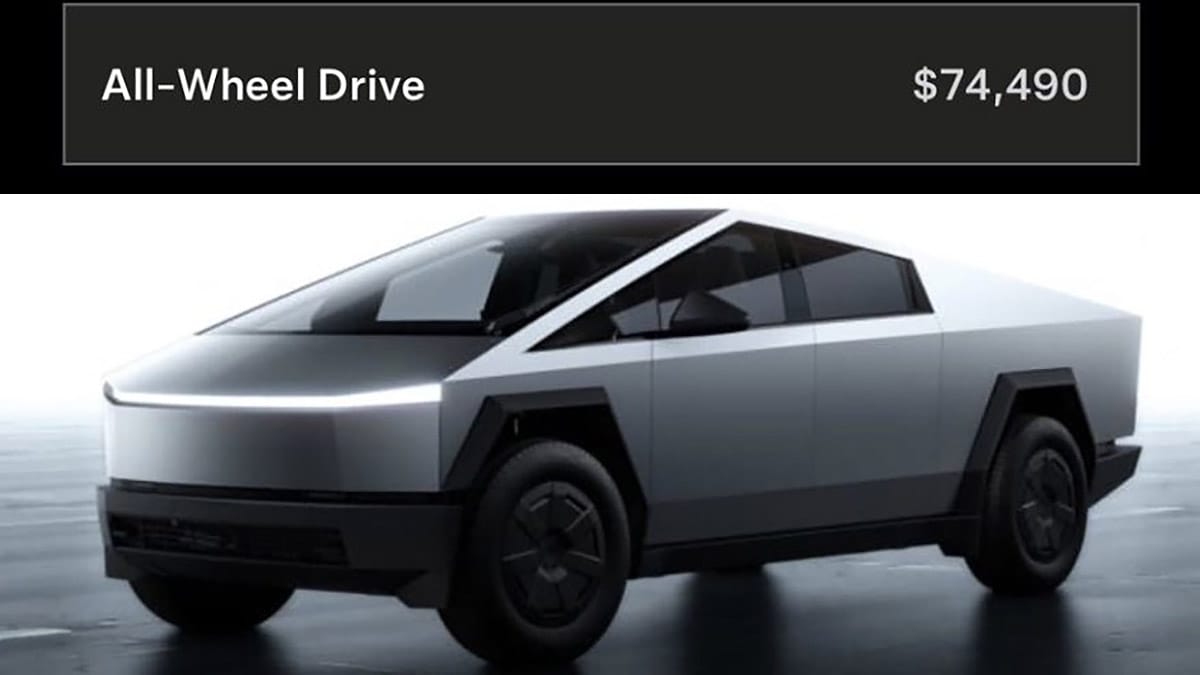
    In 2025, Tesla plans to introduce the Juniper refresh of the Model Y, lower the price of the Cybertruck, and launch its first Robotaxi service. These developments could help stabilize Tesla’s market share against competitors like Hyundai, Ford, and GM, which is now shipping the most affordable 300-mile electric vehicle in the US.

    WolfStreet & TroyTeslike (X) via CleanTechnica.


    Image 1
    Image 1
  • Cybertruck FSD Review: Quick Lane Switching & Full-Screen Visuals

    Cybertruck FSD Review: Quick Lane Switching & Full-Screen Visuals

    Tesla has announced the launch of the newest Full Self-Driving (Supervised) version 12.5.5, which finally includes the Cybertruck’s FSD option. This comes ten months after the pickup was made available, with the feature included in the Foundation Series trim price.

    Initial Rollout and Feedback

    The rollout of FSD 12.5.5 begins with Tesla employees and Early Access Testers. A key highlight is that Tesla has fulfilled its promise to introduce FSD for the Cybertruck in September. Early reviews of the Cybertruck’s FSD functionality have been mainly positive, with testers noting the impressive polish of this driver-assist system in Tesla’s largest passenger vehicle.

    Performance Insights

    Testers observed that the FSD effectively recognized the size of the Cybertruck and executed notable maneuvers and lane changes. The system demonstrated quick decision-making and responsive reactions. The visualization on the Cybertruck was smoother than that on the Model 3, accurately depicting the movements of other vehicles. While AutoMax performed well in city settings, it was slightly slower on highways. However, testers are optimistic that speed profiles will enhance performance in future updates. The End to End functionality was adequate during highway use, although it took the off-ramp a bit too rapidly. There is curiosity about how it would manage heavy traffic on the 405 during rush hour and on longer interstate routes.

    Maneuvering and Visual Experience

    While the system was somewhat cautious when merging into traffic and took a left turn from an unmarked median lane, it mirrored the cautious behavior of many human drivers. Nonetheless, Tesla has impressively managed to fine-tune the Cybertruck’s handling and quick lane changes, even in this early access version.

    The FSD visualizations on the Cybertruck’s impressive 17-inch display are exceptional, boasting smooth frame rates and full-screen graphics that match the vehicle’s angular design, even representing traffic lights in a sharper style.

    Looking Ahead

    Releasing FSD for the Cybertruck has been on Tesla’s agenda for September, alongside the introduction of Actually Smart Summon and FSD 12.5 for HW3 vehicles. Tesla has successfully delivered all items on its roadmap for the month. Looking forward to October, excitement builds as Tesla plans to unveil the FSD 13 generational leap, which is expected to integrate autonomous Robotaxi services with FSD-equipped Teslas into a unified CyberCab ride-share platform.

    Zack (X), WholeMarsCatalog (YT)


  • Tesla Model S Excels in Range Test, Model 3 Falls Short

    Tesla Model S Excels in Range Test, Model 3 Falls Short

    Despite the advancements in Electric Vehicles (EVs), range anxiety continues to be a significant concern for many potential buyers. This fear often leads to hesitation, even when most modern EVs offer impressive range capabilities.

    The Range Test

    The automotive YouTube channel What Car recently tested 12 of the leading EVs from well-known manufacturers to see how far they could go before needing a charge. They compared these results to the official WLTP figures provided by the car makers.

    The EVs included in this range test were the Tesla Model 3 RWD, Polestar 2, Renault Scenic, Kia EV9, Audi Q6 e-tron, BMW i5, Cupra Born, Volvo EX30, Hyundai Kona, Peugeot e-308 SW, Mini Cooper, and an older Tesla Model S from 2015 that has driven over 250,000 miles.

    Testing Conditions

    The testing was designed to reflect real driving conditions, such as stop-and-go traffic, highway driving, and some high-speed maneuvers. Unlike a previous test conducted in winter, this one took place in summer, taking advantage of favorable weather and temperature to maximize the electric range.

    Surprising Results

    The results were intriguing, with some unexpected outcomes based on the performance of the different EVs. Despite having the largest battery at 99.8 kWh, the Kia EV9 secured only third place by traveling 314 miles before running out of charge. The Renault Scenic followed closely behind in second place, reaching 322 miles with an efficiency of 3.7 miles/kWh.

    The Polestar 2 emerged as the leader of the range test, achieving an impressive 333 miles thanks to its efficiency of 4.2 miles/kWh. However, it was not the most efficient vehicle in the test; that title went to the Model 3, which managed only 255 miles—about 19.7% lower than its WLTP estimate—yet boasted a commendable efficiency of 4.4 miles/kWh.

    Notably, the nearly decade-old Model S 90D, which has over 260,000 miles on the odometer, still managed a respectable range of 213 miles despite its age and battery wear. This aligns with previous findings indicating that even after extensive use, EVs remain practical for daily driving with adequate range.

    What Car? via YouTube


    Image 1
    Image 1
  • Sony PlayStation EV Afeela to Feature Tesla NACS Charging Port

    Sony PlayStation EV Afeela to Feature Tesla NACS Charging Port

    Sony has teamed up with Honda to introduce its first electric vehicle (EV), the Afeela sedan, which is set to hit the market in the US and other areas by 2025.

    Partnership Details

    The Sony Honda Mobility (SHM) collaboration has revealed that the Afeela brand’s inaugural EV will come equipped with Tesla’s NACS connector straight from the factory. This feature will allow the vehicle to utilize Supercharger networks available in the US and Japan, which are the initial markets for the car.

    Max de Zegher, Tesla’s Director of Charging, expressed his enthusiasm for this development, noting that in Japan, 90% of chargers with 150 kW capacity and above are Superchargers. Therefore, it makes sense for SHM to be the first car manufacturer to adopt NACS ports in the country.

    Market Transition

    In the US, several Japanese automakers have also announced plans to transition to NACS, with the latest being Honda as it embarks on its journey as an independent EV manufacturer. Other brands making the switch include Toyota, Nissan, and Lexus.

    Preorders for the Afeela sedan are expected to begin in the first half of the year, with sales launching later in 2025. Initial deliveries in the US are projected to occur in early 2026.

    Unique Features

    During the CES 2024 expo in January, SHM’s COO showcased the vehicle using a PS5 DualSense controller, hinting at an extensive integration with the PlayStation 5 ecosystem for buyers of this performance-oriented electric sedan.

    Izumi Kawanishi from Sony stated, “Sony has content, services, and entertainment technologies that move people. We are adapting these assets to mobility, and this is our strength against Tesla since Tesla is not providing any content services.”

    In addition to its PlayStation integration, Sony has partnered with Epic Games, the creator of Fortnite, to utilize Unreal Engine for mixed-reality rendering while the vehicle is in AI-assisted autonomous driving mode. The Afeela EV will feature an impressive array of 45 cameras and sensors, including interior sensors, Time-of-Flight (ToF) depth sensing units, and a LiDAR system.

    Innovative Communication

    Alongside its entertainment features, Sony’s vehicle will include a Media Bar located at the edge of the hood, which will allow the car to communicate with people nearby through light, enhancing interactive communication between the vehicle and its surroundings.

    Final specifications and pricing for the Afeela sedan, developed in collaboration with Honda, have yet to be disclosed by Sony.


    Image 1