Tag: Electric Vehicle Range

  • CALB Warns: Solid-State Batteries Cost Twice as Much, Boost Range

    CALB Warns: Solid-State Batteries Cost Twice as Much, Boost Range

    Key Takeaways

    1. CALB’s new 60 Ah solid-state battery offers a high energy density of over 450 Wh/kg but comes with manufacturing costs twice that of liquid electrolyte batteries.
    2. The solid-state battery is significantly lighter than standard LFP cells and uses advanced materials, contributing to its higher efficiency, safety, and cold-weather performance.
    3. It features a rapid 6C+ charging rate, allowing for a full charge in just ten minutes, and retains 90% capacity in extreme cold conditions.
    4. The battery’s design eliminates volatile liquid electrolytes, enhancing safety during accidents and meeting new safety standards in China.
    5. Solid-state batteries are expected to be used initially in high-end applications like drones and robots, with mass-market adoption likely not starting until after 2030 due to high costs.


    Upon showcasing its new 60 Ah solid-state battery cell, which promises to double the usual range for electric vehicles, CALB has expressed concerns about the steep manufacturing costs involved.

    Energy Density and Costs

    The solid-state battery boasts an energy density that surpasses 450 Wh/kg, making it twice as efficient as BYD’s latest Blade 2.0 LFP battery series. However, it comes at a price—twice that of comparable liquid electrolyte batteries.

    CALB’s Chairwoman Liu noted that the manufacturing expense for a hybrid battery, which uses 95% solid electrolyte, is roughly 12 cents per Wh. In contrast, contemporary LFP cells are produced for under six cents per Wh, translating to about $5,800 for a 100 kWh pack.

    Weight and Composition

    Weighing only a quarter of what a standard LFP cell of the same capacity weighs, CATL’s 60 Ah cell also has a smaller footprint. The solid-state battery incorporates a sulfide-based electrolyte, a nickel-rich cathode, and a silicon composite anode. These elements enhance its energy density, cold-weather performance, and safety profile, although they also contribute to the increased cost of the solid-state cells.

    Despite the higher price tag for double the range on a single charge, solid-state batteries hold a promising position regarding their commercial viability. CALB plans to initially implement its high energy density solid-state cells in eVTOLs and humanoid robots, where space efficiency is crucial, before supplying them to electric vehicle manufacturers by 2027.

    Charging and Safety Features

    One notable advantage of CALB’s solid-state battery is its impressive 6C+ charging rate, which allows it to charge fully in just ten minutes from empty. It maintains 90% of its capacity even in extreme cold, whereas current liquid electrolyte batteries can lose up to 40% under similar conditions.

    Additionally, the solid-state battery is safer in the event of a vehicle accident. It doesn’t contain the volatile and flammable liquid electrolyte that complicates fire suppression for emergency services. It has successfully passed the typical puncture, pressure, and high-temperature safety tests required by the new national solid-state battery standards being developed in China, paving the way for its commercial release.

    Market Outlook

    Numerous Chinese firms, including major players such as BYD and CATL, as well as startups, are advancing solid-state battery technology, accounting for 80% of global production. They caution that solid-state cells will initially be used in drones, robots, and high-end electric vehicles due to their cost. It is expected that mass-market adoption of solid-state batteries will not begin until after 2030, when prices are anticipated to decrease significantly.

    Source:
    Link


  • Chevy Silverado EV Breaks Range Record with 1,059 Miles on Charge

    Chevy Silverado EV Breaks Range Record with 1,059 Miles on Charge

    Key Takeaways

    1. The Chevy Silverado EV Max Range Work Truck successfully traveled over 1,000 miles on a single charge, achieving 1,059.2 miles in a controlled test.
    2. Engineers improved efficiency by maintaining proper tire pressure, lowering windshield wipers, removing the spare tire, using a tonneau cover, and keeping speeds between 20-25 mph.
    3. The Silverado EV’s record surpassed Lucid’s 749-mile achievement with the Air Grand Touring sedan, although Lucid’s record reflected more typical driving conditions.
    4. GM’s VP of Battery, Kurt Kelty, emphasized that achieving such a range requires advanced integration of battery technology, vehicle design, and software.
    5. The Silverado EV has an EPA-estimated maximum range of 493 miles, 760 hp, and a starting price of $52,800, excluding incentives.


    Just how far can an electric vehicle travel on a single charge? The Chevy Silverado EV underwent a rigorous test and managed to go over 1,000 miles.

    Testing the Silverado EV

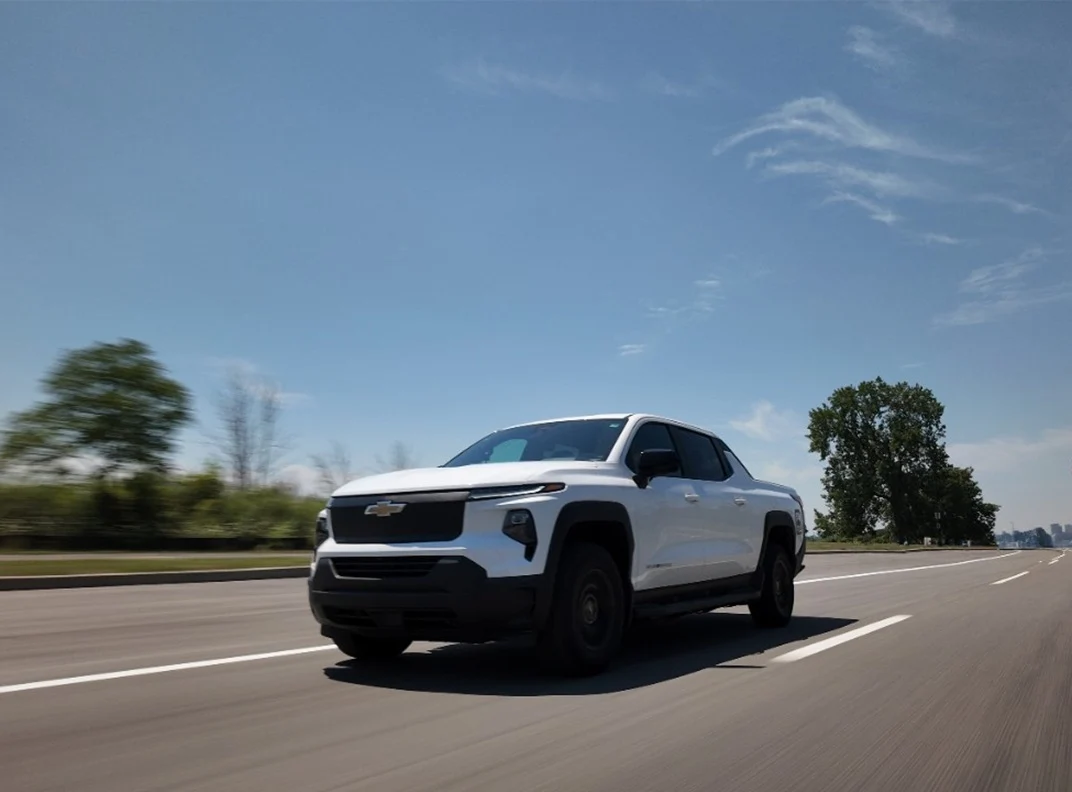
    Chevy’s engineers chose a Silverado EV Max Range Work Truck for this experiment on the streets of Detroit, Michigan. They made some slight adjustments to enhance efficiency and successfully drove 1,059.2 miles, pushing the truck to use every last bit of battery power. This resulted in an average consumption of 4.9 miles per kilowatt-hour.

    Tips for Truck Owners

    For those truck owners who want to try to achieve similar results, the engineers followed a few strategies. They maintained specific tire pressure, lowered the windshield wipers, took out the spare tire, and put on a tonneau cover. They also kept their speed within 20 to 25 mph and turned off both the lights and air conditioning.

    Comparing Records

    In comparison to Lucid’s record, the Silverado EV far surpassed the 749 miles achieved by the Air Grand Touring sedan on its trip from St. Moritz, Switzerland, to Munich, Germany. However, the startup’s accomplishment was more in line with common driving conditions, as it included aspects like highway cruising.

    Kurt Kelty, GM’s VP of Battery, Propulsion, and Sustainability, praised the team behind this record, stating, “Achieving this level of range on a full charge isn’t just luck. It requires a deep integration of battery chemistry, drive unit efficiency, software, and vehicle engineering, which is exactly what the team accomplished.”

    Specifications and Pricing

    The Chevy Silverado EV boasts a maximum driving range of up to 493 miles (based on EPA estimates) and offers 760 hp and 785 lb-ft of torque. The starting price is $52,800, not including incentives.

    Source:
    Link


  • Electric Car Sets Record with 740+ Miles on 112 kWh Charge

    Electric Car Sets Record with 740+ Miles on 112 kWh Charge

    Key Takeaways

    1. Lucid’s Air Grand Touring set a new world record by achieving over 513 miles on a single charge, officially recognized by Guinness World Records.

    2. The Air Grand Touring, with a 112 kWh battery, demonstrated exceptional efficiency, traveling nearly 750 miles in a real-world test, thanks in part to terrain advantages.

    3. Lucid’s powertrains are among the lightest and most energy-efficient, achieving a record consumption rate of 5 miles per kWh.

    4. In optimal conditions, the Air Grand Touring surpassed 6.68 miles per kWh, highlighting its advanced engineering and efficiency.

    5. Lucid’s accomplishment surpassed the previous world record by nearly 100 miles, reinforcing its reputation for premium electric vehicles.


    Lucid has become the first company to break the 500-mile range limit with its Air GT model, which achieved over 513 miles on just one charge of its 118 kWh battery.

    New Record Set

    Now, it has established a new real-world record for the longest range of an electric car on a single charge with its Air Grand Touring model. This accomplishment has been officially recognized by the Guinness Book of World Records.

    Even thought the Air Grand Touring has a slightly smaller battery at 112 kWh, its extremely efficient drivetrain enabled it to travel almost 750 miles before the battery finally ran out.

    Utilizing Terrain to Achieve Distance

    Lucid took advantage of the elevation difference between the mountainous region of St. Moritz in Switzerland and Munich in Germany to achieve this remarkable mileage. The approximate 4,200-foot elevation change between the start and finish of the journey played a role, but the overall incline was not significant enough to heavily influence the impressive 749 miles (1,205 kilometers) range on a single charge.

    Lucid takes pride in creating some of the lightest and most energy-efficient electric vehicle powertrains, boasting a record of 5 miles per kWh in power consumption. Their latest models, like the Gravity SUV, come equipped with a NACS charging connector, allowing them to be charged directly with the Tesla 48A Wall Connector. The Air Grand Touring stands as Lucid’s longest-range vehicle, certified for 512 miles under the strict EPA testing standards.

    Efficiency in Ideal Conditions

    In optimal conditions, Lucid’s powertrain efficiency can exceed the 5 miles/kWh record. The Air Grand Touring achieved an astounding 6.68 miles per kWh with its 112 kWh battery pack while going slightly downhill during the journey. It would be fascinating to make the same trip in reverse to see how that might impact the overall range on a single charge.

    In this manner, Lucid surpassed the previous Guinness world record by nearly 100 miles, once again proving that it manufactures some of the most premium and well-engineered electric vehicles available, complete with a price tag to match.

    Source:
    Link


  • 2000-Watt Solar Charging Roof Rack for EVs by Dartsolar

    2000-Watt Solar Charging Roof Rack for EVs by Dartsolar

    Key Takeaways

    1. Dartsolar’s new folding solar roof rack offers 2,000 watts of power, extending electric vehicle range by up to 40 miles daily at no cost.
    2. The product is designed for easy mounting on Tesla roofs or other electric vehicle roof racks, with a starting price of $1,950.
    3. The solar panels generate up to 10 kWh of energy daily when fully deployed and can still produce 360 watts when folded.
    4. The system features replaceable components, including solar panels that can be upgraded for better efficiency.
    5. Energy from the solar panels is stored in a battery unit, allowing for convenient recharging of electric vehicles like a typical charging station.


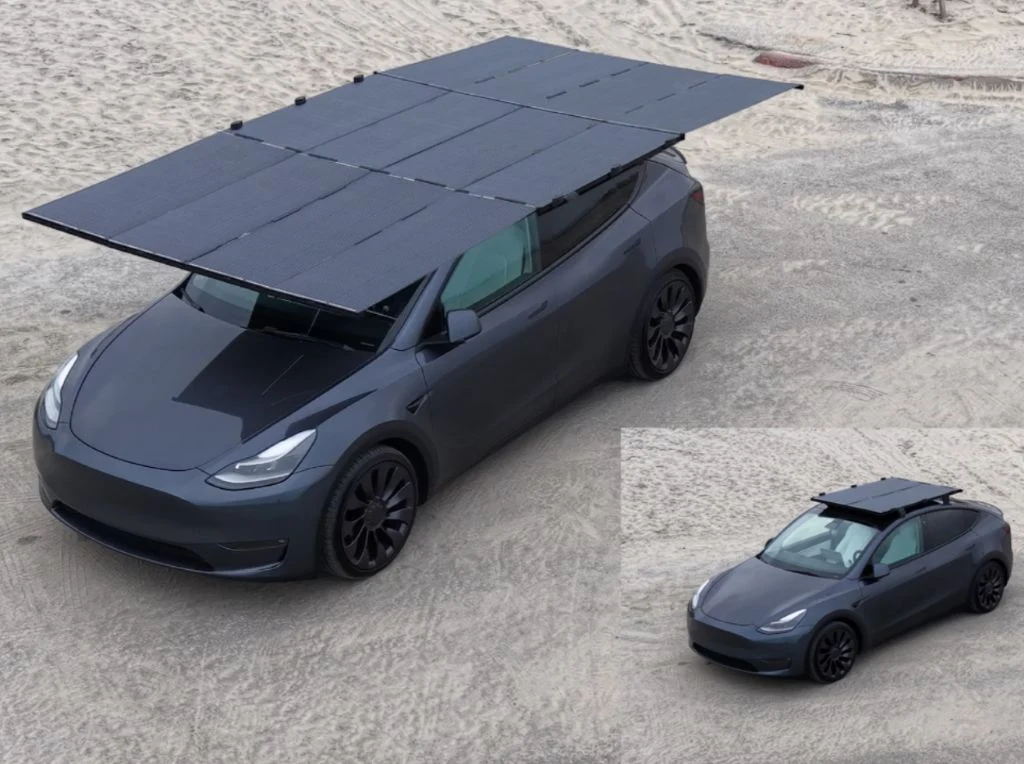
    Dartsolar has introduced its new folding solar roof rack, which boasts 2,000 watts of power and is designed for electric vehicles. This innovative product can extend the driving range by up to 40 miles each day without any cost. This announcement follows the completion of their earlier 1,000-watt model. For those interested, updates and the opportunity to pre-order the 1,000-watt version for $99 can be found on the company’s website. The starting price for these models is $1,950, which varies based on the chosen accessories.

    Daily Solar Power Benefits

    Most vehicles sit idle for most of the day after just a couple of hours on the road, even in cities with long commutes. States like New York enjoy an average of over nine hours of sunlight daily, which means the solar roof rack can provide a significant boost in range on a daily basis.

    Power Generation Details

    When deployed, the 2,000-watt solar panels are fully exposed to sunlight, while 360 watts are available when the rack is folded during travel. The unit can produce as much as 10 kWh of energy each day, translating to a range of 40 miles for electric vehicles. The smaller 1,000-watt version can yield up to 20 miles of range.

    Design and Features

    The Dartsolar is intended to be mounted directly onto Tesla roofs or on a roof rack for other electric vehicles. Its construction includes expanding aluminum tubes, 3D-printed components with provided blueprints, and solar panels that are 1/8-inch thick, achieving around 20 percent efficiency. Notably, all components are replaceable, including the solar panels, which can be upgraded to more efficient versions.

    The energy harnessed from the solar panels is stored in a battery unit, which can be used along with a compatible charging cable to recharge the electric vehicle, similar to any charging station. Innovative users may find ways to hardwire the system, making it unnecessary to exit the car to connect the charging cable.

    Source:
    Link

  • Cheapest Model Y Now Offers 5% Longer Range Per Charge

    Cheapest Model Y Now Offers 5% Longer Range Per Charge

    Tesla appears to be quite cautious, or maybe more accurately, realistic, when it comes to estimating the range of its own electric vehicles.

    Before the EPA put the base Model Y RWD Long Range through its updated and rigorous range testing, Tesla estimated its least expensive Model Y would have a range of 320 miles on its own.

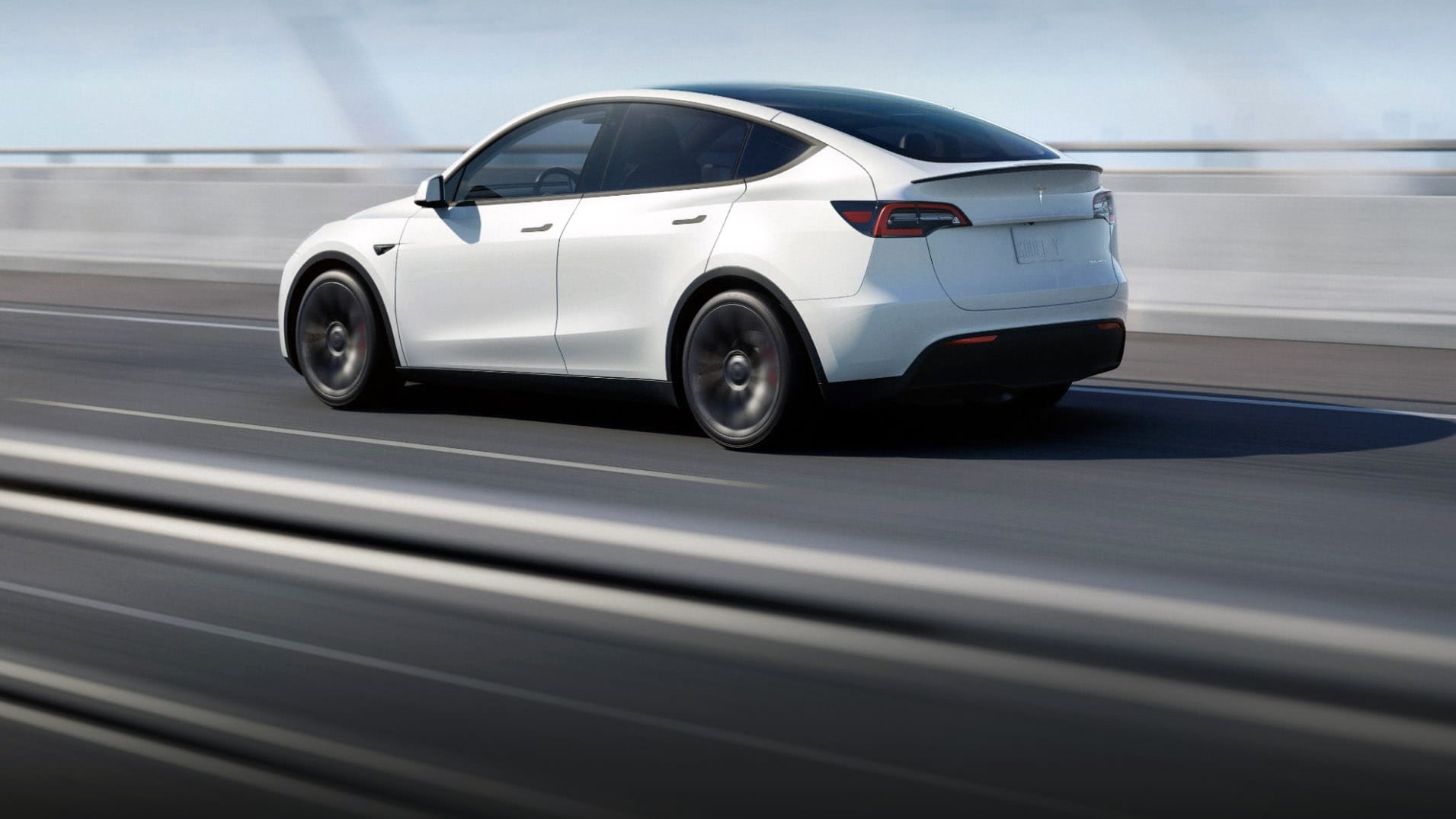
    Now that the EPA has completed testing under its stricter standards, the official range for the Model Y RWD LR is an impressive 337 miles, which is 5.3% more than Tesla’s earlier estimate.

    Updated Range Makes Model Y More Attractive

    Unsurprisingly, Tesla quickly adjusted the Model Y Long Range RWD‘s official range to reflect this new figure, making this most affordable Model Y not only the cheapest but also the one with the best range of all the versions they offer. It can now be purchased for under $35,000, especially with some inventory discounts.

    In Europe, Tesla has been offering a more economical RWD Model Y since spring, boasting an even longer range of 375 miles. However, this figure comes from the local WLTP cycle, which is usually about 10% more lenient than the EPA’s standards. The European version of the 375-mile Model Y RWD LR is equipped with 2170 cells, the same as the AWD version sold in the U.S., qualifying it for the entire federal tax credit.

    Challenges with Battery Variants

    Tesla faced some difficulties with the base Model 3 RWD that used the Chinese LFP battery, which they have since phased out because it turned out to be pricier than the AWD version that is eligible for the full tax credit.

    The Model 3 RWD LR, now the cheapest option, has a range of 363 miles, making it the longest range among Tesla’s two top-selling models. While the highest range still goes to the base Model S, rated for an astounding 402 miles, it is worth noting that it sells in much lower numbers, starting at $74,990.

    Recently, the EPA updated its electric vehicle range testing standards, placing greater importance on highway driving efficiency to better reflect real driving habits in America.

    So, even though Tesla had to lower some of its official Model Y range estimates, the fact that the base Model Y RWD is now rated at 337 miles on the new EPA cycle is quite remarkable.

  • A Quantum Leap in Electric Vehicle Range: The 2024 Mercedes-Benz EQS

    A Quantum Leap in Electric Vehicle Range: The 2024 Mercedes-Benz EQS

    The 2024 Mercedes-Benz EQS: A New Standard in Driving Range and Efficiency

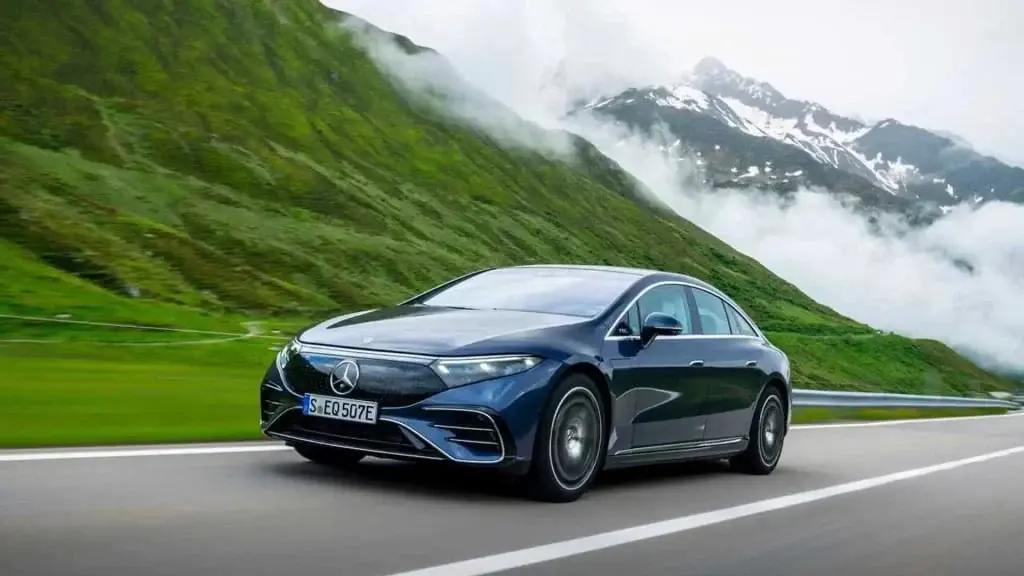
    The 2024 Mercedes-Benz EQS is making waves in the electric vehicle (EV) world with its impressive driving range and efficiency. With the latest EPA ratings, this luxury electric sedan is set to deliver more miles on a single charge, representing a significant leap forward for both the brand and EV enthusiasts.

    A Lineup of Luxury and Performance

    The 2024 EQS lineup consists of three models: the EQS 450+, the EQS 450 4Matic, and the EQS 580 4Matic. Each model offers a perfect blend of luxury and performance. However, it is the EQS 450+ that stands out with its exceptional EPA combined range of 352 miles, surpassing its predecessors. The EQS 450 4Matic and EQS 580 4Matic also offer noteworthy improvements, with each boasting a range of 345 miles.

    The Performance-Oriented AMG EQS 4Matic+: Pushing Boundaries

    While all the models in the lineup showcase impressive ranges, it is the AMG EQS 4Matic+ that truly shines. This performance-oriented variant has witnessed a remarkable 10% increase in range, jumping from 277 to 305 miles. This improvement not only allows for longer drives but also demonstrates Mercedes-Benz's commitment to advancing electric mobility without compromising on performance or luxury.

    Unveiling Enhanced Efficiency

    The gains in driving range are not solely attributed to larger batteries. The 2024 AMG EQS showcases over 6% lower total energy consumption, suggesting improvements in efficiency and a smarter utilization of its powertrain. These enhancements contribute to the overall driving range, ensuring that the EQS models deliver more miles on a single charge.

    Pricing and Considerations

    One aspect that remains a mystery is the pricing of these models. The 2023 lineup, with its six-figure price tags, positions these vehicles as premium choices in the EV market. Additionally, it is worth noting that these models do not qualify for federal tax credits due to their import status and price. This factor could potentially influence prospective buyers when considering their options.

    In conclusion, the 2024 Mercedes-Benz EQS is raising the bar in terms of driving range and efficiency in the EV market. With its impressive EPA ratings, the EQS lineup offers a range of models that blend luxury and performance. The AMG EQS 4Matic+ is a standout, showcasing a significant increase in range. These advancements are not solely due to larger batteries but also reflect improvements in efficiency. As the pricing details remain undisclosed, potential buyers will have to consider the premium positioning of these models and the absence of federal tax credits.