
Tag: Guinness World Record

  • 4.4-Pound DIY Drone Reaches 454 MPH World Speed Record

    4.4-Pound DIY Drone Reaches 454 MPH World Speed Record

    Key Takeaway

    – Ben Biggs extended his RC drone speed record to an average of 685 km/h (425.6 mph), with a downwind peak of 730 km/h and an upwind run of 640 km/h.
    – Upgrades included higher propeller pitch, carbon fiber props, and a toothed propeller design to improve straight airflow and reduce spin effects.
    – The testing involved two drones, one lost to video feedback issues, and the other achieving record speeds but the windy conditions and extended full-throttle runs led to battery depletion and a crash with smoke.


    Overview of the Record Attempt

    Nearly four months after breaking the record for the world’s fastest RC battery-powered drone, DIY engineer and tech enthusiast Benjamin Biggs (Ben Biggs) is back with a blast, breaking his own record. The update shows a bold continuation in a rivalry where progress is measured in tens and hundreds of kilometers per hour, a pace that keeps the hobby thrilling and dangerous in equal measure.

    Background and Rivalry

    For those who have not been following the situation, Ben Biggs and the Bells have been going back and forth for a while, breaking each other’s records. But since Ben last took back the crown in January, the Bells have come up with no response (though they admitted they are currently working on it); now Ben has gone ahead to extend the record with a blistering 685 km/h (425.6 mph) average top speed.

    Technical Modifications

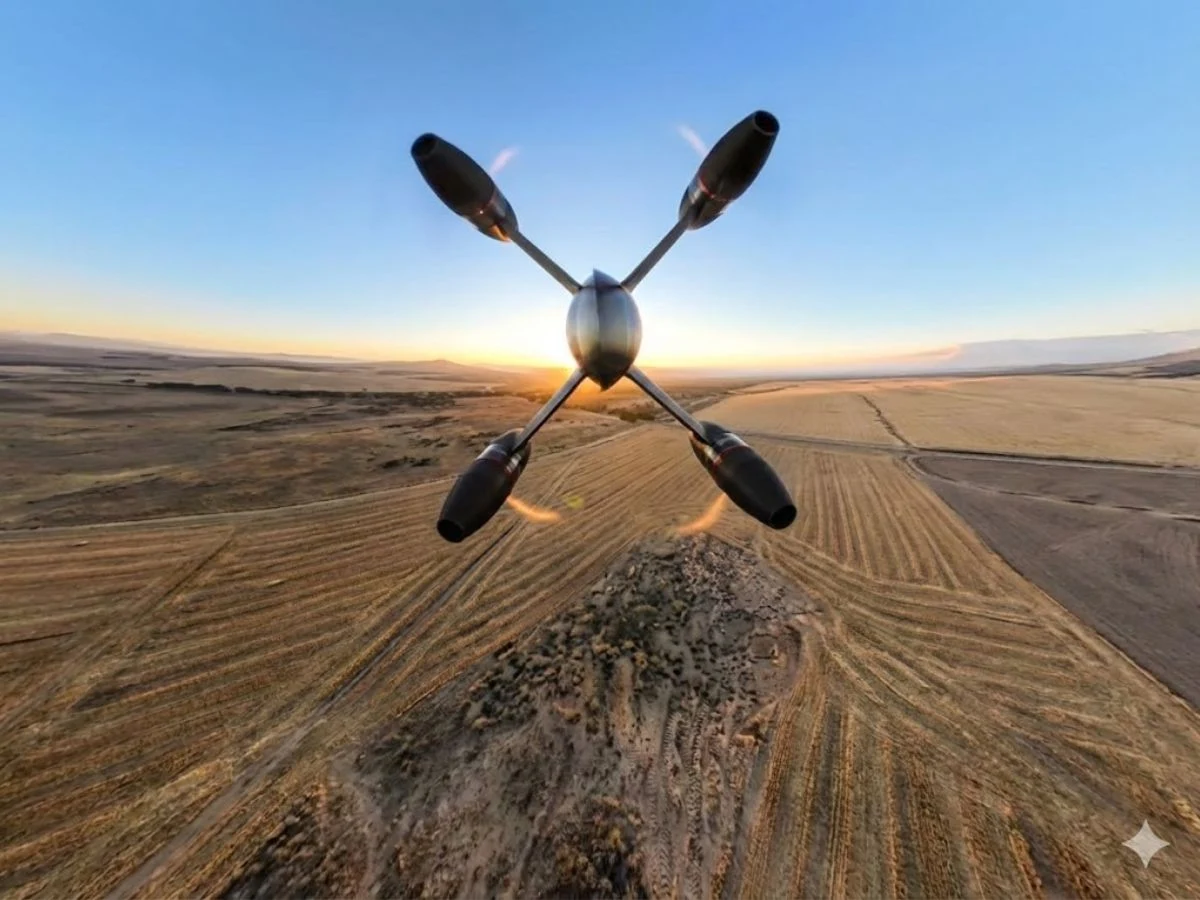
    To achieve this feat, Ben increased the pitch of his propellers and also switched to carbon fiber propellers. He also upgraded his propellers with a toothed design, which he says helps ensure the air flows straight past, instead of wrapping around the propellers in spin-wise directions.

    Flight Test Outcomes

    The flight tests went relatively smoothly, with him losing one drone due to a loss in video feedback. With a second drone, however, he was able to hit 730 km/h (453.6 mph) going downwind on a windy day; for the upwind run, he managed 640 km/h (397.7 mph). Because of the windy weather, he pushed the drone for longer at full throttle, which led to the batteries dying out and smoking after the drone crash-landed.

    Power and Performance

    During the runs, the 2-kilogram drone hit a peak power draw of 19.1 kW (25.6 horsepower) at 449 A and 42.5 V. Ben now plans to break the official Guinness World Record with his new drone. This remarkable power usage underscores the intense demands and risk associated with RC high-speed flight, where every watt counts and battery management becomes a critical safety factor.
     

  • DIY Solar Drone Achieves 5-Hour Flight Duration

    DIY Solar Drone Achieves 5-Hour Flight Duration

    Key Takeaways

    1. Luke Maximo Bell unveiled a second version of his solar-powered drone, which now includes a battery for enhanced performance.
    2. The updated drone features GPS, flight automation software, and five additional solar panels, aiming to break the Guinness World Record for longest flight time.
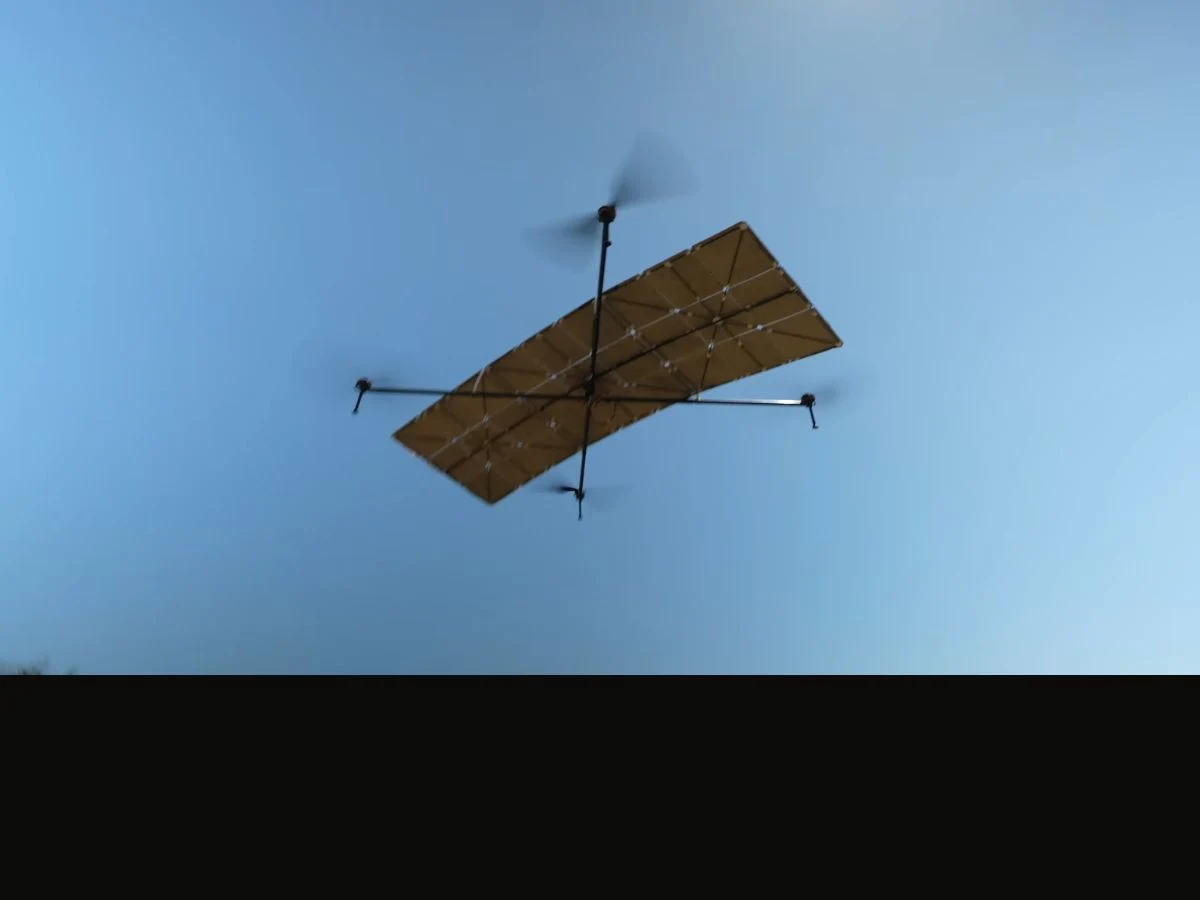
    3. Design changes include a slat with 32 solar panels and shorter arms for improved agility, with panels positioned above the propellers.
    4. Initial flight attempts faced challenges due to wind and stability issues, leading to design adjustments and a reduction in solar panels to 28.
    5. The final drone achieved a flight time of 5 hours, 2 minutes, and 21.75 seconds, with plans to eliminate the battery in future designs.


    DIY engineer and drone specialist Luke Maximo Bell has unveiled the second version of his solar-powered drone that doesn’t need a battery. However, for this new model, he had to include a battery in the design.

    Upgrades and Features

    In this update, Luke enhanced the drone as he announced in his last video, incorporating GPS, flight automation software, and additional solar panels. This drone has also succeeded in its aim to beat the existing Guinness World Record for the longest flight time of an RC quadcopter.

    Design Changes

    For this design, he started with a slat made from 32 small solar panels, which is 5 more than what he used before. He also shortened the arms to improve the drone’s agility. With the arms shorter, the panels were placed above the propellers instead of in the center. To create space for this, he elevated them higher.

    Flight Challenges

    During the first attempt, the drone successfully flew using only solar energy, but some issues came up. Since South Africa is known for its windy conditions, the drone struggled against the wind, leading to a higher power consumption than the panels could support. Additionally, having the solar panels positioned high above the main structure caused stability concerns.

    To address these challenges, Luke lowered the slat after running a simulation to ensure it would work fine. He also modified the frame that holds the panels to minimize wobbling and decided to decrease the panel count to 28. To solve the power drop issue, he included a battery that functioned as a UPS system, supplying extra power when the solar panels couldn’t meet the demands.

    Impressive Results

    The final version of the drone achieved an impressive flight time of 5 hours, 2 minutes, and 21.75 seconds before landing. For his next project, Luke aims to eliminate the battery through innovative engineering solutions.

  • DIY Engineers Break Guinness World Record with 3D-Printed Drone

    DIY Engineers Break Guinness World Record with 3D-Printed Drone

    Key Takeaways

    1. Mike Bell and Luke Maximo Bell set a new Guinness World Record for the fastest drone, reclaiming the title with their Peregreen 4 model.
    2. They prioritized stability over raw power by reverting to T-motor motors for better performance, despite previous tests showing AOS Supernova motors produced more thrust.
    3. The drone underwent four major structural modifications, including the introduction of “spinners,” which increased speed by 30 km/h and improved airflow.
    4. The Peregreen 4 achieved a peak power draw of 12 kW, making it more efficient than the previous model, Peregreen 3, which drew 16.2 kW.
    5. The Bells’ drone is now the fastest battery-powered remote-controlled quadcopter and the fastest battery-powered aircraft ever made, and they are challenging others to beat their record.


    Father-and-son engineers Mike Bell and Luke Maximo Bell have once again set a new Guinness World Record for the fastest drone in the world. This comes after they lost the title to Benjamin Biggs from Drone Pro Hub, who claimed it with a drone reaching a speed of 626.44 km/h (389.25 mph).

    Improvements to the Drone

    To reclaim their title, the Bells made significant updates to their latest drone model, the Peregreen 4. One of the most crucial changes was reverting to T-motor motors, which they had previously used in the Peregreen 2, instead of the AOS Supernova 3220 motors found in the Peregreen 3. Although the AOS 3220 produced more thrust in tests, the T-motor 3120 provided better stability. Learning from past mistakes that resulted in the loss of seven drones during their previous record attempt, the engineers prioritized stability over sheer performance. The outcome? They encountered no motor problems throughout all their runs, although a propeller detached mid-flight, causing a crash.

    Structural Modifications

    As illustrated in the image above, the drone experienced four major structural modifications. The most impactful change was the introduction of “spinners,” which contributed to an impressive speed increase of 30 km/h. These spinners eliminated the blunt ends of the motors, enabling a more tapered design that enhanced airflow. Additionally, the shape of the drone was modified, its body was sanded down, and the original 7-inch propellers were reduced to approximately 6 inches. Collectively, these changes boosted both efficiency and speed. Thanks to these innovative modifications, the Peregreen 4 reached a peak power draw of about 12 kW, making it significantly more efficient than the Peregreen 3, which had a peak power draw of 16.2 kW.

    Record-Breaking Achievement

    With this achievement, the Bells now hold the record for the fastest battery-powered remote-controlled quadcopter. However, they have also surpassed Rolls-Royce’s record, making their drone the fastest battery-powered aircraft ever constructed. The Bells are now challenging others to try and beat their record, eagerly anticipating the opportunity to reclaim their title once again.

  • DIY Engineers 3D-Print Fastest Drone at 360.4 mph Record Speed

    DIY Engineers 3D-Print Fastest Drone at 360.4 mph Record Speed

    Key Takeaways

    1. Mike Bell and Luke Maximo Bell broke the Guinness World Record for the fastest ground speed of a battery-powered, remote-controlled quadcopter, reaching 580 km/h (360.4 mph).
    2. Their quadcopter, Peregreen 3, previously achieved an unofficial record of 585 km/h (363.5 mph) before the official record was set with the Dubai Police.
    3. The team faced challenges due to extreme heat in Dubai, which caused motor failures and overheating issues.
    4. They experienced several crashes and lost seven drones while working to secure the record, requiring adjustments to hardware and software.
    5. The previous official record was held by a Swiss team at 557.64 km/h (347 mph), which the duo successfully surpassed.


    A father-son duo, Mike Bell and Luke Maximo Bell, who are known for their DIY engineering skills and YouTube content, have teamed up with the Dubai Police to achieve a remarkable feat. They have officially broken the Guinness World Record for the fastest ground speed achieved by a battery-powered, remote-controlled quadcopter, reaching an impressive top speed of 580 km/h (360.4 mph).

    Previous Achievement

    Not long ago, they posted videos on their YouTube channels featuring their latest creation, Peregreen 3. This quadcopter was instrumental in setting an unofficial record, hitting speeds of 585 km/h (363.5 mph). Their recent collaboration with the Dubai Police allowed them to solidify their achievement and set an official record.

    Overcoming Challenges

    To secure the Guinness World Record, the team faced significant challenges due to the extreme heat in Dubai. The high temperatures and low air density led to motor failures, as the motors struggled to perform efficiently while overheating. This caused issues with the magnets in the rotors, adding to their difficulties.

    Despite these setbacks, the team persevered through several crashes, losing a total of seven drones in the process. They ultimately succeeded in surpassing the previous official record of 557.64 km/h (347 mph), which had been set by a team from Switzerland. This accomplishment required various adjustments to both hardware and software, as the harsh desert conditions tested the drone’s capabilities.


  • DIY Engineer Creates Solar-Powered Drone That Doesn’t Need Batteries

    DIY Engineer Creates Solar-Powered Drone That Doesn’t Need Batteries

    Key Takeaways

    1. Luke Maximo Bell and his father Mike Bell shared a new YouTube video focusing on a solar-powered drone after a recent world record attempt.
    2. The drone features a lightweight and strong design made from carbon fiber, with 27 small solar panels providing direct power.
    3. Test flights showed the drone’s ability to fly using solar energy, despite some instability in mild winds.
    4. Future plans include an upgraded version of the drone with more solar panels, GPS, and autonomous flight software.
    5. The ultimate goal is to break the Guinness World Record for the longest flying drone.


    Just six days after trying to regain the Guinness World Record for the fastest drone, Luke Maximo Bell, alongside his father Mike Bell, has shared a new YouTube video. This video highlights a different drone and unveils plans for yet another world record attempt. The innovative drone operates entirely on solar energy, without relying on batteries or other storage devices.

    A Unique Design

    In creating this drone, Luke chose a frame and propellers crafted from carbon fiber. This choice helps in maintaining both the strength and light weight of the drone. For its power, he designed a panel composed of 27 small solar panels, connecting it directly to the drone, completely eliminating the need for a battery.

    Test Flights and Future Goals

    After conducting several test flights and making adjustments, Luke successfully flew the drone. Although it displayed some instability and wobbled in mild winds, it demonstrated the ability to fly using solar energy as its direct power source, exceeding the project’s initial goals.

    He also mentioned future plans for an upgraded version that will feature additional solar panels, a GPS unit, and software for autonomous flights. The objective of this next drone is to break the Guinness World Record for the longest flying drone.

  • Electric Car Sets Record with 740+ Miles on 112 kWh Charge

    Electric Car Sets Record with 740+ Miles on 112 kWh Charge

    Key Takeaways

    1. Lucid’s Air Grand Touring set a new world record by achieving over 513 miles on a single charge, officially recognized by Guinness World Records.

    2. The Air Grand Touring, with a 112 kWh battery, demonstrated exceptional efficiency, traveling nearly 750 miles in a real-world test, thanks in part to terrain advantages.

    3. Lucid’s powertrains are among the lightest and most energy-efficient, achieving a record consumption rate of 5 miles per kWh.

    4. In optimal conditions, the Air Grand Touring surpassed 6.68 miles per kWh, highlighting its advanced engineering and efficiency.

    5. Lucid’s accomplishment surpassed the previous world record by nearly 100 miles, reinforcing its reputation for premium electric vehicles.


    Lucid has become the first company to break the 500-mile range limit with its Air GT model, which achieved over 513 miles on just one charge of its 118 kWh battery.

    New Record Set

    Now, it has established a new real-world record for the longest range of an electric car on a single charge with its Air Grand Touring model. This accomplishment has been officially recognized by the Guinness Book of World Records.

    Even thought the Air Grand Touring has a slightly smaller battery at 112 kWh, its extremely efficient drivetrain enabled it to travel almost 750 miles before the battery finally ran out.

    Utilizing Terrain to Achieve Distance

    Lucid took advantage of the elevation difference between the mountainous region of St. Moritz in Switzerland and Munich in Germany to achieve this remarkable mileage. The approximate 4,200-foot elevation change between the start and finish of the journey played a role, but the overall incline was not significant enough to heavily influence the impressive 749 miles (1,205 kilometers) range on a single charge.

    Lucid takes pride in creating some of the lightest and most energy-efficient electric vehicle powertrains, boasting a record of 5 miles per kWh in power consumption. Their latest models, like the Gravity SUV, come equipped with a NACS charging connector, allowing them to be charged directly with the Tesla 48A Wall Connector. The Air Grand Touring stands as Lucid’s longest-range vehicle, certified for 512 miles under the strict EPA testing standards.

    Efficiency in Ideal Conditions

    In optimal conditions, Lucid’s powertrain efficiency can exceed the 5 miles/kWh record. The Air Grand Touring achieved an astounding 6.68 miles per kWh with its 112 kWh battery pack while going slightly downhill during the journey. It would be fascinating to make the same trip in reverse to see how that might impact the overall range on a single charge.

    In this manner, Lucid surpassed the previous Guinness world record by nearly 100 miles, once again proving that it manufactures some of the most premium and well-engineered electric vehicles available, complete with a price tag to match.

    Source:
    Link


  • Honor Magic V3 Sets New World Record

    Honor Magic V3 Sets New World Record

    In anticipation of its global debut at IFA Berlin 2024, the Honor Magic V3 has set an unexpected world record. Partnering with Guinness World Record holder Bryan Berg, the company highlighted the phone’s light design by placing it atop the tallest card house ever built.

    Berg dedicated eight hours to constructing the towering card structure, achieving a remarkable 54-story height using only standard playing cards with no adhesive. To cap off the feat, the Honor Magic V3 was placed on top, underscoring its lightweight nature.

    A New Benchmark for Foldable Phones

    Weighing just 226 grams, the Magic V3 is exceptionally light for a foldable device. For comparison, the Samsung Galaxy Z Fold 6 weighs 239 grams. You can view the world record video below:

    More than just a lightweight marvel, the Magic V3 also claims the title of the world’s thinnest foldable phone, with a folded thickness of only 9.2mm. The Galaxy Z Fold 6, by contrast, measures 12.1mm when folded.

    Honor Magic V3 Specifications

    With the device already launched in China, most of its specifications are well-known. Let’s review them briefly.

    The Magic V3 comes with a 6.43-inch main display featuring curved edges and an FHD+ resolution, alongside a 7.92-inch internal display with a resolution of 2,344 x 2,156 pixels. Both screens offer a 120Hz LTPO refresh rate, Dolby Vision, HDR Vivid, and support for stylus input. The device is IPX8-certified, providing water resistance up to 2.5 meters.

    Advanced Camera and Processing Features

    The rear of the phone is equipped with a triple camera system: a 50MP main sensor with OIS, a 40MP ultra-wide lens, and a 50MP periscope telephoto lens offering 100x digital zoom and OIS. It also includes a 20MP front-facing camera for selfies and video calls on both the internal and external displays.

    Internally, the phone is powered by a Snapdragon 8 Gen 3 processor, offering up to 16GB of RAM and 1TB of storage. It features a titanium heat dissipation system and is supported by a 5,150mAh battery with 66W wired and 50W wireless charging capabilities.

  • Can Honor’s Magic V3 Break a Guinness World Record?

    Can Honor’s Magic V3 Break a Guinness World Record?

    Honor is gearing up for the global release of the Magic V3, taking significant steps to make a mark. After previously challenging Samsung’s Galaxy Z Fold 6, the company now aims for an official Guinness World Record. To achieve this, Honor plans to highlight the lightweight nature of the Magic V3 in a unique way—by using it in the construction of a talent House of Cards.

    Honor Magic V3’s Guinness World Record Attempt

    The Chinese tech company has announced its intention to set a new record alongside Bryan Berg, a renowned Guinness World Record holder. Honor’s ambitious plan involves Berg building the tallest house of cards, with a twist: the Honor Magic V3 foldable phone will be placed atop the structure, emphasizing its lightweight design. Weighing only 226 grams, the Magic V3 is remarkably light for an inward-folding phone.

    Is It Actually Possible?

    With the Magic V3, Honor introduces a new level of innovation in foldable smartphone design. Devices like the Magic V3, which feature a primary large folding screen along with a cover display, are often characterized as bulky. For instance, Samsung’s Galaxy Z Fold 6 weighs 239 grams and measures 12.1mm thick when folded. In contrast, the Magic V3 is just 9.2mm thick, showcasing its sleek design.

    Here’s How You Can Watch the World Record Attempt

    Honor, along with Bryan Berg, will pursue the Guinness World Record tomorrow (22nd August 2024) at 15:00 CEST. This event will be broadcast live on Honor’s official X account and YouTube channel. The challenge involves Bryan constructing the tallest house of cards within 8 hours without any adhesive, and you can follow the attempt through the provided links.