
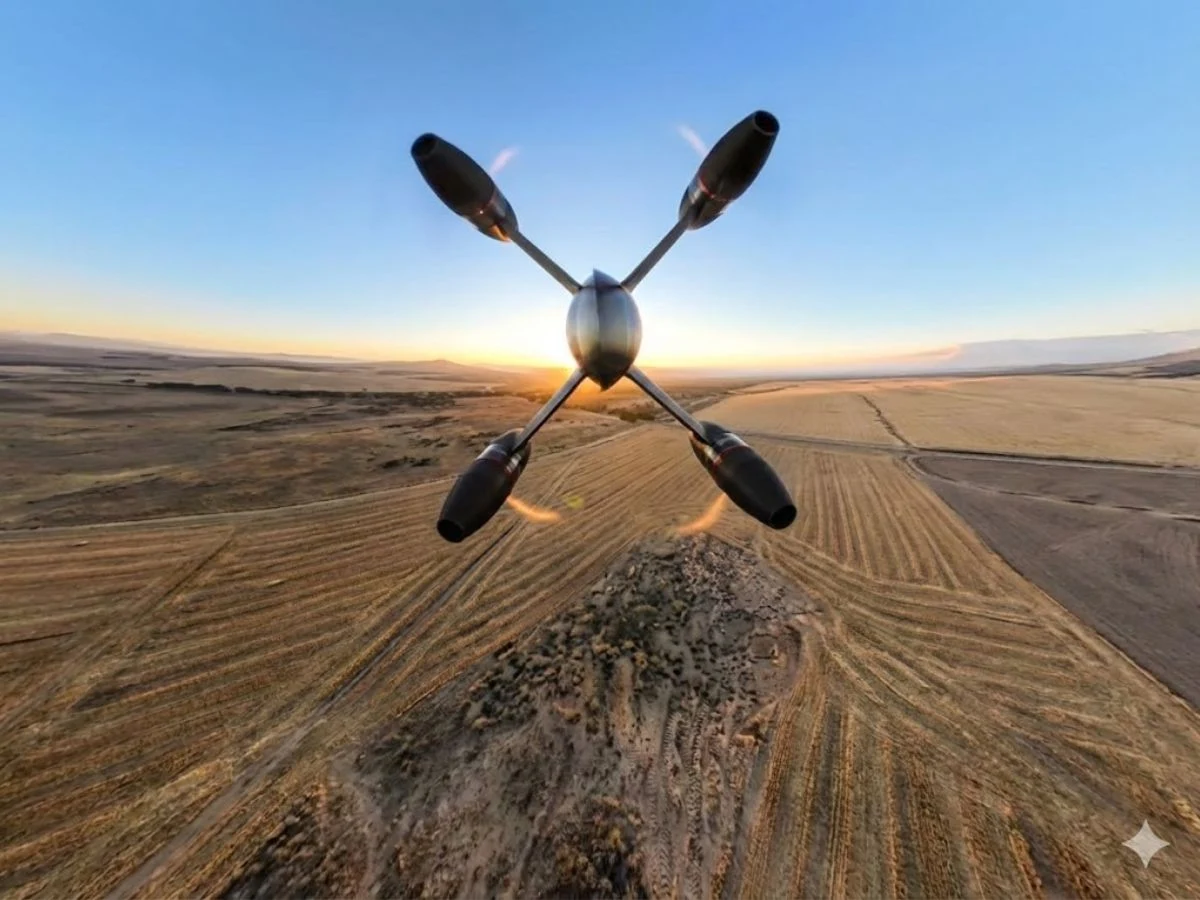
Key Takeaways
1. Mike Bell and Luke Maximo Bell set a new Guinness World Record for the fastest drone, reclaiming the title with their Peregreen 4 model.
2. They prioritized stability over raw power by reverting to T-motor motors for better performance, despite previous tests showing AOS Supernova motors produced more thrust.
3. The drone underwent four major structural modifications, including the introduction of “spinners,” which increased speed by 30 km/h and improved airflow.
4. The Peregreen 4 achieved a peak power draw of 12 kW, making it more efficient than the previous model, Peregreen 3, which drew 16.2 kW.
5. The Bells’ drone is now the fastest battery-powered remote-controlled quadcopter and the fastest battery-powered aircraft ever made, and they are challenging others to beat their record.
Father-and-son engineers Mike Bell and Luke Maximo Bell have once again set a new Guinness World Record for the fastest drone in the world. This comes after they lost the title to Benjamin Biggs from Drone Pro Hub, who claimed it with a drone reaching a speed of 626.44 km/h (389.25 mph).
Improvements to the Drone
To reclaim their title, the Bells made significant updates to their latest drone model, the Peregreen 4. One of the most crucial changes was reverting to T-motor motors, which they had previously used in the Peregreen 2, instead of the AOS Supernova 3220 motors found in the Peregreen 3. Although the AOS 3220 produced more thrust in tests, the T-motor 3120 provided better stability. Learning from past mistakes that resulted in the loss of seven drones during their previous record attempt, the engineers prioritized stability over sheer performance. The outcome? They encountered no motor problems throughout all their runs, although a propeller detached mid-flight, causing a crash.
Structural Modifications
As illustrated in the image above, the drone experienced four major structural modifications. The most impactful change was the introduction of “spinners,” which contributed to an impressive speed increase of 30 km/h. These spinners eliminated the blunt ends of the motors, enabling a more tapered design that enhanced airflow. Additionally, the shape of the drone was modified, its body was sanded down, and the original 7-inch propellers were reduced to approximately 6 inches. Collectively, these changes boosted both efficiency and speed. Thanks to these innovative modifications, the Peregreen 4 reached a peak power draw of about 12 kW, making it significantly more efficient than the Peregreen 3, which had a peak power draw of 16.2 kW.
Record-Breaking Achievement
With this achievement, the Bells now hold the record for the fastest battery-powered remote-controlled quadcopter. However, they have also surpassed Rolls-Royce’s record, making their drone the fastest battery-powered aircraft ever constructed. The Bells are now challenging others to try and beat their record, eagerly anticipating the opportunity to reclaim their title once again.