Key Takeaways
1. Luke Maximo Bell unveiled a second version of his solar-powered drone, which now includes a battery for enhanced performance.
2. The updated drone features GPS, flight automation software, and five additional solar panels, aiming to break the Guinness World Record for longest flight time.
3. Design changes include a slat with 32 solar panels and shorter arms for improved agility, with panels positioned above the propellers.
4. Initial flight attempts faced challenges due to wind and stability issues, leading to design adjustments and a reduction in solar panels to 28.
5. The final drone achieved a flight time of 5 hours, 2 minutes, and 21.75 seconds, with plans to eliminate the battery in future designs.
DIY engineer and drone specialist Luke Maximo Bell has unveiled the second version of his solar-powered drone that doesn’t need a battery. However, for this new model, he had to include a battery in the design.
Upgrades and Features
In this update, Luke enhanced the drone as he announced in his last video, incorporating GPS, flight automation software, and additional solar panels. This drone has also succeeded in its aim to beat the existing Guinness World Record for the longest flight time of an RC quadcopter.
Design Changes
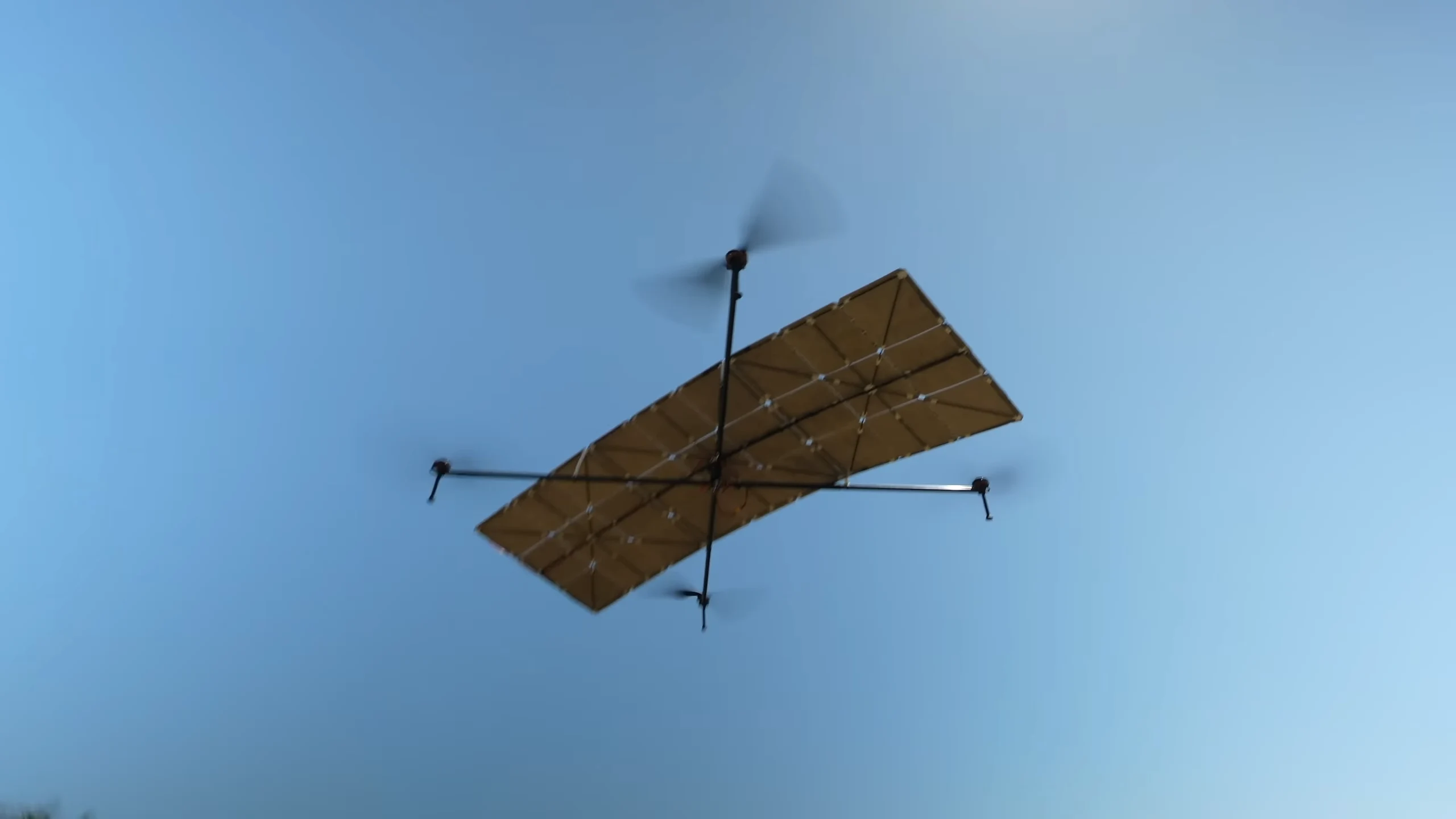
For this design, he started with a slat made from 32 small solar panels, which is 5 more than what he used before. He also shortened the arms to improve the drone’s agility. With the arms shorter, the panels were placed above the propellers instead of in the center. To create space for this, he elevated them higher.
Flight Challenges
During the first attempt, the drone successfully flew using only solar energy, but some issues came up. Since South Africa is known for its windy conditions, the drone struggled against the wind, leading to a higher power consumption than the panels could support. Additionally, having the solar panels positioned high above the main structure caused stability concerns.
To address these challenges, Luke lowered the slat after running a simulation to ensure it would work fine. He also modified the frame that holds the panels to minimize wobbling and decided to decrease the panel count to 28. To solve the power drop issue, he included a battery that functioned as a UPS system, supplying extra power when the solar panels couldn’t meet the demands.
Impressive Results
The final version of the drone achieved an impressive flight time of 5 hours, 2 minutes, and 21.75 seconds before landing. For his next project, Luke aims to eliminate the battery through innovative engineering solutions.