
Key Takeaways
1. CALB’s new 60 Ah solid-state battery offers a high energy density of over 450 Wh/kg but comes with manufacturing costs twice that of liquid electrolyte batteries.
2. The solid-state battery is significantly lighter than standard LFP cells and uses advanced materials, contributing to its higher efficiency, safety, and cold-weather performance.
3. It features a rapid 6C+ charging rate, allowing for a full charge in just ten minutes, and retains 90% capacity in extreme cold conditions.
4. The battery’s design eliminates volatile liquid electrolytes, enhancing safety during accidents and meeting new safety standards in China.
5. Solid-state batteries are expected to be used initially in high-end applications like drones and robots, with mass-market adoption likely not starting until after 2030 due to high costs.
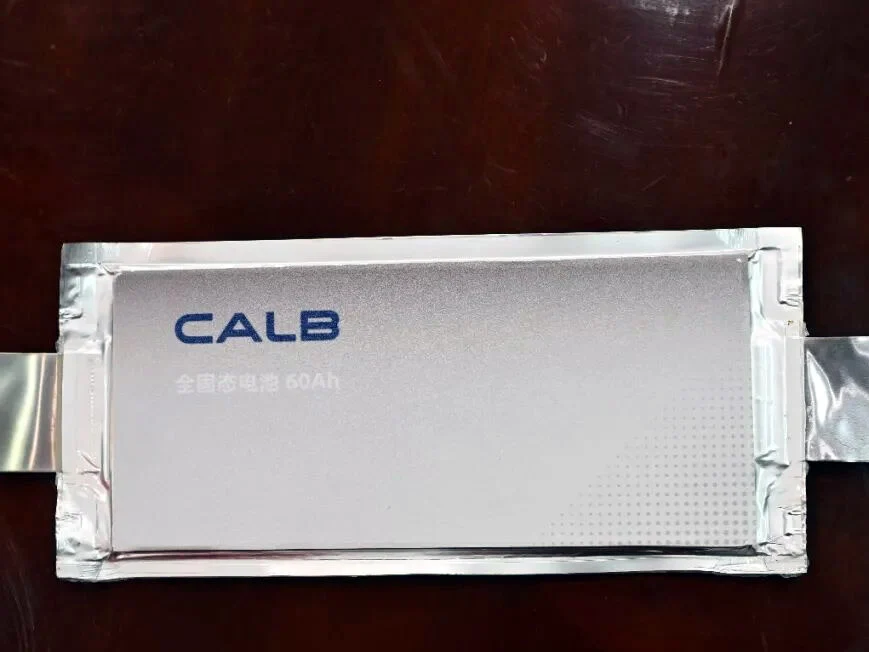
Upon showcasing its new 60 Ah solid-state battery cell, which promises to double the usual range for electric vehicles, CALB has expressed concerns about the steep manufacturing costs involved.
Energy Density and Costs
The solid-state battery boasts an energy density that surpasses 450 Wh/kg, making it twice as efficient as BYD’s latest Blade 2.0 LFP battery series. However, it comes at a price—twice that of comparable liquid electrolyte batteries.
CALB’s Chairwoman Liu noted that the manufacturing expense for a hybrid battery, which uses 95% solid electrolyte, is roughly 12 cents per Wh. In contrast, contemporary LFP cells are produced for under six cents per Wh, translating to about $5,800 for a 100 kWh pack.
Weight and Composition
Weighing only a quarter of what a standard LFP cell of the same capacity weighs, CATL’s 60 Ah cell also has a smaller footprint. The solid-state battery incorporates a sulfide-based electrolyte, a nickel-rich cathode, and a silicon composite anode. These elements enhance its energy density, cold-weather performance, and safety profile, although they also contribute to the increased cost of the solid-state cells.
Despite the higher price tag for double the range on a single charge, solid-state batteries hold a promising position regarding their commercial viability. CALB plans to initially implement its high energy density solid-state cells in eVTOLs and humanoid robots, where space efficiency is crucial, before supplying them to electric vehicle manufacturers by 2027.
Charging and Safety Features
One notable advantage of CALB’s solid-state battery is its impressive 6C+ charging rate, which allows it to charge fully in just ten minutes from empty. It maintains 90% of its capacity even in extreme cold, whereas current liquid electrolyte batteries can lose up to 40% under similar conditions.
Additionally, the solid-state battery is safer in the event of a vehicle accident. It doesn’t contain the volatile and flammable liquid electrolyte that complicates fire suppression for emergency services. It has successfully passed the typical puncture, pressure, and high-temperature safety tests required by the new national solid-state battery standards being developed in China, paving the way for its commercial release.
Market Outlook
Numerous Chinese firms, including major players such as BYD and CATL, as well as startups, are advancing solid-state battery technology, accounting for 80% of global production. They caution that solid-state cells will initially be used in drones, robots, and high-end electric vehicles due to their cost. It is expected that mass-market adoption of solid-state batteries will not begin until after 2030, when prices are anticipated to decrease significantly.
Source:
Link