Tag: SK Hynix

  • SK Hynix to Triple DRAM Capacity by 2034 Amid Memory Crunch

    SK Hynix to Triple DRAM Capacity by 2034 Amid Memory Crunch

    Key Takeaway

    – SK hynix accelerated its DRAM wafer production capacity goal, now targeting a tripling by 2034 instead of 2045.
    – New fabrication plants in Yongin, South Korea, will double capacity within five years, with full completion moved up by over a decade.
    – Despite the expansion, DRAM and HBM memory will remain scarce through 2030 due to relentless AI data center demand.
    – Memory prices are at all-time highs, with consumer DRAM costs rising sharply—e.g., a 32GB DDR5 kit jumped 19% in three months.
    – Prepayments and multi-year reservations for memory chips are becoming standard as the ongoing shortage persists.


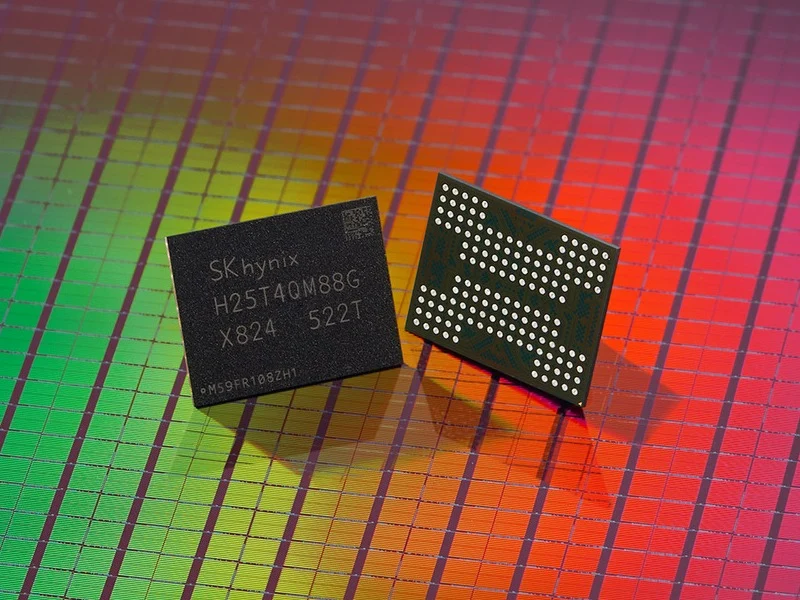
    South Korean DRAM manufacturing giant SK hynix, known for creating storage solutions, DRAM, and memory modules for consumer and enterprise setups, including HBM high-bandwidth memory for AI data centers, has announced a milestone. The company predicts it will triple its overall silicon wafer production capacity by 2034, ten years earlier than previously expected.

    Massive Construction Plans Accelerated

    SK Hynix is currently constructing four large chip fabrication and production plants in Yongin, South Korea. The initial phase of this massive project is scheduled for completion in early 2027. According to SK Group Chairman Chey Tae-won, the full construction roadmap has been substantially accelerated.

    Chairman Reveals Ambitious Timeline

    SK Group initially expected to complete the DRAM and memory fabrication plants by 2045, but now the finish line has been moved up to 2034. Chey Tae-won also sat down for an interview with Nikkei Asia and detailed the ambitious scale of SK hynix’s project. He said: “Since we’re proceeding with the plan to expand as much as possible, our calculations show that our wafer capacity will double within five years. But honestly, once all these facilities are built, it won’t just double; it will triple by around 2034.” He tempered expectations among those hoping to get their hands on readily available memory in the future by stating, “There is currently no way to move faster than this. People are already saying that even this won’t be enough.”

    Immediate Pressure Remains High

    While these projections and accelerated timelines are important steps to boost DRAM production and increase overall supply, they still won’t be able to relieve the immediate pressure and demand from AI data centers and hyperscalers. DRAM and HBM memory are expected to remain scarce through 2030, with many companies offering prepayments and multi-year reservations due to the ongoing chip shortage.

    Industry Wide Expansion Expected

    Memory production plants are expected to increase in the coming years as Samsung, SK hynix, and Micron expand chip production. However optimistically SK Group may frame it, the memory crunch is still ongoing, memory and storage prices are at an all-time high, and certain DRAM and HBM memory chips are literally worth more than their weight in gold in 2026.

    Consumer DRAM prices are on track to push towards fresh highs, and the market is already pricing in a perceived shortage yet again. A 32GB DDR5 Corsair RAM kit has increased from $370 to $440 over the past 3 months, representing an additional 19% premium.

    Sources
  • Micron and SK Hynix Join Samsung in Trillion-Dollar Club

    Micron and SK Hynix Join Samsung in Trillion-Dollar Club

    Key Takeaway

    – AI demand for HBM memory has driven three major chip manufacturers (Micron, SK Hynix, Samsung) to trillion-dollar market caps simultaneously for the first time.
    – Micron’s revenue surged 196% year-over-year, and its stock jumped 19% after UBS tripled its valuation.
    – Manufacturers are shifting production capacity from conventional DRAM/NAND to AI chips, causing global shortages.
    – Dell CEO warns that supply for laptops, PCs, and smartphones will lag behind demand until at least 2028.
    – Consumers should expect significantly higher prices for tech devices over the next two years.


    Two years ago, RAM were the least promising sector of the chip market

    A well-established business with tight margins and headlines about price drops and excess inventory. Now, AI has turned everything upside down: US manufacturer Micron Technology and South Korean manufacturer SK Hynix recently surpassed the trillion-dollar milestone in market capitalization just 24 hours apart, a milestone that Samsung had reached some weeks ago. For the first time in history, the world’s three major memory manufacturers simultaneously achieved one of the highest stock market valuations. Micron’s value soared 19% on Wall Street, recording its biggest single-session gain since 2011. This historic move came immediately after UBS, a major investment bank, tripled the company’s valuation from $535 to $1,625. SK Hynix’s stock price has also experienced a rise, thus heralding a new boom in the technology sector.

    The Main Driving Force: High Bandwidth Memory (HBM)

    The main driving force behind this unprecedented boom is HBM (High Bandwidth Memory), a type of specialized chip used by Nvidia GPUs for the processing of immense volumes of data needed to run large-scale AI models. The technology is required to run AI-powered supercomputers, which would otherwise simply freeze and become inoperative. Micron’s Q2 revenue for 2026 amounted to $23.9 billion, representing a 196% increase over the same quarter last year. In addition, the company’s Q3 revenue estimate for the following quarter is projected to rise to $33 billion.

    Impacts on Consumers and Conventional Memory Prices

    This trend is having a direct impact on everyday consumers. Chip manufacturers, by redirecting a large part of their capacity to the production of AI chips, are diverting resources and efforts away from the production of conventional DRAM and NAND memory, which are used in laptops, desktop PCs and smartphones, pushing up prices globally. Dell CEO Michael Dell has publicly warned that demand for these devices is expected to continue to outpace current supply until at least 2028, further exacerbating DRAM and NAND shortages and price hikes. In sum, the tech market is likely to become considerably more expensive for consumers over the next two years.


  • Samsung Strike Could Raise Memory Prices Amid Union Profit Dispute

    Samsung Strike Could Raise Memory Prices Amid Union Profit Dispute

    Key Takeaway

    1. Workers in Samsung’s chip production are demanding higher wages and bonuses, citing more aggressive incentives from competitors like SK Hynix.
    2. The potential for a prolonged strike could significantly reduce memory output, intensifying shortages and driving up prices across the industry.
    3. Financial ramifications include possible losses of up to $11.7 billion for Samsung if an extensive shutdown occurs, benefitting rivals.

    Demand for AI Chips Elevates Samsung’s Revenue

    AI data center demand has been driving up revenue for companies like Samsung, making the production of critical components so lucrative that workers are now seeking a bigger cut. The ongoing talks about wages and bonuses hit a bump, as production halts could lead to an increase in memory prices, affecting the whole industry.

    Workers Eye Big Bonuses and Wage Hikes

    The story, which was covered by a news source behind a paywall, reveals that Samsung workers are reportedly ready to accept a bonus of around $340,000 per employee. Still, the company’s hesitant attitude towards promising the same yearly perks adds tension. Both sides appear to disagree about how long the AI boom will last, influencing their negotiations.

    Comparison with Competitors and Industry Tensions

    • Employees claim SK Hynix offers its staff more generous incentives, with bonuses possibly reaching an extra $900,000 by next year.
    • The union also demands a 7% wage increase and removal of a 50% cap on bonuses.

    Recent Industrial Actions and Market Risks

    On April 23rd, a strike involving about 40,000 union members disrupted a factory in Pyeongtaek. It caused a sharp decrease in output—estimated at 58%—highlighting how sensitive the supply chain is for memory chips. Prolonged stoppages could worsen memory shortages and push prices even higher.

    Potential Strike and Financial Implications

    If workers’ demands are not meet, an 18-day strike planned from late May to early June could happen. Experts warn that such a strike might make Samsung lose up to $11.7 billion, giving its competitors a big advantage during the disruption.

    Broader Impact on Memory and Tech Markets

    The focus on high-bandwidth memory (HBM) used in AI applications could ripple into other types of DRAM, affecting PC and gamer markets. With only a few manufacturers like SK Hynix and Micron capable of supplying modules, a Samsung strike could lead to shortages, making DDR5 memory even harder for consumers and builders to find.

  • DDR3 Motherboard Sales Surge as DDR4 and DDR5 Prices Rise

    DDR3 Motherboard Sales Surge as DDR4 and DDR5 Prices Rise

    Key Takeaways

    1. Memory prices, especially for DDR5 RAM, have increased sharply, making upgrades difficult for PC builders.
    2. DDR4 RAM prices are also significantly higher than before, leading some builders to revert to older systems.
    3. Demand for DDR3 motherboards has surged, with sales reportedly three times higher than before the price hikes.
    4. DDR3 is currently the most budget-friendly option, as it remains widely accessible and cheaper compared to DDR4 and DDR5.
    5. The memory crisis is expected to persist until at least 2028, with further price increases anticipated this year.


    Over the last few months, the cost of memory has risen sharply. Prices for DDR5 RAM have surged, making it tough for PC builders to upgrade. Even DDR4, which used to be the cheaper choice, is now significantly pricier than it used to be. Because of this ongoing memory situation, some PC builders are reverting to older systems, and DDR3 is unexpectedly regaining popularity.

    Increase in Demand for DDR3

    A report from Board Channels states that motherboard manufacturers in China are experiencing a noticeable increase in demand for DDR3 motherboards. Actually, sales of DDR3 motherboards are supposedly three times higher than before the price hike in memory. In addition to standalone boards, bundled packages that include these motherboards with Intel CPUs from the 6th to 9th generation are also doing well.

    Current Market Challenges

    This situation shows just how severe the market has become. DDR5 RAM kits that could be bought for a few hundred dollars not long ago are now being sold for well over $1,000. For many users, upgrading to the newest platform has become impossible. While DDR4 prices are a bit lower than DDR5, they still remain unstable and significantly higher than earlier. In contrast, DDR3 is still widely accessible and much cheaper, making it the most budget-friendly option at present.

    SK Hynix has reportedly projected that the memory crisis will persist until at least 2028, and some other companies expect no improvements before 2031. With memory prices predicted to increase by another 45% this year, the outlook suggests that the situation may worsen significantly.

    Source:
    Link


  • SK Hynix May Leave Consumer DRAM and NAND Business After Micron’s Move

    SK Hynix May Leave Consumer DRAM and NAND Business After Micron’s Move

    Key Takeaways

    1. A shortage of DRAM is causing rising RAM prices for DIY builders and affecting consumer electronics like laptops and GPUs.

    2. Micron will stop selling consumer DRAM starting February 2026, meaning Crucial-branded RAM and SSDs will no longer be available.

    3. Rumors suggest SK Hynix may consider exiting the consumer DRAM and NAND market, impacting various manufacturers and major OEMs.

    4. If SK Hynix exits, Samsung could become the leading supplier, while Chinese companies like CXMT might gain market share.

    5. The market is expected to remain unstable until 2028, leaving consumers and manufacturers in a challenging situation.


    The consumer memory sector is facing some serious challenges. A shortage of DRAM from key memory manufacturers has led to rising RAM prices for DIY builders, and this issue is also expected to impact consumer electronics like laptops and GPUs. To make matters worse, Micron declared in December 2025 that it would halt the sale of consumer DRAM starting in February 2026. Consequently, the well-known Crucial-branded RAM and SSDs will no longer be available after that date.

    Possible Changes from SK Hynix

    It appears that Micron’s actions may have prompted SK Hynix to consider its own exit from the consumer DRAM and NAND market, according to a rumor posted by Jukan on X. Unlike Micron, SK Hynix does not market RAM and storage products under its own brand. Therefore, if SK Hynix decides to withdraw from the RAM and storage sector, it would impact not only third-party RAM and SSD manufacturers but also major consumer hardware OEMs like Dell.

    Potential Market Impact

    SK Hynix is among the largest, if not the largest, suppliers of consumer DRAM and NAND storage globally. Thus, if the company does indeed leave the consumer market, it would severely impact the overall industry.

    On the other hand, if SK Hynix exits, Samsung would become the leading supplier of memory and NAND worldwide. This scenario might also present a significant opportunity for Chinese companies like CXMT to strengthen their foothold in the international market. Reports indicate that HP is already looking to CXMT to fulfill its DRAM requirements.

    Uncertainty Ahead

    Although SK Hynix’s potential exit from the consumer market remains unverified, the circulation of such rumors highlights the dire situation. Predictions suggest that the market may not stabilize until 2028, leaving many with little choice but to hope for improvement.

    Source:
    Link


  • DRAM Crisis Forecast: SK Hynix Predicts No Quick Recovery Until 2028

    DRAM Crisis Forecast: SK Hynix Predicts No Quick Recovery Until 2028

    Key Takeaways

    1. The memory crisis is worsening, with Samsung reportedly doubling contract prices for DDR5 RAM.
    2. Companies like Dell and Lenovo are limiting mid-range laptops to 8 GB of RAM due to the shortage.
    3. SK Hynix predicts the DRAM shortage could last until at least 2028, driven by slow production capacity expansion.
    4. AI data centers are significantly increasing demand for memory, impacting supply for PCs.
    5. While some experts believe DDR5 prices could stabilize in 6 to 8 months, SK Hynix’s outlook remains grim.


    The memory crisis, fueled by the rising needs of AI data centers, seems to be worsening. Reports indicate that Samsung has allegedly increased contract prices for DDR5 RAM by two times. Additionally, companies like Dell and Lenovo are reportedly restricting mid-range laptops to only 8 GB of RAM. The much-awaited Steam Machine might also experience delays or be launched as a basic model due to this shortage. While many are eager for a quick fix, SK Hynix offers a much grimmer perspective on the future.

    Long-lasting Shortage Expected

    SK Hynix suggests that the DRAM shortage could persist until at least 2028, as revealed in internal reports shared by tech analyst BullsLab Jay on X.

    The main factor contributing to this dismal forecast is the sluggish pace of expanding production capacity. New DRAM fabrication plants are not expected to provide substantial output until 2028. Meanwhile, demand continues to surge: AI servers are taking up an increasing portion of production, alongside the growing memory needs for PCs, especially as AI PCs become more popular (currently, a 2 x 16 GB kit of Crucial Pro DDR5 RAM is priced around $390 on Amazon).

    Market Imbalance Continues

    Due to the current mismatch between supply and demand, SK Hynix estimates that the DRAM market won’t find stability before 2028. However, this is only one perspective among many, and it doesn’t represent a fixed prediction—more positive forecasts are out there. For instance, Edward Crisler, PR manager at Sapphire, argues that DDR5 prices could stabilize within six to eight months, assuming consumers refrain from panic buying.

    Source:
    Link


  • SK Hynix Supplies DRAM, NAND, HBM Chips to Nvidia Amid Rising AI Demand

    SK Hynix Supplies DRAM, NAND, HBM Chips to Nvidia Amid Rising AI Demand

    Key Takeaways

    1. SK hynix’s production capabilities for DRAM, NAND, and HBM are fully booked through 2026, driven by a significant order from Nvidia.
    2. The company reported a Q3 2025 profit of $8 billion, a 62% increase from the previous year, largely due to HBM3E chip sales to Nvidia.
    3. SK hynix now holds over 50% of the global HBM market, significantly outpacing competitors Samsung and Micron.
    4. The company plans to ramp up production of HBM4 memory by late 2025, which promises enhanced bandwidth and energy efficiency for future AI processors.
    5. The demand for HBM is rapidly increasing, with predictions estimating the global HBM market to reach $43 billion by 2027, highlighting the critical role of memory manufacturers in the AI infrastructure.


    SK hynix has recently revealed that its production capabilities for DRAM, NAND, and high-bandwidth memory (HBM) are completely booked through 2026. This accomplishment is largely attributed to a significant order from Nvidia. The world’s largest company by market cap relies on SK hynix’s HBM semiconductors, such as the H100 and B200 models, to power its AI processors.

    Financial Success

    SK hynix experienced a remarkable Q3 2025, reporting a profit of $8 billion (₩11.4 trillion), which is a 62% increase from the previous year. Revenue rose by 39% to ₩22.4 trillion, primarily driven by sales of HBM3E chips that Nvidia purchased for their data center GPUs. Consequently, SK hynix’s market value now surpasses that of its rivals.

    Market Dominance

    According to TrendForce, SK hynix now dominates over 50% of the global HBM market, while competitors Samsung and Micron hold about a quarter each. The company’s recent financial performance illustrates how closely linked the AI hardware ecosystem is becoming, with Nvidia’s leading position in GPUs significantly boosting SK hynix’s exceptional performance.

    “We have completely sold out our DRAM, NAND, and HBM capacity for the upcoming year,” remarked Kim Kyu-hyun, the head of DRAM marketing at SK hynix. He also mentioned that clients have already booked manufacturing slots up to 2026. This means SK hynix will be mostly unable to accept new orders next year.

    Future Production Plans

    The company is gearing up to ramp up production of its HBM4 memory by late 2025. If successfully implemented, it promises a significant enhancement in both bandwidth and energy efficiency. The next-gen chips are anticipated to be crucial for Nvidia’s forthcoming AI processors and supercomputing platforms.

    SK hynix has also entered into supply agreements with OpenAI for its planned Stargate supercomputer project. This initiative is projected to more than double the industry’s total HBM needs.

    Changing Landscape

    The strong performance of SK hynix indicates a broader shift in the tech landscape. Memory manufacturers are now vital players in AI infrastructure. “Demand for HBM is growing at a rapid pace, making it challenging for supply to keep up in the near future,” stated Kim Ki-tae, head of HBM sales and marketing.

    Citi Research predicts that the global HBM market will reach US$43 billion by 2027. The partnership between SK hynix and Nvidia positions both companies at the forefront of the AI semiconductor surge, while Samsung and Micron are left scrambling to catch up.

    Source:
    Link


  • Critical DDR5 RAM Vulnerability Phoenix Bypasses Rowhammer Fixes

    Critical DDR5 RAM Vulnerability Phoenix Bypasses Rowhammer Fixes

    Key Takeaways

    1. DDR5 RAM, while leading in performance, has been found to be more vulnerable to cyber attacks than previously thought, particularly through a new attack method called Phoenix.
    2. The Phoenix attack exploits DDR5’s high read/write speeds to flip bits in memory cells, potentially affecting all DDR5 chip brands that use SK Hynix chips.
    3. SK Hynix introduced a defense mechanism called Target Row Refresh (TRR), but researchers were able to reverse-engineer it and find vulnerabilities in its implementation.
    4. The Phoenix attack can compromise systems quickly, with the ability to gain root privileges in under 2 minutes and affecting a significant number of SK Hynix products.
    5. Activating the tREFI specification could counter the Phoenix attack but risks causing data corruption and system instability, such as Blue Screens of Death (BSODs).


    DDR5 stands as the leading RAM standard for everyday computers and has been around for about 5 years. However, new findings suggest that DDR5 might be more vulnerable to cyber attacks than earlier believed. A group of researchers from ETH Zurich University in Switzerland, along with security professionals from Google, have developed a variant of the DDR5 Rowhammer attack called Phoenix. This method exploits the increased read/write speeds to manipulate memory cell rows, flipping bits from 1 to 0 or the other way around. The attack has only been tested on DDR5 modules that utilize SK Hynix chips, potentially impacting all DDR5 chip brands.

    New Defense Mechanism

    To combat this, SK Hynix has put in place a defense known as Target Row Refresh (TRR), which helps prevent bit flipping by adding extra refresh commands when specific rows are accessed too often. However, the team from ETH Zurich and Google was able to reverse-engineer this protection. They discovered that some refresh intervals were not adequately secured, leading them to devise a method for tracking and synchronizing the various TRR refreshes, which allowed them to self-correct upon missing a refresh.

    Attack Potential

    The researchers identified that only certain refresh intervals, specifically 128 and 2608, were effective for executing the Phoenix attack. By using this technique, they were able to compromise a shell with root privileges in under 2 minutes. In their comprehensive testing, it was found that all SK Hynix products were at risk for page-table entry (PTE) targeting. Additionally, 73% of the DIMMs were susceptible to breaks in RSA-2048 key SSH authentication, while only 33% showed vulnerability to alterations in the sudo binary for root access.

    The Phoenix exploit has been rated with a high severity score and impacts all RAM modules that include SK Hynix chips manufactured between January 2021 and December 2024. It’s still uncertain how other brands with similar production dates might be compromised. There is a method to counter the Phoenix attack, which involves activating the tREFI specification (triple DRAM refresh interval) on affected RAM modules. However, this approach is not advisable, as it may lead to increased data corruption errors, resulting in Blue Screens of Death (BSODs) and overall system instability.

    Source:
    Link


  • Replace Samsung SK Hynix China Fab VEUs with Annual Licenses

    Replace Samsung SK Hynix China Fab VEUs with Annual Licenses

    Key Takeaways

    1. The U.S. is replacing VEU permissions with annual “site licenses” for Samsung and SK Hynix’s factories in China to limit upgrades and expansions.
    2. The new licenses will outline approved amounts of restricted tools, parts, and materials, adding more regulatory requirements.
    3. The shift aims to enhance U.S. oversight but complicates planning for companies due to unpredictable equipment needs.
    4. The change is part of the Trump administration’s effort to close perceived loopholes from the Biden era, emphasizing a stricter regulatory approach.
    5. Industry concerns include potential supply instability for DRAM and NAND, risking global shortages for smartphones and data centers.


    The U.S. is getting ready to switch from the current VEU permissions for Samsung and SK Hynix’s factories in China to annual “site licenses.” These licenses will outline approved yearly amounts of restricted tools, parts, and materials. The goal is to maintain the operation of existing factories while preventing any upgrades or expansions. The current VEUs will expire at the end of the year. South Korean officials see this new regulation as manageable but worry about the extra red tape it brings.

    Background of Export Restrictions

    The roots of these export restrictions can be traced back to 2022, when initial controls focused on advanced logic (about 16nm FinFET), DRAMs (18nm half-pitch), and 3D NAND (128 layers or more). During that time, the VEU system allowed Samsung and SK Hynix continuous approvals, as long as they adhered to certain monitoring and security requirements.

    Changes in Administration

    After these controls were put in place, waivers were granted during the Biden administration to facilitate operations. Now, the new Trump administration is working to eliminate what it believes are “loopholes” from the Biden era by cancelling VEUs and introducing annual site licenses.

    With the suggested new system, companies would only need to submit one application per year, detailing specific items and their amounts. This adjustment gives the U.S. more notice before shipments occur, yet it complicates planning for companies since they can’t predict when equipment might fail and require replacement parts. U.S. officials mention that urgent licenses can be processed quickly, but many industry players are skeptical of this.

    Industry Concerns

    These alterations bring up worries about the stability of DRAM and NAND supplies. If equipment breaks down during the year or new shipments are postponed, it could impact parts for smartphones and data centers, potentially causing global shortages. This policy once again places Seoul in a tricky position between its key ally and its largest trading partner.

    Source:
    Link


  • SK Hynix Launches First High-NA EUV Lithography Tool at M16 Fab

    SK Hynix Launches First High-NA EUV Lithography Tool at M16 Fab

    Key Takeaways

    1. SK Hynix has successfully installed the first High-NA EUV lithography system for mass production at its M16 facility in South Korea.
    2. The ASML TWINSCAN EXE:5200B system offers 40% greater numerical aperture, enabling smaller features and denser transistor arrangements.
    3. SK Hynix plans to quickly prototype new DRAM structures and streamline EUV processes to enhance competitiveness and reduce costs.
    4. The adoption of High-NA EUV technology positions SK Hynix ahead of competitors like Micron and Samsung in the DRAM market.
    5. This milestone marks a significant step towards next-generation DRAM production and reduces risks associated with future technology transitions.


    SK Hynix has revealed that it has successfully put together the first High-NA EUV lithography system intended for mass production at its M16 facility located in Icheon, South Korea. This achievement was celebrated by executives from both SK Hynix’s research and development and manufacturing divisions, along with ASML’s customer lead for SK Hynix, during a special event on-site. The primary aim of this system is to boost the creation and supply of next-generation DRAM while reinforcing domestic leadership in AI-memory and improving supply-chain reliability through close cooperation with partners. This achievement sets SK Hynix apart from competitors who still depend on Low-NA EUV technology.

    Enhanced Capabilities

    The ASML TWINSCAN EXE:5200B system provides around 40% greater numerical aperture (NA) than its Low-NA alternative, allowing for features that are 1.7 times smaller and approximately 2.9 times denser in terms of transistors in a single exposure. This machine can reach an impressive resolution of 8nm, which is a notable enhancement compared to the existing 13nm resolution found in Low-NA systems. ASML describes this advancement as “opening up a new chapter.”

    Accelerating Development

    In the initial phase, SK Hynix intends to quickly prototype various new DRAM structures, such as capacitor trenches, bitlines, and wordlines, to speed up the development of nodes. The company also aims to streamline its current EUV process flows, which should help in making costs more competitive as the development progresses.

    Future iterations of DRAM are likely to shift to High-NA EUV around the 2030s; thus, this tool mitigates risks associated with that transition early on. Since 2021, SK Hynix has broadened its EUV presence in DRAM, and this milestone signifies the next phase in its journey toward next-gen DRAM production.

    Competitive Edge

    Being among the first to set up High-NA EUV systems at a mass-production site gives SK Hynix an edge over competitors like Micron and Samsung, enhancing its position in the marketplace. Although ASML had previously constructed pre-production High-NA systems (the NXE:5000 series) at Intel’s D1X fab, SK Hynix’s installation represents the inaugural assembly of the new EXE:5200B system at a client fab specifically configured for large-scale production.

    Source:
    Link