Tag: DDR5

  • DRAM Crisis: EU RAM & SSD Prices Rise Slightly in June

    DRAM Crisis: EU RAM & SSD Prices Rise Slightly in June

    Key Takeaway

    – AI-driven demand has caused DRAM and SSD prices to surge dramatically since October 2025.
    – After prices more than quadrupled by January 2026, they have largely stagnated, with only 1% monthly increases recently.
    – DDR5 industrial costs keep rising, but consumer prices are stable due to high inventories and weak demand.
    – DDR3 and DDR4 prices fell slightly in June, making older memory a better value.
    – M.2 SSDs cost about double last year’s prices, with large 8TB DRAM-cached models spiking 24% in June.


    Memory Market Sees Stalled Growth After Massive Surge

    Since October 2025, big AI names like OpenAI have been driving up demand for DRAM and NAND flash memory, causing prices for RAM and SSDs to skyrocket. 3D Center has kept a close eye on RAM prices in the German retail market from the start, tracking the costs of various memory kits to show how they’ve shifted throughout this period.

    Price Movements in 2026 Show a Mixed Bag

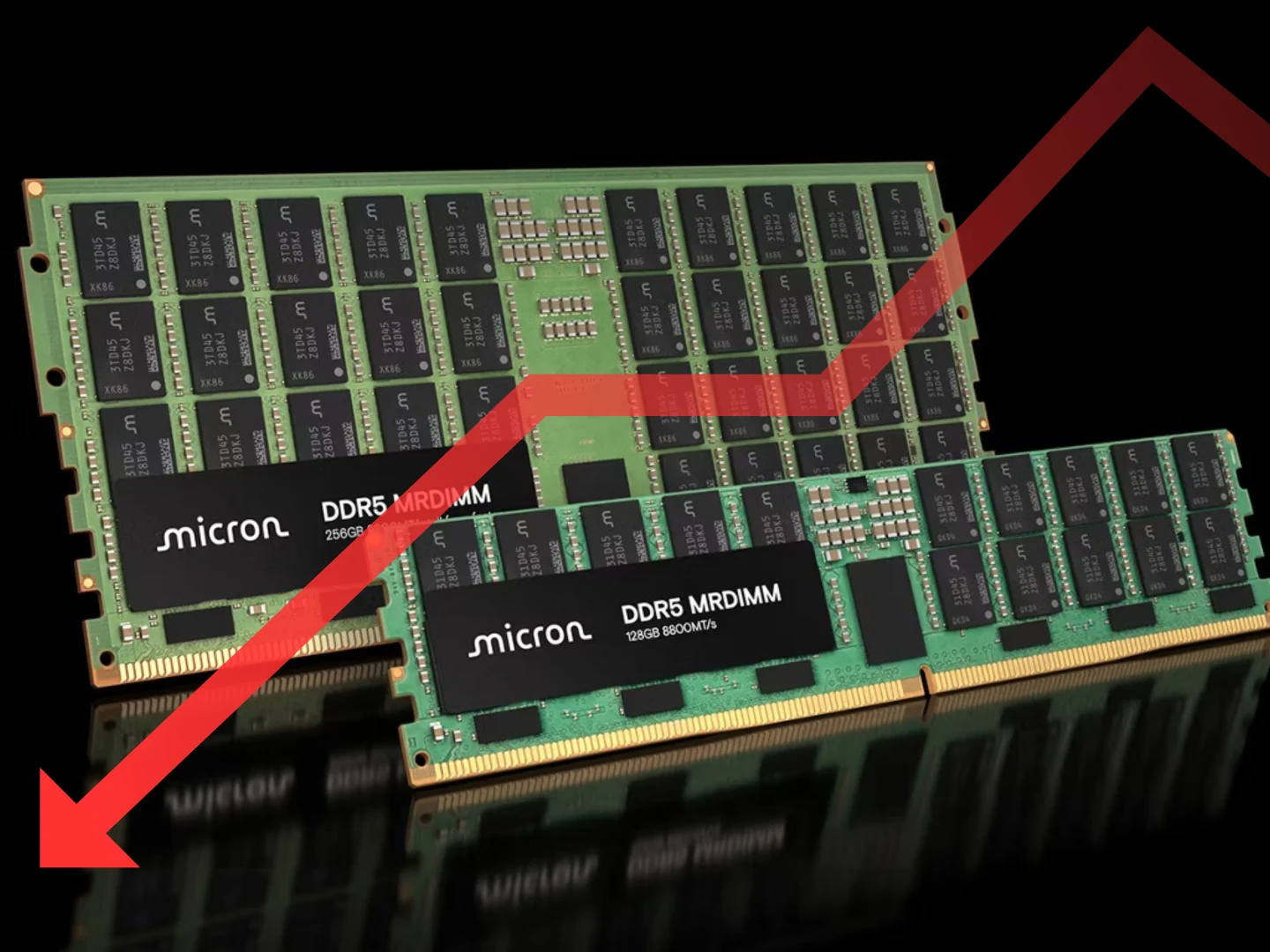
    After costs more than quadrupled between September 2025 and January 2026, they’ve essentially flatlined. In March, prices actually fell by 7 percent; in April, there was no change; and in May and now also in June, average DDR5 RAM prices have crept up by 1 percent each month. While DRAM costs for industrial buyers have kept climbing over recent months, these hikes haven’t trickled down to regular shoppers yet.

    DDR4 and DDR3 Offer Better Value Right Now

    Prices for DDR3 and DDR4 memory actually dropped a bit in June and are now “only” a little over three times what they were last year. For anyone on a DDR4-compatible platform, it’s currently smarter to stick with that older memory standard. M.2 SSDs now cost roughly twice as much as they did a year ago, with a modest 1.8 percent average rise in June, though large 8 TB SSDs with DRAM cache have gotten 24 percent pricier, hitting a minimum of €1,029; an 8 TB WD_Black SN850X even rings in at $1,499 in the US.

    Consumer Market Remains Stable Despite Industrial Pressures

    Even though industrial customers are facing ongoing cost increases, end consumers are seeing a different story. This is likely tied to high inventory piles and weak demand, plus the fact that retail prices were raised much faster and steeper at the end of 2025 compared to what industrial clients experienced. Meanhwile, the overall trend shows prices are mostly holding steady after the initial explosive growth from the AI-driven crunch.

    3D Center| Andrey Matveev
    Sources
  • AMD claims 13% FPS boost, 15% better 1% lows with EXPO-ULL DDR5

    AMD claims 13% FPS boost, 15% better 1% lows with EXPO-ULL DDR5

    Key Takeaway

    – AMD EXPO Ultra Low Latency (EXPO-ULL) reduces DDR5 memory latency by 5-7 ns for smoother out-of-the-box gaming.
    – It delivers up to 13% higher average FPS and 15% better 1% low frame rates vs. standard JEDEC DDR5, with less stuttering.
    – Unlike Intel’s XMP, EXPO-ULL optimizes timings for Ryzen CPUs, which benefit more from tighter latencies than higher frequencies.
    – Certified kits (e.g., G.Skill, Kingston) launch June 2026, with motherboard support via AGESA updates for X870/B850 boards.
    – Best for Zen 4/Zen 5/X3D users, though gains may be slightly lower on X3D chips compared to non-3D CPUs.


    New Memory Tech From AMD

    At Computex 2026, AMD unveiled its latest take on memory overclocking with the launch of AMD EXPO Ultra Low Latency (EXPO-ULL). The ULL profile builds directly on the existing AMD EXPO standard and aims to extract better timings from already popular DDR5 memory modules at 6000 MT/s and 6400 MT/s, which are typically paired with Zen 4, Zen 5, and X3D-series processors.

    Casual Gamers Benefit Big Time

    For casual gamers, this means that DDR5 memory will deliver lower latency, i.e., a reduction of 5 to 7 nanoseconds and improved frame times without the hassle of manually tweaking memory settings in the BIOS, thanks to modules already rated to work at said latencies, essentially making high-end memory worth it right out of the box.

    Test Results Are Impressive

    AMD’s focus here is to further reduce latency and improve in-game responsiveness. To back up its new EXPO-ULL overclocking technology, AMD tested the new profile on a Ryzen 7 9700X setup in more than 30 games, resulting in a solid 13% higher average frame rate and a 15% improvement in 1% low frame rates compared to standard JEDEC-spec DDR5 memory. It is prudent to note that AMD’s choice of CPU, though understandable, might slightly skew the results compared with X3D CPUs, which reportedly exhibit lower performance gains than the former.

    Why This Matters Versus Intel

    What makes EXPO-ULL a solid alternative to Intel’s XMP is that it addresses a long-standing quirk of Ryzen setups. While Intel pursues ever-higher memory frequencies, AMD chips often see better performance gains when timings are dialed in tightly rather than simply increasing clock speed.

    Real-World Smoothness

    Real-world results with AMD EXPO-ULL include fewer instances of stuttering and improved frame times, which consequently lead to better reaction times in competitive titles. Overall gameplay will feel smoother, especially in CPU-intensive games or during sessions at very high frame rates.

    Many memory partners are already hopping on the EXPO-ULL train, with certified kits expected to ship from G.Skill, Kingston FURY, KLEVV, Lexar, TeamGroup, V-Color, XPG, and Origin Code.

    Availability and Compatibility

    AMD EXPO-ULL–supported DDR5 memory kits are expected to hit store shelves in June 2026, targeting AMD gamers with Zen 4–onward supported processors. Furthermore, motherboard support for EXPO-ULL is expected to roll out via AGESA updates, so many X870 and B850 boards will be able to handle the new EXPO-ULL profiles without issue before the kits even launch.

    Cost vs. Benefit

    Although these memory modules will be expensive, they could make the difference between “good enough” and noticeably smoother gameplay.

    Sources
  • Corsair Starts Sourcing Chinese RAM Supplies

    Corsair Starts Sourcing Chinese RAM Supplies

    Key Takeaway

    – Corsair has started sourcing RAM from CXMT for its Vengeance DDR5 line, marking a notable shift in supply chain dynamics.
    – The CXMT-based Corsair modules support high speeds (around 6000 MT/s) and are positioned for global markets (CN part with potential UK/EU expansion).
    – This move could boost China’s domestic RAM market and, if Chinese supply expands, may help ease global RAM price pressure by reducing reliance on Korea and the US Big Three.


    Corsair taps CXMT for Vengeance RAM, signaling a shift in supply

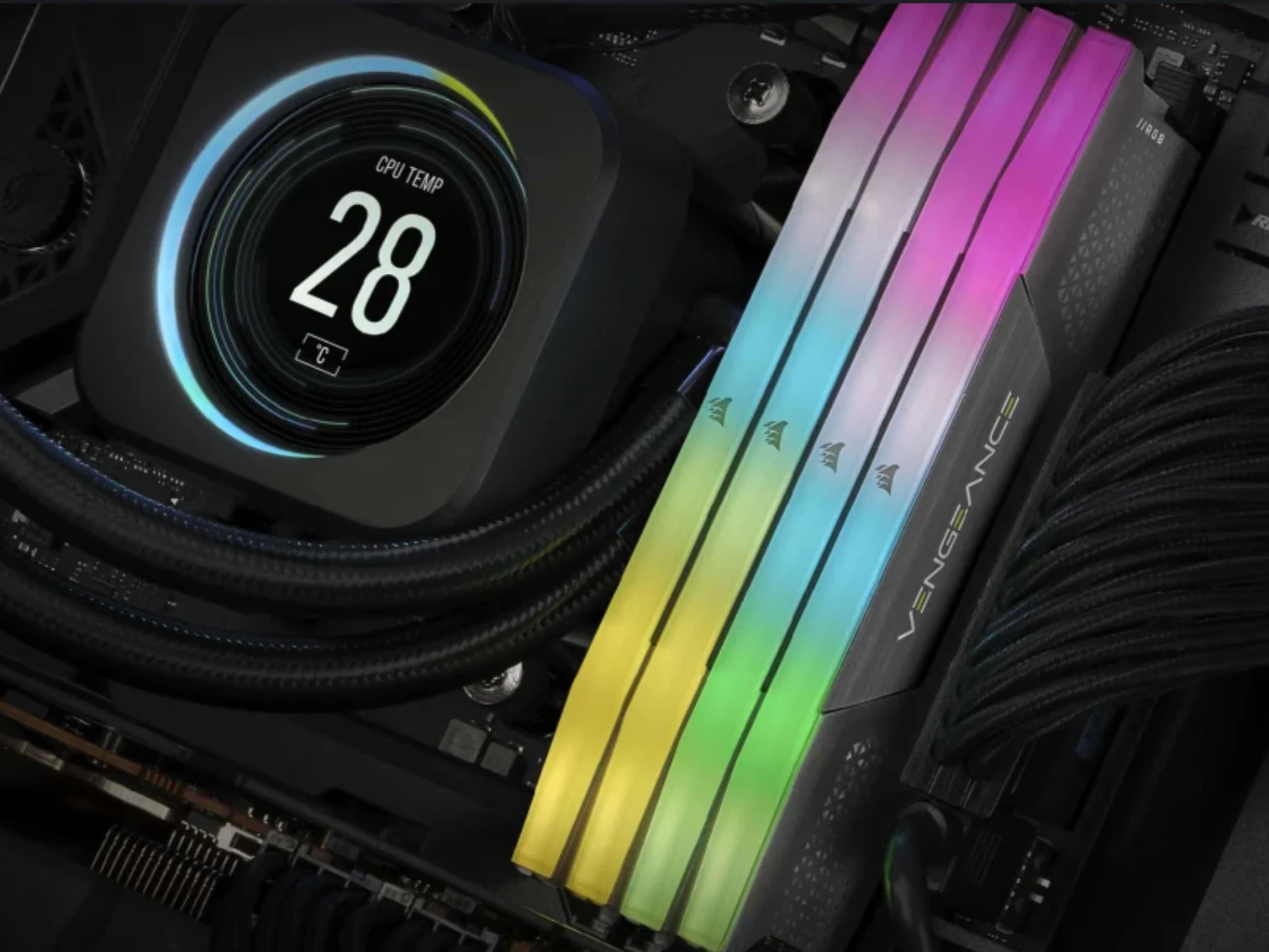
    In a very interesting turn of events, Corsair has been spotted sourcing RAM from Chinese manufacturer CXMT for its Vengeance line of memory products for the very first time. The first person to make note of this was user @wxnod on X/Twitter, and tech press including Tom’s Hardware (h/t) has reported on his findings since. The new Corsair Vengeance DDR5 kit appears to be one of Corsair’s RGB-equipped modules, complete with a CMK5X16G3E60C36A2-CN part number, with the CN denoting Chinese exclusivity but UKCA and CE indicating potential expansion to EU and UK markets.

    Implications for RAM pricing and supply

    In the short-term, this move doesn’t mean very much for existing RAM prices here in the US of A, but it marks an interesting paradigm shift for RAM supply in general. With major brands like Corsair now willing to source from CXMT and showcasing that Chinese RAM can still achieve high 6000 MT/s speeds compatible with AMD EXPO and Intel XMP alike, the potential for more Chinese RAM exports in the future has been raised considerably.

    Industry ripple effects and market prospects

    It also bodes well for China’s domestic RAM market, of course. Should Chinese industry be able to meet its own country’s ravenous demand for memory and semiconductors, reducing its reliance on Korea and the US’s Big Three should reduce overall RAM demand worldwide. The recent prediction from a former Samsung Device Solutions executive (and current Samsung advisor) Khe-hyun Kyung that the shortage could end by the end of 2026 now rings even more feasible.

    Consumer impact and price stability

    For consumers worldwide, it’s a truly tantalizing prospect. Unreasonable surges in RAM prices and the exit of Crucial (Micron’s consumer-facing brand) from the consumer business due to unprecedented AI demand has been an absolute killer for consumer electronics as a whole, especially DIY and smaller PC businesses. If CXMT RAM makes its way Stateside in the near future or at least manages to remove China’s demand from the wider equation, prices should become more palatable more quickly. Here’s hoping.


    Sources
  • MinisForum AI X1 Pro RAM Upgrade for Better Radeon 890M Performance

    MinisForum AI X1 Pro RAM Upgrade for Better Radeon 890M Performance

    Key Takeaway

    – Dual-channel RAM dramatically boosts performance: adding a second, identical RAM module enables fast dual-channel memory, increasing overall system bandwidth and responsiveness, especially benefiting integrated graphics.

    – Integrated GPU gains are substantial: the AMD Radeon 890M iGPU benefits most from higher memory bandwidth, with smoother gaming, faster frame times, and improved graphics-accelerated app performance.

    – CPU gains are notable but variable: Ryzen AI 9 HX 470 shows a measurable, though workload-dependent, 5–15% performance uplift when a second RAM module is present.

    RAM will remain an important cost factor when purchasing or upgrading modern PCs and mini PCs in 2026. Fast DDR5 modules in particular are still comparatively expensive compared to previous memory standards, which is why many systems are often only supplied with a single RAM module or are initially used in a smaller configuration. However, this can have a noticeable negative impact on overall performance, especially in compact devices with powerful integrated graphics.

    RAM configurations and system performance

    Modern processors are increasingly relying on high memory bandwidths to efficiently supply the CPU and integrated GPU. If a system only works in single-channel mode, only part of the possible bandwidth is available. The faster dual-channel mode is only activated with a second memory module. This is particularly beneficial for integrated graphics units that do not have their own video memory and access the main memory directly. At the same time, the general system performance can also improve, for example with multitasking, productive applications, or computing-intensive tasks. The importance of the right RAM configuration for actual performance therefore quickly becomes apparent, especially with powerful mini PCs. Using the recently tested Minisforum AI X1 Pro as an example, we show the influence a second RAM module can have on the overall performance of the system.

    Dual-channel gains in practice

    The Minisforum AI X1 Pro gains noticeably in performance by installing a second RAM module. Only with two identical memory modules does the system work in fast dual-channel mode, which significantly increases the available memory bandwidth. The integrated graphics unit in particular benefits significantly from this, while the AMD Ryzen AI 9 HX 470 itself also records a small increase in performance. Modern Ryzen CPUs are heavily dependent on a fast memory connection, as data can be transferred faster between the RAM and processor. In practice, this leads to shorter loading times, smoother multitasking, and an overall higher system response. CPU performance can increase by around 5 to 15 percent, depending on the software, particularly with computing-intensive applications. The AI X1 Pro therefore only reaches its maximum performance with a dual-channel RAM configuration, as can be seen from our comparative values.

    Impact on graphics and gaming

    The integrated AMD Radeon 890M in the Minisforum AI X1 Pro benefits enormously from a second RAM module. Only with two DDR5 memory modules installed does the iGPU have the full memory bandwidth at its disposal. As integrated graphics units do not have their own video memory and instead access the RAM, the higher bandwidth has a direct effect on graphics performance. Games run more smoothly, frame times improve and graphics-accelerated applications also respond noticeably faster. Depending on the title and resolution, performance increases of up to over 100 percent are possible.


    Sources

    • 128GB DDR5 RAM Now $4199: Is Memory Shortage Still an Issue?

      128GB DDR5 RAM Now $4199: Is Memory Shortage Still an Issue?

      Key Takeaway

      1. Memory prices, especially DDR5 RAM, are significantly inflated, with some kits priced far above their typical market value due to oversupply and high demand from enterprise sectors.
      2. Retailers like Micro Center still have ample stock, but products are often sold at exaggerated prices, leading consumers to believe industry exploitation occurs despite no actual shortage.
      3. The high prices are linked to sustained demand from AI data centers and enterprise customers, which maintains elevated manufacturing focus on high-bandwidth memory and related hardware.
      4. While some prices for consumer RAM are beginning to stabilize or drop, overall costs may remain high or even increase further due to ongoing enterprise demand and manufacturing trends.

      Memory Prices Skyrocket Despite Plenty of Stock

      Deal hunters who hunt for cheap PC parts at Micro Center are finding that prices for memory chips have shot way up. A Reddit post showed a 128GB DDR5 RAM kit costing a crazy $4199. Even though the shelves are still full, many buyers feel like the industry is taking advantage of them by jacking up the prices beyond reason.

      Overpriced RAM in Retail Stores

      According to Redditor Hell-Diver7, he couldn’t believe his eyes when he checked out a Micro Center store. The guy spotted two sticks of Corsair Vengeance DDR5-6400 RAM, each 64GB, with a price tag that was higher than some top-tier graphics cards. Luckily, those same modules are now cheaper on their website. Still, most of the high-end items in the snapshot have not become any cheaper, fueling frustration among tech enthusiasts who believe they are being ripped off.

      Excess Stock or Inflated Prices? It’s Complicated

      It’s not just a single retailer feeling the heat. Roth_Skyfire, a user from another area, mentioned that there’s loads of RAM still in stock—like hundreds of packs—but they’re all priced way more than they used to be, sometimes five times higher. He added that he doesn’t believe there’s a real shortage of memory, just that the vendors are pushing prices up on goods that no one wants to buy at those levels.

      Rising Costs for Storage Devices

      With manufacturers like Samsung and Micron focused on serving AI data centers, it’s no surprise that SSD prices are also soaring. Even when on sale, a buyer has to shell out around $700 for a 4TB NVMe SSD. Much like the fancy RAM modules, stores aren’t running out of these storage options. They’re simply continuing to price them high, probably because of ongoing demand from institutional buyers.

      Market Trends and Future Expectations

      Many gamers and consumers are speculating that the current oversupply might lead to a collapse in memory prices. Some models of Corsair Vengeance are already selling at more reasonable prices across different shops. Still, if costs stay high, average users may have to keep paying more, at least for the foreseeable future.

      Industry Growth and Demand

      Recent reports suggest that Samsung’s enterprise demand remains very strong. A Korean tech news site revealed that the company has locked in long-term deals at prices about 30% higher than three months ago. As AI companies continue investing heavily, factories are likely to prioritize producing high-bandwidth memory (HBM), keeping supply tight for consumer markets.

      Will Prices Drop or Rise? The Uncertainty Exists

      Some experts believe that any discounts on regular DRAM are only temporary. It’s possible that DDR5 prices could even go higher in the future, especially since many of the memory modules now on shelves were probably produced months ago. Meanwhile, manufacturers are not worried about flagging retail sales because they’re focused on sectors like AI and data centers, which still demand high-end memory solutions.

      Sources
    • DDR5 RAM Prices Drop Up to 30% Amid Ongoing Memory Shortage

      DDR5 RAM Prices Drop Up to 30% Amid Ongoing Memory Shortage

      Key Takeaway

      1. DDR5 prices are decreasing globally, with notable drops in China, though these may be temporary fluctuations.
      2. Memory manufacturers like SK Hynix and Samsung maintain stable contract prices despite market declines.
      3. Demand driven by AI applications, such as data center models and HBM, provides some stability for suppliers.
      4. Recent reductions in OpenAI’s order volume and Google’s AI efficiency improvements may influence future DRAM and HBM consumption.
      5. Analysts view the current price drops as short-term adjustments, with ongoing monitoring needed for potential market shifts.


      Recently, the prices of DDR5 have seen slight reduction across many sales points. Many folks believe that Google’s TurboQuant tech might help ease the global memory shortage. In a recent article from TrendForce, it was revealed that the biggest price drops are happening in China. But experts warn that this could just be a temporary fluctuation, not a permanent change.

      Market Trends and Regional Differences

      According to TrendForce, buyers in the U.S. and Europe are starting to notice the costs of DRAM falling. For example, a Corsair Vengeance 32GB DDR5 RAM kit was found priced at only $379.99, marking its lowest sale price in months, especially on some popular online stores. Meanwhile, in some Asian countries, the price adjustments are bigger, showing more substantial declines.

      Price Drop Details and Impact in China

      In China, popular 16GB DDR5-5600 and DDR5-6000 sticks from well-known brands are going for about 25-30% less than their previous high prices. A more significant decline was seen with a 32GB module costing CNY 3,000, which dropped to CNY 1,950, converting roughly to around $283 USD. This has led to more affordable options for consumers in that region.

      Stock Market Movements and Industry Response

      Shares of big chip manufacturers like SK Hynix and Samsung have fallen recently. Still, the report says that the chipmakers are not overly worried about these changes. Sources from Taiwan mention that “contract prices from major memory suppliers have remained completely stable,” indicating confidence in the market despite the price fluctuations.

      Demand Influences and Future Predictions

      The need for DRAM mainly comes from computer builders, but the real driver of the demand is the booming AI industry. These advanced models, especially in data centers, require large amounts of High Bandwidth Memory (HBM). Suppliers often have fixed, long-term agreements with companies like Nvidia, which helps keep pricing stable even when the market fluctuates.

      Effects of AI Development and Market Concerns

      Some industry watchers think that the news about OpenAI might be a good thing, even though they aimed for a big share of the global supply. There was some blame aimed at OpenAI for causing the memory shortage, but recent reports show they are actually reducing their order quantities after earlier meetings with suppliers. Google’s AI tools like TurboQuant promise to cut down the use of DRAM and HBM significantly. However, with models getting more complex, there’s worry that the demand for memory might grow even more, making the market tighter.

      Summary of Current Market Outlook

      TrendForce says the recent DDR5 price drops are mainly “a short-term, consumer-driven adjustment.” Industry experts will keep an eye on whether these lower prices lead to any larger market shifts in the future.


      Sources
    • Get 64GB Laptop RAM for $6.99 at Liquidator, Redditor Finds

      Get 64GB Laptop RAM for $6.99 at Liquidator, Redditor Finds

      Key Takeaway

      1. Liquidator stores often sell excess, returned, or overstock items at significantly reduced prices, creating opportunities for rare deals.
      2. The Redditor found a 64GB DDR5 laptop memory kit valued around $600 for just $6.99 due to a pricing or labeling mistake.
      3. Shoppers are encouraged to monitor liquidator stores regularly, as they can contain hidden high-value tech bargains.

      Unbelievable Deal on DDR5 RAM Found at Liquidator Store

      These days, scores on high-end pc parts like fast DDR5 RAM can be rare and highly sought after. Gamers and tech enthusiasts alike often scour deals to save a dime, but sometimes luck strikes in the most unexpected ways. One Reddit user, u/L0OK0UTT, shared his incredible experience of scoring a 64GB DDR5 laptop memory kit for just $6.99 at a local liquidator store.

      The Secret Behind the Bargain

      People often ask how such a bargain could happen. It turns out, liquidators buy leftovers, returns, or overstock items from retail giants like Amazon, and then resell them at drastically reduced prices. This approach helps retailers clear excess stock, but it also means shoppers can find high-value items for a fraction of their true price. It’s like digging for treasure in a warehouse full of forgotten goods.

      Discovery of the Lightning Deal

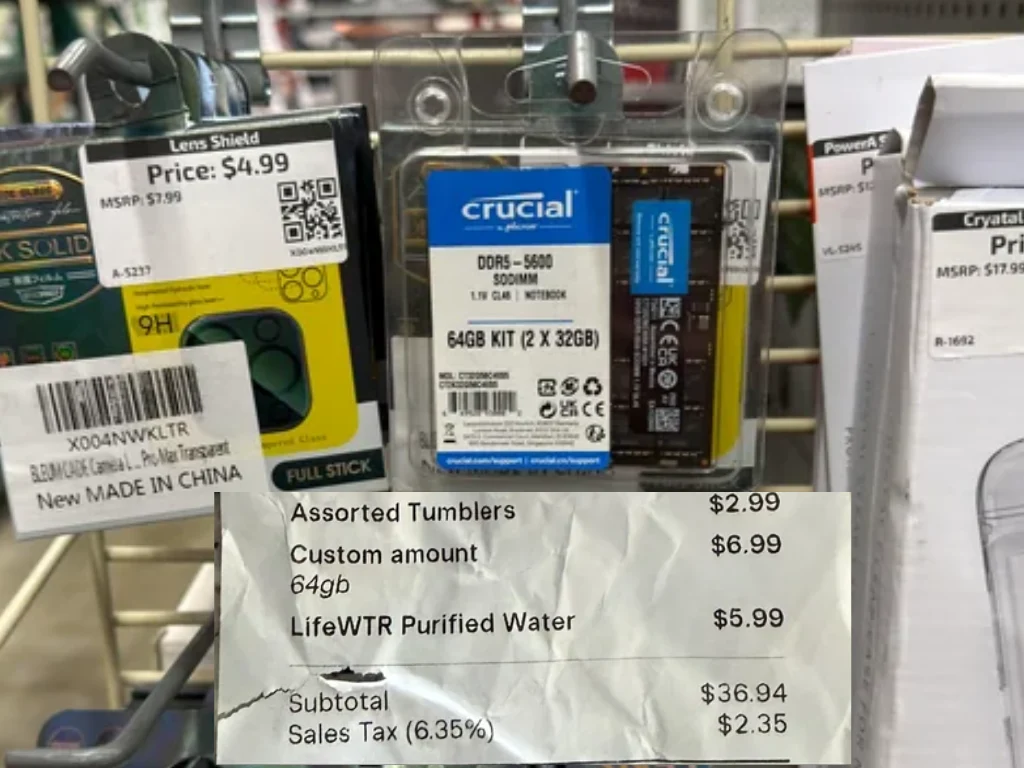
      While browsing the racks, u/L0OK0UTT found a Crucial 64GB DDR5-5600 SO-DIMM kit with 32GB modules designed for laptops. It was hanging loosely without any clear price tag, labeled only as an Amazon return. Eager to see what he could get, he grabbed the kit along with some household items and headed to the checkout. The moment of truth was just around the corner.

      How the Price Was Determined

      At the cash register, the employee scanned the RAM but couldn’t find any pricing or system record. After a brief search with no results, the clerk admitted defeat and decided to charge a flat $6.99 for the entire kit. In comparison, the same 64GB Crucial kit sells for approximately $600 on online stores. This kind of crazy price tag left the user ecstatic and eager to share his find.

      Advice for Bargain Seekers

      u/L0OK0UTT ended his post by urging fellow deal hunters to keep their eyes peeled at local liquidator stores. With a little bit of luck, you never know what hidden gems you might discover marked as returns from big online retailers. Keep looking—you could uncover your next big score just like he did.

      Sources
    • DDR5 RAM Price Analysis: Signs of Hope in Unstable Market

      DDR5 RAM Price Analysis: Signs of Hope in Unstable Market

      Key Takeaways

      1. RAM and storage prices have increased significantly due to rising demand from AI technologies.
      2. DDR5 prices have shown a slight decrease of 7.2% after months of consistent increases.
      3. Despite the recent drop, DDR5 prices are still 408% higher than last July, indicating ongoing high costs.
      4. The price changes reported are specific to the German market and may not reflect global trends.
      5. There are mixed predictions about whether RAM and storage prices will stabilize or continue to rise this year.


      Pretty much everyone knows about the chaos around RAM and storage prices that has been going on for several months. The main reason for this price increase is AI, which requires a lot of RAM and storage. Prices have been rising consistently for about nine to ten months, but there seems to be a small light of hope now.

      Slight Decrease in DDR5 Prices

      3DCenter.org, a site that has been monitoring RAM and storage prices in Germany since July of last year, has shared that their latest updates show a drop in the increase of DDR5 prices. The average decrease has been 7.2% for 20 DDR5 products they looked at. This decline comes after six months (from July 2025 to January 2026) of ongoing increases and no changes in the past two months.

      Still High Prices for DDR5

      However, it’s important to note that DDR5 prices haven’t returned to normal levels. They are currently about 408% higher than prices from July. This means that instead of a 4.4x price jump, DDR5 is now at a 4.1x increase. So, while this drop is only a slight change, it’s still a good sign, especially after a month without any increase (February). It’s too soon to tell if this indicates a longer-term downward trend. Plus, this information is only relevant for the German market and not the global one.

      Mixed Reports on Future Prices

      There are various reports arguing both sides of the debate on whether RAM and storage prices will stabilize and drop this year or if they will keep climbing. No matter what, a significant change in the market has already occurred, impacting PC gaming, driving up smartphone prices, leading to the discontinuation of certain phones, and causing some DRAM manufacturers to leave the market entirely.

      Source:
      Link


    • Samsung Raises Wholesale DRAM and SSD Prices Up to 80%

      Samsung Raises Wholesale DRAM and SSD Prices Up to 80%

      Key Takeaways

      1. Samsung has announced an up to 80% price increase for its memory products, affecting distributors in Taiwan.
      2. Consumer DRAM and SSD prices have already surged two to three times since November, with significant recent hikes.
      3. Supply issues are impacting Samsung, with distributors struggling to meet demand and shipping limited quantities.
      4. An insider indicated that not all product prices have risen by 80%, but further price hikes for electronics are expected.
      5. Rising demand for AI hardware and a component shortage are driving the price increases, leading Samsung to prioritize high-end products over consumer memory.


      Samsung has informed its distributors in Taiwan, where a large portion of the world’s laptops and gaming consoles are made, about an increase in the price of its memory products by as much as 80%.

      Recent Price Increases

      This announcement comes after significant price hikes in consumer DRAM and SSD storage, which have already seen increases of two to three times since November. For example, in the last three months, the cost of a Samsung 32GB DDR5 5600MHz laptop memory kit on Amazon has surged more than double, with expectations of even higher prices ahead. Similarly, the price of the widely-used Samsung T7 1TB portable SSD rose from $99 to $199 in the same period.

      Supply Issues

      As per one semiconductor distributor in Korea, “This month, Samsung Electronics’ 5th generation double data rate (DDR5) DRAM 16GB-5600 memory module (DIMM) for PCs has exceeded 400,000 won… it has nearly tripled within two months.” Not only has Samsung increased wholesale prices for consumer memory, but they are also struggling to supply enough units to satisfy demand. The distributor expressed frustration, stating they can only manage to ship out about 10 kits daily.

      Insider Insights

      “While it’s true that Samsung Electronics has raised its memory supply prices recently, the assertion that all product prices have gone up by 80% is misleading,” revealed an insider from Samsung Electronics, indirectly confirming that more price hikes for both memory and consumer electronics are on the horizon once manufacturers of laptops, smartphones, PlayStations, and others start working with the newly priced components.

      Market Dynamics

      Experts believe that the rising demand for enterprise AI hardware and a shortage of components are driving Samsung’s significant wholesale price increase. Notably, brands like Crucial have exited the consumer memory market to concentrate on the more profitable AI data center business, while Nvidia is reportedly paying Samsung double for its next-generation HBM4 AI graphics card memory modules.

      Consumer products usually don’t need to handle heavy workloads for long durations, but enterprise RAM and flash memory kits require superior quality components to ensure reliability. Nevertheless, the price gap between Samsung’s consumer and enterprise memory products has reached a record 40%. This shift has led Samsung to focus more on the high-end market, causing consumer memory prices to skyrocket as well.

      Source:
      Link


    • New Xbox and PS6 Release Dates in Doubt Due to High Memory Costs

      New Xbox and PS6 Release Dates in Doubt Due to High Memory Costs

      Key Takeaways

      1. Potential Delays: The release of the next-gen consoles, PS6 and Xbox, planned for 2027-2028, may be delayed due to high memory prices and discussions among manufacturers.

      2. Price Increases: Sony and Microsoft might raise the prices of upcoming consoles, but there is hope that memory prices could stabilize soon.

      3. Memory Specifications: The new consoles are expected to use GDDR7 memory, with the current DRAM supply issues affecting both console and PC gaming hardware.

      4. Sales Impact: Higher prices for the next-gen consoles could negatively affect sales, especially after a recent drop in U.S. console sales.

      5. Marketing Adjustments: Manufacturers may focus on discounts for current consoles instead of promoting new hardware, but rising component costs complicate this strategy.


      With memory prices hitting all-time highs, gamers are curious about how this will affect the next-gen consoles. Sony may be ready to launch the PS6 in 2027, while Microsoft and AMD are also working on a new Xbox console. However, Tom Henderson from Insider Gaming reports that talks regarding possible delays have started.

      Console Release Concerns

      Initially, Insider Gaming hinted that manufacturers might alter their schedules during a recent podcast episode. Now, the possibility that the next Xbox and PS6 release dates could be at risk seems more likely. Henderson notes that the current situation has prompted console makers to discuss whether the next generation should be pushed back from the planned 2027-2028 launch timeframe.

      Pricing Strategies

      Another path for Sony and Microsoft could be to increase the MSRPs of the upcoming consoles. Nevertheless, the insider has shared that there is optimism that memory prices may stabilize sooner than anticipated. Major memory producers such as Samsung and SK Hynix could ramp up DRAM production to help with the shortage, but for now, they appear focused on meeting the demands of expanding AI data centers.

      Memory Specifications

      The new Xbox and PS6 will probably utilize GDDR7 memory. The VRAM in GPUs and the DDR5 modules used in desktops and laptops are being impacted by the dwindling DRAM supply. Microsoft’s console may resemble a Windows gaming PC, which is becoming pricier to assemble.

      The podcast also touched on how manufacturers should manage the upcoming years. Gamers were already surprised by a notable drop in U.S. console sales in November. A significantly higher price for the next-gen Xbox or PS6 could further hurt revenue.

      Marketing Strategies

      Instead of promoting new hardware, the panel suggested offering discounts on the PS5 and Xbox Series X. However, with increasing component costs affecting older devices as well, this may not be feasible. In fact, unprepared for the crisis, leaker Moore’s Law Is Dead hinted that Microsoft might raise the price on its current consoles.

      Furthermore, Valve’s Steam Machine is also feeling the pinch from the soaring DDR5 RAM costs. There have been whispers that Valve might postpone the release of the compact Linux PC beyond its expected Q1 2026 launch window.

      Source:
      Link