
Tag: AMD Ryzen AI 9 HX 470

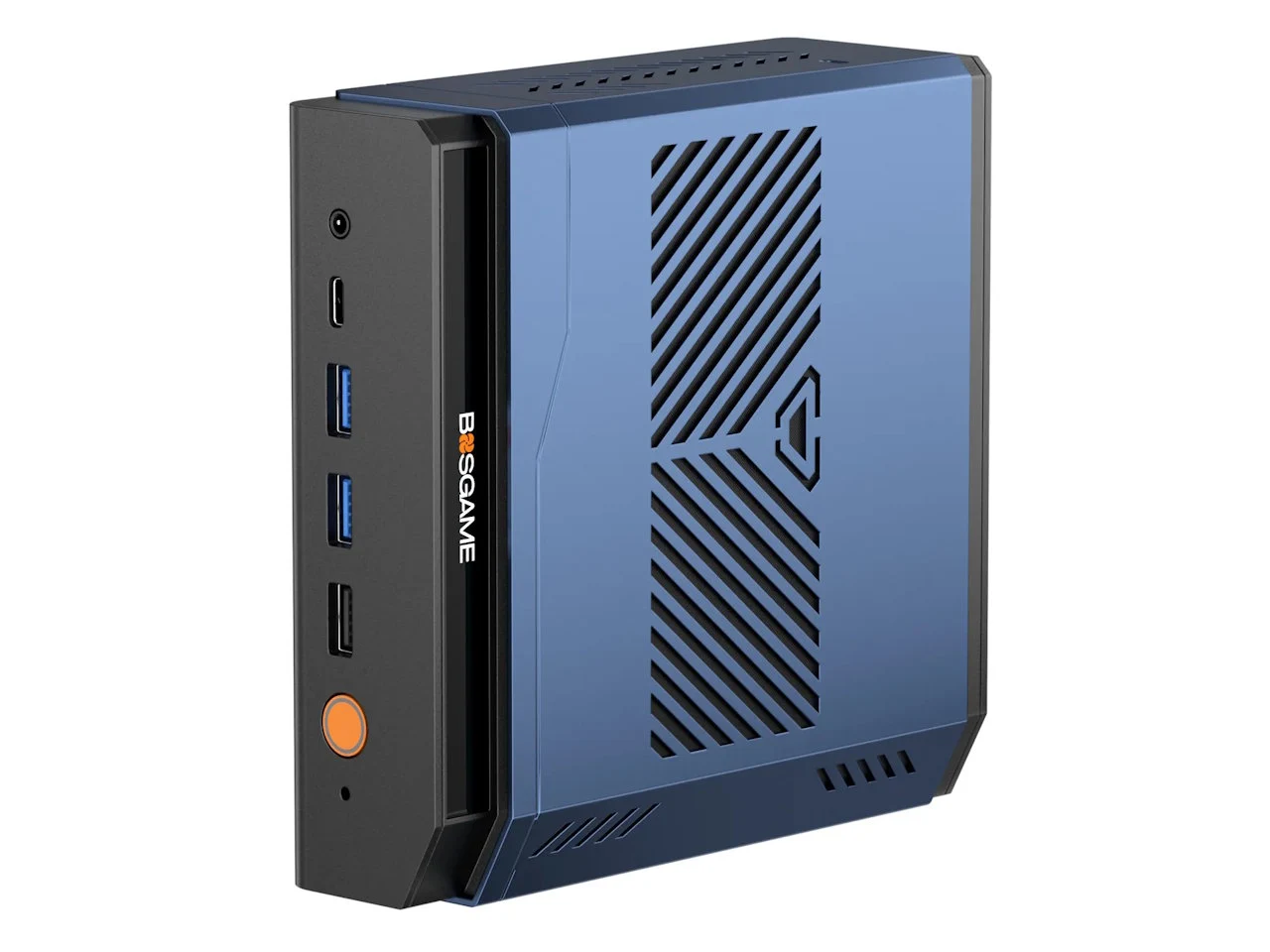
  • Bosgame VTA-439 Mini PC: Ryzen AI 9, 86 TOPS, 256GB RAM

    Bosgame VTA-439 Mini PC: Ryzen AI 9, 86 TOPS, 256GB RAM

    Key Takeaway

    – Runs AI applications like OpenClaw locally with 86 TOPS total AI compute (55 TOPS NPU + 31 TOPS CPU/GPU).
    – Powered by AMD Ryzen AI 9 HX 470 CPU, supports up to 256 GB DDR5 RAM and 6 TB NVMe storage.
    – Integrated Radeon 890M GPU (≈ Nvidia 1650 performance), upgradable via OCuLink eGPU port (supports up to RTX 5090).
    – Priced at $1,049 (sale) down from $1,599 MSRP for the 32GB RAM / 1TB SSD model.


    Bosgame Launches New AI Mini PC

    Bosgame has unveiled there VTA-439 mini PC, a device specifically engineered for running AI applicationns and services like OpenClaw locally, which potentially help owners circumvent the cost of purchasing AI tokens. This little machine is quite a powerhouse for its size, offering alot of compute capability for various tasks. It’s aimed at users who want to do heavy lifting without relying on cloud services.

    Powerful Specifications Under the Hood

    This mini PC is driven by a 12C/24T AMD Ryzen AI 9 HX 470 CPU, which can be paired with up to 256 GB of DDR5 SO-DIMM 5600MT/s RAM installed across two slots. For those needing ample storage, it supports up to 6 TB of M.2 2280 NVMe PCIe4.0 x4 storage across three slots, based on currently available 2 TB SSDs, providing plenty of space for large model files. The system is designed to not bottleneck even demanding workflows, making it a serious contender for local AI workloads.

    Importantly, the HX 470 offers a total of 86 TOPS of AI compute power, broken down into 55 TOPS from the NPU and 31 TOPS from the CPU/GPU. This enables the VTA-439 to smoothly run large AI models, OpenClaw, and various applications for image and video generation directly on the device. The levels of performance here allows for local inferencing without relying on internet connectivity.

    Graphics Performance and Connectivity

    For Windows 11 applications and games, the system utilizes an integrated AMD Radeon 890M graphics, which provides performance comparable to an Nvidia GTX 1650. Users can significantly boost this by connecting an external GPU (eGPU) to its OCuLink PCIe 4.0 x4 port, which supports powerful cards including the latest Nvidia RTX 5090. This makes it a very flexible setup for both productivity and occasional gaming, provided you have the budget for an eGPU enclosure.

    Pricing and Availability Details

    The VTA-439 configuration with 32 GB of RAM and a 1 TB SSD has an MSRP of $1,599.00, but is currently available for a lower price of $1,049 on the Bosgame website. This significant discount makes it a more accessible option for developers and hobbyists alike, though it’s still a considerable investment for most people. The pricing reflects its positioning as a premium device in the mini PC market, focusing on AI capabilities rather than being a budget option.
    Sources

  • Geekom A9 Max Upgradeability: Is It Worth Buying?

    Key Takeaway

    – High-end mini PC with AMD Ryzen AI 9 HX 470 (12 cores, 24 threads) and Radeon 890M iGPU.
    – Comes with 32 GB DDR5 RAM and 2 TB SSD, but uses a single RAM module, limiting memory bandwidth.
    – Single-channel RAM cripples iGPU performance, impacting 3D benchmarks.
    – Adding a second RAM module significantly boosts performance, especially for the integrated graphics.
    – Good build quality, low power consumption, quiet operation, but lacks modern ports like OCuLink or USB4 v2.


    Geekom Rolls Out a New High-End Mini PC

    With the A9 Max, Geekom is launching a new high-end mini PC in the 2026 edition, which is based on AMDs current Gorgon Point platform. The AMD Ryzen AI 9 HX 470 with 12 cores and 24 threads works inside, combined with the integrated Radeon 890M built on the RDNA 3.5 architecture. The equipment is complemented by 32 GB DDR5 RAM and a 2 TB SSD, making the compact computer primarily aimed at demanding users who are looking for alot of performance in a tiny space.

    Build Quality and Connectivity Insights

    In the detailed test, the Geekom A9 Max turns out to be a powerfull and high-quality mini PC with extensive connectivity. In addition to the good CPU performance, the comparatively low power consumption and the pleasant noise level under load are particularly positive. The familiar aluminum housing looks high-quality but still dosent offer any modern connections like OCuLink or USB4 v2.

    Memory Configuration Under Fire

    The memory configuration of the test device is especially open to critisism. Geekom only uses a single RAM module ex works, which limits the memory bandwidth. This not only affects the general system performance but also the integrated Radeon 890M in particular. As a result, the iGPU cannot fully develop its high potential and falls short of expectations in some 3D benchmarks. The recently tested Minisforum AI X1 Pro also had different memory.

    How to Unlock Full Performance

    The performance can be significantly improved by retrofitting a second RAM module (32 GB at Amazon), whereby the integrated graphics unit in particular benifits from the higher memory bandwidth. Despite this limitation, the Geekom A9 Max leaves a good impression overall and is currently one of the more powerful mini PCs in its segment with the AMD Ryzen AI 9 HX 470 chip.

    Final Review Details

    All details about the Geekom A9 Max including benchmarks, measured values, and detailed comparisons can be found in the full evaluation document.

    • Processor: AMD Ryzen AI 9 HX 470 (12 cores, 24 threads)
    • Graphics: Integrated Radeon 890M (RDNA 3.5)
    • Memory: 32 GB DDR5 RAM (single module)
    • Storage: 2 TB SSD
    • Case: Aluminum housing
    • Connectivity: lacks OCuLink and USB4 v2


    Sources

    • MinisForum AI X1 Pro RAM Upgrade for Better Radeon 890M Performance

      MinisForum AI X1 Pro RAM Upgrade for Better Radeon 890M Performance

      Key Takeaway

      – Dual-channel RAM dramatically boosts performance: adding a second, identical RAM module enables fast dual-channel memory, increasing overall system bandwidth and responsiveness, especially benefiting integrated graphics.

      – Integrated GPU gains are substantial: the AMD Radeon 890M iGPU benefits most from higher memory bandwidth, with smoother gaming, faster frame times, and improved graphics-accelerated app performance.

      – CPU gains are notable but variable: Ryzen AI 9 HX 470 shows a measurable, though workload-dependent, 5–15% performance uplift when a second RAM module is present.

      RAM will remain an important cost factor when purchasing or upgrading modern PCs and mini PCs in 2026. Fast DDR5 modules in particular are still comparatively expensive compared to previous memory standards, which is why many systems are often only supplied with a single RAM module or are initially used in a smaller configuration. However, this can have a noticeable negative impact on overall performance, especially in compact devices with powerful integrated graphics.

      RAM configurations and system performance

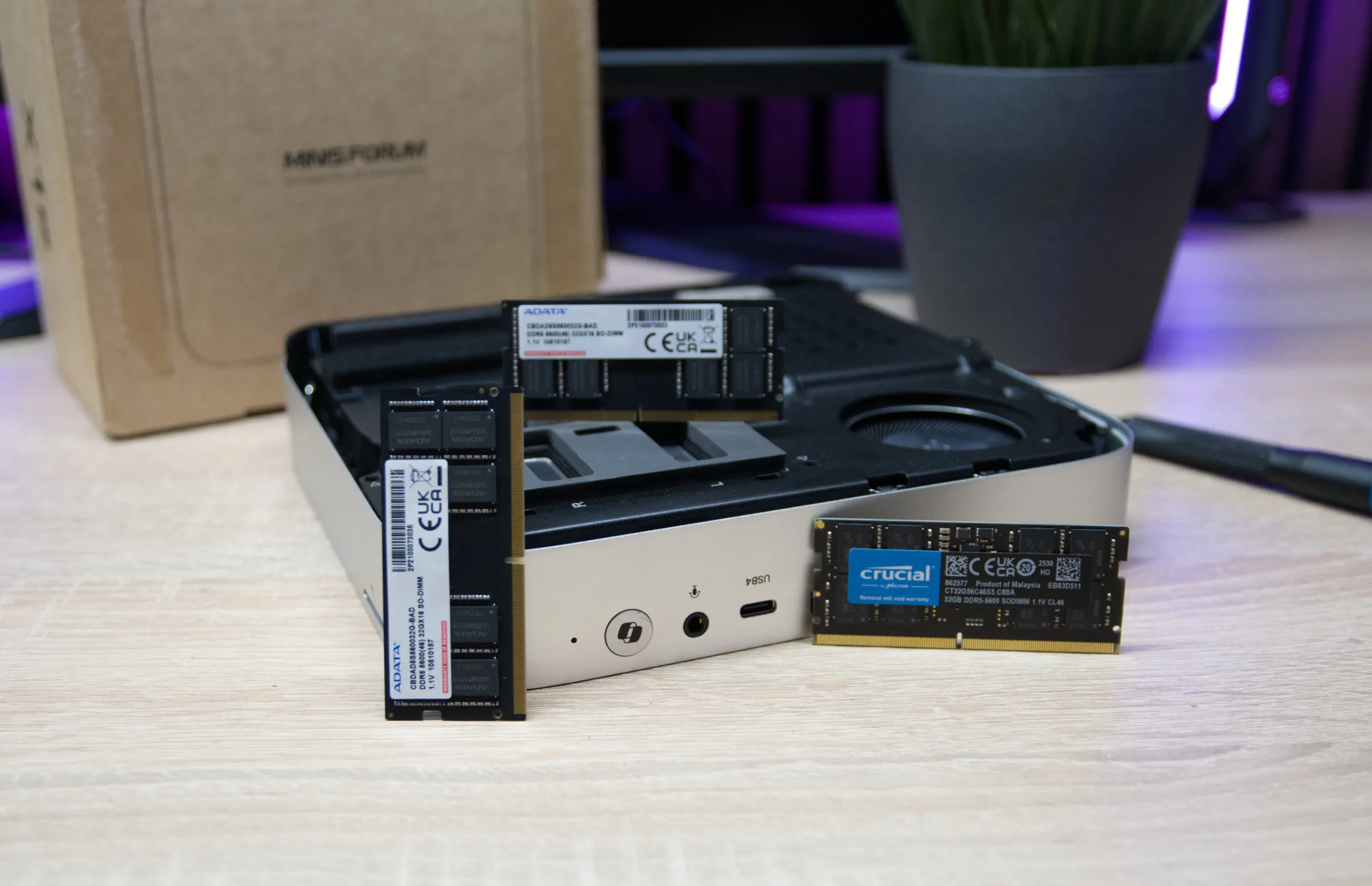
      Modern processors are increasingly relying on high memory bandwidths to efficiently supply the CPU and integrated GPU. If a system only works in single-channel mode, only part of the possible bandwidth is available. The faster dual-channel mode is only activated with a second memory module. This is particularly beneficial for integrated graphics units that do not have their own video memory and access the main memory directly. At the same time, the general system performance can also improve, for example with multitasking, productive applications, or computing-intensive tasks. The importance of the right RAM configuration for actual performance therefore quickly becomes apparent, especially with powerful mini PCs. Using the recently tested Minisforum AI X1 Pro as an example, we show the influence a second RAM module can have on the overall performance of the system.

      Dual-channel gains in practice

      The Minisforum AI X1 Pro gains noticeably in performance by installing a second RAM module. Only with two identical memory modules does the system work in fast dual-channel mode, which significantly increases the available memory bandwidth. The integrated graphics unit in particular benefits significantly from this, while the AMD Ryzen AI 9 HX 470 itself also records a small increase in performance. Modern Ryzen CPUs are heavily dependent on a fast memory connection, as data can be transferred faster between the RAM and processor. In practice, this leads to shorter loading times, smoother multitasking, and an overall higher system response. CPU performance can increase by around 5 to 15 percent, depending on the software, particularly with computing-intensive applications. The AI X1 Pro therefore only reaches its maximum performance with a dual-channel RAM configuration, as can be seen from our comparative values.

      Impact on graphics and gaming

      The integrated AMD Radeon 890M in the Minisforum AI X1 Pro benefits enormously from a second RAM module. Only with two DDR5 memory modules installed does the iGPU have the full memory bandwidth at its disposal. As integrated graphics units do not have their own video memory and instead access the RAM, the higher bandwidth has a direct effect on graphics performance. Games run more smoothly, frame times improve and graphics-accelerated applications also respond noticeably faster. Depending on the title and resolution, performance increases of up to over 100 percent are possible.


      Sources

      • Intel Core Ultra X9 388H Beats AMD Ryzen AI 9 HX 370 in Passmark

        Intel Core Ultra X9 388H Beats AMD Ryzen AI 9 HX 370 in Passmark

        Key Takeaways

        1. The Intel Core Ultra X9 388H processor features 16 cores, including high-performance and efficiency cores, and is equipped with the Arc B390 iGPU.
        2. Performance results show only slight improvements over the previous generation, with a 10% increase in multithread performance and similar single-thread results.
        3. The 388H scored just below 38,000 points in multithread testing and approximately 4,450 points in single-thread performance on Passmark.
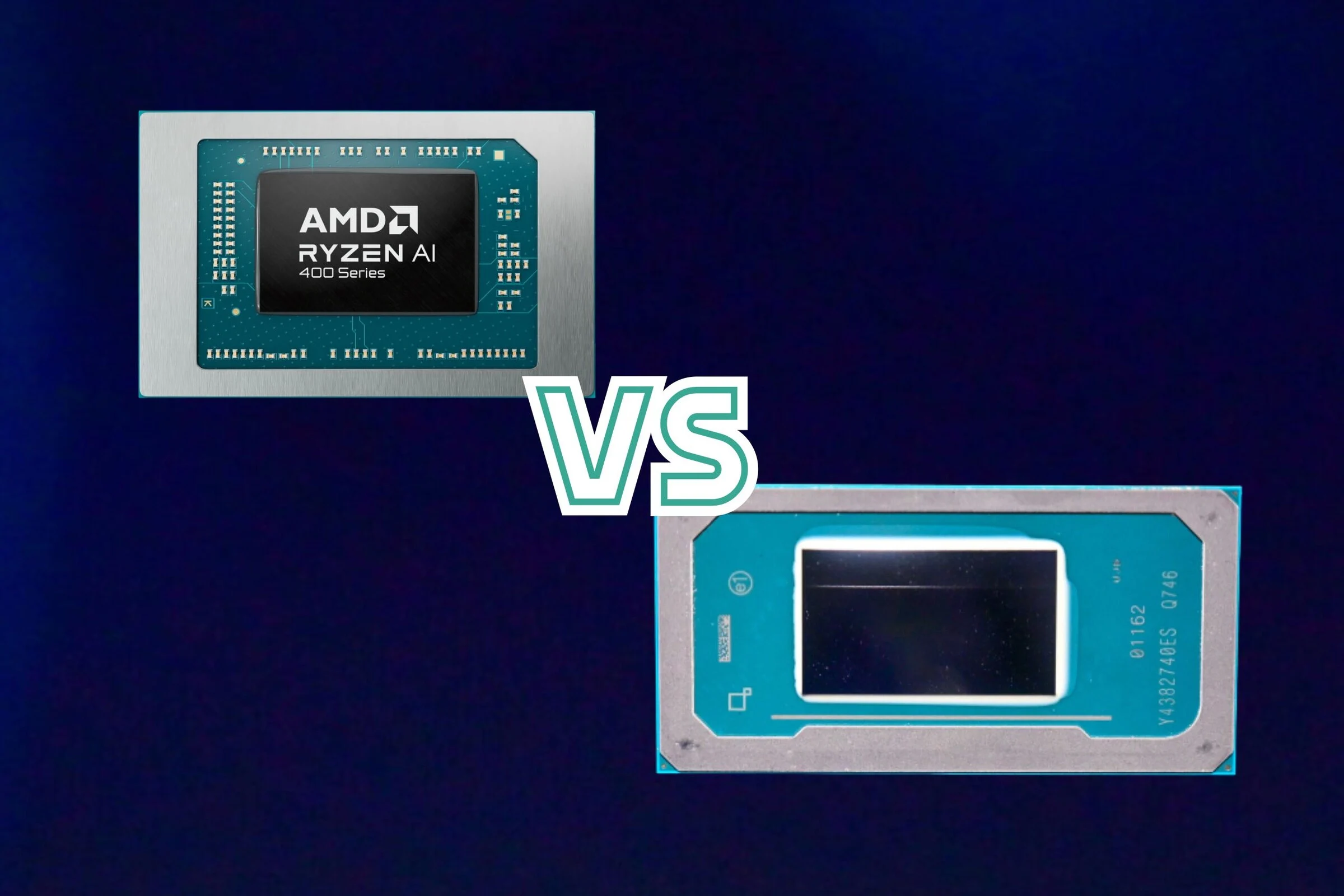
        4. The Panther Lake processor has a slight edge over AMD’s Ryzen AI 9 HX 470, which scored around 36,500 points in multithread tests.
        5. The Arc B390 iGPU is highlighted for its strong performance, reportedly outperforming the Radeon 890M by nearly 100% in gaming scenarios, making it suitable for compact laptops and mini PCs.


        The Intel Core Ultra X9 388H “Panther Lake” processor has been revealed and is now available on Passmark. The performance results show only slight improvements compared to the previous generation chips, even though Intel has been touting a significant boost of 60% in multithreaded tasks.

        Specifications Overview

        The Intel Core Ultra X9 388H features a configuration of 16 cores, which includes four high-performance Cougar Cove cores, eight Darkmont efficiency cores, and an additional 4 low-power Darkmont cores. For graphics, it utilizes the Arc B390 iGPU equipped with 12 Xe3 cores. According to the Passmark data noted by @x86deadandback on X, the 388H achieves a score of just below 38,000 points in multithreaded testing and approximately 4,450 points in single-thread performance.

        Performance Comparison

        When compared to the Core Ultra 9 285H, the Panther Lake processor shows about a 10% enhancement in multithread performance, while the single-thread results are nearly the same. Currently, only a couple of samples of the 388H have been tested on Passmark, which means that the scores are likely to fluctuate as more data comes in. Notably, the 285H has a 300 MHz higher boost clock than the 388H and a better P-core ratio, which makes the results look quite encouraging.

        AMD’s Position

        Fans of AMD might feel let down since the AMD Ryzen AI 9 HX 470 only managed to attain around 36,500 and 4,200 points in single-thread and multithread tests, respectively. This gives the Panther Lake chip a slight edge. While benchmarks alone aren’t definitive, it suggests that AMD could face challenges against Intel in 2026.

        Interestingly, as highlighted by TechPowerUp, the standout feature of the Panther Lake processor is likely the Arc B390 iGPU. Leaked benchmark information indicates that the B390 outperforms the Radeon 890M by nearly 100% in practical gaming scenarios. For compact laptops that can’t fit discrete GPUs and mini PCs, the Panther Lake chips appear to be a very attractive option.

        Exciting Offers

        Eager for Panther Lake mini PCs? The GMKtec Evo-T1, which comes with 64 GB of memory and 2 TB of storage, is currently priced at $300 less on Amazon.

        Passmark, x86deadandback, noted by TechPowerUp.

        Source:
        Link