Tag: Radeon 890M

  • Geekom A9 Max Upgradeability: Is It Worth Buying?

    Key Takeaway

    – High-end mini PC with AMD Ryzen AI 9 HX 470 (12 cores, 24 threads) and Radeon 890M iGPU.
    – Comes with 32 GB DDR5 RAM and 2 TB SSD, but uses a single RAM module, limiting memory bandwidth.
    – Single-channel RAM cripples iGPU performance, impacting 3D benchmarks.
    – Adding a second RAM module significantly boosts performance, especially for the integrated graphics.
    – Good build quality, low power consumption, quiet operation, but lacks modern ports like OCuLink or USB4 v2.


    Geekom Rolls Out a New High-End Mini PC

    With the A9 Max, Geekom is launching a new high-end mini PC in the 2026 edition, which is based on AMDs current Gorgon Point platform. The AMD Ryzen AI 9 HX 470 with 12 cores and 24 threads works inside, combined with the integrated Radeon 890M built on the RDNA 3.5 architecture. The equipment is complemented by 32 GB DDR5 RAM and a 2 TB SSD, making the compact computer primarily aimed at demanding users who are looking for alot of performance in a tiny space.

    Build Quality and Connectivity Insights

    In the detailed test, the Geekom A9 Max turns out to be a powerfull and high-quality mini PC with extensive connectivity. In addition to the good CPU performance, the comparatively low power consumption and the pleasant noise level under load are particularly positive. The familiar aluminum housing looks high-quality but still dosent offer any modern connections like OCuLink or USB4 v2.

    Memory Configuration Under Fire

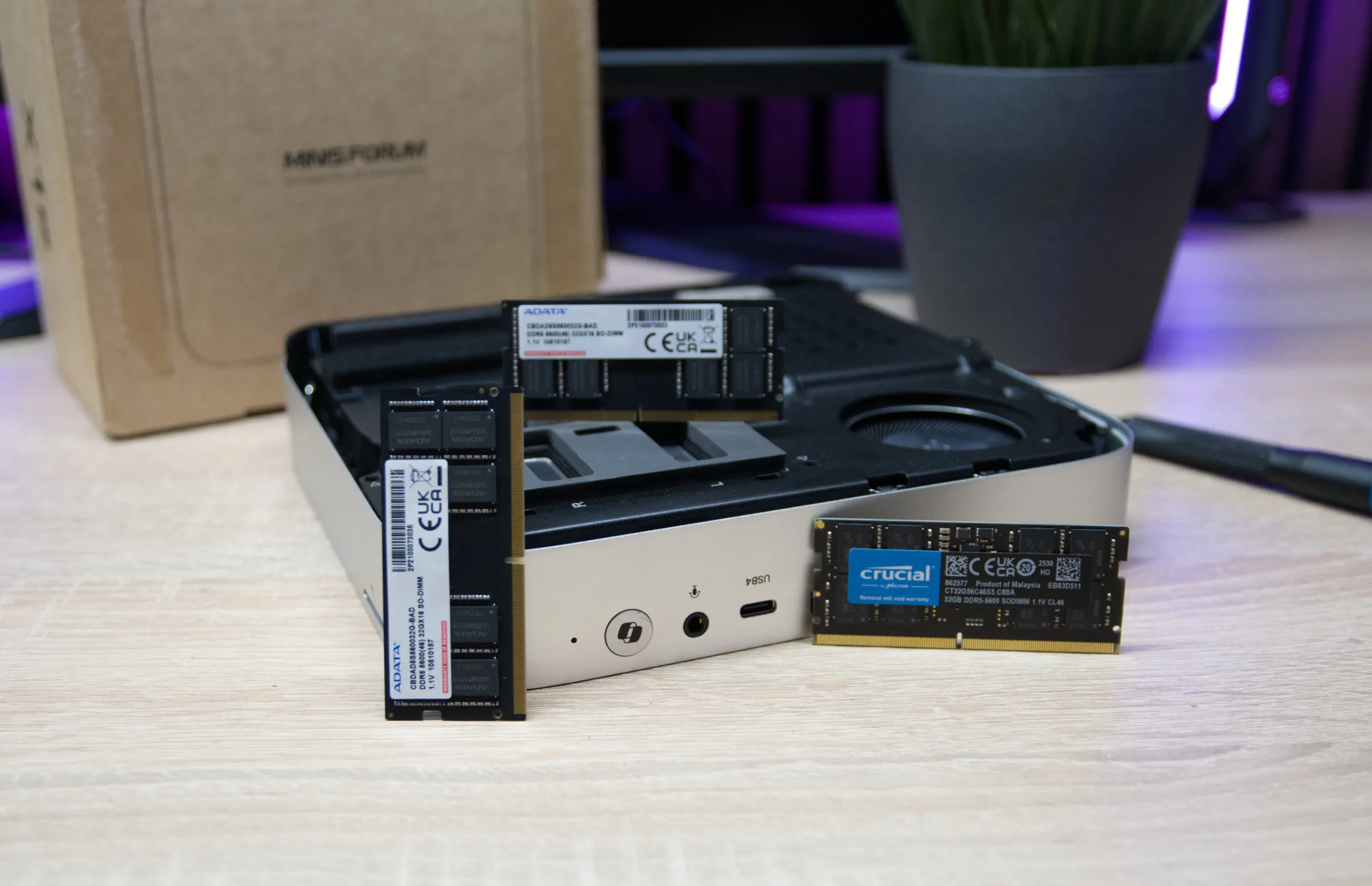
    The memory configuration of the test device is especially open to critisism. Geekom only uses a single RAM module ex works, which limits the memory bandwidth. This not only affects the general system performance but also the integrated Radeon 890M in particular. As a result, the iGPU cannot fully develop its high potential and falls short of expectations in some 3D benchmarks. The recently tested Minisforum AI X1 Pro also had different memory.

    How to Unlock Full Performance

    The performance can be significantly improved by retrofitting a second RAM module (32 GB at Amazon), whereby the integrated graphics unit in particular benifits from the higher memory bandwidth. Despite this limitation, the Geekom A9 Max leaves a good impression overall and is currently one of the more powerful mini PCs in its segment with the AMD Ryzen AI 9 HX 470 chip.

    Final Review Details

    All details about the Geekom A9 Max including benchmarks, measured values, and detailed comparisons can be found in the full evaluation document.

    • Processor: AMD Ryzen AI 9 HX 470 (12 cores, 24 threads)
    • Graphics: Integrated Radeon 890M (RDNA 3.5)
    • Memory: 32 GB DDR5 RAM (single module)
    • Storage: 2 TB SSD
    • Case: Aluminum housing
    • Connectivity: lacks OCuLink and USB4 v2

    Sources

    • MinisForum AI X1 Pro RAM Upgrade for Better Radeon 890M Performance

      MinisForum AI X1 Pro RAM Upgrade for Better Radeon 890M Performance

      Key Takeaway

      – Dual-channel RAM dramatically boosts performance: adding a second, identical RAM module enables fast dual-channel memory, increasing overall system bandwidth and responsiveness, especially benefiting integrated graphics.

      – Integrated GPU gains are substantial: the AMD Radeon 890M iGPU benefits most from higher memory bandwidth, with smoother gaming, faster frame times, and improved graphics-accelerated app performance.

      – CPU gains are notable but variable: Ryzen AI 9 HX 470 shows a measurable, though workload-dependent, 5–15% performance uplift when a second RAM module is present.

      RAM will remain an important cost factor when purchasing or upgrading modern PCs and mini PCs in 2026. Fast DDR5 modules in particular are still comparatively expensive compared to previous memory standards, which is why many systems are often only supplied with a single RAM module or are initially used in a smaller configuration. However, this can have a noticeable negative impact on overall performance, especially in compact devices with powerful integrated graphics.

      RAM configurations and system performance

      Modern processors are increasingly relying on high memory bandwidths to efficiently supply the CPU and integrated GPU. If a system only works in single-channel mode, only part of the possible bandwidth is available. The faster dual-channel mode is only activated with a second memory module. This is particularly beneficial for integrated graphics units that do not have their own video memory and access the main memory directly. At the same time, the general system performance can also improve, for example with multitasking, productive applications, or computing-intensive tasks. The importance of the right RAM configuration for actual performance therefore quickly becomes apparent, especially with powerful mini PCs. Using the recently tested Minisforum AI X1 Pro as an example, we show the influence a second RAM module can have on the overall performance of the system.

      Dual-channel gains in practice

      The Minisforum AI X1 Pro gains noticeably in performance by installing a second RAM module. Only with two identical memory modules does the system work in fast dual-channel mode, which significantly increases the available memory bandwidth. The integrated graphics unit in particular benefits significantly from this, while the AMD Ryzen AI 9 HX 470 itself also records a small increase in performance. Modern Ryzen CPUs are heavily dependent on a fast memory connection, as data can be transferred faster between the RAM and processor. In practice, this leads to shorter loading times, smoother multitasking, and an overall higher system response. CPU performance can increase by around 5 to 15 percent, depending on the software, particularly with computing-intensive applications. The AI X1 Pro therefore only reaches its maximum performance with a dual-channel RAM configuration, as can be seen from our comparative values.

      Impact on graphics and gaming

      The integrated AMD Radeon 890M in the Minisforum AI X1 Pro benefits enormously from a second RAM module. Only with two DDR5 memory modules installed does the iGPU have the full memory bandwidth at its disposal. As integrated graphics units do not have their own video memory and instead access the RAM, the higher bandwidth has a direct effect on graphics performance. Games run more smoothly, frame times improve and graphics-accelerated applications also respond noticeably faster. Depending on the title and resolution, performance increases of up to over 100 percent are possible.


      Sources

      • AMD Ryzen AI 400 Gorgon Point APUs: 29% Faster Multitasking

        AMD Ryzen AI 400 Gorgon Point APUs: 29% Faster Multitasking

        Key Takeaways

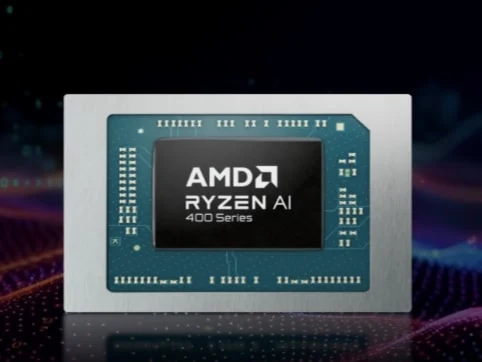
        1. AMD launched the Ryzen AI 400 APUs at CES 2026, featuring seven models from the 4-core Ryzen AI 5 430 to the 12-core Ryzen AI 9 HX 475.
        2. Each APU in the Ryzen AI 400 series includes Zen 5/5c cores, XDNA 2 NPUs, and RDNA 3.5 integrated GPUs, with the Ryzen AI 9 HX 475 having a powerful 16-CU Radeon 890M iGPU.
        3. The APUs have a base clock speed of 2.0 GHz and boost speeds ranging from 4.5 GHz (Ryzen AI 5 430) to 5.2 GHz (Ryzen AI 9 HX 475), supporting up to 36 MB of combined cache and memory speeds of up to 8,533 MT/s.
        4. The Ryzen AI 400 series operates efficiently between 15 W and 54 W, making them suitable for various devices, including lightweight laptops and gaming handhelds.
        5. The Ryzen AI 9 HX 475 outperforms the Core Ultra 9 288V in multitasking and content creation, offering 12% better average FPS at 1080p/low settings and up to 24 hours of video playback.


        After a lot of leaks and chatter, the Ryzen AI 400 APUs, previously called the “Gorgon Point” chips, are finally here. AMD revealed these processors at CES 2026. The lineup has seven APUs, starting with the 4-core Ryzen AI 5 430 and going up to the 12-core Ryzen AI 9 HX 475. Additionally, AMD introduced the Ryzen AI 400 Pro series APUs for desktops, which are nearly identical to these APUs but designed for business use.

        Ryzen AI 400 Series Breakdown

        The Ryzen AI 400 series is made up of seven different APUs. Each of these models comes equipped with a combination of Zen 5/5c cores, XDNA 2 NPUs, and RDNA 3.5 integrated GPUs (iGPUs). For example, the top model, the Ryzen AI 9 HX 475, boasts 4 Zen 5 cores and 8 Zen 5c cores, a 60 TOP NPU, and a Radeon 890M iGPU that has 16 Compute Units.

        Performance and Specifications

        All the APUs in the Ryzen AI 400 series have a base clock speed of 2.0 GHz, with various boost clock speeds. The entry-level Ryzen AI 5 430 can boost up to 4.5 GHz, while the Ryzen AI 9 HX 475 reaches a maximum boost of 5.2 GHz.

        For memory and cache, these APUs support up to 36 MB of combined L2 and L3 cache, plus they can handle memory speeds of up to 8,533 MT/s.

        AMD continues to use the Radeon 800M series iGPUs for this line. The Ryzen AI 9 HX 475/470 has a powerful 16-CU Radeon 890M iGPU, while the other models feature a 12-CU Radeon 880M, an 8-CU Radeon 860M, and a 4-CU Radeon 840M, respectively.

        Power and Efficiency

        The Ryzen AI 400 series can be configured to use between 15 W and 54 W of power. This means that the Gorgon Point APUs are capable of running on lightweight laptops, high-speed multimedia notebooks, and even gaming handhelds.

        According to AMD, the flagship Ryzen AI 9 HX 475 is said to be 29% quicker than the Core Ultra 9 288V when multitasking in programs like Microsoft Office, and it is 71% faster in content creation tasks.

        Moreover, Team Red claims that the Ryzen AI 9 HX 475 achieves 12% better average FPS at 1080p/low settings compared to the Core Ultra 9 288V paired with the Arc 140v iGPU. We’ve gone in-depth analyzing the RDNA 3.5-powered Radeon 890M and Intel Arc 140V, so make sure to take a look at our performance reviews for both GPUs.

        Lastly, AMD asserts that the Ryzen AI 400 APUs, including the Ryzen AI 7 445, can provide up to 24 hours of video playback. We will definitely put these claims to the test when laptops featuring the Ryzen AI 400 processors are released in the next few months.

        Source:
        Link


      • AMD Ryzen AI 9 HX 470 and Ryzen AI 7 450 Launch on Geekbench

        AMD Ryzen AI 9 HX 470 and Ryzen AI 7 450 Launch on Geekbench

        Key Takeaways

        1. The Ryzen AI 9 HX 470 scores 2,978 in single-core and 15,968 in multi-core Geekbench tests, showing slight improvements over the Ryzen AI 9 HX 370.
        2. The Ryzen AI 9 HX 470’s performance may be impacted by not consistently reaching its top speed of 5.3 GHz during testing.
        3. The Radeon 890M iGPU in the Ryzen AI 9 HX 470 scored 25,677 in the OpenCL benchmark but underperformed compared to the same GPU in the Strix Point variant, which scored 39,622.
        4. The Ryzen AI 7 450 achieved single-core and multi-core scores of 2,624 and 10,598, respectively, which are lower than those of the Ryzen AI 7 350.
        5. Overall, Gorgon Point shows only slight performance gains over Strix Point, with an official reveal expected at CES 2026.


        Some recent Geekbench listings have provided additional details on AMD’s Ryzen AI 400 Gorgon Point CPU. Previous leaks had already shared some specifications, and now we are able to see a hint of performance improvements when compared to Strix Point.

        Performance Scores

        Taking a closer look at the top-tier Ryzen AI 9 HX 470, it achieves scores of 2,978 and 15,968 in Geekbench’s single-core and multi-core tests, respectively. This performance is quite similar to that of the Ryzen AI 9 HX 370, which scores 2,890 for single-core and 15,051 for multi-core. However, these results may not accurately represent Gorgon Point’s capabilities, as it does not consistently reach its top speed of 5.3 GHz. The testing was conducted on an unreleased Lenovo laptop featuring 32 GB of DDR5-2126 RAM, which likely impacts the Geekbench results.

        GPU Insights

        We also see some information regarding the Ryzen AI 9 HX 470’s Radeon 890M iGPU, which scored 25,677 in the OpenCL benchmark on Geekbench. Yet again, it does not surpass the performance of the same GPU found in the Strix Point variant, which scored 39,622 despite having a slightly higher boost clock (3.1 GHz compared to 2.9 GHz). This Radeon 890M version was tested on an Asus laptop equipped with 64 GB of DDR5-5572 memory.

        Ryzen AI 7 450 Performance

        Sadly, the Ryzen AI 7 450 does not perform any better, achieving single-core and multi-core scores of 2,624 and 10,598, respectively. For comparison, the Ryzen AI 7 350 averages 2,853 and 13,092. It was also tested on the same Lenovo laptop mentioned earlier, which has 32 GB of system memory. In terms of specifications, it maintains a 4+4 layout, with the Zen 5 cluster boosting up to 5.14 GHz.

        In summary, Gorgon Point appears to be only slightly quicker than Strix Point regarding raw performance. AMD is anticipated to reveal Gorgon Point at CES 2026.

        Source:
        Link


      • Arc 140T vs Radeon 890M Benchmarks: Intel’s Mixed Results

        Arc 140T vs Radeon 890M Benchmarks: Intel’s Mixed Results

        Key Takeaways

        1. The Arc 140V outperforms the Radeon 890M in performance per watt.
        2. Higher-end Intel Core Ultra H-series CPUs use the integrated Arc 140T instead of the 140V.
        3. Benchmark results show the Arc 140T has slight advantages in 3DMark but struggles in actual gameplay.
        4. The Arc 140T exhibits lower power consumption, needing 45% less power than the Radeon 890M in Cyberpunk 2077.
        5. Intel’s Arc GPUs excel in performance per watt despite not always matching AMD’s raw frame rates.


        The Arc 140V stands strong against the Radeon 890M, particularly in terms of performance per watt. However, when you consider the higher-end Intel Core Ultra H-series CPUs, like the Core Ultra 9 285H, they tend to come with the integrated Arc 140T instead of the 140V. So, the question arises: is the 140T any quicker or more competitive compared to the Radeon 890M?

        Benchmark Results

        Regrettably, our initial benchmark findings from the MSI Prestige 16 AI Evo and Asus ZenBook Duo OLED, both featuring the Arc 140T, are quite varied as displayed below. The Arc 140T does show slight benefits in 3DMark benchmarks, but it frequently lags behind the AMD GPU in actual gameplay, such as in Baldur’s Gate 3 and Final Fantasy XV. The results for Cyberpunk 2077 and DOTA 2 Reborn (after driver updates) are nearly equal, while Intel suffers a significant loss in GTA V. On a positive note, the Intel GPU performs surprisingly well in the less popular game, Strange Brigade 3.

        Power Consumption Differences

        One of the most significant distinctions between these GPUs remains their power usage. A laptop with a Radeon 890M would require nearly 45 percent more power than one with an Arc 140T when playing Cyberpunk 2077, even though the performance gap is less than 10 percent. While Intel may not surpass AMD in terms of raw frame rates across all games, the chipmaker can at least boast about winning the performance-per-watt title for both the Arc 140V and 140T in this generation.

      • OneXPlayer OneXFly F1 Pro: AMD Radeon 890M Performance in Black Myth

        OneXPlayer OneXFly F1 Pro: AMD Radeon 890M Performance in Black Myth

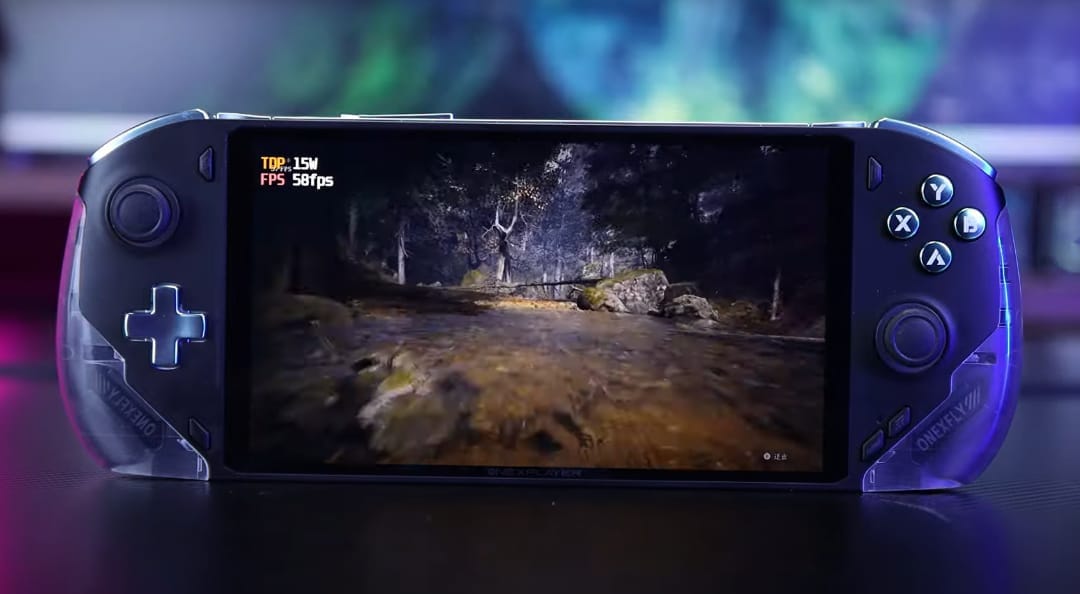
        One-Netbook has announced its upcoming gaming handheld, the OneXFly F1 Pro. This new addition to the OneXPlayer series comes after the launch of the OneXGPU 2, which is a more powerful version of the OneXGPU (currently priced at $560 on Amazon). The OneXFly F1 Pro will feature a 144 Hz OLED screen and will be powered by AMD’s latest Ryzen AI 9 HX 370 APU. As such, the OneXFly F1 Pro is set to be the first gaming handheld to utilize the Radeon 890M iGPU.

        Gaming Performance Insights

        Recently, One-Netbook showcased the expected gaming performance of the Radeon 890M in conjunction with the OneXFly F1 Pro. At this point, the company has primarily highlighted performance metrics using Black Myth: Wukong, a game we previously benchmarked with a variety of modern GPUs.

        For comparison, the Arc Graphics 140V and Radeon 780M struggle to maintain a steady 30 FPS at 1080p with low-quality settings. This testing was conducted with Temporal Super Resolution (TSR) set to 100, meaning resolution scaling was not a factor in the results.

        Promising Results

        In contrast, the Ryzen AI 9 HX 370 paired with the Radeon 890M achieves an average of about 58 FPS under similar conditions. Even more impressive, the OneXFly F1 Pro reaches this framerate while maintaining a 15 W TDP. However, it’s important to note that One-Netbook used a resolution scaling of 65%, which might not provide a fully accurate comparison. Therefore, we suggest holding off on any final conclusions for now.

        OneXPlayer via VideoCardz

      • GMK Launches EVO X1 Mini PC with Ryzen AI HX 370 and RTX 2060 iGPU

        GMK Launches EVO X1 Mini PC with Ryzen AI HX 370 and RTX 2060 iGPU

        Multiple brands of mini PCs are hinting at new products that will use AMD’s latest Strix Point APUs. GMK is one of these brands, preparing to launch its EVO X1 mini PC that will take advantage of this new technology.

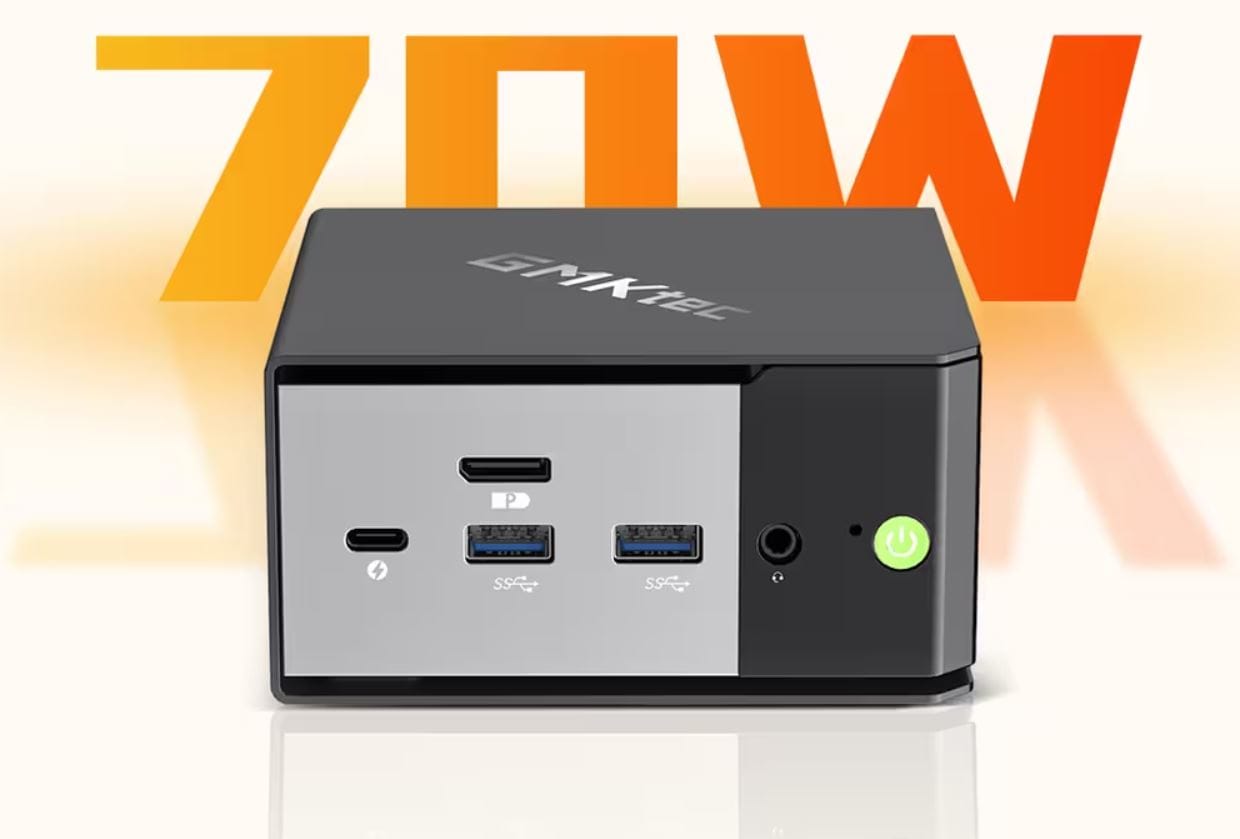
        Recently, GMK announced that the EVO X1 will feature the Ryzen AI 9 HX 370, with a TDP of 70 W for the APU. This is significantly higher than the usual maximum of 54 W that AMD recommends for this APU model.

        Performance Expectations

        It’s important to note, though, that just because the TDP is higher, it doesn’t mean there will automatically be a big boost in performance. Still, it could allow the Radeon 890M iGPU to perform better, giving the APU the extra room it needs to excel during heavy use.

        Graphics Comparison

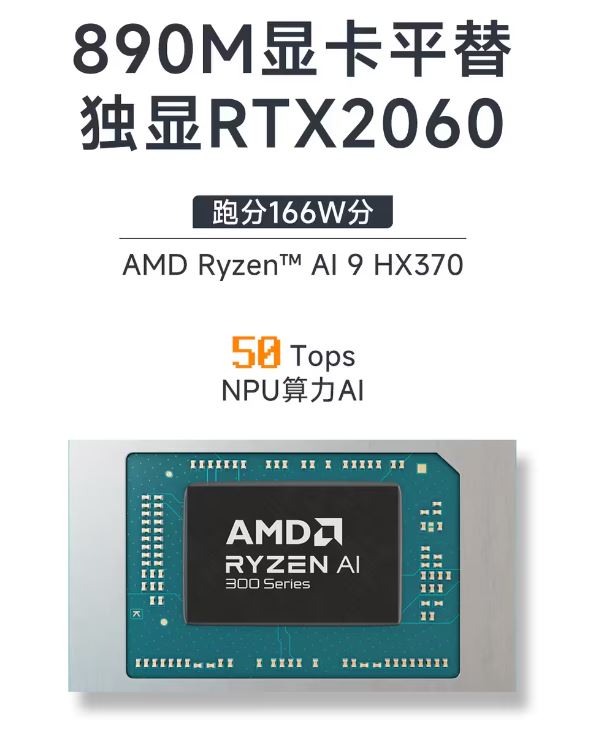
        GMK also mentioned that the EVO X1’s graphics performance may be similar to a discrete RTX 2060 GPU, likely due to the increased TDP. But let’s be real; GMK is probably talking about the 65 W Max-Q version, which isn’t as powerful as a standard RTX 2060 Laptop.

        In our tests, the Radeon 890M outperformed laptops with the RTX 2050 Mobile, and the RTX 2060 Max-Q is close in power too. However, GMK’s assertion that it will surpass an RTX 2060 seems a bit of a stretch.

        Future Updates

        As for when we can expect to see pricing or availability, it’s still unclear. More details should come out in the future. We do have a good idea of what the GMK EVO X1 will look like, thanks to a lot of marketing material, and it appears to be as stylish and compact as you would expect from a mini PC.

        Buy the Lenovo Legion Go on Amazon.

        GMK via Bilibili.


        GMK Launches EVO X1 Mini PC with Ryzen AI HX 370 and RTX 2060 iGPU
      • AMD Ryzen Z2 Gaming Handhelds Likely to Miss Radeon 890M

        AMD Ryzen Z2 Gaming Handhelds Likely to Miss Radeon 890M

        The AMD Strix Point has unveiled two new RDNA 3.5 integrated graphics processing units (iGPUs). One of these is the Radeon 890M, which comes equipped with 16 compute units (CUs). This makes the Ryzen AI 9 HX 370 and AI 9 HX 375 quite strong APUs for gaming. In our performance tests, the new iGPU delivered roughly 18% improved results compared to the earlier 780M.

        Upcoming Gaming Handhelds

        Although AMD has not announced any gaming handhelds using the new Strix Point APUs yet, the company has confirmed plans for the Ryzen Z2 series. In a conversation with Digital Trends, they mentioned an “early 2025” launch date. This new lineup is anticipated to introduce Zen 5 chips for handheld devices, although the Radeon 890M will likely not be part of this series.

        Details on Ryzen Z2 Series

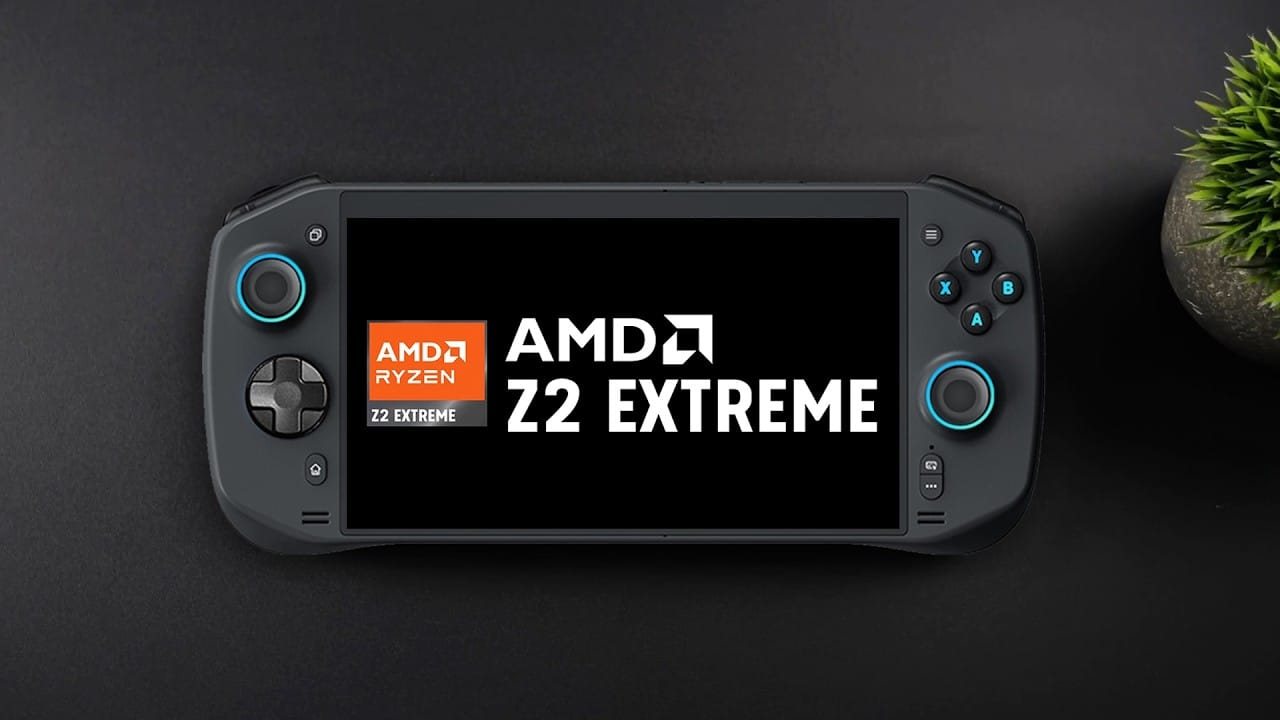
        Renowned leaker Golden Pig Upgrade revealed on Bilibili that the Ryzen Z2 Extreme will include an RDNA 3.5 iGPU with 12 CUs, effectively the Radeon 880M. This iGPU is also found in the Ryzen AI 9 365, and during testing in a gaming handheld environment, it showed about 13% better performance than the Radeon 780M.

        Golden Pig Upgrade also indicated that the standard Ryzen Z2 will be equipped with an RDNA 3 iGPU with 12 CUs. This suggests it may use the same Radeon 780M as seen in the Ryzen Z1 Extreme. Interestingly, the tipster mentioned a third APU in the new lineup, which they refer to as the Ryzen Z2G.

        What’s the G for?

        The meaning of the “G” remains uncertain, but according to Golden Pig Upgrade, it will come with an RDNA 2 iGPU with 12 CUs. This APU might just be an update to the Rembrandt series with the Radeon 680M, which could enable manufacturers to create more budget-friendly gaming handhelds.

        Even though the AMD Z2 series might not include the powerful Radeon 890M, there is a chance that Chinese manufacturers will incorporate it into gaming handhelds powered by the Ryzen AI 9 HX 370. GPD has already included this APU in its 2024 Pocket 4. While it’s more of a compact laptop than a true gaming handheld, it demonstrates the potential of this chipset to run portable devices within thermal design power (TDP) limits.

        Golden Pig Upgrade on Bilibili via: Tom’s Hardware


        Image 1
      • Benchmarking Mini PC with AMD Radeon 890M in AAA Games

        Benchmarking Mini PC with AMD Radeon 890M in AAA Games

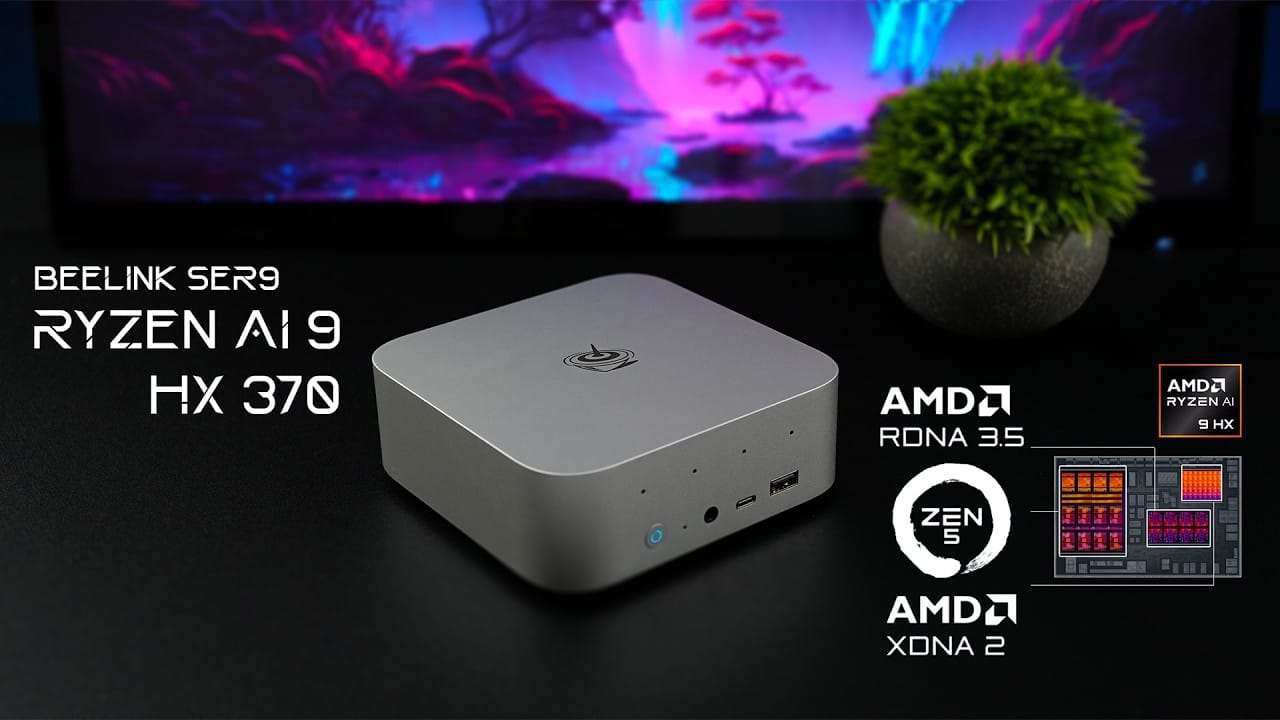
        AMD’s Strix Point has launched with laptops, and now mini PC makers are rolling out their Zen 5 models. Among the first to be revealed is the Beelink SER9, which marks its global introduction. This system is powered by the AMD Ryzen AI 9 HX 370, the highest option in the series.

        Performance of the APU

        The APU includes the Radeon 890M, which is approximately 18% quicker than the previous generation’s Radeon 780M. ETA Prime has evaluated the SER9 to assess the performance of the new RDNA 3.5 integrated GPU in a mini PC setup, and the results were quite promising.

        Game Benchmarks

        The first title tested by ETA Prime was Horizon Forbidden West. This demanding AAA game was played at 1080p with low graphics settings and frame generation enabled. The Radeon 890M achieved an average of about 70 FPS, whereas without frame generation, it dropped to around 47 FPS.

        Forza Horizon 5 was next, also at 1080p but with medium settings and no frame generation. Here, the Radeon 890M recorded an impressive average of 109 FPS, a noticeable upgrade from the 89 FPS average of the Radeon 780M under similar conditions.

        Another game, Shadow of the Tomb Raider, was tested at 1080p with medium settings and without scaling. The RDNA 3.5 integrated GPU delivered an average of 56 FPS. Call of Duty MW3 was also benchmarked, achieving an average of 141 FPS while using a balanced preset and frame generation in balanced mode.

        Additional Game Tests

        Starfield was tested at 1080p with low settings, FSR, and frame generation enabled, where the Radeon 890M averaged 87 FPS. Lastly, Cyberpunk 2077 was played at 1080p with low settings and FSR set to auto, yielding an average of 90 FPS for the mini PC.

        In summary, the Strix Point mini PCs equipped with the Ryzen AI 9 HX 370 appear to be excellent for gaming. Additionally, it’s important to mention that during testing, the Beelink SER9 reached a maximum of 54W TDP. However, the mini PC is capable of going up to 65W, which might have enhanced the iGPU’s performance slightly.