Tag: Ryzen AI 400

  • Dell launches 14-inch laptop globally with 120Hz VRR and AMD Zen 5

    Dell launches 14-inch laptop globally with 120Hz VRR and AMD Zen 5

    Key Takeaway

    – Dell Pro 3 Series 14 (P314265) uses AMD Ryzen AI 400, outperforming Intel alternatives.
    – Configurable with Ryzen AI 5/7 Pro processors, up to 64 GB DDR5-5600 RAM.
    – Storage and connectivity options: PCIe Gen 4/5 SSDs, Wi-Fi 6E or Wi-Fi 7.
    – Battery choices: 45 Wh, 57 Wh, or 70 Wh, with Long Life Cycle options.
    – Display limited to 1200p IPS (no touchscreen); only one panel reaches 500 nits with 120 Hz VRR.


    Dell Has Rounded Off Its Pro 3 Series

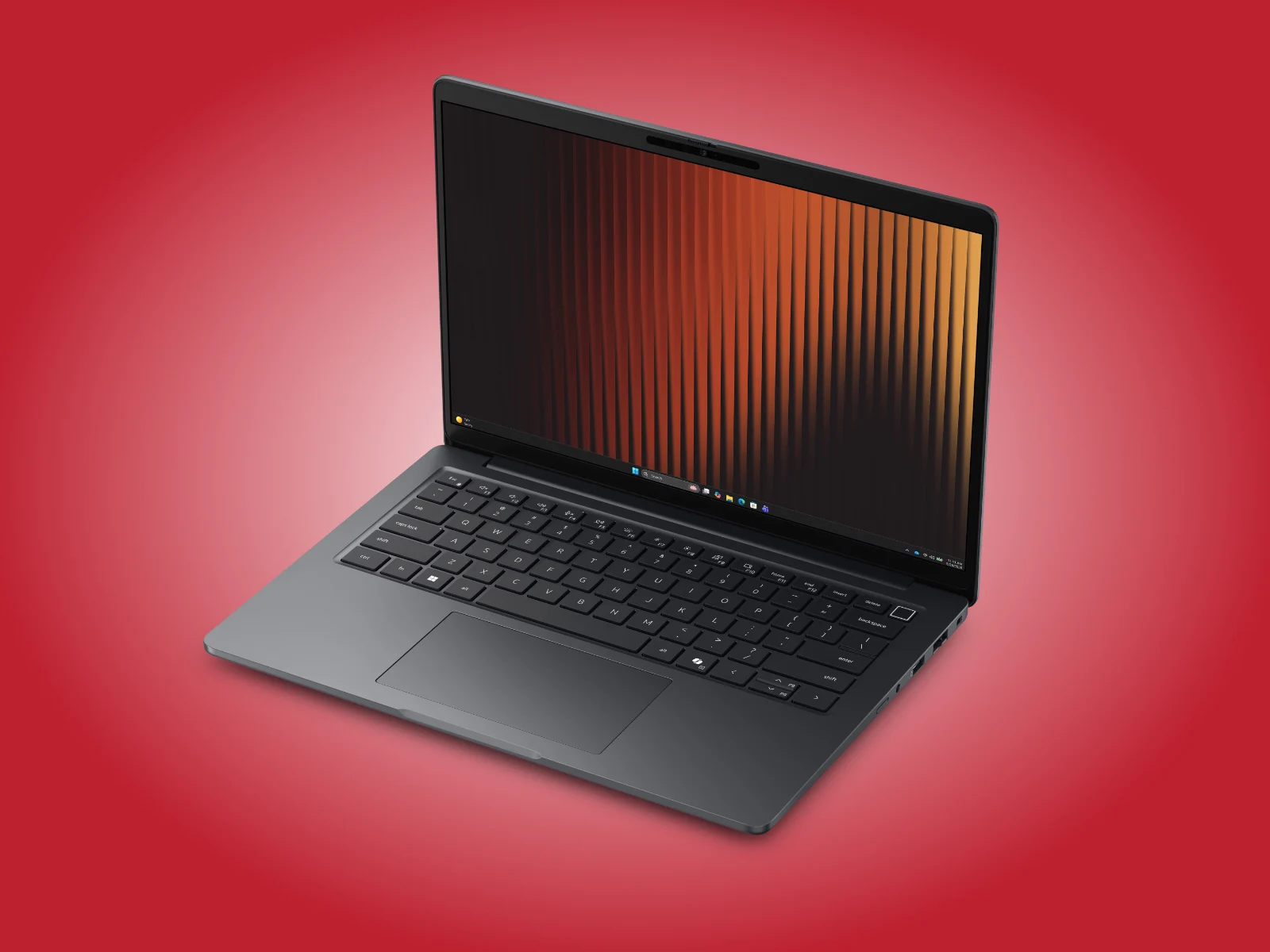
    Dell has rounded off its Pro 3 Series with a new 14-inch model. To recap, the company introduced an Intel alternative in May alongside multiple other Wildcat Lake-powered Pro laptops. By contrast, the Pro 3 Series 14 (P314265) adopts AMD’s more powerful Ryzen AI 400 platform, which should help it outshine the Pro 14 Plus PB14255 we reviewed in January.

    Specific Configuration Options

    Specifically, the P314265 can be configured with the Ryzen AI 5 Pro 435, Ryzen AI 7 450 or the Ryzen AI 7 Pro 450. According to our benchmarks, even the entry-level Ryzen AI 5 Pro 435 surpasses the performance of Dell’s Intel-powered alternatives. Additionally, these AMD processors can be complemented with 16 GB, 32 GB or 64 GB of DDR5-5600 RAM running in dual-channel mode.

    Moreover, Dell offers its new 14-inch laptop with PCIe Gen 4 or PCIe Gen 5 SSDs and Wi-Fi 6E or Wi-Fi 7 modems. On top of that, one can equip 45 Wh, 57 Wh or 70 Wh batteries with dedicated Long Life Cycle options. Currently, the P314265 only comes with 1200p IPS display options. All lacking a touchscreen layer too, only one panel reaches 500 nits and supports a 120 Hz variable refresh rate. In comparison, Dell’s other three options peak at 400 nits with a 60 Hz refresh rate.

    Pricing and Availablity

    The P314265 starts at £1,472 in the UK and €1,654-€1,728 in the Eurozone before delving into Dell’s configurator. Meanwhile, Dell requires those in Australia to call to place an order. Currently, the P314265 is unavailable in North America, although pricing should start at $1,799 in the US and CAD 2,299 in Canada. Please see Dell’s website for more details.

    Global Market Details

    Dell Australia, France, Germany, Ireland & UK

    • Ryzen AI 5 Pro 435, Ryzen AI 7 450, or Ryzen AI 7 Pro 450
    • 16 GB, 32 GB, or 64 GB DDR5-5600 RAM
    • PCIe Gen 4 or Gen 5 SSDs
    • Wi-Fi 6E or Wi-Fi 7
    • 45 Wh, 57 Wh, or 70 Wh batteries
    • 1200p IPS display (one 500-nit 120 Hz; others 400-nit 60 Hz)
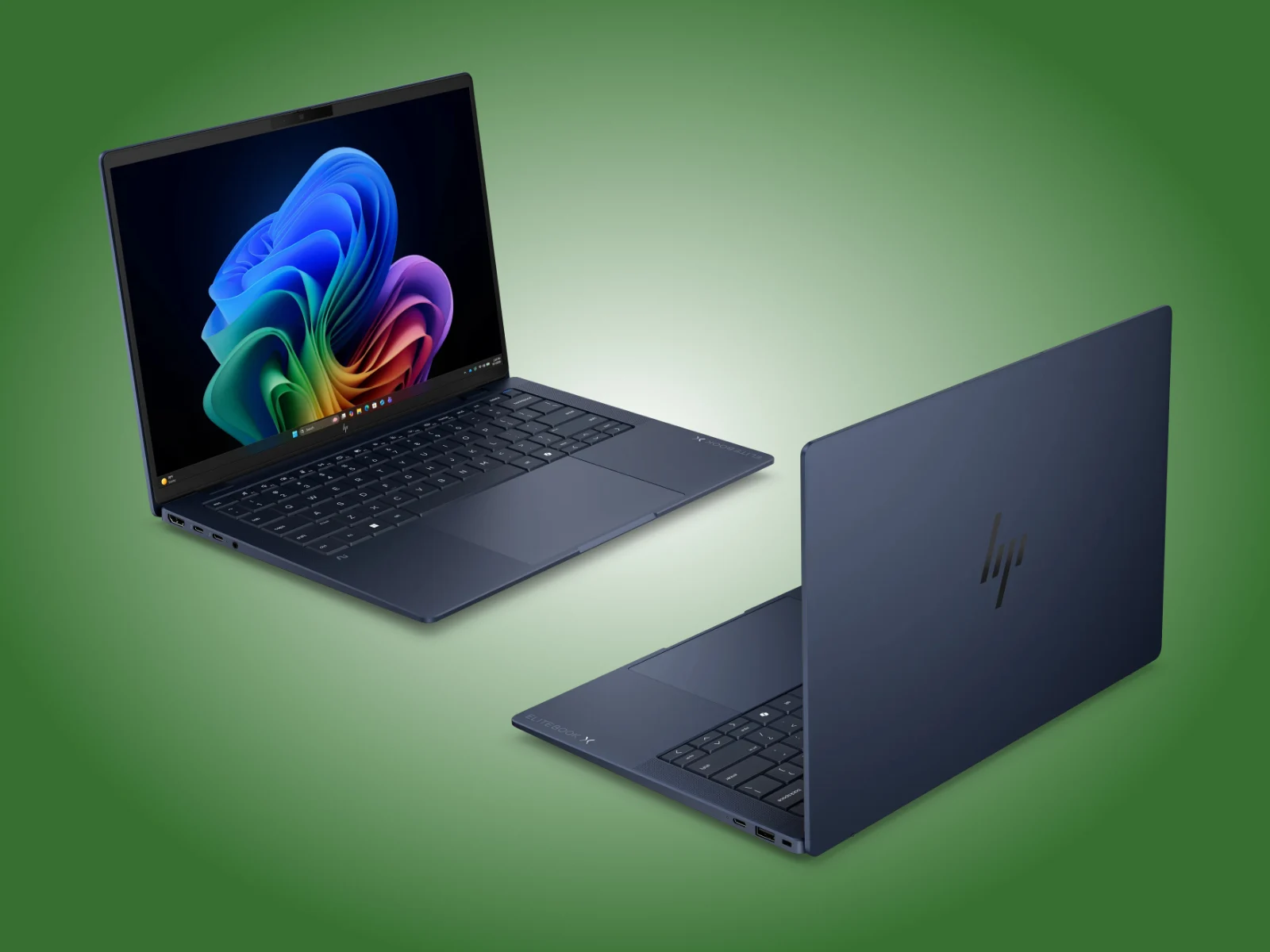
  • HP launches 14-inch laptop with 64GB RAM, cellular, 120Hz OLED display worldwide

    HP launches 14-inch laptop with 64GB RAM, cellular, 120Hz OLED display worldwide

    Key Takeaway

    – HP launched the EliteBook X G2a with Ryzen AI 400 series CPUs, starting at $3,105 (64-bit Windows 11 Pro included) and configurable up to high-end specs, including 64 GB RAM and 1 TB SSD.
    – The same model is available in UK, Eurozone, and US with analogous configurations and prices, staggered by region; notable top-spec options include Ryzen AI 9 HX PRO 470, 64 GB RAM, 1 TB PCIe Gen 5 storage, and an OLED 1200p display.
    – The EliteBook X G2a offers add-ons such as a haptic trackpad, NFC, and optional 5G connectivity, with regional variations in display options (OLED in some markets) and a notable price disparity compared to the older X G1a.


    HP has quietly started selling one of its latest 14-inch laptops powered by AMD Ryzen AI 400 processors. Announced during CES 2026 in January, the EliteBook X G2a was joined by the Snapdragon X2-based EliteBook X G2q, too. Incidentally, the latter has now gone on sale globally as well, full details of which we have covered separately.

    Pricing and availability

    By default, the Elitebook X G2a starts at $3,105 with the Ryzen AI 5 435, 16 GB of RAM and 512 GB of PCIe Gen 4 storage. This pricing includes a Windows 11 Pro licence though, which can be swapped with FreeDOS for a $250 saving. Nonetheless, the EliteBook X G2a is significantly more expensive than the EliteBook X G1a that we reviewed in early 2025 (curr. $1,199 on Amazon).

    Regional pricing

    By contrast, the same configuration costs £1,535 in the UK. Configurations range up to £3,323 with a Ryzen AI 9 HX PRO 470, 64 GB of RAM, a 1 TB SSD and a 1800p (2.8K) Tandem OLED display featuring a 120 Hz refresh rate. Meanwhile, HP lists the EliteBook X G2a in the Eurozone with the same processor for €4,119 but 32 GB of RAM, a 1 TB SSD and a 1200p IPS display.

    US options

    The company offers similar configurations in the US, too. At the time of writing, the EliteBook X G2a can be purchased there with the Ryzen AI 9 PRO HX 470, 64 GB of RAM, 1 TB of PCIe Gen 5 storage and the same OLED display as in the UK. A haptic trackpad, NFC and 5G cellular connectivity can be added too, but for a total price of $6,975 at the time of writing. Please see HP’s website for more details.


  • HP launches 14-inch laptop with 32GB RAM and 120Hz OLED display globally

    HP launches 14-inch laptop with 32GB RAM and 120Hz OLED display globally

    Key Takeaway

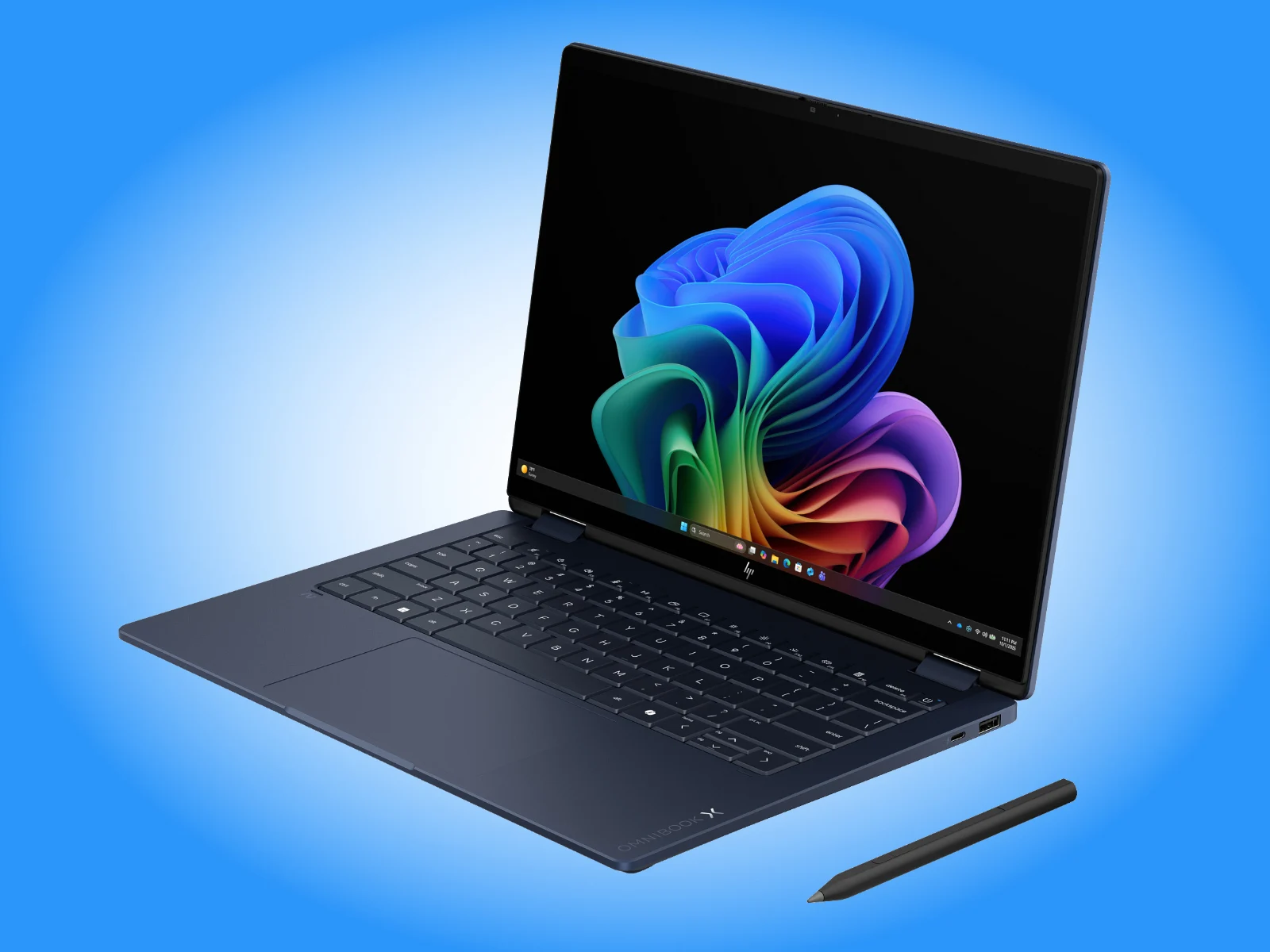
    – OmniBook X Flip 14 now globally available with a 14-inch display, featuring both AMD Ryzen AI 400 and Intel Panther Lake options, plus legacy Ryzen AI 300 and Intel Lunar Lake configurations still on sale.
    – Price dynamics show Ryzen AI 400 models cheaper than Panther Lake due to a $250 cut; both typically start around $1,399 in the US with similar 1200p/60 Hz displays, 16 GB RAM, and 512 GB SSD.
    – Config options include up to 32 GB RAM, Ryzen AI 9 465 or Core Ultra 9 386H, with Core Ultra 9 386H leading in CPU performance but Radeon 880M outperforming Panther Lake iGPU in GPU workloads; OLED 2.8K option available with 120 Hz and up to 1,100 nits HDR brightness.


    HP Begins Global Sale of OmniBook X Flip with 14-Inch Screen

    HP has finally started selling its OmniBook X Flip globally with a 14-inch display. To recap, the company unveiled AMD Ryzen AI 400 and Intel Panther Lake models almost five months ago during CES 2026 in Las Vegas. For reference, the company continues to sell the OmniBook X Flip 14 with older AMD Ryzen AI 300 and Intel Lunar Lake processors (curr. $794.99 on Amazon).

    Pricing and Model Variants

    Currently, AMD Ryzen AI 400 models are cheaper than the Intel Panther Lake counterparts thanks to a $250 price drop. However, the pair typically start at $1,399 in the US with the same 1200p and 60 Hz IPS display that peaks at 400 nits. All starting configurations feature 16 GB of RAM and a 512 GB PCIe Gen 4 SSD, too.

    Spec Options and Benchmarks

    Alternatively, the OmniBook X Flip 14 can be configured with up to 32 GB of RAM and the Ryzen AI 9 465 or Core Ultra 9 386H. According to our benchmarks, the Core Ultra 9 386H enjoys a healthy lead over the Ryzen AI 9 465. The reverse is true in GPU workloads though, where the Radeon 880M is significantly faster than Intel’s 4-core Xe3 Panther Lake iGPU.

    Display and Storage Choices

    Setting that aside, the OmniBook X Flip 14 can also be configured with an 1800p (2.8K) OLED display, combining a 120 Hz refresh rate with 500 nits SDR and 1,100 nits HDR peak brightness. Moreover, HP offers its new 14-inch convertible with up to 2 TB of storage. Only Intel models can be configured with PCIe Gen 5 SSDs, though. Likewise, while AMD models contain a 59 Wh battery, Intel alternatives can be configured with 59 Wh or 70 Wh batteries.

    European Pricing and Availability

    By contrast, pricing starts at £1,299 for a Core Ultra 7 355 model with 16 GB of RAM, 1 TB of storage and a 1200p/60 Hz OLED display. Currently, HP Germany is selling its new 14-inch convertible with the same memory configuration, an identical display and the Core Ultra 5 325 or Core Ultra 7 355 for €1,399 and €1,798, respectively.


  • Asus Zenbook S16 with AMD Ryzen 400: A Strong Intel Alternative

    Asus Zenbook S16 with AMD Ryzen 400: A Strong Intel Alternative

    Key Takeaways

    1. The Asus Zenbook S16 features upgraded Ryzen AI 400 series processors, specifically the Ryzen AI 9 465, enhancing overall performance.
    2. The laptop’s power limits have been increased, resulting in improved maximum performance, though fan noise can be noticeable in high-performance mode.
    3. Intel’s new Panther Lake processors provide solid performance, but don’t significantly outperform the Zen 5 chip in everyday tasks.
    4. Intel’s new Arc B390 iGPU shows a 70% improvement in GPU performance, making it more appealing for gaming users.
    5. The Zenbook S16 is recommended for users not focused on gaming, as it offers comparable features to Intel’s latest processors without significant differences.


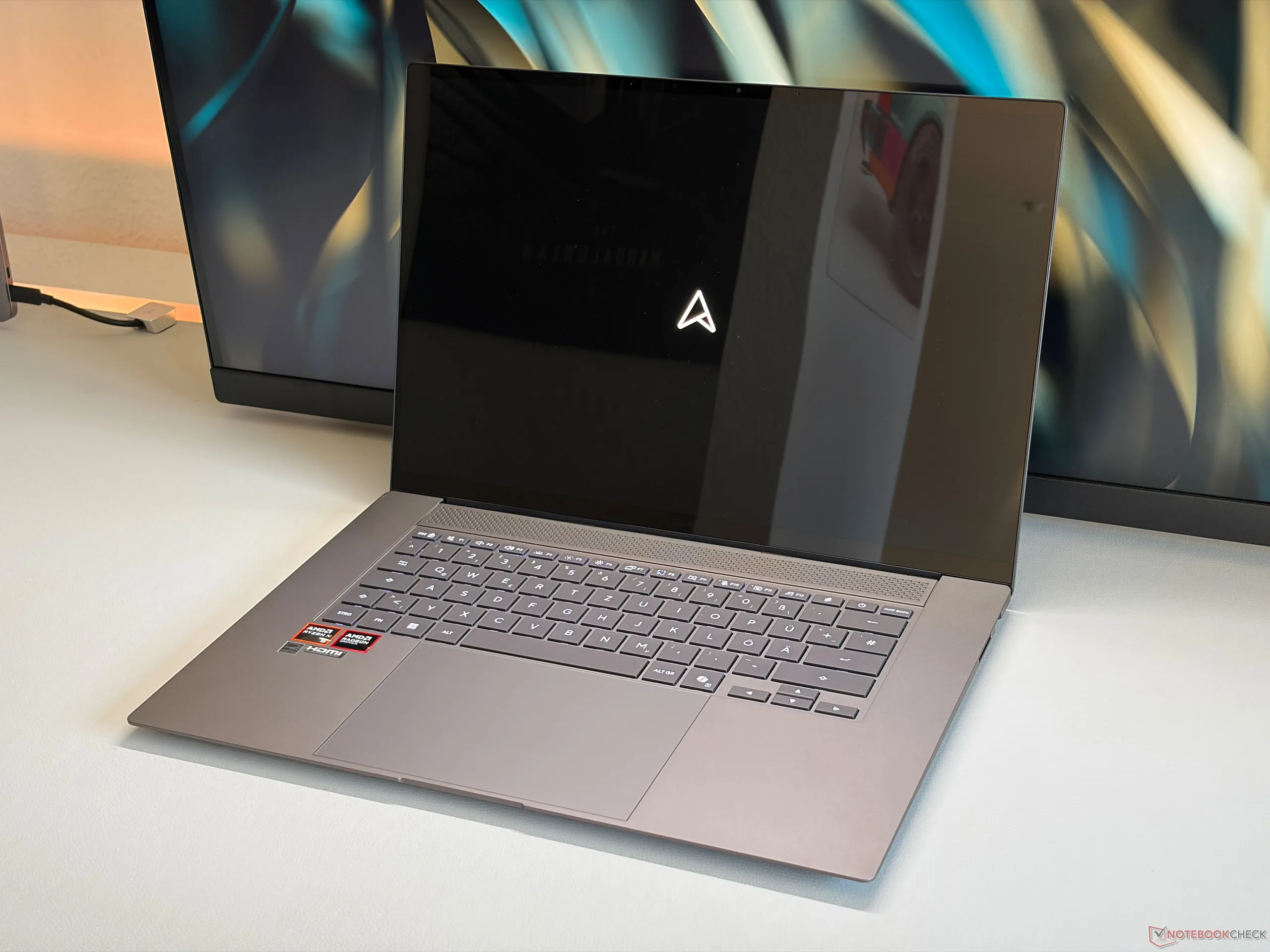
    The Asus Zenbook S16 is a sleek 16-inch laptop that boasts top-notch components. For the year 2026, Asus has upgraded the processors to the Ryzen AI 400 series from AMD. Our test model featured the speedy Ryzen AI 9 465, paired with the integrated Radeon 880M iGPU and 32 GB of RAM, which now performs at a higher speed than previous versions. In our evaluation of the new AMD chip (Gorgon Point), we noted that the overall architecture with the Zen 5 cores has not changed, but the clock speeds have seen a slight boost.

    Enhanced Performance

    Asus managed to boost the power limits, resulting in improved maximum performance when compared to the older model, which was equipped with either the Ryzen AI 9 HX 370 or the Ryzen AI 9 365. However, when you switch to performance mode and push the system to its limits, the fan noise becomes quite noticeable compared to the earlier version. In everyday usage, this high-performance scenario is rare, and the other two power settings operate much more quietly; for instance, silent mode produces just a faint hum.

    Intel’s Latest Offerings

    Recently, Intel released its new Panther Lake processors, which we’ve already evaluated. The two CPUs, Core Ultra X9 388H and Core Ultra X7 358H, also deliver solid CPU performance, but there isn’t a significant performance edge over the Zen 5 chip during daily tasks. The main distinction lies in the new Intel GPU. While AMD and Intel were fairly even last year, Intel has managed to enhance the GPU performance of its new Arc B390 iGPU by approximately 70%.

    Gaming and Recommendations

    This means that the latest Intel processors are particularly appealing for gaming. However, if gaming isn’t your focus, we can confidently suggest the Zenbook S16 with the Ryzen AI 400 processor, as there aren’t any substantial differences in features (both processors also fulfill the requirements for Microsoft’s Copilot+ certification).

  • AMD ROCm 7.2: AI Training for Ryzen AI 400 with ComfyUI Support

    AMD ROCm 7.2: AI Training for Ryzen AI 400 with ComfyUI Support

    Key Takeaways

    1. ROCm is AMD’s open-source alternative to Nvidia’s CUDA, supporting HPC and datacenter GPUs.
    2. ROCm 7.2 adds support for the latest Ryzen AI 400 APUs on both Windows and Linux platforms.
    3. Version 7.1 demonstrated significant performance improvements, achieving up to 5 times better performance compared to version 6.4.4.
    4. ROCm 7.2 enables enhanced performance for various AI models, including a 5.4 times increase in video generation tasks.
    5. A ComfyUI build with ROCm 7.2 will be available, and users can install it alongside Adrenalin 26.1.1.


    AMD is sharing several new updates to its ROCm software stack at CES 2026. ROCm, which originally meant Radeon Open Compute Platform but no longer serves as an acronym, is AMD’s open-source alternative to Nvidia’s proprietary CUDA. This software has been a key component for HPC and datacenter GPUs, such as the Instinct accelerators and Radeon Pro.

    Overview of ROCm Functionality

    ROCm consists of runtimes, compilers, tools, and libraries that allow for GPU kernel-level programming tailored for high-level end-user applications. It is utilized in training AI models and performing inference, as well as handling HPC tasks like scientific simulations and data analysis. Additionally, it supports general-purpose GPU (GPGPU) tasks that do not require graphics, all utilizing AMD hardware.

    New Features in ROCm 7.2

    The recent ROCm 7.1 version has shown remarkable performance in text-to-video generation models like LTX Video 0.9 and Wan 2.2, managing to meet the prompt requirements in merely 3 minutes on Ryzen AI Max+ APUs and just 45 seconds on Radeon AI Pro GPUs.

    With the release of version 7.2, ROCm now accommodates the latest Ryzen AI 400 APUs for both Windows and Linux platforms. A ComfyUI build featuring the integrated ROCm 7.2 will be accessible from ComfyUI.org. Also, users can install this software stack alongside Adrenalin 26.1.1.

    Performance Highlights

    Initially, ROCm introduced Windows support with version 7.1, which also delivered a notable performance increase of 5 times compared to version 6.4.4. For Ryzen Max APUs, AMD boasts a 2.6 times boost in performance for Stable Diffusion XL (SDXL) and 5.2 times for Flux S with the new v7 in comparison to the earlier versions.

    ROCm 7 can also harness the capabilities of Radeon AI Pro R9700 GPUs, achieving a performance increase of 5.4 times in the Wan 14b video generation model.

  • AMD Ryzen AI 400 Gorgon Point APUs: 29% Faster Multitasking

    AMD Ryzen AI 400 Gorgon Point APUs: 29% Faster Multitasking

    Key Takeaways

    1. AMD launched the Ryzen AI 400 APUs at CES 2026, featuring seven models from the 4-core Ryzen AI 5 430 to the 12-core Ryzen AI 9 HX 475.
    2. Each APU in the Ryzen AI 400 series includes Zen 5/5c cores, XDNA 2 NPUs, and RDNA 3.5 integrated GPUs, with the Ryzen AI 9 HX 475 having a powerful 16-CU Radeon 890M iGPU.
    3. The APUs have a base clock speed of 2.0 GHz and boost speeds ranging from 4.5 GHz (Ryzen AI 5 430) to 5.2 GHz (Ryzen AI 9 HX 475), supporting up to 36 MB of combined cache and memory speeds of up to 8,533 MT/s.
    4. The Ryzen AI 400 series operates efficiently between 15 W and 54 W, making them suitable for various devices, including lightweight laptops and gaming handhelds.
    5. The Ryzen AI 9 HX 475 outperforms the Core Ultra 9 288V in multitasking and content creation, offering 12% better average FPS at 1080p/low settings and up to 24 hours of video playback.


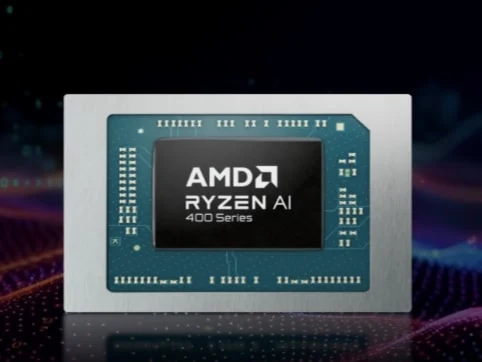
    After a lot of leaks and chatter, the Ryzen AI 400 APUs, previously called the “Gorgon Point” chips, are finally here. AMD revealed these processors at CES 2026. The lineup has seven APUs, starting with the 4-core Ryzen AI 5 430 and going up to the 12-core Ryzen AI 9 HX 475. Additionally, AMD introduced the Ryzen AI 400 Pro series APUs for desktops, which are nearly identical to these APUs but designed for business use.

    Ryzen AI 400 Series Breakdown

    The Ryzen AI 400 series is made up of seven different APUs. Each of these models comes equipped with a combination of Zen 5/5c cores, XDNA 2 NPUs, and RDNA 3.5 integrated GPUs (iGPUs). For example, the top model, the Ryzen AI 9 HX 475, boasts 4 Zen 5 cores and 8 Zen 5c cores, a 60 TOP NPU, and a Radeon 890M iGPU that has 16 Compute Units.

    Performance and Specifications

    All the APUs in the Ryzen AI 400 series have a base clock speed of 2.0 GHz, with various boost clock speeds. The entry-level Ryzen AI 5 430 can boost up to 4.5 GHz, while the Ryzen AI 9 HX 475 reaches a maximum boost of 5.2 GHz.

    For memory and cache, these APUs support up to 36 MB of combined L2 and L3 cache, plus they can handle memory speeds of up to 8,533 MT/s.

    AMD continues to use the Radeon 800M series iGPUs for this line. The Ryzen AI 9 HX 475/470 has a powerful 16-CU Radeon 890M iGPU, while the other models feature a 12-CU Radeon 880M, an 8-CU Radeon 860M, and a 4-CU Radeon 840M, respectively.

    Power and Efficiency

    The Ryzen AI 400 series can be configured to use between 15 W and 54 W of power. This means that the Gorgon Point APUs are capable of running on lightweight laptops, high-speed multimedia notebooks, and even gaming handhelds.

    According to AMD, the flagship Ryzen AI 9 HX 475 is said to be 29% quicker than the Core Ultra 9 288V when multitasking in programs like Microsoft Office, and it is 71% faster in content creation tasks.

    Moreover, Team Red claims that the Ryzen AI 9 HX 475 achieves 12% better average FPS at 1080p/low settings compared to the Core Ultra 9 288V paired with the Arc 140v iGPU. We’ve gone in-depth analyzing the RDNA 3.5-powered Radeon 890M and Intel Arc 140V, so make sure to take a look at our performance reviews for both GPUs.

    Lastly, AMD asserts that the Ryzen AI 400 APUs, including the Ryzen AI 7 445, can provide up to 24 hours of video playback. We will definitely put these claims to the test when laptops featuring the Ryzen AI 400 processors are released in the next few months.

    Source:
    Link