Tag: PS6

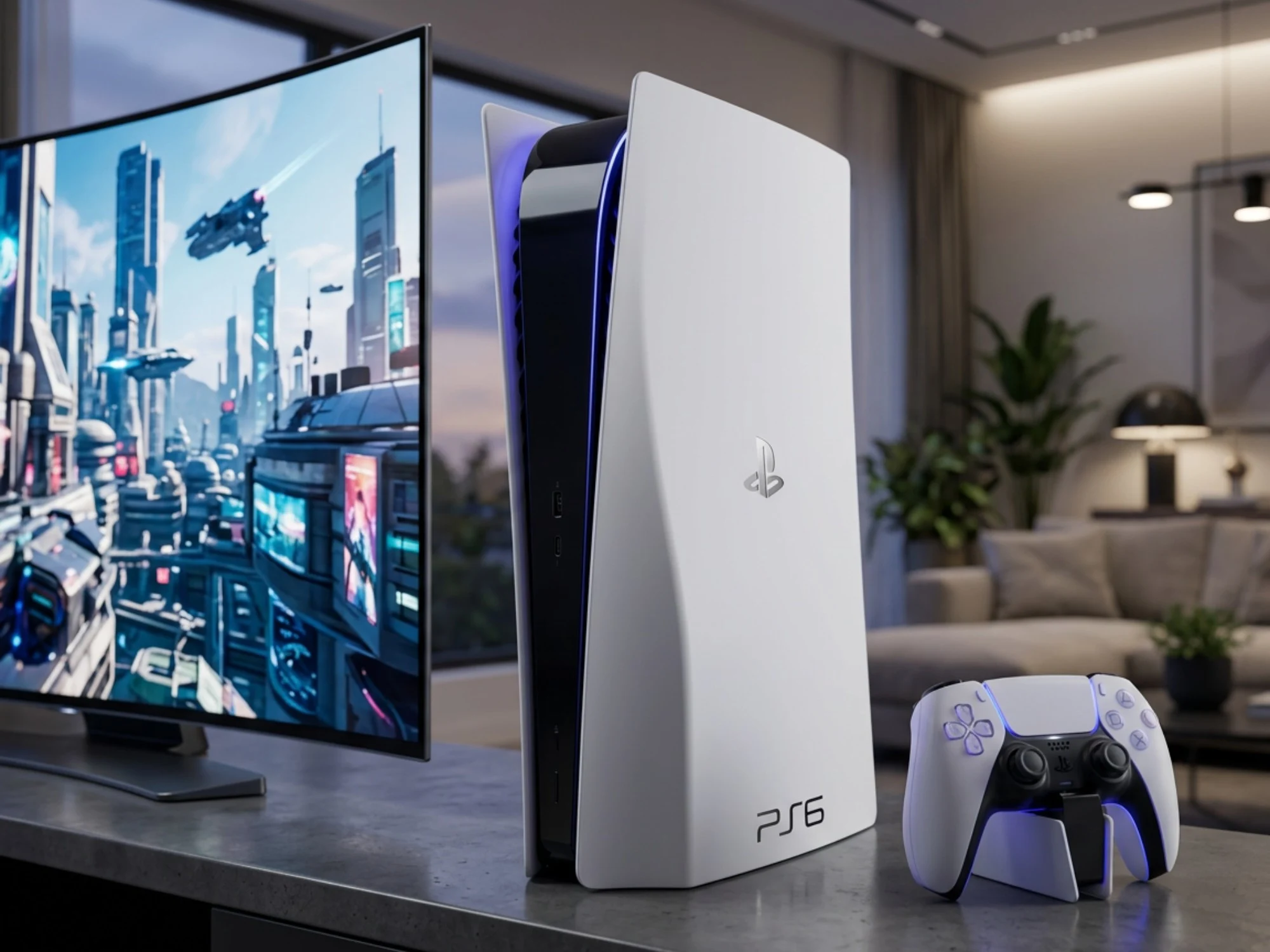
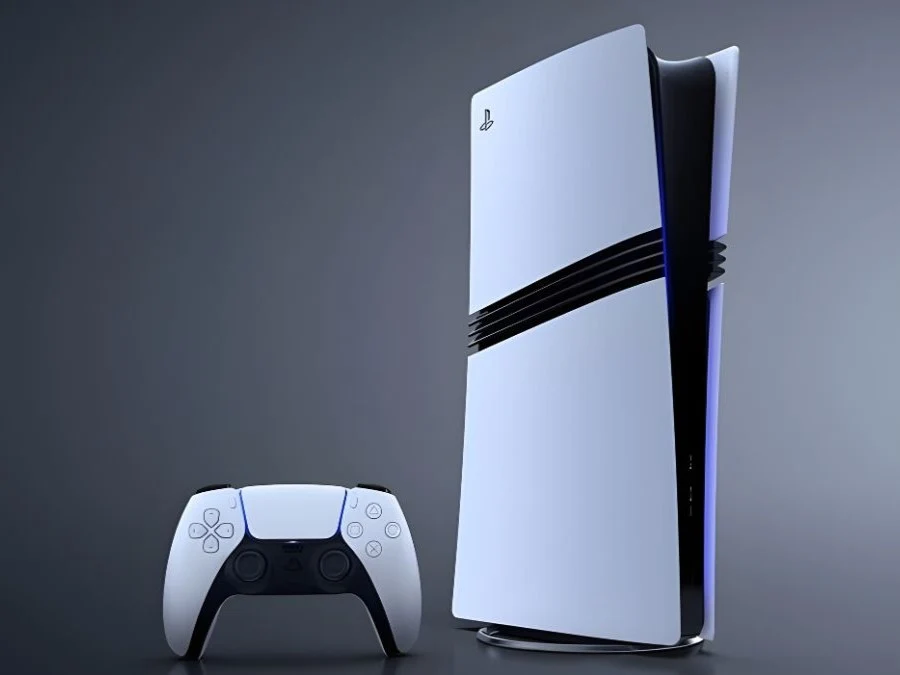
  • Publisher predicts PS6 launch in 2028 or 2029 as memory costs rise

    Publisher predicts PS6 launch in 2028 or 2029 as memory costs rise

    Key Takeaway

    – Embracer Group expects sales boost from upcoming titles like Metro 2039 and Tomb Raider: Legacy of Atlantis
    – High memory prices and tariffs threaten console sales and may delay PS6 release to 2028 or 2029
    – Console game sales increased 3% in 2025; GTA 6 anticipated to drive further gains in 2026
    – Sony raised PS5 and PS5 Pro prices due to AI-driven component shortages; PS5 adoption dropped in late 2025
    – Potential PS6 cost mitigation includes reducing GDDR7 VRAM from 30GB to 24GB and improved file compression


    Embracer Group’s Latest Report

    The Embracer Group ownes many studios, like Crystal Dynamics and THQ Nordic. In their newest annual report, they predict a big boost from upcoming games such as Metro 2039 and Tomb Raider: Legacy of Atlantis. However, high memory prices are threatning to reduce console sales and could delay the PS6 release date.

    Console Sales and Upcoming Titles

    As the report highlites, console game sales went up by 3% in 2025 compared to the past year. The publishing group thinks the GTA 6 debut will help drive even larger gains in 2026. Yet, tariffs and the cost of parts like DRAM complicate that outlook. When addressing the launch of future gaming systems, it explains:

    Potential PS6 Delay

    In fact, some experts believe that Sony is now thinking about pushing back the debut of its next PlayStation console from 2027 to 2028 or maybe even 2029. It’s unlikely that the Embracer Group has gotten a direct update from Sony. Instead, they are refering to earlier reports about a possible PS6 release date delay. A February 2026 Bloomberg article used very similar wording, quoting sources as “people familiar with the company’s thinking.”

    Impact of Component Costs

    Skyrocketing storage and memory prices have already messed with current-generation hardware. Sony and Nintendo recently raised the MSRPs of the PS5, PS5 Pro, and Switch 2 in response to the AI-driven shortage. The forcast looks bad for short-term relief, with component costs likely to stay high through 2027 and possibly into 2028. In its most recent fiscal report, Sony agreed that PS5 adoption had fallen off in Q4 2025.

    Sony’s Admission and Market Reactions

    The company also admitted that demand from AI data centers could mess up its PS6 plans. There has been evidence that the higher cost of the systems is stoping console sales. With the price hike now in effect, the first signs of a dramatic drop-off in places like the UK have shown up. If the PS6 specs offer a big leap in performance, it may demand a very high investment. Still, leaker KeplerL2 has guessed that the manufacturer could reduce its rumored GDDR7 VRAM capacity from 30GB to 24GB.

    Possible Solutions and Future Outlook

    New file compression methods also aim to remove the need for a larger SSD. Even with these options, Sony may, as the Embracer Group suggests, choose to extend the current generation. Hopefully, by later in 2028 or 2029, storage and memory will finally become more affordable.

    Sources

  • PS6 Performance Gains Possibly Overhyped

    PS6 Performance Gains Possibly Overhyped

    Key Takeaway

    1. The expected performance gains for the PS6 in ray tracing are likely around 3x-instead of the initially presumed 10x, depending on the game’s ray tracing complexity.
    2. Leaks suggesting overhyped performance improvements should be viewed with skepticism, as real-world gains are more moderate.
    3. The actual boost in ray tracing performance may vary, with heavier ray tracing demanding significantly more from hardware.

    Next-Gen Console Release Timeline and Expectations

    The upcoming generation of gaming consoles are expected around the end of 2027, with Sony preparing to launch both the PS6 and a handheld version of the PS6. Many leaks have painted a picture of significant improvements, especially in ray tracing capabilities which are said to surpass current technology by a large margin. These reports create anticipation for gamers eager for enhanced visual effects and smoother gameplay experience. Nevertheless, recent insider insights suggest that these performance claims might be somewhat exaggerated or misunderstood, indicating a need to temper expectations a bit.

    Insights from Industry Leakers

    Information recently surfaced from KeplerL2 on the NeoGaf forum, where they responded to claims that performance metrics had been misread. The discussion centered around a popular leaker known as Moore’s Law is Dead (MLID), famous for sharing details about next-gen hardware. MLID previously claimed that the PS6 would deliver a tenfold increase in ray tracing performance over the PS5, fueling speculation about revolutionary improvements. But KeplerL2 states, “The real gains are probably closer to about 3 times,” rooted in the actual data from game performance and technical estimates, meaning that the hype around a tenfold boost might be overly optimistic.

    Clarifying Performance Expectations

    Further explanation from KeplerL2 shed light on how performance metrics are often misinterpreted. They pointed out that when a slide mentions “Orion 10x RT perf vs Oberon,” it doesn’t mean that PS6 will be 10 times faster in all cases, especially not across all gaming scenarios. Instead, this ratio should be seen in specific contexts, such as comparing frame rates where a game running at 30 FPS on current hardware could be multiplied to estimate future performance, which isn’t always accurate. KeplerL2 went on to say that in tests involving Ubisoft’s Assassin’s Creed Shadows, the real-world improvement in ray tracing performance is closer to just over 3 times, particularly for games with lighter ray tracing effects. For more graphically demanding titles, like those employing path tracing, the performance gap might be slightly larger, but still not as dramatic as initially suggested.

    Understanding the Broader Context

    It’s important to underline that MLID did not officially claim a tenfold increase in frames per second (FPS); rather, they reported AMD’s stated performance figures, emphasizing the importance of context and interpretation. Also, the current PS5 Pro is marketed as being roughly 2x to 3x faster than the PS5 in ray tracing, which suggests that the PS6 could be at least 4x faster, though this varies dependent on the game and workload involved. Ultimately, while next-gen consoles will likely see substantial improvements, the exaggerated expectations should be dialed back based on more recent insights from industry insiders. As the release date approaches, more concrete details are expected to clarify the actual capabilities of these new pieces of hardware, but for now, patience and measured outlooks are advised.


  • Sony Shifts Focus to PS6 Games, Moving Away from PlayStation PC Ports

    Sony Shifts Focus to PS6 Games, Moving Away from PlayStation PC Ports

    Key Takeaways

    1. Jeff Gerstmann believes game studios are shifting focus to developing projects for the PS6, even if its release is not confirmed for 2027.
    2. Concerns exist about the PS6’s potential high price and impressive specs, especially amid ongoing memory shortages that could affect availability.
    3. Sony’s strategy of limiting PS5 exclusives on PC may encourage more buyers to choose the PS6 console instead.
    4. Sony faces criticism for its investment in live-service games, with the need for strong single-player titles for the PS6 emphasized.
    5. Future announcements regarding the PS6 release date may be delayed, but clarity on PS5 exclusives could come soon.


    Some players are doubtful about the PS6 hitting shelves in 2027. Nevertheless, journalist Jeff Gerstmann is of the opinion that game studios might already be developing projects for the new console. A rumored choice to stop PlayStation PC ports could indicate that Sony is speeding up its plans for this new system.

    Insights from Gerstmann

    The previous Editorial Director of Gamespot and co-founder of Giant Bomb now runs a podcast regularly. In a recent episode, Gerstmann shared that “every studio that isn’t already working on a PS5 game needs to be pushing in the direction of PlayStation 6.” This suggests that many developers might have shifted their focus towards the future.

    Timing and Expectations

    Although the podcaster can’t specify when the PS6 will launch, he wouldn’t find it shocking if it arrives sooner than some fans expect. There are concerns regarding whether the PS6, if it comes with a hefty price, will have specs impressive enough to drive sales. The ongoing memory shortages could also result in delays or higher prices than originally thought.

    Gerstmann points out that, in spite of these worries, Sony seems to be moving towards the next generation. Keeping single-player PS5 exclusives off Steam might actually benefit the upcoming hardware. With fewer PlayStation games available on PC, buyers may be more tempted to opt for the console instead.

    Criticism and Future Plans

    Sony has been criticized for pouring a lot of resources into live-service games. Concord underperformed significantly, and Marathon hasn’t yet achieved Bungie’s expectations. However, the company understands that multi-platform shooters alone won’t attract all gamers to its next console. Just like before, there’s a need for distinctive single-player PS6 games.

    Whether PlayStation will alter its strategy again is up for debate. For the time being, players can still look forward to multiplayer games like Horizon Hunters Gathering making their way to Steam. Sony might postpone the announcement of the PS6 release date, but Jason Schreier from Bloomberg believes it could soon provide clarity on its position regarding PS5 exclusives.

    The Jeff Gerstmann Show

    Source:
    Link


  • Will PS6 Specs Convince PS5 Owners to Upgrade at Launch?

    Will PS6 Specs Convince PS5 Owners to Upgrade at Launch?

    Key Takeaways

    1. Critics question whether gamers will upgrade to the PS6, with many still using the PS4, which is expected to have a 40% user base by 2025.

    2. Enhancements in ray tracing may not be enough to motivate upgrades, as dedicated fans remain unconvinced.

    3. The PS6 is expected to significantly improve ray tracing and visuals, but gamers want more than just technical upgrades at launch.

    4. Price concerns for the PS6 may arise due to shortages in storage and memory, impacting consumer interest.

    5. A potential PS6 handheld device could attract early adopters if priced around $399, allowing portable access to PS5 games.


    While there are whispers about a PS6 launch in 2027 or 2028, many critics are questioning how many gamers will actually upgrade. On a recent episode of the Moore’s Law Is Dead podcast, Matthew Cassells, the founder of Alderon Games, shared his perspectives on the upcoming console. He suggests that enhancements to ray tracing by themselves may not be enough to draw in all potential buyers.

    Current Gaming Trends

    Cassells and his team are working on a dinosaur-themed MMO called Path of Titans. During the podcast, which was covered by Wccftech, he mentioned that the PS4 continues to have a significant user base. By 2025, about 40% of PlayStation ecosystem users are still expected to be using the older console. Interestingly, these gamers might be more inclined to switch to a new system compared to those who already own a PS5.

    Some dedicated fans haven’t found sufficient motivation to upgrade to the next generation. Up until recently, many popular third-party titles were still being made available for the PS4. However, these players will soon find themselves with fewer choices and might have to consider upgrading. Meanwhile, PS5 owners can look forward to several more years of games running at solid performance levels.

    Expectations for the PS6

    Sony’s upcoming gaming console is anticipated to deliver 6-12 times the ray tracing capabilities compared to the PS5. Games like Resident Evil Requiem already showcase how this technology can enhance lighting effects. However, it may not be a compelling factor for most consumers when the PS6 is released. As Cassells points out, “Are you really going to upgrade for a ray tracing improvement?”

    With a new version of RDNA 5, the PS6 specs are also expected to offer more effective upscaling. This could lead to smoother visuals at 4K/120 fps, and potentially a true 8K option. Regardless, gamers will be looking for a strong launch lineup that offers more than just a tech demonstration. Another issue looming over the PS6 is its price, which could rise due to shortages in storage and memory.

    The Handheld Opportunity

    During the podcast, Moore’s Law Is Dead suggested that Sony might consider focusing on a rumored PS6 handheld device. This could allow players to enjoy PS5 games on the move with minimal sacrifices. For this to work, Sony would need to hit a price point around $399. Doing so could make it easier to attract early adopters compared to a pricier, slightly enhanced console.

    Moore’s Law Is Dead, Wccftech.

    Source:
    Link


  • PS6 and PlayStation Handheld Set for Holiday 2027 Release

    PS6 and PlayStation Handheld Set for Holiday 2027 Release

    Key Takeaways

    1. The ongoing memory crisis is raising prices for memory parts, affecting tech companies and product launches.
    2. Sony plans to release the PS6 and a new handheld console by Holiday 2027, despite market challenges.
    3. Previous reports suggested potential delays for the next PlayStation until 2028 or 2029, but current information indicates otherwise.
    4. Industry experts believe delaying the console launch could cost Sony more than sticking to the planned schedule.
    5. Both Sony and Microsoft are reportedly maintaining their release timelines for the PS6, handheld, and Project Helix.


    The ongoing memory crisis has been impacting the tech world for quite a while now. The increasing prices of memory parts have led many companies to raise the costs of their products, and some have even postponed their upcoming devices to avoid releasing them in an unstable market. Yet, it seems that Sony’s plans for their next console are still on track as previously expected.

    Upcoming Console Plans

    A recent statement from industry insider KeplerL2 suggests that both the PS6 and Sony’s anticipated PlayStation handheld are aiming for a Holiday 2027 launch. This information was shared in a conversation on the NeoGAF forums, where the leaker noted that the release schedule hasn’t altered despite the challenging market conditions.

    Market Conditions vs. Launch Timelines

    This is particularly noteworthy since a prior report from Bloomberg mentioned that Sony might consider delaying the release of the next PlayStation console until 2028 or even 2029 due to the persistent memory shortage. Nevertheless, KeplerL2 asserts that both Sony and Microsoft are still targeting the same schedule for the PlayStation handheld, PS6, and Project Helix.

    Insights from Industry Experts

    This update aligns with earlier insights from Moore’s Law Is Dead, indicating that Sony is likely not to push the next PlayStation console too far into the future. Delaying the console could potentially cost the company more than launching it as planned. He stated that the console would “almost certainly” debut in 2027, with early 2028 being the farthest realistic timeframe, rather than 2029.

    KeplerL2 via NeoGAF

    Source:
    Link


  • PS6 Launch Expected in 2027 or Early 2028 Despite Speculation

    PS6 Launch Expected in 2027 or Early 2028 Despite Speculation

    Key Takeaways

    1. Uncertainty surrounds new gaming console launches due to RAM and storage pricing issues, with some reports suggesting a 2029 release.
    2. Console lifespans typically last around seven years, indicating new consoles could be expected around 2027.
    3. Insider source Moore’s Law Is Dead suggests the PS6 is likely set for a 2027 release, with minimal delays expected.
    4. Sony’s significant investment in AMD for custom APUs makes it illogical to delay the PS6 just to save on RAM costs.
    5. RAM prices are expected to improve soon, which may influence Sony’s decision to launch the PS6 in late 2027 or early 2028.


    The timelines for launching new gaming consoles are somewhat uncertain due to the ongoing crisis in RAM and storage pricing. Many reports indicate delays, with the latest suggesting a 2029 release. However, there has been no official word from Microsoft or Sony. Typically, console lifespans last around seven years, which means we should see new consoles around 2027. A well-known leaker suggests that this is likely to be the case.

    Insights from a Trusted Source

    The information originates from the YouTube channel Moore’s Law Is Dead (MLID). This channel has been providing updates on upcoming consoles, particularly focusing on the AMD APUs that will drive their performance. In a recent video, MLID elaborated on a comment made on his Patreon regarding the PS6’s release timeline. A commenter mentioned that Sony is unlikely to delay the console significantly, as it would be more expensive to do so than to release it on time with a higher price tag.

    Expectations for the PS6

    MLID supports this viewpoint, stating that the PS6 is “almost certainly set for 2027, or perhaps early 2028. I really don’t think it’ll be pushed to 2029.” Sony has invested millions in AMD for the custom APU, and it wouldn’t be logical to delay the console just to save on RAM costs during the first six months post-launch. Additionally, MLID claims to have seen documents detailing Sony’s agreements with AMD and TSMC, indicating a production timeline targeting Q2 2027. Any attempt to shift these timelines could jeopardize Sony’s allocation of 3nm manufacturing, potentially delaying them to 2030.

    Previous Launches and Future Pricing

    The leaker also highlighted that Sony launched the PS5 (available on Amazon) in 2020 amidst the COVID-19 pandemic, and despite earlier reports of delays, it successfully launched. Therefore, even if they end up with less desirable or more expensive RAM, it’s unlikely that the PS6 will experience significant delays. The most anticipated delay could be up to six months, potentially pushing the release to April 2028 to align with tax season. Finally, drawing from insider information, the leaker noted that RAM prices are projected to improve by the end of this year and even more in early next year. This could allow Sony to decide whether to launch the console in late 2027 or early 2028.


  • Sony to Address PS5 Memory Costs with Possible PS Plus Price Hike

    Sony to Address PS5 Memory Costs with Possible PS Plus Price Hike

    Key Takeaways

    1. The tech industry is experiencing a significant memory shortage due to high demand from AI data centers, leading to increased prices for RAM, SSDs, and GPUs.

    2. Sony may delay the launch of the PS6 until 2028 or 2029 due to rising memory and component costs.

    3. Sony has secured enough memory supply to keep PS5 prices stable through 2026, while negotiating with suppliers to meet customer demands.

    4. To mitigate rising memory costs, Sony plans to generate revenue from the existing PlayStation user base and expand software and network services.

    5. Gamers may experience higher game prices, fewer discounts, and potential subscription price increases as Sony adjusts its strategies amid the memory crisis.


    The tech industry is facing a significant memory shortage. Demand from AI data centers has surged, leading to a majority of the global RAM and storage supply being directed towards these large-scale operations. Consequently, the prices for RAM, SSDs, and even GPUs have risen sharply in recent months.

    Sony’s Challenges Ahead

    Sony is not exempt from this dilemma. Recent reports indicate that the launch of the PS6 might be delayed until 2028 or 2029, instead of the previously planned 2027, primarily due to increasing costs of memory and components. While this impacts long-term strategies, Sony is also focusing on managing current pressures with the PS5.

    In an earnings call held earlier this month, CFO Lin Tao stated that Sony has secured sufficient memory supply to maintain stable PS5 pricing through 2026. The company is also working on negotiating with suppliers to ensure they can fulfill customer demands.

    Navigating Rising Costs

    Nonetheless, the escalating memory prices will eventually affect the business. To address this, Sony aims to monetize the “installed base.” Essentially, this means generating additional revenue from current PlayStation users rather than depending solely on hardware sales. The company also seeks to enhance its revenue from software and network services, which include digital game sales, add-ons, subscriptions, and various online services.

    Given where we are in the console cycle, our strategy for hardware sales can be adjusted flexibly, and we plan to lessen the effects of increased memory costs on this segment moving forward by focusing on monetizing the installed base and expanding our software and network services revenue.

    Impact on Gamers

    If Sony successfully implements this strategy, gamers might notice the effects in various ways. Game prices could gradually increase, and substantial discounts during sales events might become rarer. Additionally, the PlayStation Plus subscription may see a price increase, particularly for the Premium and Extra tiers.

    Sony’s approach to handling the memory crisis will be crucial in shaping the future experience for its users.

    Source:
    Link


  • Sony PS6 May Not Use Full RDNA 5 to Keep Costs Low

    Sony PS6 May Not Use Full RDNA 5 to Keep Costs Low

    Key Takeaways

    1. The Sony PS6 will feature some aspects of the AMD RDNA 5 GPU architecture but not the complete design, likely to reduce production costs.
    2. Expected specifications include a Zen 6 CPU and 30 GB of memory, suggesting potential cost-cutting measures in other areas.
    3. The PS6 follows a similar strategy as the PS5, which utilized RDNA 1 for its GPU while incorporating ray tracing capabilities with RDNA 4.
    4. The PS6 is anticipated to release in 2028, with current market challenges in memory impacting production costs and pricing strategies.
    5. Sony must price the PS6 competitively against the next-gen Xbox, which is expected to be more expensive, to maintain good sales and value perception.


    KeplerL2, a trusted source, has indicated that the upcoming Sony PS6 will not utilize the complete AMD RDNA 5 GPU architecture. Instead, it is expected to incorporate some features of RDNA 5 but not all. Although the specific reasons behind Sony’s choice remain unclear, it seems likely that blending RDNA 5 with older technologies aims to keep production costs lower.

    Expected Specs and Costs

    Rumors suggest that the PS6 will be powered by a Zen 6 CPU and will include 30 GB of memory, which would be pretty pricey in today’s market. This suggests that Sony might need to cut costs in other areas. The combination of hybrid RDNA 5 graphics and a new method for minimizing storage requirements could be part of this strategy.

    Past Strategies and Future Expectations

    Kepler points out that a similar approach was taken with the PS5, which primarily relies on the RDNA 1 architecture for its integrated GPU, while also offering ray tracing capabilities. Additionally, the PS5 Pro is known to utilize RDNA 4 technology for its ray tracing features. Therefore, it’s not surprising that the PS6 is following a comparable path. However, what remains to be seen is the final pricing of the PS6 and how it stacks up against the rumored pricey next-gen Xbox.

    The upcoming Xbox console, believed to be a Windows PC in disguise, is anticipated to be significantly more expensive than the current Xbox Series X. Sony must be cautious not to set the PS6’s price too close to the next Xbox, as offering good value is crucial for console sales. While Microsoft could justify a higher price with the “Xbox is a PC now” narrative, Sony lacks that flexibility.

    Release Timeline and Market Outlook

    The Sony PlayStation 6 is projected to be released in 2028. At present, the memory market is facing challenges, with increasing prices for RAM, SSDs, and GPUs. Experts expect that conditions may not improve in the near future, but there is a possibility that by 2028, the market could stabilize. This would enable Sony to provide a significant upgrade from the PS5 without a steep price hike. We’ll just have to wait and see how things unfold.

    Source:
    Link


  • Microsoft anticipates current-gen consoles will last beyond Xbox, PS6

    Microsoft anticipates current-gen consoles will last beyond Xbox, PS6

    Key Takeaways

    1. Pricing concerns for the upcoming Xbox console and PS6 may make them less affordable for many gamers due to increased costs for storage and memory.
    2. Microsoft believes the current generation consoles (Xbox Series X|S and PS5) will have a longer lifespan, supported by backward compatibility and ongoing support for older systems.
    3. There is a high demand for budget-friendly gaming options as the new consoles are expected to be priced between $600 and $900, while current models are more expensive than at launch.
    4. Microsoft may not release a budget version of the upcoming console/PC hybrid, but there could be simplified configurations from OEM partners to cater to less affluent gamers.
    5. Sales of current Xbox consoles are declining, raising doubts about production sustainability, while the PS5 is positioned better for future success even after the launch of the PS6.


    One of the main issues with the upcoming Xbox console and PS6 is their pricing. The increased costs for storage and memory might make these new systems less affordable for many gamers. Nevertheless, a recent report suggests that Microsoft believes the current generation consoles will remain relevant for a long time.

    Insights from Jez Corden

    Jez Corden from Windows Central shared insights regarding future Xbox hardware. He explained how Microsoft regards the existing consoles:

    He mentioned, “I’ve been informed that Microsoft envisions the Gen-9 Xbox Series X|S and PS5 to have a longer lifespan than expected due to this expanding hardware endpoint ecosystem.”

    Corden pointed out that support for older games on PS4 and Xbox One continued for several years even after the new models were released. He also noted that developers are planning for sustained support for less powerful devices, such as the Switch 2 and Steam Deck. This, combined with backward compatibility, would simplify the development of games for older systems.

    Market Demand for Affordable Options

    With the speculations surrounding the pricing of the new Xbox console and PS6, a significant demand for budget-friendly alternatives is anticipated. Microsoft has described its next gaming system as “high-end.” In contrast, some sources predict that the PlayStation counterpart could be priced between $600 and $900 MSRP. Additionally, concerns arise as both the Series X|S and PS5 are currently more expensive than they were at their 2020 launch.

    When Microsoft first launched the Series X, it came along with the more affordable Series S. However, this might not be the situation for the console/PC hybrid, which AMD suggested may be released in 2027. Corden did mention that OEM partners might provide simplified configurations to meet the needs of less affluent gamers.

    Sales Challenges and Future Outlook

    Skepticism surrounds the Windows Central report, as the available Xbox consoles are facing challenges in attracting buyers. Sales have dropped significantly as the company has shifted its focus towards Windows devices and cross-platform games. Analysts are questioning whether it is reasonable to continue production at this point. Conversely, the PS5 appears to be in a better position to succeed even after the PS6 is launched.

    Source:
    Link


  • PS6 Leak: 30GB RAM Expected but Price Increase Likely

    PS6 Leak: 30GB RAM Expected but Price Increase Likely

    Key Takeaways

    1. Sony is not ready to announce the PS6, but leaks suggest a launch in 2026, with production possibly starting in mid-2027 and rollout by Fall 2027 or early 2028.
    2. The PS6 is rumored to have 30GB of GDDR7 RAM, which is 6GB more than previous expectations, operating on a 160-bit bus with a bandwidth of 640GB/s.
    3. The console’s memory design may include 10 modules of 3GB each, representing a significant upgrade over the PS5’s 16GB of GDDR6 RAM.
    4. The tech industry is currently experiencing a memory crisis, leading to rising RAM prices and potential supply issues that could impact the PS6’s cost.
    5. There’s debate about whether 20GB of RAM would be a more practical choice due to costs, but some believe 30GB is necessary despite potentially raising the console’s price by $100.


    Sony is not quite ready to announce the PS6, but leaks and speculations have begun to give us a clearer view. The new console is predicted to launch in 2026. Some whispers indicate that production may kick off around mid-2027, with a complete rollout scheduled for either Fall 2027 or early 2028. A recent leak has also shed light on a crucial part: the memory.

    New Memory Specs

    The freshest details come from Kepler L2, a source recognized for its trustworthy hardware leaks in the past. The information suggests that the PS6 will come equipped with 30GB of GDDR7 RAM, which is 6GB more than earlier rumors indicated. It is reported that this memory will operate on a 160-bit bus, providing a memory bandwidth of 640GB/s. Supposedly, the console will utilize 3GB memory modules, totaling 10 modules on the motherboard. If this turns out to be true, it would be a significant upgrade over the existing PS5, which has 16GB of GDDR6 RAM.

    The Memory Crisis

    However, there’s an essential aspect to keep in mind. The tech sector is currently facing a memory crisis. The prices of RAM have been climbing rapidly, and supply issues are likely to persist for the next few years. It’s clear that increasing memory would enhance performance, but it might also raise the overall price of the console.

    A user proposed that 20GB of RAM might be a more practical choice for the PS6, primarily due to the escalating RAM costs. This user pointed out that jumping to 30GB could potentially add an extra $100 to the console’s MSRP. Kepler L2, however, countered this viewpoint, arguing that 20GB would fall short for the console’s needs. While he acknowledged that the extra memory could indeed push the price up by $100, he believes that Sony will just have to face the higher expenses for the initial year or two, until RAM prices eventually drop.

    Kepler L2 via NeoGaf

    Source:
    Link