Tag: GDDR7

  • Publisher predicts PS6 launch in 2028 or 2029 as memory costs rise

    Publisher predicts PS6 launch in 2028 or 2029 as memory costs rise

    Key Takeaway

    – Embracer Group expects sales boost from upcoming titles like Metro 2039 and Tomb Raider: Legacy of Atlantis
    – High memory prices and tariffs threaten console sales and may delay PS6 release to 2028 or 2029
    – Console game sales increased 3% in 2025; GTA 6 anticipated to drive further gains in 2026
    – Sony raised PS5 and PS5 Pro prices due to AI-driven component shortages; PS5 adoption dropped in late 2025
    – Potential PS6 cost mitigation includes reducing GDDR7 VRAM from 30GB to 24GB and improved file compression


    Embracer Group’s Latest Report

    The Embracer Group ownes many studios, like Crystal Dynamics and THQ Nordic. In their newest annual report, they predict a big boost from upcoming games such as Metro 2039 and Tomb Raider: Legacy of Atlantis. However, high memory prices are threatning to reduce console sales and could delay the PS6 release date.

    Console Sales and Upcoming Titles

    As the report highlites, console game sales went up by 3% in 2025 compared to the past year. The publishing group thinks the GTA 6 debut will help drive even larger gains in 2026. Yet, tariffs and the cost of parts like DRAM complicate that outlook. When addressing the launch of future gaming systems, it explains:

    Potential PS6 Delay

    In fact, some experts believe that Sony is now thinking about pushing back the debut of its next PlayStation console from 2027 to 2028 or maybe even 2029. It’s unlikely that the Embracer Group has gotten a direct update from Sony. Instead, they are refering to earlier reports about a possible PS6 release date delay. A February 2026 Bloomberg article used very similar wording, quoting sources as “people familiar with the company’s thinking.”

    Impact of Component Costs

    Skyrocketing storage and memory prices have already messed with current-generation hardware. Sony and Nintendo recently raised the MSRPs of the PS5, PS5 Pro, and Switch 2 in response to the AI-driven shortage. The forcast looks bad for short-term relief, with component costs likely to stay high through 2027 and possibly into 2028. In its most recent fiscal report, Sony agreed that PS5 adoption had fallen off in Q4 2025.

    Sony’s Admission and Market Reactions

    The company also admitted that demand from AI data centers could mess up its PS6 plans. There has been evidence that the higher cost of the systems is stoping console sales. With the price hike now in effect, the first signs of a dramatic drop-off in places like the UK have shown up. If the PS6 specs offer a big leap in performance, it may demand a very high investment. Still, leaker KeplerL2 has guessed that the manufacturer could reduce its rumored GDDR7 VRAM capacity from 30GB to 24GB.

    Possible Solutions and Future Outlook

    New file compression methods also aim to remove the need for a larger SSD. Even with these options, Sony may, as the Embracer Group suggests, choose to extend the current generation. Hopefully, by later in 2028 or 2029, storage and memory will finally become more affordable.
    Sources

  • AMD RX 9080 XT price vs Nvidia could doom RTX 50 rival

    AMD RX 9080 XT price vs Nvidia could doom RTX 50 rival

    Key Takeaway

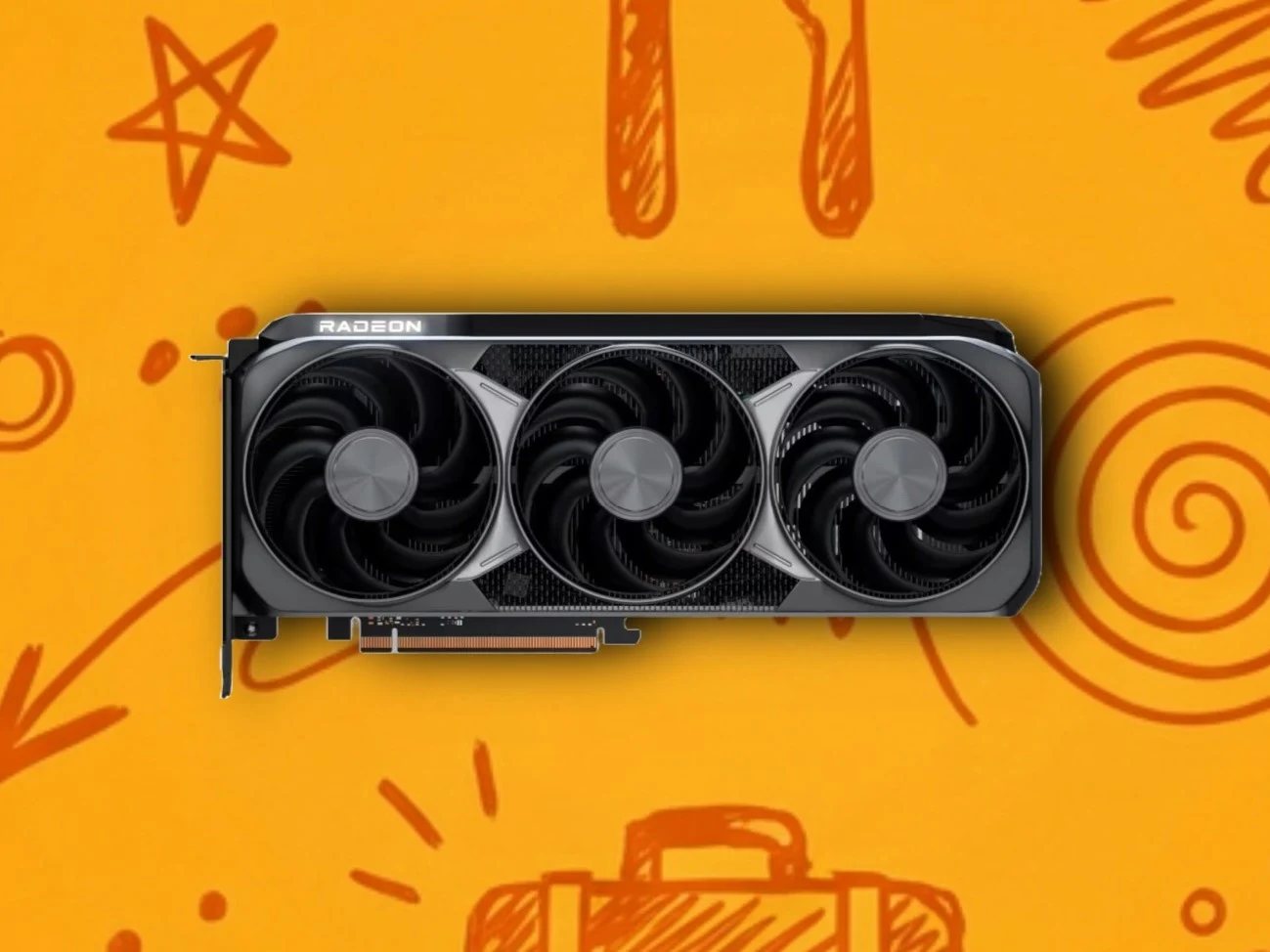
    – AMD’s rumored flagship RX 9080 XT may be canceled to preserve a price advantage over Nvidia.
    – The RX 9000 series uses cheaper GDDR6 VRAM while RTX 50 cards use expensive GDDR7.
    – A cheaper RX 9070 XT refresh with more GDDR6 is suggested as an alternative to a costly RX 9080 XT.
    – Current pricing shows a 25%+ gap between the RTX 5070 Ti (~$900) and RX 9070 XT (~$700).


    Rumors of AMD’s RDNA 4 Flagship in June

    Earlier in June, we herd rumors of AMD preparing high-end/flagship RDNA 4 GPUs for release in late 2025. The RX 9080 XT was expected to be among the GPUs under development. This seemed like AMD’s strategy to counter the RTX 50 Super series that Moore’s Law Is Dead recently leaked.

    Moore’s Law Is Dead’s New Theory

    Moore’s Law Is Dead now thinks that the RX 9080 XT, which could’ve been AMD’s RTX 5080 Super-killer, might not launch at all. The leaker explains that, due to the sharp increase in the price of GDDR7 memory, Nvidia GeForce RTX 50 cards are generally more expensive than the competing RX 9000 series GPUs. The reason for this is mainly the use of GDDR6 VRAM in the RX 9000 series boards. MLID reports that the price of GDDR6 is much better than GDDR7, and GDDR6 is going to get even cheaper.

    AMD’s Price Advantage Over Nvidia

    This gives AMD a major price advantage over Nvidia, not only in regard to the current crop of RTX 50 cards but also the upcoming RTX 50 Super refresh GPUs, as they reportedly also use GDDR 7 memory. MLID suggests that AMD might not want to lose this advantage by launching an RX 9080 XT with 32 GB of GDDR7 VRAM.

    Alternative Strategy Suggested

    The leaker’s personal opinion is that it makes more sense for AMD to refresh the RX 9070 XT with more GDDR6 VRAM and higher clocks to go against the RTX 5080 than to develop a new card with GDDR7 VRAM, which would make the card quite expensive.

    Current Market Pricing Evidence

    While we have no insight into AMD’s plans for the RTX 50 Super series, MLID’s argument against the RX 9080 XT does hold some weight. The RTX 5070 Ti with 16 GB of GDDR7 is currently at or above $900 on Amazon. The RX 9070, on the other hand, can be found for under $700 on Amazon. So, there is more than a 25% difference between the price of the RTX 5070 Ti and the RX 9070 XT.

    Future Outlook for RDNA 4

    It remains to be seen what becomes of the RX 9080 XT and whether or not AMD launches new RDNA 4 GPUs this year. We are looking forward to Nvidia revealing the RTX 50 Super cards, if they exist. More options are always better for consumers. We just need those options at reasonable prices.

    • RX 9080 XT: 32 GB GDDR7 VRAM rumored
    • RTX 5070 Ti: 16 GB GDDR7, ~$900+
    • RX 9070 XT: Under $700 with GDDR6
    • GDDR6 prices falling, GDDR7 rising
    Sources
  • Nvidia GeForce RTX 50 Super Leak: Performance & Price/Performance Hope

    Nvidia GeForce RTX 50 Super Leak: Performance & Price/Performance Hope

    Key Takeaway

    – RTX 50 Super GPUs focus on more VRAM and higher TDP rather than core count increases.
    – Performance gains are modest (5-14%), driven by increased bandwidth and clock speeds.
    – Pricing leaks suggest minimal to no price increase over standard models.
    – Nvidia’s disinterest in the gaming market raises doubts about availability and reasonable pricing.


    Nvidia GeForce RTX 50 Super Desktop Gaming GPUs are Back on the Menu

    It appears the Nvidia GeForce RTX 50 Super desktop gaming GPUs are back on the menu. We heard a lot about an impending RTX 50 Super series refresh in 2025, which never happened. The rumors are making the rounds once again, and Moore’s Law Is Dead has shared detailed specs and performance targets of the RTX 5080 Super, RTX 5070 Ti Super, RTX 5070 Super, and RTX 5060 Super.

    VRAM and TDP Changes for the RTX 50 Super Lineup

    MLID reports that the RTX 50 Super series GPUs mainly bring more VRAM, coupled with a higher TDP. At the top end, the RTX 5080 Super features the same 10,752 CUDA cores as the standard RTX 5080, while packing 24 GB of 32 Gbps GDDR7 video memory. The RTX 5080 Super reportedly has a TDP of 415 W vs 360 W for the RTX 5080.

    Sitting under the RTX 5080 Super, the RTX 5070 Ti Super also brings the same number of CUDA cores as the RTX 5070 Ti, but enjoys 24 GB of 28 Gbps VRAM. The RTX 5070 Ti features 16 GB GDDR7 VRAM. The RTX 5070 Ti Super is reportedly also more power hungry at 350 W vs 300 W for the RTX 5070 Ti.

    The RTX 5070 Super and 5060 Super Specification Details

    The RTX 5070 Super allegedly follows the same path as the other two RTX 50 Super GPUs with more VRAM and a higher TDP. Compared to the standard RTX 5070, the RTX 5070 Super seemingly carries 6 GB more VRAM for a total of 18 GB and a 25 W higher TDP at 275 W. Unlike the RTX 5080 Super and the RTX 5070 Ti Super, the RTX 5070 Super is also expected to get a 4% CUDA core count increase, resulting in 6,400 CUDA cores.

    Finally, the RTX 5060 Super, which could be called the RTX 5060 12 GB, has 12 GB of VRAM and the same 3,840 CUDA cores as the vanilla desktop RTX 5060 6 GB. MLID shares no information regarding the RTX 5060 Super’s TDP. But we can assume the GPU will get a higher power consumption limit like the rest of the RTX 50 Super lineup.

    Performance Gains and Potential Pricing Insights

    MLID alleges that the RTX 50 Super could bring some noticeable but not massive performance gains. These performance uplifts will be entirely due to the increased bandwidth and Nvidia pushing higher clocks, which is why the RTX 50 Super GPUs have higher TDPs.

    For the RTX 5080 Super, MLID reports a 7 to 14% performance gain over the RTX 5080. Considering that the leaker has previously reported a $999 to $1,199 price tag, the RTX 5080 Super might end up being a good deal, as it will bring more VRAM and performance for the same starting price as the RTX 5080.

    Market Expectations and Nvidia’s Gaming GPU Attitude

    The RTX 5070 Ti Super, which has been rumored to cost $749 to $799, could be 5 to 10% faster than the standard RTX 5070 Ti. The RTX 5070 Ti launched at a starting price of $749 in February 2025. However, the GPU has seen some of the worst price inflation and currently retails for above $900.

    Finally, the RTX 5070 Super is expected to have an 8 to 12% performance advantage over the RTX 5070. Based on the leaked $549 to $599 pricing, the RTX 5070 Super should be a pretty good deal when and if it eventually launches.

    Concerns Over Pricing and Supply for Gamers

    Sadly, Nvidia seems pretty disinterested in ensuring a good GPU market for gamers. So, we aren’t too confident that the RTX 50 Super GPUs will launch at reasonable prices. Even if they do launch at the leaked prices, Nvidia producing enough cards to satisfy demand is not a given. Until Nvidia’s attitude towards the gaming GPU market changes, we shouldn’t expect the RTX 50 Super cards to make the current market better.

    Moore’s Law Is Dead on YouTube

    Sources
  • Nvidia RTX 50 Super Series Launch Tipped for Later Date

    Nvidia RTX 50 Super Series Launch Tipped for Later Date

    Key Takeaway

    – RTX 50 Super series now rumored for CES 2027 unveiling, despite earlier expectations of a 2026 or even 2025 launch.
    – Recent reports have been contradictory, with some claiming a Q3 2026 release and others denying a 2026 arrival.
    – Leaked models include RTX 5060 Super (12 GB), 5070 Super (18 GB), 5070 Ti Super (24 GB), and 5080 Super (24 GB).
    – The Super lineup will use new 3 GB GDDR7 memory chips, already seen in laptop RTX 5070 and RTX 5090.
    – Nvidia prioritized AI and datacenter products over gaming GPUs, delaying the Super series release.


    Nvidia’s RTX 50 Super Series: New CES 2027 Rumour Emerges

    There has been a lot of back and forth about when Nvidia’s ‘Super’ version of the RTX 50 GPU’s will come out, with different sources giving conflicting release windows. A fresh report from a Chinese publication called Benchlife is now claming these graphics cards will be unveiled at CES 2027, even though previous stories were still saying we might see them as early as late 2026. The information seams to come from industry insiders, but Benchlife hasn’t stated who exactly their source is.

    According to the report, the RTX 50 Super series is set to be announced during the CES 2027 event, which usualy takes place in early January. This is a big shift from earlier expectations, where many thought Nvidia would reveal the cards at CES this year, but that never materialized. Instead, the company decided to focus their efforts on AI and datacenter products, leaving gamers waiting for a proper update to their high-end lineup.

    Contradictory Timelines and Launch Dates

    Back in February of this year, a different report suggested that the RTX 50 Super cards wouldn’t be arriving at all in 2026. Then just a few days later, another story cited a Q3 2026 launch date for at least one model in the Super lineup. Because there has been so much contradictory information floating around about the launch window, scepticism about the latest Benchlife rumor is completly justified. It’s hard to know what to belive at this point.

    For now, leaks and rumors about the RTX 50 Super cards are sugesting that there will be several new models. These includes an RTX 5060 Super with 12 GB VRAM, an RTX 5070 Super with 18 GB, an RTX 5070 Ti Super with a full 24 GB, and an RTX 5080 Super also with 24 GB of memory. All of these cards are expected to be based on the new 3 GB GDDR7 memory chips, which are already present in the current laptop RTX 5070 with 12 GB VRAM and the laptop RTX 5090 with 24 GB VRAM.

    Memory and Specification Details

    All these upcoming Super GPUs will leverage the 3 GB GDDR7 memory modules, which is a key upgrade over the standard 2 GB chips used in earlier generations, and this allows for higher VRAM capacities without needing more physical memory slots on the board. This is similar to the technology Nvidia already used in their mobile RTX 5070 and RTX 5090 laptop chips. It means that even the mid-range RTX 5060 Super will get a decent memory boost, making it more suitable for modern games and higher resolutions.

    Sources
  • Xbox CEO cuts Project Helix price amid console memory shortage

    Xbox CEO cuts Project Helix price amid console memory shortage

    Key Takeaway

    – Xbox CEO sees memory/storage cost crisis as key challenge for Project Helix affordability
    – Innovation (e.g., streamlined version, next-gen FSR upscaling) is central to avoiding high prices
    – Standard specs likely include 36GB GDDR7 and costly SSDs, making a reasonable MSRP difficult
    – Open ecosystem with competing storefronts limits traditional hardware subsidy strategies
    – Risk of niche product if value proposition isn’t clearly communicated before 2027 release


    Memory crunch hitting hard

    With the ongoing memory shortage, Xbox CEO Asha Sharma may struggle to keep first-party hardware affordable. That includes a new Xbox console, which could see a release date as early as 2027. During a Bloomberg Tech interview, Sharma explained that innovation could address concerns over the Project Helix price. The Microsoft executive was asked whether gamers would recognise enough value in Project Helix to upgrade.

    Innovation is the only way out

    Sharma argued that it would be expensive only “if we do not innovate.” She continued, “I don’t think you can raise prices through the hardware crisis that we’re seeing.” Sharma noted how, in her first 100 days as Xbox CEO, memory and storage costs have risen dramatically. She also doesn’t expect demand from AI data centers to drop in the near term. Even so, over the next 100 days, the focus will be on keeping products affordable.

    Gamers are terrified of price hikes

    Gamers were horrified when the PS5 recently suffered another price hike. More relevant to Microsoft’s hybrid PC/console, the Steam Machine could sell for well over $1,000. There are fears that with superior specs, the Helix will stretch budgets even further. Unfortunately, Sharma isn’t specific about what type of innovation would lower the Project Helix price. One option may be a streamlined version of the new Xbox console, as buyers saw with the Series S.

    Leaked specs and cost problems

    Otherwise, leaks suggest that the standard configuration will include at least 36GB of unified GDDR7 memory. The inflated costs of SSDs will also make it difficult to achieve a reasonable MSRP. Microsoft could lean heavily on the next generation of RDNA 5 upscaling. The rumored AMD FSR Diamond would harness AI and neural rendering to maximize a GPU’s capabilities. Nevertheless, it’s unclear how much memory or other specs developers could reduce before throttling performance.

    Subsidising hardware is getting tricky

    Another issue is whether the company can subsidize the cost of the Helix as it did with past releases. An open ecosystem with competing storefronts makes that prospect challenging. As with Xbox exclusive games, the CEO may need to reevaluate those decisions or risk it becoming a niche product.

    Sources
  • RTX 5060/Ti May Get VRAM Upgrade but with Caveats

    RTX 5060/Ti May Get VRAM Upgrade but with Caveats

    Key Takeaway

    1. The RTX 5060 and RTX 5060 Ti are expected to receive VRAM upgrades to 9 GB GDDR7, but with decreased bandwidth, potentially impacting performance.
    2. The memory configuration will shift from four-chip 128-bit GDDR6 to three-chip 96-bit GDDR7, reducing overall bandwidth from 448 GB/s to 336 GB/s.
    3. This change aims to lower costs and address the VRAM shortage, with official announcements anticipated by late May or early June.
    4. Similar updates are expected for RTX 5050 models, indicating a possible industry-wide change in VRAM configurations for upcoming Nvidia GPUs.

    The rumor mill is buzzing about Nvidia’s upcoming graphics cards, especially regarding the potential VRAM upgrades. The RTX 5060 and 5060 Ti models are the latest in the spotlight because they are expected to get a larger memory size, according to industry insiders. It’s kinda intriguing because while they may offer more VRAM, it might not necessarily mean better overall performance due to a possible drop in bandwidth.

    Details about VRAM Changes

    Sources from Board Channels mention that these new models might come equipped with 9 GB of VRAM, moving away from the traditional four-chip 128-bit GDDR6 setup to three-chip 96-bit GDDR7. That shift would result in a big decrease in overall bandwidth—dropping from around 448 GB/s down to approximately 336 GB/s. So though you’re getting more memory, the speed might take a hit, making it a trade-off that everyone will have to consider.

    Why Nvidia Might Do This

    According to the reports, Nvidia’s strategy seems to be about cutting costs and addressing the ongoing memory shortage. The company could be planning to release a 3 GB GDDR7 version soon, and it’s suggested that the official announcement might happen by late May or early June. The RTX 5060 Ti and 5060 are also expected to follow in the footsteps of their laptop counterparts, which already sport 3 GB GDDR7 chips. Of course, there’s no confirmed release date at this point, so we’ll have to wait and see.

    Possible Future Developments

    Interestingly enough, this isn’t the first time we’ve heard about RTX 5050 models getting similar updates, also without a specific date. The next couple of months could be quite pivotal as Nvidia might shift up their VRAM configurations, perhaps making things interesting for gamers and professionals awaiting new options. Keep an eye out for official news, because these changes might reshape how we look at budget and mid-range GPUs soon.

    Sources
  • Affordable Nvidia Gaming GPU Launch: Great Performance Ahead

    Affordable Nvidia Gaming GPU Launch: Great Performance Ahead

    Key Takeaways

    1. Nvidia is updating the RTX 5050 to include 9 GB of VRAM using 3 GB GDDR7 modules.
    2. The new RTX 5050 is expected to utilize the GB206 Blackwell GPU with 2,560 CUDA cores and a 130 W TDP.
    3. The memory bus for the RTX 5050 will likely be 96 bits wide, potentially offering improved memory bandwidth over the existing model.
    4. The increase to 9 GB of VRAM is significant for modern AAA games, improving performance and texture quality at 1080p.
    5. The pricing strategy for the RTX 5050 9 GB will be crucial, ideally positioned between the current RTX 5050 and the RTX 5060.


    It has recently emerged that Nvidia is planning to update the RTX 5050 with a new version that includes increased VRAM. The updated RTX 5050 desktop GPU is said to have 9 GB of VRAM, made possible by 3 GB GDDR7 modules. Full specifications of this card have been shared by Kopite7kimi on X, indicating that it could be a solid choice for certain gamers.

    Specifications Overview

    The RTX 5050 9 GB is expected to utilize the GB206 Blackwell GPU, which will have 2,560 CUDA cores and a 130 W TDP. The new desktop card is also likely to feature a memory bus that is 96 bits wide. We are unable to determine the final speed of the GDDR7 modules for this new RTX 5050 at this time, so we can’t figure out the total memory bandwidth. However, due to the high-speed GDDR7, it’s probable that the memory bandwidth for the RTX 5050 will exceed the 320 GB/s offered by the current RTX 5050 with 8 GB of GDDR6 VRAM.

    Expected Gaming Performance

    Given that the RTX 5050 9 GB maintains the same number of CUDA cores and 130 W TDP as the RTX 5050 8 GB, with a potential slight improvement in bus width, we anticipate that the gaming performance of the card will remain consistent. Still, we expect to observe a notable enhancement in gaming smoothness and texture quality, especially in VRAM-intensive games.

    It’s become increasingly evident that today’s AAA titles often require more than 8 GB of VRAM to function smoothly at 1080p with higher graphics settings. While the increase of just 1 GB in VRAM might not seem significant, it can be the key factor that differentiates between a game experiencing lag and one that runs fluidly.

    Real-World Gaming Examples

    Hardware Unboxed has shown through extensive testing that 8 GB of VRAM isn’t sufficient for modern AAA gaming. For example, Ratchet and Clank: Rift Apart needs at least 9 GB of VRAM for a smooth experience at 1080p/high settings. The same applies for Avatar Frontiers of Pandora, which also requires more than 8 GB at 1080p/high settings.

    With 9 GB of VRAM, the RTX 5050 will be able to handle these games without compromising on texture quality and will avoid performance hitches. In contrast, the RTX 5050 8 GB is more likely to face such performance issues.

    Therefore, the RTX 5050 9 GB could turn out to be a decent option, depending on its final price. If Nvidia sets the price reasonably above that of the RTX 5050 but below the RTX 5060, it could be a smart move.

    Source:
    Link


  • GeForce RTX 5050 Expected to Receive Minor VRAM Upgrade

    GeForce RTX 5050 Expected to Receive Minor VRAM Upgrade

    Key Takeaways

    1. The RTX 50 Super series is delayed until 2026, prompting Nvidia to innovate with the Blackwell series.
    2. The laptop version of the RTX 5070 may get a VRAM boost, and the desktop RTX 5050 might also be upgraded.
    3. The RTX 5050 will feature 9 GB of VRAM on a 96-bit bus, an increase from the previous 8 GB GDDR6.
    4. Potential performance improvements could arise from faster GDDR7 modules, increasing bandwidth from 320 GB/s to 388 GB/s.
    5. Other specifications for the RTX 5050, such as GPU and clock speeds, remain unclear and may be similar to the RTX 5050 8 GB.


    With the RTX 50 Super series now delayed until 2026, Nvidia needs to get inventive to keep the Blackwell series relevant in gaming. The laptop version of the RTX 5070 may receive a VRAM boost, and according to a recent leak from the reliable source @Zed__Wang, the RTX 5050 desktop might also see a similar upgrade. Supposedly, the entry-level GPU will be redesigned to include 3 GB GDDR7 modules.

    RTX 5050 9 GB Features

    Thus, the RTX 5050 9 GB will feature 9 GB of VRAM on a 96-bit bus. While this is technically an improvement from the previous 8 GB of GDDR6, which runs on a 128-bit bus, the overall memory bandwidth should remain similar. Depending on the GDDR7 modules utilized (either 28 Gbps or 32 Gbps), we could witness a slight enhancement in performance, bumping from 320 GB/s with GDDR6 to 388 GB/s with the faster GDDR7 modules.

    Specs Still Unclear

    At this moment, other specifications for the RTX 5050 9 GB, including its GPU, TGP, and base/boost clocks, are still unknown. It’s likely that these will be nearly the same or identical to those of the RTX 5050 8 GB. In the grand scheme, it appears Nvidia is eager to utilize its 3 GB GDDR7 modules, although it’s hard to understand why they would allocate them to an RTX 5050 when a VRAM boost would have been much more useful for the RTX 5060 lineup.

    @Zed__Wang on X

    Source:
    Link


  • GeForce RTX 50 Super Refresh Development Reportedly Canceled

    GeForce RTX 50 Super Refresh Development Reportedly Canceled

    Key Takeaways

    1. Nvidia’s rumored RTX 50 Super series may include the RTX 5080 Super, RTX 5070 Ti Super, and RTX 5070 Super.
    2. Reports suggest the RTX 50 Super series has been scrapped due to shortages of 3 GB GDDR7 modules.
    3. The RTX 50 Super series was never officially confirmed by Nvidia; it was based on speculation.
    4. Current GPU prices may increase because of memory shortages, impacting Nvidia’s production plans.
    5. AMD’s upcoming RDNA 4 GPUs are expected to remain unaffected as they will use GDDR6 VRAM.


    Multiple speculations about Nvidia’s rumored RTX 50 Super refresh have popped up in recent weeks. This lineup would supposedly feature at least three models: the RTX 5080 Super, RTX 5070 Ti Super, and RTX 5070 Super. Initially, these GPUs were set to debut at CES 2026, promising a significant VRAM upgrade. However, a new report now suggests that they might have been completely scrapped.

    Rumor Mill Spins

    According to Uniko’s Hardware on X, Nvidia has abandoned the mid-cycle refresh due to severe shortages of 3 GB GDDR7 modules. This development isn’t too surprising considering the recent skyrocketing prices for DRAM. Still, it’s worth noting that the RTX 50 Super series was never officially confirmed or teased by Nvidia, existing only in speculation.

    Price Increases Ahead

    The leak indicates that current GPUs might also see a price increase due to the mentioned memory shortages. This could also explain why Nvidia is reducing production of the RTX 5090 Founders Edition. Even AMD had some upcoming RDNA 4 desktop GPUs planned, but they should remain relatively unaffected as they’re expected to use the previous generation’s GDDR6 VRAM modules.

    Conclusion

    In summary, the situation surrounding Nvidia’s RTX 50 Super series is quite fluid, with shortages and price hikes potentially changing the landscape. As always, it’s wise to keep an eye on official announcements, which have yet to materialize from Nvidia itself.

    Source:
    Link


  • Nvidia RTX 6000D Seeks to Regain Market Share in China

    Nvidia RTX 6000D Seeks to Regain Market Share in China

    Key Takeaways

    1. Nvidia plans to release the RTX 6000D in Q3 2025, targeting two million units by year-end.
    2. The RTX 6000D is built on Blackwell architecture using TSMC’s 4 nm technology and features GDDR7 memory with 1,100 GB/s bandwidth.
    3. CEO Jensen Huang introduced the RTX 6000D during his trip to China, aiming to revive a key market for Nvidia.
    4. Export controls since 2022 have led to significant inventory losses and unrealized revenue for Nvidia, totaling $7 billion.
    5. Competitors like Huawei face challenges in AI silicon production, while Nvidia maintains a strong position in the AI GPU market with the upcoming RTX 6000D.


    Nvidia is set to release the RTX 6000D in the third quarter of 2025, with a goal of shipping as many as two million units by the end of the year. This new graphics card is based on Blackwell architecture and is manufactured using TSMC’s 4 nm technology. It features GDDR7 memory, which offers approximately 1,100 GB/s bidirectional bandwidth—these specifications are crafted to navigate the existing U.S. export limits while still nearing HBM-level performance.

    Jensen Huang’s Commitment

    CEO Jensen Huang emphasized this initiative during his third trip to China in 2023 on July 14, where he introduced the RTX 6000D and other compliant GPUs to important partners amidst tight U.S. scrutiny. This visit highlighted Nvidia’s ambition to revive a market that previously accounted for over 13 percent of its yearly revenue.

    Impact of Export Controls

    Since 2022, the company has felt the weight of export restrictions. Initial bans prohibited the A100 and H100 models, followed by their lower clock-speed replacements, the A800 and H800. The restrictions extended to the H20 and even high-end gaming GPUs like the RTX 4090 and 5090D. Due to these limitations, Nvidia has already recorded $4.5 billion in inventory losses and written off an additional $2.5 billion in unrealized revenue.

    Challenges for Competitors

    Analysts observe that Chinese competitors such as Huawei and Cambricon are still pursuing domestic AI silicon but are hindered by production constraints at SMIC, high costs, bandwidth issues, and a software gap when compared to CUDA. These challenges, along with Nvidia’s near-monopoly in the AI GPU market, position the RTX 6000D favorably if the company can secure enough GDDR7 in the latter half of the year.

    A successful launch would also enhance TSMC’s 4 nm utilization and could help Nvidia regain a considerable portion of its revenue from China, which dropped below five percent after the latest export bans. Thus, the RTX 6000D is not only a commercial opportunity but also a crucial test of how much downgraded AI hardware the U.S. regulators will permit.

    Source:
    link