Tag: Moore’s Law Is Dead

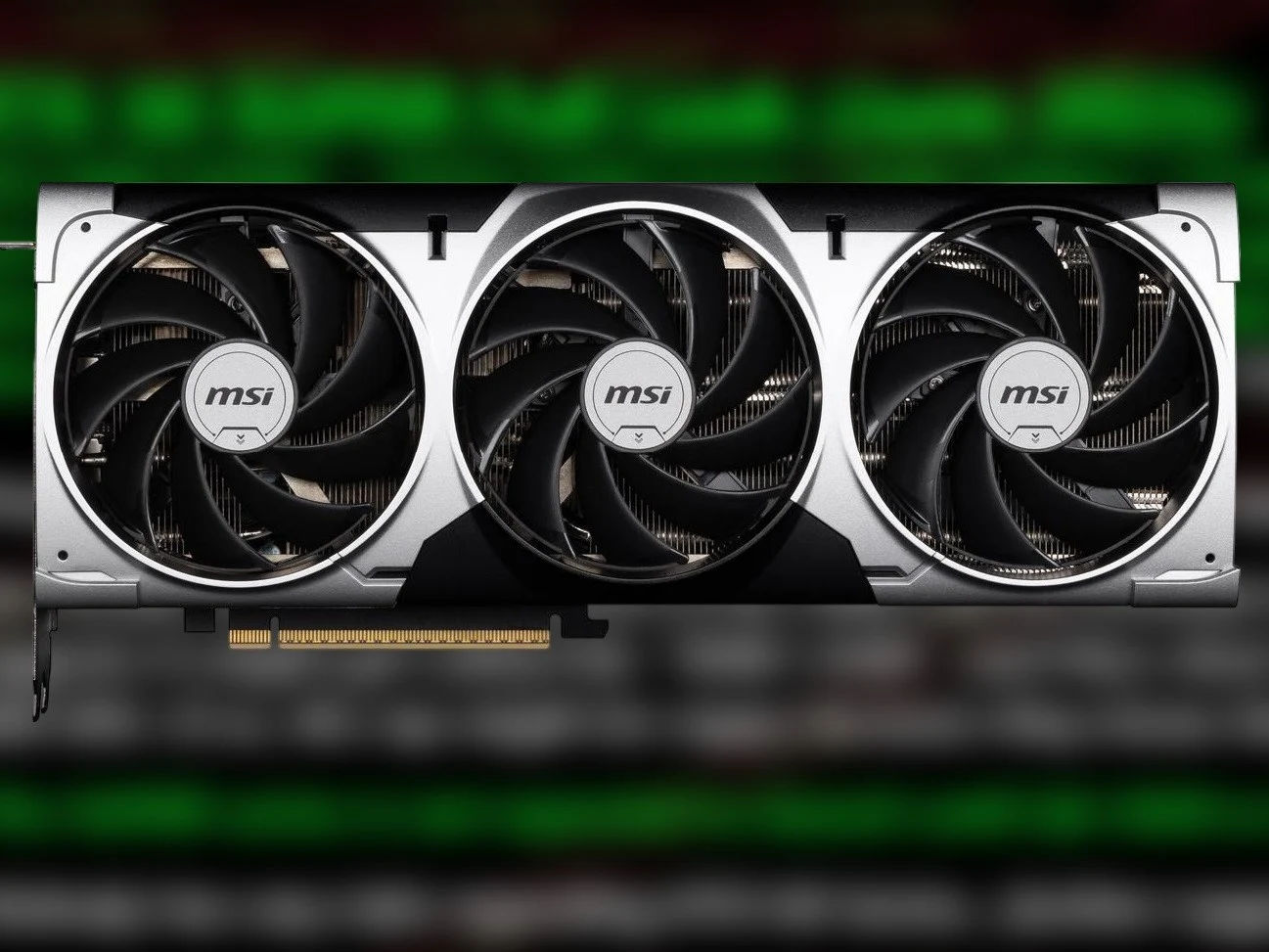
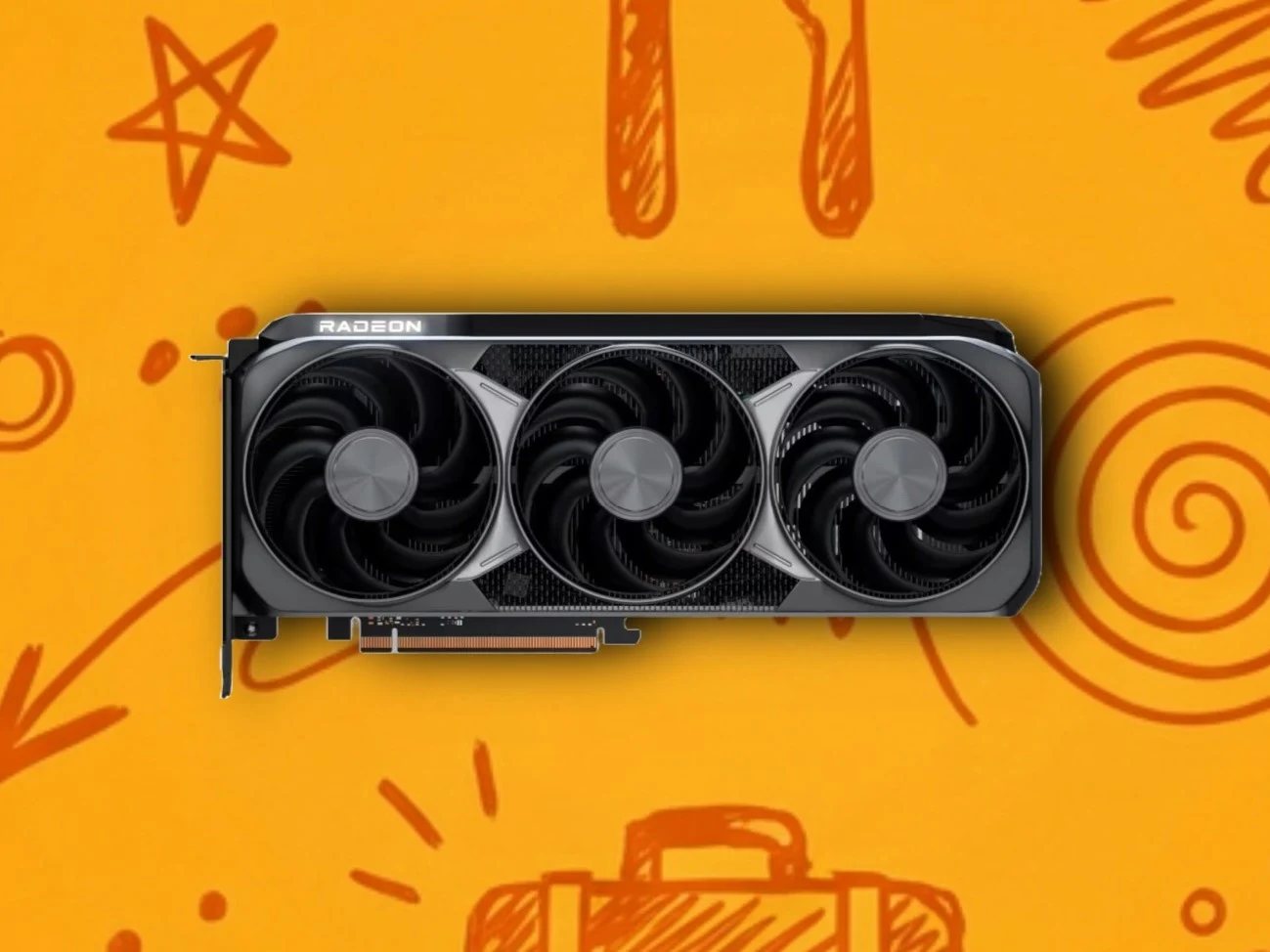
  • AMD RX 9080 XT price vs Nvidia could doom RTX 50 rival

    AMD RX 9080 XT price vs Nvidia could doom RTX 50 rival

    Key Takeaway

    – AMD’s rumored flagship RX 9080 XT may be canceled to preserve a price advantage over Nvidia.
    – The RX 9000 series uses cheaper GDDR6 VRAM while RTX 50 cards use expensive GDDR7.
    – A cheaper RX 9070 XT refresh with more GDDR6 is suggested as an alternative to a costly RX 9080 XT.
    – Current pricing shows a 25%+ gap between the RTX 5070 Ti (~$900) and RX 9070 XT (~$700).


    Rumors of AMD’s RDNA 4 Flagship in June

    Earlier in June, we herd rumors of AMD preparing high-end/flagship RDNA 4 GPUs for release in late 2025. The RX 9080 XT was expected to be among the GPUs under development. This seemed like AMD’s strategy to counter the RTX 50 Super series that Moore’s Law Is Dead recently leaked.

    Moore’s Law Is Dead’s New Theory

    Moore’s Law Is Dead now thinks that the RX 9080 XT, which could’ve been AMD’s RTX 5080 Super-killer, might not launch at all. The leaker explains that, due to the sharp increase in the price of GDDR7 memory, Nvidia GeForce RTX 50 cards are generally more expensive than the competing RX 9000 series GPUs. The reason for this is mainly the use of GDDR6 VRAM in the RX 9000 series boards. MLID reports that the price of GDDR6 is much better than GDDR7, and GDDR6 is going to get even cheaper.

    AMD’s Price Advantage Over Nvidia

    This gives AMD a major price advantage over Nvidia, not only in regard to the current crop of RTX 50 cards but also the upcoming RTX 50 Super refresh GPUs, as they reportedly also use GDDR 7 memory. MLID suggests that AMD might not want to lose this advantage by launching an RX 9080 XT with 32 GB of GDDR7 VRAM.

    Alternative Strategy Suggested

    The leaker’s personal opinion is that it makes more sense for AMD to refresh the RX 9070 XT with more GDDR6 VRAM and higher clocks to go against the RTX 5080 than to develop a new card with GDDR7 VRAM, which would make the card quite expensive.

    Current Market Pricing Evidence

    While we have no insight into AMD’s plans for the RTX 50 Super series, MLID’s argument against the RX 9080 XT does hold some weight. The RTX 5070 Ti with 16 GB of GDDR7 is currently at or above $900 on Amazon. The RX 9070, on the other hand, can be found for under $700 on Amazon. So, there is more than a 25% difference between the price of the RTX 5070 Ti and the RX 9070 XT.

    Future Outlook for RDNA 4

    It remains to be seen what becomes of the RX 9080 XT and whether or not AMD launches new RDNA 4 GPUs this year. We are looking forward to Nvidia revealing the RTX 50 Super cards, if they exist. More options are always better for consumers. We just need those options at reasonable prices.

    • RX 9080 XT: 32 GB GDDR7 VRAM rumored
    • RTX 5070 Ti: 16 GB GDDR7, ~$900+
    • RX 9070 XT: Under $700 with GDDR6
    • GDDR6 prices falling, GDDR7 rising
    Sources
  • Nvidia GeForce RTX 50 Super Leak: Performance & Price/Performance Hope

    Nvidia GeForce RTX 50 Super Leak: Performance & Price/Performance Hope

    Key Takeaway

    – RTX 50 Super GPUs focus on more VRAM and higher TDP rather than core count increases.
    – Performance gains are modest (5-14%), driven by increased bandwidth and clock speeds.
    – Pricing leaks suggest minimal to no price increase over standard models.
    – Nvidia’s disinterest in the gaming market raises doubts about availability and reasonable pricing.


    Nvidia GeForce RTX 50 Super Desktop Gaming GPUs are Back on the Menu

    It appears the Nvidia GeForce RTX 50 Super desktop gaming GPUs are back on the menu. We heard a lot about an impending RTX 50 Super series refresh in 2025, which never happened. The rumors are making the rounds once again, and Moore’s Law Is Dead has shared detailed specs and performance targets of the RTX 5080 Super, RTX 5070 Ti Super, RTX 5070 Super, and RTX 5060 Super.

    VRAM and TDP Changes for the RTX 50 Super Lineup

    MLID reports that the RTX 50 Super series GPUs mainly bring more VRAM, coupled with a higher TDP. At the top end, the RTX 5080 Super features the same 10,752 CUDA cores as the standard RTX 5080, while packing 24 GB of 32 Gbps GDDR7 video memory. The RTX 5080 Super reportedly has a TDP of 415 W vs 360 W for the RTX 5080.

    Sitting under the RTX 5080 Super, the RTX 5070 Ti Super also brings the same number of CUDA cores as the RTX 5070 Ti, but enjoys 24 GB of 28 Gbps VRAM. The RTX 5070 Ti features 16 GB GDDR7 VRAM. The RTX 5070 Ti Super is reportedly also more power hungry at 350 W vs 300 W for the RTX 5070 Ti.

    The RTX 5070 Super and 5060 Super Specification Details

    The RTX 5070 Super allegedly follows the same path as the other two RTX 50 Super GPUs with more VRAM and a higher TDP. Compared to the standard RTX 5070, the RTX 5070 Super seemingly carries 6 GB more VRAM for a total of 18 GB and a 25 W higher TDP at 275 W. Unlike the RTX 5080 Super and the RTX 5070 Ti Super, the RTX 5070 Super is also expected to get a 4% CUDA core count increase, resulting in 6,400 CUDA cores.

    Finally, the RTX 5060 Super, which could be called the RTX 5060 12 GB, has 12 GB of VRAM and the same 3,840 CUDA cores as the vanilla desktop RTX 5060 6 GB. MLID shares no information regarding the RTX 5060 Super’s TDP. But we can assume the GPU will get a higher power consumption limit like the rest of the RTX 50 Super lineup.

    Performance Gains and Potential Pricing Insights

    MLID alleges that the RTX 50 Super could bring some noticeable but not massive performance gains. These performance uplifts will be entirely due to the increased bandwidth and Nvidia pushing higher clocks, which is why the RTX 50 Super GPUs have higher TDPs.

    For the RTX 5080 Super, MLID reports a 7 to 14% performance gain over the RTX 5080. Considering that the leaker has previously reported a $999 to $1,199 price tag, the RTX 5080 Super might end up being a good deal, as it will bring more VRAM and performance for the same starting price as the RTX 5080.

    Market Expectations and Nvidia’s Gaming GPU Attitude

    The RTX 5070 Ti Super, which has been rumored to cost $749 to $799, could be 5 to 10% faster than the standard RTX 5070 Ti. The RTX 5070 Ti launched at a starting price of $749 in February 2025. However, the GPU has seen some of the worst price inflation and currently retails for above $900.

    Finally, the RTX 5070 Super is expected to have an 8 to 12% performance advantage over the RTX 5070. Based on the leaked $549 to $599 pricing, the RTX 5070 Super should be a pretty good deal when and if it eventually launches.

    Concerns Over Pricing and Supply for Gamers

    Sadly, Nvidia seems pretty disinterested in ensuring a good GPU market for gamers. So, we aren’t too confident that the RTX 50 Super GPUs will launch at reasonable prices. Even if they do launch at the leaked prices, Nvidia producing enough cards to satisfy demand is not a given. Until Nvidia’s attitude towards the gaming GPU market changes, we shouldn’t expect the RTX 50 Super cards to make the current market better.

    Moore’s Law Is Dead on YouTube

    Sources
  • Steam Deck OLED Price Leak: Valve Incompetent, Steam Machine Costs Rise

    Steam Deck OLED Price Leak: Valve Incompetent, Steam Machine Costs Rise

    Key Takeaway

    – Steam Deck OLED price hike: 512 GB and 1 TB models up by $240 and $300, prompting concerns over value versus competing devices.
    – Industry context vs. claims: Valve cites rising memory/storage costs and logistics; MLID argues other companies manage costs and questions Valve’s reasoning and potential greed or incompetence.
    – Market implications for Steam Machine: rising prices and delayed restock fuel skepticism about Steam Machine’s viability and potential target pricing (ideally under $700).


    Valve has increased the price of the Steam Deck OLED by a massive margin. The 512 GB and 1 TB models of the Steam Deck OLED are now $240 and $300 more expensive at $789 and $949, respectively. Moore’s Law Is Dead, who has a habit of blasting companies for moves such as this, thinks that the Steam Deck price increase could be a side effect of Valve’s incompetence and is a bad sign for the Steam Machine.

    Pricing thoughts and comparisons

    MLID states in his latest video that, at $949 for the 1 TB model, Valve shouldn’t even have bothered restocking the Steam Deck OLED. Per the leaker, the Steam Deck OLED just doesn’t make any sense when we consider that the more powerful Asus ROG Xbox Ally X retails in the same price range.

    Market context and competing devices

    For instance, Best Buy is selling the ROG Xbox Ally X with 24 GB of RAM and 1 TB of storage for $999.99. The less powerful ROG Xbox Ally with 16 GB of RAM and 512 GB of storage is available on Amazon for $599.

    Valve’s justification and counterpoints

    Valve claims that the increased prices of the Steam Deck OLED are entirely due to “rising memory and storage costs” and “global logistical challenges across the industry as a whole”. MLID appears to dismiss these reasons, as other companies have found ways to manage the current RAM and storage crises. The leaker gives the example of the Asus ROG Xbox Ally X, which is a lower volume product than the Steam Deck OLED. While Asus also has to contend with inflated component prices, the ROG Xbox Ally X, which has 50% more RAM than the Steam Deck OLED, has somehow managed to stave off a huge price increase.

    Implications and opinions

    So, MLID asserts that the Steam Deck OLED price increase is more than a simple reflection of the RAM and storage crises, and Valve might either “be greedy or incompetent”.

    The new Steam Deck OLED price could also be a herald of doom for the Steam Machine. Valve has struggled to get the Steam Machine to the market after having first shown the console back in November 2025. Six months later, and we have no idea of when the console might actually release or for how much.

    So, MLID exclaims that if the price of the Steam Deck OLED is any indication, Valve should just cancel the Steam Machine. The leaker thinks that the Steam Machine should ideally be less than $700. Seeing the state of gaming console prices, where even Sony has been forced to make PS5 consoles more expensive, chances are very little that the Steam Machine will launch at or below $700.

    Conclusion and what to watch

    In the end, it is quite clear that Valve has dropped the ball with the Steam Deck OLED restock and the accompanying new price. We’ll have to wait and see how things pan out and if Valve will be forced to revisit this move.

    Moore’s Law Is Dead on YouTube

    Sources
  • Insider Denies PS6 Delay, Specs Drop; PS5 Sales Slower Factor

    Insider Denies PS6 Delay, Specs Drop; PS5 Sales Slower Factor

    Key Takeaway

    – MLID argues the PS6 must launch in 2027 and should not compromise on VRAM or bandwidth to preserve next-gen experience.
    – Rumors speculated a downsize of GDDR7 from 30GB to 24GB and a 160-bit bus reduced to 128-bit to cut costs, but this is uncertain.
    – Sony faces a delicate balance between memory constraints, price, and a slow PS5 market, yet intends to push a new console to drive lifecycle momentum.


    Speculation continues over a potential PS6 release date delay. Recently, there have also been rumors suggesting Sony might reduce specs in response to the memory shortage. However, with PS5 sales flattening, insider Moore’s Law Is Dead believes the system will arrive on time without cutbacks.

    Rumors and claims about VRAM shifts

    In his latest podcast, the YouTuber addressed a theory from KeplerL2 reported on by TweakTown. The fellow hardware leaker claimed that the manufacturer may downsize the console’s GDDR7 VRAM from 30GB to 24GB. The memory would also run on a slower 128-bit bus rather than the previously expected 160-bit bus. This move could lower the PS6 price while still providing a performance upgrade.

    Risk and rationale behind memory decisions

    While cost is a concern, MLID doubts that Sony would risk compromising the console’s capabilities. He says that 30GB of VRAM is the “minimum for it to allow the next-gen experience Sony is trying to deliver.” Likewise, the insider argues that when preparing for a long lifecycle, preserving a higher bandwidth is critical.

    Gamers might anticipate that, considering the PS5 price increase, PlayStation will hesitate to introduce a follow-up. The latest fiscal report revealed that sales had already slowed compared to the same quarter in 2025. Straining consumers’ budgets, the company expects revenue to dwindle further.

    Market pressures and launch expectations

    Even facing those challenges, MLID explains that PlayStation can’t afford a PS6 release date delay. Saying that the “PS5 is dying quickly,” exciting hardware could entice buyers. He may be overly pessimistic about the current system, but the insider thinks it’s imperative that a new console ship in 2027.

    The manufacturer may also be willing to lose money initially on the system. If the memory shortage eases in a few years, it can recoup lost profits later in its existence.

    Statements from leadership

    Sony President and CEO Hiroki Totoki recently confirmed that the company was investing more in a “next-generation platform.” Not naming the PS6 or specifying a launch window, he admitted that higher component costs threatened its plans.


  • Nvidia N1X ARM APU Faces Software Issues, Delays Laptop Launch

    Nvidia N1X ARM APU Faces Software Issues, Delays Laptop Launch

    Key Takeaways

    1. Nvidia N1X ARM APUs for Windows laptops were expected to launch at CES 2026 but lack an official release date.
    2. Delays are attributed to unresolved bugs and software issues, with Nvidia taking time to finalize the APUs.
    3. The likelihood of Nvidia N1X/N1V laptops launching in the first quarter of 2026 is low; a summer 2026 release is more probable.
    4. Some Nvidia N1X and N1V laptops have been seen online, indicating potential software problems.
    5. Official confirmation from Nvidia is needed to assess the true status of the N1X ARM APUs.


    We’ve been hearing whispers about the Nvidia N1X ARM APUs for Windows laptops for some time now. Back in 2025, it was anticipated that laptops incorporating the Nvidia N1X would debut at CES 2026, with a general release planned for the first quarter of 2026. Yet, there hasn’t been any significant news regarding the Nvidia N1 chips, not to mention an official launch date.

    Delays and Issues

    Leaker Moore’s Law Is Dead suggests that the delay in Nvidia N1X-based Windows laptops is a result of the APUs still not being finalized, with numerous bugs and software complications. Additionally, Microsoft doesn’t seem to be rushing to make sure the Nvidia N1X functions properly on Windows. MLID is also stating that Nvidia is taking its time to prepare the N1X and N1V APUs.

    Future Predictions

    In essence, it appears improbable that any Nvidia N1X/N1V laptops will be launched in the first quarter of 2026. If they do, MLID believes the quantity will be limited. A more plausible outcome is that the notebooks might emerge in the second quarter or possibly during summer 2026. There’s even a suggestion from someone MLID spoke with that the launch of N1X-powered laptops could be pushed back to August 2026.

    Observations from the Market

    From Dell Alienware and Dell 16 Premium to Lenovo Legion, Yoga, and IdeaPad laptops, we’ve seen a variety of Nvidia N1X and N1V machines surfacing online. This supports MLID’s claims regarding potential software troubles.

    As always, we will only truly understand the situation with Nvidia N1X ARM APUs when the company provides official information. Until then, it’s wise to take any unverified reports lightly.

    Source:
    Link


  • PlayStation 6: 10x PS5 Performance and Enhanced Ray Tracing

    PlayStation 6: 10x PS5 Performance and Enhanced Ray Tracing

    Key Takeaways

    1. The PlayStation 6 may significantly improve ray tracing performance, offering 5 to 10 times more capability than the PS5.
    2. Rasterization improvements for the PlayStation 6 are expected to be minimal, not exceeding double the performance of the PS5 Pro.
    3. Sony is shifting focus towards achieving a stable 4K120 experience rather than further enhancing rasterization.
    4. A second, lower-priced model of the PlayStation 6 may be introduced, targeting 1080p resolution at around $299.
    5. The primary PlayStation 6 model is anticipated to cost between $500 and $900, competing with the rumored Xbox “Magnus.”


    A recent leak from Moore’s Law Is Dead suggests that Sony’s forthcoming PlayStation 6 could offer a significant boost in ray tracing performance, boasting capabilities that are 5 to 10 times greater than the original PlayStation 5. Conversely, improvements in rasterization are anticipated to be rather limited, reportedly not even reaching double the performance of the PlayStation 5 Pro. This indicates a notable change in Sony’s focus regarding performance.

    Sony’s Strategic Shift

    As stated by Moore’s Law Is Dead, this change stems from Sony’s internal evaluations, which reveal that most PlayStation 5 games already deliver a stable 4K60 or 4K80 experience, while user uptake of 120Hz remains relatively low. Instead of enhancing rasterization further, Sony seems to be concentrating on achieving a consistent 4K120 experience, along with significantly enhanced ray tracing capabilities. The PlayStation 6 is said to include custom silicon developed alongside AMD, designed to optimize the hardware’s performance on specific tasks like ray tracing and AI upscaling, akin to technologies like DLSS or FSR.

    Potential Variants and Pricing

    Moore’s Law Is Dead also hints at the introduction of a second PlayStation 6 model, potentially priced around 299 dollars. This version would share the same architecture but would be tailored for 1080p resolution. This strategy would resemble the dual-SKU approach seen with the PlayStation 5 and its Digital Edition, but with more pronounced hardware differences. The primary model is anticipated to retail between 500 and 900 dollars, positioning it as a strong competitor against the rumored Xbox “Magnus,” which could be approximately 30% faster yet also pricier.

    In conclusion, Moore’s Law Is Dead hints that this is merely “the tip of the iceberg,” stating, “I honestly know a lot more but I can’t say anything yet” — so let’s keep an eye on further developments.

  • Sony PS6 Specs, Performance, and Release Date: 3x Faster than PS5

    Sony PS6 Specs, Performance, and Release Date: 3x Faster than PS5

    Key Takeaways

    1. Specifications: The PS6 will feature the “Orion” APU, potentially a chiplet-based design with a 6-core CPU and RDNA 5 GPU architecture, boasting 40-48 Compute Units and a boost clock over 3 GHz.

    2. Memory and Performance: Expected to have a memory bus of 160 or 192 bits, the PS6 may include 24 GB of GDDR7 VRAM, providing three times the rasterization performance of the PS5, with full backward compatibility for PS4 and PS5 games.

    3. Cost and Efficiency: Sony is emphasizing cost constraints and power efficiency, with the PS6’s TDP at 160 W, lower than the PS5’s 180 W, indicating potential for a lower retail price.

    4. Release Timeline: Serial production for the PS6 is projected for mid-2027, with an official launch planned for Fall 2027 or early 2028.

    5. Source of Information: The details primarily come from Moore’s Law Is Dead, believed to be based on an AMD presentation to Sony in 2023, suggesting that the final design may evolve before the official release.


    There has been quite a bit of buzz surrounding the anticipated specifications for the Sony PlayStation 6 and the upcoming Xbox. The latest technical information about these next-gen consoles has primarily come from Moore’s Law Is Dead. This source not only disclosed the existence of the AMD Magnus APU, which may drive the next-gen Xbox, but also shared the codenames for the AMD APUs that will power both the PS6 and its handheld version.

    Details About the PS6

    Moore’s Law Is Dead has provided extensive information about the Sony PS6 and the PS6 handheld console. This includes specifications of the APUs for these consoles, the expected release dates, and performance projections. We will focus on the specifications of the PS6 in this article, while the PS6 portable will be discussed in a future piece.

    Specifications Overview

    To begin with, the Sony PlayStation 6 is said to be powered by the “Orion” APU, which is reportedly chiplet-based and likely manufactured using 3 nm technology, similar to the AMD Magnus APU. The CPU chiplet is rumored to contain 6 cores, potentially based on Zen 6 or later. As for the integrated GPU, it is said to be based on the RDNA 5 architecture, featuring 40-48 Compute Units and a boost clock exceeding 3 GHz.

    According to MLID, the PS6 is expected to have a memory bus that is either 160 or 192 bits wide, coupled with 32 GT/s of GDDR7 VRAM. Previous leaks suggested that the PS6 might include 24 GB of RAM, marking a 50% increase from the PS5’s 16 GB of GDDR6 memory.

    Emphasis on Cost and Efficiency

    Moreover, MLID indicates that Sony is focusing heavily on “cost constraints” and power consumption for the PS6. This could mean that the PS6 will consume less power than the PlayStation 5 and might be priced significantly lower than the PS5 Pro (available on Amazon).

    Additionally, MLID states that the Orion APU has a Thermal Design Power (TDP) of 160 W. This is lower than the base PS5, as per TechpowerUp, which noted that the Oberon GPU in the PS5 has a TDP of 180 W, while the entire console typically requires over 200 W when gaming.

    Performance Expectations

    Even though the PS6’s Orion APU is reported to have a lower TDP than the base PS5, MLID claims that the PS6 is expected to deliver three times the rasterization performance of the original PS5. The ray tracing capabilities are projected to see even greater enhancements. This means that the PS6 should be able to run PS5 and PS4 games at 4K/120 FPS, as it is supposedly fully backward compatible with titles from both the PS5 and PS4.

    Anticipated Release Date

    Regarding the release timeline, MLID has reported that serial production for the PS6 is set for mid-2027, with an official launch likely slated for Fall 2027 or early 2028.

    In conclusion, it’s important to mention that the information from MLID regarding the PS6 is believed to have originated from an AMD presentation to Sony in 2023. Thus, the design of the console may have changed considerably since then. For example, AMD could have persuaded Sony to utilize desktop RDNA 5 chips like AT3 or AT2, which could lead to more than 48 CUs.

    In short, treat the information provided here as very early, not final, and likely missing some details.

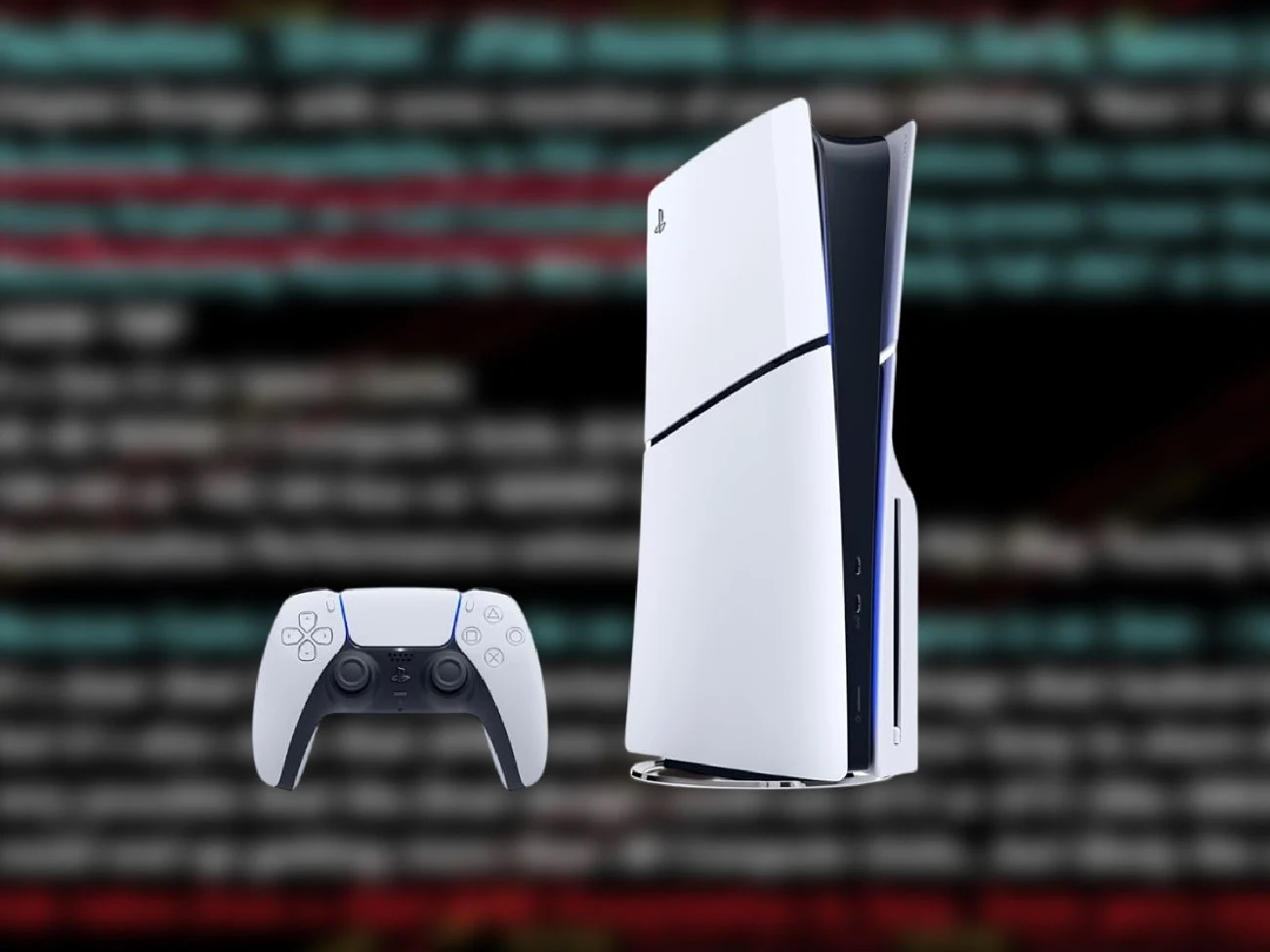
    Check out the Sony PS5 Slim on Amazon.

    Follow Moore’s Law Is Dead on YouTube.

    Source:
    Link