Tag: Steam Deck OLED

  • Valve Replaces Baby-Damaged Steam Deck Case, Fans Applaud

    Key Takeaway

    – Valve replaced a Steam Deck OLED carrying case for free after a customer’s newborn vomited on it.
    – The company is known for highly accommodating individual customer service.
    – This follows other generous gestures, like giving free games after a Steam Controller shipping error.
    – Some critics see this as a low-cost marketing strategy for goodwill, but fans focus on the positive experiences.


    The customer of Steam was probably not expecting such a generous response from the company. When the user contacted them about the case that was ruined by their babys vomit, they didnt think about getting a free replacement. The Reddit community is praising the company for treating customers with respect and appreciation, and this recent example is not the only case of its kind.

    How Valve Responded to the Customer Issue

    As a screenshot of the email exchange shows, the Reddit user contacted Valve to ask whether they could order a replacement for the carrying case that ships with the Steam Deck OLED. The reason: their newborn had vomited on the case, leaving it ruined. The Steam Deck owner probably did not expect such a generous response from Valve. Instead of offering to sell them a new case, Valve explained in its reply email that a replacement was already on its way. For the user, it appears to be completely free of charge.

    Previous Examples of Their Customer Service

    After a recent shipping error involving the Steam Controller, for instance, Valve gave affected customers a free Steam game of their choice. Less sympathetic voices note that a simple marketing strategy could be behind Valve’s courteous customer service. After all, gestures like these cost comparatively little but generate plenty of media attention and goodwill for the company.

    For fans, however, Valve’s motivation is likely to matter less as long as they continue to have such positive experiences with customer support. The gesture from Valve cost them very little but they got a lot of goodwill and media atention for it. The company has a history of doing this kind of thing, which is why so many people trust them with their gaming needs.

    Sources

  • Why gamers choose an $800 Steam Deck over Xbox ROG Ally or Legion Go S

    Key Takeaway

    – Strong Steam integration and existing library convenience
    – OLED display, trackpads, battery life, and speakers as key advantages
    – Popularity persists despite higher price than more powerful competitors
    – Scalpers were initially suspected, but user preference explains demand
    – Valve must now prove value without previous price advantage


    Steam Deck OLED Still Flying Off Shelves Despite Price Hike

    Since the sudden price increase, the Steam Deck OLED has cost around $790. Nevertheless, the handheld sold out shortly after the adjustment. Reddit user Pretty_Trip_2215 raises an obvious question: why is Valve’s handheld still so popular when more powerful devices are available at lower prices? The Lenovo Legion Go S starts at $499.99, while the ASUS ROG Xbox Ally has an MSRP of $599.

    Community Reacts to Scalper Theory

    At first, the creator of the Reddit thread suspected that scalpers might be behind the rush for the expensive Steam Deck OLED. However, the discussion quickly took off. Many users explained why they still prefer Valve’s handheld. In a later edit, the thread creator summarized the most common reasons.

    Reading through the comments shows that users do not judge the Steam Deck by performance alone. Many simply like Valve and appreciate the seamless Steam integration. Anyone who already has a Steam library can simply switch on the device, log in and start playing right away – a clear convenience advantage over the competition.

    Technical Edge and Display Quality

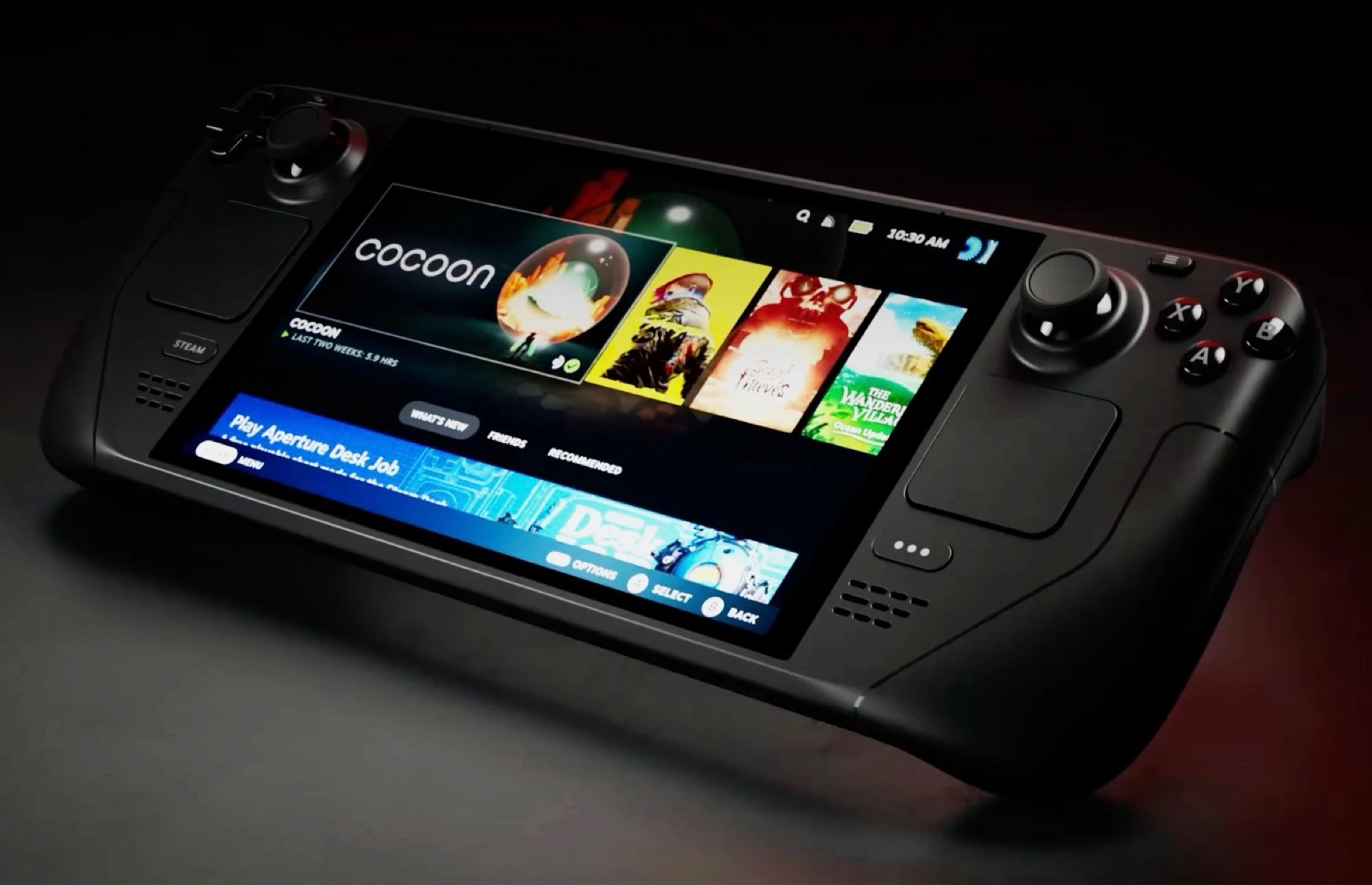
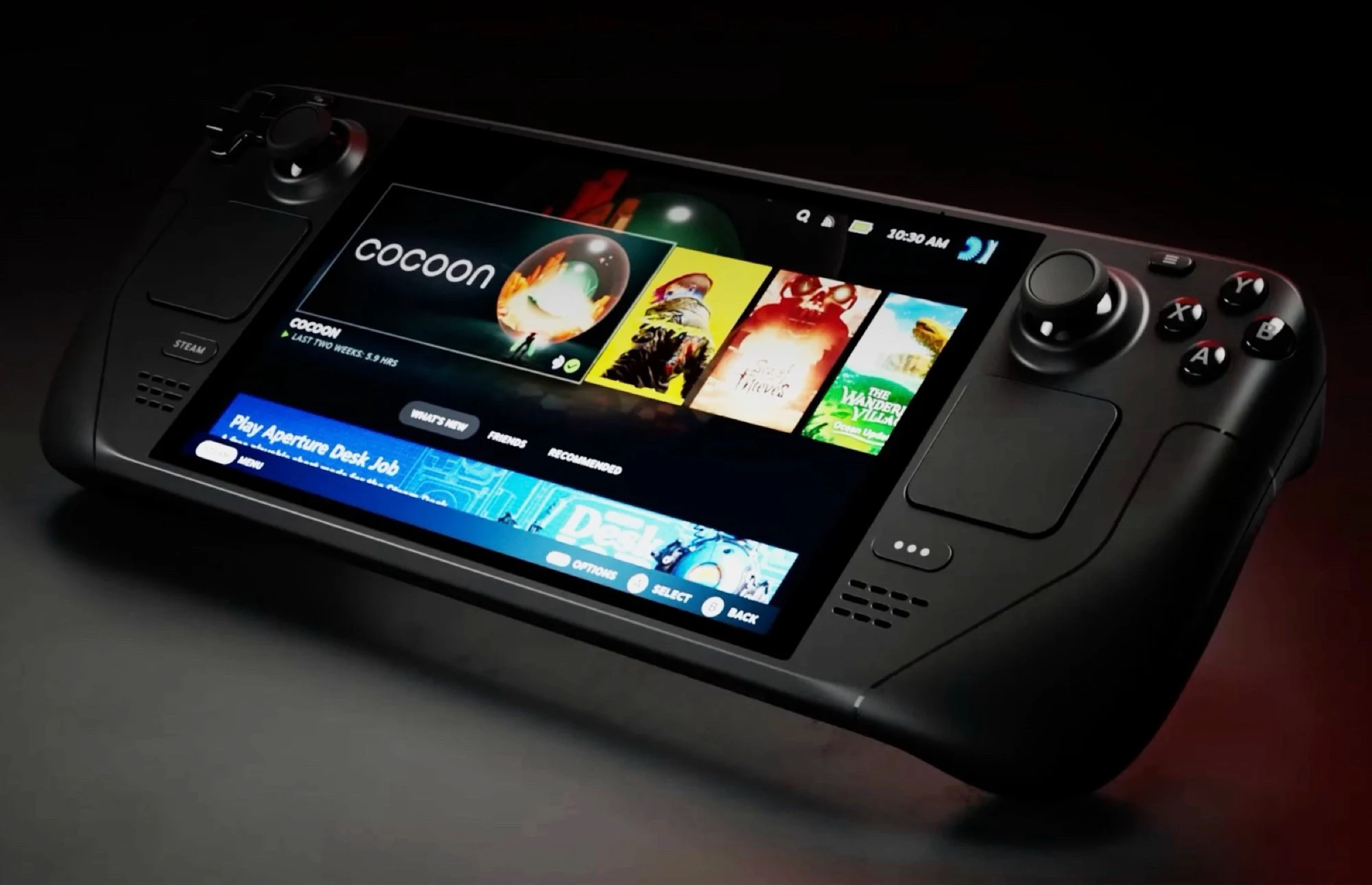
    Although the Steam Deck cannot keep up in terms of raw performance, it still has several technical advantages – most notably the OLED display. In the Reddit discussion, the trackpads are also repeatedly mentioned as an argument in favor of the Steam Deck. They work like small touchpads and allow mouse-like control. This not only makes navigation easier, but also makes strategy games more comfortable to play. For many users, Valve’s handheld also has the edge when it comes to battery life and speakers.

    Valve’s Value Proposition Under Fire

    Critics argue that Valve has squandered the Steam Deck’s biggest advantage with the price increase: its strong value for money. On social media, the handheld is therefore repeatedly described as “dead.” The situation is not quite that dramatic, but after losing its previous price advantage, Valve now has to prove that the Steam Deck is still attractive enough even at significantly higher prices.

    Sources
  • Steam Deck: Will Valve’s Handheld Slowly Fade Away

    Key Takeaway

    – Steam Deck’s original appeal was strong value for money, now undermined by price increases.
    – Community opinions split: current owners still see a capable device; potential buyers face worse conditions.
    – OLED version now costs $789 instead of $549, with no cheaper new model available.
    – Loss of value perception could threaten long-term sales and justify future hardware development.
    – Steam Deck is not “dead,” but must re-prove itself after the price hike.


    Why the Steam Deck Debate is Heating Up

    Following the significant Steam Deck OLED price increase, the future of Valve’s handheld PC is being hotly debated in the gaming community. On Reddit, one user asked why so many gamers were suddenly acting as if the Steam Deck were “dead.” The question clearly struck a nerve. At the time of research, nearly 800 comments had been posted in less than 20 hours – with opinions sharply divided.

    A Shift in Perceived Value

    As the creator of the Reddit thread explains, the Steam Deck was long attractive above all because of its strong value for money. Buyers got an easy-to-use handheld with Steam integration, modding options and good repairability at a reasonable price. However, the Steam Deck has long since ceased to be the most powerful device in its class – and with the recent price increases, the mood in the community has noticeably shifted. According to the thread creator, comments under videos and posts increasingly describe the Steam Deck as outdated or even “dead.”

    Two Distinct Camps on Reddit

    Reddit is largely split into two camps. One consists of existing Steam Deck owners. For those who already own Valve’s handheld, it remains a capable device with a large game catalog and an active community – even if significantly more powerful handhelds such as the Asus ROG Ally X or Lenovo Legion Go are now available.

    New Buyers Face Higher Costs

    The other camp consists of potential buyers. Anyone looking to buy a new handheld today has to evaluate the Steam Deck under very different conditions – at least the OLED version, which has cost $789 instead of $549 since the price increase. Since the standard Steam Deck is no longer regularly sold as a new device, Valve currently has no cheaper model on offer.

    The Core Question of Survival

    Reddit users largely agree on one point: due to the price increase, the Steam Deck is losing much of its original appeal – namely its strong value for money. Against this backdrop, the question is whether Valve can continue to sell enough units in the long term to justify new models or further hardware projects. The Steam Deck is therefore not “dead” right now, but after the price increase, it has to prove itself all over again.


    Sources
  • Steam Deck OLED Price Leak: Valve Incompetent, Steam Machine Costs Rise

    Steam Deck OLED Price Leak: Valve Incompetent, Steam Machine Costs Rise

    Key Takeaway

    – Steam Deck OLED price hike: 512 GB and 1 TB models up by $240 and $300, prompting concerns over value versus competing devices.
    – Industry context vs. claims: Valve cites rising memory/storage costs and logistics; MLID argues other companies manage costs and questions Valve’s reasoning and potential greed or incompetence.
    – Market implications for Steam Machine: rising prices and delayed restock fuel skepticism about Steam Machine’s viability and potential target pricing (ideally under $700).


    Valve has increased the price of the Steam Deck OLED by a massive margin. The 512 GB and 1 TB models of the Steam Deck OLED are now $240 and $300 more expensive at $789 and $949, respectively. Moore’s Law Is Dead, who has a habit of blasting companies for moves such as this, thinks that the Steam Deck price increase could be a side effect of Valve’s incompetence and is a bad sign for the Steam Machine.

    Pricing thoughts and comparisons

    MLID states in his latest video that, at $949 for the 1 TB model, Valve shouldn’t even have bothered restocking the Steam Deck OLED. Per the leaker, the Steam Deck OLED just doesn’t make any sense when we consider that the more powerful Asus ROG Xbox Ally X retails in the same price range.

    Market context and competing devices

    For instance, Best Buy is selling the ROG Xbox Ally X with 24 GB of RAM and 1 TB of storage for $999.99. The less powerful ROG Xbox Ally with 16 GB of RAM and 512 GB of storage is available on Amazon for $599.

    Valve’s justification and counterpoints

    Valve claims that the increased prices of the Steam Deck OLED are entirely due to “rising memory and storage costs” and “global logistical challenges across the industry as a whole”. MLID appears to dismiss these reasons, as other companies have found ways to manage the current RAM and storage crises. The leaker gives the example of the Asus ROG Xbox Ally X, which is a lower volume product than the Steam Deck OLED. While Asus also has to contend with inflated component prices, the ROG Xbox Ally X, which has 50% more RAM than the Steam Deck OLED, has somehow managed to stave off a huge price increase.

    Implications and opinions

    So, MLID asserts that the Steam Deck OLED price increase is more than a simple reflection of the RAM and storage crises, and Valve might either “be greedy or incompetent”.

    The new Steam Deck OLED price could also be a herald of doom for the Steam Machine. Valve has struggled to get the Steam Machine to the market after having first shown the console back in November 2025. Six months later, and we have no idea of when the console might actually release or for how much.

    So, MLID exclaims that if the price of the Steam Deck OLED is any indication, Valve should just cancel the Steam Machine. The leaker thinks that the Steam Machine should ideally be less than $700. Seeing the state of gaming console prices, where even Sony has been forced to make PS5 consoles more expensive, chances are very little that the Steam Machine will launch at or below $700.

    Conclusion and what to watch

    In the end, it is quite clear that Valve has dropped the ball with the Steam Deck OLED restock and the accompanying new price. We’ll have to wait and see how things pan out and if Valve will be forced to revisit this move.

    Moore’s Law Is Dead on YouTube

    Sources
  • Steam Deck OLED Restocked: Price Up by $300 Now In Stock

    Steam Deck OLED Restocked: Price Up by $300 Now In Stock

    Key Takeaway

    – Steam Deck OLED back in stock and available to order directly from Valve again, but at higher prices.
    – The LCD 256 GB SSD variant has been removed from Valve’s lineup.
    – Price surge driven by DRAM/SSD cost increases, making the OLED version notably more expensive than some competitors (e.g., Asus ROG Xbox Ally).


    Valve announces Steam Deck OLED back in stock with price changes

    In a recent update, the company revealed that the Steam Deck OLED is once again available after a period of being listed as sold out for several months. The handheld is now open for orders again directly through Valve, though the pricing has shifted upward from previous levels. The new power trio of models is presented with updated price points, and customers can expect the OLED option to arrive with the same core features that fans have come to anticipate, albeit at a higher cost than before. The news arrives as consumers weigh the benefits of OLED visuals against the push to economize in a fluctuating market.

    Pricing and stock details

    The newly available Steam Deck OLED lineup features two variants, each priced higher than in the past. Notably, the LCD version with a 256 GB SSD has been removed from Valve’s catalog, narrowing the entry points for new buyers. The refreshed price structure reflects an industry-wide shift in component costs, particularly for memory and storage, and it signals Valve’s stance on continuing to push premium screen technology alongside robust performance for handheld gaming. The refreshed pricing contrasts with the original launch price from 2022, which started at $399, showing a sizable increase over time with expectations of continued demand for portable power.

    Why costs rose, and how it compares to rivals

    The reason behind the hike is largely tied to the DRAM shortage and rising SSD costs driven by intense demand from AI sectors, including major players like OpenAI. This ripple effect has pushed up the cost to equip the Steam Deck with 16 GB RAM and higher-capacity SSDs, thereby elevating the overall price of the OLED model. In this context, Valve’s decision to price higher aligns with market realities and the premium feel of OLED technology, though it positions the Deck against other powerful handhelds such as the Asus ROG Xbox Ally, which is available for a higher price point with competitive specs, yet still represents a different value proposition for gamers.

    The corporate explanation stresses that supply chain pressures are a core driver of the revised cost structure, while the OLED variant is marketed as a premium experience that emphasizes display quality and performance. This shift also includes the discontinuation of the lower-cost LCD 256 GB option, which previously served as the most affordable entry, potentially affecting budget-minded enthusiasts who were counting on a broader range of choices. Consumers now weigh OLED’s advantages against the elevated price tag and the battery life trade-offs that often accompany brighter, more vibrant panels in handheld devices.


    Sources

  • Steam Deck OLEDs Sell Out Hours After Price Hike

    Steam Deck OLEDs Sell Out Hours After Price Hike

    Key Takeaway

    – Steam Deck OLEDs are sold out again, despite recent restocks for the 512GB and 1TB models.
    – Valve significantly increased prices: 512GB from $549 to $789; 1TB from $649? to $949 (noting the $300 jump).
    – Valve says hardware hasn’t changed; price hikes are due to memory/NAND shortages and global logistics affecting component costs.


    Steam Deck OLED stock evaporates as prices soar

    If you were hoping to snag the Steam Deck OLED, you’re outta luck again. After Valve finally restocked the hotly anticipated handheld, the 512GB and 1TB variants have all vanished from shelves in record time, leaving buyers with little choice but to wait or seek alternatives. The situation underscores the tug-of-war between demand and supply for this gadgety favorite, and how fast two popular SKUs can disappear from mainstream channels.

    Pricing shift explains by Valve

    This news comes hot on the heels of Valve’s sweeping price update for the consoles. The 512GB model jumped from $549 to $789, a steep rise that will leave many shoppers re-evaluating their budget. The 1TB version fared even worse, seeing a $300 increase to $949. Valve’s brief note asserted that the hardware specs had not changed, just the price point due to external pressures. The company’s explanation aims to calm fears of firmware or performance downgrades while acknowledging market realities that impact retail pricing.

    Why the costs spiked, according to Valve

    Valve pointed at the heavy costs of components as the primary culprit for the price surge. Memory chips and NAND flash shortages, alongside a broad spectrum of global supply-chain disturbances, have pushed production expenses upward. The tech sector, in general, has struggled with supplier lead times and logistics bottlenecks, which ripple through to consumer prices for high-end portable gaming devices like the Steam Deck OLED.

    What this means for buyers and stock posting

    For shoppers in the immediate term, the combination of sold-out status and inflated retail prices creates a tricky buying environment. Those hoping for restocks soon may need to brace for delayed availability as manufacturers navigate constrained inventories. Meanwhile, price-conscious consumers might weigh alternatives or older models to balance feature needs with a tighter budget, since the OLED variant remains a premium option in Valve’s lineup.

    Sources
  • Steam Machine leaks turn out to be hot air, price worries grow

    Steam Machine leaks turn out to be hot air, price worries grow

    Key Takeaway

    – Valve restocked Steam Deck OLED and raised prices, dampening hopes for a low-cost Steam Machine launch.
    – Leaked containers from China likely contained more Steam Decks, not Steam Machines, shifting speculation away from a new living-room PC release.
    – Market signals now point to a potentially higher price range for a future Steam Machine, around or approaching $1,000.


    For weeks, leaks about mysterious Valve hardware imports had kept the community on edge. In both early and late May, the company received containers from China that allegedly contained game consoles – and many assumed they were Steam Machines. Now, however, something has happened that has dashed the recently fueled hopes of an imminent launch of the highly coveted living-room PC in one fell swoop: a restock of the Steam Deck OLED.

    Retail Update

    The OLED version of Valve’s handheld had been sold out for some time. Its renewed availability now suggests that the leaked containers may not have brought Steam Machines across the sea after all. For the time being, that would put the speculation of recent weeks to rest. The general sentiment on Reddit is roughly: “If the containers only contained Steam Decks, we still don’t have any real Steam Machine news.”

    Pricing Shift

    With the restock, Valve has also raised the prices of the Steam Deck OLED – and significantly so. The 512 GB model now costs $789 instead of $549, while the 1 TB version has increased from $649 to $949. That does not seem to be deterring fans, however. Shortly after the restock, both variants were already sold out again in Valve’s store. For the future of the Steam Machine, however, the handheld’s price increase paints a gloomy picture.

    Market Implications

    The price hike for the Steam Deck OLED suggests that the living-room PC could end up more expensive than many had hoped. On Reddit, many users had expected a price somewhere in the mid three-digit range. Now, however, concerns are growing that the Steam Machine could end up closer to $1,000.

    Valve

    Sources
  • Steam Deck OLED Out of Stock in U.S. Amid Memory Shortage Fears

    Steam Deck OLED Out of Stock in U.S. Amid Memory Shortage Fears

    Key Takeaways

    1. The Steam Deck OLED has become unavailable in many regions, including the U.S., following the discontinuation of the less expensive LCD version at the end of 2025.
    2. In the U.K. and Australia, some storage options of the Steam Deck OLED are still available, but refurbished models are no longer on sale in the U.S.
    3. Speculation on Reddit suggests that Valve is struggling to meet demand due to ongoing shortages of storage and memory components.
    4. Concerns exist among U.S. gamers that the Steam Deck OLED may not return at its original price, especially with rising costs for RAM and SSDs.
    5. Rumors indicate that the Steam Deck 2 may not be released until 2028 or later, leaving the OLED model as Valve’s only mobile gaming option for now.


    After Valve discontinued the less expensive LCD version at the end of 2025, the Steam Deck OLED has become unavailable in various areas. In the United States, all versions of this gaming device are currently out of stock on the official website. With the ongoing memory shortage pushing back the Steam Machine’s release, there are growing fears of a potential price hike.

    Availability in Other Regions

    In some countries, like the UK and Australia, Steam Deck OLED models with storage options of 512GB and 1TB are still available. However, it’s quite rare to witness multiple SKUs in a key market being sold out at the same time. Additionally, refurbished models are also off the table on the U.S. site now.

    Speculations on Reddit

    Valve hasn’t offered any insight into why the stock has suddenly disappeared. Nevertheless, fans of the handheld have been speculating on Reddit. One popular idea suggests that the manufacturer is struggling to keep up with demand due to the ongoing shortages of storage and memory.

    The Steam Deck OLED is equipped with 16GB of LPDDR5 RAM, which has experienced significant price increases due to the surge in AI. The cost of SSDs is also on the rise as data centers are increasing their capabilities. This situation has created uncertainty surrounding the launch dates for the Steam Machine, Steam Frame VR headset, and a new controller.

    Concerns for U.S. Gamers

    Gamers in the U.S. are apprehensive that the handheld might not return at its initial MSRP. With features like an enhanced 90Hz display and better battery longevity, the 2023 model quickly gained popularity. Since the LCD version is no longer available, it stands as the sole mobile option from Valve.

    As rumors suggest that the Steam Deck 2 might not come until 2028 or later, fans are eagerly awaiting news regarding its predecessor. More OLED Windows competitors are set to arrive with SteamOS in the future, such as the Legion Go 2. Sadly, the price of the Steam Deck OLED remains significantly more budget-friendly.

    Source:
    Link


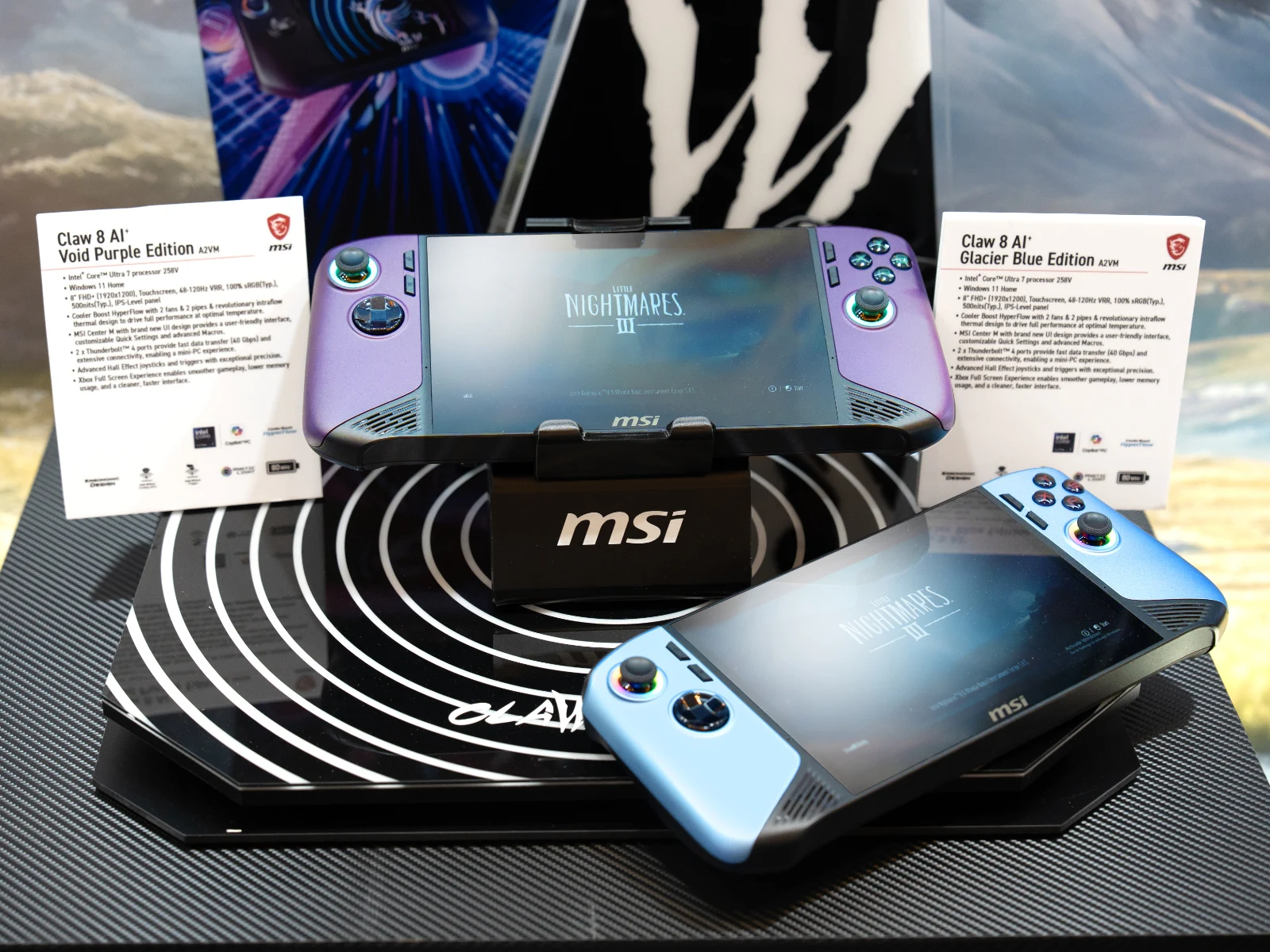
  • MSI Teases New OLED PC Gaming Handheld Device

    MSI Teases New OLED PC Gaming Handheld Device

    Key Takeaways

    1. The MSI Claw 8 AI+ is highly regarded as a leading PC handheld, outperforming the Claw A1M in many areas.
    2. The Claw 7 AI+ and Claw 8 AI+ have ergonomic and display shortcomings compared to competitors like the Legion Go S and Steam Deck OLED.
    3. MSI is developing a new handheld featuring Intel’s Panther Lake architecture, designed specifically for handheld devices.
    4. Future MSI handhelds may transition to OLED display technology, enhancing visual quality.
    5. Built-in trackpads are unlikely to be included in upcoming models, and the release date for new handhelds is still to be announced.


    The MSI Claw 8 AI+ is still widely recognized as one of the top choices for PC handhelds, outshining the underwhelming Claw A1M in nearly every aspect. Although MSI has introduced the Claw 7 AI+ as a more affordable option, both it and its 8-inch counterpart have their own issues. Nevertheless, there are indications that MSI is working on addressing one of these problems with the upcoming release of another Claw handheld.

    Ergonomics and Displays

    At present, the Claw 7 AI+ and Claw 8 AI+ do not offer the same level of comfort as devices like the Legion Go S, nor do they have the user-friendly software seen in Asus’s line, including the ROG Xbox Ally (currently priced at $589.99 on Amazon). Furthermore, MSI’s existing handhelds lack the impressive displays found in the Steam Deck OLED and the Legion Go 2, as both the Claw 7 AI+ and Claw 8 AI+ utilize IPS panels.

    Future Developments

    Intel has indicated that MSI’s forthcoming PC handheld will incorporate its new Panther Lake architecture, featuring a dedicated processor designed for handhelds. Additionally, MSI’s management has suggested that a transition to OLED display technology is likely. However, it appears that MSI does not plan to include built-in trackpads like those from Valve or Lenovo, judging by the video provided below. The exact launch date for MSI’s next PC handhelds is still unknown, but they are expected to be released sometime later this year. Moreover, specific information regarding the handheld’s processor has yet to be confirmed.

    Source:
    Link


  • Best Gaming Handhelds of 2025: Surprising Winner Revealed

    Best Gaming Handhelds of 2025: Surprising Winner Revealed

    Key Takeaways

    1. Marques Brownlee reviews the top and bottom smartphones of 2025, gaining over 3 million views.
    2. ETA Prime focuses on x86-based gaming handhelds, amid the rise of budget and premium ARM devices.
    3. GPD Win 5 is highlighted as the most powerful handheld, followed by MSI Claw 8 AI+ and ROG Xbox Ally X for battery life.
    4. The Steam Deck OLED and Legion Go 2 are praised for their superior OLED displays, with the Legion Go 2 named ETA Prime’s top choice for 2025.
    5. The handheld gaming market has significantly evolved, showcasing advancements in technology and design.


    With 2025 nearing its end, creators are evaluating their favorite gadgets of the year. Just this week, Marques Brownlee expressed his opinions on the top and bottom smartphones of 2025. His video has already been watched over 3 million times and discusses various ‘bests’, which we have detailed in a separate piece.

    Gaming Handhelds Take the Stage

    Now, ETA Prime has added his own insights, focusing on gaming handhelds. He has only looked at x86-based devices this time. A few years back, this would have been clear-cut, but now there are many budget and premium ARM-based devices available. For example, Anbernic is still leading in the budget Linux sector. In addition, Ayaneo has teamed up with Ayn Technologies to introduce several high-end Android handhelds.

    Top Picks of the Year

    ETA Prime primarily evaluates devices launched this year, highlighting the GPD Win 5 as the most powerful option thanks to its AMD Strix Halo processors, with the MSI Claw 8 AI+ following in second place. The ROG Xbox Ally X is noted for having the longest battery life, ranking just below the Legion Go S (currently priced at $899 on Amazon) for the most comfortable x86 handheld of the year.

    At present, ETA Prime believes the Steam Deck OLED and Legion Go 2 boast the finest displays since they utilize OLED technology instead of IPS panels. The MSI Claw A8 also receives an honorable mention for its design and overall look. After all that has been said, ETA Prime names the Legion Go 2 as his top choice for 2025, thanks to its 144 Hz OLED display, the powerful Ryzen Z2 Extreme chipset, and detachable controllers. On the other hand, the Steam Deck OLED continues to be a favorite due to its impressive price-to-performance ratio. For more details, check out the video above and our hands-on review of the Legion Go 2 below for a complete overview of Lenovo’s latest gaming handheld.

    ETA Prime’s findings showcase how much the handheld gaming landscape has evolved in a short time.

    Source:
    Link