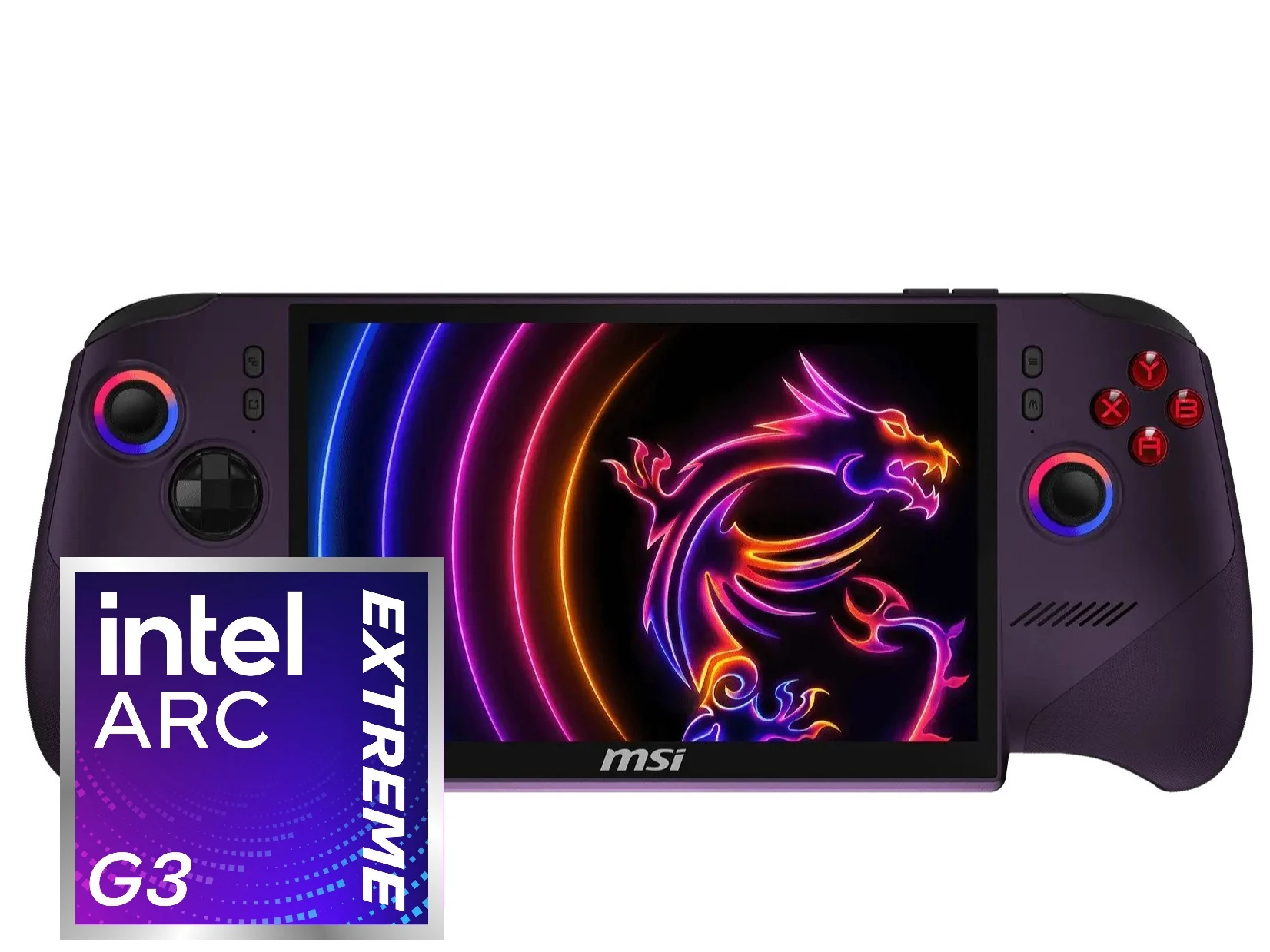
Tag: MSI Claw 8 AI+

  • Intel warns of “crazy” price: Arc G3 Extreme tramples AMD Ryzen Z2 Extreme for expensive price

    Intel warns of “crazy” price: Arc G3 Extreme tramples AMD Ryzen Z2 Extreme for expensive price

    Key Takeaway

    – Intel Arc G3 Extreme delivers 42% higher 1080p performance than AMD Ryzen Z2 Extreme at 35W, and 37% better FPS at 12W.
    – “Endurance Gaming” mode can extend battery life from ~2.8 hours to nearly 6 hours in Forza Horizon 6.
    – Arc G3 Extreme uses a full 12 Xe-core iGPU; the standard Arc G3 uses 10 Xe-cores.
    – Pricing for G3 Extreme handhelds is expected to be “crazy” high, partly due to Intel 18A yields and memory/storage costs.
    – AMD Ryzen Z2 Extreme consoles will likely be significantly cheaper than Intel Arc G3 Extreme handhelds.


    Intel’s New Handheld Chip Brings Big Performance

    Since Intel dropped the Panther Lake APUs featuring the powerful Arc B390 iGPU, people have been wondering if we would see that same graphics tech inside a chip made just for handheld gaming consoles. Leaks from earler this year confirmed Intel was indeed cooking up two new processors for this exact purpouse, known as the Arc G3 and the Arc G3 Extreme. Now, Intel has offically shown off what the top-tier Arc G3 Extreme can actualy do in real world tests, and the numbers are pretty striking.

    Comparing the Arc G3 and G3 Extreme Specs

    Both of these new handeld chips, the Intel Arc G3 and the Arc G3 Extreme, share an identical CPU layout which includes 2 performance cores, 8 efficiency cores, and 4 low-power efficiency cores. The main difference between them is the iGPU configueration. The Arc G3 Extreme uses the full 12 Xe-core Arc B390 iGPU, making it the more powerfull option. In contrast, the standard Arc G3 only gets a slightly cut down 10 Xe-core iGPU, which is still likely to be quite capable for the target devices.

    • Intel Arc G3 Extreme: 12 Xe-core iGPU (full Arc B390)
    • Intel Arc G3: 10 Xe-core iGPU
    • Both chips: 2 P-core + 8 E-core + 4 LP E-core CPU

    Performance Numbers and Efficiency Claims

    Intel gave a complete breakdown of the Arc G3 Extremes performance over on Gamers Nexus, where they made some huge claims about power efficiency. Intel is saying the chip brings a massive 44% “gen-on-gen” gaming performance uplift when compared to the Lunar Lake Core Ultra 7 258V found in the MSI Claw 8 AI+, while also delivering 2x upscaling. The company also directly compared it to AMDs chip, calling the Ryzen Z2 Extreme a “dated platform” during the presentation.

    At a sustained 35 watts, Intel showed the Arc G3 Extreme beating the AMD Ryzen Z2 Extreme in the ROG Xbox Ally X by a huge 42% at 1080p with upscaling enabled. The Arc G3 Extreme also delivered 37% better FPS at just 12 watts compared to the Ryzen Z2 Extreme. Because of this, Intel claimed that you can get nearly the same performance as the Z2 Extreme while using only half the power, which would be great for battery life in a handheld device.

    Endurance Gaming Feature for Better Battery

    On the subject of battery life, Intel showcased a new feature they are calling “Endurance Gaming.” This feature will dynamically adjust the processor’s power usage and automatically cap the frame rate to optimise the battery. For example, in Forza Horizon 6, using Endurance Gaming at 1080p/low settings reportedly extends the battery from 2 hours and 47 minutes to almost 6 hours. This is a pretty bold claim from Intel, and its something that will need to be tested extensively by reviewers before we know if it can really shake up the handheld gaming landscape as they suggest.

    Price and Market Positioning

    Even though the performance and power efficiency of the Arc G3 Extreme look incredibly impressive, the potential price of the consoles it will power, like the MSI Claw 8 EX AI+, could be brutal for consumers. Intel didnt say anything concrete about the pricing, but Tom Peterson did let slip that the “price point is going to be crazy,” and that the Arc G3 Extreme MSI Claw 8 EX AI+ will only be for people who “really really want that.”

    A big part of this “crazy” price is the current cost of RAM and storage. We have already seen Valve implement a massive $300 price hike on the 1 TB Steam Deck OLED, which was directly due to the same prevailing market conditions for memory components. However, Intel’s Panther Lake architecture is also playing a role in the high cost, as we know these chips are not cheap, which is evident in the price of laptops using the latest Core Ultra 300 processors. Intel is working hard to improve the yield of the Intel 18A process node, which should eventualy drive these costs down.

    So, while the Intel Arc G3 Extreme is expected to beat the socks off the Ryzen Z2 Extreme in terms of raw performance, the consoles using the AMD Ryzen Z2 Extreme will likely be much cheaper for the average buyer. Its a trade off between top tier performance and affordability.

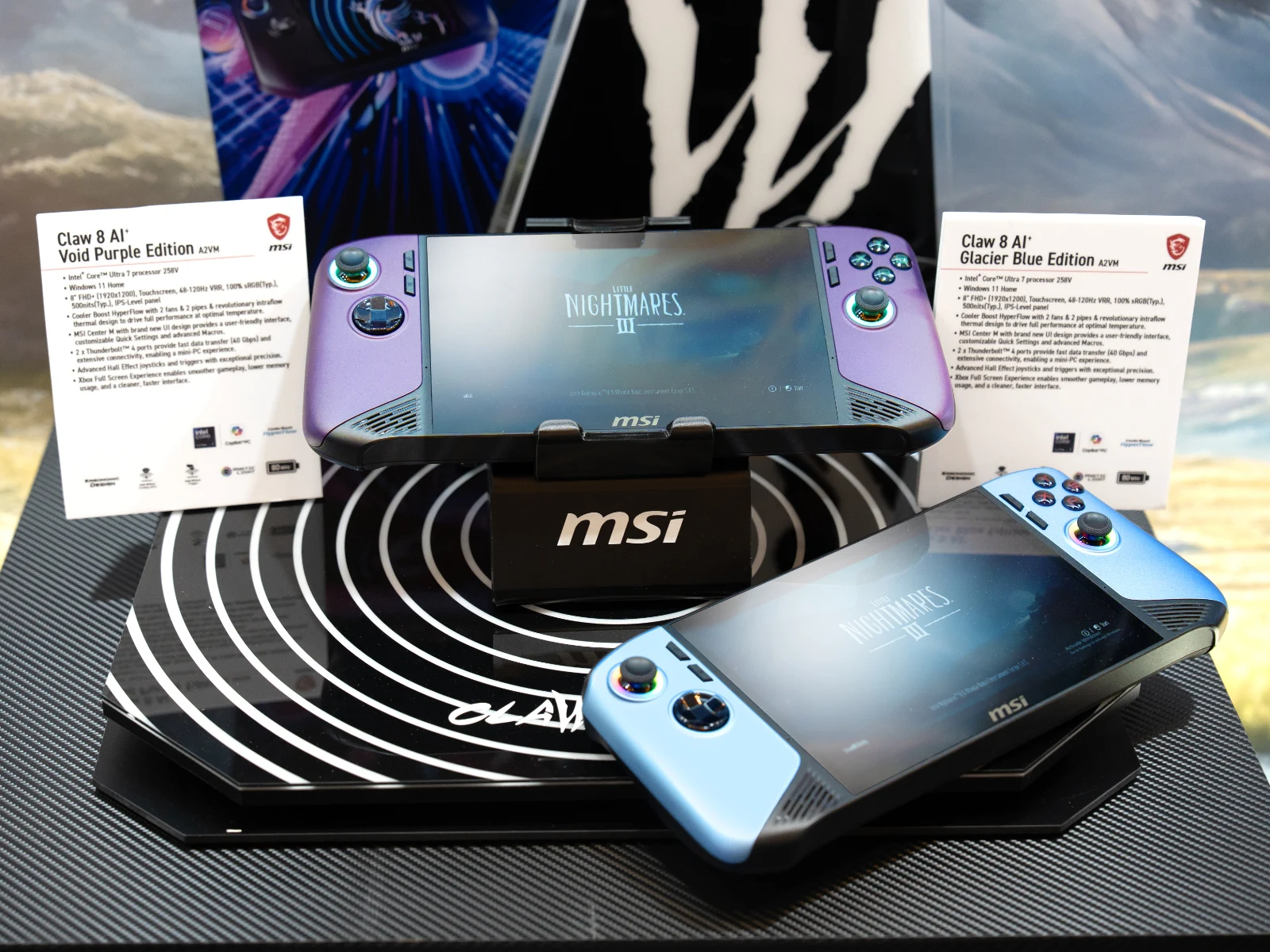
    Sources

  • Core G3: Intel’s Gaming Handheld Chip with Xe2 GPU Leaked

    Core G3: Intel’s Gaming Handheld Chip with Xe2 GPU Leaked

    Key Takeaways

    1. Intel’s Core G3 series is designed specifically for gaming handhelds, featuring a unique architecture based on Panther Lake.
    2. The most powerful Core G3 processor includes two performance cores, eight efficiency cores, and four low-power cores, totaling 14 CPU cores.
    3. The integrated GPU for the G3 series is the Intel Arc B380, which has 12 Xe2 cores and is a lower-clocked version of the Arc B390.
    4. A second chip in the G3 series may include the Intel Arc B360 iGPU, potentially featuring 10 Xe2 cores, although details are limited.
    5. Intel’s entry into the handheld gaming market raises competition against AMD, with the effectiveness of the Core G3 series being critical for challenging AMD’s current dominance.


    Following AMD’s introduction of various Ryzen Z2 series processors aimed at gaming handhelds, Intel is likely to respond, potentially providing enhanced performance and extended battery life for devices like the MSI Claw 8 AI+.

    Intel Core G3 Series Overview

    Recent updates from VideoCardz reveal that the Intel Core G3 series is tailored for gaming handhelds. These processors utilize the same architecture seen in Intel’s Panther Lake, but they aren’t just rebranded Core Ultra 300 chips. The most powerful Intel Core G3 processor is said to have only two performance cores, along with eight efficiency cores and four low-power cores. Panther Lake does not currently have a chip boasting a total of 14 CPU cores. Additionally, the integrated GPU (iGPU) is new; the Intel Arc B380 is noted to be a lower-clocked variant of the Arc B390, featuring 12 Xe2 cores.

    Expected Features and Release

    Anticipation surrounds the Intel Core G3 series, which is believed to also include a second chip that comes with an Intel Arc B360 iGPU. Information regarding this iGPU is scarce, but if it shares similarities with the Arc B370, it would have 10 Xe2 cores. The launch date for the Intel Core G3 series remains uncertain. So far, no new handheld devices powered by Intel processors were unveiled at CES. With Intel now entering the fray against AMD in the handheld sector, it’s unclear if Panther Lake and the Core G3 series will be sufficient to challenge AMD’s stronghold in this area.

    The Future of Gaming Handhelds

    As Intel steps into the handheld gaming market, the competition is heating up. The effectiveness of the Core G3 series and Panther Lake’s offerings will be crucial in determining if they can rival AMD’s existing dominance. The excitement around Intel’s potential innovations could reshape the landscape of gaming handhelds, but only time will tell if they can keep pace with AMD’s advancements.

    Source:
    Link


  • MSI Teases New OLED PC Gaming Handheld Device

    MSI Teases New OLED PC Gaming Handheld Device

    Key Takeaways

    1. The MSI Claw 8 AI+ is highly regarded as a leading PC handheld, outperforming the Claw A1M in many areas.
    2. The Claw 7 AI+ and Claw 8 AI+ have ergonomic and display shortcomings compared to competitors like the Legion Go S and Steam Deck OLED.
    3. MSI is developing a new handheld featuring Intel’s Panther Lake architecture, designed specifically for handheld devices.
    4. Future MSI handhelds may transition to OLED display technology, enhancing visual quality.
    5. Built-in trackpads are unlikely to be included in upcoming models, and the release date for new handhelds is still to be announced.


    The MSI Claw 8 AI+ is still widely recognized as one of the top choices for PC handhelds, outshining the underwhelming Claw A1M in nearly every aspect. Although MSI has introduced the Claw 7 AI+ as a more affordable option, both it and its 8-inch counterpart have their own issues. Nevertheless, there are indications that MSI is working on addressing one of these problems with the upcoming release of another Claw handheld.

    Ergonomics and Displays

    At present, the Claw 7 AI+ and Claw 8 AI+ do not offer the same level of comfort as devices like the Legion Go S, nor do they have the user-friendly software seen in Asus’s line, including the ROG Xbox Ally (currently priced at $589.99 on Amazon). Furthermore, MSI’s existing handhelds lack the impressive displays found in the Steam Deck OLED and the Legion Go 2, as both the Claw 7 AI+ and Claw 8 AI+ utilize IPS panels.

    Future Developments

    Intel has indicated that MSI’s forthcoming PC handheld will incorporate its new Panther Lake architecture, featuring a dedicated processor designed for handhelds. Additionally, MSI’s management has suggested that a transition to OLED display technology is likely. However, it appears that MSI does not plan to include built-in trackpads like those from Valve or Lenovo, judging by the video provided below. The exact launch date for MSI’s next PC handhelds is still unknown, but they are expected to be released sometime later this year. Moreover, specific information regarding the handheld’s processor has yet to be confirmed.

    Source:
    Link


  • New Gaming Handhelds Expected with Intel Panther Lake and Arc B380

    New Gaming Handhelds Expected with Intel Panther Lake and Arc B380

    Key Takeaways

    1. MSI’s Claw 8 AI+ gaming handheld, powered by Intel’s Lunar Lake technology, is priced at $1,199 and will launch in early 2025.
    2. Intel’s Lunar Lake handhelds may soon be succeeded by the Panther Lake series featuring the Arc B380 integrated GPU designed for gaming.
    3. The Arc B380 is expected to have 12 cores and a boost clock speed of 2.3 GHz, enhancing performance for gaming handhelds.
    4. The Arc B380 may integrate 4 Performance cores, 4 Efficient cores, and 4 Low Power Efficient cores for improved efficiency.
    5. The Arc B380 is projected to outperform the Arc 140V in the MSI Claw 8 AI+, while the Arc B390 is expected to be a higher-performing option.


    Well over a year ago, MSI unveiled its first gaming handheld powered by Intel’s Lunar Lake technology. The Claw 8 AI+ (currently priced at $1,199 on Amazon) won’t be available until early 2025, but it stands alongside other Lunar Lake devices like the Claw 7 AI+, OneXPlayer X1 Air, and the upcoming Abxylute 3D One.

    Potential Upgrades on the Horizon

    As reported by VideoCardz, it seems that Intel’s Lunar Lake handhelds might soon be succeeded by the Panther Lake series. The site hints that Intel plans to introduce processors featuring the Arc B380 integrated GPU specifically designed for gaming handhelds. As mentioned yesterday, a source on X, known as OneRaichu, claims that the Arc B380 will have 12 cores based on the Xe3 architecture, with a boost clock speed of 2.3 GHz.

    Uncertainty Surrounding New Processors

    At this point, we do not know what name Intel will give to the processor aimed at gaming handhelds. Meanwhile, Lonely City Hardware suggests that the Arc B380 might integrate 4 Performance cores, 4 Efficient cores, and 4 Low Power Efficient cores to enhance both performance and efficiency. Interestingly, prototypes of the Galaxy Book6 Pro have already shown the Arc B370 and Arc B390 integrated GPUs.

    Performance Expectations

    It’s clear that the Arc B380 is likely to underperform compared to the Arc B390, based on their hierarchy in Intel’s lineup. However, the recent Geekbench 6 OpenCL score for the Arc B390 suggests that the Arc B380 will surpass the performance of the Arc 140V found in the MSI Claw 8 AI+ and other Lunar Lake devices. With Samsung set to launch Panther Lake laptops in January at CES 2026, it wouldn’t be surprising if MSI also revealed a next-gen Claw gaming handheld during the same showcase.


    Source:
    Link


  • $1,000 Gaming Handheld with Windows 11 and Xbox Mode Boosts FPS

    $1,000 Gaming Handheld with Windows 11 and Xbox Mode Boosts FPS

    Key Takeaways

    1. The handheld gaming market is rapidly evolving, with strong competition between Windows and Linux devices, highlighted by the GPD Win 5’s performance running Cyberpunk 2077 at 1080p Ultra.

    2. A performance comparison was conducted among handheld devices with AMD and Intel processors to gauge where a new Xbox-branded model may rank.

    3. Microsoft has introduced a full-screen handheld mode for the MSI Claw series, enhancing the Xbox gaming experience on Windows devices without needing unofficial modifications.

    4. The new full-screen experience on the Claw 8 AI+ reduces background memory usage, allowing for better game performance and resource allocation.

    5. Despite improvements, the Xbox-style launcher still lacks customization options and requires separate launches for some applications, indicating room for further refinements.


    Over the last few months, the handheld gaming market has been changing rapidly, with devices running on both Windows and Linux competing fiercely with one another. The GPD Win 5, equipped with the AMD Strix Halo, has shown off its ability to run Cyberpunk 2077 at 1080p Ultra on SteamOS 3.8, delivering some impressive results.

    Performance Comparisons

    In addition, there was a comprehensive comparison of handheld devices featuring the AMD Ryzen Z1 Extreme, Z2 Extreme, and Intel’s Core Ultra 7 258V. This was done to predict where the new Xbox-branded model might fall in terms of performance, considering it also includes the AMD Ryzen Z2 Extreme APU.

    Enthusiast Tweaks

    On another note, a test with Bazzite, a well-known Linux fork, on the ROG Xbox Ally X demonstrated how dedicated fans are to maximizing performance from these handheld devices by installing a new operating system on an Xbox-branded machine.

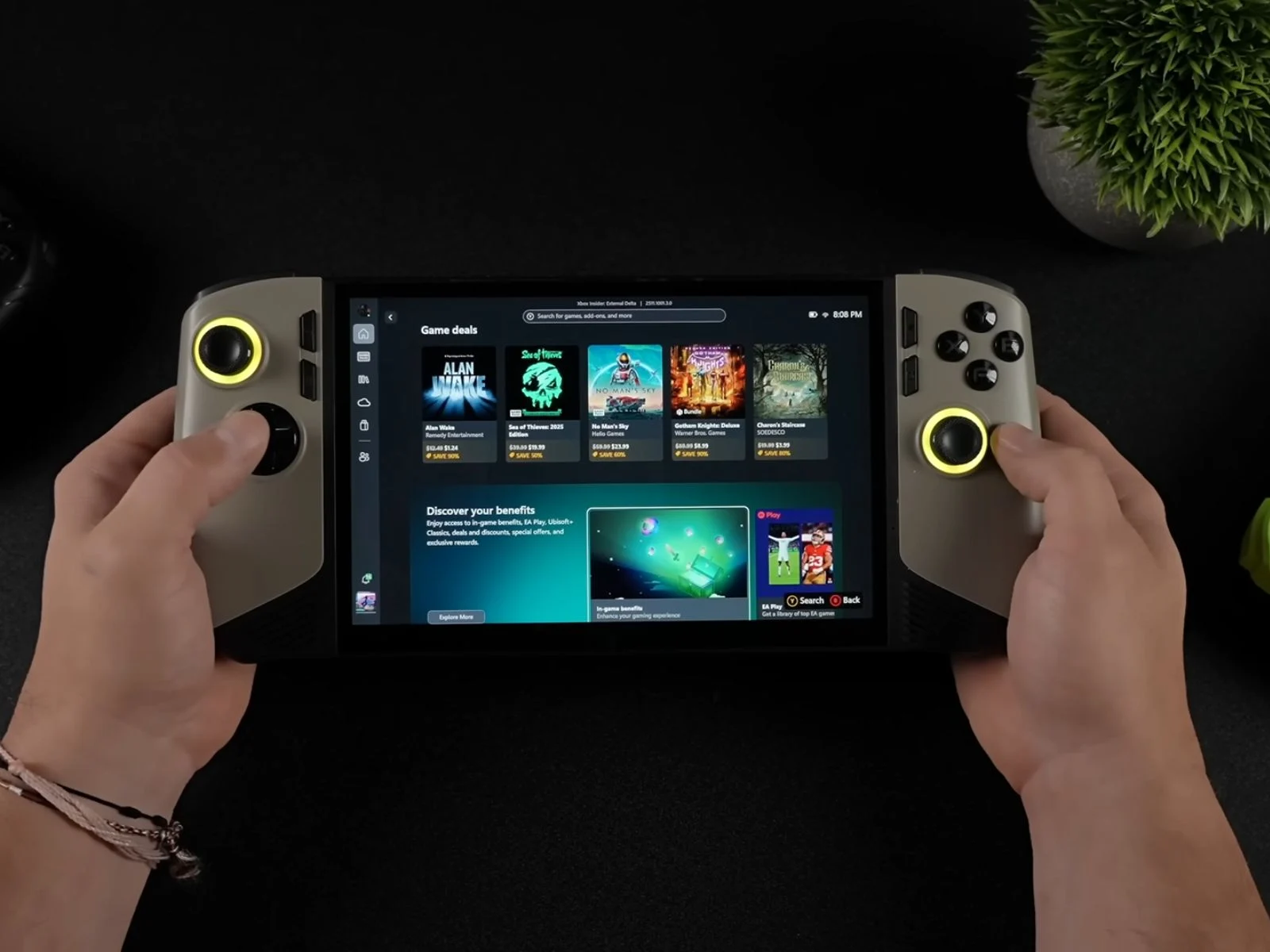
    Now, Microsoft is raising the bar by launching its full-screen handheld mode for the MSI Claw series via the Windows 11 Insider Dev and Beta channels (build 7051). This effectively extends the Xbox full-screen experience beyond just Asus’ ROG Ally devices. It’s an important milestone that acknowledges Windows handhelds as a significant category and eliminates the need for unofficial modifications to access the gaming-optimized interface.

    New User Experience

    YouTuber ETA Prime recently highlighted in a video how this update allows MSI Claw devices, such as the Intel-powered Claw 8 AI+, to enjoy the full-screen experience natively. Users can now boot straight into the new Xbox-like interface, navigate using the device’s buttons, and log in without a keyboard. Although this mode still needs an Insider build, Microsoft has stated that more OEMs will be supported in the upcoming months.

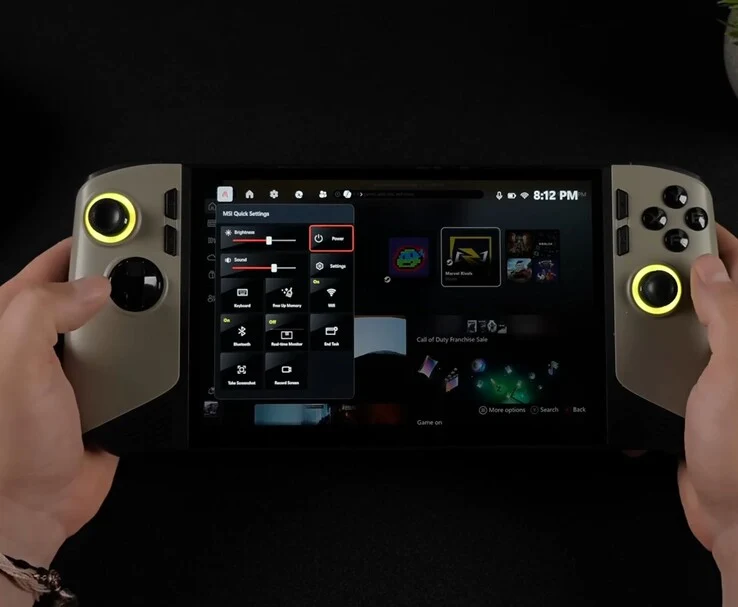
    The interface works well with the Claw’s built-in tools, like MSI Center M, enabling users to adjust TDP and performance settings via the Xbox Game Bar. This creates a more unified experience similar to what SteamOS provides on Valve’s handhelds but is entirely built within Windows.

    Memory Optimization and Performance

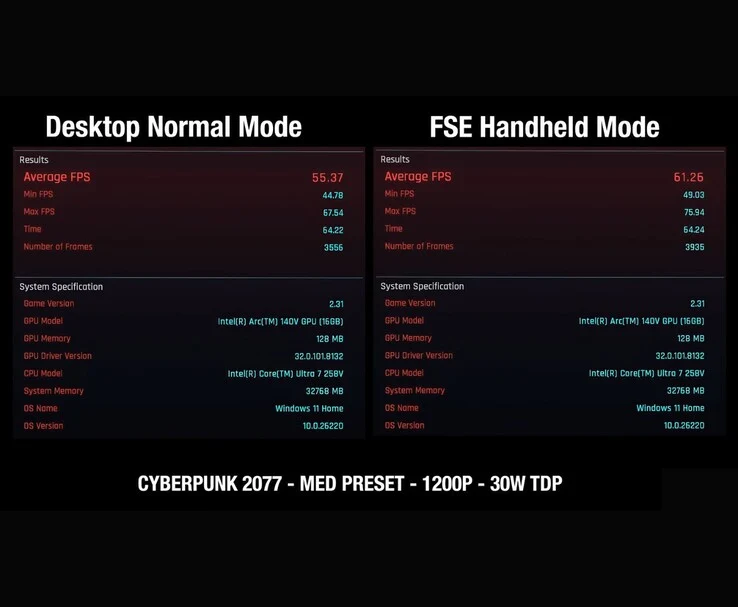
    Testing conducted by ETA Prime on the Claw 8 AI+ indicates that switching from the old desktop mode to the new full-screen experience decreases background memory usage from around 7.3 GB to 6.2 GB, closely aligning with Microsoft’s claim of a 2 GB reduction. This optimization could be especially beneficial for 16 GB models, allowing for more available memory for games or VRAM allocation.

    In terms of performance, games like Cyberpunk 2077 displayed modest yet steady improvements:

    Other titles, such as Forza Horizon 5 and Black Myth: Wukong, also experienced slight boosts, while battery life stayed the same.

    Room for Improvement

    Despite the functional enhancements, ETA Prime points out that the interface still lacks some refinement. The Xbox-style launcher provides limited customization options and only automatically detects game launchers rather than all installed applications. Users who depend on monitoring tools or mod managers will still have to start them separately or through Steam’s non-Steam shortcut feature.

    Nevertheless, ETA Prime emphasizes that this update marks a significant change in Microsoft’s approach to handheld gaming PCs, a sector that has been mainly dominated by Linux-based systems. With broader OEM support on the horizon, handheld gamers can anticipate improved compatibility and similar performance across devices like the MSI Claw, ROG Ally, and others.

    Source:
    Link


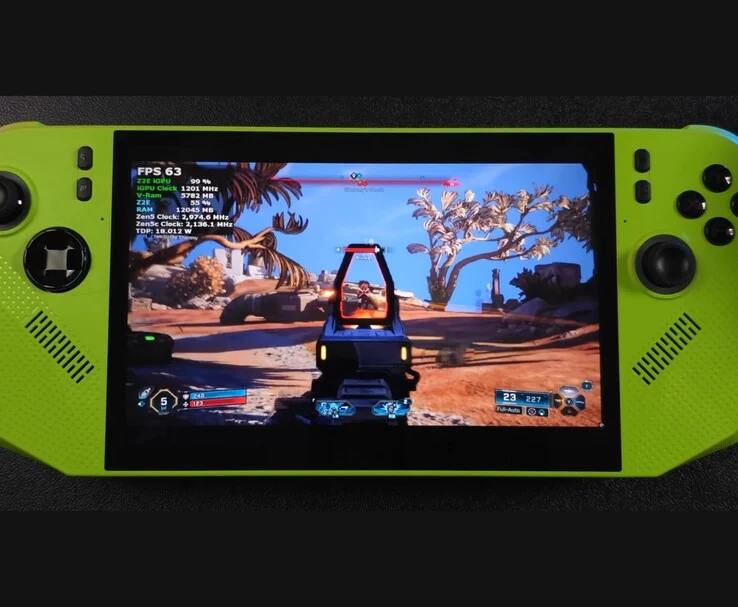
  • Borderlands 4 on MSI Claw 8 AI vs Steam Deck: FPS Comparison

    Borderlands 4 on MSI Claw 8 AI vs Steam Deck: FPS Comparison

    Key Takeaways

    1. Borderlands 4 performs significantly better on the MSI Claw 8 AI with AMD Ryzen Z2 Extreme compared to the Steam Deck.
    2. On the MSI Claw 8 AI, the game can achieve around 30 FPS at 1080p with medium settings, but frame rates drop during action.
    3. Lowering resolution and settings improves performance, but maintaining a steady 60 FPS requires very low resolutions (700p or 800p).
    4. The Steam Deck struggles with Borderlands 4, often hitting only 18-22 FPS, making gameplay challenging even with overclocking.
    5. Both handheld devices highlight that Borderlands 4 may need optimization for better performance on portable hardware.


    YouTuber ETA PRIME has recently tried out Borderlands 4 on the MSI Claw 8 AI, which is driven by the AMD Ryzen Z2 Extreme. The performance of the game is clearly improved when compared to its performance on the Steam Deck. In a prior video, he evaluated Borderlands 4 on the Steam Deck and found that even though the game can be played, the overall experience is not very enjoyable. The conclusion was that players might be better off waiting for a performance patch before jumping in.

    Performance Comparison

    In stark contrast, the MSI Claw 8 AI, equipped with the more robust AMD Ryzen Z2 Extreme APU, shows much better performance. ETA PRIME kicked off his tests at a 1080p resolution with medium graphics settings and FSR scaling set to Balanced. The thermal design power (TDP) was limited to 35 W.

    During this testing phase, Borderlands 4 managed about 30 FPS, but often dropped below that number. It’s important to mention that there was no action happening on screen; the player was just wandering through empty fields. This indicates that when enemies come into play, the frame rate might drop even more.

    Adjusting Settings for Better Performance

    When he reduced the resolution to 1600×900 using medium settings, the performance improved to above 30 FPS, yet the gameplay still felt slow. Turning on frame generation raised the averages close to 50 FPS, but maintaining a steady 60 FPS was challenging. Lowering the settings to low at 900p enhanced performance even more, however, achieving a constant 60 FPS required dropping down to 700p or 800p.

    ETA PRIME also looked into performance at an 18 W TDP. Running with low settings, FSR Balanced, and frame generation, the experience was not significantly different from the 35 W profile, as both were prone to occasional drops below 60 FPS. Nonetheless, this setup provided smoother gameplay than on the Steam Deck, thanks to the Claw’s larger 80 Wh battery which gave decent runtimes.

    Steam Deck Performance Issues

    In ETA PRIME’s previous video, the performance on the Steam Deck was much less impressive. At an 800p resolution with FSR set to Performance, Borderlands 4 often fell between 18-22 FPS, making aiming and combat really difficult. The particle effects caused even more performance issues, and even with frame generation turned on, the game had a hard time reaching 30 FPS. He even overclocked the Steam Deck’s GPU to 1600 MHz, but while frame rates got closer to 40 FPS, heavy input lag and stuttering continued to make the experience quite frustrating.

    In comparison, the Ryzen Z2 Extreme-powered MSI Claw 8 AI performed significantly better with Borderlands 4, although both handheld devices underline that the game wasn’t made for portable hardware. Without further optimization from Gearbox, players using handheld devices might need to depend on lower resolutions and reduced settings to keep the gameplay smoother.

    Source:
    Link


  • MSI Claw 8 AI+ Boosts Performance and Battery Life with New Drivers

    MSI Claw 8 AI+ Boosts Performance and Battery Life with New Drivers

    Key Takeaways

    1. The MSI Claw 8 AI+ received updates that significantly boost gaming performance, particularly with the new Intel graphics driver (version 32.0.101.6987 WHQL).
    2. Forza Horizon shows a performance increase from 66 FPS to 88 FPS at 1200p resolution and Medium settings after the driver update.
    3. Other games also benefit from performance improvements, although specific performance numbers were not provided.
    4. Updates to the MSI Center and BIOS have improved battery life on the MSI Claw 8 AI+, though no direct comparisons were made.
    5. The Intel Core Ultra 7 258V model is more power-efficient at lower TDPs compared to the Z2 Extreme version, which is noted to be slightly superior in early reviews.


    Since it came out, the MSI Claw 8 AI+ has undergone several updates aimed at boosting performance. As shown by ETA Prime, the newest Intel graphics driver, version 32.0.101.6987 WHQL, brings a significant increase in performance for the gaming handheld.

    Performance Benchmarks

    In the recent video, ETA Prime started by testing Forza Horizon at a 17 W TDP, 1200p resolution, and Medium settings. Before the update, the game used to run at an average of 66 FPS, but now, post-update, the handheld is performing at an average of 88 FPS under the same conditions. The YouTuber didn’t offer much in the way of before-and-after comparisons for other games, though.

    General Improvements

    Nonetheless, ETA mentions that the latest driver does improve performance across other titles as well. The additional games tested on the updated gaming handheld included various popular titles, although specific performance numbers weren’t disclosed.

    In addition to the performance enhancements, ETA Prime also pointed out that updates to the MSI Center and BIOS have led to better battery life. While a direct before-and-after comparison wasn’t conducted, battery tests were performed on the updated Core Ultra 258V-powered MSI Claw 8 AI+.

    Battery Life Testing

    The games used for battery life benchmarking had the screen brightness set at 50%, a refresh rate of 60 Hz, and fan settings on auto. Plus, WiFi, Bluetooth, and RGB lighting were all kept enabled. Here’s how the battery life varied at different TDP levels:

    Overall, the Intel Core Ultra 7 258V gaming handheld appears to perform better now than it did at launch, thanks to these updates. Early reviews suggest that the Z2 Extreme version of the MSI Claw might be slightly superior, but it’s important to note that the Intel model is more power-efficient at lower TDPs. For more information, check out ETA Prime’s latest video on YouTube.

    Source:
    Link


  • $1,050 Xbox ROG Ally X May Be Weaker Than Older Handhelds

    $1,050 Xbox ROG Ally X May Be Weaker Than Older Handhelds

    Key Takeaways

    1. The Xbox ROG Ally X is anticipated to be less powerful than the MSI Claw 8 AI+.
    2. In gaming performance tests, the Intel Core Ultra 7 258V outperformed the AMD Ryzen Z1 Extreme in several scenarios.
    3. Benchmark results showed the Intel Core Ultra 7 258V leading in single-core performance, while Ryzen chips excelled in multi-core performance.
    4. The Intel Arc iGPU demonstrated strong performance in gaming tests, often matching or exceeding AMD chips.
    5. The MSI Claw 8 AI+ offers better specifications, such as more RAM and a larger display, compared to the upcoming Xbox ROG Ally X.


    The new Xbox ROG Ally X handheld gaming device is expected to be less powerful than the older MSI Claw 8 AI+. The Intel Core Ultra 7 258V APU in the latter has improved significantly since its debut, now competing closely with AMD’s latest Ryzen Z2 Extreme APU, which will power the Xbox ROG Ally X as well.

    YouTuber Comparison

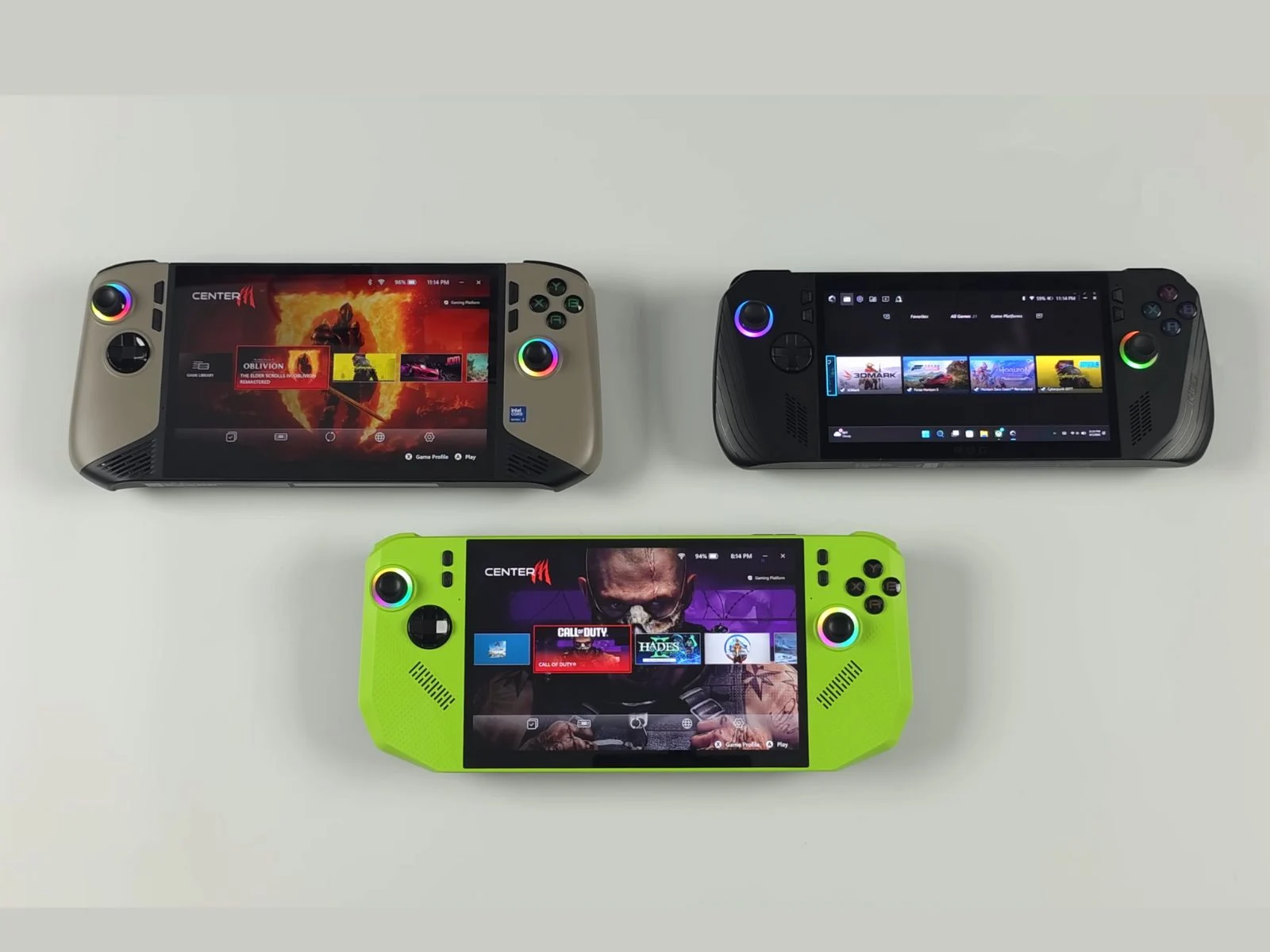
    YouTuber ETA PRIME recently showcased the gaming performance of three leading handheld consoles in the market. This comparison included the MSI Claw A8 with the AMD Ryzen Z2 Extreme, the MSI Claw 8 AI+ featuring the Intel Core Ultra 7 258V, and the ASUS ROG Ally X which utilizes the AMD Ryzen Z1 Extreme APU.

    The YouTuber conducted various tests involving synthetic benchmarks and in-game frame rates across popular titles like Cyberpunk 2077, Shadow of the Tomb Raider, and Forza Horizon 5, yielding some unexpected results.

    Benchmarking Performance

    In the Geekbench 6 tests, the Intel Core Ultra 7 258V took the lead in both single-core and multi-core evaluations, achieving scores of 2,712 and 8,247 at a 17 W TDP. However, at a 25 W power draw, the performance for single-core was nearly the same for both the Ryzen Z2 Extreme and the Core Ultra 7 258V, with the former at 2,766 and the latter at 2,746.

    The Ryzen Z1 Extreme lagged behind in single-core performance during both scenarios, scoring 2,379 at 25 W and 1,795 at 17 W. Nevertheless, in multi-core scores at 25 W, the Ryzen chips regained the advantage, with the Z1 and Z2 Extreme scoring 10,434 and 11,163, respectively, while the 258V trailed with a score of 9,957.

    GPU Testing Results

    During the 3DMark Time Spy GPU assessment, the Intel Arc iGPU outperformed its AMD counterparts. However, ETA PRIME pointed out that these results may not accurately represent real gaming experiences. “Synthetic scores usually favor Intel’s 140V GPU, but they don’t necessarily mean better gaming performance,” the YouTuber mentioned.

    In subsequent gaming tests, the Intel Arc 140V iGPU managed to match or exceed the performance of the AMD chips.

    In Cyberpunk 2077 at 1080p Steam Deck settings, the Intel chip recorded an average of 54 FPS at 25 W, which surpassed the Z2 Extreme’s 46 FPS and the Z1 Extreme’s 41 FPS. In Shadow of the Tomb Raider, the Z2 Extreme marginally outperformed the Intel chip at 17 W but fell short at 25 W, scoring just 1 FPS less than the 258V.

    Forza Horizon 5 Performance

    While testing Forza Horizon 5 at 1080p resolution, medium settings, and a 25 W power draw, the 258V achieved 83 FPS, outpacing the Ryzen Z1 and Z2 Extreme, which scored 76 and 80 FPS, respectively. However, when the power draw was reduced to 17 W, the 258V’s score dropped to 73 FPS, just shy of the Z1 Extreme’s 74 FPS.

    In Black Myth: Wukong, ETA PRIME employed upscaling without frame generation. At 25 W power draw and low settings at 1080p with 60% resolution scaling, the 258V scored 50 FPS, again surpassing the Ryzen Z1 Extreme’s 44 FPS and the Z2 Extreme’s 49 FPS. Yet, at 17 W under the same conditions, the Z2 Extreme once more surpassed the 258V by a single FPS.

    However, during this segment of the video, a misleading graph was displayed, as ETA PRIME indicated that the Z2 Extreme edged out the 258V by 1 FPS, while the graph showed both achieving 43 FPS at 17 W in Black Myth: Wukong.

    Final Thoughts

    Finally, the YouTuber assessed Horizon Zero Dawn Remastered, where all three handheld consoles struggled, with the best average FPS at 1080p low being just 37, achieved by the 258V, while the Z1 and Z2 Extreme managed only 31 and 30 FPS, respectively.

    ETA PRIME highlighted Intel’s notable driver enhancements, claiming frame rates have substantially increased since the 140V’s original launch. “If you’re opting for AMD, the Z2 Extreme is the better choice right now, unless you find a fantastic deal on a Z1 device,” they stated.

    I would also suggest that if you’re anticipating the Xbox ROG Ally X thinking it will deliver much better performance than current options, it might be wise to check out what’s already on the market.

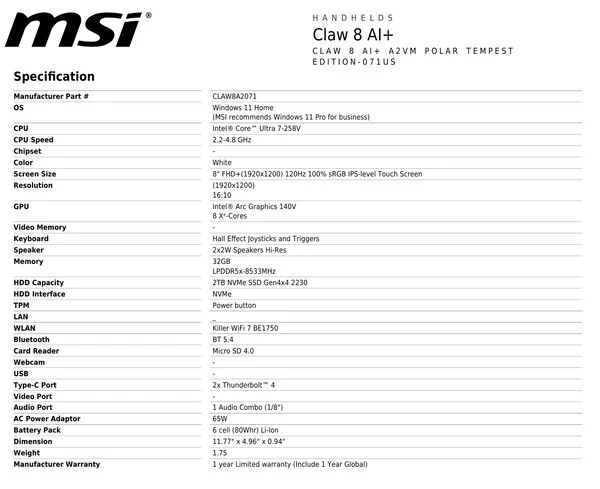
    The older Intel Core Ultra 7 258V seems to be matching the performance of the latest AMD Ryzen Z2 Extreme. Moreover, the MSI Claw 8 AI+ (currently priced at $1,032 on Amazon) offers 32 GB of RAM and a larger 8-inch display, while the upcoming Xbox ROG Ally X will only feature 24 GB of memory and a slightly smaller 7-inch display. For a clearer understanding of the MSI Claw 8 AI+ performance, you can view ETA PRIME’s video below.

    Source:
    Link


  • MSI Claw 8 AI+ Polar Tempest Edition Returns for Global Release

    MSI Claw 8 AI+ Polar Tempest Edition Returns for Global Release

    Key Takeaways

    1. The MSI Claw 8 AI+ and Polar Tempest Edition are hard to find since their launches, with the Polar Tempest Edition recently reintroduced.
    2. MSI has created a dedicated product page for the Polar Tempest Edition, marking its official return after being removed from retailers.
    3. The Polar Tempest Edition is set to launch in the U.S. on July 15, featuring upgraded specs like 2 TB of storage and a new model name.
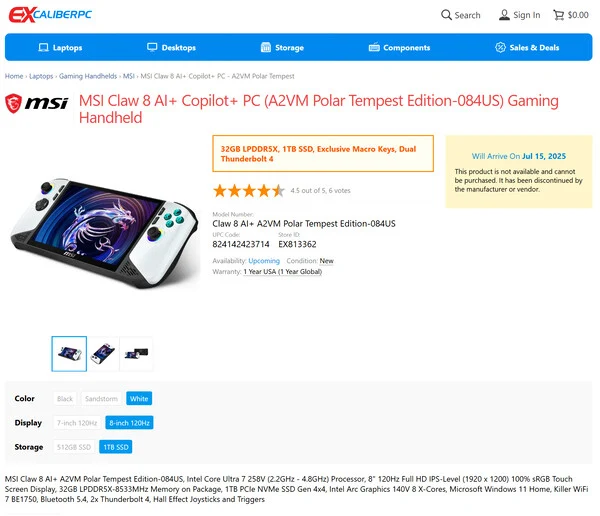
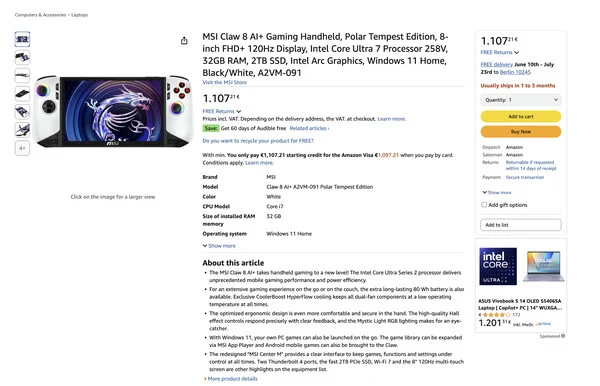
    4. The pricing for the Polar Tempest Edition remains at $999 in the U.S., while it has been listed at €1,107 on Amazon Germany.
    5. The new version is expected to arrive in Europe this summer, with no current listings in other countries.


    The MSI Claw 8 AI+ continues to be hard to find for many people, even though it was officially introduced towards the end of last year. The Polar Tempest Edition of this handheld is even harder to catch, as it was launched in early April but was quickly taken down from MSI’s website and also from retailer Excalibur PC.

    Official Return of Polar Tempest Edition

    Now, the Polar Tempest Edition seems to be back with what looks like an official launch. In the past, MSI only had links to buy this version through other retailers. However, the company has now set up a specific product page for the Polar Tempest Edition, which wasn’t available just a month ago.

    Release Date and Specs

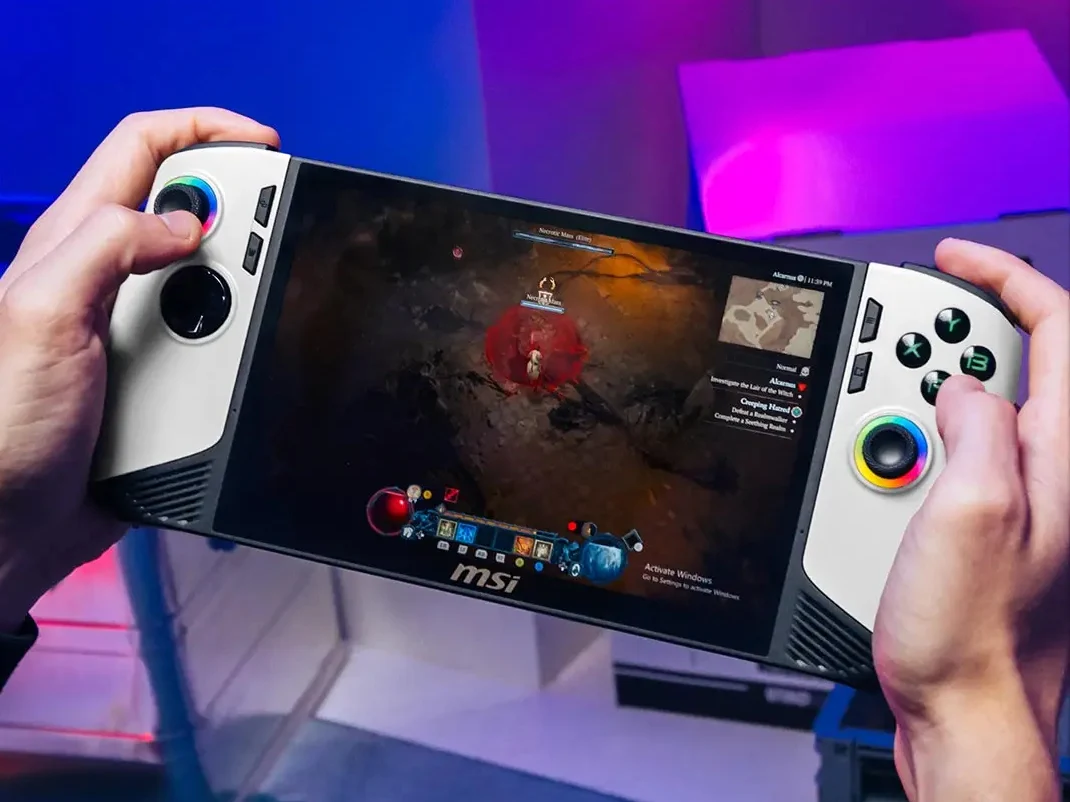
    MSI is expected to launch the Polar Tempest Edition on July 15 in the United States, featuring white front panels and offering 2 TB of storage, which is an upgrade from the original Sandstorm model. The pricing is still set at $999, and the model name has been updated from Polar Tempest Edition-071US to Polar Tempest Edition-084US.

    Availability in Europe

    Interestingly, this new version has been spotted on Amazon Germany with a listing price of €1,107. Currently, there are no similar listings in other countries. Nevertheless, Amazon Germany indicates that the Polar Tempest Edition is likely to arrive in Europe this summer. For more details, you can check our earlier review of the Claw 8 AI+, where we share our opinions on MSI’s first 8-inch gaming handheld, which is a strong competitor to the Lenovo Legion Go S in terms of size. (curr. $623 on Amazon).

    Source:
    Link


  • Intel Lunar Lake Boosts Gaming Performance by 10% with Update

    Intel Lunar Lake Boosts Gaming Performance by 10% with Update

    Key Takeaways

    1. Intel released driver update version 6734 on April 8th, enhancing gaming performance for Arc 130V and Arc 140V models.
    2. Benchmark tests show an average frame rate increase of 10% and a 25% rise in average 1% low frame rate for the Arc 140V with the new driver.
    3. Testing was conducted on an MSI Claw 8 AI+ with an Intel Core Ultra 7 258V at 1080p with medium settings.
    4. The latest driver version (6739) primarily fixed bugs, with no major performance changes expected.
    5. Intel has significantly improved gaming performance through driver updates, achieving frame rate boosts over 700% in some games.


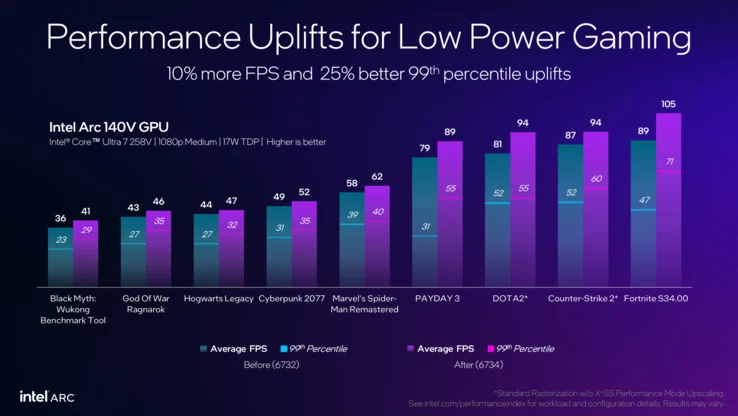
    Once again, Intel is striving to showcase its ongoing efforts in updating drivers to enhance gaming performance for its graphics chipsets. In a recent blog entry, Intel asserts that driver update version 6734, released on April 8th, significantly boosts gaming performance for the Intel Arc 130V and Arc 140V models.

    Benchmark Insights

    To back up this assertion, Intel has shared gaming benchmarks, shown below, illustrating the performance of the Intel Arc 140V using both the new driver and the previous version (6732) from April 2nd. The company tested nine games and found that the update has led to an average frame rate increase of 10%. Interestingly, the average 1% low frame rate has also seen a rise of 25%.

    Testing Setup

    These benchmarks were carried out using an MSI Claw 8 AI+ (starting at $999 at Best Buy) alongside an Intel Core Ultra 7 258V with a thermal design power (TDP) of 17 watts. The games were tested at 1080p with medium settings and no XeSS upscaling. Although Intel has just revealed these benchmark results, the driver version 6734 is already considered outdated. However, since the most recent graphics driver (version 6739) mainly addressed some bugs, there should not be any major performance changes.

    Ongoing Improvements

    It’s common for Intel to make substantial improvements to gaming performance through driver updates for its GPUs. Over the past few years, the company has achieved frame rate boosts exceeding 700% in specific games through new drivers. This has often been due to initial poor optimization. Nonetheless, with these updates, the MSI Claw 8 AI+ featuring Intel Lunar Lake is gradually becoming a more appealing option compared to gaming handhelds that utilize AMD Ryzen chipsets.

    Source:
    Link