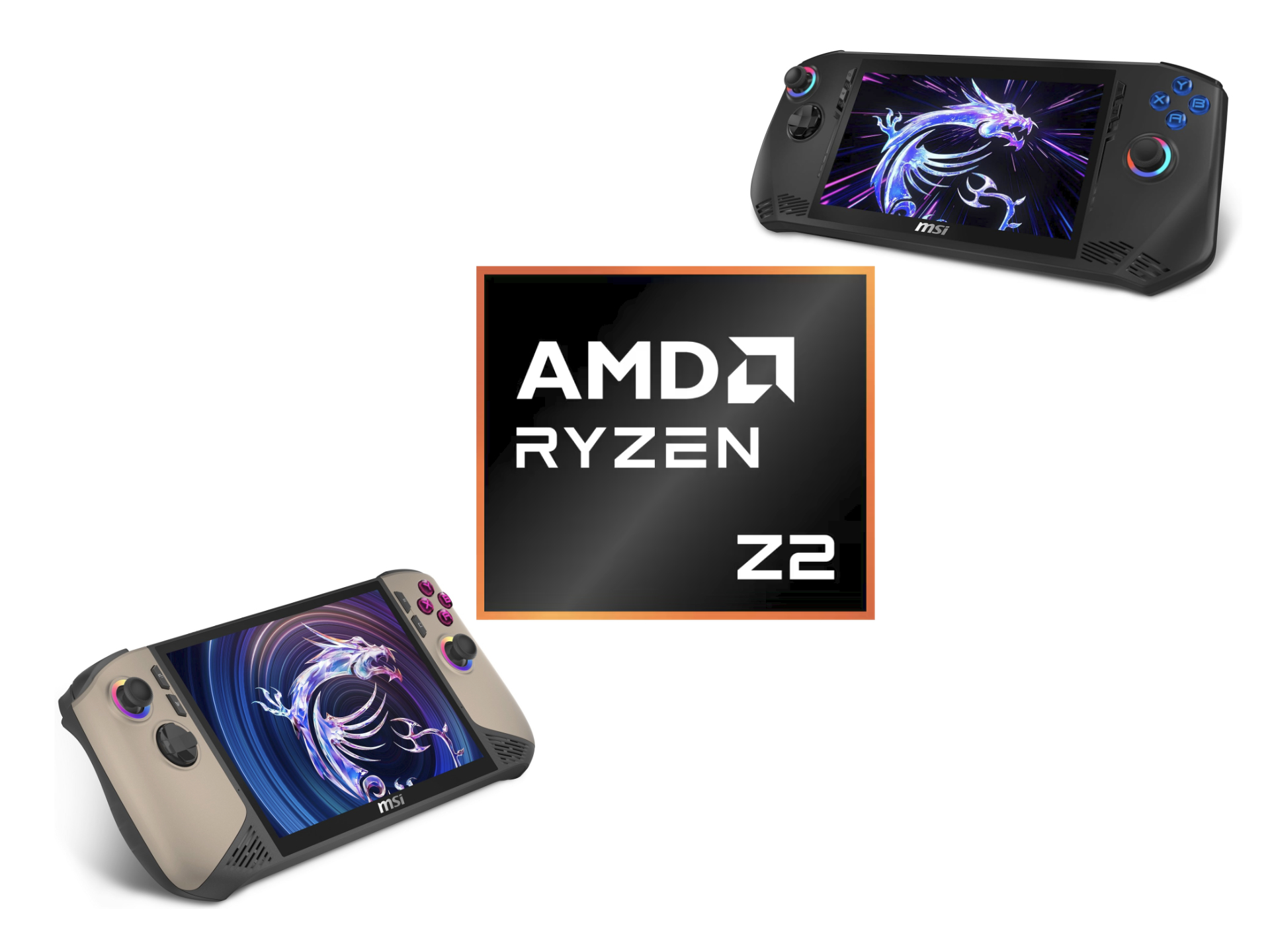
Tag: AMD Ryzen Z2

  • PC price hikes make Switch 2 the best handheld value

    Key Takeaway

    – Nintendo Switch 2 outperforms both Steam Deck and entry-level PC handhelds in gaming performance.
    – Switch 2’s price-for-performance is superior; PC handhelds only beat it at $1000+.
    – Developer tailoring and “mini DLSS” on Switch 2 make pricier PC handhelds hard to justify.
    – Steam Deck OLED’s $549 launch was once a strong value; Switch 2 now flips the script.
    – Lack of OLED display is Switch 2’s only major weakness versus PC handhelds.


    Nobody likes price hikes, and both the Steam Deck and Nintendo Switch 2 have seen substantial price increases since launch—but Nintendo Switch 2’s was executed in such a way that the handheld still provides a more performant gaming experience versus cheaper PC handhelds from Anbernic and even more expensive handhelds like the ROG Xbox Ally.

    Gaming Performance Compared to PC Handhelds

    In terms of pure gaming performance, the Nintendo Switch 2 handily outclasses both the AMD Ryzen Z2 A leveraged by most entry-level PC handhelds and the custom AMD “Aerith” SoC used by the Steam Deck. PC handhelds don’t get stronger than the Nintendo Switch 2 until you start breaching AMD Z1 and Z2 Extreme-based handhelds…and those are scarcely available below $1000 if you’re not buying used. Add in Nintendo Switch 2’s developer tailoring and “mini DLSS”, and it becomes difficult to justify spending twice as much for only marginal performance gains in titles like Cyberpunk 2077.

    From a PC Gamer’s Perspective

    As a lifelong PC gamer, its an unfortunate admission for me to make that Nintendo Switch 2 has effectively flipped the script from when the Steam Deck launched. While Steam Deck LCD was indeed slightly more expensive than the Switch 1 at $399 USD over $299, it was substantially more powerful in the same games and included tons of extra features thanks to being a fully-fledged PC beneath its controller-friendly SteamOS interface.

    Steam Deck OLED’s launch at $549 changed the argument slightly, but with Switch OLED costing $349, the argument to spend $200 on a powerful handheld PC rather than Switch’s antiquated Tegra X1 chipset was strong. Steam Deck OLED’s launch pricing was so strong, even, that technically-superior handheld PCs without OLED screens struggled to compete with the device.

    Current State of Handheld Pricing

    Even now, handheld PCs launching without an OLED display are criticized for cost-cutting even as they push 1080p and 120-144 Hz. That omission is really the only major weakness of Switch 2 compared to PC handhelds at this point, but Nintendo’s latest & greatest is running circles around them when it comes to price-for-performance. Sadly for handheld gamers, handheld PCs have become harder than ever to justify buying.

    Sources
    • Core G3: Intel’s Gaming Handheld Chip with Xe2 GPU Leaked

      Core G3: Intel’s Gaming Handheld Chip with Xe2 GPU Leaked

      Key Takeaways

      1. Intel’s Core G3 series is designed specifically for gaming handhelds, featuring a unique architecture based on Panther Lake.
      2. The most powerful Core G3 processor includes two performance cores, eight efficiency cores, and four low-power cores, totaling 14 CPU cores.
      3. The integrated GPU for the G3 series is the Intel Arc B380, which has 12 Xe2 cores and is a lower-clocked version of the Arc B390.
      4. A second chip in the G3 series may include the Intel Arc B360 iGPU, potentially featuring 10 Xe2 cores, although details are limited.
      5. Intel’s entry into the handheld gaming market raises competition against AMD, with the effectiveness of the Core G3 series being critical for challenging AMD’s current dominance.


      Following AMD’s introduction of various Ryzen Z2 series processors aimed at gaming handhelds, Intel is likely to respond, potentially providing enhanced performance and extended battery life for devices like the MSI Claw 8 AI+.

      Intel Core G3 Series Overview

      Recent updates from VideoCardz reveal that the Intel Core G3 series is tailored for gaming handhelds. These processors utilize the same architecture seen in Intel’s Panther Lake, but they aren’t just rebranded Core Ultra 300 chips. The most powerful Intel Core G3 processor is said to have only two performance cores, along with eight efficiency cores and four low-power cores. Panther Lake does not currently have a chip boasting a total of 14 CPU cores. Additionally, the integrated GPU (iGPU) is new; the Intel Arc B380 is noted to be a lower-clocked variant of the Arc B390, featuring 12 Xe2 cores.

      Expected Features and Release

      Anticipation surrounds the Intel Core G3 series, which is believed to also include a second chip that comes with an Intel Arc B360 iGPU. Information regarding this iGPU is scarce, but if it shares similarities with the Arc B370, it would have 10 Xe2 cores. The launch date for the Intel Core G3 series remains uncertain. So far, no new handheld devices powered by Intel processors were unveiled at CES. With Intel now entering the fray against AMD in the handheld sector, it’s unclear if Panther Lake and the Core G3 series will be sufficient to challenge AMD’s stronghold in this area.

      The Future of Gaming Handhelds

      As Intel steps into the handheld gaming market, the competition is heating up. The effectiveness of the Core G3 series and Panther Lake’s offerings will be crucial in determining if they can rival AMD’s existing dominance. The excitement around Intel’s potential innovations could reshape the landscape of gaming handhelds, but only time will tell if they can keep pace with AMD’s advancements.

      Source:
      Link


    • Lenovo Legion Go 2 (Ryzen Z2) Gaming Performance in Top Titles

      Lenovo Legion Go 2 (Ryzen Z2) Gaming Performance in Top Titles

      Key Takeaways

      1. The Lenovo Legion Go 2 is an affordable handheld gaming PC featuring AMD’s Ryzen Z2 APU, offering multiple performance modes to optimize power usage.
      2. Performance modes include Quiet Mode (8 W), Balanced Mode (16 W), Performance Mode (up to 20 W), and Custom Mode (temporary boosts up to 45 W).
      3. The device allows customization of fan settings and performance through the Legion Space menu, with features like adjustable refresh rates and performance monitoring.
      4. In performance tests, it achieved a Geekbench score of about 2,444 (single-core) and 11,000 (multi-core), and scored 3,285 in 3DMark Time Spy at a TDP of 25 W.
      5. Priced at $1,099.99, the Legion Go 2 has an 8.8-inch OLED screen with a 144 Hz refresh rate and detachable controllers, but alternatives like the MSI Claw 8 AI+ offer better specs for a slightly higher price.


      YouTuber ETA PRIME has taken an in-depth look at the Lenovo Legion Go 2, highlighting its performance and how it manages heat. This handheld gaming PC, which runs on AMD’s Ryzen Z2 APU, stands out as the most affordable option in Lenovo’s second-gen Legion Go series.

      Performance Profiles

      The Legion Go 2 comes with multiple performance modes, enabling gamers to adjust the TDP (Thermal Design Power) based on what they’re playing. When in Quiet Mode, it limits power usage to 8 W, which is ideal for 2D games and emulators. Balanced Mode increases this limit to 16 W, while Performance Mode can pull 20 W from the battery and even more when connected to a power source. There’s also a Custom Mode that allows for temporary power boosts of up to 45 W (FPPPT for 10 seconds), 37 W (SPT for 2 minutes), or a steady 35 W (SPL).

      Customization Options

      Gamers can also tweak fan settings and quickly adjust performance through the Legion Space menu, which offers instant toggles for refresh rates (between 60–144 Hz), brightness, Bluetooth, and tools for performance monitoring.

      In performance tests, ETA PRIME managed to achieve a Geekbench 6 score of about 2,444 for single-core and around 11,000 for multi-core in Performance Mode. When running 3DMark Time Spy with a TDP of 25 W, the Legion Go 2 hit a score of 3,285 points, putting it slightly ahead of devices powered by the Ryzen Z1.

      Game Performance Insights

      From the testing done, ETA PRIME noted that while the Ryzen Z2 version is a bit behind the Z2 Extreme at lower TDP levels, it still delivers solid efficiency and playable frame rates for most AAA games. The current price for the Legion Go 2 is set at US $1,099.99 at Best Buy. It boasts an 8.8-inch OLED screen with a refresh rate of 144 Hz and detachable controllers, offering a high-quality feel even though it’s labeled as ‘entry-level.’ That said, some may find better options like the MSI Claw 8 AI+, which is priced at US $1,184.85 on Amazon. This alternative comes with additional RAM and a more robust APU for a slightly increased cost.

      Source:
      Link


    • Lenovo Justifies Legion Go 2’s Price for Dedicated Gamers

      Lenovo Justifies Legion Go 2’s Price for Dedicated Gamers

      Key Takeaways

      1. The Legion Go 2 is priced at $1,100 for the base model and $1,350 for the Ryzen Z2 Extreme variant, which has upset many fans due to its high cost compared to other handhelds.
      2. It features an 8-inch 2K OLED screen, 144 Hz refresh rate, and detachable controllers, making it a high-end gaming device.
      3. Lenovo aims the Legion Go 2 at “enthusiast gamers” willing to invest in premium gaming experiences, despite the small target market.
      4. Advanced components like the SoC and OLED technology contribute to the device’s elevated price, justifying it in Lenovo’s view.
      5. The Legion Go 2 will support the Xbox full-screen experience (FSE) starting in spring 2026, enhancing gaming performance compared to other models.


      Lenovo has just announced the Legion Go 2, which is the new version of its handheld gaming device that was launched nearly two years ago. This updated model comes with a much steeper price compared to its predecessor and even against some of the newer handhelds on the market. Many fans who were eagerly awaiting the Legion Go 2 are upset about the starting price of $1,100, but Lenovo seems confident about the value they’re offering with this device.

      Models and Pricing

      The Legion Go 2 features two different versions: one equipped with the AMD Ryzen Z2 and another with the Z2 Extreme SoC. Both versions include an 8-inch 2K OLED screen that refreshes at 144 Hz, along with detachable controllers. The Ryzen Z2 Extreme variant is set at $1,350 and includes 32 GB of RAM and 1 TB of storage. In contrast, the MSI Claw A8, which has the Z2 Extreme, 24 GB of RAM, and a non-OLED 1,200p display (with a lower refresh rate), retails for £850 (about $1,151 USD).

      Justifying the Cost

      Lenovo has defended the high price, which is comparable to gaming laptops. In a recent group interview with PC Watch in Japan, several Lenovo executives were questioned about the pricing and whether it might discourage potential buyers. They replied (translated by machines) that the Legion Go 2 is aimed at “enthusiast gamers who are prepared to invest in their hobbies.” Although this market segment may be small, they believe it holds significant importance.

      Performance Features

      The company pointed out that the advanced components, like the SoC and OLED technology, are the reasons behind the Legion Go 2’s high cost. For those who prefer a different handheld gaming experience, Lenovo recommends the Legion Go S (available on Amazon).

      As per The Verge, the Legion Go 2 will be the first handheld, apart from the Asus ROG Xbox Ally and Ally X, to support the Xbox full-screen experience (FSE). This feature won’t be available at launch but is expected to roll out in spring 2026. The FSE is designed to optimize resources, which could lead to better gaming performance. Nonetheless, other more affordable handhelds, like the ROG Ally X, are also expected to receive the Xbox FSE eventually.

      Source:
      Link


    • Lenovo Legion Go 2 Leaked Video Shows 144Hz VRR OLED Display

      Lenovo Legion Go 2 Leaked Video Shows 144Hz VRR OLED Display

      Key Takeaways

      1. The Legion Go 2 was first shown as a prototype at CES 2025, alongside the Legion Go S, priced at $649 on Amazon.
      2. A Lenovo customer service representative hinted that the Legion Go 2 might launch in September, with a showcase planned during the IFA 2025 event from September 5 to 9 in Berlin.
      3. New images have emerged, revealing the Legion Go 2 features six programmable buttons on the controllers.
      4. A leaked promotional video confirms a fingerprint scanner will be integrated into the power button, which was not present in the original Legion Go.
      5. The Legion Go 2 will be powered by AMD’s Ryzen Z2 Extreme APU, and there may also be a less powerful variant based on the Ryzen Z2.


      The Legion Go 2 has been anticipated for a while now. It was first presented in prototype form at CES 2025 alongside the Legion Go S, which is currently priced at $649 on Amazon. Since then, Lenovo has not provided any updates on the release of the Legion Go 2. However, a customer service representative from Lenovo Latin America hinted in late spring that the launch could happen sometime in September.

      Upcoming Showcase

      It seems that the representative was indeed close to the mark. According to Evan Blass, Lenovo plans to showcase the Legion Go 2 during its IFA 2025 event. This means that we can expect more updates on this highly awaited gaming handheld in just about a week. For now, Lenovo hasn’t officially confirmed this information. Nevertheless, their IFA 2025 event page suggests that they will be showcasing new Legion and Legion Gaming products from September 5 to September 9 in Berlin.

      New Features Revealed

      In the meantime, Evan Blass has also released fresh images of the Legion Go 2, displaying it from various angles. These images reveal that Lenovo’s upcoming high-end gaming handheld is equipped with six programmable buttons: two located on the edge of the right controller and two sets positioned on the back of both controllers.

      Exciting Additions

      Furthermore, a first leaked promotional video confirms the presence of a fingerprint scanner integrated into the power button of the Legion Go 2, a feature that was absent on the original Legion Go. The video also emphasizes that the Legion Go 2 will be powered by AMD’s Ryzen Z2 Extreme APU, which is the same chip used in the Asus ROG Xbox Ally X. Recent leaks suggest that Lenovo also at least created a prototype of a less powerful variant based on the Ryzen Z2.

      Source:
      Link


    • MSI Claw Rumors: AMD Ryzen Z2 Upgrades Coming Soon

      MSI Claw Rumors: AMD Ryzen Z2 Upgrades Coming Soon

      MSI is presenting updated versions of its Claw gaming handhelds at CES 2025 in Las Vegas this week, along with various other new gadgets. To give some context, the company first launched the Claw 8 AI+ A2VM in the US at the end of November, right alongside the smaller Claw 7 AI+ A2VM (currently priced at $799.99 on Amazon). However, a worldwide release is planned for later this quarter.

      New Developments in Handheld Gaming

      Both versions came out less than a year after MSI introduced the Claw 7 A1M. However, speculation about an AMD Ryzen update has already started circulating online. Specifically, there are whispers that MSI might be working on handhelds based on the Ryzen Z2. Yet, it’s still uncertain whether this includes the more robust Ryzen Z2 Extreme that AMD announced this week.

      Unclear Specifications and Models

      Furthermore, there are no specifics available on whether this update will be limited to a certain Claw model or if it will be available for both the 7-inch and 8-inch versions of MSI’s offerings. Additionally, there is no information yet regarding the release date for this anticipated AMD Ryzen Z2 upgrade.

      Trustworthy Sources and Caution

      The rumor appears to have come from CodeCommando, known for accurately leaking details about future AMD and MSI products. Still, it’s wise to remain somewhat skeptical for the moment, especially since MSI has historically committed to using Intel processors in its gaming handheld lineup.

      Source: Link


      Image 1