Tag: Handheld Gaming PC

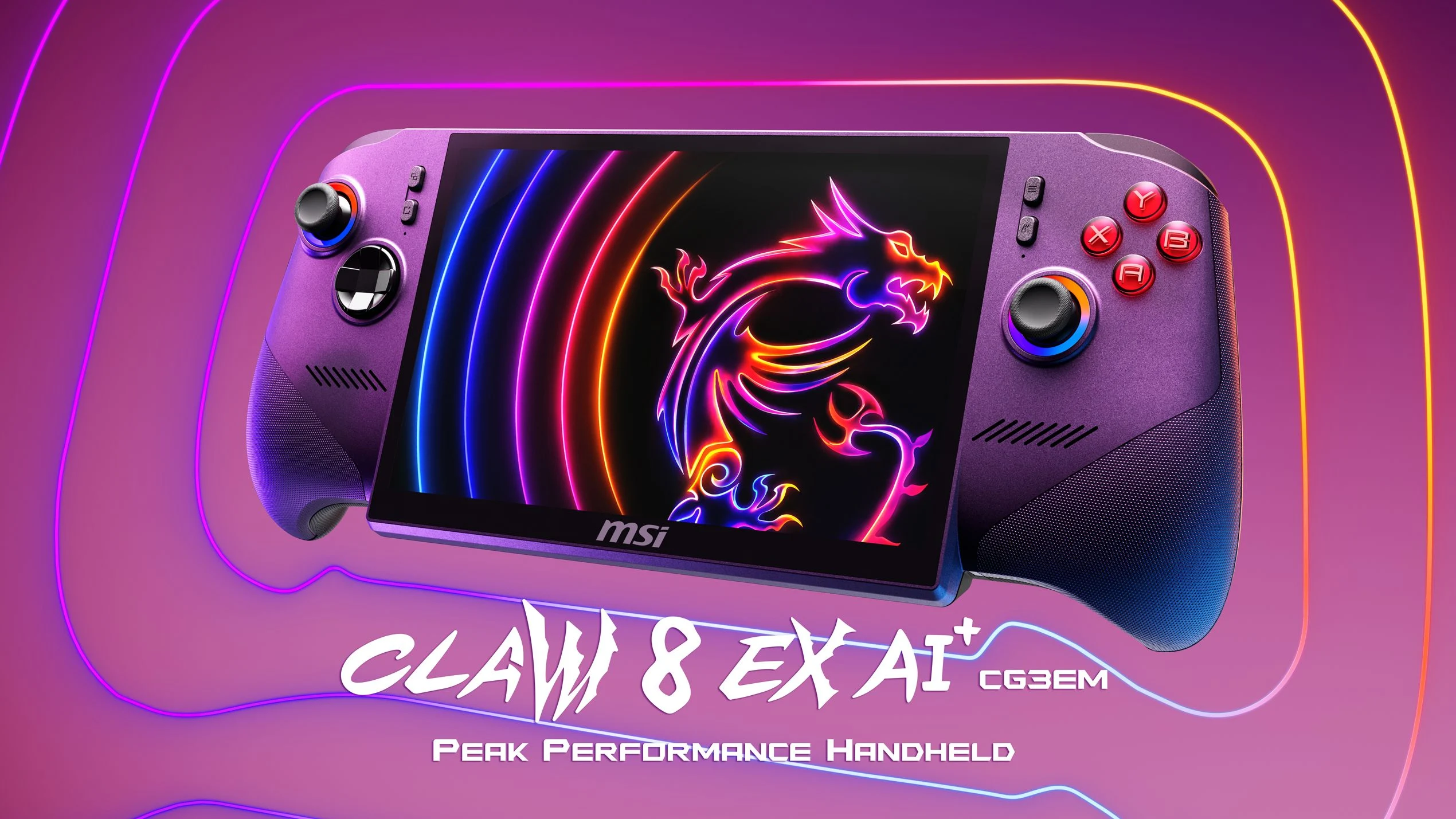
  • MSI Claw 8 EX AI+ Price Revealed with Arc G3 Extreme

    MSI Claw 8 EX AI+ Price Revealed with Arc G3 Extreme

    Key Takeaway

    – MSI Claw 8 EX AI+ priced at $1,799.99 (MSI Store) and $1,699 (Newegg).
    – Significantly more expensive than the previous MSI Claw 8 AI+ model ($1,119).
    – Features Intel Arc B390 GPU, making it one of the most powerful handhelds available.
    – Includes an 80 Wh battery, 120 Hz 8-inch display, Hall-effect triggers/sticks, and Thunderbolt 4 ports.
    – Price increase attributed to the DRAM crisis; device costs as much as a mid-range gaming laptop.


    Pricing Finally Revealed

    The MSI Claw 8 EX AI+ was officially unveiled at Computex in early June, though MSI had not yet confirmed any pricing details at launch. Finally, the MSI Store confirms the price, but its anything but affordable. Thats because the MSI Claw 8 EX AI+ with Intel Arc G3 Extreme, 32 GB of LPDDR5x-8,533 RAM, and a 1 TB SSD costs $1,799.99.

    Retailers such as Newegg list the same model for $1,699. This makes the new model significantly more expensive than the older MSI Claw 8 AI+ ($1,119 on Amazon), which features an Intel Core Ultra 7 258V with 32 GB of RAM and a 1 TB SSD. The higher list price is likely due in no small part to the DRAM crisis. Those willing to pay the price of a mid-range gaming laptop for a gaming handheld should at least recieve top-notch specs.

    Display and Controls Excellence

    Because with the Intel Arc B390, the device is among the most powerful handhelds on the market. The 8-inch display offers a resolution of 1,920 x 1,200 pixels, a refresh rate of 120 Hz, and a decent brightness of 500 nits; it can fully display the sRGB color space. The triggers and analog sticks use Hall-effect sensors to prevent stick drift.

    MSI has equipped the device with an exceptionally large 80 Wh battery, which can be charged via USB-C at up to 65 watts. The Windows handheld can be easily transformed into a desktop PC via the two Thunderbolt 4 ports when connected to a docking station.

    Connectivity and Portability

    Wi-Fi 7, Bluetooth 6.0, a microSD Express slot, a 3.5 mm headphone jack, and 2 x 2-watt stereo speakers round out the features of this 784-gram gaming handheld.

    • Intel Arc B390 processor
    • 32 GB LPDDR5x-8,533 RAM
    • 1 TB SSD
    • 8-inch display, 120 Hz, 500 nits
    • 80 Wh battery, 65W USB-C charging
    • Two Thunderbolt 4 ports
    • Wi-Fi 7 and Bluetooth 6.0
    • MicroSD Express slot
    • 3.5 mm headphone jack
    • 2 x 2-watt stereo speakers
    • Weight: 784 grams


  • MSI Claw 8 Unveiled: Intel Arc G3 Panther Lake Handheld

    MSI Claw 8 Unveiled: Intel Arc G3 Panther Lake Handheld

    Key Takeaway

    – Intel introduces Arc G3 and Arc G3 Extreme handheld chips, directly competing with AMD’s Ryzen Z series.
    – MSI Claw 8 AI+ CG3EM features Arc G3 Extreme with 14-core CPU and 12-core Arc B390 iGPU on Xe3 architecture.
    – Key specs: 8-inch 120Hz VRR display, 80 Wh battery, 32 GB RAM, Wi-Fi 7, Bluetooth 6.0, and two Thunderbolt 4 ports.
    – Supports multi-frame generation for improved gaming performance, unlike older Intel handheld chips.
    – Estimated MSRP around $1,500, with MSI joining Acer and OneXPlayer as early Arc G3 adopters.


    Intel’s New Handheld Chip Unveiled

    Intel finally showed of its handheld-focused Arc G3 and Arc G3 Extreme chips yesterday (May 31). Team Blue positions it as a direct competitor to AMD’s Ryzen Z lineup which has historically been the only offering in the space. While Meteor Lake and Panther Lake did find themselves in handhelds, particuarly ones from MSI, the off-the-shelf chips often had trouble keeping up. Now, the new MSI Claw 8 AI+ CG3EM has finally arrived with Intel’s newest top-shelf handheld silicon.

    Performance and Display Specifications

    It is powered by the Arc G3 Extreme with a 14-core (2P + 8E + 4 LPE) CPU and a 12-core Arc B390 iGPU. The new Xe3 architecture supports features like multi-frame generation, something that wasn’t possible in older variants. The new MSI Claw 8 AI+ CG3EM comes with an 8-inch (1,920 x 1,200) screen with a refresh rate of 30-120 Hz thanks to variable refresh rate technology. An 80 Wh battery powers the handheld. Ideally, that should be enough for less demanding titles, but some newer ones could demand all the processing power offered by the Arc G3 Extreme.

    Memory, Storage, and Connectivity

    Other MSI Claw 8 AI+ CG3EM include 32 GB of RAM and an unspecified amount of storage. It has space for one M.2 2280 PCIe Gen4 NVMe SSD, so capacity will likely cap out at 4 TB. For wireless connectivity, the handheld comes with a Wi-Fi 7 and Bluetooth 6.0 radio. Two Thunderbolt 4.0 ports can handle all wired connections, including charging and data transfer. A micro SD card is also included for good measure, as is a 3.5 mm combo audio jack. All of this weighs 785 grams, which is not bad for something this powerful.

    Pricing and Market Positioning

    MSI hasn’t specified how much the new Claw 8 will cost, but earlier estimates pegged its MSRP at around the $1,500 mark. In simpler times, that would be exorbitant, but now, it is totally understandable given market conditions. MSI joins the likes of Acer and OneXPlayer as one of the first OEMs to release a handheld powered by the Arc G3 platform.

    Sources
    • Acer Launches Windows Handheld Arc B390 with 120 Hz Display

      Acer Launches Windows Handheld Arc B390 with 120 Hz Display

      Key Takeaway

      – Predator Atlas 8 uses Intel Arc G3 or G3 Extreme (Arc B370/B390) with strong rumored gaming performance vs Radeon 890M handhelds.
      – 8-inch 1200p IPS display at 120 Hz VRR, 500 nits, plus up to 24 GB RAM and 1 TB M.2 storage; weights 770–810 g with 60 Wh or 80 Wh battery options.
      – Availability: launching in Africa, Australia, Europe, the Middle East, and North America with first shipments in October 2026; pricing not announced.


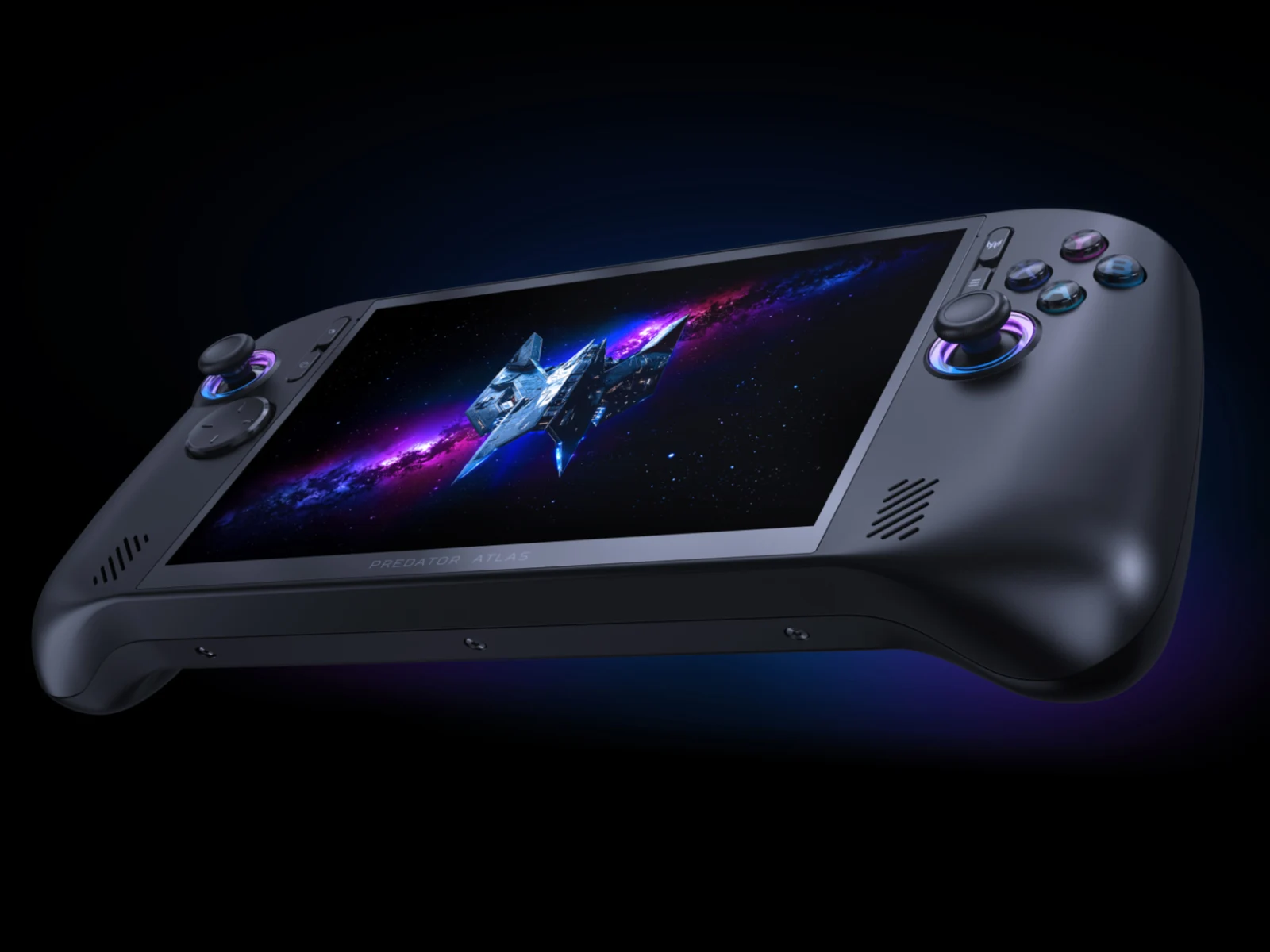
      Acer has jumped into the handheld gaming arena with the Predator Atlas 8, following OneXPlayer’s Arc G3 Extreme powered reveal earlier today. The Atlas 8 arrives amid a market where Nitro Blaze models from Acer previously teased but not released, leaving fans curious about the company’s handheld ambitions and timing.

      Pricing and specifications retained here

      According to Acer, the Predator Atlas 8 will be available with Intel’s Arc G3 or Arc G3 Extreme processors, which contain Arc B370 and Arc B390 graphics, respectively. Based on our experiences with Arc B390-powered laptops, the Predator Atlas 8 could be over 50% more powerful in games than Radeon 890M-equipped handhelds like the Legion Go 2 or the ROG Xbox Ally X (curr. $1,309 on Amazon).

      Display and hardware configuration

      Moreover, the Predator Atlas 8 leverages an 8-inch and 1200p IPS display featuring 500 nits peak brightness and a 120 Hz VRR refresh rate. On top of that, the handheld offers up to 24 GB of LPDDR5X-7467 RAM and 1 TB of M.2 2280 storage, all in a package measuring 299 x 127 x 28.5 mm. Apparently, Acer plans to sell versions with 60 Wh and 80 Wh batteries too, which will see the Predator Atlas 8 weighing 770 g or 810 g.

      Launch window and market reach

      Currently, Acer expects to sell the Predator Atlas 8 in Africa, Australia, Europe, the Middle East and North America. However, the handheld will not reach any of these markets until October 2026. Pricing information remains unknown for now.


      Sources

      • Lenovo Legion Go 2 (Ryzen Z2) Gaming Performance in Top Titles

        Lenovo Legion Go 2 (Ryzen Z2) Gaming Performance in Top Titles

        Key Takeaways

        1. The Lenovo Legion Go 2 is an affordable handheld gaming PC featuring AMD’s Ryzen Z2 APU, offering multiple performance modes to optimize power usage.
        2. Performance modes include Quiet Mode (8 W), Balanced Mode (16 W), Performance Mode (up to 20 W), and Custom Mode (temporary boosts up to 45 W).
        3. The device allows customization of fan settings and performance through the Legion Space menu, with features like adjustable refresh rates and performance monitoring.
        4. In performance tests, it achieved a Geekbench score of about 2,444 (single-core) and 11,000 (multi-core), and scored 3,285 in 3DMark Time Spy at a TDP of 25 W.
        5. Priced at $1,099.99, the Legion Go 2 has an 8.8-inch OLED screen with a 144 Hz refresh rate and detachable controllers, but alternatives like the MSI Claw 8 AI+ offer better specs for a slightly higher price.


        YouTuber ETA PRIME has taken an in-depth look at the Lenovo Legion Go 2, highlighting its performance and how it manages heat. This handheld gaming PC, which runs on AMD’s Ryzen Z2 APU, stands out as the most affordable option in Lenovo’s second-gen Legion Go series.

        Performance Profiles

        The Legion Go 2 comes with multiple performance modes, enabling gamers to adjust the TDP (Thermal Design Power) based on what they’re playing. When in Quiet Mode, it limits power usage to 8 W, which is ideal for 2D games and emulators. Balanced Mode increases this limit to 16 W, while Performance Mode can pull 20 W from the battery and even more when connected to a power source. There’s also a Custom Mode that allows for temporary power boosts of up to 45 W (FPPPT for 10 seconds), 37 W (SPT for 2 minutes), or a steady 35 W (SPL).

        Customization Options

        Gamers can also tweak fan settings and quickly adjust performance through the Legion Space menu, which offers instant toggles for refresh rates (between 60–144 Hz), brightness, Bluetooth, and tools for performance monitoring.

        In performance tests, ETA PRIME managed to achieve a Geekbench 6 score of about 2,444 for single-core and around 11,000 for multi-core in Performance Mode. When running 3DMark Time Spy with a TDP of 25 W, the Legion Go 2 hit a score of 3,285 points, putting it slightly ahead of devices powered by the Ryzen Z1.

        Game Performance Insights

        From the testing done, ETA PRIME noted that while the Ryzen Z2 version is a bit behind the Z2 Extreme at lower TDP levels, it still delivers solid efficiency and playable frame rates for most AAA games. The current price for the Legion Go 2 is set at US $1,099.99 at Best Buy. It boasts an 8.8-inch OLED screen with a refresh rate of 144 Hz and detachable controllers, offering a high-quality feel even though it’s labeled as ‘entry-level.’ That said, some may find better options like the MSI Claw 8 AI+, which is priced at US $1,184.85 on Amazon. This alternative comes with additional RAM and a more robust APU for a slightly increased cost.

        Source:
        Link


      • Lenovo Legion Go 2 Images Show Display, Controllers, Accessories

        Lenovo Legion Go 2 Images Show Display, Controllers, Accessories

        Key Takeaways

        1. Display Features: The Legion Go 2 will have an 8.8-inch OLED display with a 16:10 aspect ratio, 1200p resolution, 97% DCI-P3 color accuracy, 500 nits brightness, and a variable refresh rate of 144Hz.

        2. Battery and Charging: It will feature a 74Wh battery with two cells, a 65W AC adapter, and support for higher-wattage chargers for faster charging.

        3. Design Changes: The design includes relocated MicroSD card slot and audio jack, revamped Truestrike Controllers for better comfort, and a new USB-C port for independent controller charging.

        4. Cooling and Other Features: The device will utilize Legion Coldfront cooling technology with a larger fan, manual fan control, a fingerprint scanner in the power button, and support for up to a 2TB MicroSD card.

        5. Processor Options: Users can choose between a Ryzen Z2 or Ryzen Z2 Extreme processor, and Lenovo is expected to offer accessories, including a padded carrying bag for protection.


        After its first showing at CES 2025 in January, Lenovo is getting ready to unveil the Legion Go 2 at IFA 2025. This new handheld gaming PC will be the successor to the Legion Go that was launched in November 2023 (check out our review). Well-known leaker, Evan Blass, has disclosed some information about the Legion Go 2 before its debut at IFA. He has also shared several new images of the device that reveal additional details.

        Display Features

        According to one image, the Legion Go 2 will sport an 8.8-inch display, featuring a 16:10 aspect ratio, a resolution of 1200p, and a 97% DCI-P3 color accuracy. The OLED panel will support 10-point touch and can reach a brightness of 500 nits. It meets VESA’s DisplayHDR True Black 1000 standard and features a variable refresh rate of 144Hz.

        Battery and Charging

        As noted back in January, the Legion Go 2 will come equipped with a 74Wh battery, which has been divided into two cells, as seen in a hands-on video released in July. It will include a 65W AC adapter, but similar to the original Legion Go, it should be able to draw more power when plugged into a higher-wattage charger, like the Anker 140W 4-port wall charger (currently listed on Amazon for $79.99).

        Design Changes

        Though the Legion Go 2 keeps much of the original’s design, including its detachable controllers, there are notable modifications that set them apart. For instance, Lenovo has relocated the MicroSD card slot and audio jack from the top of the Legion Go to the bottom of the second version.

        Additionally, the Truestrike Controllers have been revamped for better comfort, and they will be backward compatible with the first-generation Legion Go. A new feature highlighted in one of the images from Evan Blass appears to be a USB-C port. If this is accurate, users will be able to charge the controllers independently of the Legion Go 2.

        Cooling and Other Features

        The Legion Go 2 will use Lenovo’s Legion Coldfront cooling technology and will be outfitted with a larger fan for improved airflow. The images reveal that the device has larger vents for air intake and exhaust. Users will also have the option to manually control the cooling fan.

        Other confirmed features visible in the images include a fingerprint scanner integrated into the power button, support for up to a 2TB MicroSD card, dual USB 4.0 Type-C ports, and the choice of either a Ryzen Z2 or a Ryzen Z2 Extreme processor. There will only be one color choice available.

        Similar to the first Legion Go, Lenovo is likely to offer accessories for this handheld. Evan Blass has also shown an image of a carrying bag for the device. The bag appears to be made from canvas and is padded for some level of protection for the Legion Go 2. It remains unclear if this will be the included accessory or if a hard case, like the one for the first-gen Legion Go, will be offered.

        Source:
        Link


      • ROG Xbox Ally Price Leak at Asus Store Sparks Xbox Handheld Debate

        ROG Xbox Ally Price Leak at Asus Store Sparks Xbox Handheld Debate

        Key Takeaways

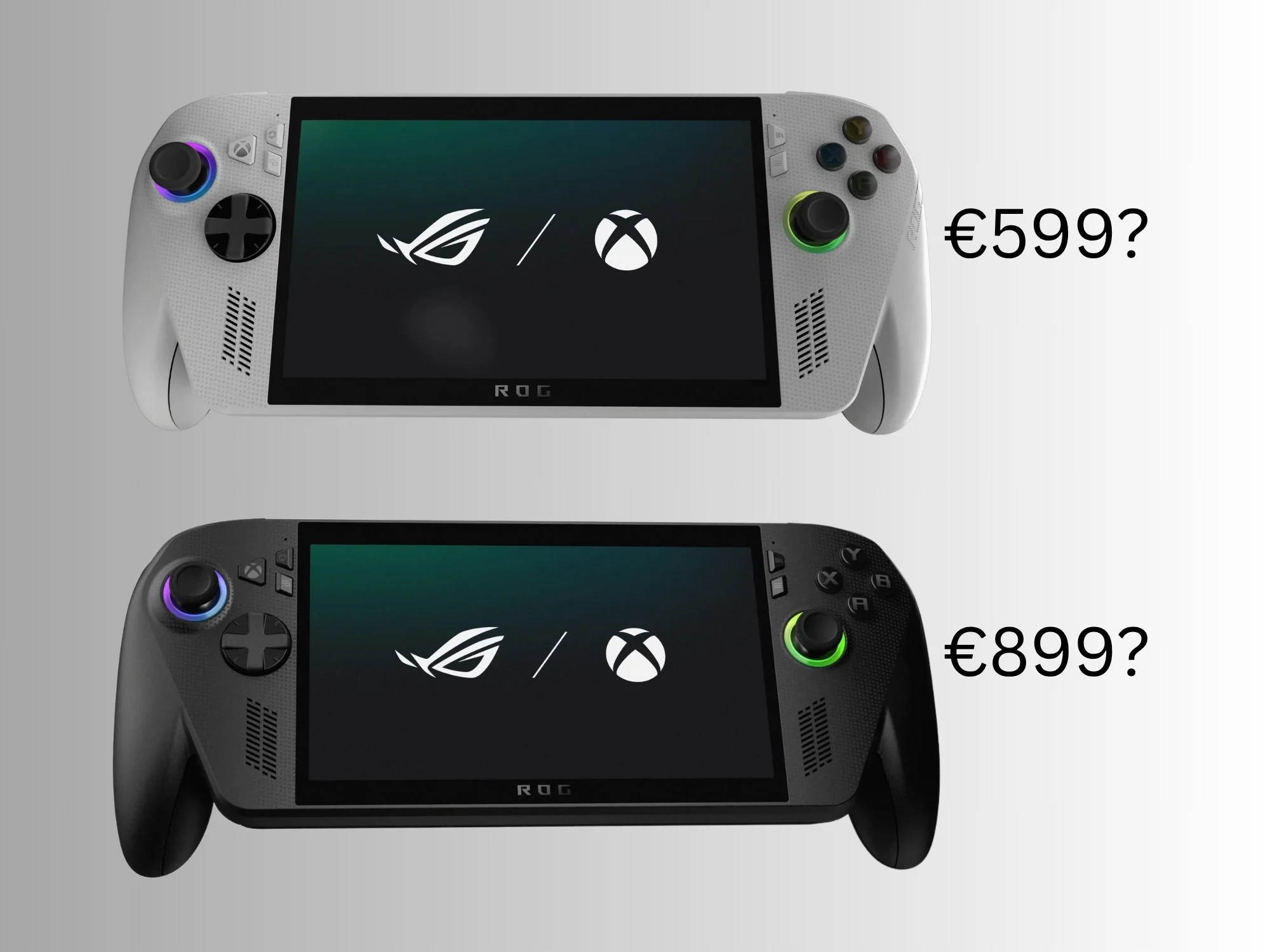
        1. The Asus Store suggests the ROG Xbox Ally X will cost €599, while the ROG Xbox Ally will be priced at €899.
        2. U.S. pricing remains uncertain, with estimates ranging from $499 to $799, potentially higher due to tariffs.
        3. Microsoft announced a Holiday 2025 launch for the ROG Xbox Ally series, with possible earlier availability in October.
        4. The new handhelds resemble the Asus ROG Ally series and feature 7-inch 1080p/120Hz displays, lacking OLED screens.
        5. Industry skepticism exists regarding the handhelds, with concerns about limited exclusive titles and competition from devices like the Nintendo Switch 2 and Steam Deck.


        After the leaker eXtas1s disclosed the prices for the upcoming Xbox handheld options in June, evidence has emerged that backs up his statements. The Asus Store by MacMan, an official Spanish partner for the handheld gaming PC maker, reveals information when you type “Xbox Ally” into the search feature. If this store is accurate, the cost for the ROG Xbox Ally X will be €599, while the ROG Xbox Ally comes in at a higher €899.

        Pricing Uncertainty in the U.S.

        The pricing for the U.S. market remains unclear, though eXtas1s has proposed $499 and $799 as potential prices. Other experts have predicted that the systems might be a bit pricier due to tariff uncertainties. Microsoft has announced a Holiday 2025 launch for the ROG Xbox Ally series, but Jez Corden from Windows Central believes that an October release could be on the table.

        Official Announcement

        Microsoft officially introduced the devices during its Xbox Games Showcase on June 8. Instead of launching a brand-new console, the Xbox handheld products resemble the existing Asus ROG Ally series. Gamers can look forward to the same 7-inch 1080p/120Hz displays, as Asus opted not to use more expensive OLED screens. However, in addition to an Xbox control layout, Microsoft guarantees grips designed for better comfort.

        Skepticism Among Gamers

        Many gamers and industry insiders express doubts regarding these new devices. Former Microsoft Executive Laura Fryer sees the handhelds as a strategy for the company to move away from hardware. Fryer emphasizes that the ROG Xbox Ally options do not offer the straightforwardness typical of traditional consoles. Furthermore, with a shift towards a cross-platform model, there will be limited exclusive Xbox titles to attract buyers.

        To draw in a broader audience, Microsoft plans to roll out a full-screen interface that provides access to various marketplaces. Still, the prices of the ROG Xbox Ally and ROG Xbox Ally X could determine their success. The potentially less expensive Nintendo Switch 2, which supports more AAA games, is a tempting alternative for console gamers. Meanwhile, the market for handheld gaming PCs is competitive, featuring the Steam Deck and several Windows-based options.

        Source:
        Link


      • New Xbox Handheld Prices Leak: €599/€899 for ROG Ally Models

        New Xbox Handheld Prices Leak: €599/€899 for ROG Ally Models

        Key Takeaways

        1. The ROG Xbox Ally is expected to be priced at €599, while the ROG Xbox Ally X may cost €899, with U.S. prices potentially being $499 and $799, respectively.
        2. Pre-orders for the Xbox handheld lineup are likely to start in August, with a release set for October.
        3. The ROG Xbox Ally will use a Ryzen Z2 A processor, while the ROG Xbox Ally X will feature the AI Z2 Extreme processor, marking a difference from the original ROG Ally.
        4. The cheaper ROG Xbox Ally is anticipated to have a larger battery, improving performance, and both devices will include an upgraded Microsoft gaming interface.
        5. Potential buyers should remain cautious about rumors, as the leaker eXtas1s has had varying accuracy in the past.


        Many gamers are uncertain if the Asus ROG Xbox Ally and ROG Xbox Ally X will be popular with buyers. However, a compelling price might persuade some to explore these new handheld gaming PCs. According to a reliable leaker named eXtas1s, the less powerful ROG Xbox Ally is expected to be priced at €599. In contrast, the more advanced ROG Xbox Ally X could have a price tag of €899. After consulting with retailers in Europe, eXtas1s shared that the Xbox handheld lineup is set to debut in October, with pre-orders likely starting in August.

        Cautious Optimism

        It’s wise for potential buyers to take the latest rumors with a grain of salt since eXtas1s isn’t always spot on. Nevertheless, the prices for the new handhelds in Europe should compete with those of the ROG Ally and ROG Ally X. In the U.S., however, the pricing might be even more appealing. Although not officially confirmed, eXtas1s hinted at a price range of $499 for the base model and $799 for the X version during a podcast on YouTube. Gamers often see discounts on the ROG Ally, but the AMD Z1 Extreme variant has a suggested retail price of $700. The ROG Ally X, which offers more memory and storage, retails for $899 without any deals.

        Processor Differences

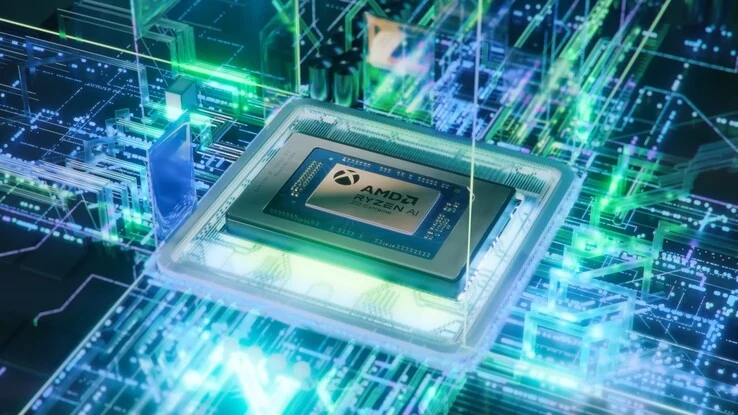
        Comparing the ROG Xbox Ally to its predecessor presents a challenge, as they are built on different processors. The original, more affordable ROG Ally was launched with the Ryzen Z1 chip, but that model is now hard to find, unlike the $700 Z1 Extreme. The new ROG Xbox Ally will feature the Ryzen Z2 A, which has fewer cores and threads than its predecessor. Conversely, the ROG Xbox Ally X will make use of the AI Z2 Extreme, an upgrade over the Z1 Extreme in the non-Xbox version.

        Battery and Software Enhancements

        The cheaper ROG Xbox Ally is expected to come with a bigger battery, which should improve its overall performance. Additionally, both Asus Xbox handheld devices will include Microsoft’s upgraded user interface for gaming along with revamped controls. Even so, Asus may roll out better software for other Windows devices in 2026, which might not give much reason for handheld gaming PC buyers to look into Microsoft’s options.

        Source:
        Link


      • Lenovo Legion Go Clone:  Oversized Display, Intel Processor, $295

        Lenovo Legion Go Clone: Oversized Display, Intel Processor, $295

        Key Takeaways

        1. The Lenovo Legion Go features detachable controllers, a design element also seen in the upcoming Legion Go 2 prototype and the Nintendo Switch 2.
        2. New handheld gaming PCs, Crelander and NWNLAP, share a similar design to the Legion Go but have a larger 10.5-inch display and differ in controller size.
        3. The Crelander/NWNLAP models have distinct design differences, including a lack of a touchpad on the right controller and various port placements.
        4. Unlike the Legion Go’s AMD Ryzen Z1 Extreme processor, the new handhelds use Intel’s 12th Gen N95 Alder Lake-N processor with up to 32GB of RAM and up to 2TB SSD storage.
        5. Pricing for the new handheld gaming PCs starts at around $295 for base models, with higher configurations reaching up to $486.59.


        The Lenovo Legion Go stands out from other handheld gaming PCs due to its detachable controllers, similar to what the Nintendo Switch 2 will offer. While the Legion Go S does away with this feature, the Legion Go 2 prototype, which was presented at CES 2025 earlier this year, retains the detachable controller concept but with improvements. Recently, two Chinese handheld gaming PCs have taken inspiration from the Legion Go’s design, introducing a unique twist.

        New Players in the Market

        The Crelander and NWNLAP handheld gaming PCs are essentially the same device but marketed under different names. With a design that clearly takes cues from the Legion Go, this handheld gaming PC distinguishes itself with a larger display. In contrast to the Legion Go, which is currently listed on Amazon for $602 and features an 8.8-inch 2560 x 1600 144Hz screen, this new model boasts a 10.5-inch 1920 x 1080 60Hz display. Interestingly, the controllers do not match the tablet’s size, appearing much smaller in relation to the screen.

        Design Differences

        It’s important to note that the Crelander/NWNLAP handheld gaming PC is not an exact replica of the Legion Go, as shown in the images. For instance, the right controller does not include a touchpad, but instead features two buttons located below the thumbstick. The bottom of the device has speaker grilles while the top includes a single USB-C port, a full-sized USB port, an audio jack, a mini HDMI port, a MicroSD card slot, and a DC power input. The kickstand design is also different from that of the Legion Go.

        Internal Specs

        Another notable aspect of this handheld gaming PC is its internal components. While the Lenovo Legion Go utilizes AMD’s Ryzen Z1 Extreme processor, this new handheld is equipped with Intel’s 12th Gen N95 Alder Lake-N processor and Intel UHD graphics, offering up to 32GB of RAM and up to 2TB of M.2-2280 SSD storage. Additional features include Bluetooth 4.2, a 5,000mAh battery, and compatibility with 60W charging.

        Pricing for the NWNLAP handheld gaming PC starts at $295.36 for the entry-level model with 16GB of RAM and 128GB of storage, reaching up to $486.59 for the variant with 32GB of RAM and 2TB SSD. The Crelander version begins at $293.22 for the base model with 16GB of RAM and 256GB SSD, while the highest configuration with 32GB of RAM and 2TB SSD is priced at $430.57. Both models can be found on AliExpress.

        Source:
        Link

      • GPD Win 4 Handheld Gaming PC: AMD Ryzen 9, 32GB RAM, 2TB SSD

        GPD Win 4 Handheld Gaming PC: AMD Ryzen 9, 32GB RAM, 2TB SSD

        GPD has just revealed its latest version of the Win 4 handheld gaming PC for 2025, which is now open for crowdfunding on Indiegogo. This new model comes packed with upgrades, most notably featuring AMD’s robust Ryzen AI 9 HX 370 “Strix Point” processor.

        Specifications of GPD Win 4 2025

        The GPD Win 4 2025 is remarkable for its combination of convenience and performance. It keeps the design elements of earlier versions, such as a 6-inch FHD (1920×1080) touchscreen that can slide up to show a QWERTY keyboard, made specifically for thumb typing.

        The heart of the device is the AMD Ryzen AI 9 HX 370 processor, which is equipped with 12 Zen 5 CPU cores and 16 RDNA 3.5 GPU cores. This configuration gives it a boost of up to 30% in gaming frame rates when compared to the previous model. Plus, it comes with a high-performance NPU that supports AI-driven applications.

        Performance and Connectivity

        To back up the powerful processor, it has 32GB of LPDDR5x-7500 memory and a 2TB PCIe 4.0 NVMe SSD, offering plenty of storage and fast data transfer speeds. The device also includes Wi-Fi 6E and Bluetooth 5.3 capabilities, with an optional 4G LTE module to enhance connectivity.

        For ports, users will find USB4, USB-C (3.2 Gen 2), and an OcuLink connector, allowing for compatibility with external GPUs. Moreover, a microSD slot is available for those who need extra storage options.

        Cooling and Build Quality

        This handheld device employs advanced cooling techniques, boasting a single-fan system that offers a 35% improvement over its earlier version. This ensures that the device stays cool during long gaming sessions. Additionally, it features AVX-512 acceleration, which enhances PS3 emulation, taking full advantage of the AMD HX 370 processor’s superior architecture.

        Lightweight at just 598 grams and measuring 220×92×28mm, it’s smaller than many rivals, including the Steam Deck. Its body is made from magnesium alloy and aviation-grade ABS materials, which guarantees durability while keeping a sleek design.


        Image 1
      • Acer Nitro Blaze 7: New Powerful Gaming Handheld Launch

        Acer Nitro Blaze 7: New Powerful Gaming Handheld Launch

        Acer has made its debut in the handheld gaming sector with the Nitro Blaze 7, marking its first entry into portable gaming consoles. This device is tailored for on-the-go, high-performance gaming and is equipped with an AMD Ryzen 7 8840HS processor alongside Radeon 780 M graphics. It stands as a competitor to devices like the Asus ROG Ally, Steam Deck, and Lenovo Legion Go.

        Display and Performance

        Featuring a 7-inch Full HD (1920 x 1080) IPS display, the Nitro Blaze 7 offers a 144Hz refresh rate for seamless gameplay. The display also reaches a peak brightness of 500 nits, ensuring visibility under various lighting conditions. It supports AMD FreeSync Premium, which minimizes screen tearing and stuttering, enhancing the gaming experience.

        The powerhouse behind the Nitro Blaze 7 is the AMD Ryzen 7 8840HS processor, boasting 8 cores and 16 threads with clock speeds reaching up to 5.1 GHz, which ensures robust performance for intensive games. The Radeon 780M graphics, featuring clock speeds up to 2.7 GHz and 12 compute units, are capable of handling modern games effectively on the compact screen of the Nitro Blaze 7.

        Storage and Controls

        In terms of storage, the Nitro Blaze 7 offers up to 2 TB of M.2 NVMe PCIe 4.0 x 4 Gen 4 SSD, granting ample space for games and applications. Additionally, it comes with 16GB of LPDDR5x SDRAM, facilitating smooth multitasking and rapid load times.

        The design includes physical joystick-style buttons, a D-pad, bumpers, triggers, and shoulder buttons, providing a familiar interface for gamers accustomed to traditional console controllers.

        Additional Features

        Beyond hardware, the Nitro Blaze 7 includes software enhancements for gaming, such as the Acer Game Space app. This app integrates popular gaming platforms and provides features like game recording, streaming, and performance optimization. The device also comes with a 3-month subscription to PC Game Pass, offering access to a vast array of games.

        In other developments, Bitmo Lab has unveiled the GameBaby, a versatile iPhone accessory that doubles as both a protective case and a retro gaming controller. The GameBaby attaches directly to the iPhone, providing physical buttons for playing classic games through the Delta emulator, all without requiring a power source. Early pre-orders are priced at $20, with a future retail price of $39.99, and shipments set to begin in October. The case is compatible with the iPhone 15 Pro Max and the forthcoming iPhone 16 Pro Max.


        Acer Nitro Blaze 7: New Powerful Gaming Handheld Launch