Tag: Ryzen Z2 Extreme

  • AMD’s Frank Azor denies FSR 4.1 cancellation rumor for RDNA 3.5 APUs

    AMD’s Frank Azor denies FSR 4.1 cancellation rumor for RDNA 3.5 APUs

    Key Takeaway

    – FSR 4.1 support for RDNA 3.5 APUs (e.g., Ryzen Z2 Extreme, AI 300/400) is not decided, with AMD VP David McAfee stating it is “not currently planned” and internal discussions “leaning toward no.”
    – AMD’s Frank Azor firmly denied any final decision has been made, emphasizing that the company continues to listen to customer feedback.
    – No technical reason prevents FSR 4.1 from working on RDNA 3.5, as users have successfully tested it via third-party injection tools like OptiScaler.
    – Rapid backlash and response from AMD suggest customer feedback may still influence a reversal of the decision.
    – RDNA 4 GPUs (e.g., RX 9070 XT) remain the guaranteed path for FSR 4.1 and long-term software support.


    AMD has officially announced a staggered FSR 4.1 release schedule for RDNA 3 and 2 GPUs, but rumors have been circulating that Team Red has decided to skip its mobile RDNA 3.5 APUs, such as the Ryzen Z2 Extreme, AI 300, AI 400, and Radeon RX 8000 Mobile series. According to reports, AMD was considering dropping support for RDNA 3.5 in favor of older discrete desktop RDNA 3 and RDNA 2 GPUs.

    Interview Reveals Uncertainty

    The confusion spread when German news outlet HardwareLuxx interviewed David McAfee at Computex 2026. AMD Vice President David McAfee stated that the company doesn’t have any concrete plans to bring FSR 4.1 to RDNA 3.5 APUs, but the decision hasn’t been finalized yet. As a result, FSR 4.1 support for RDNA 3.5 APUs is currently up in the air. In his own words, “FSR 4.1 is not currently planned for RDNA 3.5.” He mentioned that AMD needs to weigh the pros and cons of introducing the technology to iGPUs, and that the internal discussion seemed to be “leaning toward ‘no.’”

    Frank Azor Clarifies

    However, more recently, AMD’s Frank Azor, Corporate Vice President of Client and Graphics Marketing, stepped into the discussion to state firmly that no such decision has been made regarding the implementation of FSR 4.1 for RDNA 3.5 handhelds and mini-PCs. Frank Azor responded directly to numerous posts from various outlets, such as Digital Foundry and Pirat_Nation, in a statement on X, saying: “I wasn’t there to hear the exact words said. However, I will share that no such decision as being reported or implied here has been made. We are not ready to speak to any other potential future product plans at this time. We continue to listen to our customers, and we hear you.”

    Technical Feasibility

    Still, there’s no definitive reason why FSR 4.1 or FSR 4 INT8 wouldn’t work on RDNA 3.5 GPUs, as many gamers have already tested the technology on Strix Halo APUs using third-party injection tools like OptiScaler. Given the speed at which Frank Azor responded to online reports, which is contrary to AMD’s usual style, it’s possible that customer feedback (and backlash) continues to shape AMD’s decision to implement FSR 4.1 support for RDNA 3.5 GPUs in the future.

    Future Outlook

    RDNA 4-based GPUs like the currently on sale RX 9070 XT are expected to be gamers’ best bet when it comes to long-term software support and a guaranteed path to FSR 4.1, even as many decry what they feel is AMD pulling back from its older “fine wine” narrative to offering sustained value across the board to consumers, often years after release. The RX 9070 XT features 64 compute units, 16GB GDDR6 memory, and a boost clock of 2.8 GHz, with a TDP of 304W, priced at approximately $599.
    Sources
  • ASUS ROG Ally X: Why Gamers Hesitate Despite Upgrades

    Key Takeaway

    – ASUS ROG Xbox Ally X20 upgrades (OLED display, Ryzen Z2 Extreme, improved controls) are well-received.
    – Most users praise the changes but show low purchase intent due to expected high pricing.
    – X20 likely priced over $1,000, possibly up to $1,500, especially as a bundle with AR glasses.


    Debate Over Steam Deck and ASUS Updates

    Alongside the debate over the recent Steam Deck OLED price increases, there has also being notable news in the gaming handheld market concerning another device: the ASUS ROG Xbox Ally X, which is getting a refreshed version for the 20th anniversary of ROG. We have already reported separately on the technical upgrades of the ASUS ROG Xbox Ally X20. A recent Reddit thread now shows how the community is reacting to those changes.

    Technical Upgrades and Community Feedback

    With the Ryzen Z2 Extreme under the hood, the ASUS handheld is already one of the most powerful devices of its kind. The new 7.4-inch OLED display is brighter and more vibrant than the previous 7-inch IPS panel, allowing the ROG Xbox Ally to catch up in exactly the area where it lagged furthest behind the Steam Deck OLED. Many users would have preferred an 8-inch display, but if ASUS can reuse the existing chassis with a 7.4-inch panel and keep the price of the upgraded version lower, that compromise may be acceptable.

    Improved Features and Pricing Expectations

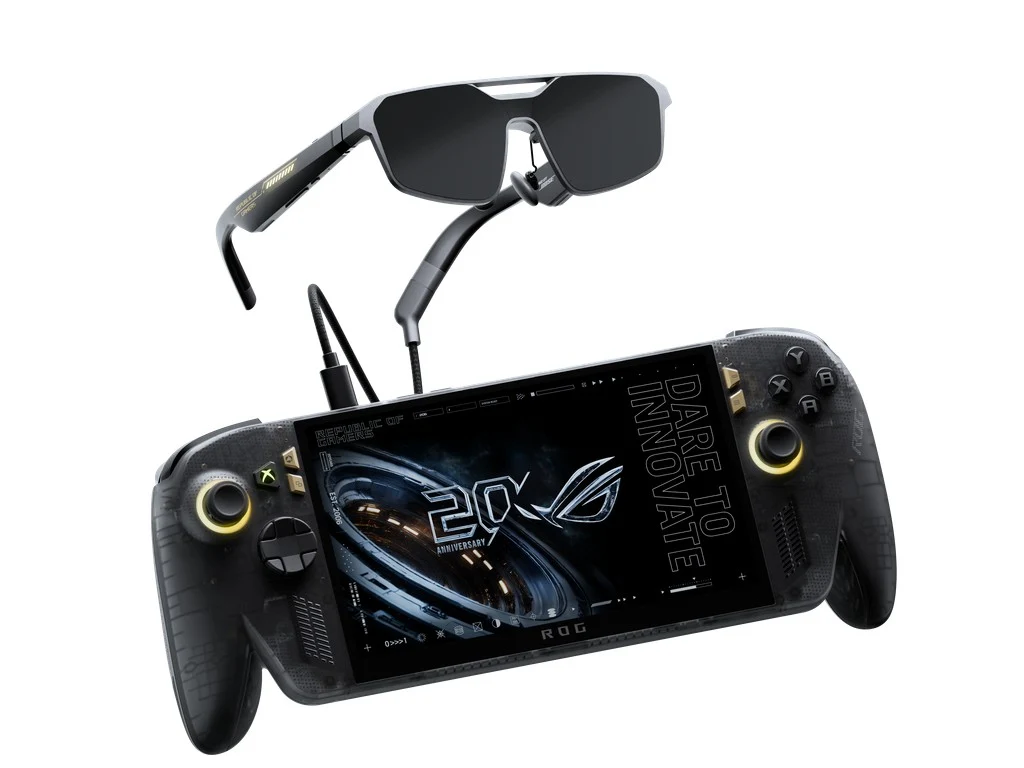
    The improved D-pad and sticks are also being welcomed by many users, as is the new look created by the transparent casing. Overall, the X20’s upgrades appear to have been received well. However, very few users express a clear intention to buy it, mainly because the price is expected to be extremely high. ASUS has equipped the X20 with a 1 TB SSD and 24 GB of RAM. However, the standard ROG Xbox Ally X already offers the same memory and storage configuration and carries an MSRP of $999.

    Pricing and Bundle Details

    Even so, the OLED display is not the only feature that could justify a noticeably higher price. The X20 is apparently being offered only as a bundle with the ROG Xreal R1 Edition 20 AR glasses. Given the recent price increases for the Steam Deck, hardly anyone expects the handheld to stay below the $1,000 mark. On the contrary: some users even expect a price of up to $1,500.

    • Ryzen Z2 Extreme processor for powerful performance
    • 7.4-inch OLED display with improved brightness and vibrance
    • 1 TB SSD and 24 GB RAM storage and memory configuration
    • Standard ROG Xbox Ally X already has MSRP of $999
    • X20 offered only as a bundle with ROG Xreal R1 Edition 20 AR glasses
    • Community expects price up to $1,500 due to recent Steam Deck increases
    Sources
  • Intel warns of “crazy” price: Arc G3 Extreme tramples AMD Ryzen Z2 Extreme for expensive price

    Intel warns of “crazy” price: Arc G3 Extreme tramples AMD Ryzen Z2 Extreme for expensive price

    Key Takeaway

    – Intel Arc G3 Extreme delivers 42% higher 1080p performance than AMD Ryzen Z2 Extreme at 35W, and 37% better FPS at 12W.
    – “Endurance Gaming” mode can extend battery life from ~2.8 hours to nearly 6 hours in Forza Horizon 6.
    – Arc G3 Extreme uses a full 12 Xe-core iGPU; the standard Arc G3 uses 10 Xe-cores.
    – Pricing for G3 Extreme handhelds is expected to be “crazy” high, partly due to Intel 18A yields and memory/storage costs.
    – AMD Ryzen Z2 Extreme consoles will likely be significantly cheaper than Intel Arc G3 Extreme handhelds.


    Intel’s New Handheld Chip Brings Big Performance

    Since Intel dropped the Panther Lake APUs featuring the powerful Arc B390 iGPU, people have been wondering if we would see that same graphics tech inside a chip made just for handheld gaming consoles. Leaks from earler this year confirmed Intel was indeed cooking up two new processors for this exact purpouse, known as the Arc G3 and the Arc G3 Extreme. Now, Intel has offically shown off what the top-tier Arc G3 Extreme can actualy do in real world tests, and the numbers are pretty striking.

    Comparing the Arc G3 and G3 Extreme Specs

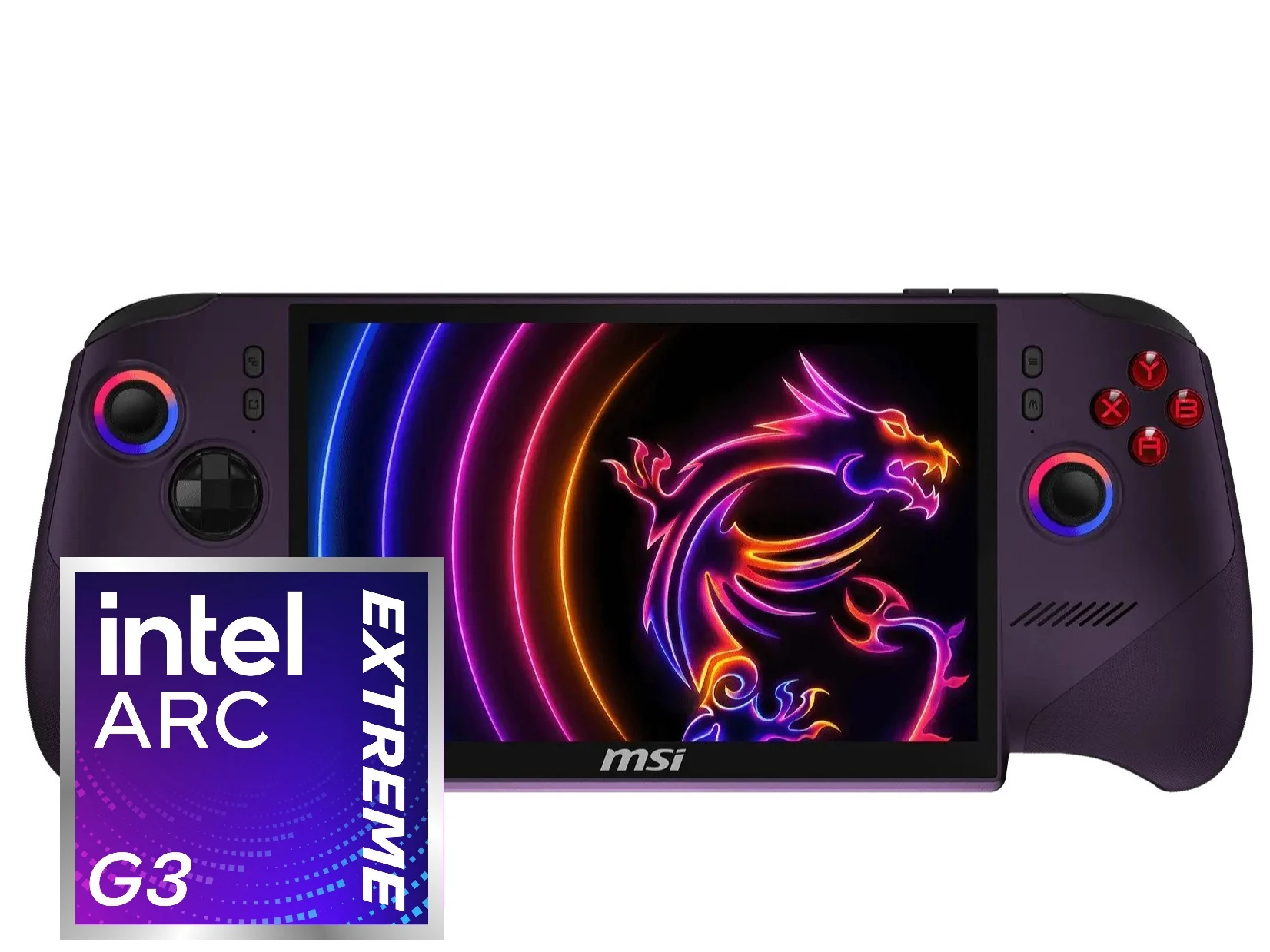
    Both of these new handeld chips, the Intel Arc G3 and the Arc G3 Extreme, share an identical CPU layout which includes 2 performance cores, 8 efficiency cores, and 4 low-power efficiency cores. The main difference between them is the iGPU configueration. The Arc G3 Extreme uses the full 12 Xe-core Arc B390 iGPU, making it the more powerfull option. In contrast, the standard Arc G3 only gets a slightly cut down 10 Xe-core iGPU, which is still likely to be quite capable for the target devices.

    • Intel Arc G3 Extreme: 12 Xe-core iGPU (full Arc B390)
    • Intel Arc G3: 10 Xe-core iGPU
    • Both chips: 2 P-core + 8 E-core + 4 LP E-core CPU

    Performance Numbers and Efficiency Claims

    Intel gave a complete breakdown of the Arc G3 Extremes performance over on Gamers Nexus, where they made some huge claims about power efficiency. Intel is saying the chip brings a massive 44% “gen-on-gen” gaming performance uplift when compared to the Lunar Lake Core Ultra 7 258V found in the MSI Claw 8 AI+, while also delivering 2x upscaling. The company also directly compared it to AMDs chip, calling the Ryzen Z2 Extreme a “dated platform” during the presentation.

    At a sustained 35 watts, Intel showed the Arc G3 Extreme beating the AMD Ryzen Z2 Extreme in the ROG Xbox Ally X by a huge 42% at 1080p with upscaling enabled. The Arc G3 Extreme also delivered 37% better FPS at just 12 watts compared to the Ryzen Z2 Extreme. Because of this, Intel claimed that you can get nearly the same performance as the Z2 Extreme while using only half the power, which would be great for battery life in a handheld device.

    Endurance Gaming Feature for Better Battery

    On the subject of battery life, Intel showcased a new feature they are calling “Endurance Gaming.” This feature will dynamically adjust the processor’s power usage and automatically cap the frame rate to optimise the battery. For example, in Forza Horizon 6, using Endurance Gaming at 1080p/low settings reportedly extends the battery from 2 hours and 47 minutes to almost 6 hours. This is a pretty bold claim from Intel, and its something that will need to be tested extensively by reviewers before we know if it can really shake up the handheld gaming landscape as they suggest.

    Price and Market Positioning

    Even though the performance and power efficiency of the Arc G3 Extreme look incredibly impressive, the potential price of the consoles it will power, like the MSI Claw 8 EX AI+, could be brutal for consumers. Intel didnt say anything concrete about the pricing, but Tom Peterson did let slip that the “price point is going to be crazy,” and that the Arc G3 Extreme MSI Claw 8 EX AI+ will only be for people who “really really want that.”

    A big part of this “crazy” price is the current cost of RAM and storage. We have already seen Valve implement a massive $300 price hike on the 1 TB Steam Deck OLED, which was directly due to the same prevailing market conditions for memory components. However, Intel’s Panther Lake architecture is also playing a role in the high cost, as we know these chips are not cheap, which is evident in the price of laptops using the latest Core Ultra 300 processors. Intel is working hard to improve the yield of the Intel 18A process node, which should eventualy drive these costs down.

    So, while the Intel Arc G3 Extreme is expected to beat the socks off the Ryzen Z2 Extreme in terms of raw performance, the consoles using the AMD Ryzen Z2 Extreme will likely be much cheaper for the average buyer. Its a trade off between top tier performance and affordability.


    Sources

  • Asus ROG Ally X20 & Xreal R1 Glasses Bundle Announced

    Asus ROG Ally X20 & Xreal R1 Glasses Bundle Announced

    Key Takeaway

    – 7.4-inch OLED display with 1400 nits, 120Hz VRR, and Dolby Vision
    – Ryzen Z2 Extreme processor with 24GB RAM and 80Wh battery
    – MicroSD card slot upgraded to microSD Express
    – Redesigned D-pad can switch between 4-way and 8-way modes
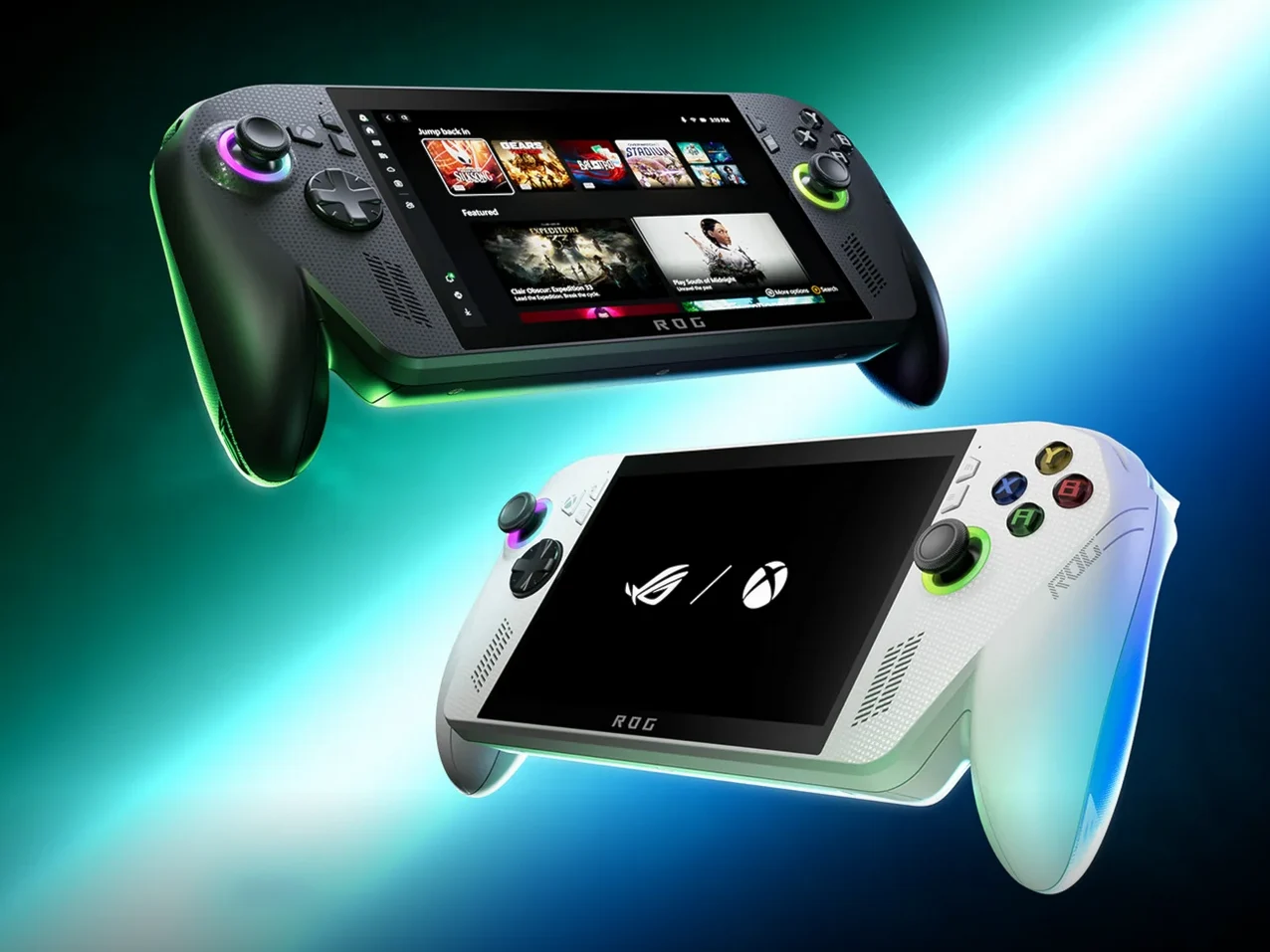
    – Translucent shell with new TPS rubber grips and enhanced RGB features


    ROG Ally X20 Announced at Computex 2026

    Asus has officially announced the ROG Ally X20 handheld at Computex 2026. The handheld arrives as one of the numerous products unveiled to celebrate the 20th anniversary of the ROG brand. However, the ROG Ally X20 isn’t a special edition of Asus’s previous handhelds, but a separate device.

    Display and Screen Specifications

    The ROG Ally X20 has a 7.4-inch OLED display with a FHD+ resolution and a 16:9 aspect ratio. The panel has a peak brightness of 1400 nits, 120Hz variable refresh rate (30Hz to 120Hz), and support for Dolby Vision and ROG Nebula HDR. It also has a VESA DisplayHDR True Black 1000 certification and a 100% DCI-P3 color gamut. Like the ROG Xbox Ally X, the screen has an anti-reflective coating and Corning XC glass protection.

    Internal Hardware and Storage

    Under the hood is a Ryzen Z2 Extreme processor paired with 24GB of LPPDR5X RAM and 1TB of PCIe 4.0 NVME storage. It also has an 80Wh battery. There’s still a microSD card slot for adding more storage, but it has now been upgraded to microSD Express just like that of the Nintendo Switch 2.

    Controller and Input Features

    Asus has equipped the ROG Ally X20 with TMR thumbsticks and has increased the LEDs in the RGB rings from 2 to 4. There are also new RGB features such as real-time reaction to your movement and visual feedback in compatible games such as when an enemy is approaching from either side.

    Asus has also redesigned the ABXY buttons and the D-pad. The former is reported to be closer to those on the Xbox wireless controller while the latter is a combination of dome switches and a rubber membrane. Another neat feature of the D-Pad is that it can transform from a regular 4-way D-pad to an 8-way D-pad by lifting and rotating it. The latter is great for fighting games.

    Chassis, Bundle, and Release Info

    In addition, the ROG Ally X20 uses a new type of rubber called TPS for the grips. This new material is harder and will last longer. The case itself has a translucent shell and some of the buttons are gold. The ROG Ally X20 will be sold as a bundle with a 20th anniversary edition of the ROG Xreal R1 glasses that was announced recently. It will be released this holiday, but Asus has not revealed the price.

    Asus, Retro Game Corps on YouTube

    Sources
  • Lenovo Legion Go 2 Price Increased to $2,849 After $850 Hike

    Lenovo Legion Go 2 Price Increased to $2,849 After $850 Hike

    Key Takeaway

    1. The Lenovo Legion Go 2 has been recently priced at $2,849.99, marking a significant increase from previous prices.
    2. Retailers’ current listings are lower, but are likely to update to the new pricing once current stock depletes.
    3. The price hikes are most likely due to the ongoing memory crisis affecting component costs.
    4. The device has experienced multiple price increases since its September launch, with uncertainty remaining about further hikes.

    Price Increases by a Large Margin

    Recently, the Lenovo Legion Go 2 with the Ryzen Z2 Extreme processor quite dramatically increased in cost. Initially, it was priced at $1,350, then went up to $1,850, and now has jumped again to a staggering $2,849.99 on their official website. This huge escalation makes it clear that the device is now in a very high priced segment, probably making it less attractive for the average gamer or enthusiast looking for a portable gaming option.

    Current Retail Prices Compared to Official Listing

    Despite the official website showing a steep price of nearly $2,850, some retail shops are still selling the Legion Go 2 at much lower prices. For example, Best Buy offers it at $1,999, and B&H still has it for $1,849.99. But these prices are most likely for older units before the recent price hike. Soon, once current stock is sold out and new units are available, it’s expected that these stores will also update their prices to match the official $2,849.99, which is quite a leap from previous amounts.

    Understanding The Price Jumps

    Lenovo hasn’t officially explained why the price keeps increasing so steeply. But industry analysts believe that this is mainly due to the ongoing memory shortage crisis, causing the costs of critical parts like memory and storage to hike up quickly. Since its launch in September last year, the Legion Go 2 has had multiple price increases and there’s no guarantee that the last one was the final, leaving consumers to wonder what the future holds for this high-end handheld gaming device.


    Sources

    • MSI Launches Z2 Extreme Claw A8 Gaming Handheld Worldwide

      MSI Launches Z2 Extreme Claw A8 Gaming Handheld Worldwide

      Key Takeaways

      1. MSI has launched the Claw A8, its first AMD gaming handheld, available in China since July 2025.
      2. The Claw A8 is now available in the US for $1,149, with a pre-order discount at ExcaliberPC for $1,099.
      3. The gaming handheld is listed on Newegg but is not yet available for purchase, raising questions about the delay in the US release.
      4. Performance reviews highlight improved battery life and display quality, but it has 8 GB less RAM than the MSI Lunar Lake model and could use better ergonomics.
      5. The Claw A8 competes well against other handhelds like the Legion Go 2 and ROG Xbox Ally X, with the latter offering a smaller, more affordable option at $999.99.


      MSI has introduced the Claw A8, marking its entry into the AMD gaming handheld market. This device became available for sale in China in July 2025. While MSI later broadened the reach of this competitor to the Legion Go 2, powered by Ryzen Z2 Extreme, there was no specific information regarding its release in the United States.

      Availability in the US Market

      After several months since its initial release, the MSI Claw A8 can now be bought by customers in the US. It is listed on the official US store for $1,149. Additionally, a pre-order discount is available at ExcaliberPC, where the price is currently $1,099.

      Online Listings and Competitors

      As of now, the gaming handheld is also found on Newegg, though it is not available for purchase there yet. It’s still a mystery as to why it took MSI so long to release its Ryzen Z2 Extreme gaming handheld in the US market. To recap, the Legion Go 2 with the same APU launched in October 2025, and Asus’s ROG Xbox Ally X was also released around that time.

      Performance Insights

      For those keen on the gaming handheld, our thorough review showed it performed quite well. The battery life was a significant improvement compared to the first-generation MSI Claw, and the display received favorable remarks. However, it has 8 GB less RAM compared to the MSI Lunar Lake alternative, and we observed that the ergonomics could have been enhanced.

      Nonetheless, when it comes to gaming performance, the MSI Claw A8 holds its own against rival handhelds powered by the AMD Ryzen Z2 Extreme. Yet, for buyers who prefer a slightly smaller 7-inch display, the ROG Xbox Ally X could be a better value, priced at $999.99 (non-X version is $499.99 on Amazon).

      Source:
      Link


    • MSI Claw A8 Launches in US at Lower Price than Legion Go 2

      MSI Claw A8 Launches in US at Lower Price than Legion Go 2

      Key Takeaways

      1. MSI has launched the Claw A8, entering the gaming handheld market with the Ryzen Z2 Extreme APU.
      2. The Claw A8 is priced at $1,149 for a model with a 1 TB SSD, which is less than the Lenovo Legion Go 2’s $1,349.99 price.
      3. The Claw A8 features core specifications like an 80 Wh battery, 1 TB M.2 SSD, 8-inch display with 120 Hz refresh rate, and WiFi 7.
      4. The Claw A8 has appeared on Newegg, suggesting a potential US launch is coming soon.
      5. While the Claw A8’s specs are competitive, prices are higher than last-generation gaming handhelds.


      MSI has unveiled the Claw A8, marking its entry into the gaming handheld market with an AMD APU. This device features the Ryzen Z2 Extreme, positioning it as a strong rival against the Asus Xbox ROG Ally X and the high-end Legion Go 2. Although MSI’s product has been around for some time, it has not yet been officially announced in the United States.

      US Launch on the Horizon

      It appears that the Claw A8 might soon make its US debut, as it has recently appeared on Newegg’s website. It remains uncertain if the listed price is just a temporary figure, but it is notably lower than the launch price of the Lenovo Legion Go 2 equipped with the Ryzen Z2 Extreme.

      Pricing Details

      Specifically, the MSI Claw A8 with a 1 TB SSD is priced at $1,149, while the Z2 Extreme version of the Legion Go 2 with the same storage launched at a price of $1,349.99. While Lenovo’s model offers more RAM, some might not find the extra 8 GB worth the additional $200. Moreover, it’s important to highlight that these prices are significantly higher than those of last-generation gaming handhelds.

      Returning to the Claw A8 listing on Newegg, the core specifications are identical to those found in other markets. This includes an 80 Wh battery, a 2280 M.2 SSD (1 TB Samsung SSD 9100 currently priced at $175.99 on Amazon), an 8-inch display with a 120 Hz refresh rate and VRR, along with WiFi 7 capabilities. Although there’s no specific release date for purchasing yet, MSI is anticipated to formally announce its availability in the US shortly.

      Newegg via: VideoCardz

      Source:
      Link


    • Asus ROG Xbox Ally X Supply Issues Indicate Microsoft Doubts

      Asus ROG Xbox Ally X Supply Issues Indicate Microsoft Doubts

      Key Takeaways

      1. The Asus ROG Xbox Ally and Ally X are Microsoft’s first handheld gaming consoles, designed to provide a smooth gaming experience similar to traditional consoles.

      2. The hardware performance of the ROG Xbox Ally X is better than the Ally, but both have shortcomings, particularly the less capable Ryzen Z2A in the standard model.

      3. Pricing is a significant concern, with the ROG Xbox Ally priced at $599 and the Ally X at $999, leading to questions about their overall value.

      4. Initial supply for both models is limited, with the Ally X having particularly low stock and no anticipated consistent restocks, which may impact sales.

      5. The ROG Xbox Ally X received a “Good” rating of 86%, but potential buyers might consider waiting for Intel’s upcoming Panther Lake APUs, which are expected to offer better graphics performance.


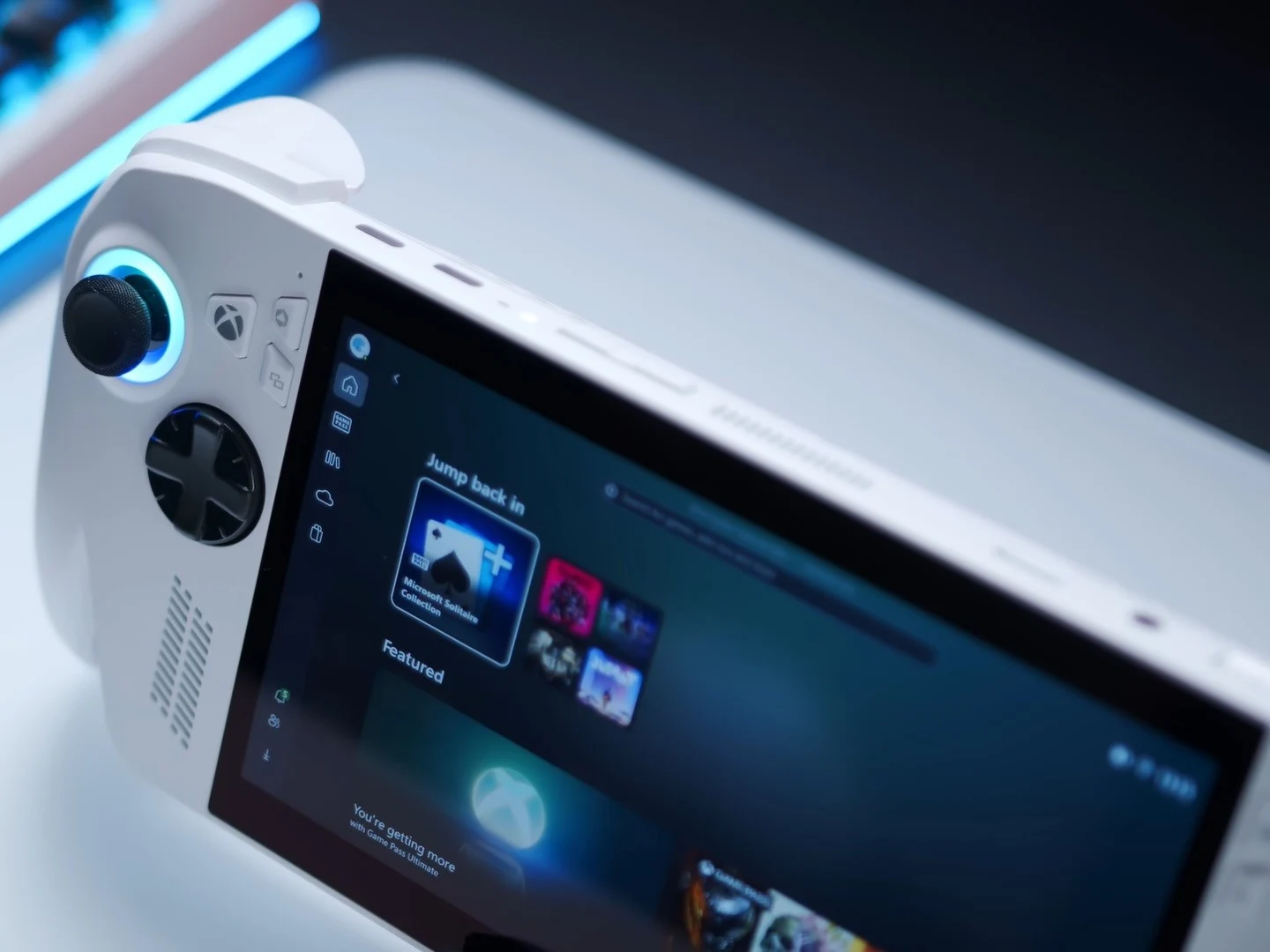
      The Asus ROG Xbox Ally and the Xbox Ally X mark Microsoft’s entry into handheld gaming consoles under the Xbox label. Gamers had high expectations for these devices, hoping they would provide a smooth gaming experience similar to traditional consoles, avoiding the typical issues that come with portable Windows setups. For the most part, both the ROG Xbox Ally and the ROG Xbox Ally X meet these expectations, offering a full-screen gaming experience that is fast and user-friendly, designed specifically for gaming.

      Hardware Concerns

      Nonetheless, the hardware for the ROG Xbox Ally X and especially the ROG Xbox Ally has some shortcomings. For example, while the Ryzen Z2 Extreme performs better than the Ryzen Z1 Extreme, it still falls short of being impressive. The Ryzen Z2A found in the ROG Xbox Ally is even less capable.

      Pricing Issues

      Pricing is another point of concern. The Asus ROG Xbox Ally and Ally X do not shine in terms of value, as the former is priced at $599 and does not offer much bang for your buck, while the latter, costing $999, may be tough for many to justify.

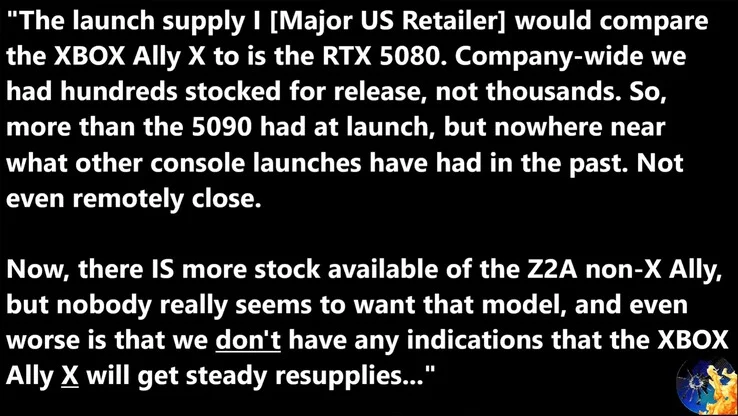
      It’s not shocking to think that the Xbox Ally handhelds may struggle in sales. Microsoft might be aware of this, as Moore’s Law Is Dead reports that the initial supply of the Asus ROG Xbox Ally and the Ally X is quite limited.

      Supply and Demand

      According to a source from a “Major US Retailer” mentioned by MLID, the stock of the ROG Xbox Ally X is on par with the RTX 5080, boasting only hundreds of units available across the company. However, this supply is “nowhere near” what other console launches have previously seen. The outlook for the ROG Xbox Ally X’s availability appears worse, as MLID’s source doesn’t anticipate any “consistent restocks” for this model.

      Interestingly, there may be more units of the standard ROG Xbox Ally available, but “not many seem to be interested in that version.” This is not surprising since the ROG Xbox Ally is powered by a weaker Ryzen Z2A APU.

      Final Thoughts

      In summary, the Asus ROG Xbox Ally X is not a bad console at all. We rated it a “Good” 86% in our review. If you’re looking for a handheld gaming console that runs Windows and are okay with spending around $1000, it’s wise to buy a ROG Xbox Ally X before the stock runs out.

      On the flip side, Intel’s new Panther Lake APUs are said to have superior graphics performance compared to the Ryzen Z2 Extreme. Thus, waiting a few months, perhaps until CES 2026, could be beneficial to see if any Intel Panther Lake gaming handhelds are released.

      Source:
      Link


    • Intel Panther Lake iGPU Outshines ROG Xbox Ally X Ryzen Z2

      Intel Panther Lake iGPU Outshines ROG Xbox Ally X Ryzen Z2

      Key Takeaways

      1. The Asus ROG Xbox Ally X shows improved performance over the standard ROG Ally, with the Ryzen Z2 Extreme being 10-15% faster in gaming.
      2. Intel’s Panther Lake iGPU may outperform the Ryzen Z2 Extreme by 72%, based on leaked benchmark results.
      3. The Ryzen Z2 Extreme operates at a maximum TDP of 55 W, while the Panther Lake Core Ultra X9 388H has a limit of 45 W, suggesting potential efficiency benefits for Intel.
      4. If Intel’s performance claims hold true, upcoming handheld consoles with Panther Lake APUs may compete strongly against AMD-based devices.
      5. Final validation of Intel Panther Lake’s performance will come with retail samples, indicating potential advancements in handheld gaming technology.


      Initial impressions of the first Xbox-branded handheld gaming device, the Asus ROG Xbox Ally X, are now available. From our evaluations, this console shows enhancements over the standard Asus ROG Ally in nearly every noticeable aspect. This includes performance, with the Asus ROG Xbox Ally X featuring the Ryzen Z2 Extreme and its Radeon 890M being approximately 10-15% quicker in gaming compared to the ROG Ally X’s Z1 Extreme SoC.

      Performance Comparison

      Even though this performance gap is promising, it appears that Intel’s latest Panther Lake iGPU could be significantly faster based on leaked 3DMark Time Spy Graphics results. In our review of the Asus ROG Xbox Ally X, we observed that the Ryzen Z2 Extreme, when in “Turbo” mode with a maximum TDP of 55 W, achieved a score of 3,620 points in the 3DMark Time Spy Graphics benchmark. According to the recently leaked scores from Intel’s Panther Lake, the 12 Xe-core Panther Lake iGPU leads by an impressive 72% over the Radeon 890M found in the Asus ROG Xbox Ally X. It’s important to mention that the Intel chip used in the test was paired with faster memory (8,533 MT/s compared to 8,000 MT/s), which likely contributes to its superior performance.

      Power Consumption and Future Prospects

      Additionally, we must remember that the Ryzen Z2 Extreme was allowed to use a maximum TDP of 55 W, while the top-tier Panther Lake chip, the Core Ultra X9 388H, is said to have a limit of 45 W. Thus, the Intel Panther Lake Core Ultra X9 388H may not only outperform the Ryzen Z2 Extreme in gaming but could also operate more efficiently in terms of power consumption. If these synthetic test results hold true for actual gaming scenarios, upcoming portable consoles featuring Intel Panther Lake APUs will likely compete strongly against AMD-based handheld devices.

      In conclusion, we will need to wait for retail samples of Intel Panther Lake to validate these claims. As of now, Intel Panther Lake APUs might just be the handheld gaming processors that Team Blue has been promising us.

      Source:
      Link


    • Lucky Redditor Receives ROG Xbox Ally X Before Official Launch

      Lucky Redditor Receives ROG Xbox Ally X Before Official Launch

      Key Takeaways

      1. Scalpers have raised prices of the ROG Xbox Ally X and ROG Xbox Ally to as high as $2,500.
      2. A Reddit user received their console three weeks early, highlighting early availability in some regions.
      3. The Ryzen Z2 Extreme offers a 5-10 FPS improvement over the Ryzen Z1 Extreme in gaming performance.
      4. The ROG Xbox Ally X can achieve up to 86 FPS in Clair Obscur: Expedition 33 at lower resolutions with enhanced settings.
      5. Maintaining a steady 60 FPS at 1080p on ‘High’ settings may be challenging, relying on AI upscalers for better performance.


      With the ROG Xbox Ally X and ROG Xbox Ally now available for pre-order, scalpers have already started raising the prices, reaching as high as $2,500. On a different note, a Reddit user has shared that they received their console three weeks ahead of schedule. The user, known as u/Technical_Fun77, mentioned they are based in Belgium and ordered the device from Amazon France.

      Performance Insights

      While the user didn’t provide extensive performance metrics, they mentioned that the Ryzen Z2 Extreme generally offers a 5-10 FPS improvement compared to the Ryzen Z1 Extreme. In the game Clair Obscur: Expedition 33, the ROG Xbox Ally X managed to deliver 47 FPS at ‘High’ settings with XeSS enabled at 1080p. When played at 900p, this number rose to 56 FPS, and with Lossless Scaling Frame generation, it reached an impressive 86 FPS.

      Gaming Experience

      Clair Obscur: Expedition 33, being developed on Unreal Engine 5, is among the more challenging games released this year. The fact that it can maintain playable frame rates on a handheld device is quite remarkable. The ideal thermal design power (TDP) seems to be between 17-25 Watts to ensure good battery performance. The user described the Xbox’s full-screen mode as “really disturbing at first,” but noted that it improves over time.

      Expectations and Reality

      It’s worth noting that the ROG Xbox Ally X is probably using pre-production software, which may affect its performance. However, keeping a steady 60 FPS at 1080p on ‘High’ settings will be a challenge for many games, meaning that players will likely depend on AI upscalers to bridge the performance gap.

      Source:
      Link