Tag: Computex 2026

  • HP Mini PC with Nvidia RTX Spark, 128GB RAM, ConnectX-7

    HP Mini PC with Nvidia RTX Spark, 128GB RAM, ConnectX-7

    Key Takeaway

    – HP’s unnamed RTX Spark mini PC features a bold, prototype-level design with unlabeled ports.
    – It includes two proprietary Nvidia ConnectX-7 data-center-grade ports, which may not appear in the final retail version.
    – HP is one of several OEMs that have not published press releases or announced pricing/availability for their RTX Spark mini PCs.
    – The overall marketing and rollout of Nvidia’s RTX Spark mini PCs at Computex 2026 has been lackluster, despite their potential to compete with Apple’s Mac Mini and Mac Studio.


    First Look at HP’s Mysterious New Mini PC

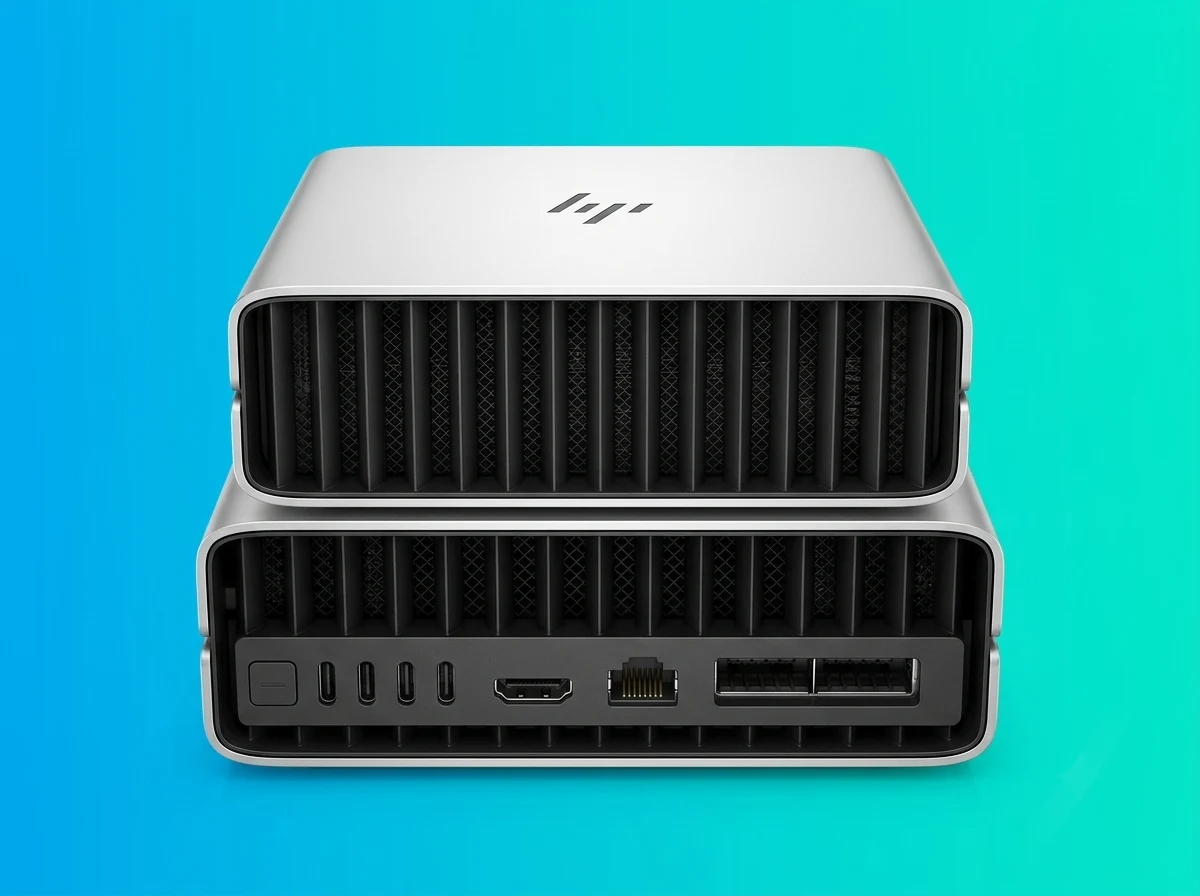
    While the new HP OmniDesk Mini Desktop PC was unveiled as the world’s first “Mini AI PC” to feature Thunderbolt Share, the company’s first RTX Spark-powered mini PC somehow went unnder the radar in the first few days of Computex 2026. However, the wait is now over, as we can reveal hands-on images of HP’s RTX Spark mini PC, which might just have the boldest design of all new Nvidia RTX Spark-powered mini PCs announced at Computex (from Asus, Dell, MSI, and Lenovo).

    The Name is Still a Mystery

    What’s interesting is that HP hasn’t decided on a name yet. As bizarre as it sounds, none of the reports from Computex 2026 mention a name for the mini PC, while HP’s press release for the new OmniBook Ultra 16 and OmniBook X 14 explicitly says the mini PC is indeed on the way but doesn’t share a name for it. On top of that, none of the ports on the PC are labeled, which signals we might be looking at a prototype of the final design.

    Unique Ports and Connectivity

    Speaking of ports, the I/O layout of HP’s RTX Spark mini PC is similar to other RTX Spark mini PCs but, at the same time, it stands out due to the inclusion of two proprietary Nvidia ConnectX-7 ports. Whether the data-center-grade ports will remain on the final retail version of the PC or they are exclusive to the units showcased at Computex remains to be seen. Perhaps HP is planning to launch two completely different RTX Spark mini PCs (and this has something to do with the whole naming mystery).

    The I/O on HP’s RTX Spark mini PC is as follows:

    • 2x Nvidia ConnectX-7 ports
    • Standard USB Type-A and Type-C ports
    • HDMI and DisplayPort outputs
    • Ethernet jack
    • Audio jack

    Pricing and Availability Still Undisclosed

    As the story with all new Nvidia Spark RTX laptops and mini PCs goes, HP is yet to announce pricing and availability for its nameless RTX Spark mini PC. Strangely enough, while the naming mystery stands out, HP is one of several OEMs refusing to publish press releases on their new RTX Spark mini PCs, even though they were officially revealed at Computex 2026.

    All in all, the hardware marketing around Nvidia’s new chips seems to be rather lackluster following Computex 2026. That’s somewhat bizarre considering these new mini PCs (and laptops) are supposed to be game-changing for the prosumer Windows market and even rival Apple’s super-popular Mac Mini and Mac Studio.
  • Lenovo Mini PC with Nvidia RTX Rivals Mac, 128GB RAM

    Lenovo Mini PC with Nvidia RTX Rivals Mac, 128GB RAM

    Key Takeaway

    – Lenovo SFF RTX Spark is the first Arm-based mini PC from Lenovo using Nvidia’s new RTX Spark platform.
    – All ports are located on the back of the device, which some users may find inconvenient.
    – Cooling capacity and thermal design vary by manufacturer; Lenovo has not yet disclosed its thermal headroom.
    – Specific configurations, pricing, and availability have not been announced by Lenovo.
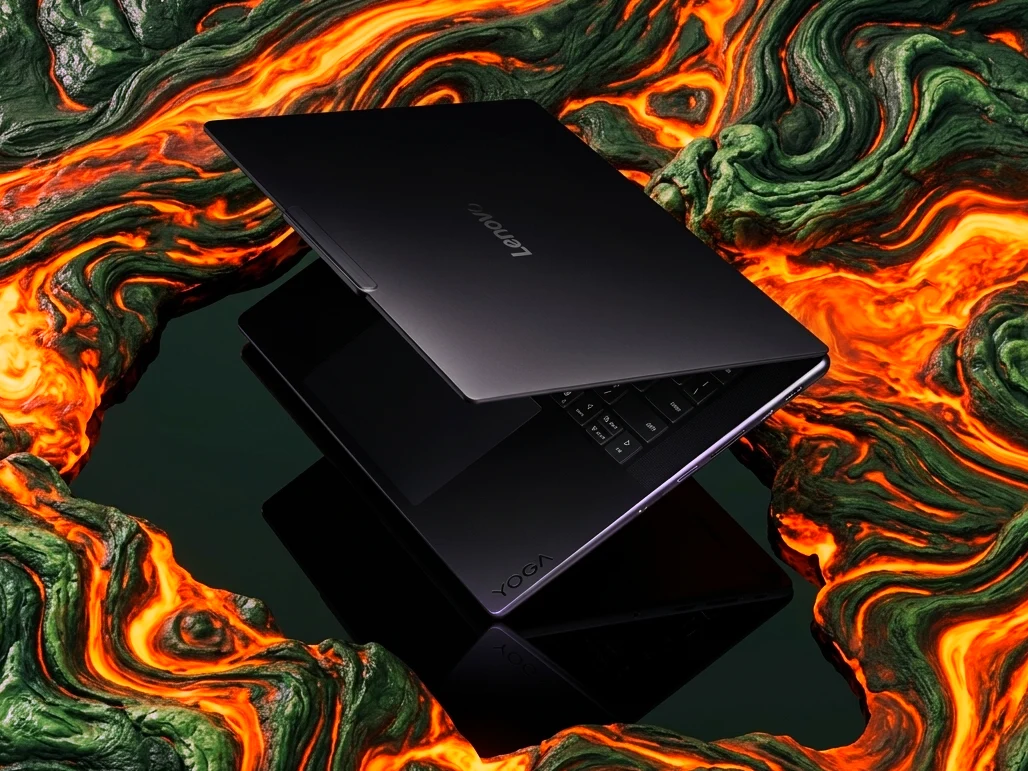
    – The mini PC uses the same RTX Spark platform as the Yoga Pro 9n laptop.


    New Lenovo Mini PC Spotted at Computex

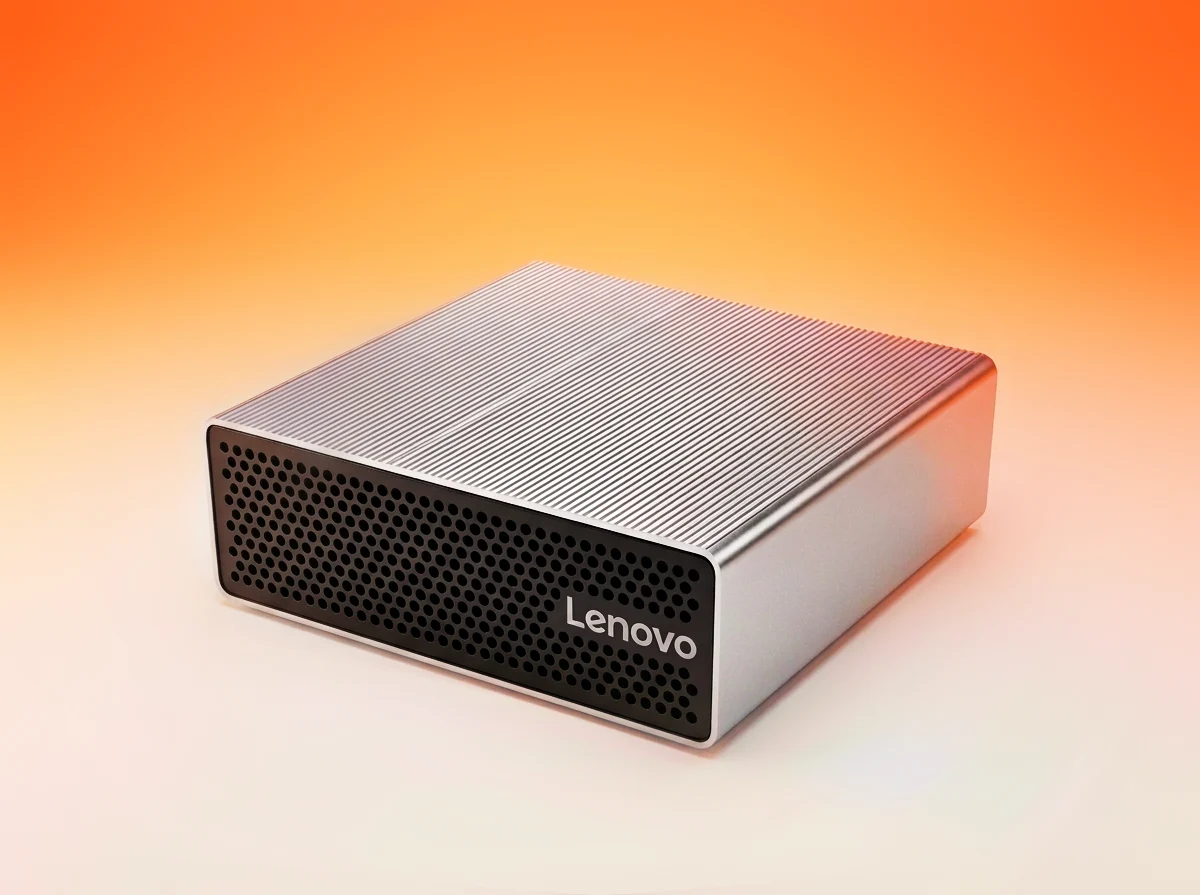
    Although we recently reported on the unveiling of the new Yoga Pro 9n, which is Lenovo’s first laptop powered by Nvidia’s revolutionary RTX Spark platform, Lenovo has proven to be one of the most secretive companys at this year’s Computex trade show. Despite Lenovo’s reluctance to publish press releases for its new hardware, we no longer have to wait to check out the brand-new Lenovo SFF RTX Spark, which (as the name implies) becomes the first Lenovo mini PC to get the Arm-based RTX Spark chips.

    Box Design and Port Layout

    The Lenovo SFF RTX Spark is one of five RTX Spark mini PCs to be revealed at Computex 2026, and it arrives in a pretty minimalistic dual-tone box in the colors black and silver. Unlike the Dell XPS RTX Spark Desktop, which has two USB-C ports and an SD card reader on the front, Lenovo’s mini PC hides all of its ports in the back (something many PC users find to be inconvenient). The (rear-facing) port selection on the new Lenovo SFF RTX Spark mini PC is as follows:

    • Multiple USB-C ports with variable speeds
    • Standard USB-A connectors for legacy devices
    • HDMI and DisplayPort outputs for monitors
    • Ethernet jack for wired networking
    • Headphone and microphone combo jack

    Cooling Capacity and Platform Details

    So far, only Asus has revealed the thermal headroom of its new RTX Spark mini PC, the Asus ProArt, which is built around 140W of thermal ceiling. Cooling capacity depends on each manufacturer’s specific chassis design and performance priorities, so Lenovo may target lower or higher thermal capacity, depending on the factors it chooses to prioritize for the Lenovo SFF RTX Spark (like noise, portability, or cost). The SFF RTX Spark mini PC uses the same RTX Spark platform as the newly-announced Yoga Pro 9n laptop.

    Chip Variants and Configurations

    The RTX Spark is said to come in two flavors, dubbed as the N1x and N1. Of course, specific configurations and their pricing will vary widely, depending on RAM and SSD size. Just like with all other Nvidia Spark RTX laptops and mini PCs, Lenovo is yet to announce pricing and availability for the Lenovo SFF RTX Spark mini PC. In fact, this early reveal is a collection of official specs and features based on Nvidia’s press release and hands-on previews.

    Manufacturer’s Silence Continues

    Like Dell, Lenovo is one of the few OEMs that hasn’t published press releases for their new RTX Spark mini PCs, even though they were officially revealed at Computex 2026. This lack of official word is frustraiting for enthusiasts who want concrete numbers, but the hardware itself is now out in the wild for viewing. The device remains a tantalizing peek into what could be a very powerful little machine, assuming Lenovo finalizes its thermal and performance targets soon.


    Sources

  • Mac-Inspired Nvidia RTX Spark Dell XPS Mini PC: 128GB RAM

    Mac-Inspired Nvidia RTX Spark Dell XPS Mini PC: 128GB RAM

    Key Takeaway

    – Dell XPS RTX Spark Mini PC is a direct competitor to Apple Silicon Macs, launching the new Spark RTX platform.
    – The dark gray design resembles the Mac Studio, with side vents and a removable bottom lid for SSD access.
    – Port selection and thermal headroom vary by manufacturer; Dell’s cooling capacity is unconfirmed.
    – The RTX Spark platform comes in N1x and N1 variants, with pricing and availability still unannounced by Dell.


    Dell’s New XPS Mini PC

    Computex 2026 has been one of the most important tech events for Nvidia and Windows in recent years, and that’s all thanks to the brand-new Spark RTX platform, which is the direct competitor to the ARM-based Apple Silicon found in Macs, which has been a game-changer in modern computing. And with a bit of a delay, we now have our first look at the “Dell XPS RTX Spark Desktop”, the company’s first mini PC utilizing the new Spark RTX series of chips.

    Design and Build

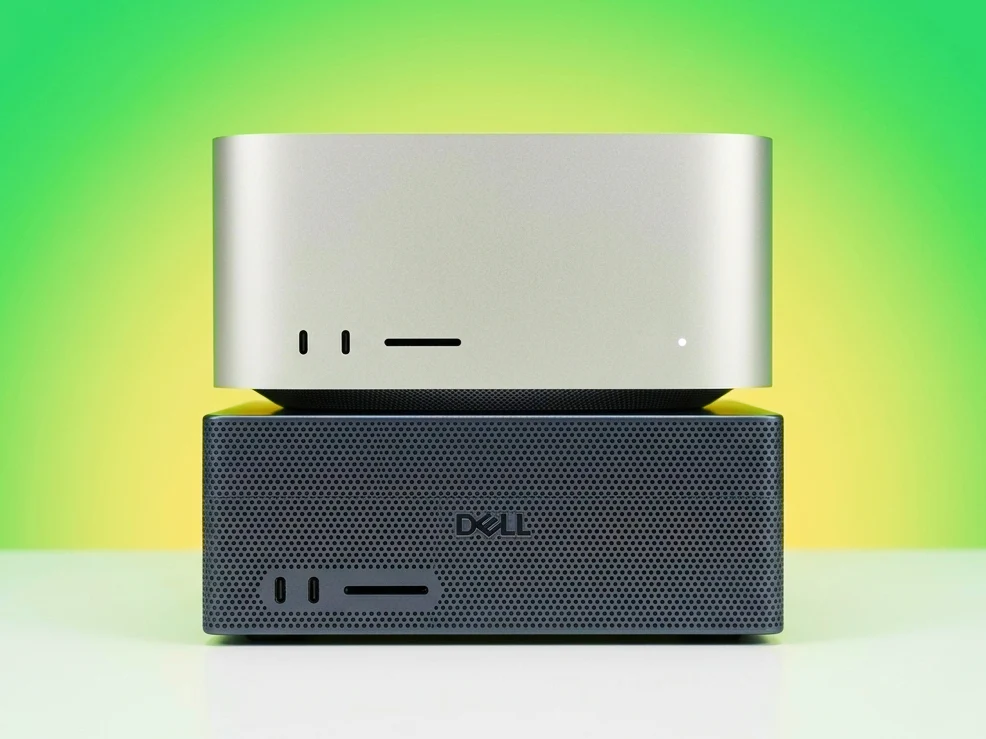
    And yes, for the record, the dark gray Dell PC is the most Mac Studio-looking Nvidia RTX Spark mini PC we’ve seen yet (at least from the front). Reportedly, the vents are on the sides of the chassis, and the removable bottom lid should give you access to the SSD. The port selection on the new Dell XPS RTX Spark Mini PC is as follows:

    • USB-C with Thunderbolt support
    • USB-A ports
    • HDMI 2.1
    • Ethernet
    • Headphone jack

    While the RTX Spark-powered Asus ProArt Mini PC is built around 140W of thermal headroom, we can’t assume Dell is targeting the same number, because cooling capacity depends on each manufacturer’s specific chassis design and performance priorities.

    Platform Scalability and Performance

    The RTX Spark platform is scalable, and different manufacturers may choose lower power targets to prioritize factors like fan noise, portability, or cost. In case it’s unclear, the Dell XPS RTX Spark Mini PC uses the exact same RTX Spark platform as the newly-announced Dell XPS 16 Creator Edition laptop. The RTX Spark is expected to arrive in two main flavors, dubbed the N1x and N1. Configurations and pricing will vary widely, depending on RAM and SSD size.

    Pricing and Availability

    Just like with all other Nvidia Spark RTX laptops and mini PCs, Dell is yet to announce pricing and availability for the Dell XPS RTX Spark Mini PC. In fact, this early reveal is a collection of official specs and features based on hands-on previews. Strangely enough, Dell is one of the few OEMs refusing to publish press releases on their new RTX Spark mini PCs, even though they were officially revealed at Computex 2026.


    Sources

  • AMD Ryzen 5800X3D Relaunch Required Extensive Engineering Work

    AMD Ryzen 5800X3D Relaunch Required Extensive Engineering Work

    Key Takeaway

    – AMD re-announced the Ryzen 7 5800X3D at Computex 2026 as a re-release, set for June 25 at $350.
    – The chip highlights AM4 platform longevity, allowing gamers to keep using DDR4 memory and existing motherboards.
    – Re-engineering was required because TSMC’s original 3D V-Cache stacking process was no longer available.
    – Engineers had to re-qualify, fabricate, test, and validate the chip using the new stacking approach to meet quality standards.


    Comptex Re-Intros the 5800X3D Chip

    After numerous leaks and rumors, the AMD Ryzen 7 5800X3D has been formally re announced by Team Red at Computex 2026. The tenth anniversary of the 5800X3D just goes to show the longevity of the AM4 platform, even as the company continues to produce Zen 4 and Zen 5 chips. This means gamers can stick to reliable, relatively inexpensive DDR4 memory without haveing to upgrade their motherboards, while still getting a bump in CPU and gaming performance.

    Return of the King at $350

    In press briefings at Computex, AMD framed the Ryzen 7 5800X3D as the “Return of the King,” evoking the chip’s status in 2022 as the first Ryzen gaming processor to introduce 96MB of 3D V-Cache. Even today, it remains one of the best go-to options, with the re-release set for June 25, 2026, at a retail price of $350.

    McAfee Addresses Gamers

    At Computex, David McAfee, the corporate VP and GM of AMD’s Client Channel and Graphics Business, addressed gamers while announcing the processor. Stating “We’re commited to giving gamers high-performance technologies with the flexibility to upgrade their systems over time. Ultimately, our goal is to deliver unmatched ownership experiences for players around the world.” The road to re-releasing the Ryzen 7 5800X3D was not as straightforward though as simply refabricating the chips, because AMD says a lot of engineering effort went into adapting to the current chip manufacturing landscape.

    Engineering Behind the Return

    Bringing back the 5800X3D wasn’t just a matter of dusting off the old design and pressing “go” on the production line. McAfee stated that “a whole body of engineering work” went into reproducing the original bonding process TSMC used for the 5800X3D. This is because, as AMD moved forward to second-generation 3D V-Cache designs, the original process was no longer available. So engineers had to re-qualify the design for the new stacking approach, fabricate and validate new sample chips, and run extensive reliability tests to ensure the re-released chip would meet quality control requirements and gamers’ standards.

    Process Changes Explained

    McAfee explained: “It’s not as simple as bringing back the 5800X3D. The original stacking process that was used at TSMC changed when we went from first-gen to second-gen cache, so we had to re-engineer that product, and there actually went a fair amount of development work into bringing back the 5800X3D.” AMD had to put a whole lot of work into re-validating the chip for modern fabrication.

    • 96MB of 3D V-Cache
    • Re-release date: June 25, 2026
    • Retail price: $350
    • AM4 platform compatibility
    • DDR4 memory support
    Sources
  • Asus Fast Color E-Paper Touchscreen Spotted at Computex

    Asus Fast Color E-Paper Touchscreen Spotted at Computex

    Key Takeaway

    – Quiet, discreet exhibits at Computex 2026 offer interesting finds, not just major announcements.
    – Asus showed a 13.3-inch color e-paper display (MP13UC) with high resolution (3200×2400) and 35 Hz refresh rate.
    – The e-ink display is flicker-free, emits no blue light, and can show static images without power.
    – It consumes very little power and includes HDMI, Mini DisplayPort, and USB-C ports.
    – Pricing, global availability, and full specs are still unannounced, but a European release is expected.


    Quiet Finds at Taipei Show

    At trade fairs like Computex 2026, sometimes it is the quiet and discreet exhibits that are interesting, rather than those announced with great fanfare. In Taipei, the primary focus is on “the new PC era” based on the RTX Spark, proclaimed by Nvidia’s Jensen Huang the day before the show began. Together with partners like Microsoft, Dell, Asus and HP, there are plenty of new laptops and mini-PCs, which aren’t expected to be truly available until fall 2026 and possibly not as expensive as originally anticipated.

    Asus Booth Features Unannounced Gadgets

    While the new ProArt RTX Spark designs are only shown behind closed doors, the Asus booth also features items that weren’t widely announced but could be quite interesting for some. For example, a 13.3-inch color e-paper display with a very high resolution of 3,200 x 2,400, 300 ppi, and a relatively fast 35 Hz refresh rate. While it doesn’t quite reach the speeds of top-of-the-line models like those from Modos that can reach up to 75 Hz, it is at least sufficient for displaying YouTube videos, as demonstrated by the display unit.

    Being that it’s a prototype, some specs are missing. The MP13UC model is expected to be released in Europe, but Asus haven’t confiremd global availability or pricing details yet. It will likely also come with the flexible ATS01D mini stand, which is height-adjustable, rotatable, tiltable, and folds down to a very compact size. The e-ink display can reproduce 4,096 colors and is designed to reduce ghosting artifacts; it is flicker-free and emits no blue light.

    Video Quailty and Ports

    In the short video below, one gets a better idea of the video quality of the Asus Zenscreen e-paper display. The color intensity isn’t comparable to an OLED display and is somewhat pale. On the other hand, the touchscreen consumes very little power and can even display a static image without a power source, making it suitable for use as a digital picture frame or a 13-inch digital display.

    • 13.3-inch color e-paper
    • Resolution: 3,200 x 2,400
    • 300 ppi, 35 Hz refresh rate
    • 4,096 colors, flicker-free, no blue light
    • Ports: HDMI, Mini DisplayPort, USB-C

    Final Thoughts on the Zenscreen

    On the bottom, you’ll find HDMI, Mini DisplayPort and USB-C ports, as well as the power button. It serves jest fine for static images like a digital picture frame, though the video playback still lacks the vibrance of modern screens. Asus hasnt revealed a price, but the stand alone design is quite portable for its size.


    Sources

  • Lenovo Launches Nvidia RTX Spark Laptop 15-Inch SD Slot

    Lenovo Launches Nvidia RTX Spark Laptop 15-Inch SD Slot

    Key Takeaway

    – Lenovo’s Yoga Pro 9n is the first laptop revealed with Nvidia’s new RTX Spark superchip, combining a Grace CPU and Blackwell GPU.
    – It features up to 128GB RAM, 1 petaflop of AI performance, and promises “all-day battery life” for creators, gamers, and AI work.
    – The 15-inch laptop includes top-firing speakers, a backlit keyboard, a large trackpad with pen support, HDMI, and an SD card slot.
    – Pricing is estimated at $1,799 to $2,899, competing with Apple’s M5 MacBook Pro lineup.
    – Official launch details are unconfirmed, but Spark RTX laptops are expected to ship in fall 2026.


    Lenovo Shows Off Its First RTX Spark Laptop

    Lenovo has (sort of) officially revealed its first laptop powered by the new Nvidia RTX Spark, the Lenovo Yoga Pro 9n, which appears to follow the design of the Yoga Pro 9i. While the next-gen Yoga laptop is on full display at Computex 2026, and an official teaser video has been shared online, the company hasn’t (technically) detailed the hardware just yet. However, thanks to reports from the event, we have more info.

    Under the Hood of the Yoga Pro 9n

    Of course, at the core of the Yoga Pro 9n the Nvidia RTX Spark superchip. In its fastest flavor, the platform pairs a 20-core Nvidia Grace CPU with an Nvidia Blackwell-based RTX GPU; up to 128GB of RAM, and up to 1 petaflot of AI performance. According to Nvidia and Lenovo, the Spark RTX-powered Yoga Pro 9n is built for agents and AI, creators, and gamers, while offering “all-day battery life”.

    Design and Ports Revealed in Teasers

    The short video shared by Lenovo reveals the laptop from a distance, confirming a 15-inch screen, and a familiar Yoga aesthetic. The remaining details we have come from hands-on reports from Computex, which confirm the laptop has top-firing speakers, a backlit keyboard, and a large trackpad with pen support so you can use it for drawing.

    We can also spot the presence of an HDMI port and an SD card slot from the images, which (unsurprisingly) confirms the Lenovo Yoga Pro 9n is made for creators and professionals, who might need to use external displays and transfer large video files.

    Pricing and Launch Timeline

    Naturally, official pricing and launch date for the Lenovo Yoga Pro 9n haven’t been shared yet. Most new laptops with the RTX Spark are expected to hit the shelves this fall. One thing’s for sure, and it is that the Lenovo Yoga 9n will face some stiff competition from the likes of Dell, Asus and Microsoft.

    In related news, according to market analyst Morgan Stanley, Spark RTX laptops like the Lenovo Yoga Pro 9n could start at $1,799 and $2,899, depending on the chip (N1 or N1x). This is in the same ballpark as the base M5 MacBook Pro and an M5 Pro 16-inch MacBook Pro.

  • Microsoft unveils Android AI device with Qualcomm, 5G to rival iPhone

    Microsoft unveils Android AI device with Qualcomm, 5G to rival iPhone

    Key Takeaway

    – Microsoft’s Project Solara introduces a “chip-to-cloud” platform for AI agent-first experiences, moving beyond traditional app-based smartphones.
    – The key hardware is a wearable “badge” with an always-connected, agent-centric UI, designed to replace the app grid on current phones.
    – The device uses an Android-based OS (Microsoft Device Ecosystem Platform) tailored for active AI agents, not conventional app launchers.
    – Microsoft is internally testing the badge and smart display among hundreds of employees, with plans for enterprise pilots in healthcare, retail, hospitality, and more.
    – Purpose-built, lightweight hardware is seen as essential for reaching true “agent-first” potential, with AI generating UIs instead of requiring native apps for every form factor.


    Project Solara Unveiled at Computex 2026

    At Computex 2026, Microsoft has officially unveiled Project Solara, an ambitious new “chip-to-cloud” platform designed to shift the focus of computing from the apps we use on our phones to AI agent-first experiences that do things for you (and instead of you). While the company revealed a stationary desk-based smart display concept that looks like a smart speaker/display combo, the real standout announcement is a portable wearable device, that hints at a future where the smartphone as we know it might be rendered obsolete. And despite the fact that Microsoft doesn’t call the device a “phone”, it sure has all of the hardware and software to do what your iPhone 17 Pro or Galaxy S26 Ultra can do.

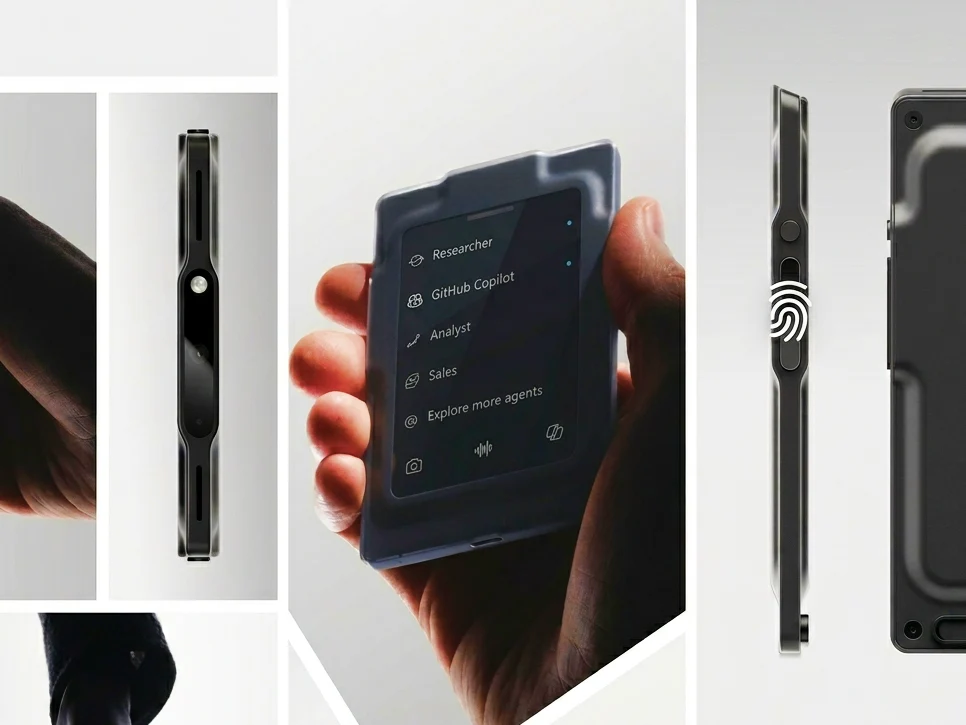
    The Badge Hardware and Agent-Centric UI

    The badge, a crucial hardware element of Project Solara, is not just a digital ID (which is what it looks like) but a dedicated, always-connected interface for AI agents, says Microsoft. Currently designed for frontline and information workers, this wearable replaces the traditional app-based grid (that we know from phones) with a streamlined, agent-centric UI. Reportedly utilizing an Android-based OS for the device (specifically the Microsoft Device Ecosystem Platform), Microsoft says that the current “app-launcher” smartphone paradigm may be too cumbersome for the era of active AI agents.

    Internal Testing and Enterprise Pilots

    It’s important to note that even though they are still in their concept stage, the company is testing the badge and smart display devices internally among hundreds of employees, hoping to quickly move the wearable phone/computer from a concept to mainstream adoption. Having started internal testing, Microsoft prepares to begin enterprise pilot testing in the healthcare, retail, hospitality, financial services, legal, industrial, and field services. In related news, Qualcomm’s CEO said that “resistance is futile”, when it comes to adopting agentic AI-based devices and operating systems like the ones part of Project Solara.

    Strategic Timing and Competition with OpenAI

    Meanwhile, the timing of Project Solara likely isn’t a coincidence. With rumors swirling that OpenAI is fast-tracking its own AI-focused smartphone for a potential early 2027 launch, Microsoft is likely trying to position itself to be the dominant platform provider for this next hardware cycle. In case you’re wondering why today’s flagship smartphones can’t serve the same purpose as Microsoft and OpenAI’s upcoming AI agent phones/devices, the answer might be in the “stack”, according to Microsoft. While traditional phones rely on apps (as we know them), the company thinks that to truly reach “agent-first” potential, devices must be purpose-built, lightweight, and specialized for AI.

    Lowering Barriers for Hardware Ecosystem

    By lowering the barrier to entry for specialized hardware, using AI to handle UI generation rather than requiring developers to build native apps for every new form factor, Microsoft aims to make the hardware ecosystem as fluid as the software. All in all, whether Project Solara and the badge/phone/computer device (or its successor) can sucessfully disrupt the iPhone/Android space remains to be seen, but the message seems clear. The next battleground for AI might not be taking place in your browsers but in your pockets.

    Sources
  • AMD claims 13% FPS boost, 15% better 1% lows with EXPO-ULL DDR5

    AMD claims 13% FPS boost, 15% better 1% lows with EXPO-ULL DDR5

    Key Takeaway

    – AMD EXPO Ultra Low Latency (EXPO-ULL) reduces DDR5 memory latency by 5-7 ns for smoother out-of-the-box gaming.
    – It delivers up to 13% higher average FPS and 15% better 1% low frame rates vs. standard JEDEC DDR5, with less stuttering.
    – Unlike Intel’s XMP, EXPO-ULL optimizes timings for Ryzen CPUs, which benefit more from tighter latencies than higher frequencies.
    – Certified kits (e.g., G.Skill, Kingston) launch June 2026, with motherboard support via AGESA updates for X870/B850 boards.
    – Best for Zen 4/Zen 5/X3D users, though gains may be slightly lower on X3D chips compared to non-3D CPUs.


    New Memory Tech From AMD

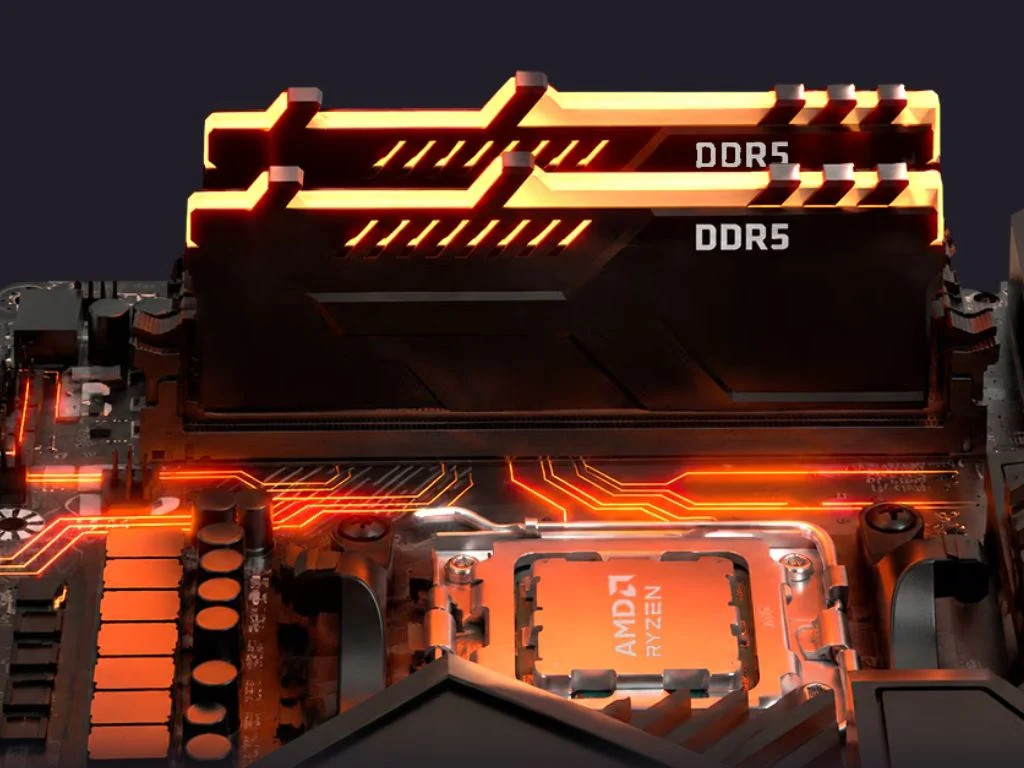
    At Computex 2026, AMD unveiled its latest take on memory overclocking with the launch of AMD EXPO Ultra Low Latency (EXPO-ULL). The ULL profile builds directly on the existing AMD EXPO standard and aims to extract better timings from already popular DDR5 memory modules at 6000 MT/s and 6400 MT/s, which are typically paired with Zen 4, Zen 5, and X3D-series processors.

    Casual Gamers Benefit Big Time

    For casual gamers, this means that DDR5 memory will deliver lower latency, i.e., a reduction of 5 to 7 nanoseconds and improved frame times without the hassle of manually tweaking memory settings in the BIOS, thanks to modules already rated to work at said latencies, essentially making high-end memory worth it right out of the box.

    Test Results Are Impressive

    AMD’s focus here is to further reduce latency and improve in-game responsiveness. To back up its new EXPO-ULL overclocking technology, AMD tested the new profile on a Ryzen 7 9700X setup in more than 30 games, resulting in a solid 13% higher average frame rate and a 15% improvement in 1% low frame rates compared to standard JEDEC-spec DDR5 memory. It is prudent to note that AMD’s choice of CPU, though understandable, might slightly skew the results compared with X3D CPUs, which reportedly exhibit lower performance gains than the former.

    Why This Matters Versus Intel

    What makes EXPO-ULL a solid alternative to Intel’s XMP is that it addresses a long-standing quirk of Ryzen setups. While Intel pursues ever-higher memory frequencies, AMD chips often see better performance gains when timings are dialed in tightly rather than simply increasing clock speed.

    Real-World Smoothness

    Real-world results with AMD EXPO-ULL include fewer instances of stuttering and improved frame times, which consequently lead to better reaction times in competitive titles. Overall gameplay will feel smoother, especially in CPU-intensive games or during sessions at very high frame rates.

    Many memory partners are already hopping on the EXPO-ULL train, with certified kits expected to ship from G.Skill, Kingston FURY, KLEVV, Lexar, TeamGroup, V-Color, XPG, and Origin Code.

    Availability and Compatibility

    AMD EXPO-ULL–supported DDR5 memory kits are expected to hit store shelves in June 2026, targeting AMD gamers with Zen 4–onward supported processors. Furthermore, motherboard support for EXPO-ULL is expected to roll out via AGESA updates, so many X870 and B850 boards will be able to handle the new EXPO-ULL profiles without issue before the kits even launch.

    Cost vs. Benefit

    Although these memory modules will be expensive, they could make the difference between “good enough” and noticeably smoother gameplay.

    Sources
  • Minisforum MS-03 & M2 Pro AI Mini PCs with Powerful NPU

    Minisforum MS-03 & M2 Pro AI Mini PCs with Powerful NPU

    Key Takeaway

    – Four new local AI devices announced: MS-03, M2 Pro mini PCs, S5 and N5 Max NASs.
    – M2 Pro offers up to 180 TOPS AI performance with Intel Panther Lake and eGPU support via OCuLink.
    – N5 Max NAS provides massive storage (up to 200 TB) and a local AI assistant via MinisOpenClaw software.
    – MS-03 features up to 50 TOPS NPU, WiFi 7, and dual SFP+ ports.
    – S5 NAS is a fanless, all-flash unit with 24-33 TOPS, WiFi 7, and Bluetooth 6.


    Minisforum’s New Local AI Devices at Computex 2026

    Minisforum has announced four devices capable of running local AI apps at Computex 2026 – the M2 Pro and MS-03 mini PCs and the S5 and N5 Max NASs. These systems are targeted toward users who want to run artifical inteligence models withought relying entierly on cloud services.

    MS-03 Mini PC Specifications

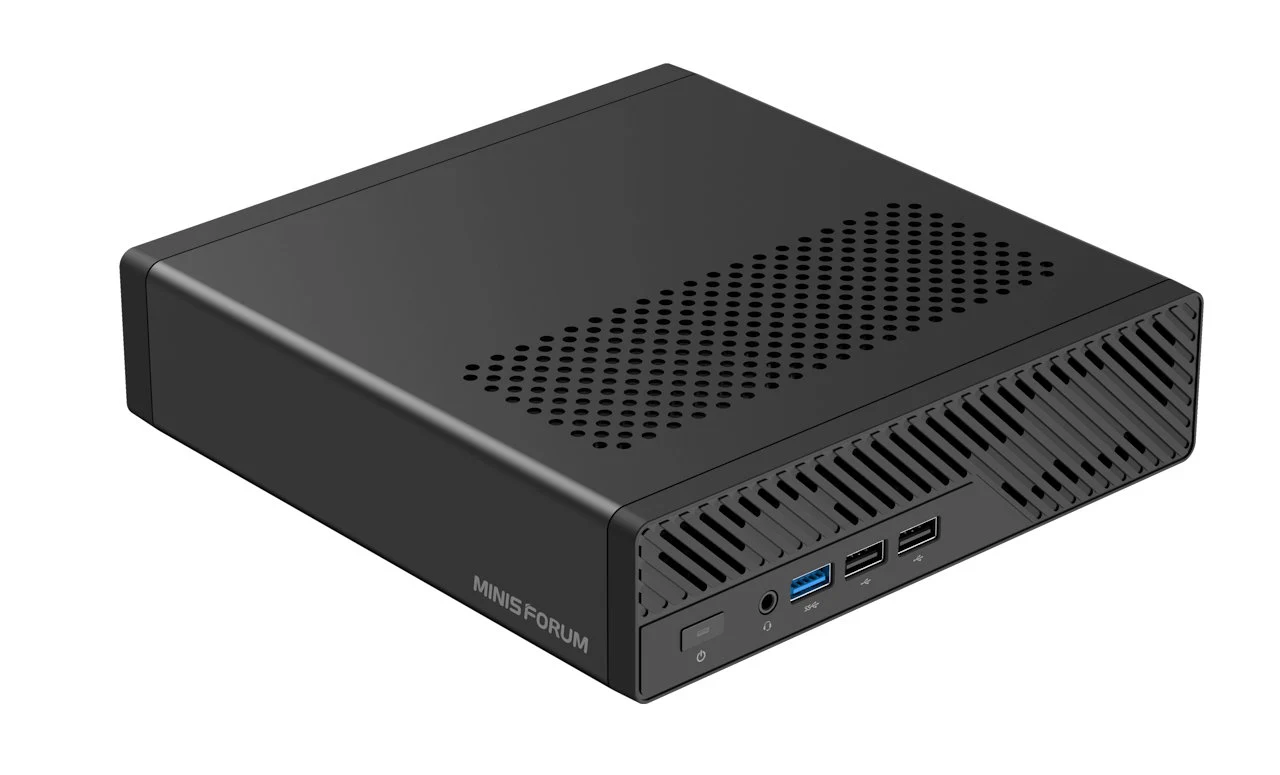
    The MS-03 updates the previous MS-01 model with faster Intel Panther Lake CPUs paired with DDR5 7200 RAM, two M.2 2280 NVMe SSD slots, and WiFi 7. Its NPU provides up to 50 TOPS of AI compute power. It has one 2.5G LAN jack, one 10G LAN jack, an HDMI 2.1 port with FRL support, five USB-A ports, two USB-C ports, two SFP+ ports, and a 3.5 mm headphone jack. This model is good for basic local AI tasks.

    M2 Pro Mini PC with Copilot Button

    The M2 Pro is powered by Intel Panther Lake CPUs capable of providing up to 180 TOPS of AI performance thanks to its fast Xe3 integrated GPU and up to 128 GB of LPDDR5X 8533 RAM. An external GPU (eGPU) can be added to increase AI compute power through the OCuLink port. Large AI models can be stored in up to three M.2 2280 SSDs. Uniquely, the M2 Pro has a Microsoft Copilot button and microphone on the front panel, giving users quick access to the chatbot.

    M2 Pro I/O and Mounting Options

    It has three USB-A ports, three USB4 ports, one HDMI port, one DP port, one 2.5G LAN jack, one 10G LAN jack, an SD card slot, a 3.5 mm headphone jack, and a security cable slot. The metal body M2 Pro can be VESA mounted on the back of monitors. The toatl AI TOPS is impressive for a tiny form factor.

    N5 Max NAS with Massive Storage

    The N5 Max NAS is powered by a 16C/32T AMD Ryzen AI Max+ 395 CPU running MinisCloud, Windows 11 Pro, or Linux OS, coupled with 64 GB of LPDDR5x 8533 RAM and a 128 GB system disk installed in one of the five M.2 2280 NVMe storage slots (8TB each). The NAS has five 3.5” SATA hard drive bays (32 TB each), giving the NAS a maximum storage capacity of 200 TB.

    Cooling and Connectivity

    Besides five cooling fans, the NAS also has one HDMI 2.1 FRL port, three USB4 ports, three USB-A ports, two 10 GbE LAN jacks, and a security cable slot. The combination of 126 TOPS of AI compute power along with MinisOpenClaw software enables owners to run a local AI assistant free of recurring costs. Advanced AI-powered file features such as semantic search will be added by the end of 2026.

    S5 All-Flash NAS Details

    The S5 All-Flash NAS was previously launched in Xiamen during a joint Minisforum and Intel event. The NAS is powered by an Intel Core 300 CPU running MinisCloud OS, paired with 12 GB of LPDDR5X 7500 RAM, 64 GB of UFS 2.2 storage, and up to five M.2 2280 NVME solid state drives (8 TB each). It has two USB-A ports, two USB4 ports, one 2.5G LAN jack, one 10G LAN jack, one HDMI port, and a security cable slot.

    Networking and AI Performance

    The unit can also be networked using WiFi7 and Bluetooth 6 connectivity. The fanless unit provides 24 to 33 TOPS of AI compute power. This is a more afforable option for light AI workloads and home media serving.


    Sources

  • Samsung Unveils World’s Thinnest Laptop OLED Panel: 240Hz

    Samsung Unveils World’s Thinnest Laptop OLED Panel: 240Hz

    Key Takeaway

    – 20% thinner OLED panel for gaming laptops unveiled at Computex 2026
    – Thickness reduction achieved by etching TFT and encapsulation glass by over 30%
    – Proprietary techniques prevent panel warping despite slimmer design
    – Enables thinner, lighter laptops without sacrificing thermal or component space
    – Not yet in commercial production; no confirmed first adopters


    Record-breaking slim OLED panel

    After announcing the development of the world’s first 4K 360Hz QD-OLED, Samsung Display wants to break another record by unveiling its new “Ultra Slim” OLED panel at Computex 2026. Designed specifically for the high-performance gaming laptop market, this new technology promises to shed bulk without sacrificing the visual fidelity gamers demand. It’s a pretty big deal for folks who care about lugging around a lighter machine but still want those rich colors and deep blacks.

    How they made it so thin

    The new panel achieves a dramatic reduction in thickness, cutting the module’s outer-edge profile by more than 20% compared to Samsung’s current mass-produced displays. To reach this benchmark, Samsung engineers developed a specialized etching process that reduces the thickness of both the Thin Film Transistor (TFT) substrate glass and the encapsulation glass by over 30%. This aproach is quite innovative, and it allows them to shave off millimeters without completely redesigning the whole panel structure from scratch.

    Despite the aggressive physical reduction, Samsung has addressed the common industry challenge of panel warping, utilizing proprietary manufacturing techniques to ensure structural integrity in the thinner form factor. They’ve managed to keep the thing from bending like a wet noodle, which is often a problem when you take away too much material from a display.

    Design flexibility for manufacturers

    While portability is the primary benefit of the Ultra Slim design, Samsung emphasizes that the technology maintains premium visual standards: “The Ultra Slim panel provides device manufacturers with unprecedented design flexibility”, the company says. By reducing the footprint of the display module, manufacturers can develop thinner, lighter laptops that do not compromise on the high-end thermal management or component space required for modern gaming hardware. This means they can still pack in a proper cooling system and a powerful GPU without needing to make the chassis thicker.

    • Reduces module outer-edge profile by over 20%
    • Both TFT substrate and encapsulation glass reduced by over 30%
    • Proprietary anti-warping manufacturing techniques
    • Maintains premium visual standards for gamers

    Status and availability unclear

    It’s worth noting that while Samsung Display is showcasing the technology at Computex to demonstrate its design capabilities, the Ultra Slim panel has not yet reached the commercial manufacturing stage, and it’s unclear which new laptops might be first to utilize it. So, don’t expect to see this in the next Alienware or Razer blade right away; it’s still very much a prototype that needs to go through final testing and production scaling before hitting the streets.


    Sources